Not an RDNA 4 Exclusive After All: FSR 4 Tested on RX 6800 XT in Stellar Blade
Translated with AI from the Russian original.
FSR 4 officially does not support video cards based on the RDNA 2 architecture, but after the source code leaked, enthusiasts began adapting the technology for previous generations.
Last week, the source code for FSR 4 leaked, allowing enthusiasts to run the technology on video cards that are not officially supported. In addition to solutions based on the RDNA 3 architecture and the GeForce RTX 30 series, it also worked on older models, including the Radeon RX 6800 XT based on the RDNA 2 architecture.
A user on the Chiphell forum reported that he managed to activate FSR 4 on his RX 6800 XT. For testing, he used the game Stellar Blade with FSR 3 and OptiScaler support, using a modified DLL library version FSR 4.0.2 (Model 3).
According to him, the image quality with FSR 4 turned out to be higher than with FSR 3, but the performance decreased. In "quality" mode, FSR 3 showed over 110 frames per second, while with FSR 4 it was about 100-107 FPS. Thus, the performance drop was 10-20%.
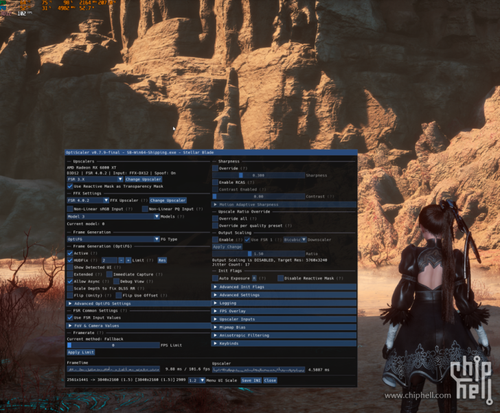
This case showed that the declared "exclusivity" of FSR 4 for video cards of the RDNA 4 generation (RX 9000 line) is not absolute. Enthusiasts are able to run the technology on older models, albeit with a noticeable drop in performance compared to officially supported solutions. At the same time, if the frame rate remains comfortable, FSR 4 may be a preferred option due to better scaling.
Against this background, the community hopes that AMD will eventually officially extend support for the technology to previous generations as well. For now, users have to rely on third-party modifications.
Never miss our newsAdd this site to your preferred sources to see us more oftenAdd on Google