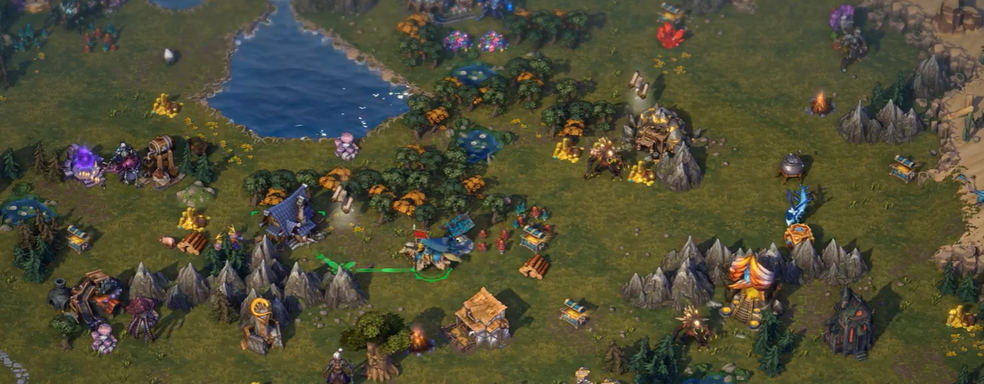
Heroes of Might and Magic: Olden Era Publisher Names Steam Best Service for Game Promotion - The Problem Isn't Algorithms, Some Projects Just Shouldn't Be Made
Translated with AI from the Russian original.
Valve has created a strong recommendation system.
Recently, the head of Hooded Horse, the publishing company of Heroes of Might and Magic: Olden Era, decided to speak out about Steam. In his opinion, there is currently no service whose recommendation system can compare to the one presented by Valve.
I've seen many argue that one of the fundamental problems with PC games right now is poor discoverability, but I disagree.
Tim Bender explained his vision and gave specific examples of how the Steam recommendation system works - it includes several levels, takes into account the preferences of a specific player, and really highlights projects that they might like:
There is no platform that can compare to Steam's magnificent recommendation system. And I say this not only in the context of games - even compared to streaming services like Netflix or Amazon, none of them come close in quality. If I open the Steam homepage right now, at the top I will see a mix of bestsellers and games selected by the tags I play. I scroll down - and I see category pages where you can choose specific genres. There is a section "Recommended based on games you play" - it selects content as accurately as possible for my niche interests and includes many indie projects (although, I suppose, if I only played AAA shooters, the recommendations would look accordingly - Steam knows what I like). There is also a section "Because you played RimWorld", offering a selection of colony simulators and city-building games to my taste. And the whole platform is arranged exactly like this - wherever I go and however far I scroll down, everything here is created to help discover new games.
The manager believes that the large number of games released on PC (and around 19,000 were released on Steam in 2025) is not a problem, since "stores should be open to all developers and allow player preferences to determine what gets attention."
However, Tim Bender thinks that you should take a balanced approach to deciding whether to develop a particular project:
[...] Ultimately, if we want stability, the budget for a particular game should be such that "success" is considered covering costs and allowing the team to move on to the next project with moderate sales, based on a cautious assessment of its potential audience. And this, in turn, means that some games should not be made - at least not with the budgets that are initially planned.
The head of Hooded Horse also expressed the opinion that publishers "should not receive 100% of the revenue from the game as part of the breakeven terms that guarantee them profitability at the expense of the developers." Instead, publishers should have a "diversified portfolio" - hit games could compensate for losses from other projects.
Tim Bender also spoke about the closure of studios in the gaming industry:
[...] corporations should not close studios just because their performance did not meet expectations. Large companies that can absorb risks should be prepared for the fact that some projects will be unprofitable - after all, the losses of some are compensated by the successes of others, and a team that failed today may well create tomorrow's hit.
Never miss our newsAdd this site to your preferred sources to see us more oftenAdd on Google