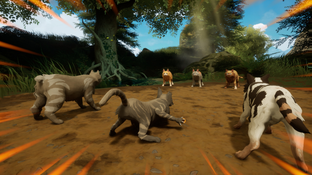
Toyota is developing its own game engine
Translated with AI from the Russian original.
Toyota is quietly working on its own game engine called Fluorite. The project is being developed by Toyota Connected North America, a subsidiary of the brand that focuses on digital technologies. However, Fluorite was not created for classic video games.
The engine was developed with a focus on stable operation on weak hardware, including systems installed in cars. To do this, Fluorite combines several well-known solutions: it works with Flutter, Google's interface framework, uses the Dart language for logic and interface, and is based on the Entity Component System (ECS) core in C++, optimized for low-performance devices.
Among the declared functions: the ability to set interaction zones directly in 3D models, which simplifies working with tools like Blender and creating interactive three-dimensional interfaces. Fluorite also supports a console level of 3D rendering through Filament, a Google technology.
The engine supports Hot Reload, a Flutter feature that allows you to quickly update scenes and interfaces without restarting the system.
Toyota studied existing engines but abandoned them due to the high cost of licenses and resource requirements. Fluorite became an alternative that better suits the company's tasks.
Fluorite is open and distributed as open-source. Even if Toyota does not use it for games, the engine is available as a ready-made solution and may be of interest to indie developers, especially for projects for weak devices.
Never miss our newsAdd this site to your preferred sources to see us more oftenAdd on Google







![[STREAM] Ultimate Version - Cyberpunk 2077 Update 2.5](https://media.ixbt.games/fit-in/312x/ixbt-data/1730178/b6ca9a8e-de42-4e9a-b1aa-df5e519a7449.jpg)