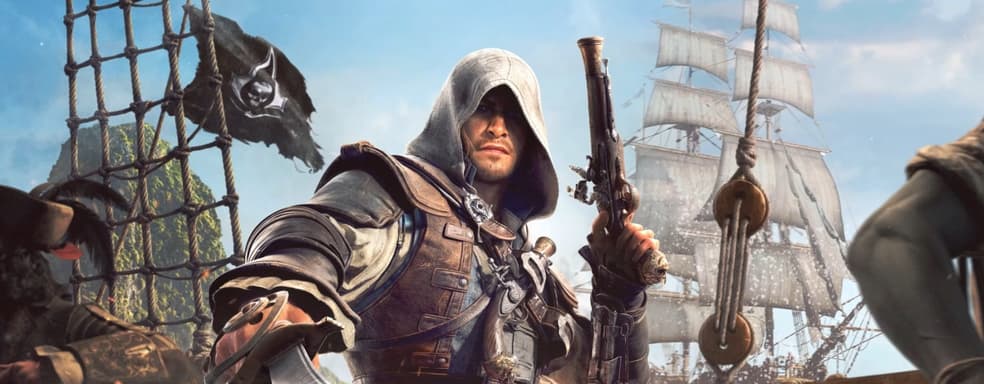
A remake built from the ground up: everything known about Assassin's Creed Black Flag Resynced
On April 23, 2026, Ubisoft held the official worldwide presentation of a full-fledged remake of its legendary 2013 pirate game. The event was hosted by Matt Ryan, the actor who voiced Edward Kenway in the original Black Flag and recorded both old and completely new lines for the remake.
The remake is being developed by Ubisoft Singapore, one of the main teams involved in creating the original alongside Ubisoft Montreal. Many developers from the original game have returned to the team, and the script for the new content was written by Darby McDevitt, the author of Black Flag (2013) and many of the best games in the series.
The music track for the remake's marketing campaign was once again created by Woodkid, who had previously worked on the trailer for Assassin's Creed Revelations.
Release date and platforms
The release is scheduled for July 9, 2026, and pre-orders are already available in digital stores. The game will be released on the following platforms:
- PlayStation 5 / PlayStation 5 Pro
- Xbox Series X|S
- PC (Steam and Ubisoft Connect)
The price is $60 for the standard edition and $70 for the Deluxe Edition. The remake will be available on release day through the Ubisoft+ subscription.
Black Flag Resynced will also include Russian subtitles, but the voice acting will remain in the original language — all because of the re-recording of the actors' voices and the new content.
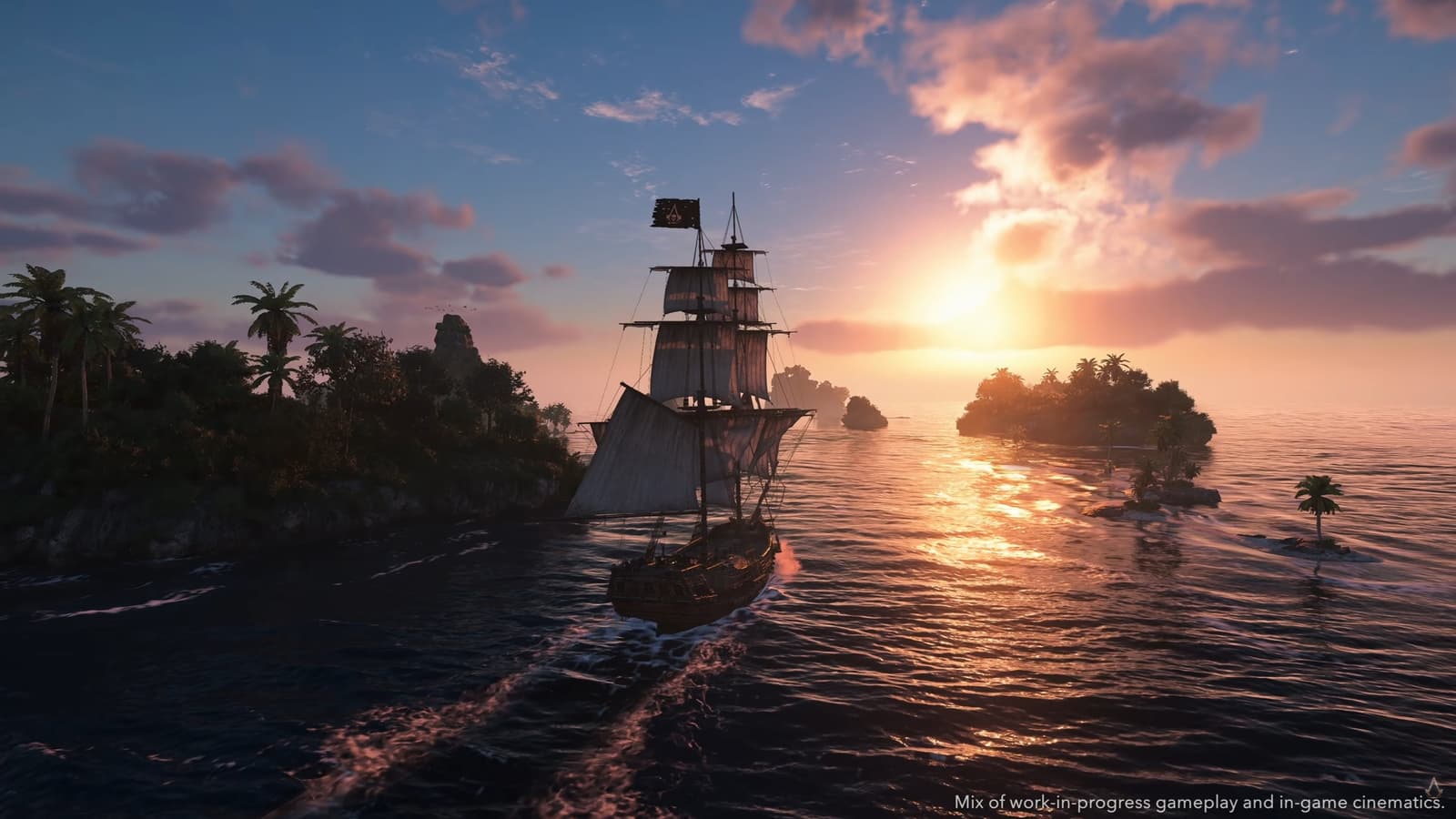
What is Resynced?
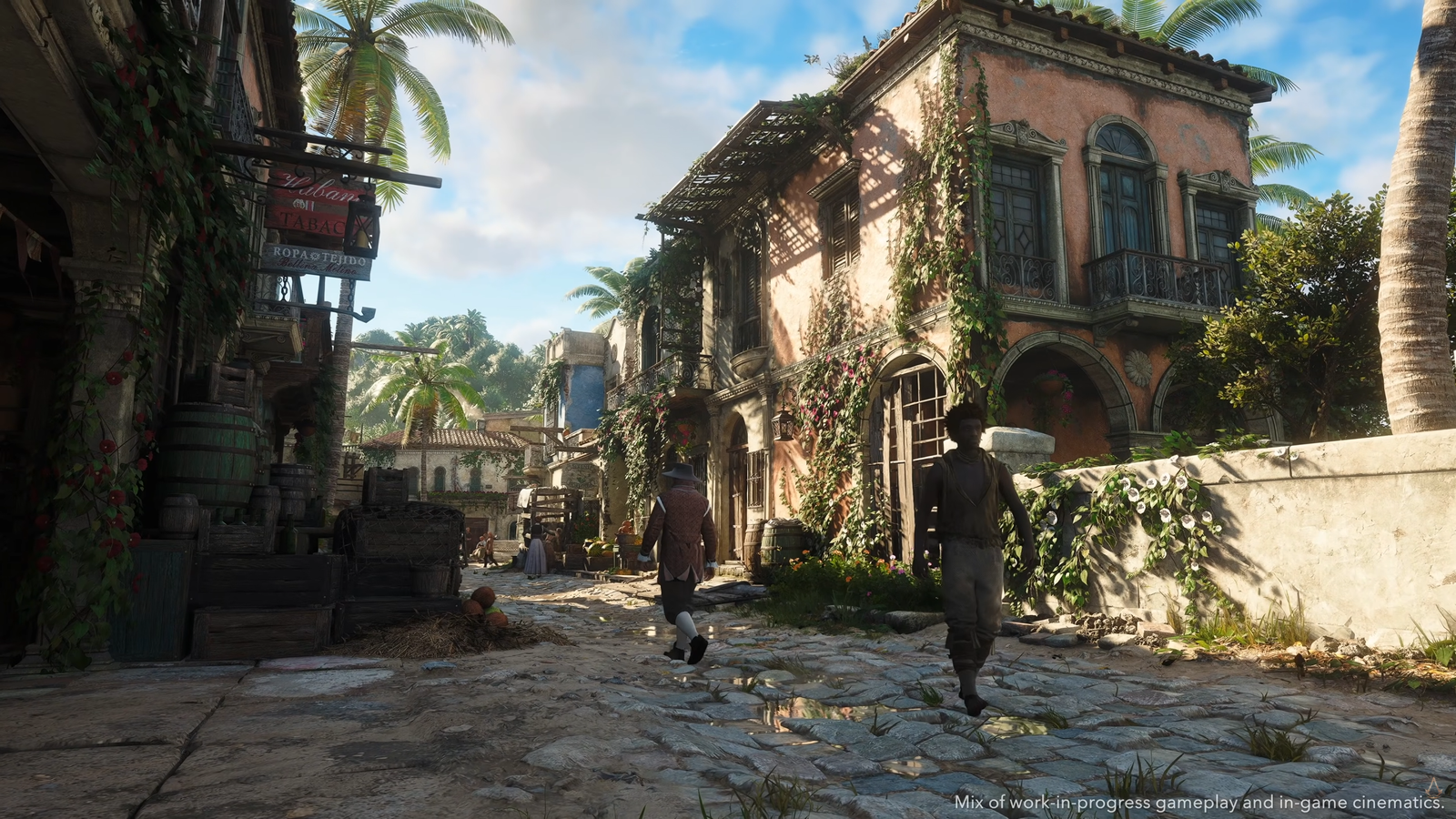
Ubisoft positions the project as a "remake faithful to the original," completely rebuilt from scratch on the latest version of the Anvil engine — the same one used in Assassin's Creed Shadows.
The key difference: this is not an RPG! The leaning toward role-playing elements typical of Origins/Odyssey/Valhalla/Shadows is absent. Game director Richard Knight emphasized: "From the very beginning, the intention was clear — to create a faithful and enriched experience based on what players loved."
Combat system
The combat mechanics were reworked from the ground up — they have become much faster, smoother, and focused on dynamic action instead of the slow original combat that was built around counterattacks.
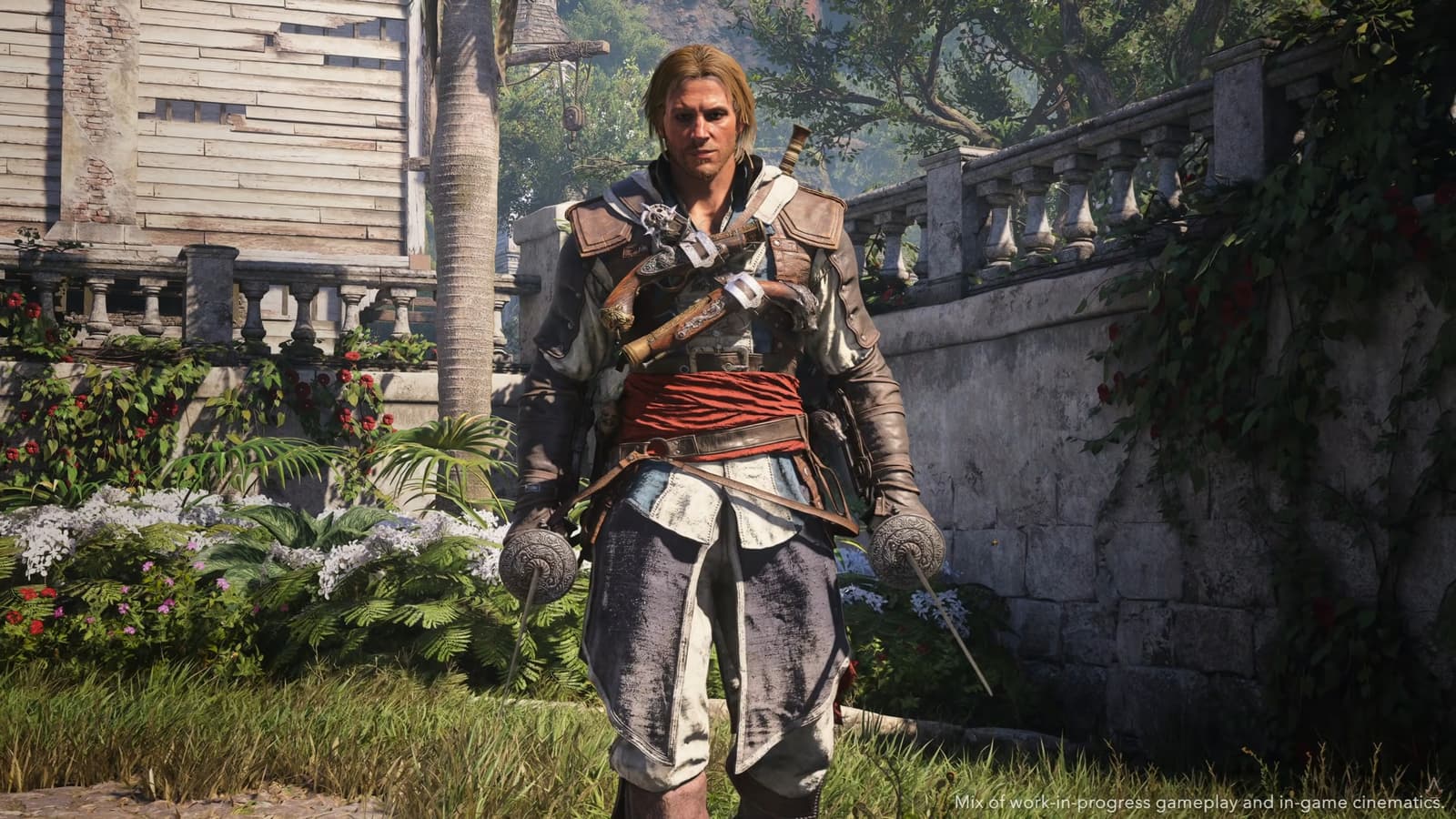
Edward uses three weapon types at once: dual swords, pistols, and hidden blades — each occupies a specific niche in combat. For quick switching between weapons and items, the developers added mini-menus in the lower corners of the HUD instead of abilities like in the RPG quadrilogy. The rope dart received a quick-throw mode to make it more dynamic to use in combat.
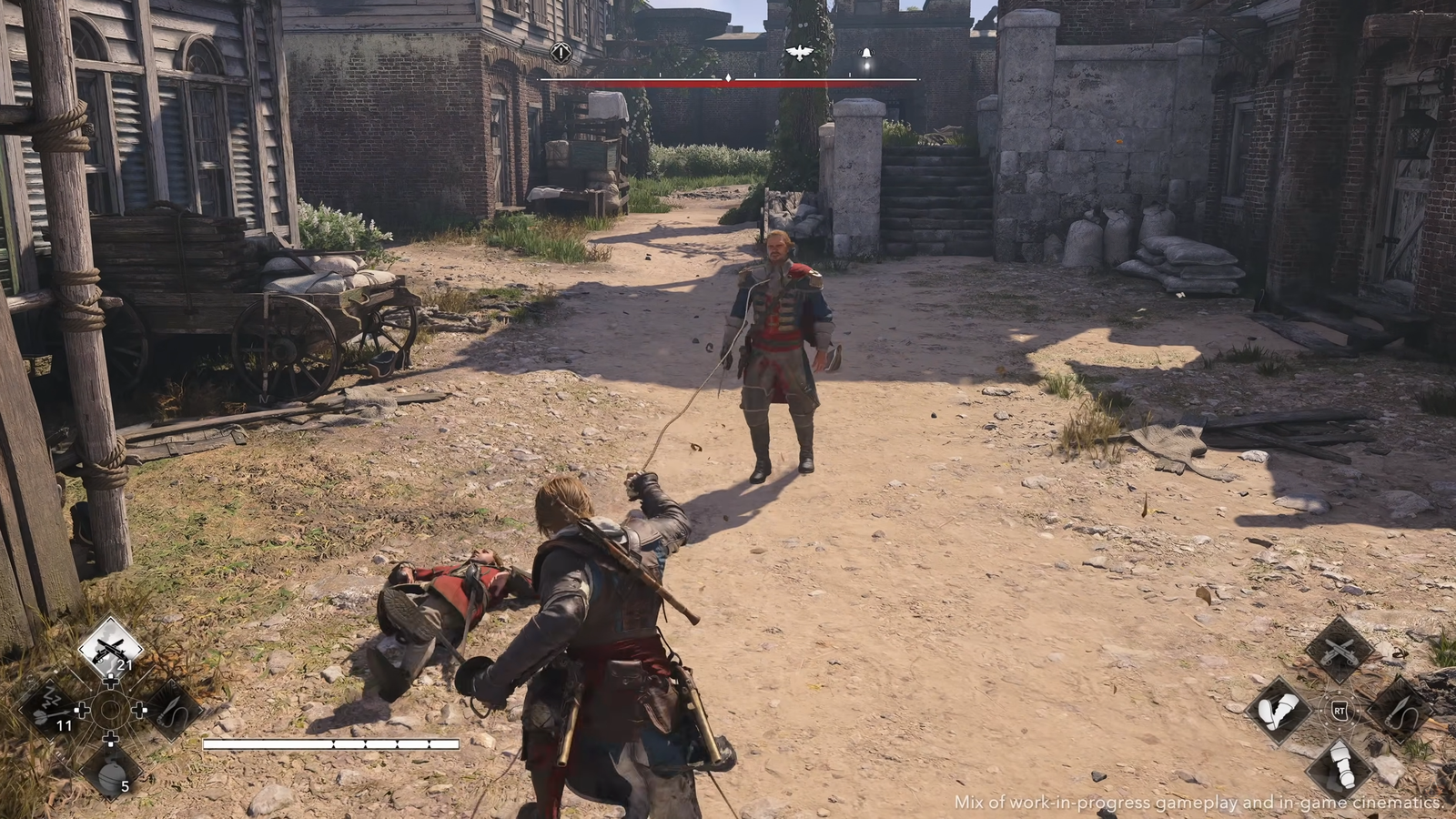
A perfect parry instantly opens an enemy up for a kill, after which a finisher chain begins — up to four enemies without interruption, sometimes with double-kill animations at once. This system is very similar to the counterattacks from the original, but spamming it will not work.
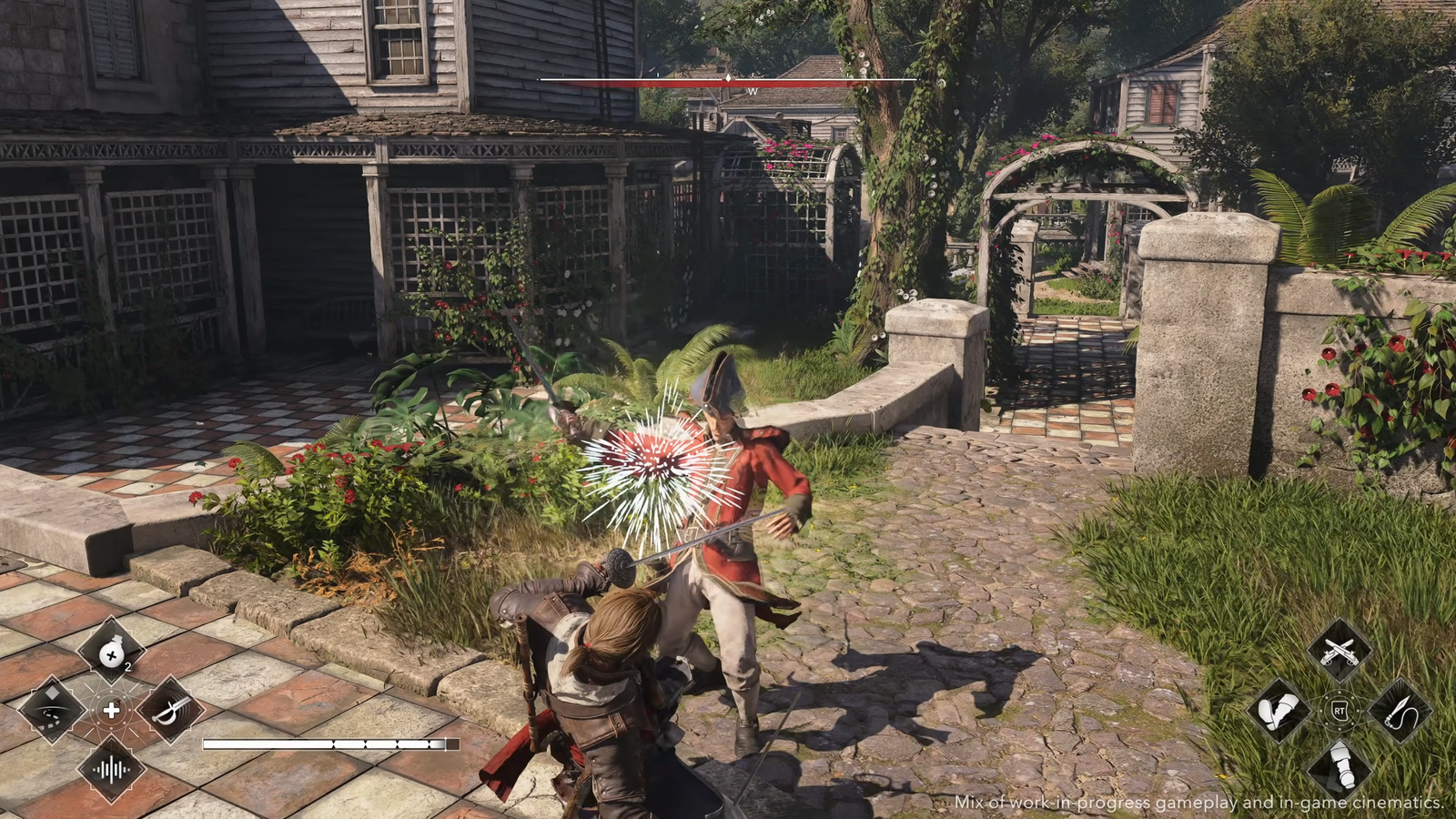
Walls, ledges, barrels, and any destructible objects have become full-fledged combat tools — enemies can be thrown into them or they can be used as cover. If the player fights carelessly, enemies will punish them inevitably: the new combat system requires thinking, not just spamming attacks.
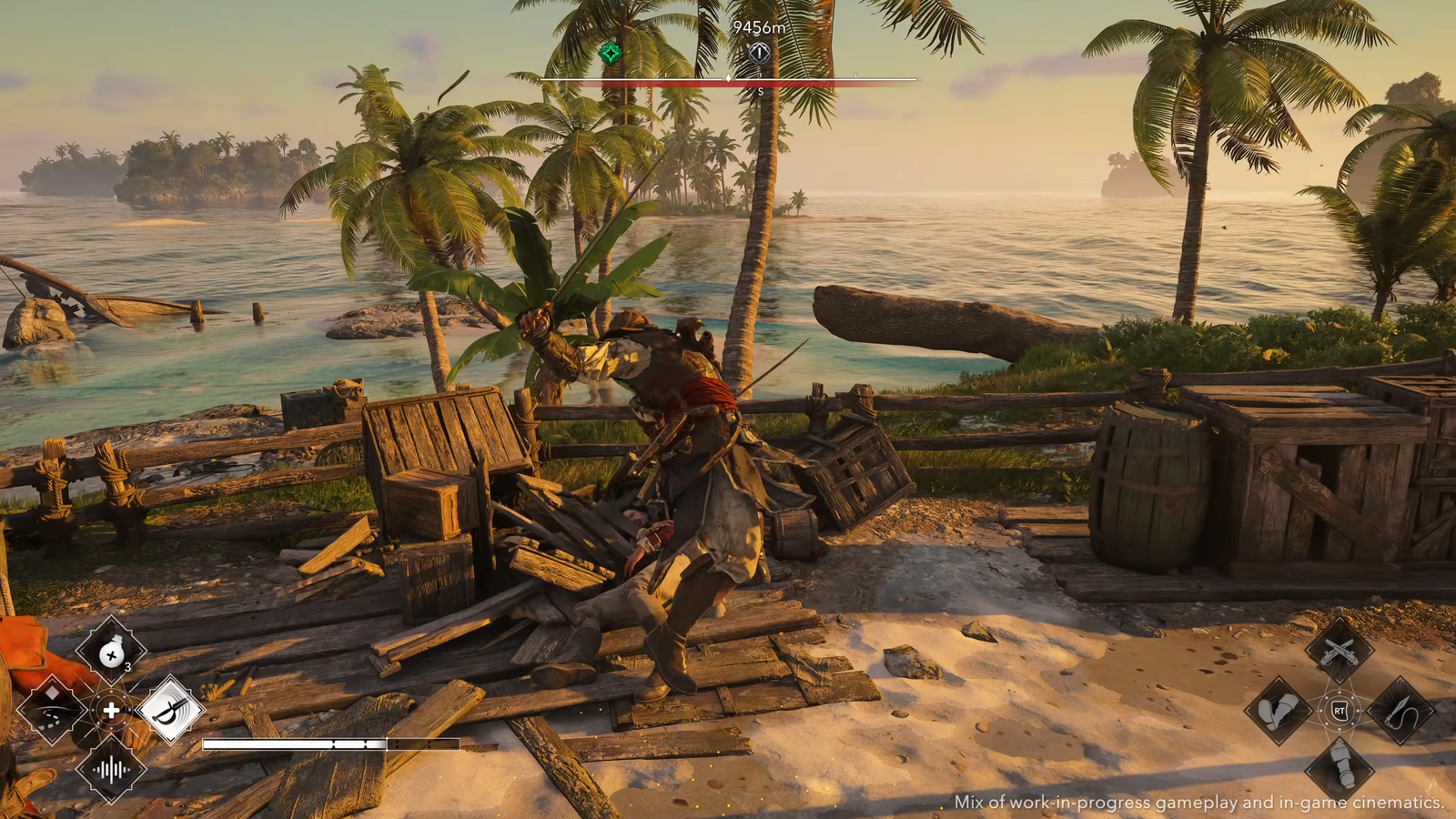
Color prompts have appeared on the screen to signal the type of attack, including unblockable strikes. This directly affects tactics — the player must read the fight visually.
And as a treat: the remake will feature the Demolitionist — a completely new enemy type that was not in the original. Moreover, each faction now has different equipment depending on whether it belongs to Spain or Great Britain.
Stealth
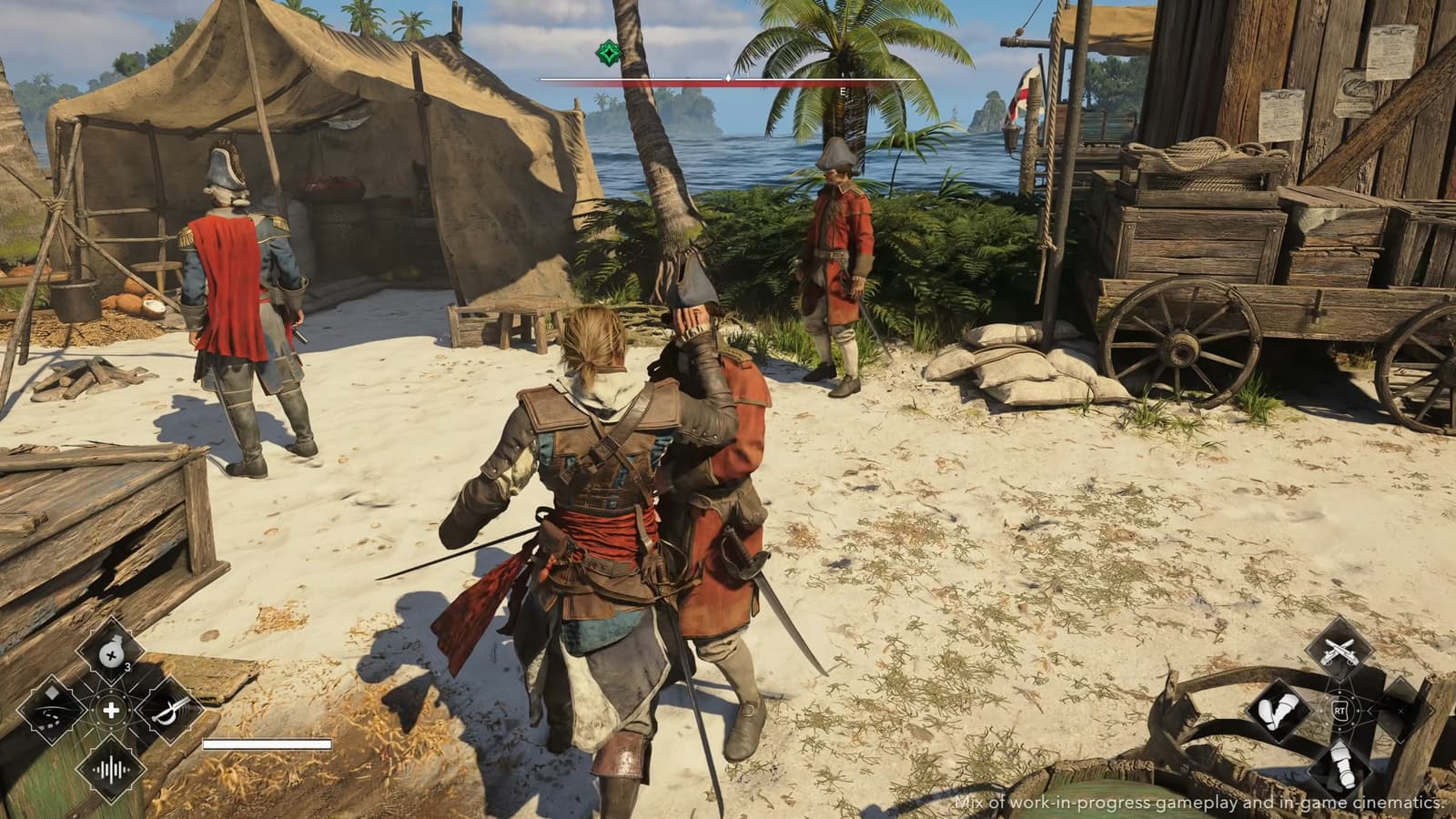
Now Edward can crouch at any moment, opening up new options for stealthy playthroughs. For the first time in Black Flag, shadows and low lighting directly affect the character's visibility — the darker the area, the less noticeable Edward becomes. This system was carried over from Assassin's Creed: Shadows.
The player will also be able to silently swim up to coastal fortifications and enemy ships, bypassing the entire security perimeter on land. According to Ubisoft, this opens up new possibilities during fort captures and boardings.
Eagle Vision has not gone anywhere either. Its expanded counterpart — Observe Mode — provides a significantly wider viewing angle, allowing players to mark targets and study the situation from much greater distances.
But the main change to stealth is the complete abandonment of instant failure in tailing missions and while eavesdropping. If Edward is spotted, the scene does not cut off: the target reacts dynamically — it may start a fight, run away, raise the alarm — and the player must adapt to the new situation on the fly. Ubisoft officially acknowledged that instant desynchronizations were a "major pain point" of the original.
Parkour
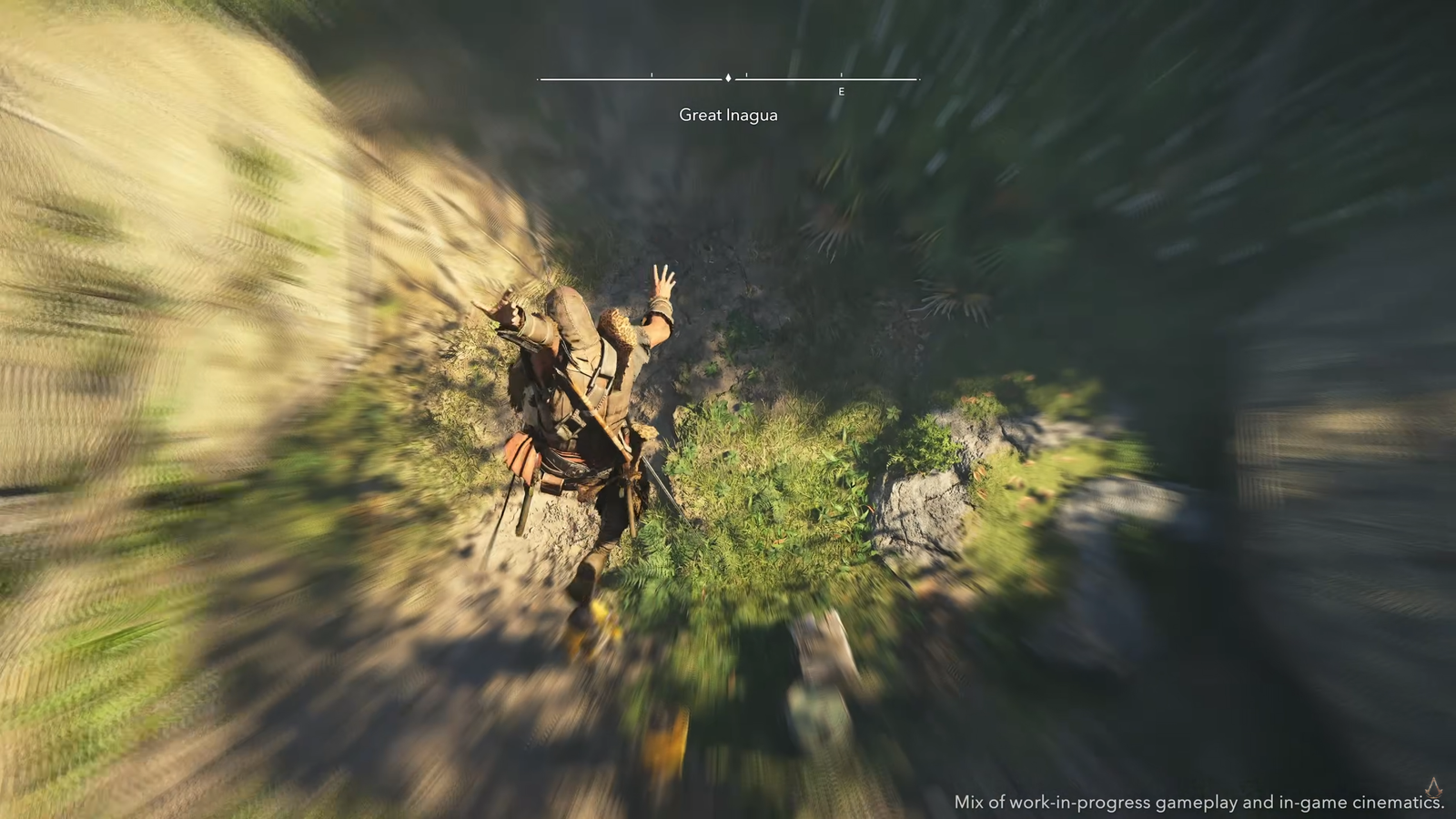
The system of fast movement through cities has been enriched with four new movement types while preserving its recognizable style:
- Manual jump — a jump with full trajectory control;
- Side jump — lateral evasions during parkour for quickly changing direction on walls and ledges;
- Vertical jumps — allow quick climbing onto buildings or jumping to ledges higher than Edward;
All of this is combined with accelerated transitions between parkour movements — without losing rhythm or momentum.
Taken together, the new techniques make parkour more responsive and faster, recalling the fluid feel of AC: Shadows. Interestingly, each new movement can also be used to initiate stealth kills — the developers have tied parkour even more tightly to stealth-elimination mechanics.
The Jackdaw and naval gameplay
New weaponry
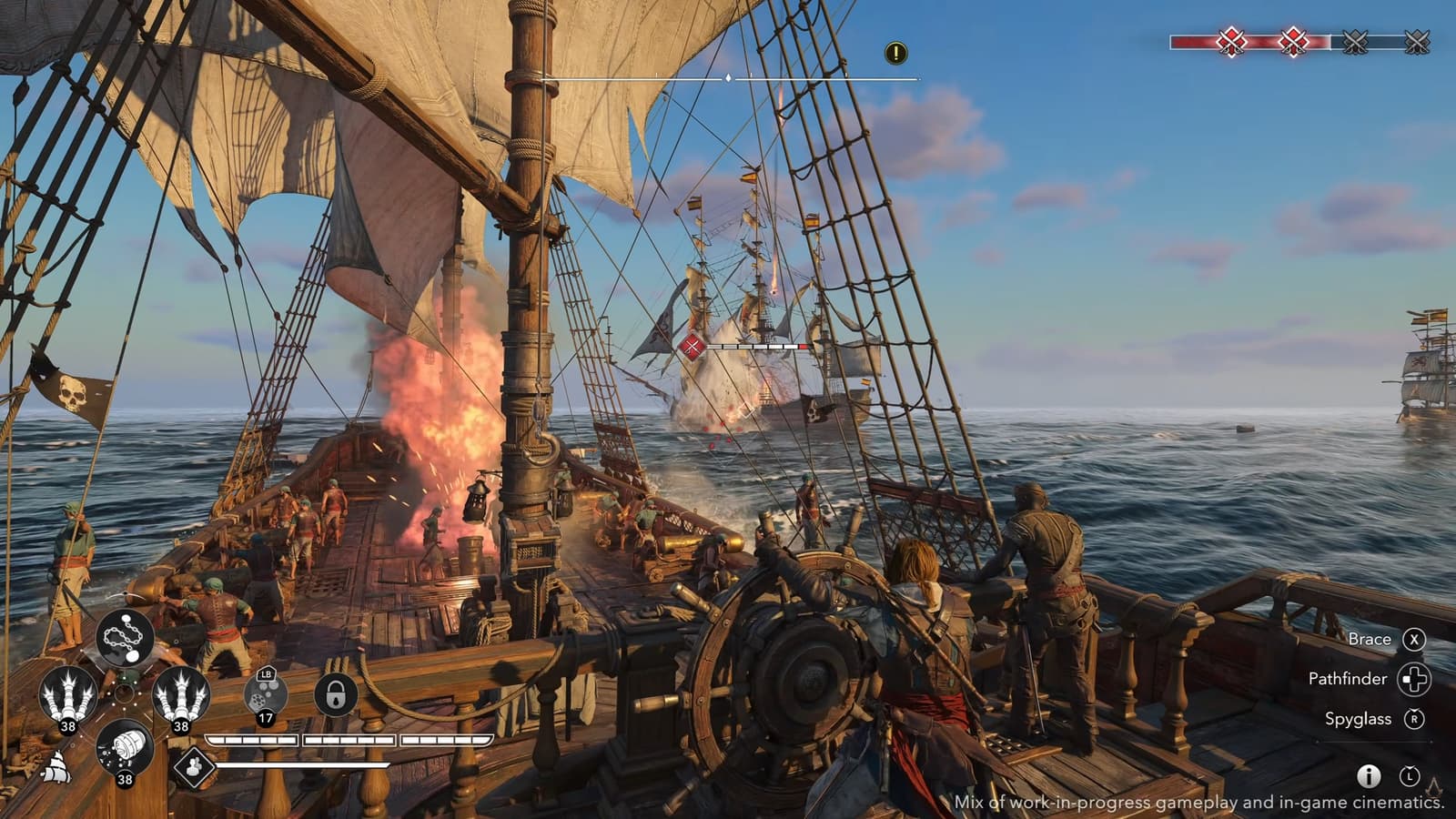
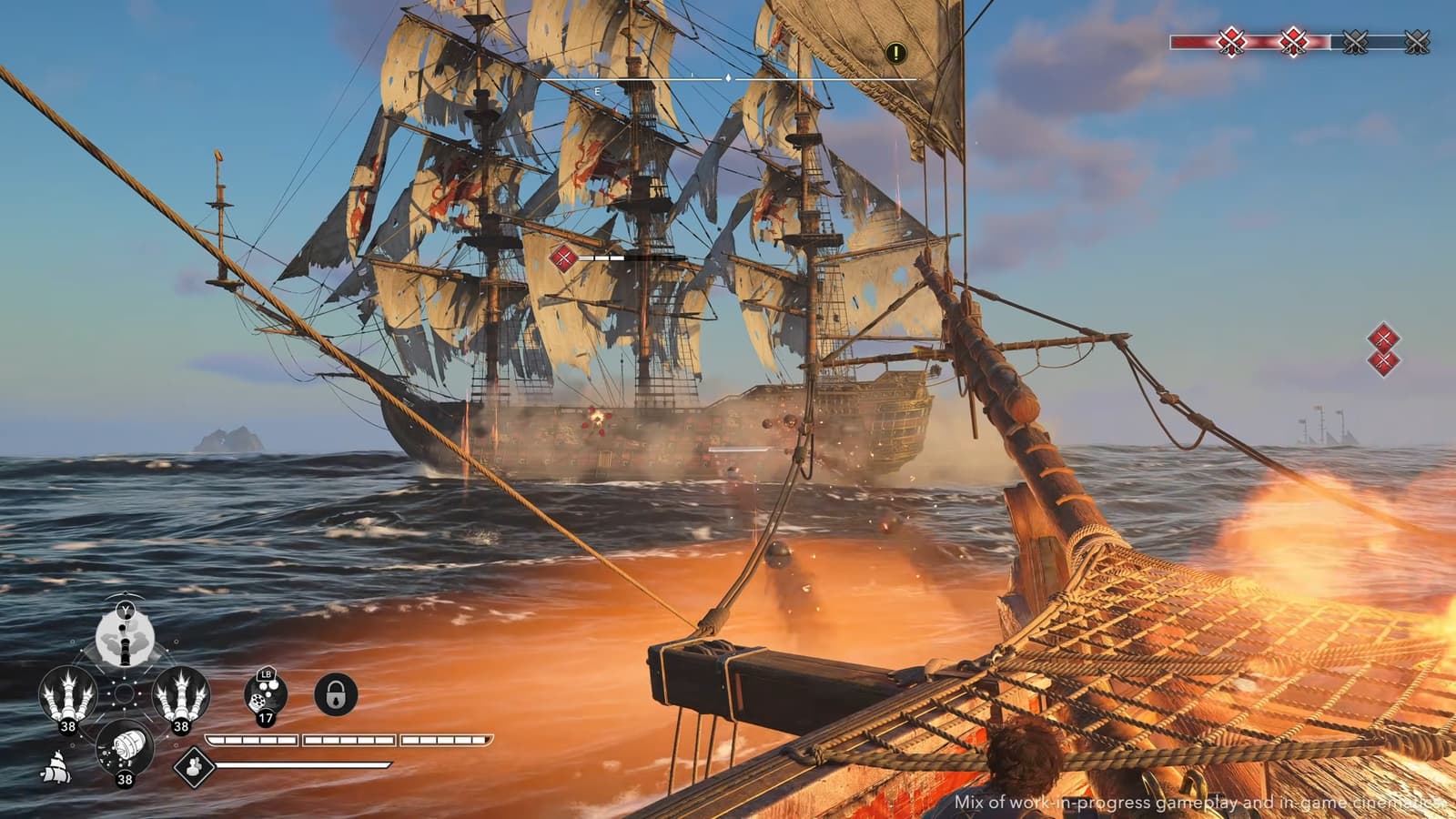
The Jackdaw's arsenal has received two new types of ammunition:
- Shrapnel barrels — when they explode, they damage enemy ships' sails, sharply reducing their speed and maneuverability
- 8-pounder cannons — they penetrate durable hulls and expose vulnerable points where a normal broadside is powerless
New officers and their abilities
Each of the Jackdaw's weapons has received an alternative fire mode, unlocked through new officers. For example, the officer Deadman Smith unlocks the ability to fire a double broadside — double damage to a single target.
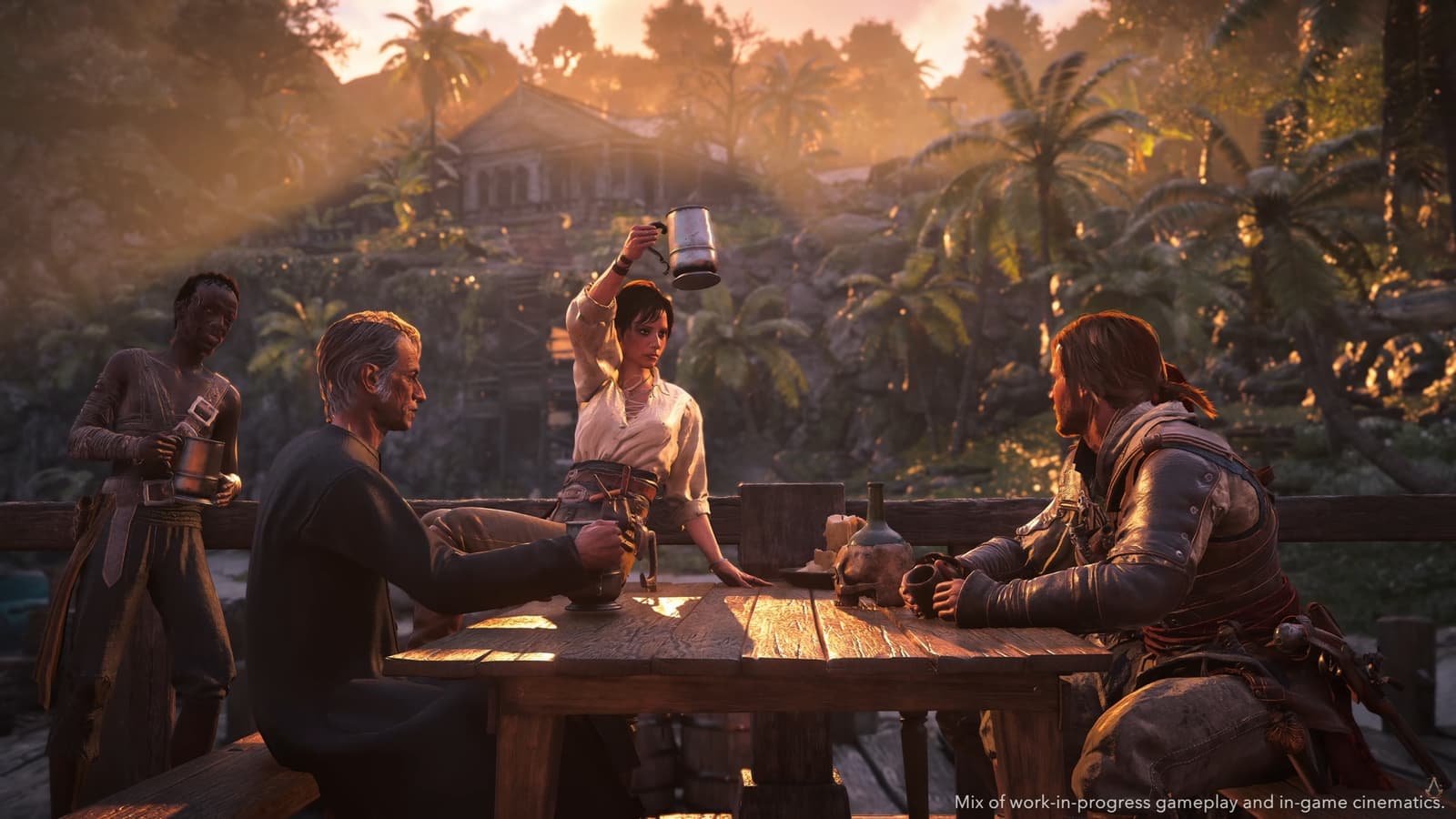
Other officers presumably unlock different alternative modes:
- Lucy Baldwin — with her own unique quest chain and combat ability;
- Padre — a priest with a dark past and his own combat capabilities;
Each officer has an independent story chain — you need to earn their trust to recruit them to the ship.
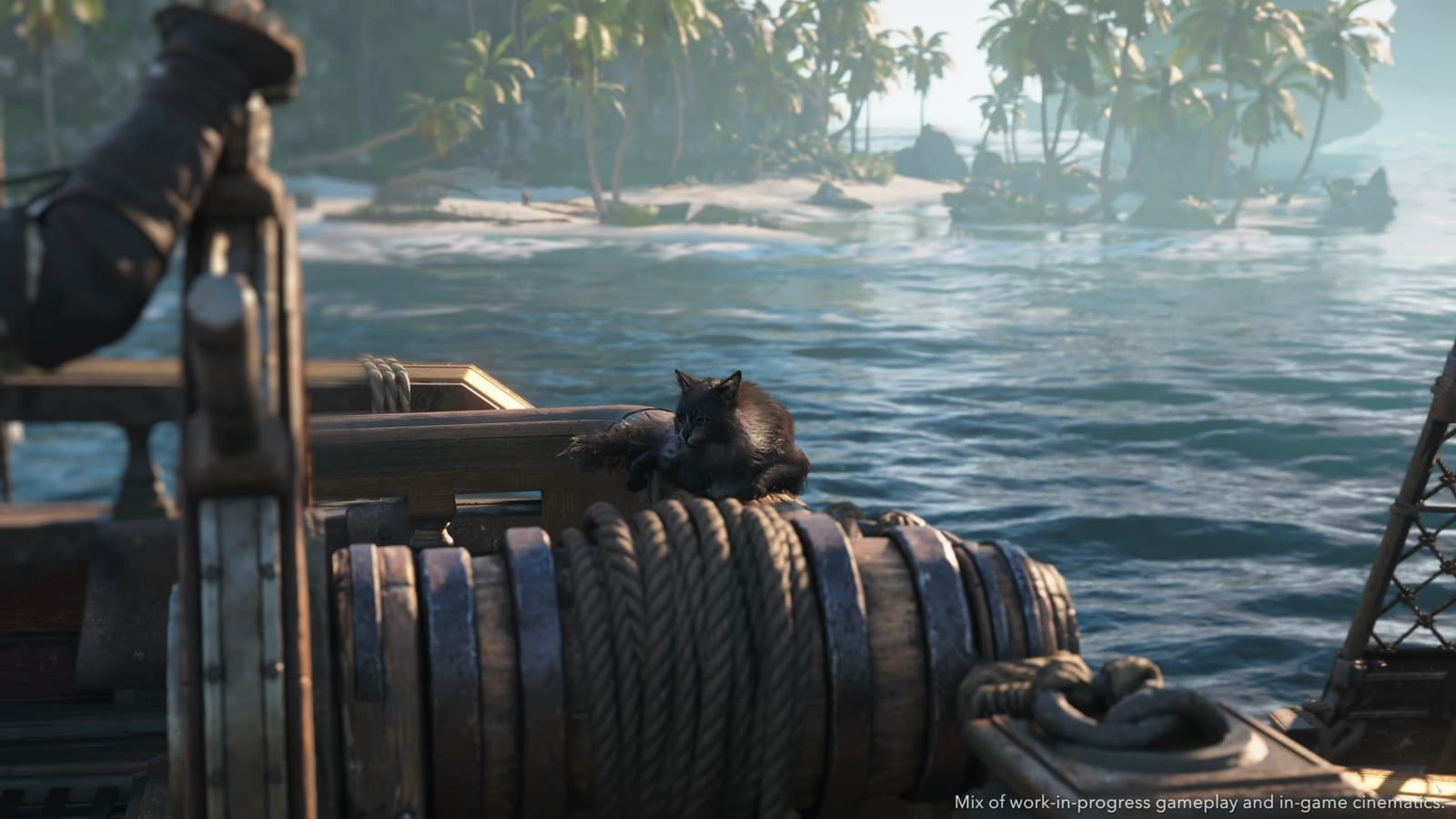
For the first time in the series, you can take a pet aboard — a cat or a monkey — to accompany Edward while sailing.

Black Flag Resynced will also feature 10 new sea shanties — the original ones will return as well.
Kenway's Fleet
The mini-game about managing a captured fleet has been reworked — it is now available in all versions of the game, including cloud streaming. Rare activities and trade routes have been added, and the interface has become significantly more convenient.
Dynamic weather
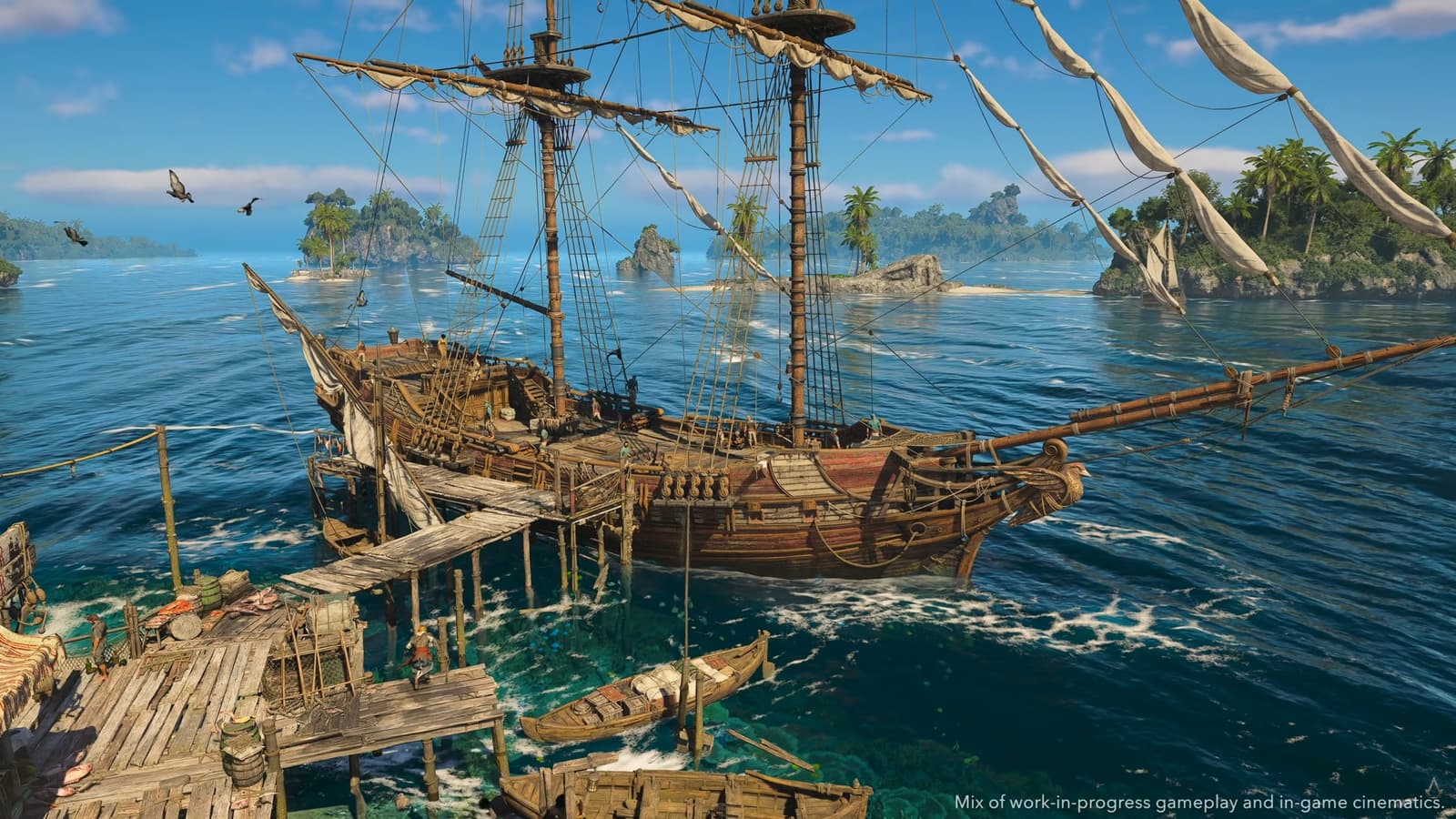
The Atmos Engine makes weather a "full-fledged character in the game": raging storms with wandering waves; sails that truly billow or tear in the wind; coconuts rolling across the deck during a storm; objects on the ship's sides breaking from enemy impacts. The water physics have been completely recalculated — the vessel's behavior on the waves has changed noticeably.
Exploring the Caribbean archipelago
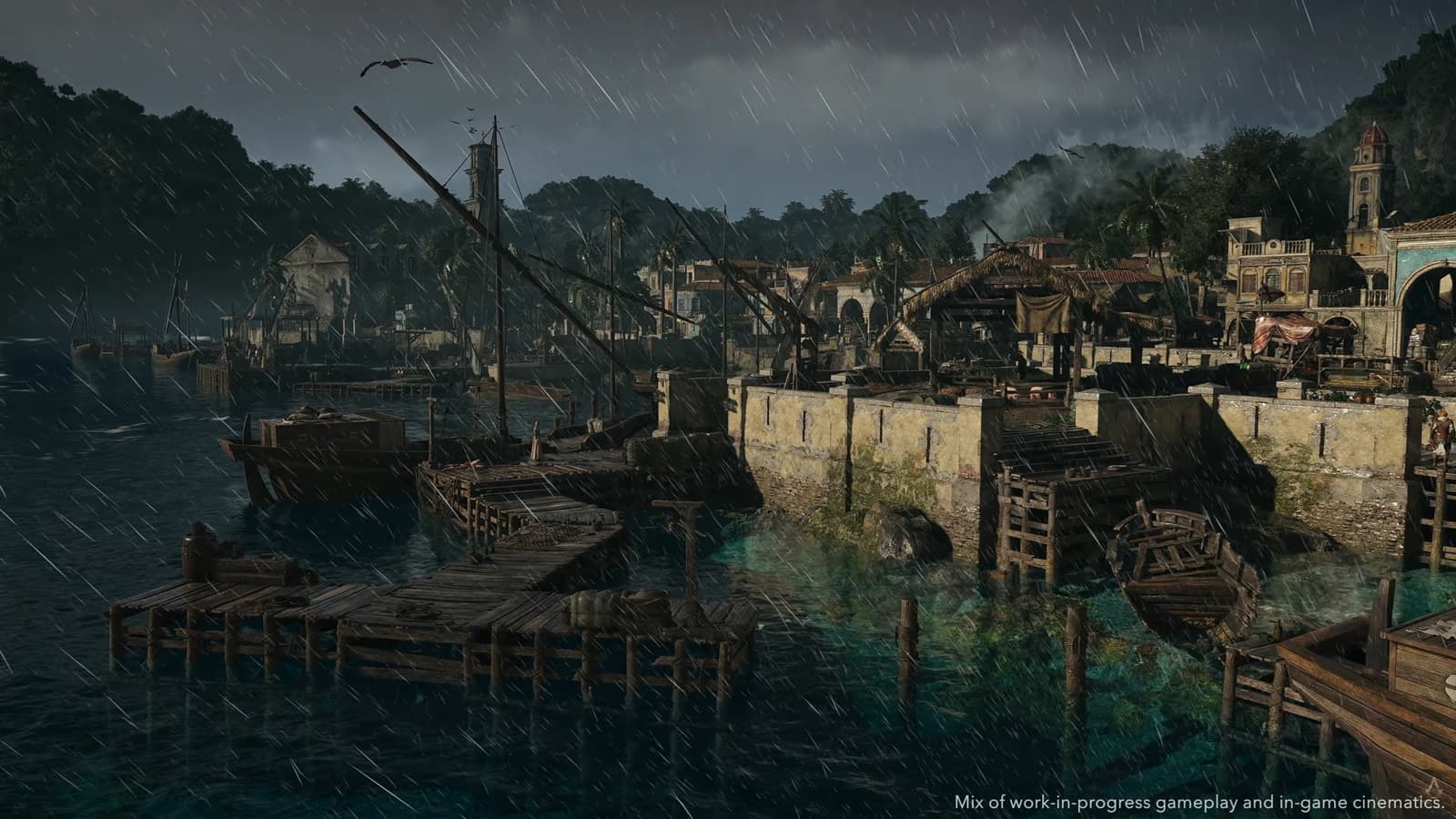
One of the developers' key technical priorities is the complete absence of loading screens when transitioning between sea and land.
Game director Richard Knight described the goal directly: "We wanted seamlessness — a single flow of movement, combat, and navigation, without any friction between the pirate and assassin fantasy." In the 2013 original, landing on shore technically interrupted naval gameplay; in Resynced, it is merged into a single continuous flow.
Islands and plantations
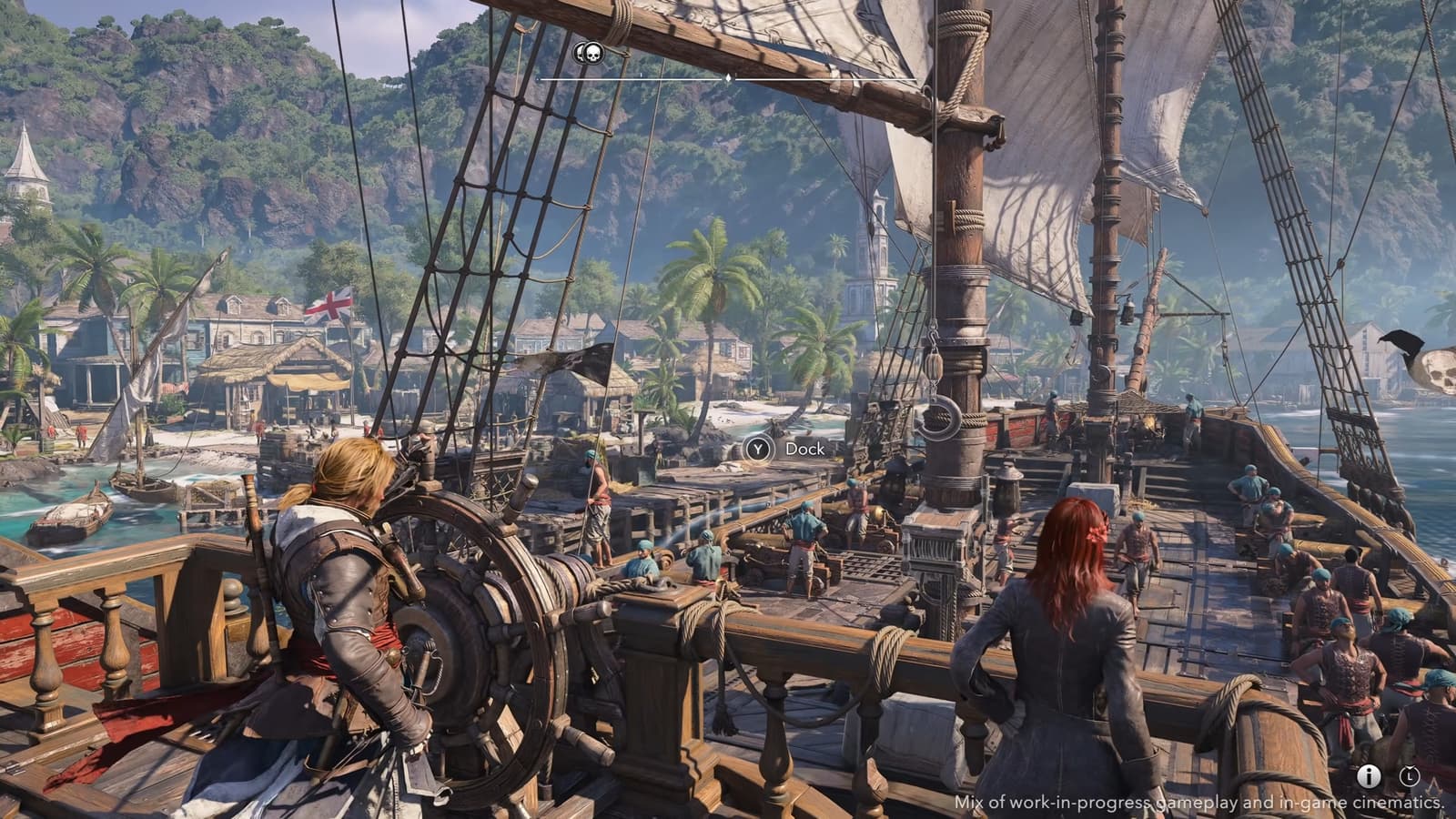
Plantations and islands have been reworked: rewards have been expanded, and unique encounters and events have been added on islands across the map. Every place you visit now offers unique content, rather than just repetitive tasks or collectible gathering.
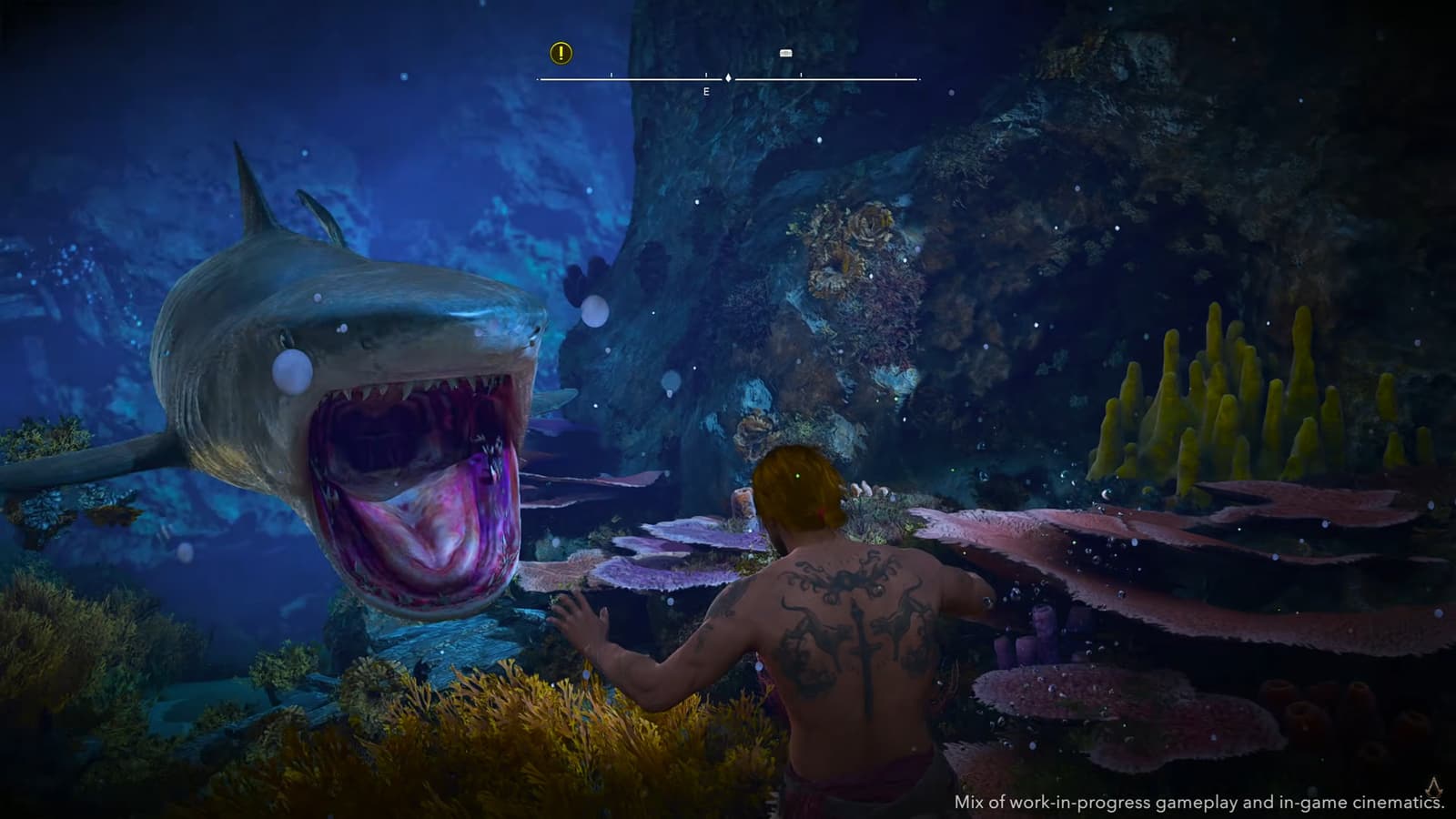
Underwater world
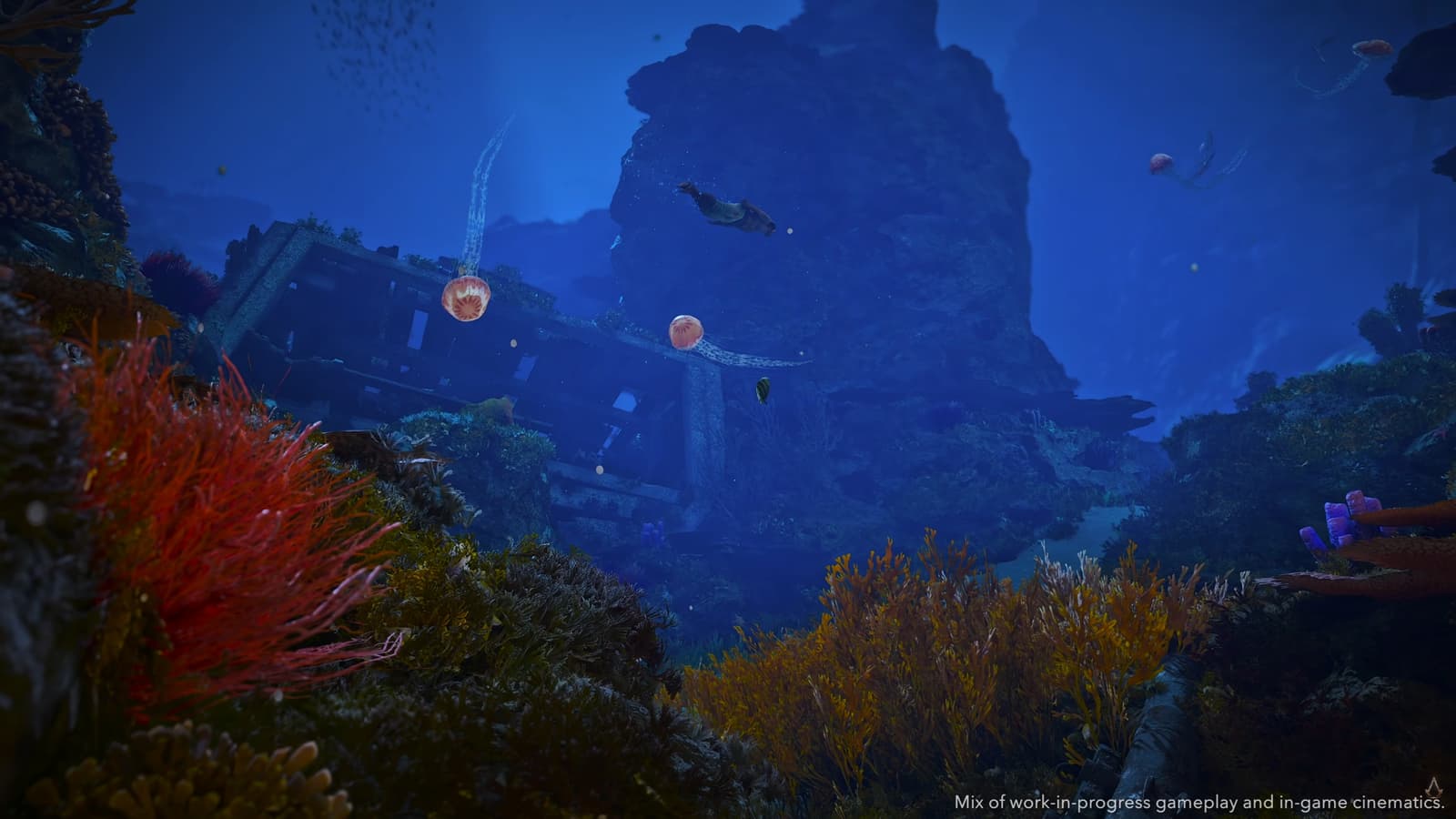
Ubisoft officially confirmed that underwater exploration has become "broader, more beautiful, and more dangerous."
The technology of the new Anvil engine made it possible to significantly improve the detail of the seabed, diversify underwater ecosystems, and enrich the interiors of sunken ships.
Apparently, it is now also possible to interact with enemies underwater, although Ubisoft promised to reveal details of this system in the coming weeks.
Engine and core technologies
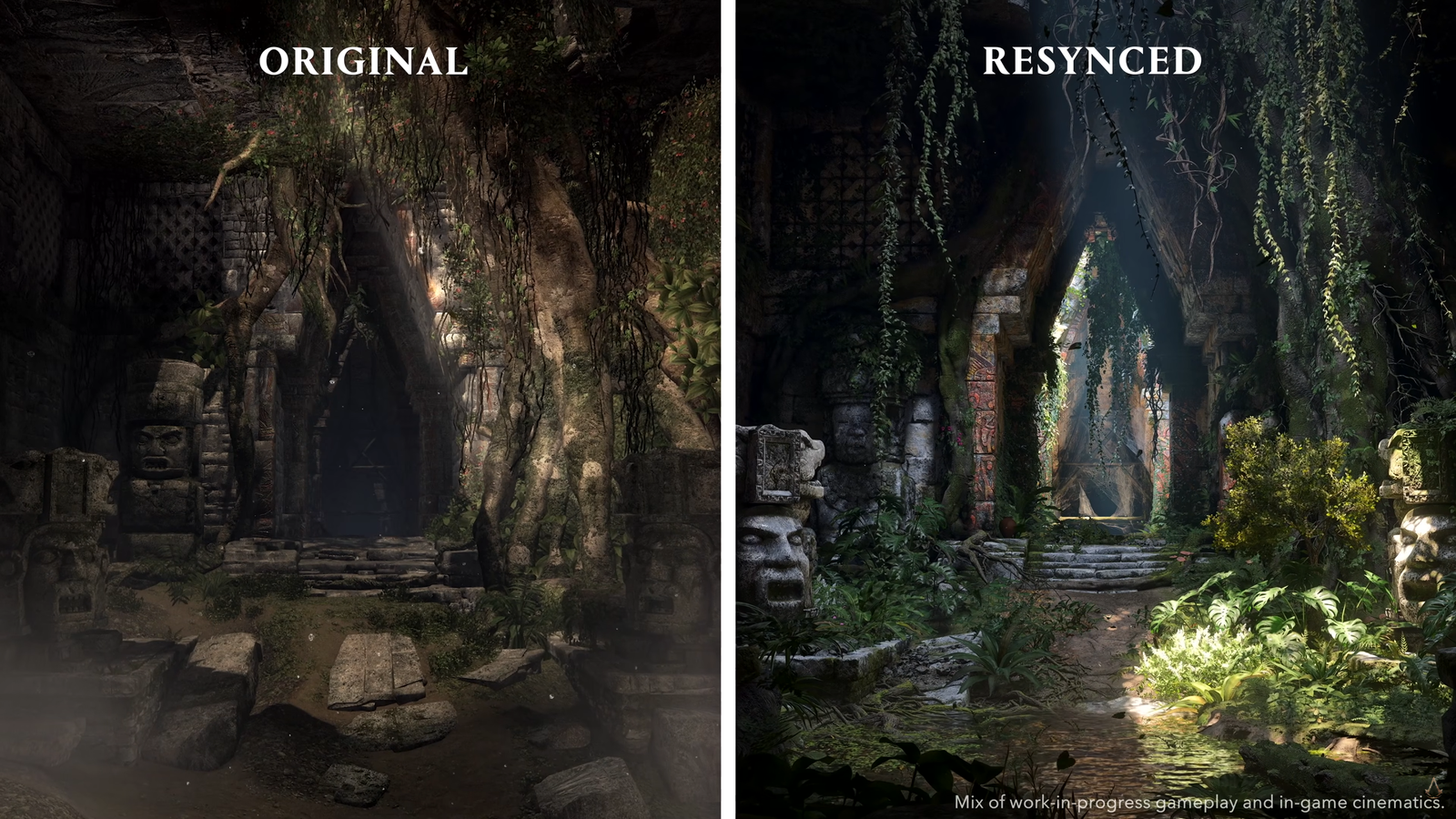
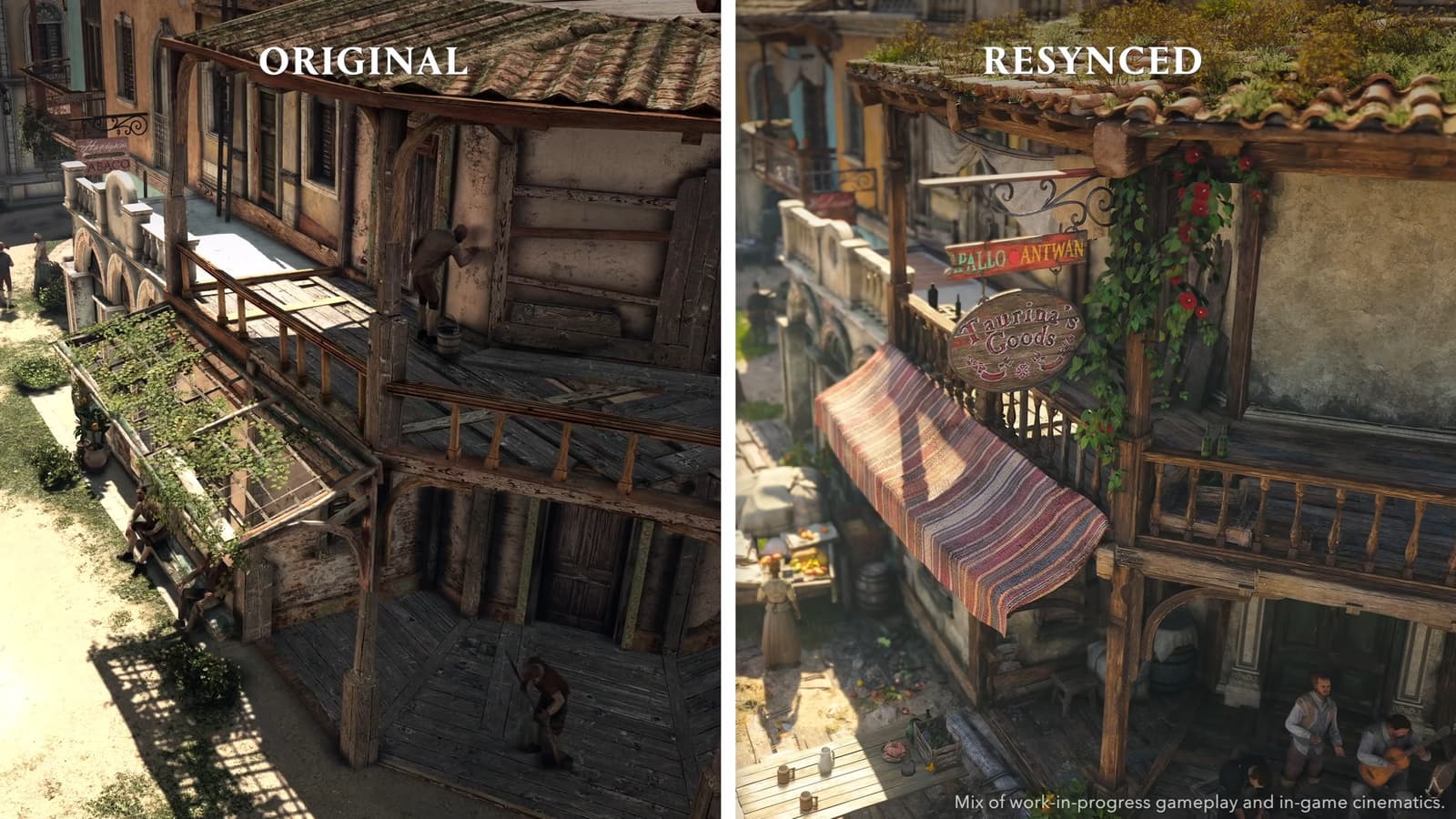
The game is built entirely from scratch on the latest version of Ubisoft's proprietary engine — the Anvil Engine of the same generation as in Assassin's Creed Shadows. This is not a port and not an upgrade of old code — all graphical assets (models, textures, shaders) were created anew for two key rendering technologies:
- Micropolygon rendering — ultra-precise geometry tessellation that makes it possible to reproduce the tiniest surface details (ship wood, Edward's leather cloak, coral reefs) without pixelated "jaggies"
- Physically Based Rendering (PBR) — a physically accurate lighting model in which materials react to light the same way real objects do: metal like metal, fabric like fabric
All water (ocean, rivers, rain, underwater sections) has been completely redrawn — both simulation and rendering.
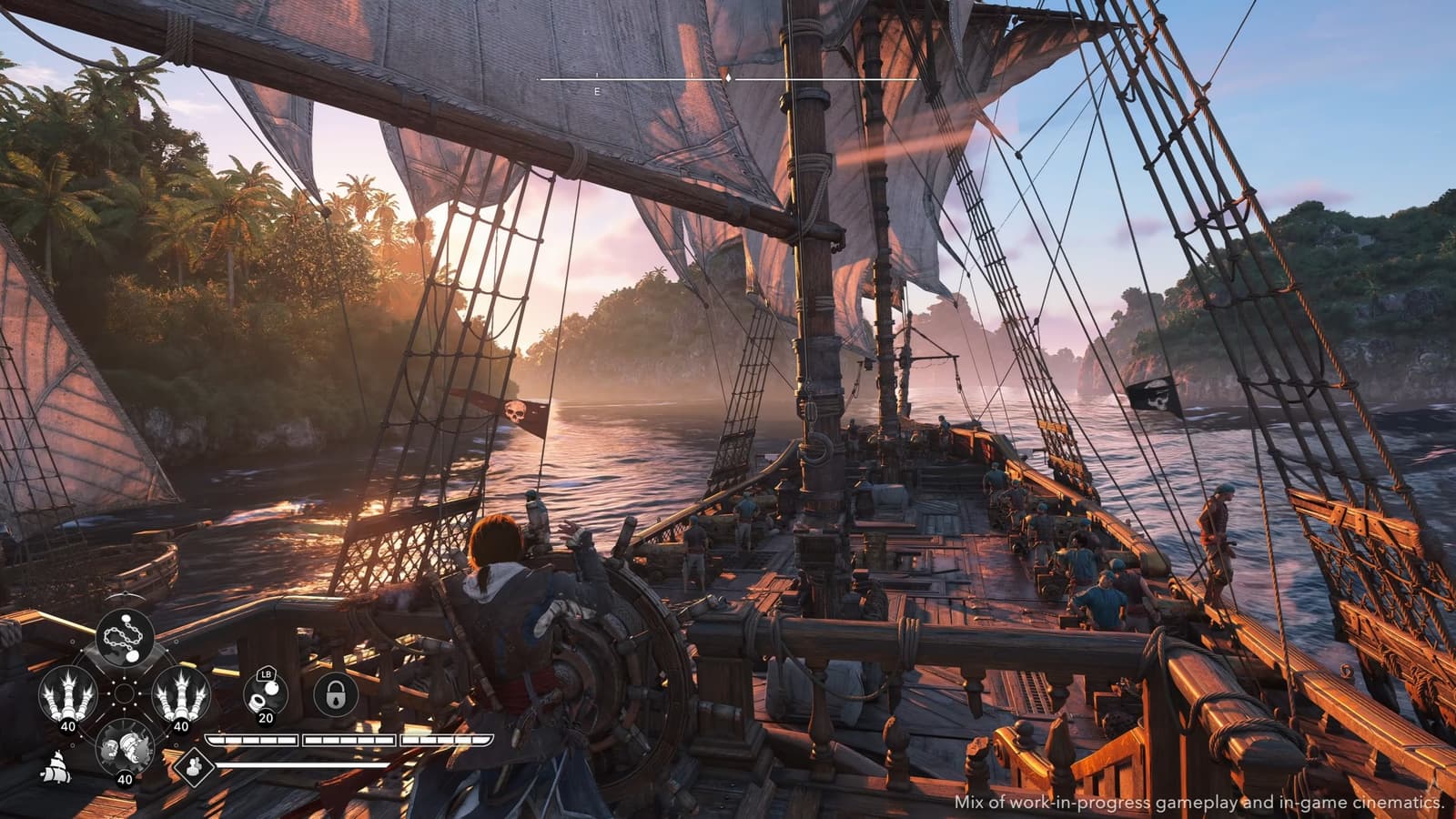
The developers preserved the original motion-capture data and reused it wherever possible — similar to the approach of The Last of Us Part I and MGS Delta.
At the same time, all cutscenes were fully re-voiced and re-recorded from scratch at Ubisoft Toronto with Matt Ryan and the entire original cast. Ryan noted that the scenes feel just as dynamic as in the original — characters interrupt each other, pass objects around, and react physically.
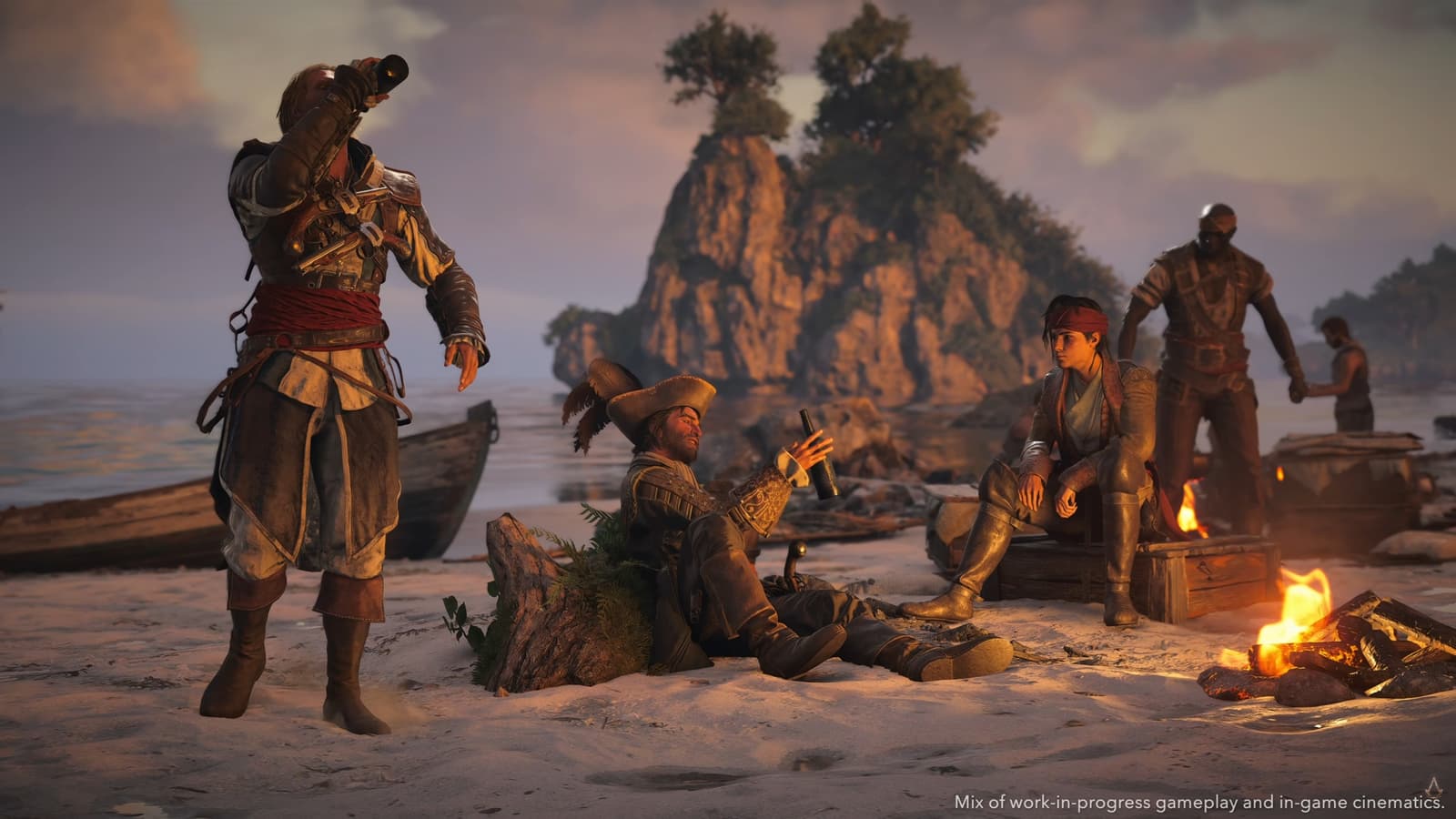
Particular mention was made of the painstaking work on facial animations: "Every little moment had to be rebuilt by hand — that is the soul of the game."
PC system requirements
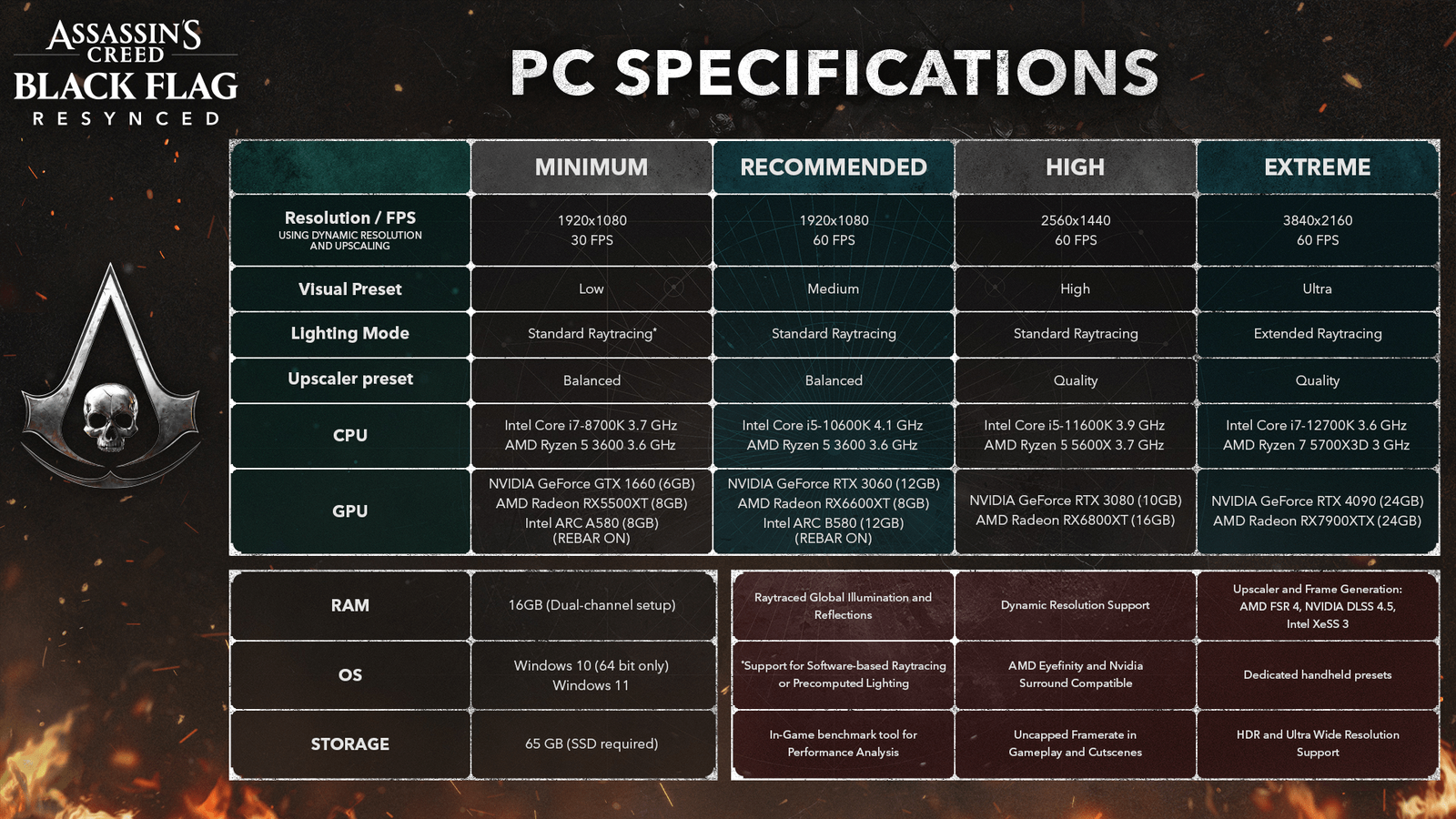
Windows 10/11 and an SSD are mandatory — HDD is officially unsupported. At the same time, only a one-time internet connection is required during installation, after which the game works entirely offline without checks.
Separate graphics presets are provided for handheld PCs (Steam Deck, ROG Ally, and similar devices), optimized for handheld hardware.
The game supports all current upscaling and frame-generation technologies: DLSS (Nvidia), FSR (AMD), XeSS (Intel).
Two types of ray tracing
Ubisoft has implemented two ray-tracing modes, which appear in the system requirements:
| RT Mode | How it works |
| RT Standard | Ray-traced global illumination (RTGI) — realistic shadows, secondary light from surfaces |
| RT Extended | RTGI + ray-traced reflections — accurate mirrors on water, metal, and glass |
For weaker graphics cards without hardware RT acceleration (for example, GTX 1660), software ray tracing has been implemented — a software solution that provides some RT effects without hardware support. This is the first such case in the Assassin's Creed series.
PlayStation 5
There are three graphics modes available on PS5:
| Mode | FPS | How it works |
| Performance | 60 FPS | RTGI enabled, reflections without RT, reduced render resolution |
| Balanced | 40 FPS | Requires a 120 Hz display; quality is like Fidelity, but the upscaler targets 40 FPS |
| Fidelity | 30 FPS | RTGI + ray-traced reflections, maximum resolution, best draw distance |
The key point: RTGI is present in all three modes on PS5 — this is a major step forward compared to AC Shadows, where ray-traced lighting was disabled in Performance mode.
DualSense haptic feedback and adaptive triggers, Tempest 3D Audio, and fast SSD loading are supported.
PS5 Pro
The PS5 Pro version has received special extended optimization:
- Improved graphics rendering in all modes — thanks to the more powerful GPU;
- PSSR — Sony's proprietary upscaler will be available right at launch;
- Full ray tracing will be available in Performance mode — meaning the Pro delivers maximum RT at 60 FPS.
Where to watch for yourself
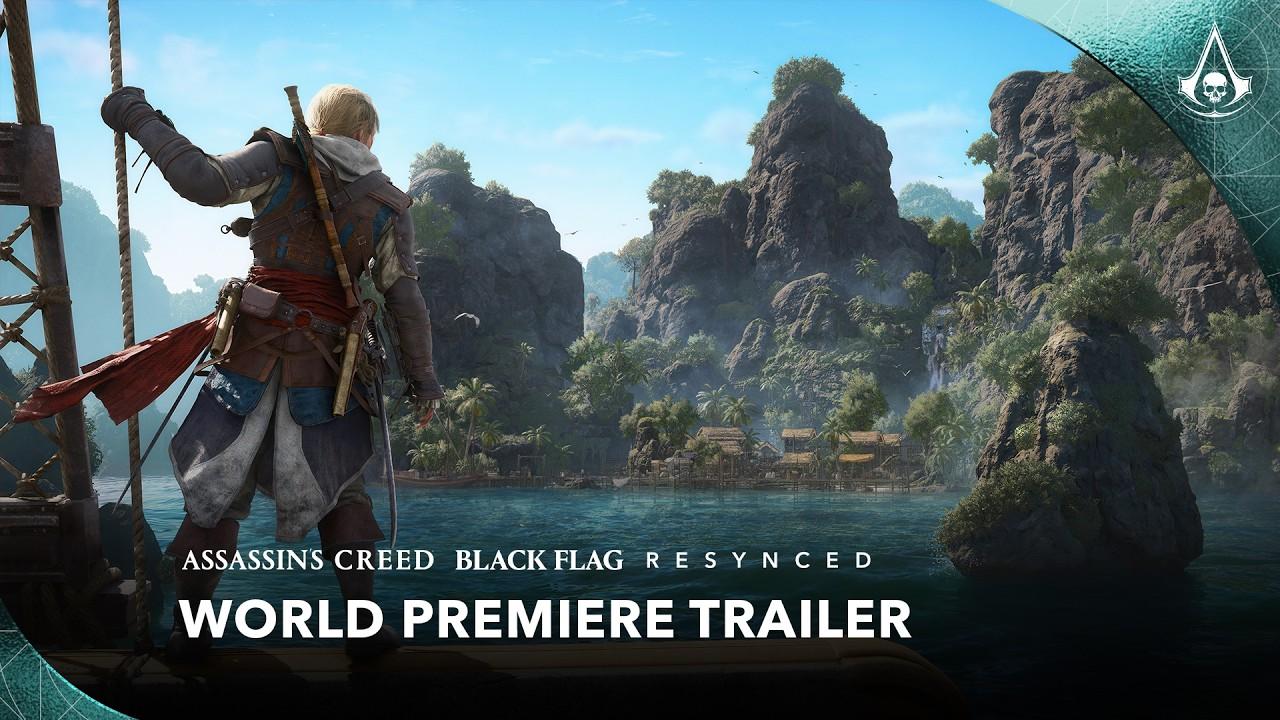
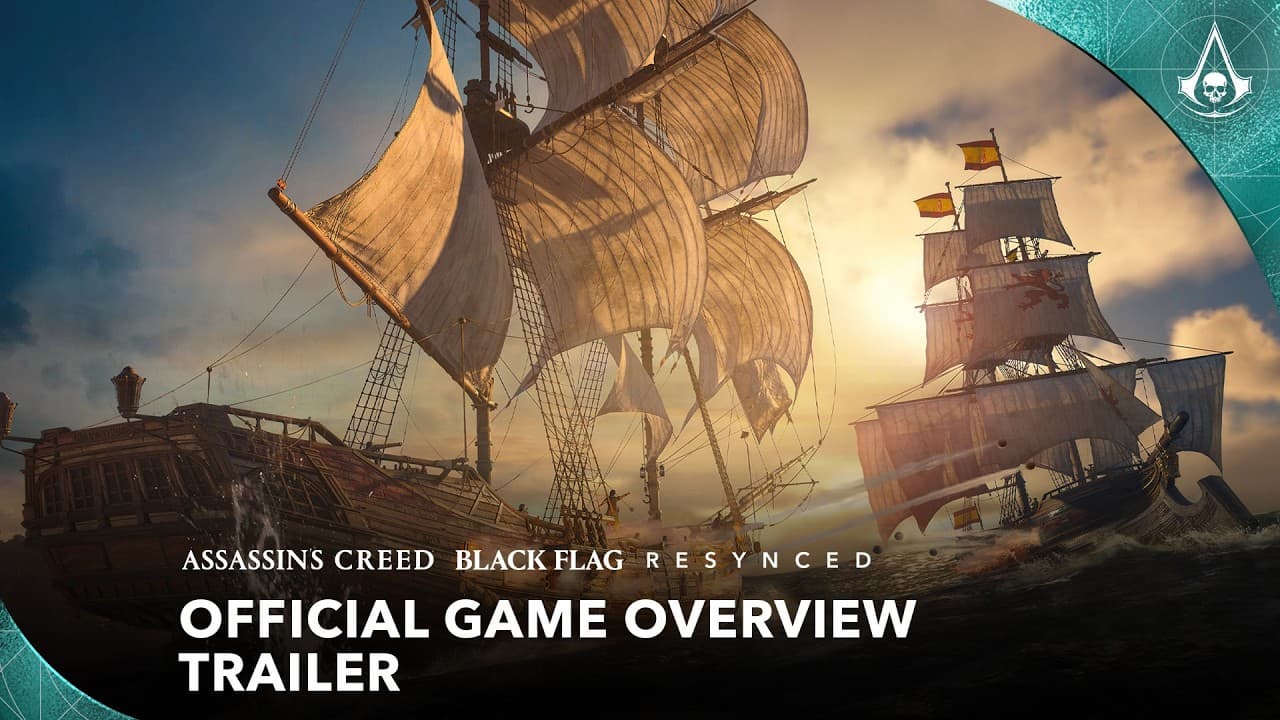
Due to technical work on the site, videos may not display in the article. Click on the trailer title if you do not see the embedded video — we have duplicated the links for your convenience.

Never miss our newsAdd this site to your preferred sources to see us more oftenAdd on Google