The second season of the animated series about Lara Croft from Netflix once again follows a well-known formula - ancient artifacts, a global threat, travels to different parts of the world. But this time, the "familiar" quickly turns into the "secondary." Especially against the backdrop of how Netflix is once again trying to tell an extraneous story, hiding behind an iconic character and stubbornly stepping on the same rake.
Familiar Rake, New Route
The second season of Legend of Lara Croft begins shortly after the end of the first and formally continues the line built after the Survivor trilogy. Structurally, this is a direct continuation, but from the very first episodes there is a feeling of déjà vu. The story is again built around ancient artifacts with limitless power and an influential benefactor who offers Lara help for the sake of a "high goal."
The focus is on the Pithos organization and its head Mila — a billionaire who preaches the ideas of "ethical archeology" and the "green agenda," in short, everything "good" for the sake of saving the world and other "blah-blah-blah." Under the guise of returning stolen relics to their rightful owners, she offers Lara resources to search for the ritual Orisha masks from Yoruba mythology, which are supposedly to be returned to Benin.
By a coincidence convenient for the script, one of these masks is found in the collection of Lara Croft's father. The artifact is formally transferred to the museum, but this does not stop the heroine. Lara goes to steal, seeking to transfer the relic to Mila as soon as possible and thereby "correct" the mistakes of the past. It soon becomes clear that good intentions were only a cover, and Lara herself once again acted as a convenient tool in someone else's game.
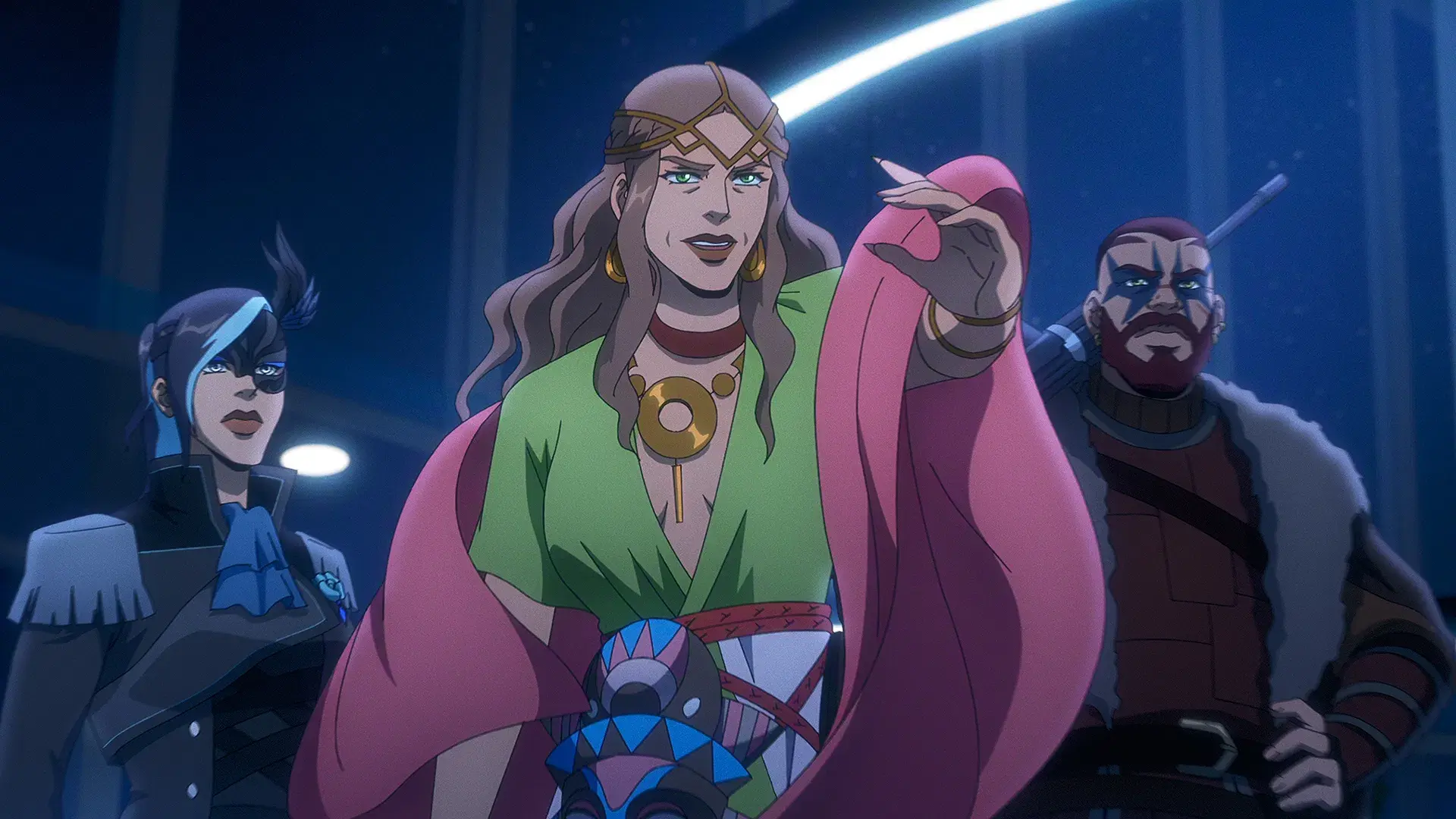
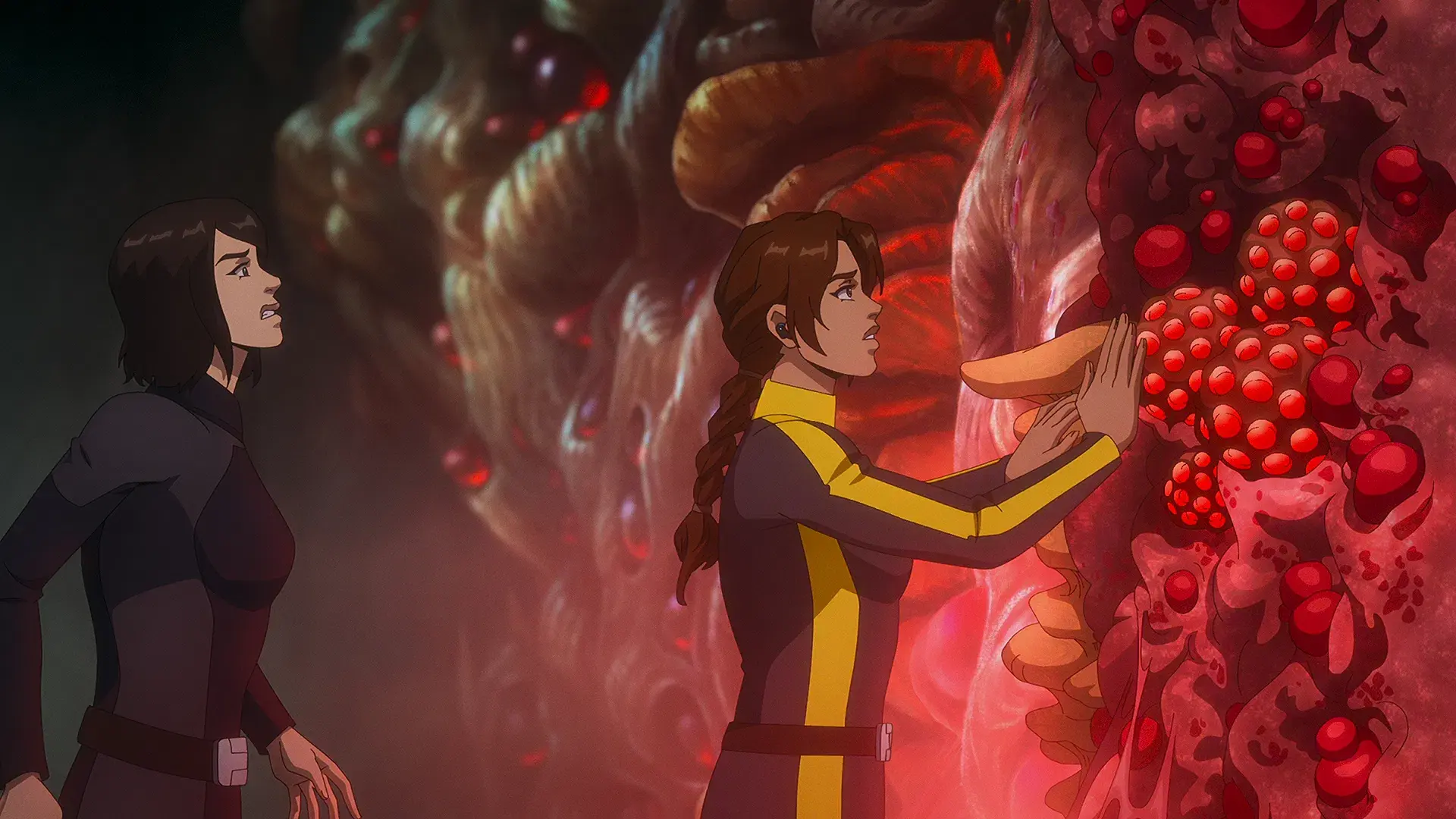
Having received the mask, Mila drops the image of a benefactor — in the literal and figurative sense. She reveals the plan and declares the goal of collecting all the Orisha masks in order to reshape the world according to her own vision. Already in the finale of the first series, Mila puts on the Oko mask, the goddess of fertility, acquires the ability to command the earth and without hesitation destroys an entire village along with the former owner of the artifact.
The story again boils down to a global race for artifacts. Lara and her allies move around different parts of the world, trying to stop the impending catastrophe.
The problem is that this scheme is too recognizable. And it's not just the straightforward construction with the collection of "infinity masks," almost repeating the structure of the first season. If we give examples from projects familiar to the gaming audience, the villain again justifies her actions with a "green agenda," as already happened in "Splinter Cell: Blacklist," and the conflict itself is again presented through the prism of neocolonialism, echoing the motives of "Castlevania: Nocturne."
Netflix's closets have been filled with such skeletons for years, but sometimes clear and spectacular stories still break through this set of themes. However, this does not happen here.
Legend of Eshu
The main problem of the second season is the lazy script. The fact that it largely repeats the first has already been said, but in practice everything looks even worse. The authors manage to spoil even the controversial formula on which the series was based before.
The first season was built around guilt, trauma, and an attempt to comprehend the consequences of both other people's and one's own decisions. The second logically should have recorded the result of this path and shown Lara as more experienced and cautious.
Instead, she again unconditionally trusts the first person she meets. Not because that's how her character or inner conflict works, but because it's more convenient to move the plot. At some point, it begins to seem that screenwriter Tasha Huo simply doesn't know how to do otherwise. Familiarity with her previous works, even if only by virtue of duty, only reinforces this feeling.
The charismatic antagonist of the first season, who finally descended into operetta only closer to the finale, is replaced by a character who doesn't even try to be interesting. From the first to the last frame, this is a template "savior of the world" with a god complex, zero depth, and a complete lack of charm. His motivation is indicated by a couple of general phrases that contradict what is happening on the screen and are not developed in any other way.
There is no internal conflict, no evolution, no attempt to make the antagonist a living person, and not a function of the script. Imitations of the conditional Thanos from the Marvel Cinematic Universe repeatedly miss the main thing: he was remembered not by the scale and not by the box office of the Avengers films, but by a clear motivation and a holistic image that could be empathized with at a certain moment. The second season of "Legend of Lara Croft" does not provide for anything like this.
It is no less обидно that Lara herself freezes in development. After the mental anguish of the first season, her personality in the second seems to be canned. Croft appears as a confident and experienced adventurer, closer to the classic image and without the former fears. But this is where progress ends. New internal conflicts do not appear, the character does not become more complicated. The authors seem to decide that Lara has already fulfilled her norm of "character growth." As a result, she jumps, fights and shoots, but as a character she no longer changes.
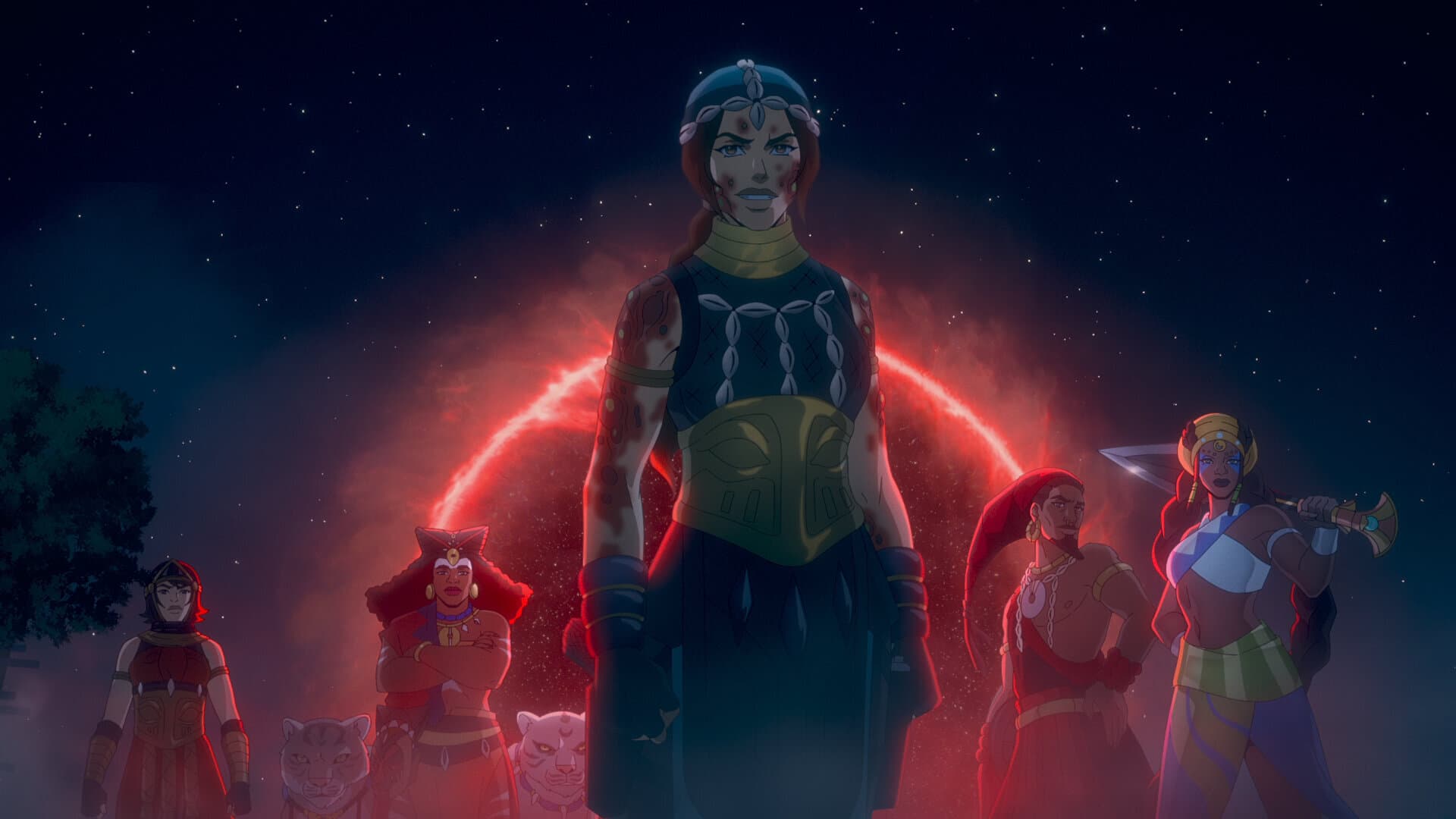
This is understandable, given that the second season consistently turns Lara into an observer of other people's destinies, and not into a driving force of history. Although in the course of the narrative she encounters different owners of the Orisha masks, the key role among them is assigned to Eshu, also known as Papa Legba — a trickster and conductor between the world of the living and the world of the dead in the Voodoo tradition.
As befits a trickster, Eshu is chaotic, flustered and full of hidden pain. The series quickly focuses on him, offering a living character with a clearly defined inner drama: Eshu is tormented by guilt for the fact that at a critical moment he left his people without protection, renouncing strength and responsibility. This guilt becomes the main engine of his actions and forms a full-fledged story arc that develops from series to series.
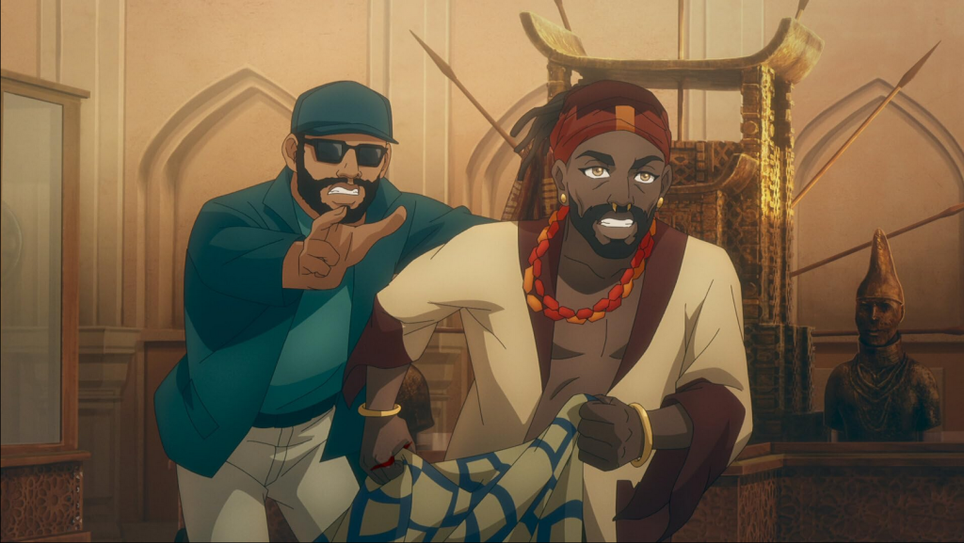
As a result, the series unexpectedly turns into the "legend of Eshu," where Lara is assigned the role of assistant on the path of transformation of another hero. Of course, Eshu himself turned out to be successful — such unpredictable tricksters are difficult to make uninteresting, and here he really pulls out the sagging plot. However, fans of Lara Croft may well be offended by the fact that in the second half of the season, the titular tomb raider turns out to be only a witness to someone else's mythological showdown.
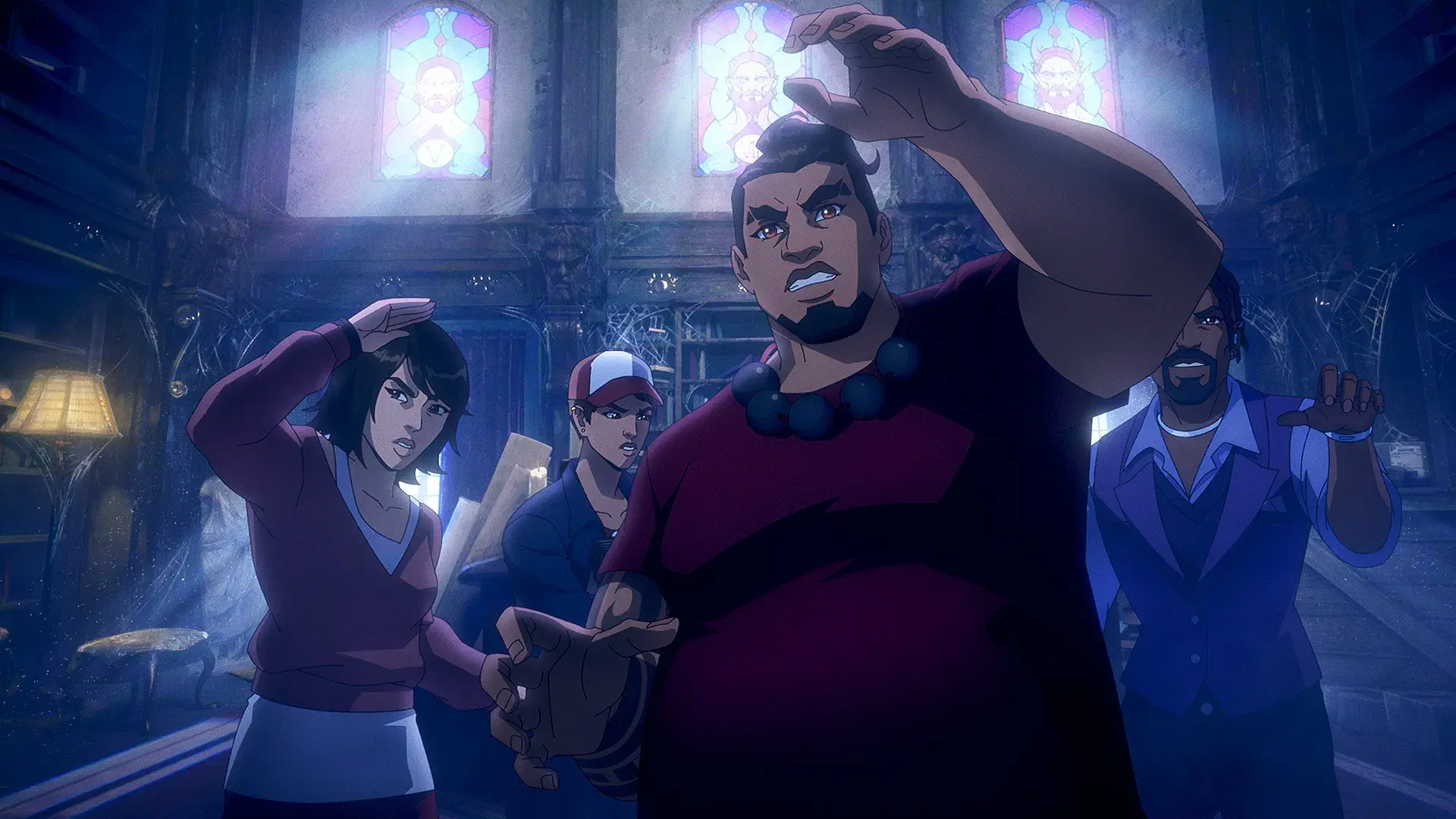
Lara's team, which seems to be gathering again after the events of the first season, is pushed even further to the periphery of the narrative. These characters perform mainly a declarative function — to show that Lara has learned to accept help and work in a team, but at the level of drama this does not develop in any way and has no consequences.
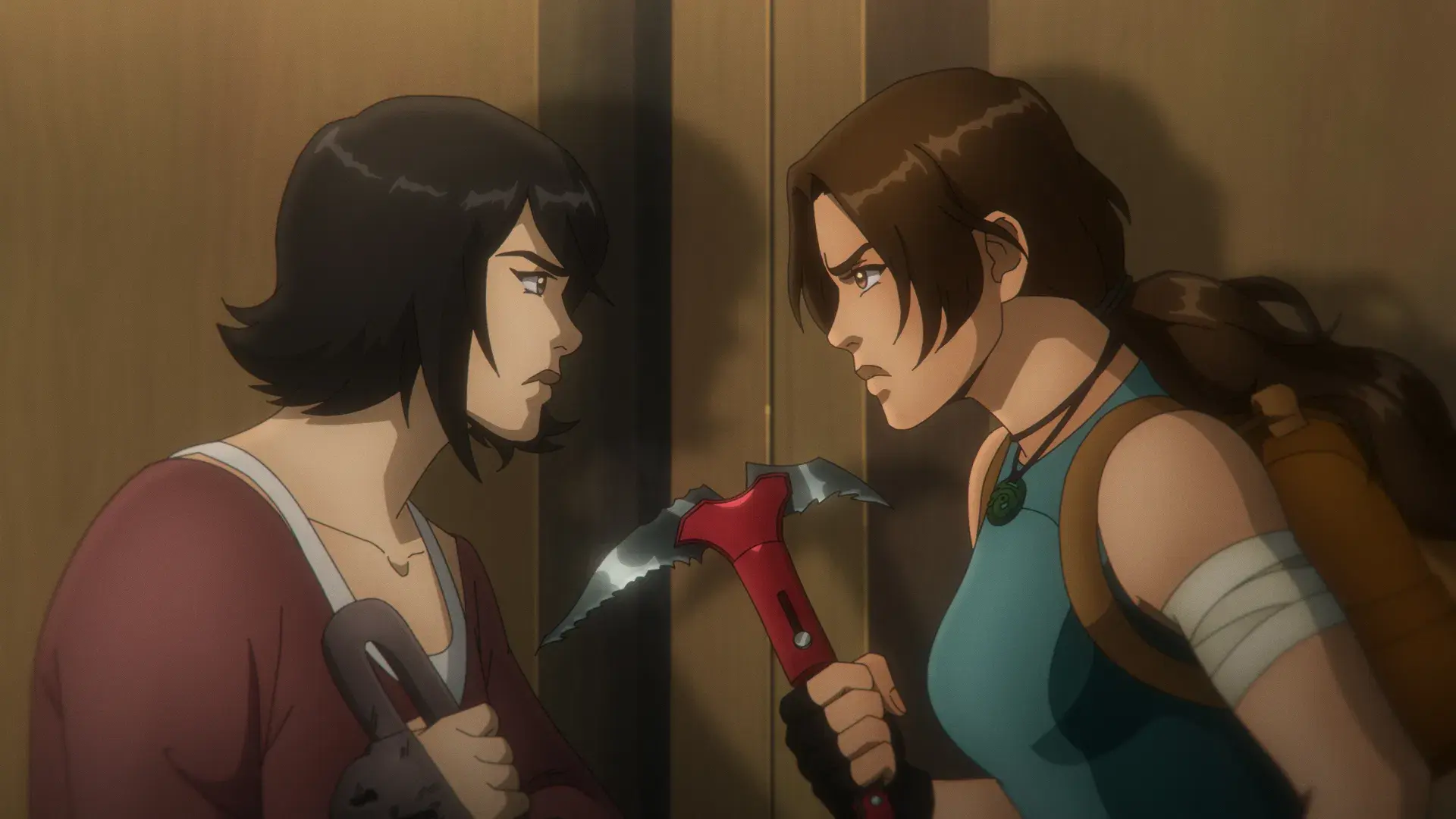
Sam looks a little better than the rest against this background. She gets more screen time, and formally she becomes an important participant in the events. However, the dynamics between Sam and Lara are indicated only by general strokes and never goes beyond functional partnership. In terms of influence on what is happening, they are almost equal and mainly react to the already launched conflict. This only emphasizes the secondary role of Lara herself in her own story.
Tomb Raider without Tombs
From a visual point of view, Powerhouse Animation does not present any surprises. This is still the same strong craft level without revelations and without obvious failures, almost identical to the first season and other projects of the studio. Expressive characters, smooth facial expressions and neat choreography are combined with modest detail and active use of 3D backgrounds, which help save resources without losing scale.
As a result, the series looks like a typical conveyor product of Netflix — functional, stable, but sometimes sterile and devoid of individuality.
But when comparing the action with the first season, the contrast is striking. In the second season, the battle scenes are either short or secondary in importance. When the plot reaches clashes related to the divine forces and magical abilities of the Orisha masks, Lara simply has nothing to oppose to the characters who are at a different level of the conditional hierarchy of power.
Even in the finale of the season, where the series unambiguously quotes "Avengers: Endgame," Lara remains on the periphery of what is happening. In the culminating scene, there is simply no full-fledged place for the titular heroine. Spells are cast around, portals are opened, characters with divine powers converge in spectacular duels, while Lara is again limited to a local duel that does not affect the outcome of the conflict.
Against this background, the first season unexpectedly wins. The opening episodes already offered a dense action composition with chases, traps, a fight with an alligator, and a series of dynamic fights that, in terms of variety and pace, surpass most of the second season as a whole.
In addition to the "ordinary" action, there were also truly memorable scenes - a motorcycle chase through a collapsing city, battles with a tyrannosaurus, infiltration into a mansion where Lara, under the influence of a relic, brutally and technically deals with the guards.
After watching the second season, there was a feeling that there was noticeably more action before, and rewatching the first season confirmed this. The difference was colossal. Moreover, the action there did not just fill the timing, but worked on the image of Lara as a tomb raider - a heroine constantly faced with traps, riddles and mortal danger.

In the second season, this is almost gone. The locations look poorer and more monotonous, tombs, temples and trials disappear as a class, and the geography of travel loses its expressiveness. The change of countries is not always visually readable. The choreography is simplified, the color palette is duller, which makes the picture itself look less alive. Instead of riddles based on mythology and active interaction with the environment, Lara is increasingly found in standard combat episodes without inventive staging.
As a result, the second season does not just offer less action. It loses the very adventurous nature of Tomb Raider, turning the action into a background accompaniment to someone else's story. That is why you involuntarily want to return to the first season and give it more praise than a year ago. By and large, except for the spectacular death of the antagonist, direct references to the games and individual references - like the scene in the elevator with a clear nod to "Evangelion" - the second season is almost not memorable.
With this alignment, the first season does not look like a masterpiece, but a full-fledged and appropriate part of the Tomb Raider franchise. A year ago, it at least seemed like a strong middle peasant, which was worth watching for the sake of action. Today, the second season is not able to justify even its own existence.
Diagnosis
The second season of "Tomb Raider: The Legend of Lara Croft" formally corrects some of the mistakes of the first. Lara no longer gets stuck in endless self-analysis, acts more confidently, uses cult pistols again and works in a team. This is no longer a traumatized survivor of the post-Survivor era, but an experienced adventurer, noticeably closer to the classic image. It would seem that it was from this moment that the series should have finally opened up in full force.
However, along with the minuses, the second season also abandons the pluses. The plot quickly ceases to be a story about Lara Croft and turns into another mythological drama with new characters, where the title heroine is assigned a secondary, serving role.
In isolation from the franchise, this could be taken for a watchable animated product of an average level - crafted, verified and designed to fill the catalog, without revelations, but without disasters. In the status of a sequel and part of Tomb Raider, it is perceived as a disappointment. The action has become impoverished, the adventure component has almost disappeared, the antagonist remains flat from the very beginning. The second season does not develop the ideas laid down earlier and consistently abandons everything that made the existence of the series at least somewhat justified.
It was previously reported that this season will be the last, since Netflix ordered the production of only two. After watching, you realize: if there is no third season, then that's the way it should be. Lara Croft herself, as a character and as a franchise, does not disappear anywhere and, apparently, will be with us for a long time.
The legend lives on, but scrolling it in the second round in the interpretation of Netflix is like chewing old gum, which loses its taste faster with each movement of the jaws.