Fatekeeper Review: The "Eurojank" That Could Be the Next Dark Messiah
Translated with AI from the Russian original.
The new action RPG from German studio Paraglacial looks like a living Unreal Engine 5 advertisement. Just thirteen people managed to create a thoroughbred "next-gen" game with visuals "worth hundreds of millions of dollars" and physics in the spirit of Dark Messiah of Might and Magic. But behind the luxurious facade hides good old "Eurojank," held together by crutches and duct tape. We explain why right now, Fatekeeper is only worth buying out of pure altruism and a desire to support the developers.
While some have been nurturing the hope of seeing Half-Life 3 for years, other old-school fans still sadly recall Dark Messiah of Might and Magic with nostalgia. Arkane Studios' action RPG was built on Valve's Source engine and developed similar ideas: a physics sandbox, interactive environments, and dozens of ways to creatively deal with enemies. You could kick enemies off cliffs with satisfying blows, crush them with heavy crates, cut bridge supports, or drop chandeliers on their heads. But over the past twenty years, the industry seems to have forgotten about tangible worlds and physics – and Fatekeeper aims to fill this empty niche.
The game offers a compact, concentrated adventure without a bloated open world, but with an emphasis on immersion, positioning, and environmental use. However, even before you get a chance to understand the mechanics and taste the local physics, Fatekeeper will blow your mind with its visual aesthetics.
High-Tech Next-Gen for Peanuts
We've been fed plastic creations on Unreal Engine 5 for a long time, and the most beautiful and technologically advanced projects were often born on studios' internal engines – from Kingdom Come: Deliverance 2 on a modified CryEngine to Crimson Desert on the BlackSpace Engine. Against this backdrop, waking up in the world of Fatekeeper, created by a baker's dozen of developers, causes a cultural shock.
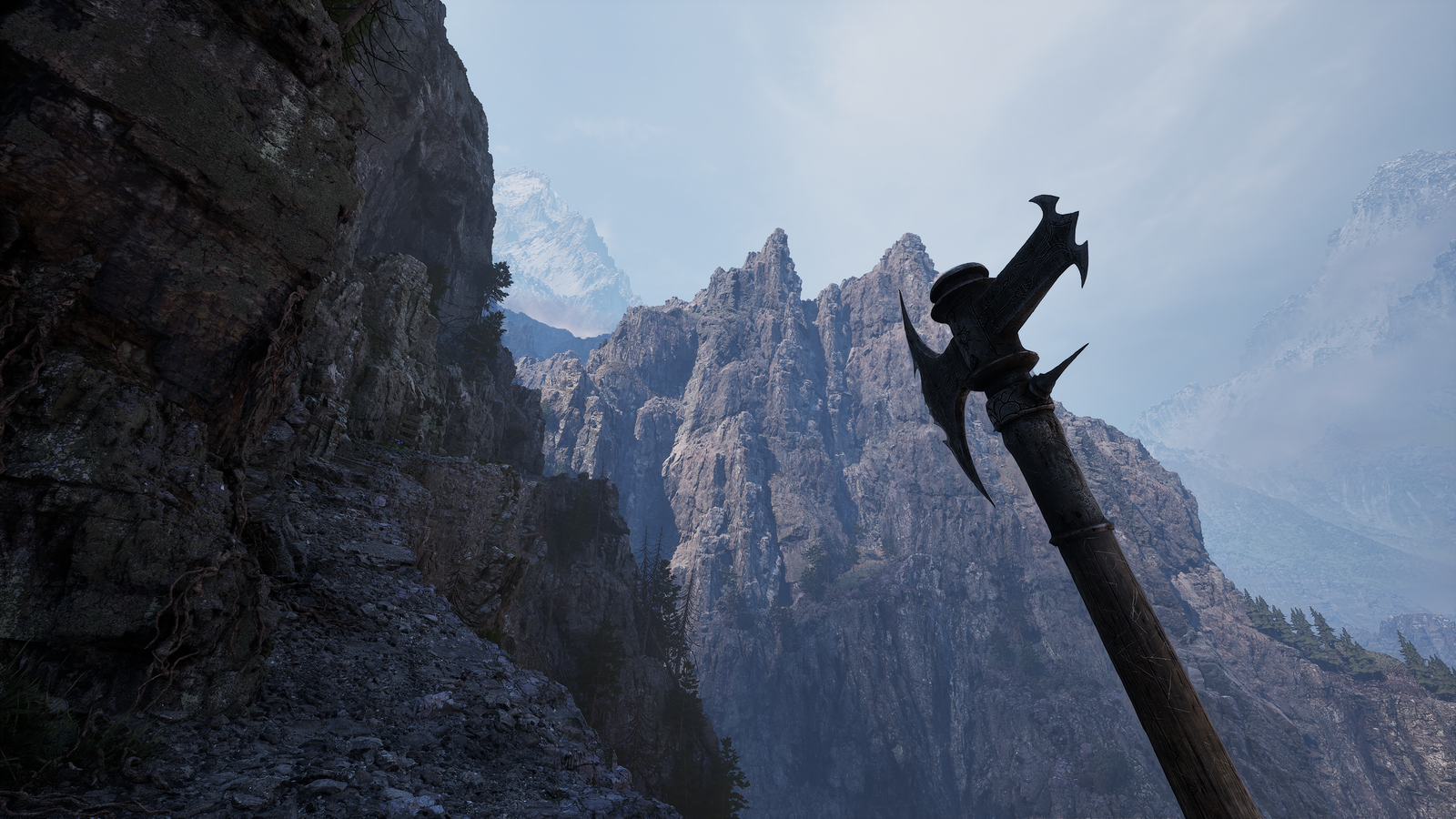
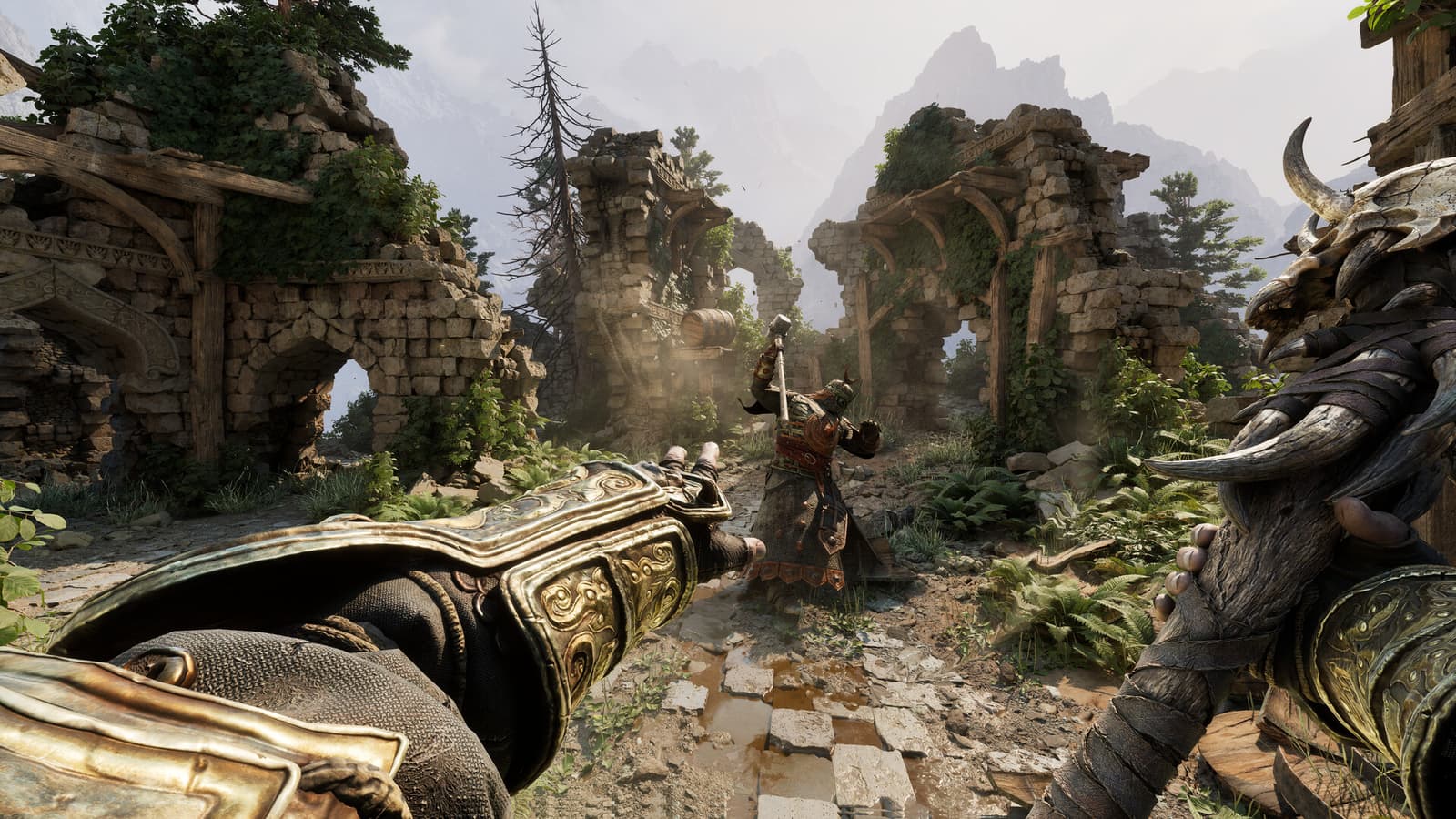
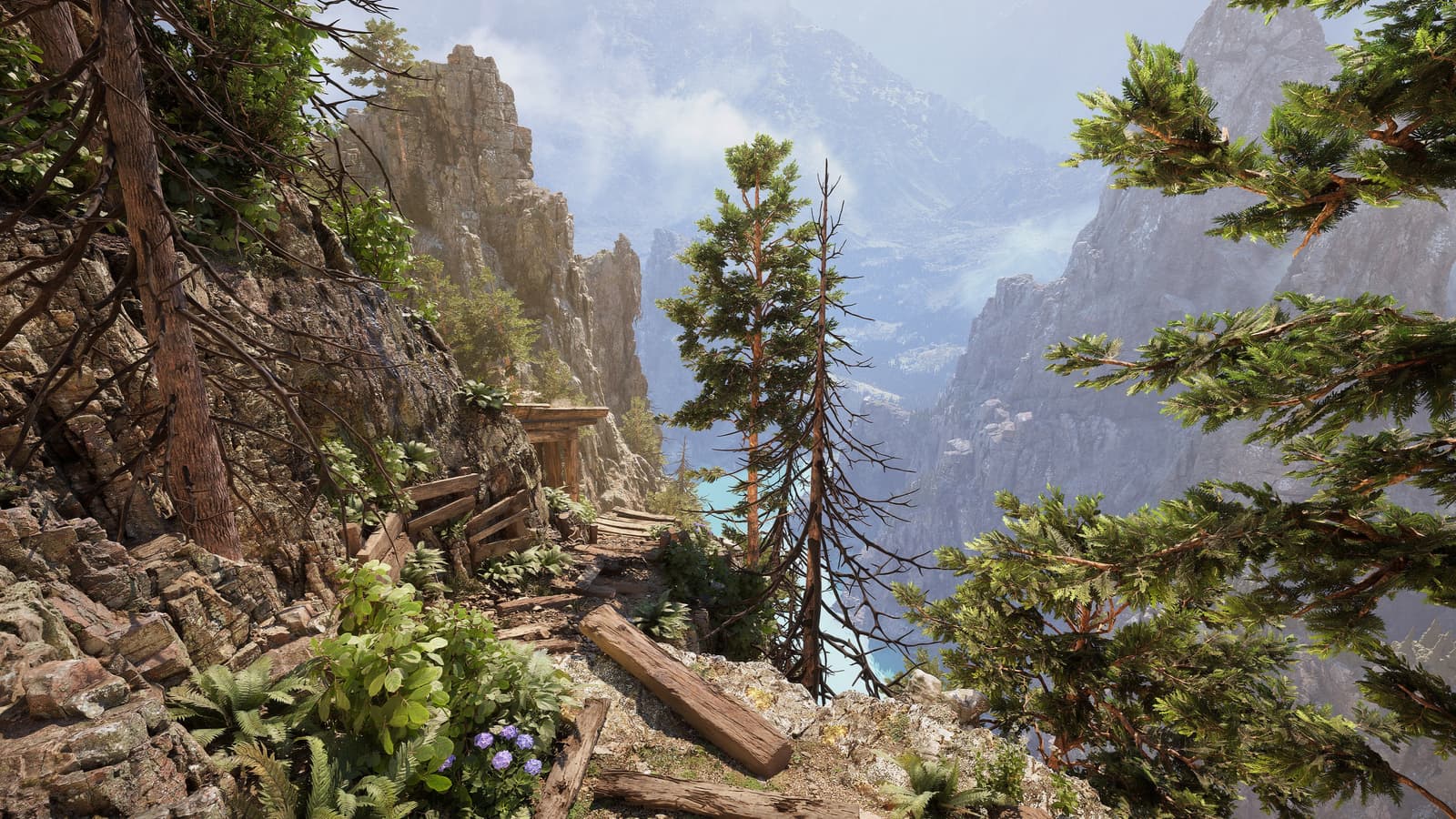
The game starts high in the mountains, and the local landscapes make you freeze in place. Textured leaves and stones, detailed mushrooms, grass, and slopes look so photorealistic and expensive that your mind refuses to believe the project's indie origins. This is the visual level of an AAA blockbuster from major game publishers – only made by a small German studio.
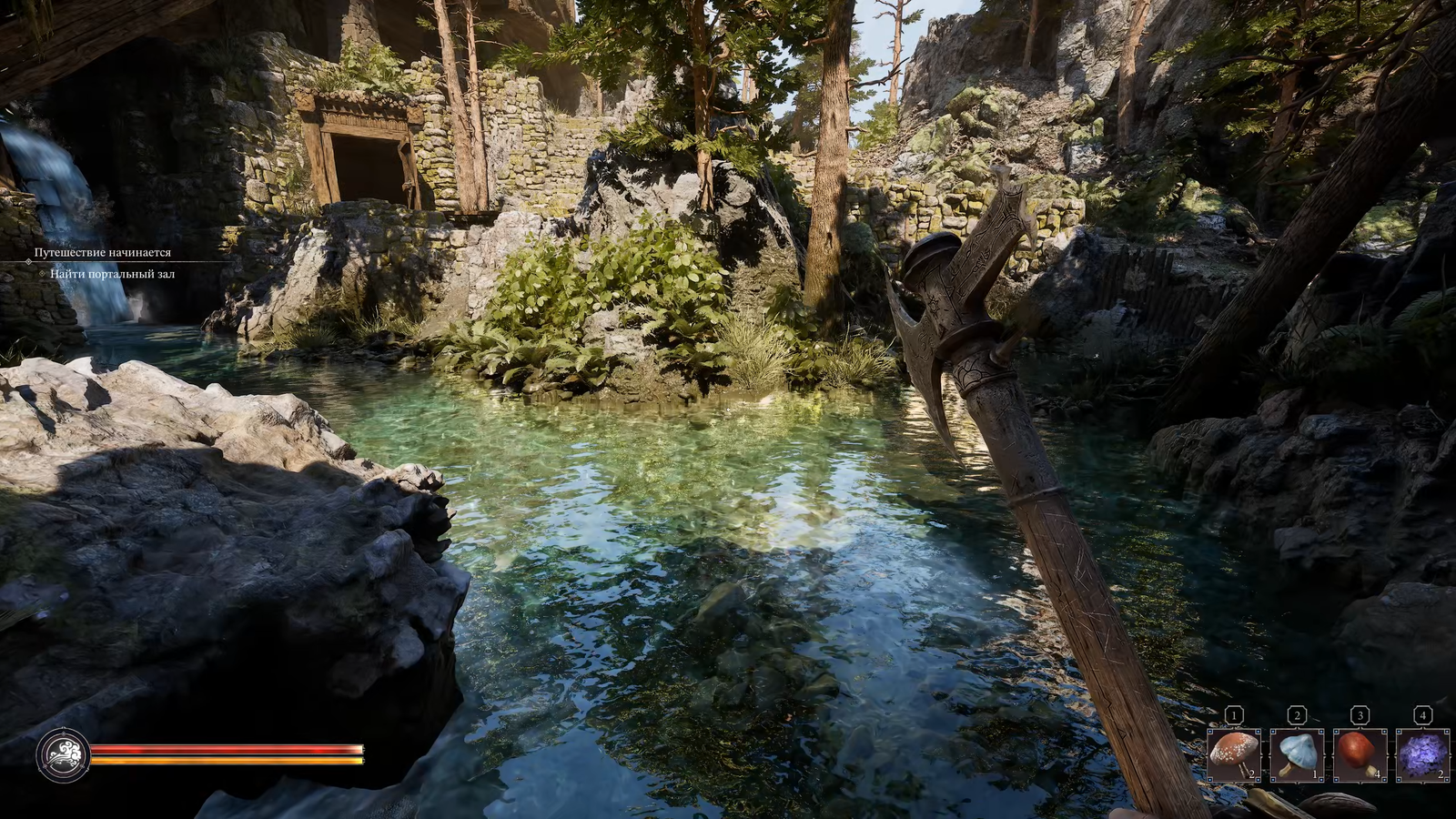
Even better, the beauty is backed by decent optimization. On a PC with a Ryzen 5 7500F and RTX 4070 Super, the game delivers a stable 70-80 frames per second on ultra settings at native 1440p resolution. With DLSS enabled in "Quality" mode along with frame generation, the counter flies past 165 FPS, and the picture becomes even sharper than native.
Such a technological level contributes to immersion in the atmosphere of a fantasy world, but the deeper you go, the more noticeable the rough edges of early access become beneath the expensive visuals.
Heroes of Sword, Magic, and Boot
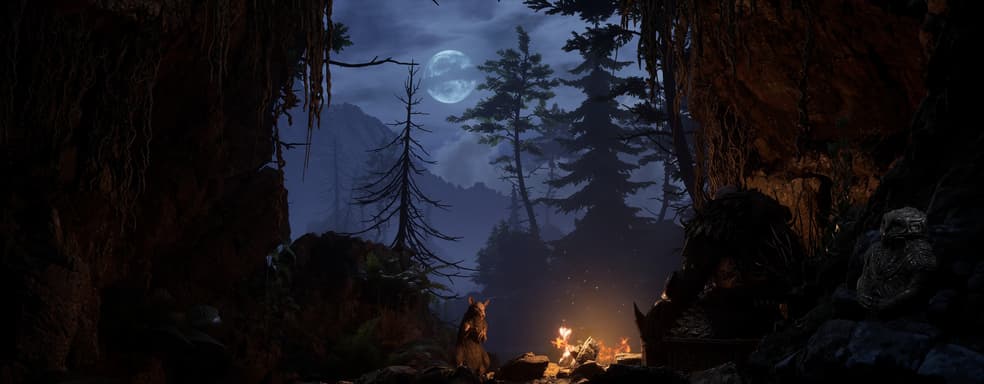
The events of Fatekeeper unfold in Solas – a magical world in the spirit of Western European fantasy. The protagonist undergoes training to become a Guardian and must ascend the sacred mountain of Mar Guran. He is accompanied by the charismatic pet rat Muran Thor – the main guide to the local lore.
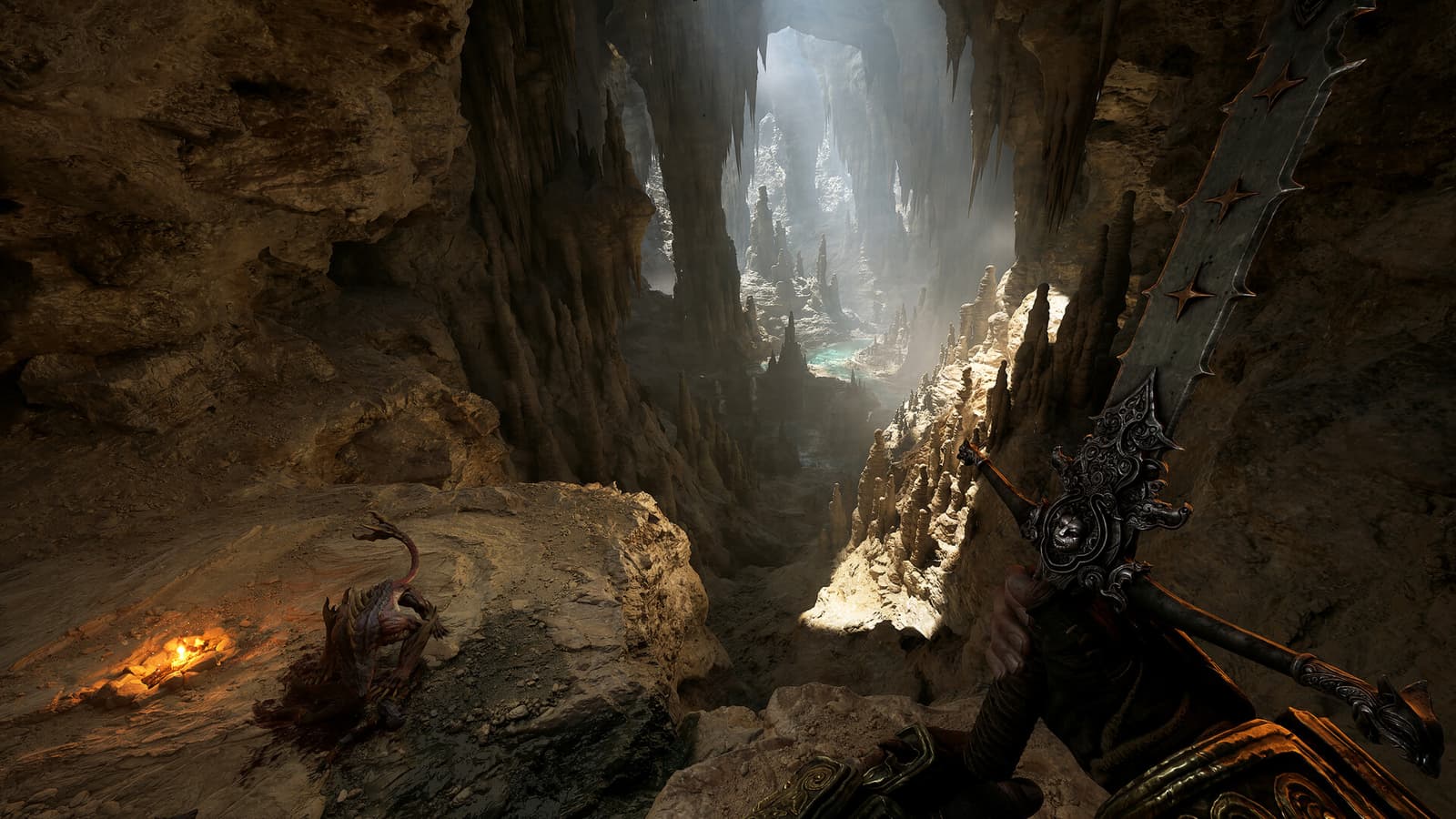
At this stage, the plot justifies the journey rather than driving it. After a short tutorial in the Druid's Haven, we set off to conquer the peak, and all narration is sparsely doled out in text fragments on loading screens. Because of this, the game currently feels like a series of isolated combat sorties. It's hard to say how much the situation will change by release, but exploring the local caves, ruins, and fortresses is already interesting.
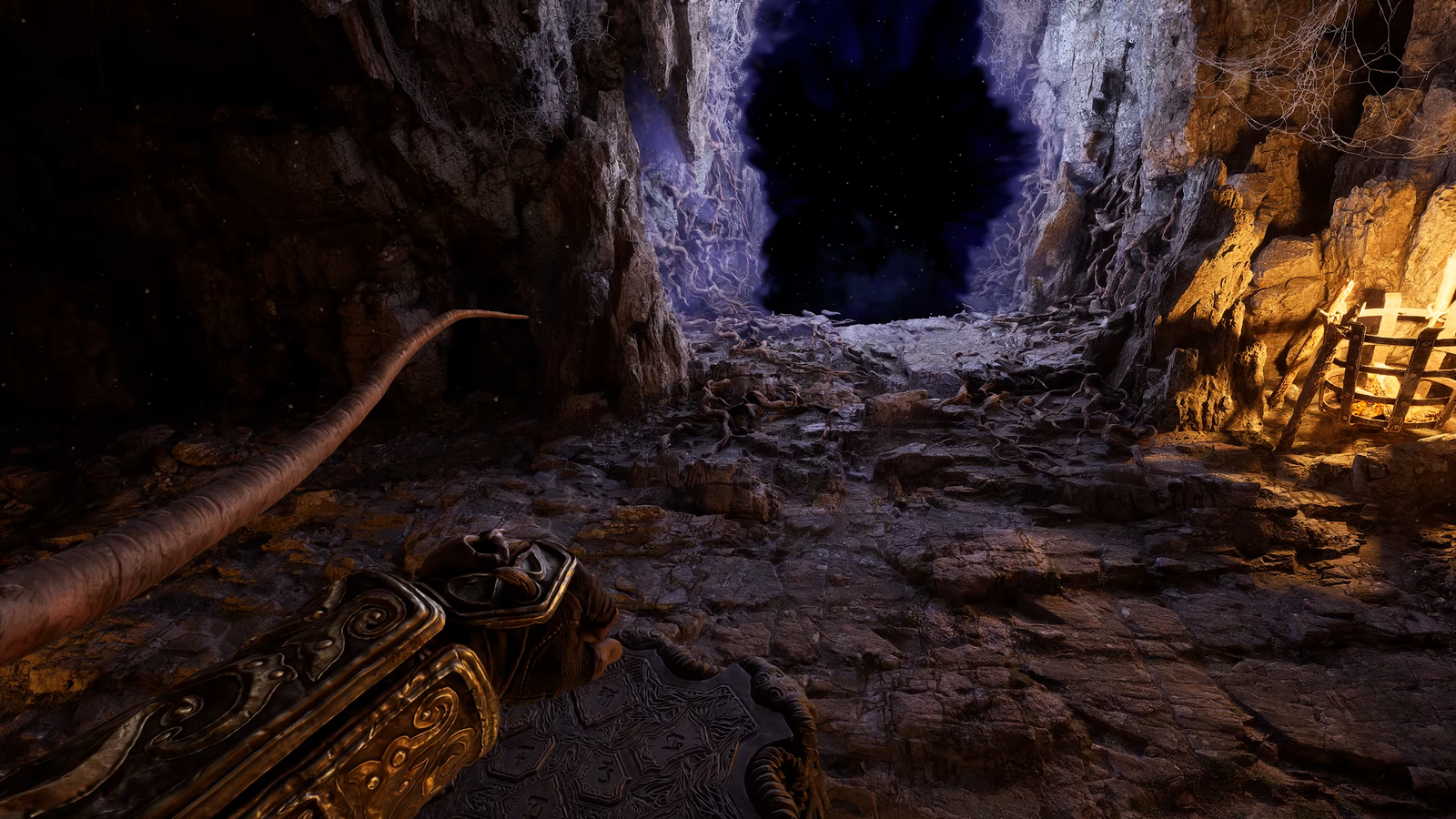
The locations are relatively small and, as a rule, lead the player along a predetermined route – it's impossible to get lost for long even if you wanted to. But the authors saturate them with verticality, architectural details, and secrets, so the environment is interesting to explore not only for its beauty but also for practical benefits.
A chest with a valuable resource might be hidden around an inconspicuous corner, and a new weapon behind a dilapidated partition. Sometimes, the way forward has to be found through a series of not-so-responsive jumps and dashes or with the help of telekinesis, which allows you to reach a lever and open the way forward.
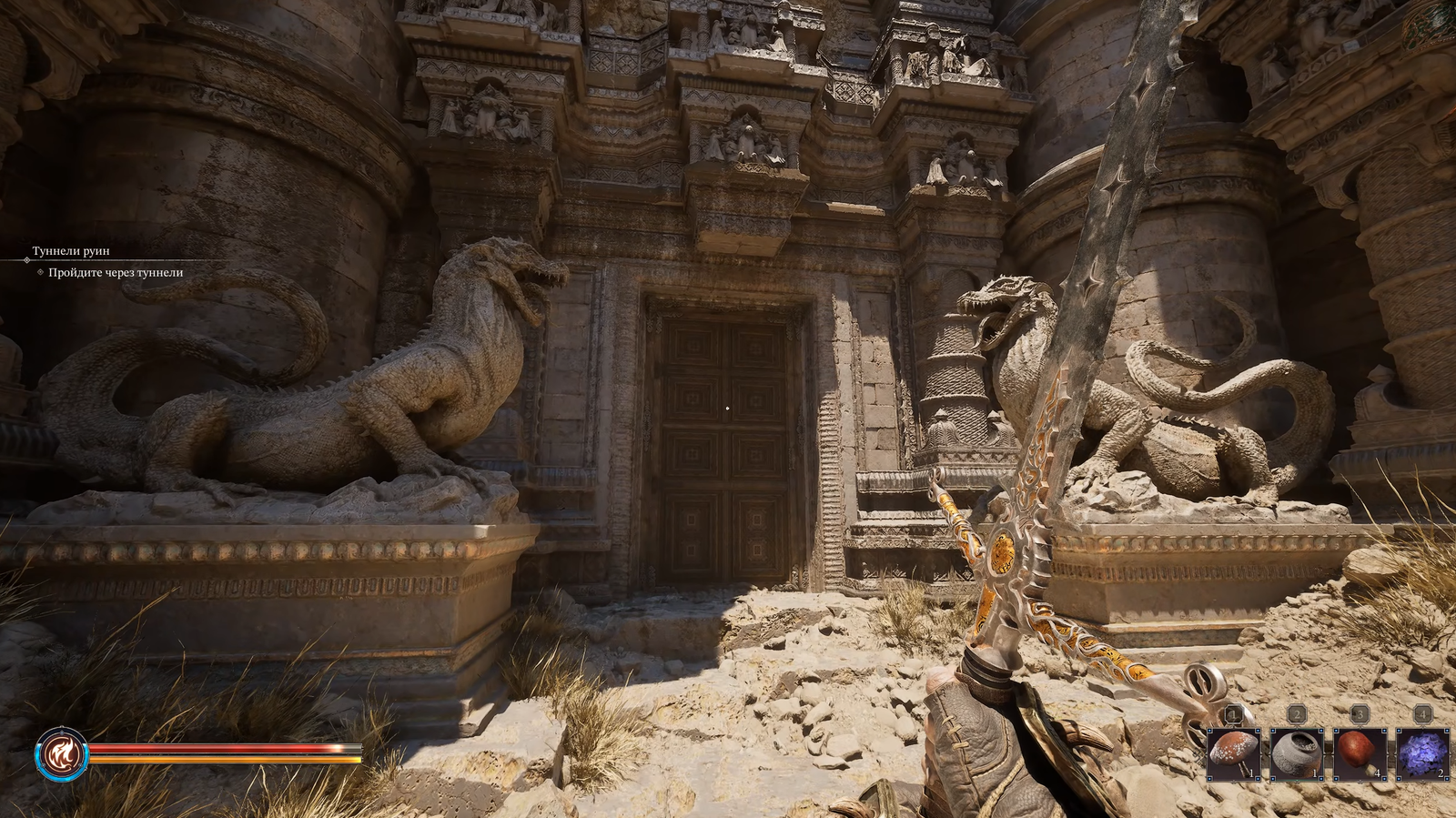
The combat system is familiar: the hero has weak and strong attacks, block, and dodge – each action eagerly consumes stamina and punishes aggressive spamming. Weapons feel weighty, blows have proper inertia, and enemies are dismembered and scattered with satisfying, albeit exaggerated, ragdoll physics upon impact.
But the main star of melee combat is the good old kick. It's fun to knock unsuspecting spearmen into chasms or onto spiked walls, as well as break the defense of shield-bearers, opening them up for attack.
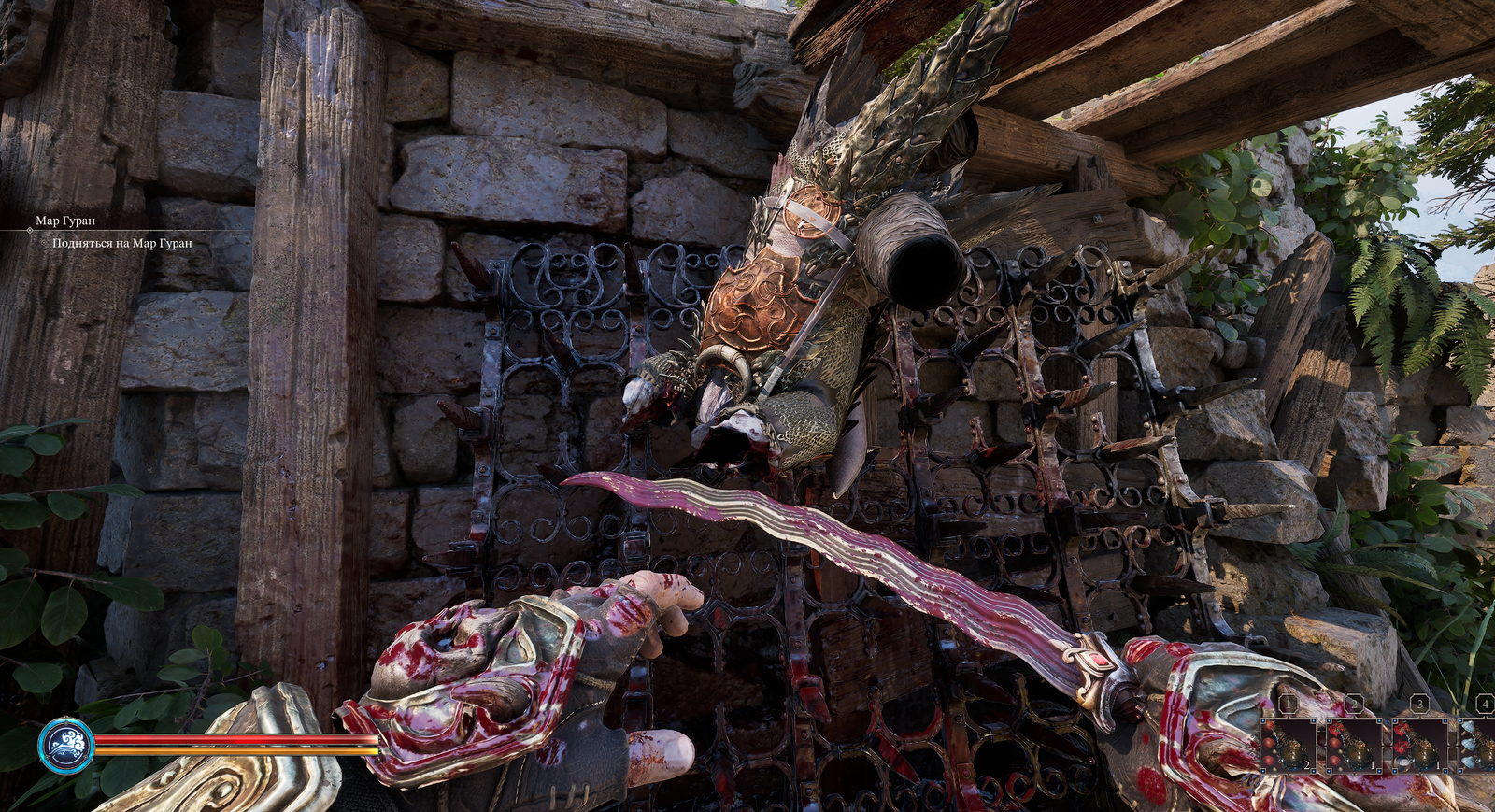
In addition to "sword and boot," the game offers four schools of magic: fire, ice, telekinesis, and wind, opening up different possibilities. A puddle of oil under enemies' feet can be set on fire with a fire spell, flimsy boards under an opponent can be broken with a blow or a gust of wind, and an annoying archer from above can be pulled with telekinesis, impaled on a sword, or sent flying with a kick. Such interactions with the environment work much more interestingly than simply clicking with a sword.
However, don't expect deep systemic mechanics and full physics simulation yet: everything works strictly within the given combat rules. If you shoot ice next to fire, it won't melt faster than ice lying elsewhere. But freezing an opponent and shattering them into pieces with a sword is still priceless.
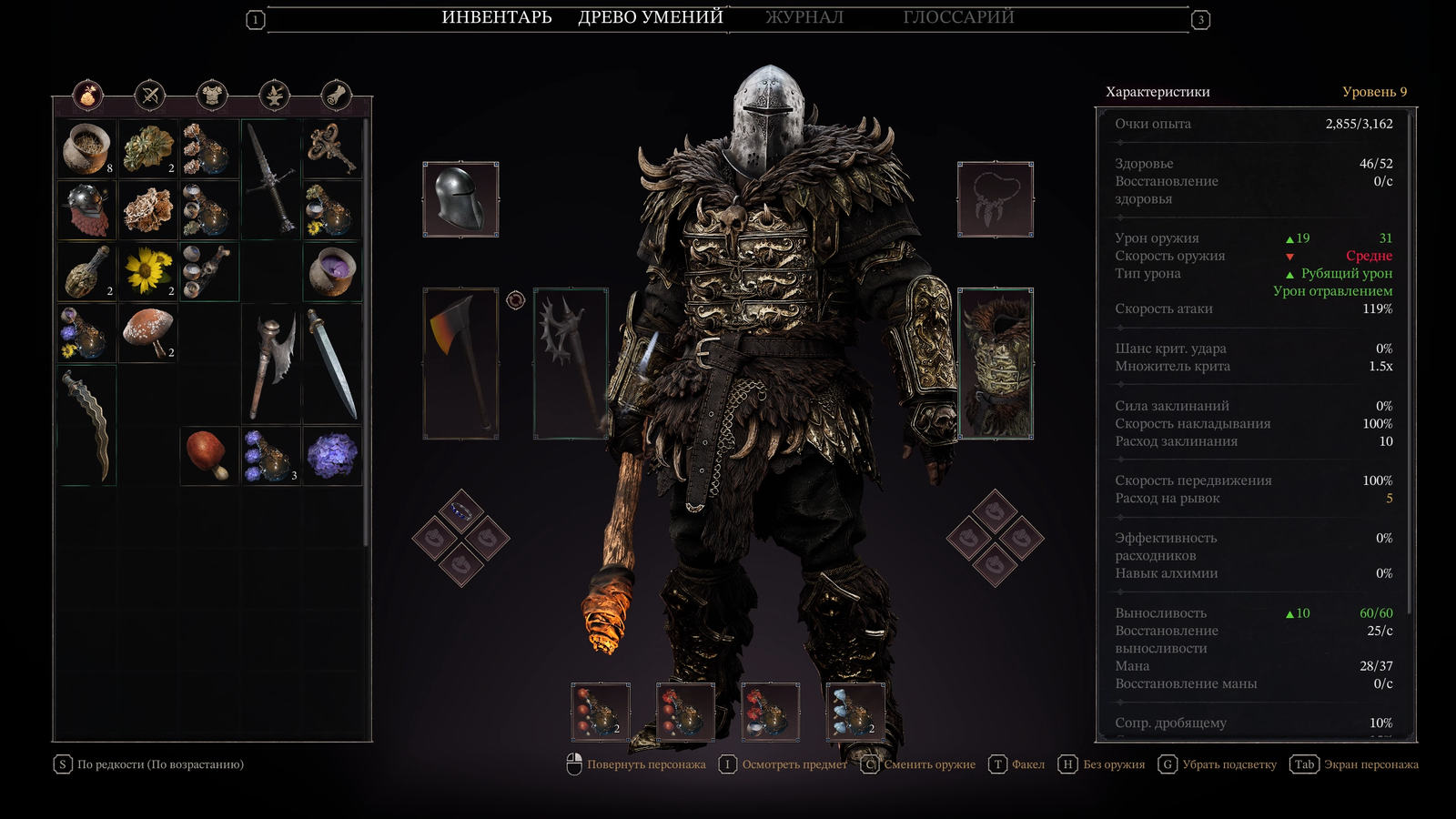
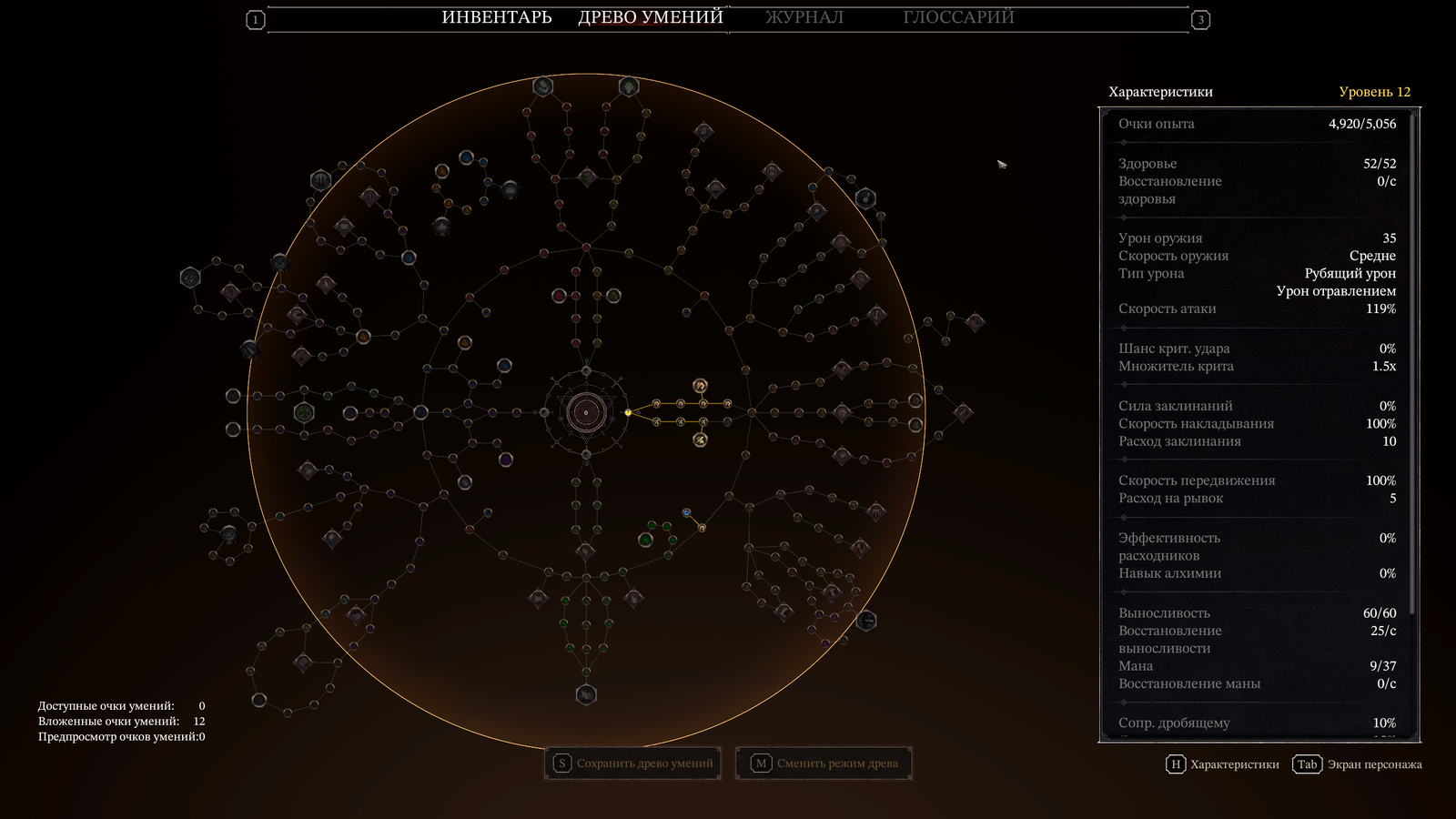
The variety of tools is supported by a skill tree that resembles a younger sibling of the Path of Exile tree: a branching web of small nodes and large abilities divided into melee, magic, alchemy, and stamina. Excellent synergies are hidden deep within the branches: you can cast spells at the cost of your own health, compensating for the cost with vampirism from sword strikes; replace standard parrying with a magical shield; add a freezing effect to the wind.
But the current build runs into limitations. Choosing one specialization completely blocks access to others, and skill points cannot be reset. If you want to try a different build, you have to start the game over. Some abilities lack descriptions, some nodes dully increase basic stats by a couple of percent, and the most juicy upgrades are simply unreachable due to lack of content.
For now, it's easy to overlook this. Regular opponents are rather foolish, easy to deal with, and in skirmishes with crowds, ingenuity and interactive environments come to the rescue. In the first version, truly serious problems arose primarily with the first boss – but the developers quickly responded to criticism, and the very first patch forced me to rewrite about a third of this text.
This Could Have Been a Rant
At the start of early access, about half an hour before the end of the available content, the player fell victim to a sadistic trick: they were met by the first boss – a huge horned devil with several minions in a tiny circular arena. He made swift lunges, swung wide attacks, shook the ground, and the player had to constantly jump and dodge.
Stamina was catastrophically insufficient for such maneuvers, the hero died from literally two hits, and it was impossible to break distance and try to use a healing potion: during attacks, the boss either "magnetized" to the character or hit them even when there was no visual contact.
Personally, to get past him and see all available content, I had to install a cheat mod. But the problem was obviously not just with me: I defeated the second boss without difficulty (and without the mod), taking only one hit, while Reddit and Steam quickly filled with complaints about the first. The developers promptly responded to the collective cry of pain and released patch 0.1.1, which corrected the situation.
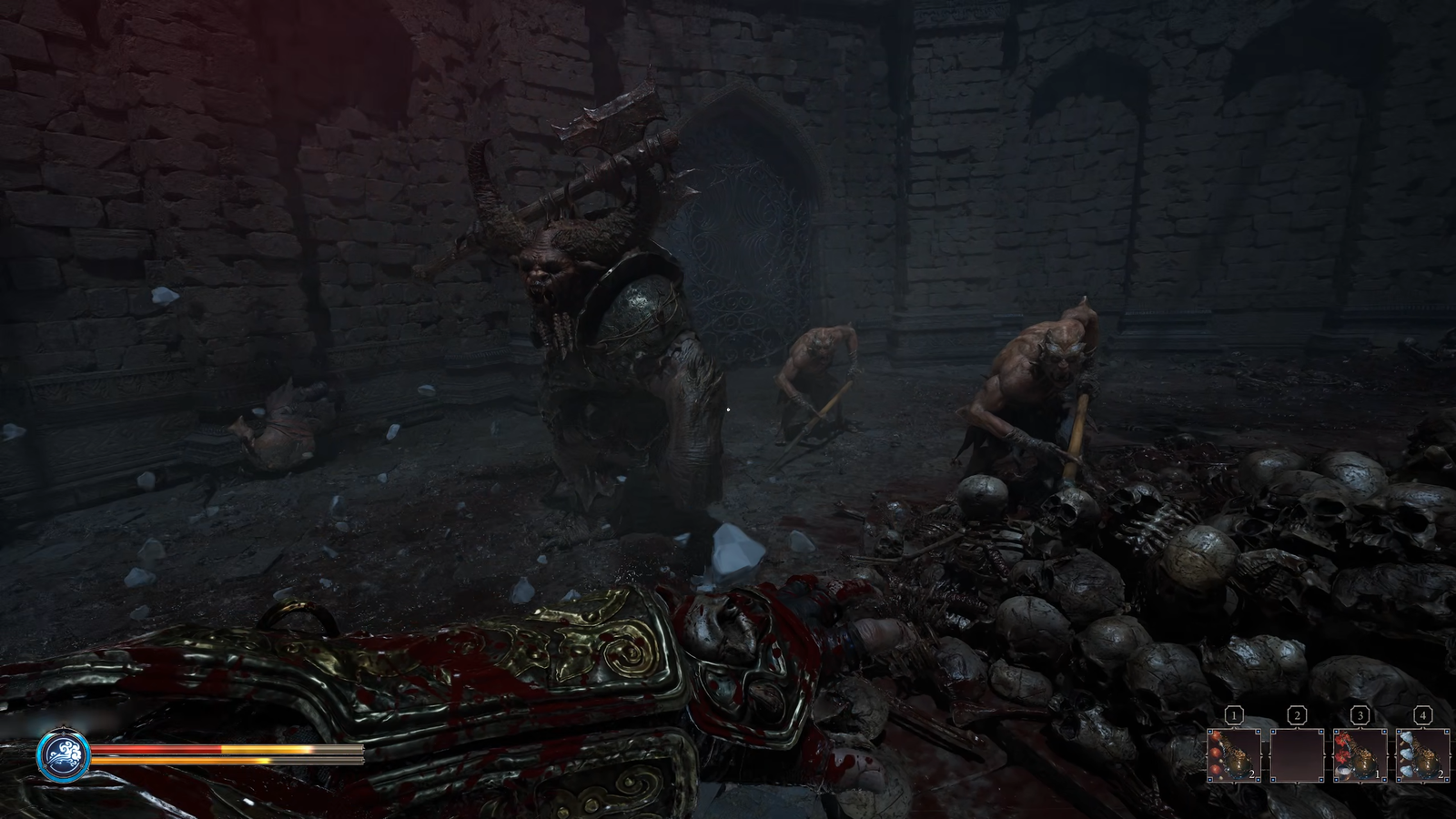
After the update, the battle transformed from outright mockery into a tense but fair challenge. The boss's damage was reduced, allowing the hero to withstand three hits instead of two; his stomp attack radius and angle were cut, and most importantly, the "magnetization" distance during lunges was significantly reduced. The player finally got a safe window to catch their breath and heal – although using consumables is still too restrictive: the animation is long, and the hero cannot run or jump while using a potion.
But the patch didn't fix everything. The first boss was just the most striking example of how the game broke due to a combination of problems. Unfair hitboxes still occur in skirmishes with regular enemies: enemies sometimes hit the hero further than their animations suggest, and the character sometimes has to get closer than the weapon's length indicates.
"Warp" – the attraction of an enemy to the hero during an attack – is still actively used in the fight with the second boss. Even with this mechanic, the boss is significantly easier than the first, but such attraction itself is a lazy way to artificially increase difficulty without complicating the battle design and is therefore automatically perceived as unfair.
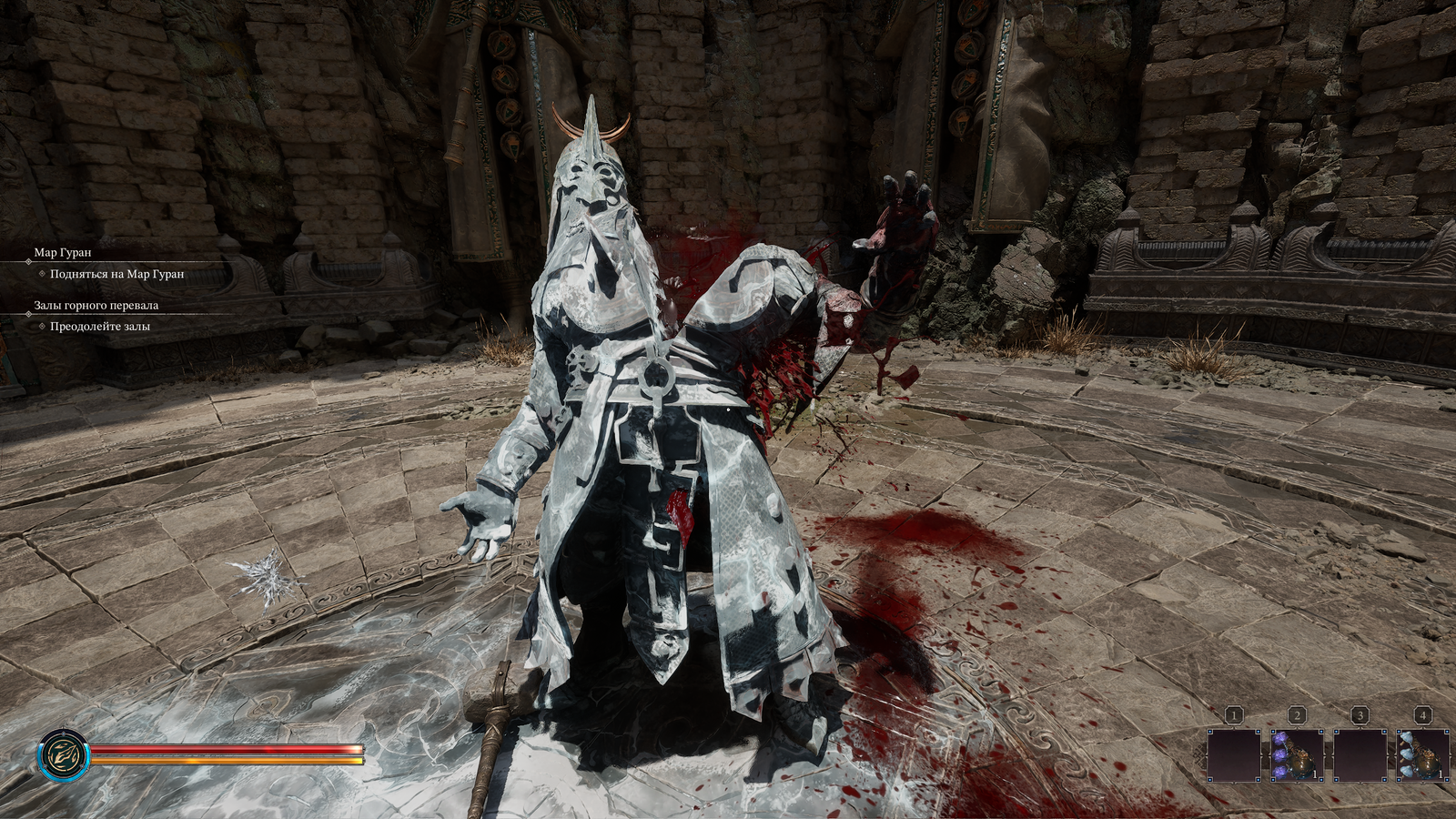
However, such rough edges are easy to overlook for now: dealing with ordinary enemies is quite simple. In addition, the developers have strengthened healing consumables, placed chests with additional resources near bonfires, and increased the character's movement speed. Playing has become more comfortable – but along with the crutch-hardcore, the need to squeeze the maximum out of the available systems has disappeared. Magic and interactive environments have turned into "entertain yourself": there wasn't much variety to begin with, and now most skirmishes are faster to close with simple button mashing.
This highlights the main distance to Dark Messiah. Such games must be difficult, but the difficulty should arise not from crooked hitboxes and "magnetizing" attacks, but from well-thought-out combat scenarios and systemic capabilities that help overcome it. It remains to be hoped that the developers will move in this direction.
Verdict
It's easy to fall in love with Fatekeeper. The project instantly captivates with stunning visuals and Dark Messiah-style physics – even if it doesn't yet have the same variety of possibilities, which is quite forgivable for early access. In a few hours of playing, I got a lot of gaming and aesthetic pleasure, despite the shortcomings.
It's encouraging that Paraglacial isn't abandoning the early version and listens to the audience – meaning they care about their product. At the same time, the game's technical foundation is strong from the start: thirteen people managed to assemble a beautiful and well-optimized project on Unreal Engine 5, which is a significant achievement in itself.
But behind the luxurious facade hides a raw, somewhat empty tech demo for a couple of hours of gameplay – especially noticeable now that the game has become easier. Key systems are still underdeveloped, and the most painful problems are currently being fixed with localized workarounds.
Buying Fatekeeper is only worth it if you want to support the developers financially and personally work as a paid tester; others should be patient and wait for content patches. The potential is enormous, but the team still has to go through fire, water, and brass pipes before a full release.
Never miss our newsAdd this site to your preferred sources to see us more oftenAdd on Google