What is MECCHA CHAMELEON: a 7 million player dummy or a new word in multiplayer?
It would seem like just another indie project that would be forgotten after a couple of days. However, the attention of bloggers turned another "friendslop" into a successful product with millions in sales. That's why we tried to figure out what the game is, what its charm is, and why the hype around it is not worth your time - even the short amount of time it can hold you.
This year, the friendslop-hit contender is MECCHA CHAMELEON, a game by Japanese solo developer LEMORION. It took only two months to develop, and sales, despite a very low price, have already reached 7 million copies!
Wolves in sheep's clothing
MECCHA CHAMELEON is a party game for 24 participants, built around the familiar hide-and-seek format seen in popular modes like Prop Hunt from Garry's Mod. However, the project adds its own twist to this formula: instead of transforming into an object on the map, players need to repaint their character to match the colors of that object to blend in with the environment.
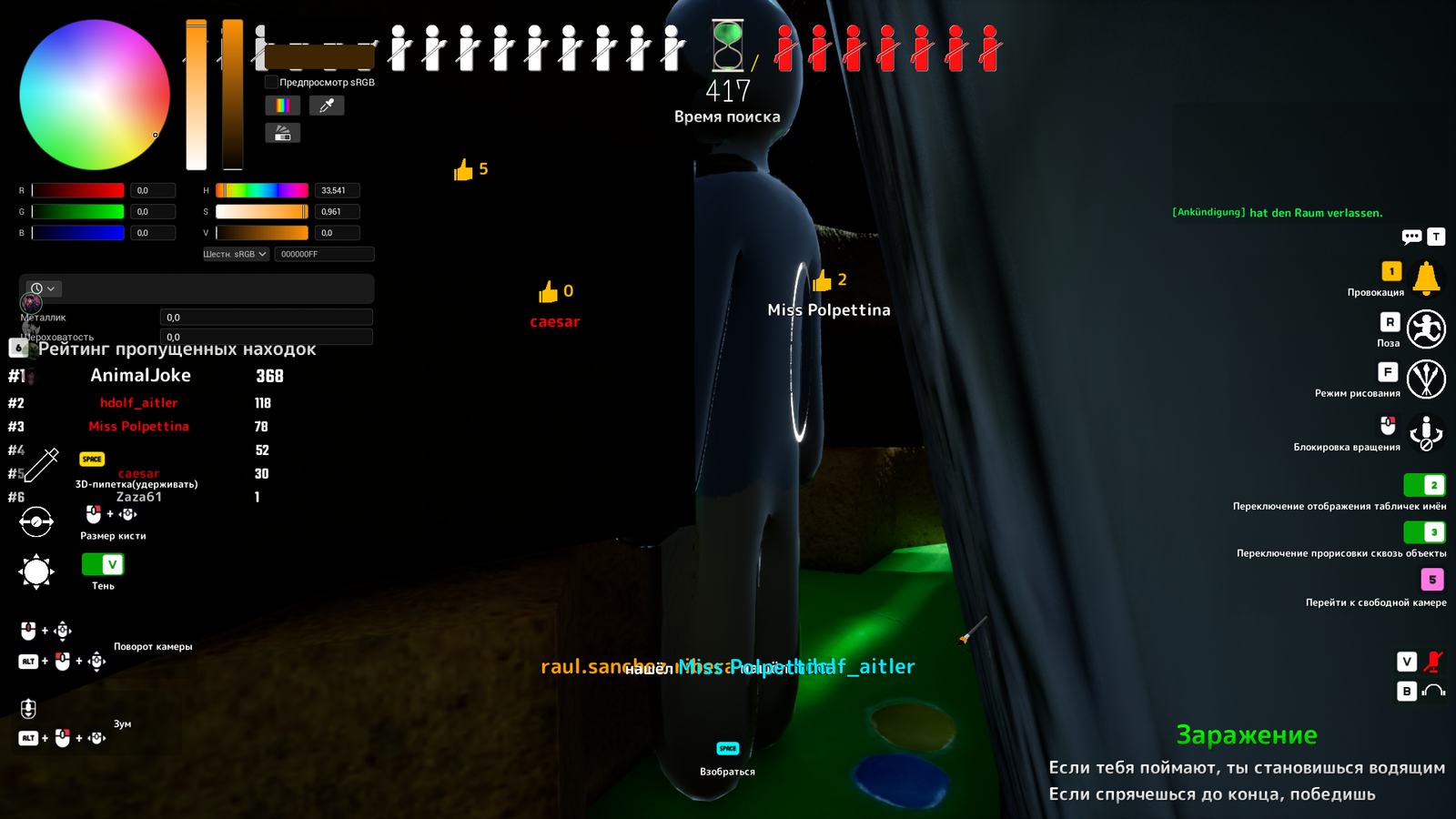
In a match, participants are divided into two roles: seekers and hiders. Hiders make up the main part of the lobby and rely on creativity to remain undetected. Seekers, on the other hand, must track down other players and shoot them when found.
Hiding is not particularly difficult, but it is in this role that most of the fun unfolds. The situation itself, when you cover yourself with the color of the nearest wall or floor, and the hunters completely ignore your silhouette sticking out right in front of their eyes, creates funny moments. The game provides the ability to move not only on the ground but also on other surfaces. You can also choose what pose to take. For example, you can climb onto the ceiling, lie horizontally, cover yourself in gray, and watch as the hunters completely ignore you.
Usually, in hide-and-seek, the most intriguing things happen in the last minutes of the match, when most participants have already been found and only you remain. Hunters can meticulously examine every detail or frantically run around the location trying to catch some detail. It is at such moments that everyone in the lobby understands how perfect the victim's disguise is and how attentive or lucky the hunter is.
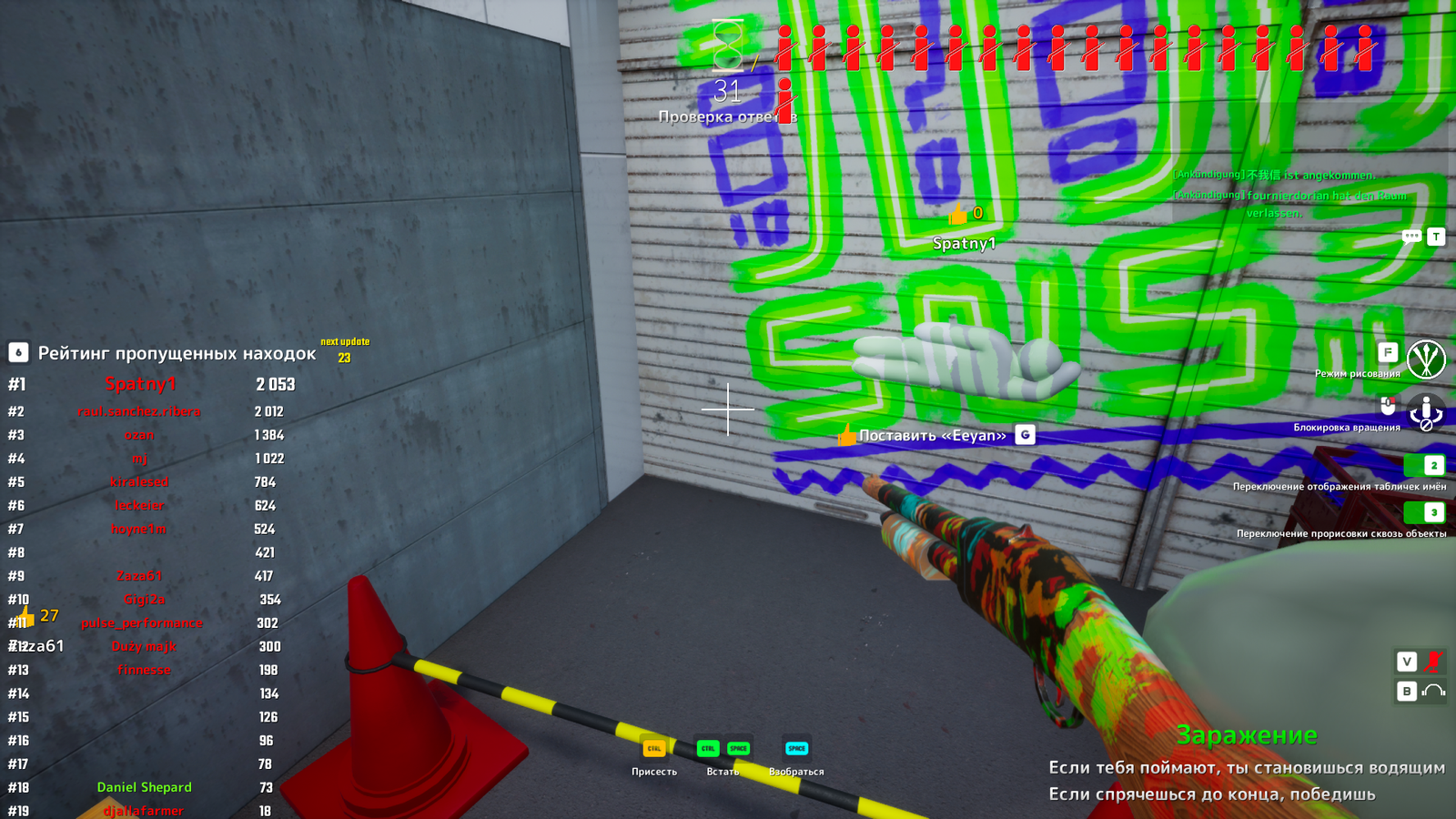
As a hunter, the gameplay remains similar to classic Prop Hunt. It remains just as exciting, challenging, but not as fun. The player has to peer at walls, floors, furniture, and small objects, looking for distortions, strange paint spots, and environmental elements that look too alien. After finding the hider, the simplest part remains — aim and shoot.
Fun game and interesting rules
There are three modes in total. The standard mode divides players proportionally into hunters and victims. In "Infection" mode, the match starts with one hunter, and all found victims join the hunt for the remaining players. Finally, in "Double Mode," everyone hides first, and then everyone becomes a hunter. The one who finds all the hidden characters wins.
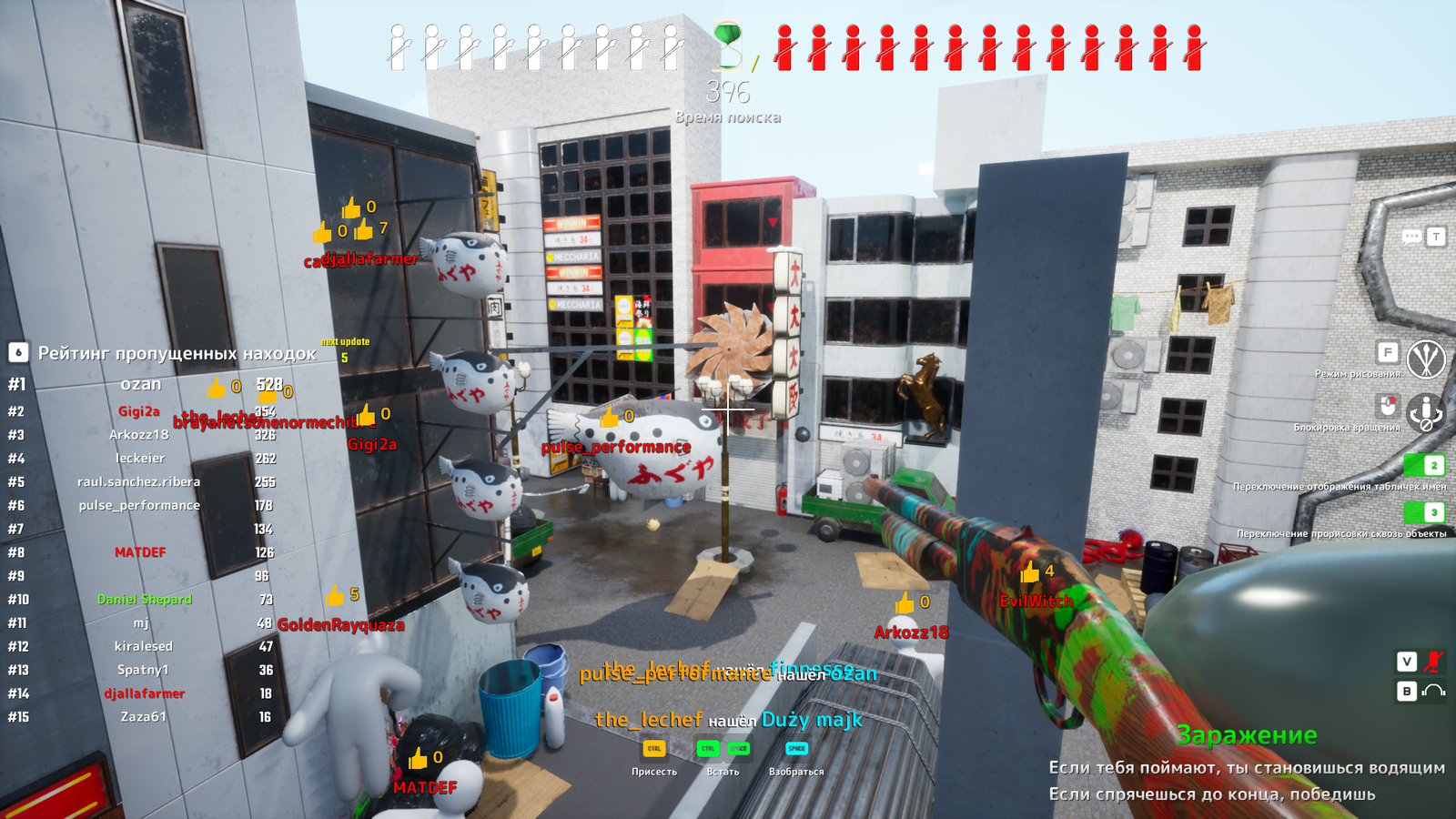
Speaking of the online component and the ability to play alone, it's important to note that this is the first friendslop where friends are not mandatory. There are public lobbies, so a user can simply join a server with random people and immediately get into a match. For the genre, this is an important advantage: many similar projects quickly lose their meaning if the player doesn't have a constant company.
But playing with random people and playing with friends are two different experiences. In a public lobby, you don't feel that same "fun." Instead, a lone player begins to be overcome by a sense of competitiveness: the desire to win the round begins to outweigh the atmosphere of fun. Therefore, you will need a company of friends. With them, the match turns into a full-fledged emotional rollercoaster: with teasing, hints, personal grudges for found hiding places, and that very party feeling for which friendslops are usually launched.
Fresh layers of paint
At some point, the player will start to lose interest — friendslops have a very short lifespan. Therefore, MECCHA CHAMELEON provides a workshop with custom maps. This gave the mechanic new life. For example, one of the most popular maps became an art gallery, where gamers try to hide, pretending to be part of a painting.
Much more often you will encounter simple copies of maps from other franchises. You can compete on the famous Backrooms level in a liminal space, where there are only yellow walls and almost no interior. You can play on locations from Prop Hunt: classic maps from Counter-Strike or other popular maps of this mode.
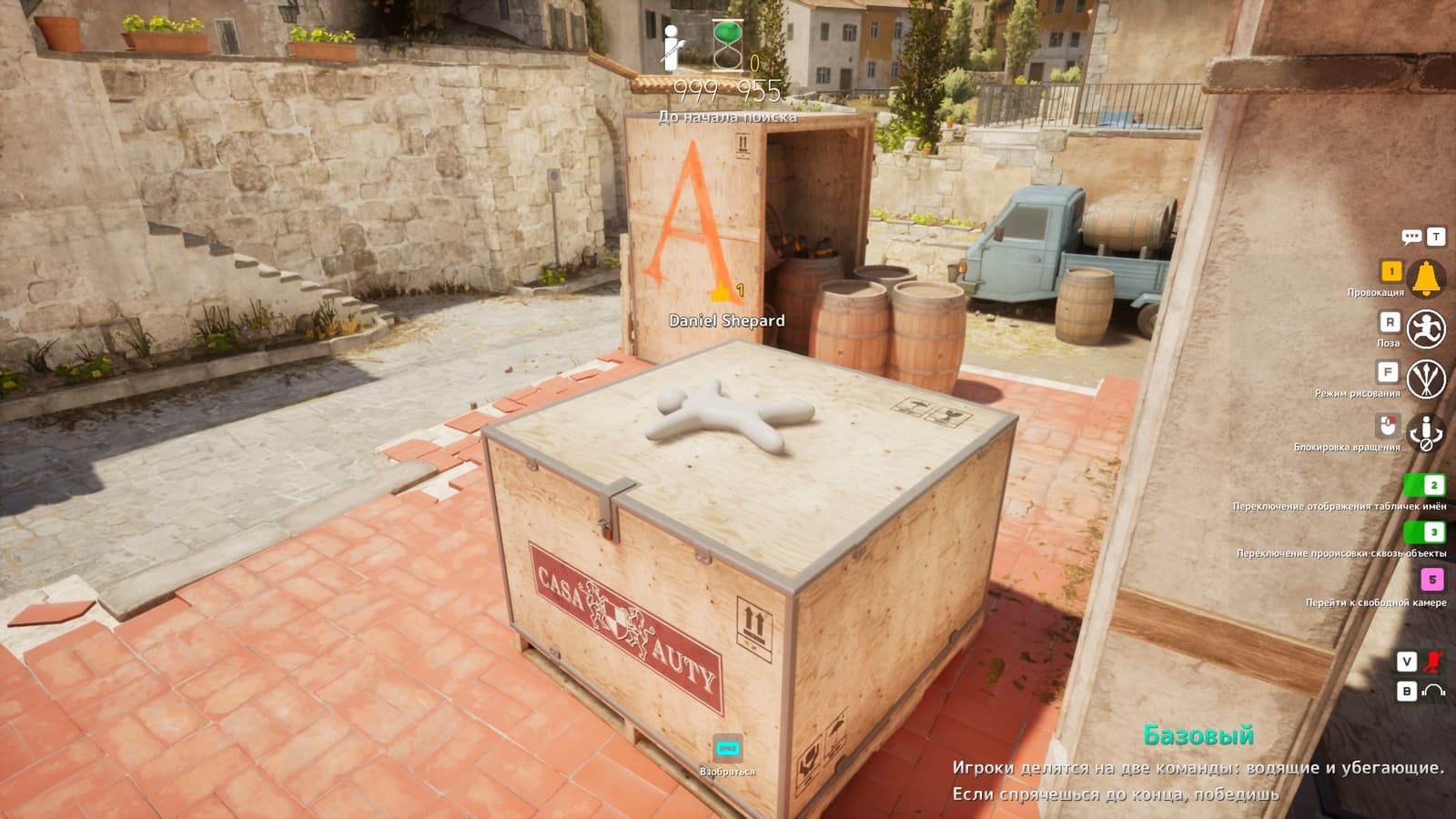
However, for now, mod support is focused exclusively on maps. The community offers nothing else. No one has thought about creating custom modes, difficulty modifiers, or other mechanics that develop the very idea of hide-and-seek.
Verdict
The success of MECCHA CHAMELEON has a simple explanation: the game took a popular formula and slightly changed it, giving it more originality. After all, no one would have noticed it if it weren't for word of mouth. It's interesting to watch streamers demonstrate their observational skills or lack thereof, entertaining people. And with that, MECCHA CHAMELEON has become an excellent place for playing with subscribers.
If you don't touch on the context, it's just a good multiplayer project. There's nothing surprising about it, but the coloring mechanic has proven its viability. But that's where its list of advantages ends.
And it doesn't need an analysis of mechanics or a breakdown of nuances. MECCHA CHAMELEON is just another friend-slop, and that's enough for it.
Never miss our newsAdd this site to your preferred sources to see us more oftenAdd on Google
![[STREAM] Metroidvania of the Year. Castlevania: Belmont's Curse](https://media.ixbt.games/fit-in/312x/ixbt-data/1726494/940e6d3b-9ba9-4463-9895-c60829830d6f.jpg)