Gaming archive: iconic games released in 2004
Translated with AI from the Russian original.
For the price of a single modern AAA game, you can now purchase a sizable collection of cult classics celebrating their 20th anniversary this year. Ironically, they are bound to deliver just as much joy as they did back in 2004. Today, we have gathered truly iconic titles in one place—if you missed any of them, it is a huge omission that ought to be rectified as soon as possible!
Mechanoids [A.I.M.] (PC) — February 27
 Image belongs to SkyRiver Studios.
Mechanoids is an unrecognized masterpiece and an unpolished gem of the gaming industry. The game, created by Russian developers, gained a cult following in CIS countries, but failed to conquer the Western market. Perhaps the reason was its suboptimal technical condition at launch, which almost all players complained about. The fact remains: Mechanoids did not “blow up” the gaming industry either in Russia or in the West.
Nevertheless, the Mechanoids universe and the games based on it deserve attention. The player assumes control of an artificial intelligence (a mechanoid), which is an indestructible electronic sphere placed inside a glider, and sets off on a journey across an open world. In this sandbox, players have to gather resources, trade, swap gliders, engage in combat, and explore. Beneath what looks like an ordinary grind hides an intriguing sci-fi plot, deep lore, and a magnificent open-world concept that is not static and lives a life of its own without revolving solely around the player. However, only those who did not abandon the game in its first few hours managed to appreciate this.
The second installment in the Mechanoids series was even larger in scale, though it featured a somewhat less polished narrative. A recent attempt to revive the franchise, unfortunately, met with a lack of investor interest. You can learn about this sad tale on the iXBT.Games channel.
Is it worth playing the first and second Mechanoids games today? The second part is available on Steam under the Western title A.I.M.2 Clan Wars, along with A.I.M. Racing—a combat racing spin-off that is not quite about what the main series depicts—as well as a demo of the third game. You will have to search elsewhere for the first installment, but finding it should not be difficult. We won’t unconditionally recommend going through them, but we are confident that many modern gamers will find something to love in this unusual world, and both the first and second Mechanoids will draw them into dozens of hours of engaging gameplay.
Unreal Tournament 2004 (PC) — March 16
 Image belongs to Epic Games. Source: Steam.
The first Unreal Tournament, released in 1999, managed to challenge Quake 3 Arena, even though the authority of id Software, the pioneer of 3D shooters and online gunplay, seemed unshakeable. However, Epic Games did not share that view, and the original Unreal showcased what a story-driven shooter could be, while Unreal Tournament became just as beloved as the third “Quake.”
UT 2004 made an even bigger splash, although it was largely a correction of the mistakes the developers made in UT 2003 (released in 2002). The new title amazed players with the size and sheer number of new maps, brought nostalgic tears with revivals of classic maps, surprised them with fresh game modes, delighted them with a diverse arsenal, and pleased them with stunning visuals.
Today, the online shooter market is brimming with various titles, but hardly any can match the style, atmosphere, and variety of game modes found in Unreal Tournament 2004—except, perhaps, Fortnite from Epic Games. But that is an entirely different story. You can still play UT 2004 today. Finding and installing the game is not the problem, though; you will have to track down teammates and opponents to play with.
Far Cry (PC) — March 23
 Image belongs to Ubisoft.
The Far Cry franchise is currently going through rough times. Judging by player reviews, modern Ubisoft has turned these shooters into run-of-the-mill AAA releases. However, back when the first installment launched, things were very different. Crytek crafted a game with jaw-dropping visuals that remain impressive even twenty years later. Yet players had to pay for this beauty with high system requirements. Far Cry became a gold standard for competitors and a benchmark for graphics cards of that era.
Still, the game stood out for more than just its graphics. Engaging gameplay and revolutionary game design backed by a technological breakthrough made Far Cry a cult classic. A semi-open world featuring massive locations and varied approaches to missions was unfamiliar to players accustomed to corridor shooters.
Today, the game can still be purchased, though you may need to adjust your Steam region, as the original Far Cry is not officially sold in Russia. However, if you look outside foreign storefronts, you can find a version compatible with modern operating systems and localized into Russian by the publisher Buka in 2004. By the way, Far Cry still plays great.
Syberia II (PC) — March 30
 Image belongs to Microids. Source: Steam.
Syberia and Syberia II are classic adventure quests created under the leadership of French artist Benoît Sokal. Both parts share a continuous storyline and were released two years apart. Perhaps if the developers had enjoyed a bigger budget, they wouldn’t have had to split the story into two parts, but even so, the outcome was wonderful. While the first Syberia is widely considered a masterpiece, the second part did not receive the same universal acclaim. However, the fact that Syberia II is not a masterpiece does not make it a bad game; it remains enchanting to this day.
The plot follows the journey of Kate Walker, an attorney from New York, into the mythical homeland of mammoths—Siberia. The events take place in a parallel steampunk world where automatons and steam trains are widespread. A slight flavor of Russian stereotypes encountered along the protagonist’s travels across Russia does not spoil the overall impression. The games can still mesmerize players with their refined style and gorgeous visuals, and captivate them with their story. As for gameplay, classic point-and-click adventure mechanics probably never age.
The series is available on Steam, including a 20th anniversary bundle containing all four games. Subsequent installments (Syberia 3 and Syberia: The World Before) did not receive as much love from gamers as the first two, especially the third part (see the review by Mikhail Shkredov). Overall, however, they are well worth checking out.
Painkiller (PC) — April 12
 Image belongs to People Can Fly. Source: GOG.
A small but talented team of Polish developers, People Can Fly, joined forces with publisher DreamCatcher Interactive to deliver something remarkable. In 2004, they presented Painkiller to the world—a game that became a true sensation. Nobody expected much from this duo, since the derogatory term “Polish shooter” had already been coined to describe dull, soulless 3D action titles with mediocre mechanics. Yet Painkiller surpassed all expectations. Released the same year as the official continuation of the legendary Doom franchise, this shooter became its best successor, if only in spirit.
Painkiller is a mindless, bloody, straightforward, and gory action romp—and that is what makes it great. In fact, this was precisely what people were anticipating from Doom 3 in August 2004, but got from Painkiller in April instead. Its 24 levels are packed with hordes of enemies that the protagonist obliterates in the most brutal and gruesome ways possible. At the end of each level, players see their completion time, body count, and secrets discovered. The use of the Havok physics engine, trendy in the early 2000s and masterfully integrated into the game, not only boosted immersion and gunplay, but also gave players one of the most memorable weapons in gaming history—the Stakegun, whose wooden stakes pin zombies to walls, an iconic feature mentioned in every Painkiller retrospective.
The game received several expansions, though recommending them is rather difficult. However, playing through the original, despite its respectable age and dated visuals, is certainly worth it. Its gameplay does not age. Tracking down a version compatible with modern operating systems will take no effort at all.
Hitman: Contracts (PC, PlayStation 2, Xbox) — April 20
 Image belongs to Io-Interactive A/S. Source: Steam.
The first two Hitman games laid the groundwork for an entire franchise that thrives to this day. Naturally, the visuals of the debut installment have lost their appeal over time; even on max settings, it will not impress fans of modern 3D. Hitman: Contracts, the third entry in the series, looks notably better than its predecessors and will likely not hurt your eyes today if you give them a break from the modern Hitman III (see the review by Maxim Dragan).
While there is a noticeable graphical gulf between older and modern entries, gameplay-wise it is barely noticeable. Social stealth, puzzle-like stages with refined level design, and immense replayability were realized brilliantly back then and remain so today. IO Interactive has stuck to that winning formula ever since. If you missed out on Hitman or are only familiar with the post-reboot titles, do not miss the chance to experience the classics.
You do not necessarily have to begin with Codename 47; starting with Contracts works just as well, especially since several of its levels are remakes of the original. All classic Hitman installments are available on Steam for very reasonable prices. Best of all, you will not need a powerhouse gaming PC to run them.
Manhunt (PC, Xbox) — April 20
 Image belongs to Rockstar North. Source: iXBT.Games
Manhunt is a controversial title. Both in the past and today, video games have frequently faced accusations of glorifying violence due to bloody shooters or fighting games like Mortal Kombat. But none of them depicted violence the way Manhunt did. The developers at Rockstar North (the studio behind the GTA franchise, in case you forgot) chose to delve as deeply into the process of murder as possible. The result was a game that shows human execution with maximum realism.
Naturally, this level of violence is justified by the narrative. The main character is a death row inmate forced to take part in a deadly underground snuff reality show. Yet not every gamer, even among fans of gruesome finishers in Mortal Kombat or Doom, would willingly partake in such an experience, even virtually. Given the developers’ craftsmanship, the game turned out solid both narratively and mechanically (see the review by Mikhail Shkredov). It retains its cult status to this day, as nobody since 2004 has dared to repeat the Manhunt experiment. We will refrain from recommending that you play it, even though it remains available on Steam and other storefronts. It is not about user review scores; it is just that those scores depend not on the quality of the game itself, but on your personal stance toward what transpires in it.
Perimeter (PC) — May 21
 Image belongs to K-D Lab. Source: Steam.
The late 1990s and early 2000s were the golden age of real-time strategy games. The flagship franchises of that era were Westwood’s Command & Conquer / Red Alert and Blizzard’s StarCraft. Both series were immensely popular in Russia. It was hardly surprising that Russian studios sought to make their mark in the genre. Notably, unlike Western studios churning out countless C&C clones, Russian developers frequently tried to push genre boundaries. Perimeter, developed by the Kaliningrad-based studio K-D Lab, is one of those successful experiments, though unfairly overlooked today.
Perimeter stands out primarily for its unique terraforming battlefield mechanics and unit transformations. Before K-D Lab, no one had seen anything quite like this in the RTS genre. In addition to these intriguing mechanics, Perimeter boasts deep lore and a captivating, unconventional narrative detailing the Chain of Worlds and the struggle against the Scourge.
An updated edition bundled with the expansion is still available on Steam today. The core mechanics haven’t aged a day, and the enhanced visuals hold up well. If you missed out on this cult-classic title 20 years ago, you have every chance to experience it now. You can even play it online directly on the studio’s website.
Soldiers: Heroes of World War II (PC) — June 29
 Image belongs to Best Way. Source: 1C.
Ukrainian developer Best Way offered players an unconventional take on real-time tactical strategies. In a World War II setting, they opted for far more realism than the cartoonish camp of Red Alert or the fun but arcadey Blitzkrieg. Combat units ceased being mere hitboxes with health bars; each unit received distinct hit zones with varying armor vulnerability, players could take direct manual control of an individual soldier or vehicle, and fuel limits, ammunition constraints, and advanced physics added further layers of authenticity.
This approach resonated with players, earning the game acclaim both domestically and in the West.
Doom 3 (PC) — August 3
 Image belongs to id Software and Bethesda Softworks LLC. Source: GOG.
Of all of id Software’s famed 3D shooter series, Quake was the first to dive into true 3D. While it was initially conceived as a single-player experience like Doom—and its sequel even attempted to tell a story (see the review of Quake II Remastered)—it was competitive online battles that defined the Quake franchise, leaving few players viewing it as a single-player series after Quake 3 Arena. The unenviable fate of Quake 4, which attempted to focus on storytelling again, only proved the point.
Meanwhile, an answer to Valve’s Half-Life was desperately needed. id Software mobilized their forces for Doom 3, which was poised to battle Half-Life 2 for gamer mindshare. The clash between these two story-driven shooters became legendary, and the internet of that era buzzed with fierce debates over which was superior: Doom 3 or Half-Life 2. We will not judge which one took the crown (Half-Life 2, naturally), but even today, Doom 3’s visual design, gameplay, and pacing remain commendable. As long as you aren’t counting pixels and shaders, playing Doom 3 today is still a genuine pleasure.
Series veterans might habitually grumble that Doom 3 was too dark and cinematic, insisting that Doom 2016 is the true gold standard, but that does not make the third game a bad shooter. Feel free to download and play Doom 3; its visuals and gunplay easily outshine many modern boomer shooters, while its system requirements remain negligible.
Silent Hill 4: The Room (PC, PlayStation 2, Xbox) — August 7
 Image belongs to Team Silent and KONAMI. Source: GOG.
Silent Hill horror games need no introduction. This is evidenced by the enormous interest shown by the gaming community in the announced remake of the second installment. But we still have to wait for the remake to come out, and when developers will get around to the fourth game—or if they ever will—remains unknown. Unlike the Resident Evil series, which captivates players with engaging gameplay in both remakes and new entries, Silent Hill spent many years forgotten. So you can still play Silent Hill 4 today, even though, after 20 years, the graphics have noticeably aged. The limitations of consoles back then take their toll.
As for the game itself, this installment received mixed reactions from critics. The Room was criticized for resembling the beloved first two games the least, while borrowing heavily from outside ideas. Players loved it, however, so you can still give yourself a good scare today.
Fable (PC) — August 14
 Image belongs to Lionhead Studios and Microsoft Game Studios. Source: IXBT.com.
The IXBT.com review of Fable: The Lost Chapters contains the following words: “Nobody knows how to brilliantly bring the most unconventional ideas to life quite like Peter Molyneux. Dozens of projects have passed through his hands, each original in its genre… Fable turned out to be both worthy of the title ‘a Peter Molyneux project’ and the proverbial rare exception.” By 2024, Peter Molyneux had firmly earned a reputation as the gaming industry’s chief storyteller of tall tales. Far too often, his stories about how magnificent his current project would be turned out not to be entirely true.
According to Molyneux, Fable was supposed to be the greatest game ever created, but what came out was… just a very good game that collected plenty of awards, yet fell short of what had been promised. It became hugely popular across the Xbox ecosystem (the game was a console exclusive) and on PC. It featured engaging gameplay, an entertaining fairytale plot, and good humor. This action-adventure RPG still plays well today, even in its 2004 version. The 2014 Anniversary edition proved to be too radical an overhaul and didn’t sit well with many fans of the original.
The Sims 2 (PC) — August 14
 Image belongs to Maxis and EA. Source: IXBT.com.
It wouldn’t be much of an exaggeration to say that The Sims truly came into its own with the second installment. Of course, the first Sims released in 2000 was also popular and famous to a degree, but it was only in 2004 that the concept was brought to perfection, surviving almost unchanged to this day.
This life simulation game allows you to live not just one life of your own, but dozens and hundreds of lives, deciding the fates of your Sims and simulating “what if” scenarios. Toying with human destinies, even in a video game format, is an extraordinarily addictive pastime. Since the release of The Sims 4 in 2014, EA has continued to monetize this successful franchise.
Is it worth playing The Sims 2 today, now that the fourth entry has gone free-to-play and competitors like inZOI and The Sims Project Rene are just around the corner? Yes. According to female fans of the franchise, some of whom are younger than the second game itself, The Sims 2 feels less “vanilla” and “casual,” as odd as that might sound when applied to the Sims. On top of that, the second game will run on virtually any toaster today, and getting hold of the complete version with all expansions poses no difficulty at all.
Star Wars: Battlefront (PC, PlayStation 2, Xbox) — August 21
 Image belongs to LucasArts and EA. Source: SteamDB.
The Star Wars cinematic universe was experiencing a renaissance in the early 2000s. The prequel trilogy fueled interest among new moviegoers and long-time fans alike, even if the latter grumbled that things used to be better. LucasArts, then still an independent developer and publisher, kept the excitement alive with computer games. The genre variety was impressive: shooters, space simulators, action games. Not all of them hit the mark, but there were plenty of worthy titles.
Battlefront was the first attempt at a multiplayer shooter in this universe. It took Battlefield 1942’s gameplay as a foundation and carefully transplanted it into the new setting. Players loved the end result. Compelling game modes, familiar locations from the beloved universe, and most importantly, characters and vehicles from the saga brought to life on computer screens. Small wonder the game has seen multiple re-releases.
Rome: Total War (PC) — August 22
 Image belongs to Sega. Source: SteamDB.
Rome was the third installment in the Total War series. It combined a grand turn-based strategy layer with real-time tactical battles between massive armies, all in full 3D. Thanks to its superb execution, the game garnered rave reviews across practically all gaming publications. It was also a huge hit with players, even those who weren’t regular strategy game enthusiasts.
Because the foundation of Rome: Total War was built on finely tuned gameplay, it hasn’t aged poorly at all. For games like this, graphics aren’t paramount, though even after 20 years, they don’t look repulsive. But if you want a more modern aesthetic, a remastered edition of the project is also available. The Total War series regularly receives new releases that stay relevant for years. Strategy fans have undoubtedly played or are still playing RTW. But if you are just planning to dive into the genre, this timeless classic is the perfect place to start.
BloodRayne 2 (PC, PlayStation 2, Xbox) — October 12
 Image belongs to Terminal Reality and Ziggurat. Source: Steam.
Neither the first nor the second BloodRayne game was a revelation in the hack-and-slash genre, though the developers did an admirable job. Dismembering hordes of enemies worked brilliantly. However, critics took aim at the game for its hollow storyline, short runtime, and repetitive gameplay. The gaming press handed it scores around 7 out of 10, yet it was deeply loved by players.
Even now, looking at the game’s tags on Steam (where the enhanced BloodRayne 2: Terminal Cut is available), right after “Action” come two tags that explain everything: “Female Protagonist” and “Great Protagonist.” Yes, gamers adored Miss Rayne. Striking, stylish, powerful. In some ways she could be compared to the heroine of Stellar Blade, but Eve would lose that comparison. The charisma of the dhampir (half-human, half-vampire) Rayne bursts from every single screenshot.
Unfortunately, the game hasn’t held up all that well. By today’s standards, the gameplay feels dated, though even now we are confident that many newcomers will find spending a dozen hours with it quite enjoyable.
Grand Theft Auto: San Andreas (PC, PlayStation 2, Xbox) — October 26
 Image belongs to Rockstar Games. Source: IXBT.Games.
With GTA III and Vice City, the Grand Theft Auto series had already earned its place in gaming history, but San Andreas cemented its status as an icon. It refined the previous games’ formula to absolute perfection, and subsequent entries tended to evolve visually rather than conceptually.
Everything about it was magnificent. The story of a young gangster from a Black gang settling scores with rivals in a dangerous trade. Colorful characters and a charismatic protagonist. A massive open world even by modern standards, packed with various activities. The soundtrack. Awesome, fun gameplay and great humor. It is not for nothing that in Mikhail Shkredov’s nostalgic review, this game was crowned the Greatest Game in Human History.
At least once, probably every gamer needs to try beating GTA: San Andreas. Just not the dreadful remaster, but the original. Even if you have already completed this masterpiece, perhaps the time has come to hear that famous line: “Ah, shit. Here we go again.” Or even see the screen flash “Wasted.”
FlatOut (PC) — November 5
 Image belongs to Strategy First. Source: Steam.
In the arcade racing simulator genre, the Need for Speed series was undisputedly dominant 20 years ago, just as it remains today. Yet the creators of FlatOut never even tried to compete directly with EA. They launched their game just days before Underground 2 hit the shelves and successfully carved out their own audience. While Underground 2 offered flashiness, glamour, and the neon lights of the big city, FlatOut delivered rural track mud, wheel-to-wheel contact, environmental destruction, and a raucous vehicular carnival packed with insane stunts.
Of course, nothing stops you from picking the optimal racing lines, watching your lap times, and trying to overtake opponents cleanly. But is that really as fun as a demolition derby-style race? Slam into an enemy car’s side, flip it over, ram it off the track. Because your opponent will return the favor in kind. Racing in FlatOut is pure adrenaline—something that, regrettably, very few games can offer these days. That is why, even two decades later, we still recommend picking up FlatOut, although the 2004 original might feel a bit too old-school for some. For those players, there is FlatOut: Ultimate Carnage Collector’s Edition, which compiles the best this series has to offer. All versions of FlatOut are available on Steam.
Halo 2 (Xbox) — November 9
 Image belongs to Microsoft Game Studios. Image source: IXBT.Games.
Halo is the hallmark of the Xbox console and arguably remains the benchmark for console shooters to this day. Even with Halo Infinite’s underwhelming story and controversial open-world design, its shooting mechanics remained just as sharp as in Halo and Halo 2. The series’ console pedigree shows, and on PC these titles feel different than on consoles. But that doesn’t make Halo 2 inferior to Doom 3 or Half-Life 2. Making such a comparison simply makes no sense: despite outward similarities, they belong to completely different subgenres.
The first few Halo installments stood out for their well-crafted world and lore, alongside wonderfully tuned shooting and grenade-throwing mechanics. They also featured distinct twists that made gameplay unique (such as energy shielding). The hardware limitations of the original Xbox prevented massive open levels or cutting-edge visuals, yet you hardly pay attention to these shortcomings because the gameplay is so thoroughly captivating. Furthermore, these games introduced players to Master Chief, who is a blast to play as.
For the second game’s 10th anniversary in 2014, Halo: The Master Chief Collection was released on Xbox One, eventually arriving on PC in 2020. This bundle stands as a prime example of how gaming companies ought to handle their legacy. The first four Halo games received careful visual enhancements while retaining all the gameplay strengths of the originals (see Mikhail Shkredov’s review). We wholeheartedly recommend The Master Chief Collection to all Xbox owners. Thanks to Game Pass, doing so is both easy and affordable. If you are part of the PC master race and don’t turn your nose up at console shooters, but simply enjoy good games, it makes total sense to pick up Halo on PC as well. The collection is also available on Steam, though not in the Russian region. Nowadays, however, that hardly stops anyone.
Need for Speed: Underground 2 (PC, PlayStation 2, Xbox) — November 9
 Image belongs to EA. Source: IXBT.com.
Underground 2 is a legendary game that introduced an open world to Electronic Arts racing simulators, established their style for years to come, and remains unmatched by rivals or subsequent Need for Speed titles. There was a unique chemistry in Underground 2’s gameplay loop that hooked players completely and refused to let go.
Deconstruct the gameplay, and you’ll find nothing fundamentally brand new. Familiar racing modes from earlier entries, visual tuning and customization for your ride, magazine-cover cars. Yet when brought together and immersed in an open world of night-time streets and underground racing, these disparate elements left an indelible impression.
In the twenty years since its debut, EA has never managed to craft a worthy successor. Most Wanted, often viewed as an unofficial third Underground installment and a return to the franchise’s roots with police pursuits, still couldn’t match the sheer magic of this game.
Soaking in the atmosphere of the nocturnal city and its racing culture remains a delight even now, 20 years on. Today’s generation of gamers might find its visuals dated compared to modern arcade racers, but in all other respects it hasn’t aged a bit and plays just as brilliantly. EA pulled this masterpiece from storefronts long ago, so you will have to hunt it down, which won’t be much of a problem in Russia anyway.
Half-Life 2 (PC) — November 16
 Image belongs to Valve. Source: IXBT.com.
For shooter fans, 2004 undoubtedly left an indelible mark: genre newcomers Far Cry and Painkiller kicked off the year by showcasing both polished gameplay and gorgeous visuals. Yet the battle for the 2004 throne in this genre unfolded between Doom 3 and Half-Life 2. Debates over which shooter was superior rage to this day, and we won’t presume to settle them (Doom 3 is obviously the best shooter). But the fact remains: in several areas, Half-Life 2 was crafted with such depth that it remains unmatched even now.
The first Half-Life already excelled in cinematic scripting, but the second demonstrated how physics engines could be harnessed both for clever, interactive puzzles and for inventive weapon concepts. Since 2004, gaming hasn’t seen any new weapon matching the originality of the Gravity Gun.
Over the past 20 years, the game hasn’t aged at all, save for a natural urge to bring its graphics closer to modern standards. Otherwise, it is the very same masterpiece. Not every masterpiece becomes a legend, however. Superb staging, beautiful visuals, and original concepts made it a masterpiece, but it became a legend thanks to Half-Life 3. The third installment at Valve [DATA WILL BE AVAILABLE IN 2034!]
Vampire: The Masquerade — Bloodlines (PC) — November 16
 Image belongs to Troika Games and Activision. Source: IXBT.Games.
Bloodlines is a flawed masterpiece. The game was unlucky with its release date and marketing. Under the terms of the contract, the developers and publisher could not release the game until Half-Life 2 was out, as it was being developed on the Source engine. Even the game's announcement was supposed to take place later. However, for some reason, this did not stop Activision from releasing Bloodlines alongside Half-Life 2, while simultaneously trying to compete for players’ attention with other hits of 2004, of which, as you can see from our selection, there were plenty. One could argue at length about what would have happened if the game had been delayed for at least six months, but history does not tolerate the subjunctive mood. Technically, the game was unfinished.
Yet thanks to writer Brian Mitsoda, the game was remembered as one of the finest role-playing games ever made. The Vampire: The Masquerade RPG system licensed by Activision, along with the universe’s lore, allowed Mitsoda to spread his wings and create a true masterpiece. The branching dialogue and multiple playthrough paths remain impressive to this day. For details, we direct you to Maxim Ivanov’s review. Playing the original was somewhat problematic back then and still is now, but there is a vast number of fan patches and mods at your service that will bring the game to the state you need.
Metal Gear Solid 3: Snake Eater (PlayStation 2) — November 17
 Image belongs to Kojima Productions and KONAMI
According to our editor-in-chief Maxim Dragan, Metal Gear Solid 3: Snake Eater is still Hideo Kojima’s finest creation. After all, it features a simple and clear story about the Cold War in 1964 and the clash of two nations, as well as loyalty, human emotions, and backroom political maneuvering. A wealth of mechanics, complete with a full-fledged survival and jungle camouflage system. Some of the best boss fights in the entire franchise: from the sniper duel with The End to hide-and-seek in the woods with The Fear, or the psychological showdown with The Sorrow (see the game review).
The third installment of MGS is chronologically the very first in the game’s universe. Therefore, it is best to begin exploring this renowned series with it. However, if you are not yet familiar with the works of the auteur Kojima, it might be better to wait for the remake, which is promised to be released in the near future.
World of Warcraft (PC) — November 23
 Image belongs to Blizzard Entertainment. Image source: IXBT.com.
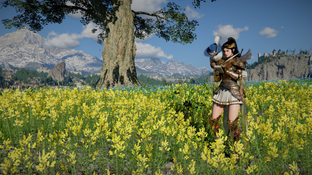
World of Warcraft was released in 2004 and has already traversed a “20-year-long journey.” There is no point in describing this legendary universe and this game at length here. You will hardly find any dedicated gamers who are unfamiliar with World of Warcraft. Perhaps it only makes sense to suggest that players who either want to dive into this realm for the first time, or have been living in it for just a short while, try World of Warcraft Classic. Classics never age.
Space Rangers 2: Dominators (PC) — November 26
 Image belongs to SNK Games, Elemental Games, Katauri Interactive, and Fulqrum Publishing. Image source: Steam.
The domestic press initially almost completely overlooked the cult Russian title Space Rangers. Almost. When the game finally reached journalists, awards and top ratings came pouring in. Seasoned gamers grew to love Space Rangers, not least for its gameplay mechanics reminiscent of Elite, Nether Earth, and Star Control presented in a modern format.
Yet gamers were passionate about the title not just because of its superb gameplay. Everything about it was fantastic: the hybrid of action-adventure and strategy genres, finely tuned mechanics, appealing graphics, captivating text quests, and a branching narrative with multiple endings. Is it worth playing today? Absolutely. Though it might make sense to jump straight into the Space Rangers HD: A War Apart expansion, developed with community involvement and available on Steam.
Star Wars: Knights of the Old Republic II — The Sith Lords (PC) — December 6
 Image belongs to Obsidian Entertainment and LucasArts. Image source: SteamDB.
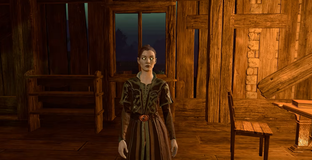
KOTOR 2 is a game from a galaxy far, far away and the Old Republic. They simply do not make games like this anymore. Over 20 years, its gameplay may have aged, but it remains thoroughly playable. The story is an entirely different matter, written by the then-young Chris Avellone, who by that time had worked on Fallout 2 and Baldur's Gate: Dark Alliance, and would later co-author Fallout: New Vegas and Divinity: Original Sin II.
The developers were rushed, and pieces of the unfinished story, crudely torn out, stuck out from the retail release, yet even in that state, the narrative captivated far more than just Star Wars fans. KOTOR 2 is rightfully considered one of the finest role-playing games in this universe, largely due to the scriptwriters’ efforts. So if you decide to experience it now, it makes sense to install a mod that partially restores the cut story content, as well as a Russian localization patch.
Never miss our newsAdd this site to your preferred sources to see us more oftenAdd on Google