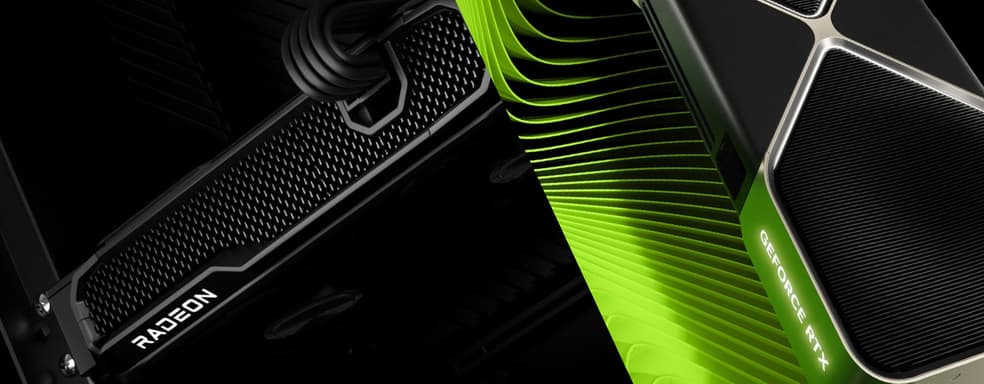
Budget AMD and NVIDIA Graphics Cards Under Threat. Memory Price Increase Changes the Market
The PC market is entering a difficult phase. The Korean publication Hankyung reported that AMD and NVIDIA are considering reducing or completely stopping the production of inexpensive GPUs. The cost of GDDR has risen so much that the production of affordable models has ceased to be profitable.
In recent weeks, prices for DDR5 and GDDR have been growing at a record pace. The AI sector is buying up almost the entire global volume of DRAM, which is causing suppliers to switch to panic buying of memory, and new batches are costing significantly more.
According to sources, both companies may redirect capacity to the premium segment, where a high margin is maintained. At risk: NVIDIA xx60, xx50 lines and budget Radeon. At the current cost of GDDR6 and GDDR7, the production of inexpensive cards costs almost as much as the production of higher-class models.
Analysts expect price increases, a reduction in choice, and a shift in the market towards PCs with integrated graphics. The middle segment will begin to pass itself off as a "budget", but with higher price tags.
Warnings have been sounding for a long time: ASUS stated that the DRAM deficit would lead to a serious increase in the cost of PCs. If AMD and NVIDIA remove affordable models, the video card market will face a second major collapse in a decade - after the mining boom and the pandemic.
Never miss our newsAdd this site to your preferred sources to see us more oftenAdd on Google