Intel Showcases Z-Memory Prototype for the First Time, Aiming to Be an Alternative to HBM
But it's too early to count on saving the sector and falling prices.
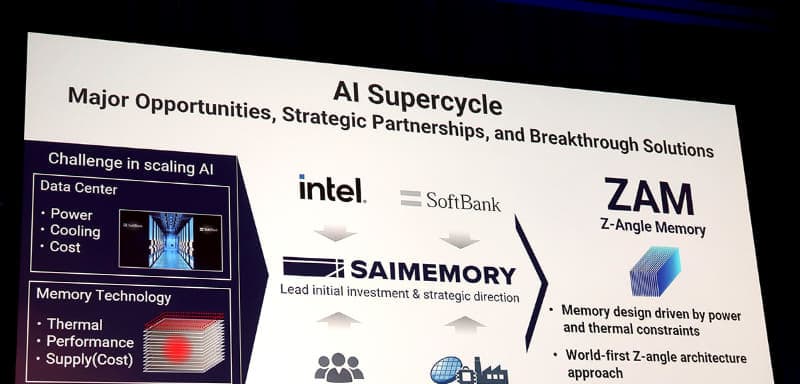
Although Intel has not been in the DRAM business for several decades, the company has entered a new direction for itself by joining forces with Saimemory, a subsidiary of SoftBank. The joint project is called Z-Angle Memory (ZAM) and aims to challenge the de facto HBM monopoly in the high-performance memory market. Previously, ZAM appeared mainly in scientific papers and press releases, but, according to the Japanese publication PCWatch, the first official overview of the technology was presented at the Intel Connection Japan 2026 event.
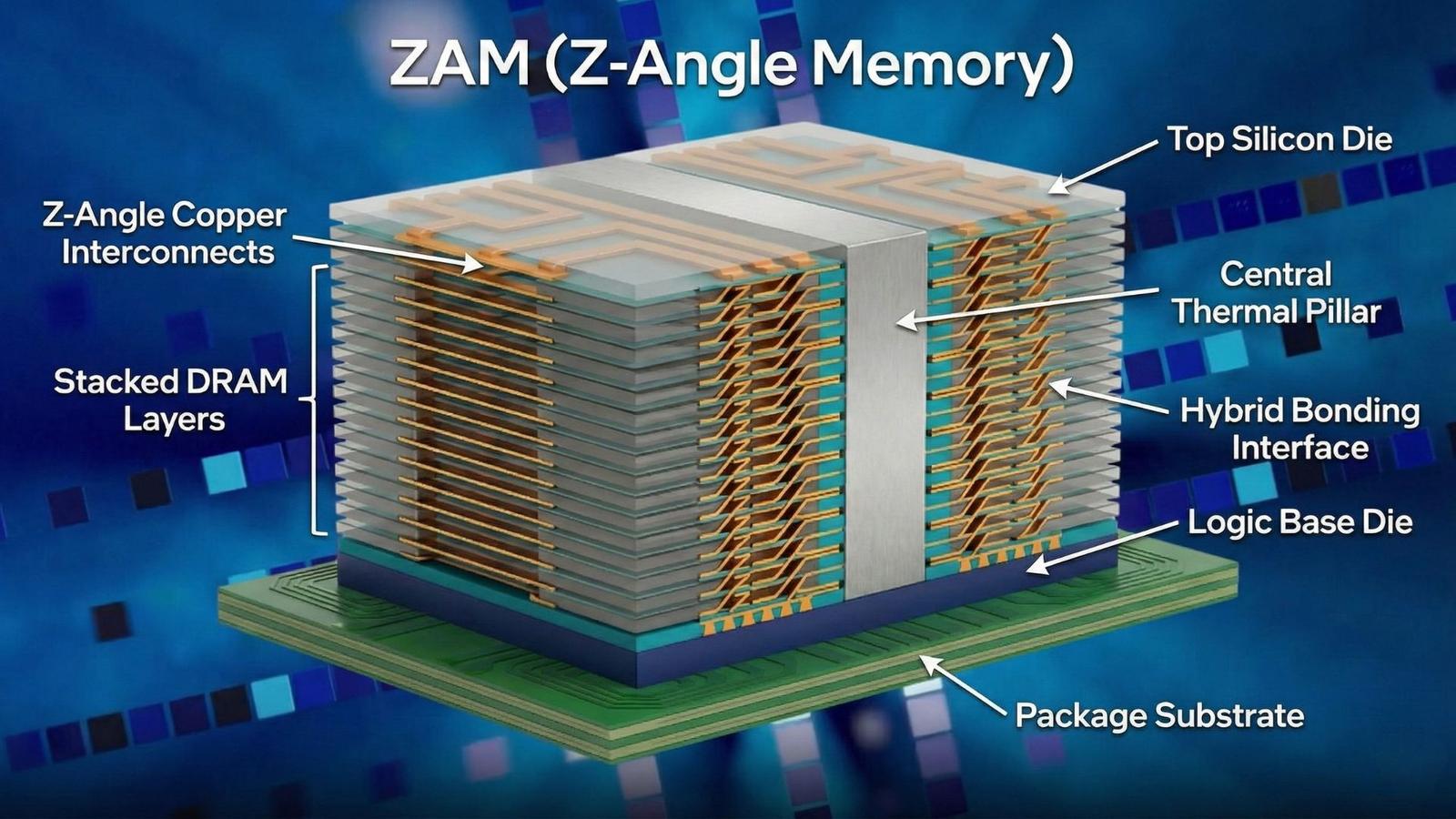
The main feature of ZAM is the use of a stepped interconnect topology, in which connections are laid diagonally inside stacks of crystals, and do not pass strictly vertically, as in traditional approaches. According to Intel, this solution provides significant advantages in the field of heat dissipation, which is critical for modern high-density memory modules.
Intel's role in the ZAM project has not yet been fully disclosed. According to marketing materials presented at the exhibition, the company is responsible for "initial investments and strategic decisions." Nevertheless, the potential advantages of Z-Angle Memory compared to HBM are already being discussed. Among the stated improvements:
- 40–50% reduction in power consumption
- Simplified production due to Z-interconnects
- Higher capacity per chip — up to 512 GB
Never miss our newsAdd this site to your preferred sources to see us more oftenAdd on Google