Monsters of Polish Socialism. A Review of the Horror Cronos: The New Dawn
After Bloober Team gifted the world with a magnificent remake of Silent Hill 2, their name ceased to be associated solely with niche experiments like Layers of Fear or The Medium. However, the cult status of the classic inadvertently overshadowed the studio's own contribution-it seemed that it was not their victory, but the merit of the original material. That's why Cronos: The New Dawn faced a difficult task-to prove that Bloober is not just a quality craftsman, but a studio that evolves, grows, and is ready to compete in the genre of combat horror. Did they succeed? Let's find out.
Not everything goes according to plan
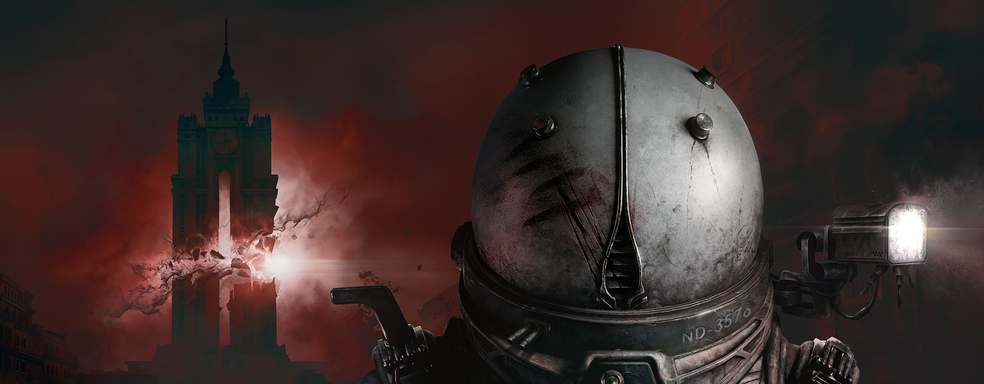
Cronos: The New Dawn sends us to an alternate eighties, where the showcase of the socialist future has turned into ruins. After waking up in a mysterious sarcophagus and a short test resembling a replicant check, we find ourselves on the streets of New Dawn.
Once, it was a model city, inspired by the real Nowa Huta—a giant socialist district of Krakow, conceived as an "ideal city" of the Stalinist era, a radiant symbol of the triumph of socialism. Now it is plunged into eternal twilight. An epidemic called the Fracture has burned all life out of it, leaving only temporary anomalies and creepy mutants called Orphans.
As the Wanderer ND-3576, an agent of the Union, we delve into the past through temporal rifts to snatch those who play a key role in this story from the clutches of Change. The previous Wanderer died, and now we take his place—because "that is our mission."
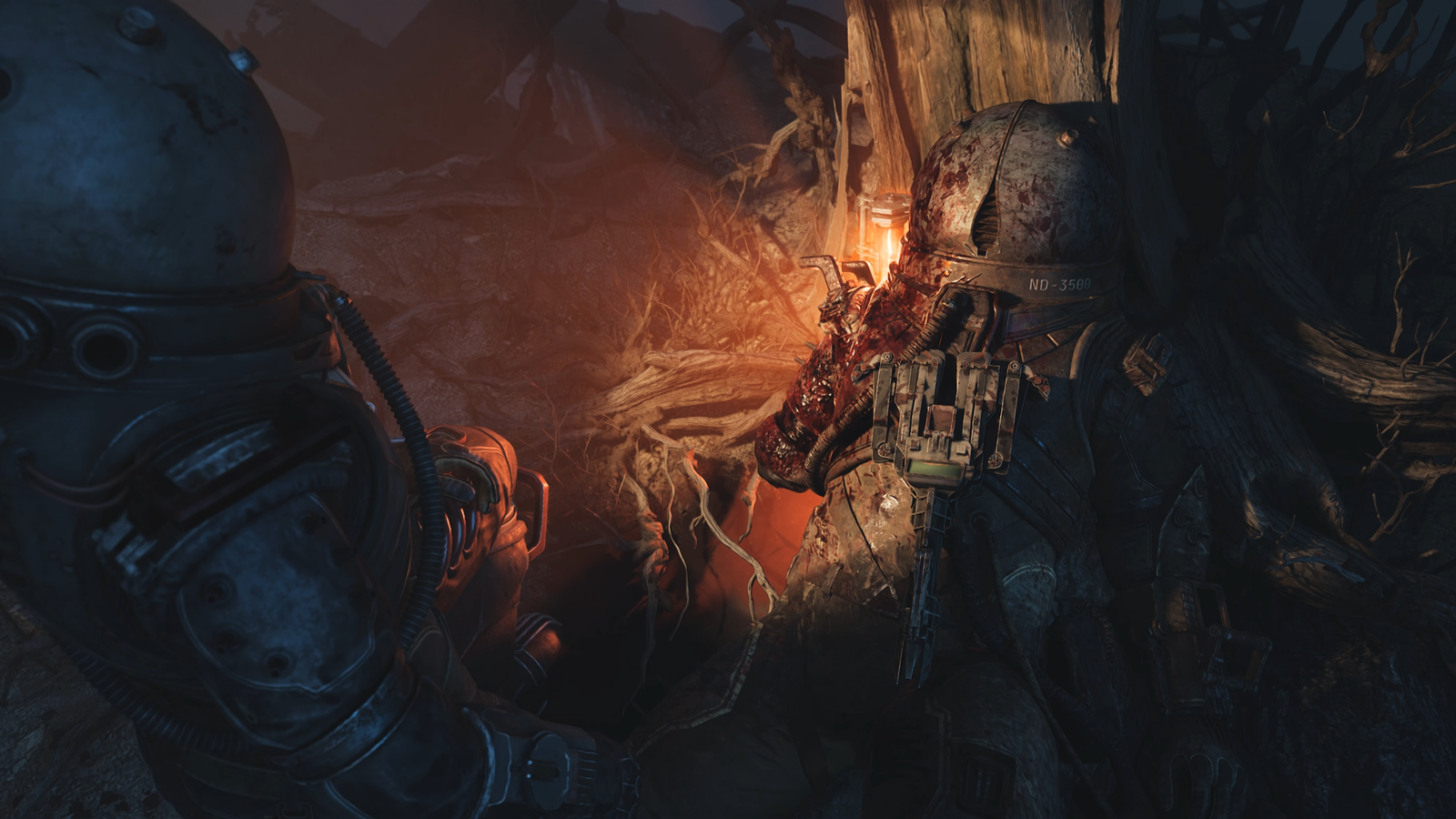
At first glance, the goal seems noble. But as the heroine—and the player themselves—progress, doubts begin to torment them. We are not saving the people themselves, but only extracting their essences—a mental imprint, if you will. We are saving them, in essence, depriving them of human existence. And with each extraction, the Wanderer's consciousness becomes more and more intertwined with the personalities of the extracted, giving rise to hallucinations, fragments of other people's memories, and disturbing images of the past. Who are we really saving—and for what? And are these her thoughts at all?
The story has to be pieced together—from found documents, fragments of diaries, and voices of the past breaking through. Gradually, a picture emerges where personal tragedies coexist with a large-scale disaster. But each new discovery not only provides answers but also raises new, even more complex questions.
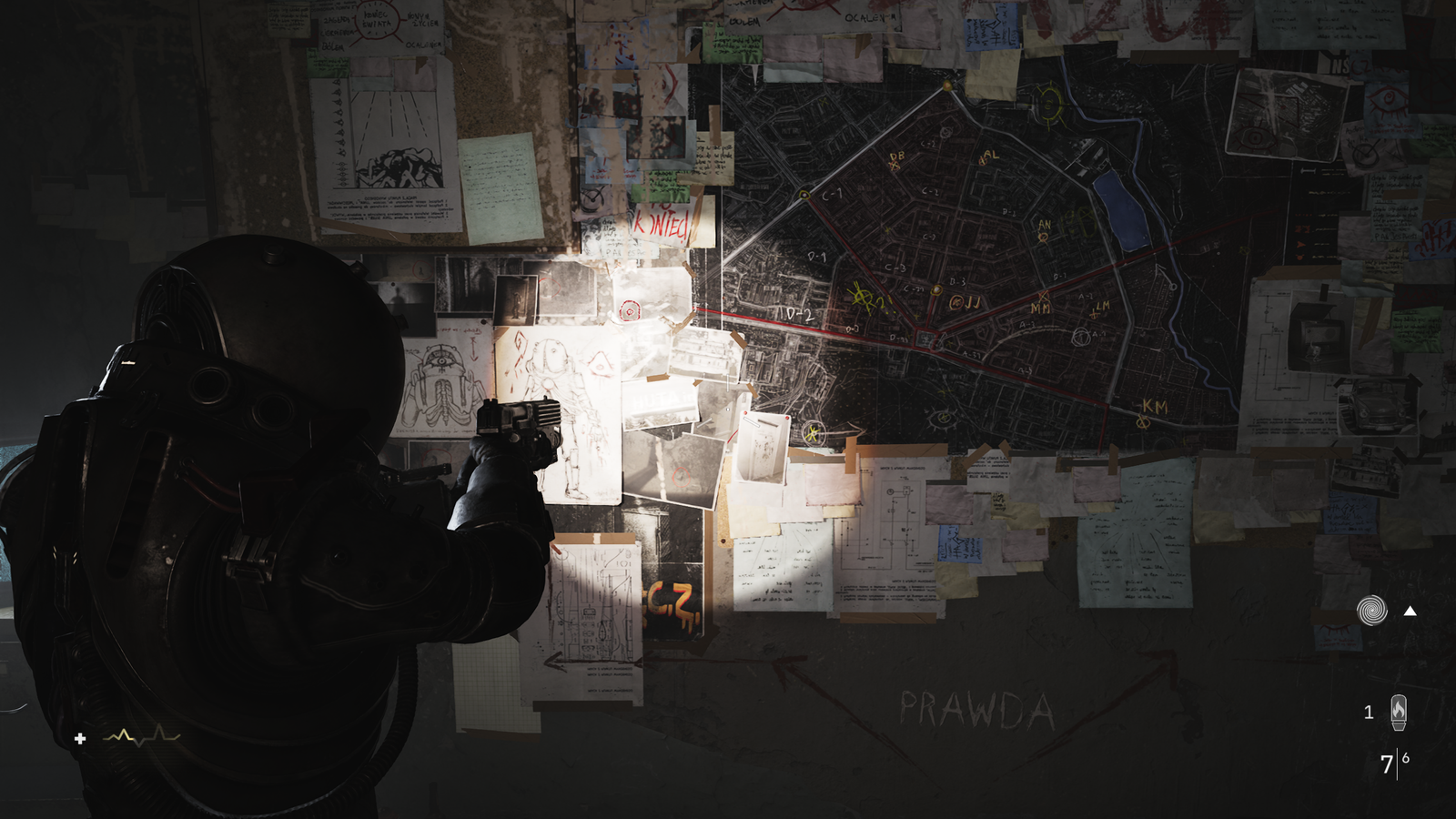
If you wish, you can discern much deeper themes behind the facade of combat horror—the confrontation between humanity and inhuman ideals, transhumanism, the suppression of individuality in the name of the common good, distorted ideas about collectivism. And understand that even good intentions in this world can turn into a nightmare.
The plot intrigues and pushes you to move on, but, alas, it cannot be called truly satisfying. It is vague, sometimes indistinct, and even if you collect all the notes, listen to the audio diaries, and thoroughly talk with the Watcher—one of the key characters—you still won't get definitive answers.
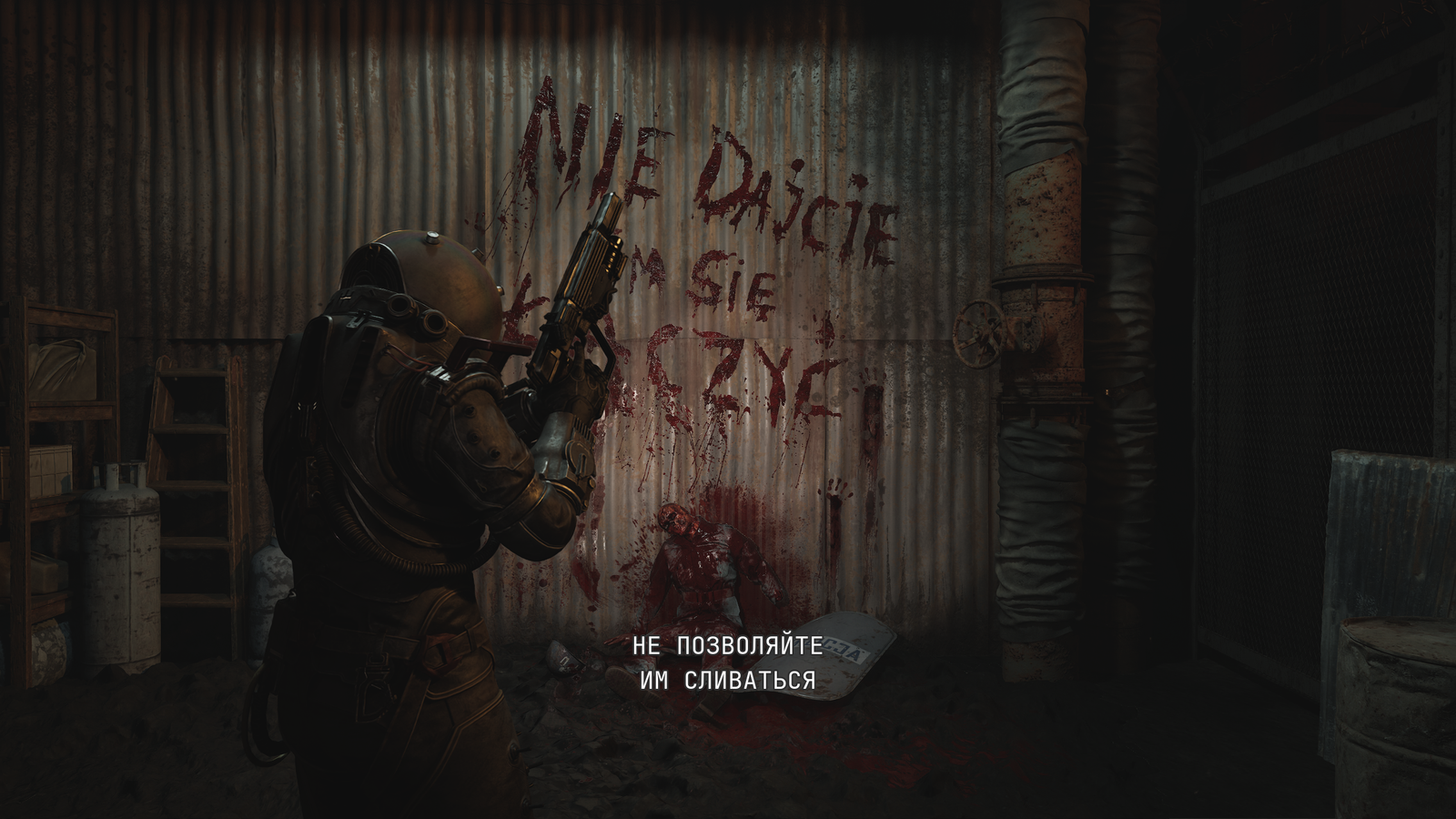
The final twist, against the backdrop of the tragedy that the game so diligently builds, looks frankly primitive. Although extremely human—it's just not surprising anymore. But to get at least to a grain of truth, you must first survive. And remember the main thing—don't let them merge.
Resident Space
If you paid attention to the subtitle, you may have already understood where I'm going. There is absolutely nothing in Cronos that you could not find in recognized representatives of the genre. It is a highly crafted product—made, if you will, "by the book." And in this, of course, there were both pros and cons.
But it's especially funny that the game, warning us against "monsters of collectivism," which in no case should be allowed to unite, is itself a compilation—a combination of features of many other, much more recognizable horrors.
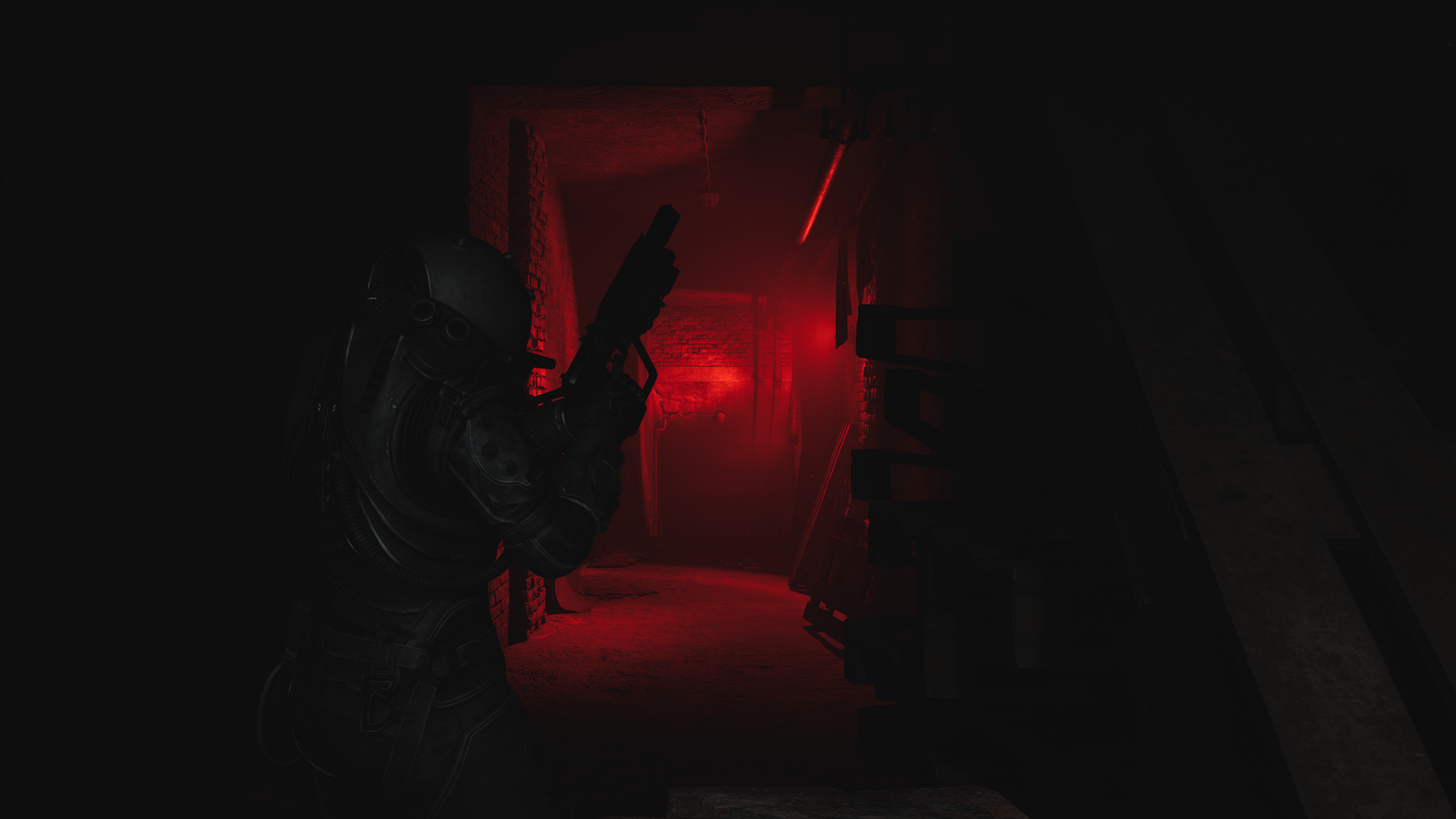
Cronos remains true to the traditions of combat horror: we have to carefully explore dark locations, fight monsters in conditions of resource scarcity, look for useful items, and solve small puzzles to advance through the plot.
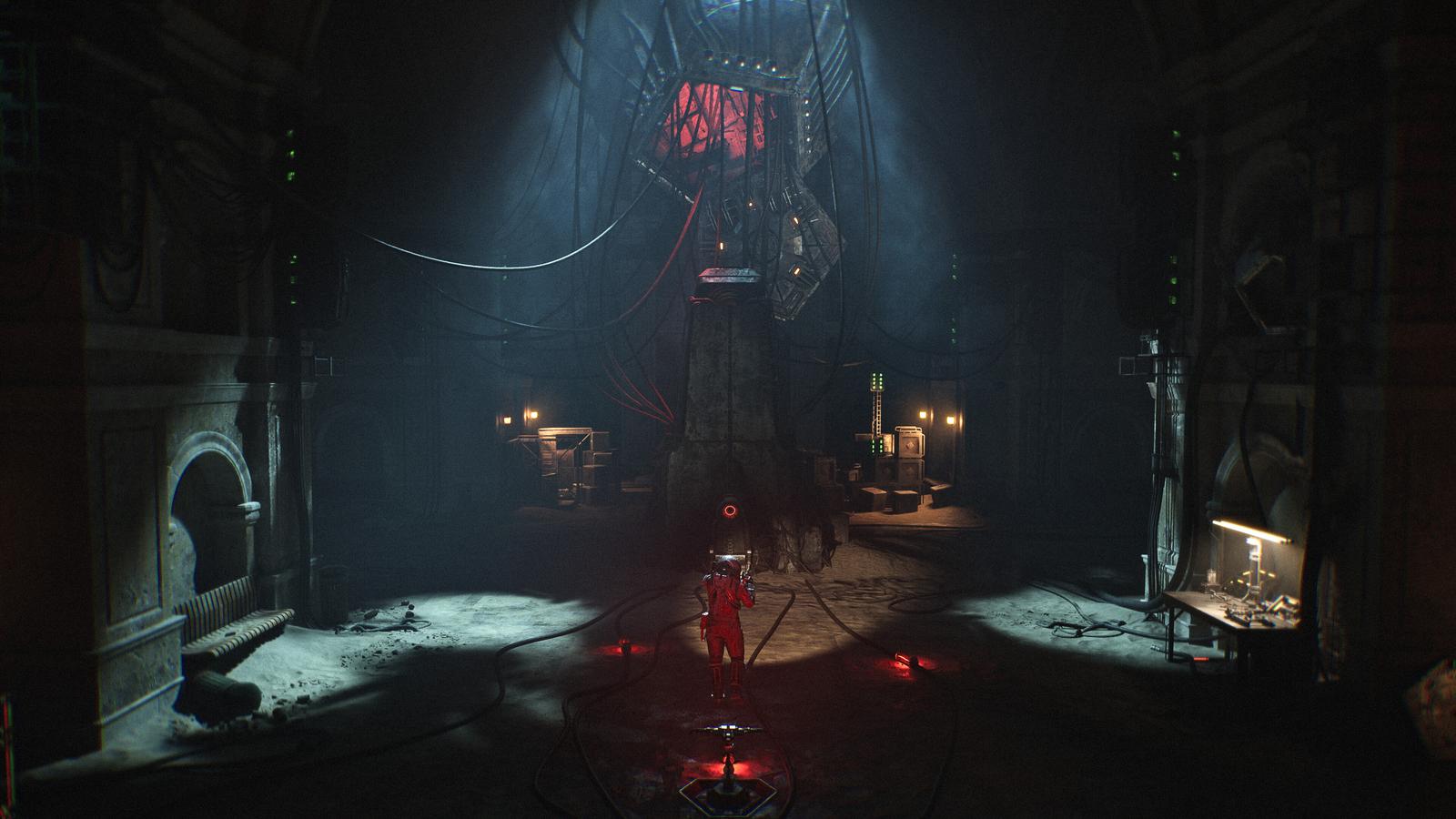
The structure of the game resembles the classics of the genre—with a central hub, to which we periodically return to go to new areas of New Dawn in search of another goal. Something like the main hall of the Raccoon City police station from Resident Evil 2.
On the way, we are waiting for a standard, but time-tested set of genre challenges: searching for fuses and keys, opening combination locks, and methodically collecting resources—just to make it to the next save room.
Somewhere with the help of a gadget-emitter you have to control temporal anomalies—rewind time for individual objects of the environment. For example, you have a collapsed floor in your path—with the help of the emitter, it can be restored to move on. Somewhere—lay a chain of electrical conductors to power the generator.
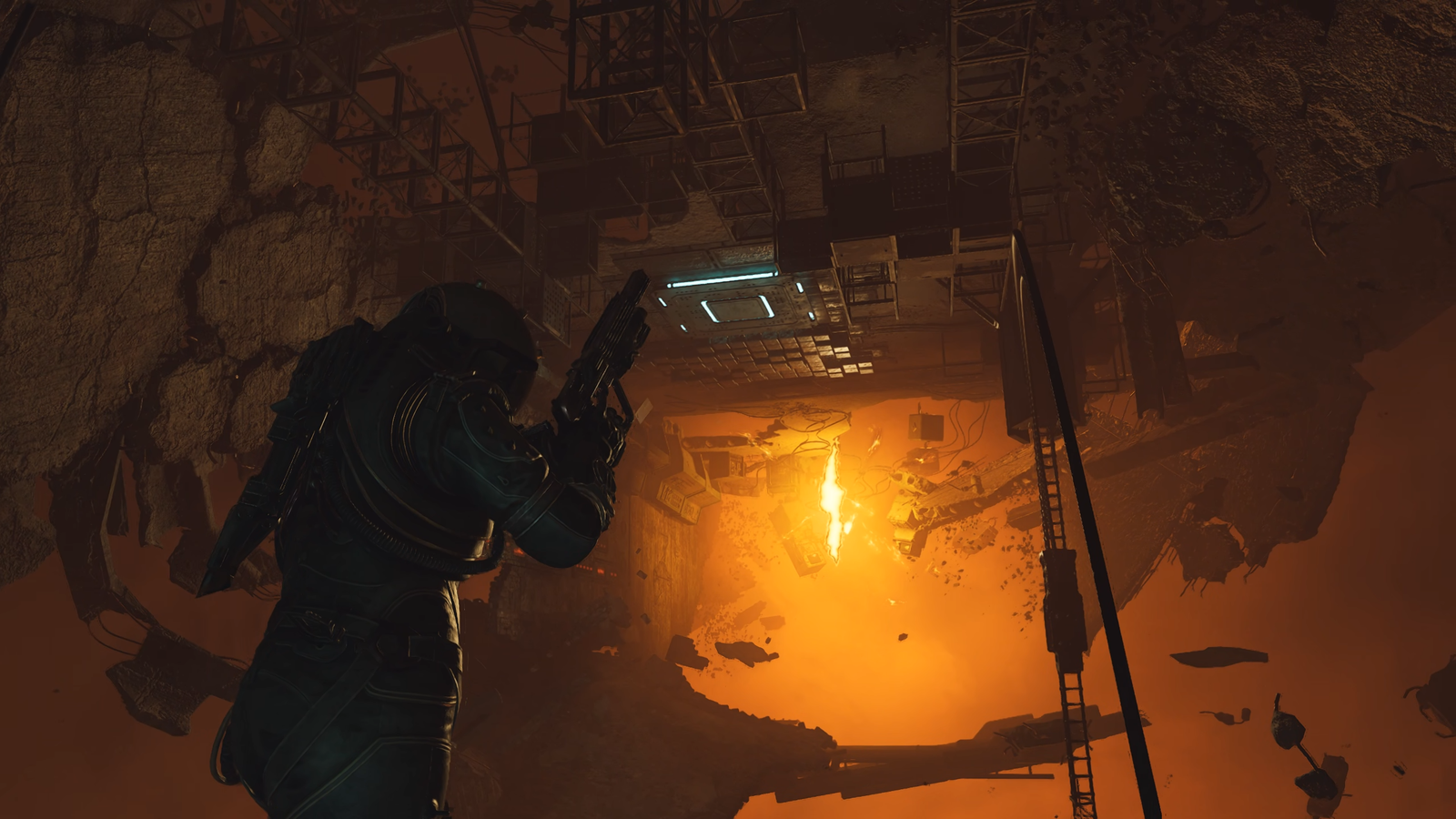
Sometimes there are segments with gravitational platforms, allowing you to move between individual fragments of a world torn to pieces. This gives you the opportunity to look at the surrounding reality from a different perspective and better feel the scale of the tragedy.
All these elements and puzzles do not delay the player for long—they simply have no chance, they are so simple. Nevertheless, they add a little variety to the exploration, although at times they are perceived as a banal way to make the player make an extra detour and stretch the passage.
And, of course, all these sorties are not without collisions. Battles in Cronos become a natural continuation of the exploration—an Orphan may be hiding behind every door or turn, and the noise in the next room, as a rule, does not bode well.
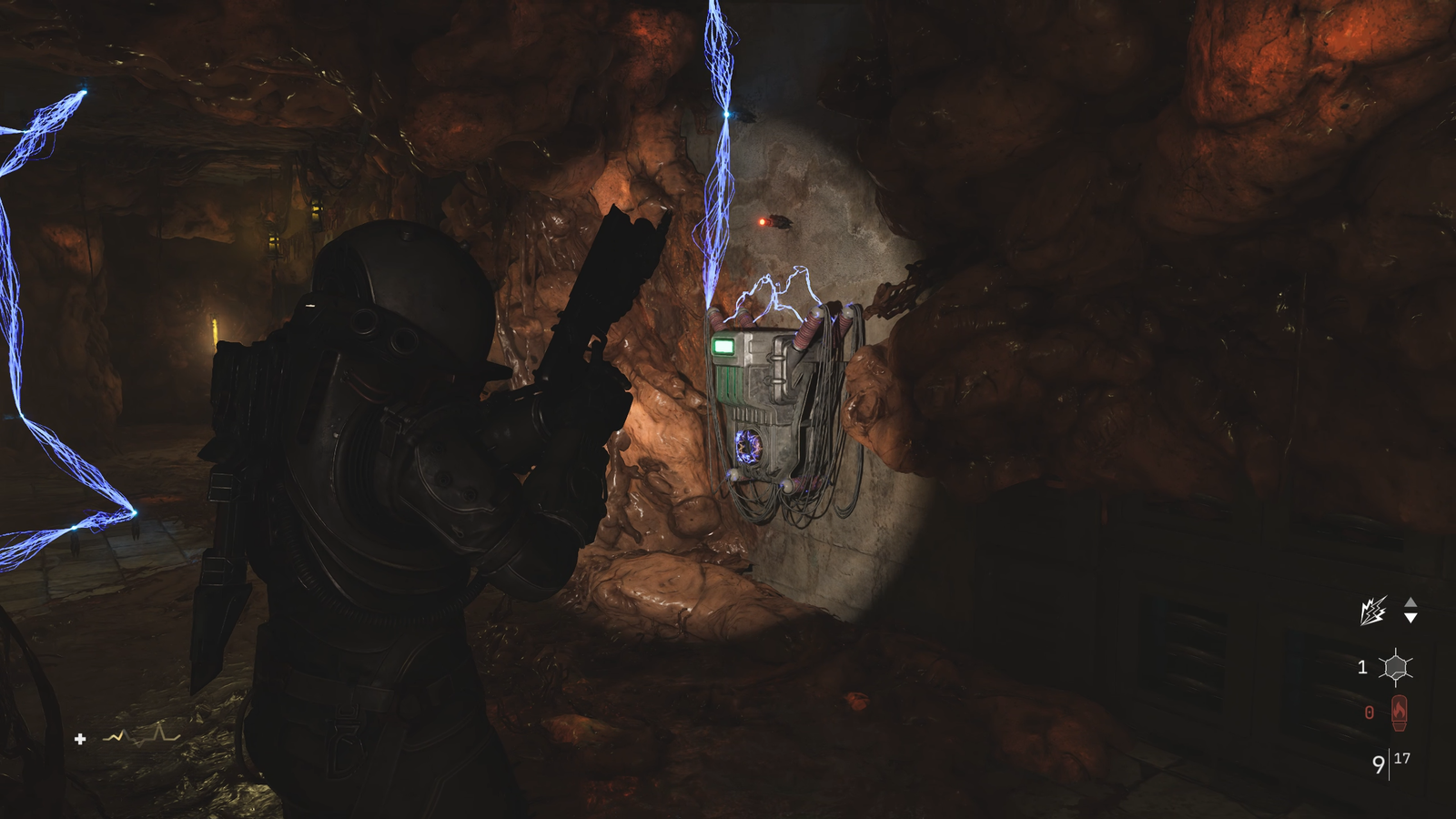
Collective horror
The combat system in Cronos balances on the verge of heaviness and responsiveness. Our heroine is encased in a massive spacesuit—Armor, which does not allow her to make dashes or dodges—which is sometimes sorely lacking, especially when enemies are pressing in numbers or squeezing into narrow passages.
But she has access to endless running, not limited by human endurance, and melee attacks, allowing you to beat and stomp opponents—as Isaac Clarke did in Dead Space. As there, this helps to save ammunition—first you shoot off limbs, then you finish off in hand-to-hand combat.
The arsenal of the main character is simple, but exquisite. Only seven types of weapons, and almost each one feels like a variation on a familiar theme—but with its own character, expressed in an alternative fire mode. The basic "Sword" relies on powerful charged shots, which help throughout the game, while its advanced version, "Dirk", tempts with an automatic mode that burns ammunition in an instant.
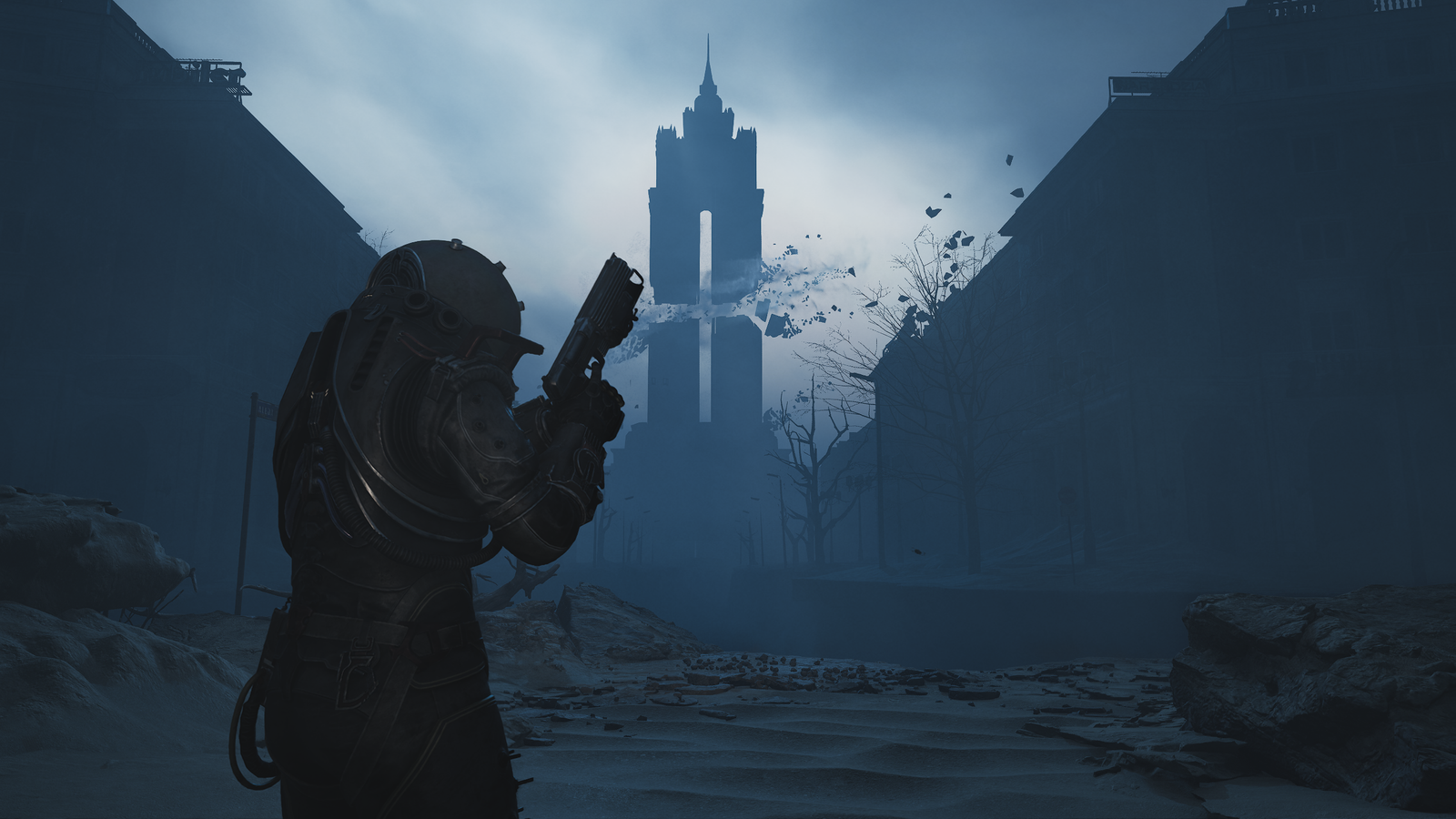
A pair of shotguns is ideal for narrow corridors — allowing you to hold back a crowd or quickly deal with a single large target. Automatic rifles work confidently at medium range and, if desired, allow you to shoot enemies from afar — which, however, is not often required.
The composition is completed by a real BFG crossbow, disembodying everything in its path. True, in the first playthrough you will have only two charges (I didn’t find more), and crafting cartridges for it only opens in "New Game+".
In addition to firearms, the Wanderer has mines — they can be placed on the surface or thrown directly at enemies with predictable results. The main thing is the Torch, a flamethrower built into the heroine's armor, which allows you to burn corpses. This is really important, because the killed enemies become food for the survivors. If you let them merge, you will no longer have just another opponent in front of you, but something much more dangerous that will become stronger with each absorbed body.
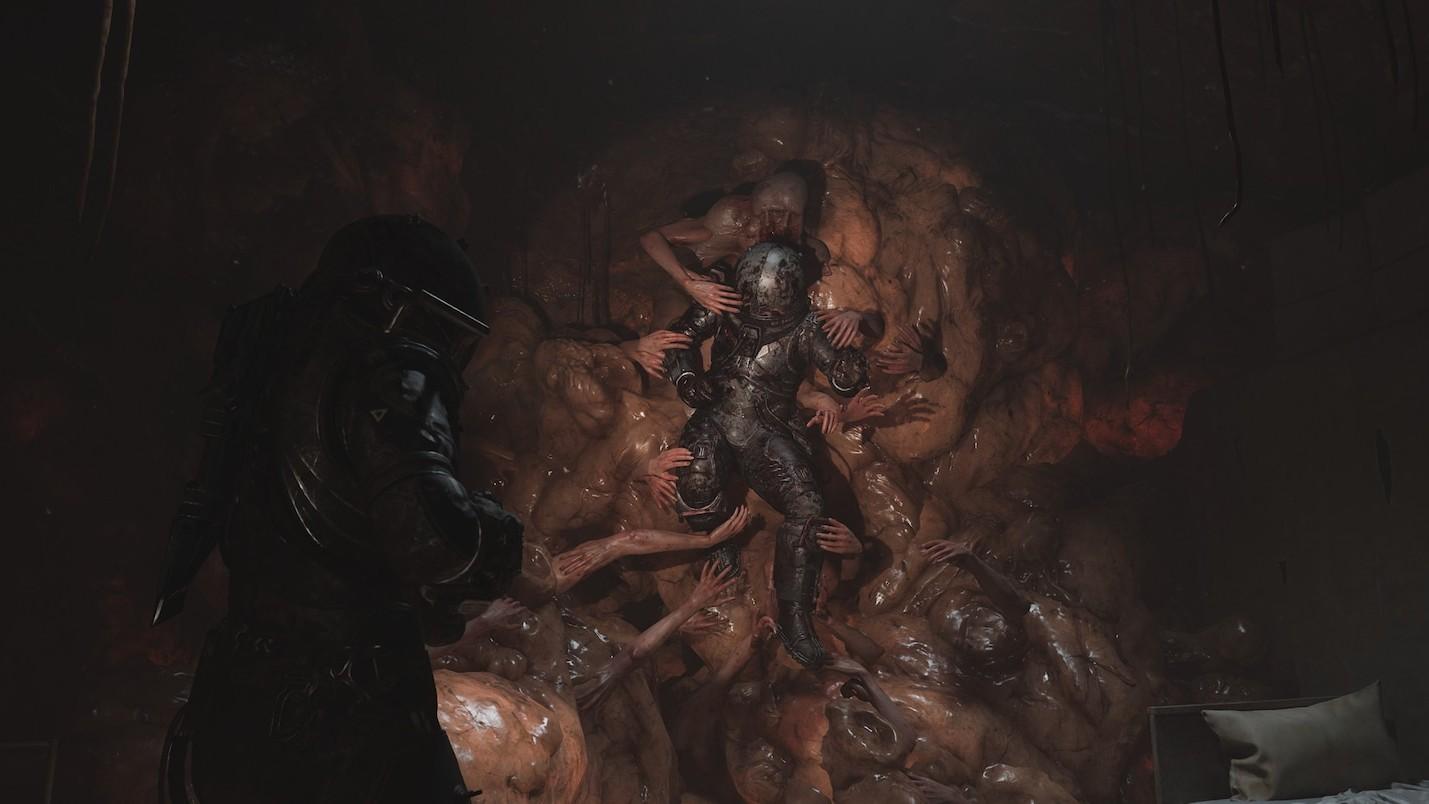
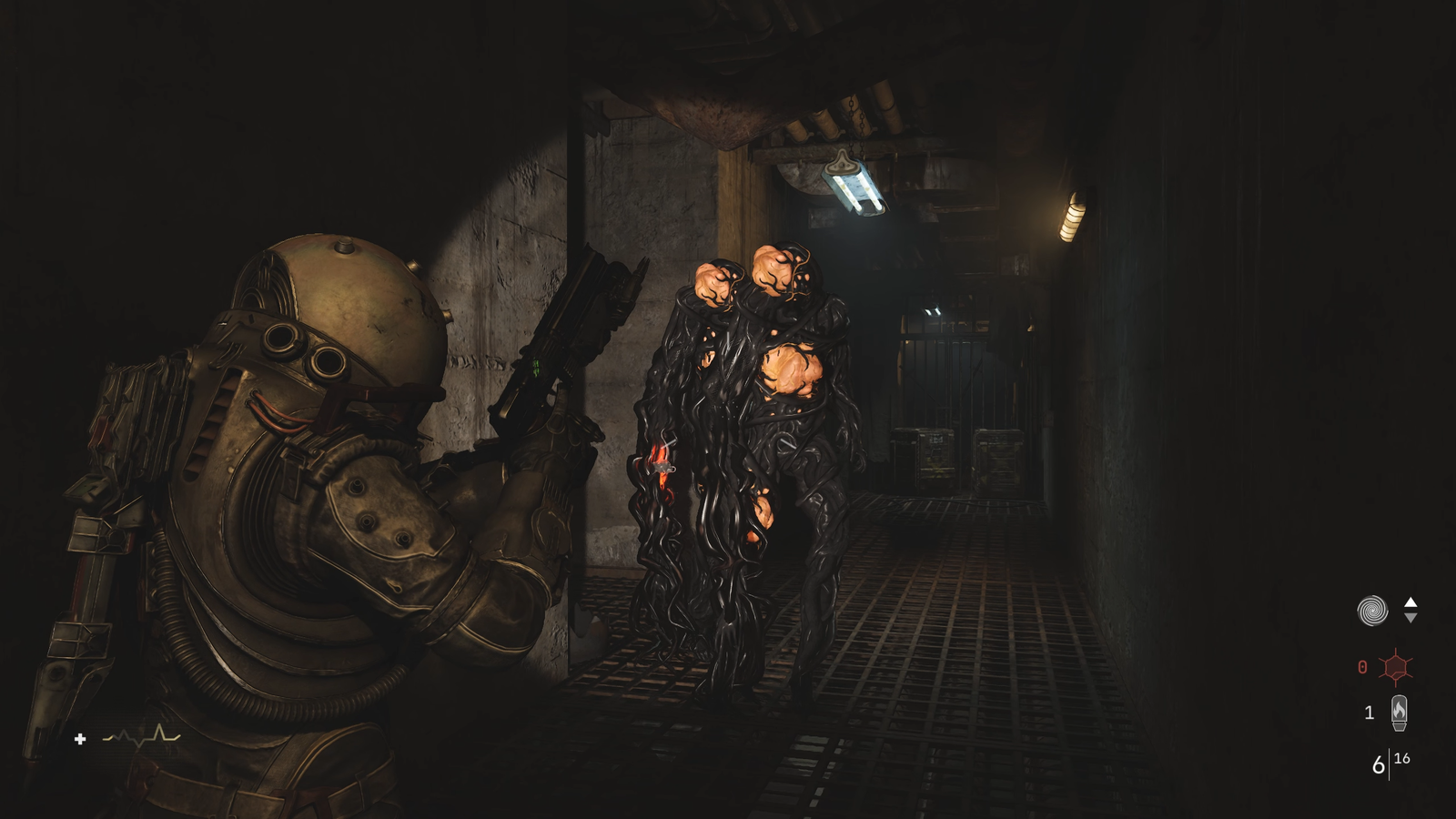
The variety of opponents is small, but this is enough to keep the player in suspense. Among them are those who hide in the biomass, grabbing the victim with tentacles, small things exploding with poisonous splashes, fused bodies crawling along the walls and ceiling, and ordinary monsters that simply "rush" at the player.
The latter are potentially the most dangerous: they are able to absorb each other, becoming stronger and growing up to fat juggernauts capable of absorbing a whole mountain of ammunition.
Of course, enhanced versions are also found separately, but in fact they differ only in the presence of thorns, armor and the ability to attack with tentacles at a distance.
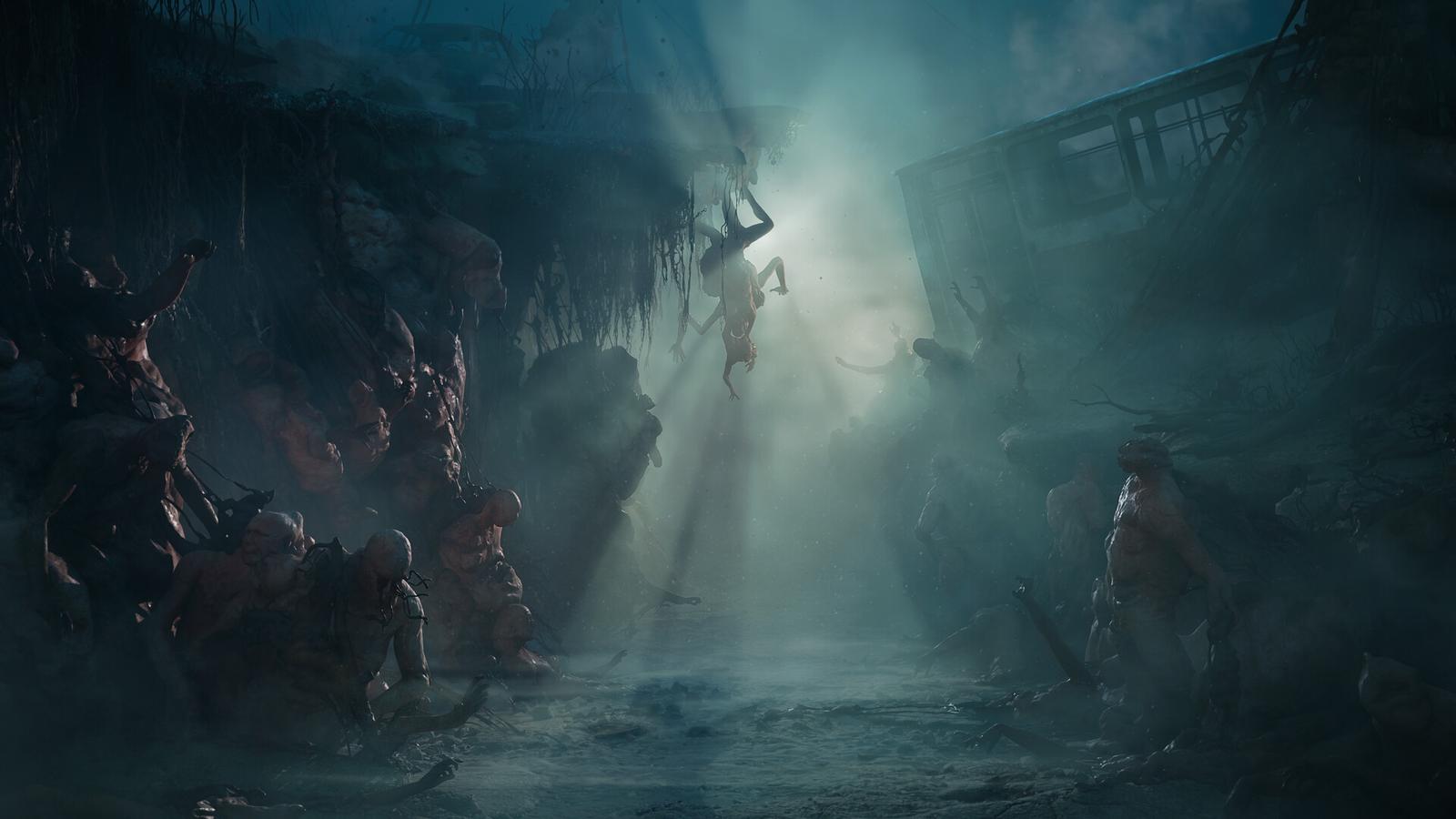
Battles with bosses are built on the same familiar principles — the player is locked in an arena, where explosive barrels and boxes of ammunition are generously scattered. All that is required is to methodically shoot off the glowing weak spots that are exposed upon contact with fire.
There are few bosses, and they do not impress with variety: one bulky bag of flesh is replaced by another, sometimes there are two of these "bags", and the habits differ only in details — like a very slow "teleportation" or the ability to summon minions.
Only the final battle is the most different, where you have to jump on gravitational platforms and run out of area attacks. But even it does not turn into a grueling test — I managed to destroy all the bosses, except for the last two, on the first try, and the last ones on the second. Because among the player's opponents are not only monsters, but also inventory and resource management.
The scariest enemy
To say that the inventory in the game is limited is to say nothing. This is the most merciless creation in the whole game, because of which the passage is stretched out more than necessary, and, perhaps, this is the main disadvantage of the whole game.
We start with six inventory slots, and at first it doesn’t seem like a tragedy. But it quickly becomes clear that each bolt cutter, core for pumping or key takes up precious space next to first-aid kits and cartridges. Even the weapon — which, it would seem, is one, simply transforms to suit the needs of the heroine, like the Service Weapon in Control — still takes up separate slots. Of course, the cartridges for each type of weapon are different and also take up space.
But what is most offensive is that even if your pistol is empty and the inventory is full, the heroine will not load the found cartridges directly into the weapon. She just won't be able to pick them up. And then either throw away something valuable, or stomp back to the save room to free up space. And you have to choose often.
But that's not the saddest thing. Remember that if you miss and leave a pile of corpses uncleaned, the next enemy can grow many times stronger? So — there is only one charge for burning corpses, and you can replenish it only at the refueling station in the save room.
It would seem that this should force you to carefully choose what to burn — especially considering that some rooms with resources are hidden behind biomass, which also needs to be burned. But in practice, such a restriction leads to the fact that in the first hours you, like an idiot, run back to the save room every few minutes to replenish the charge or free up space in the inventory. This is not always necessary, but you, as a player, do not know what awaits you around the next corner, and you play it safe — and this greatly affects the initial pace of the game.
Yes, it is worth saying that the game has Armor and weapon upgrades, which allow you to increase damage, health, the supply of flamethrower or mine charges received during crafting. Fortunately, all this can be created directly in battle, which is very convenient... if you do not consider that the number of resources for crafting that the player can carry with him is also limited by pumping.
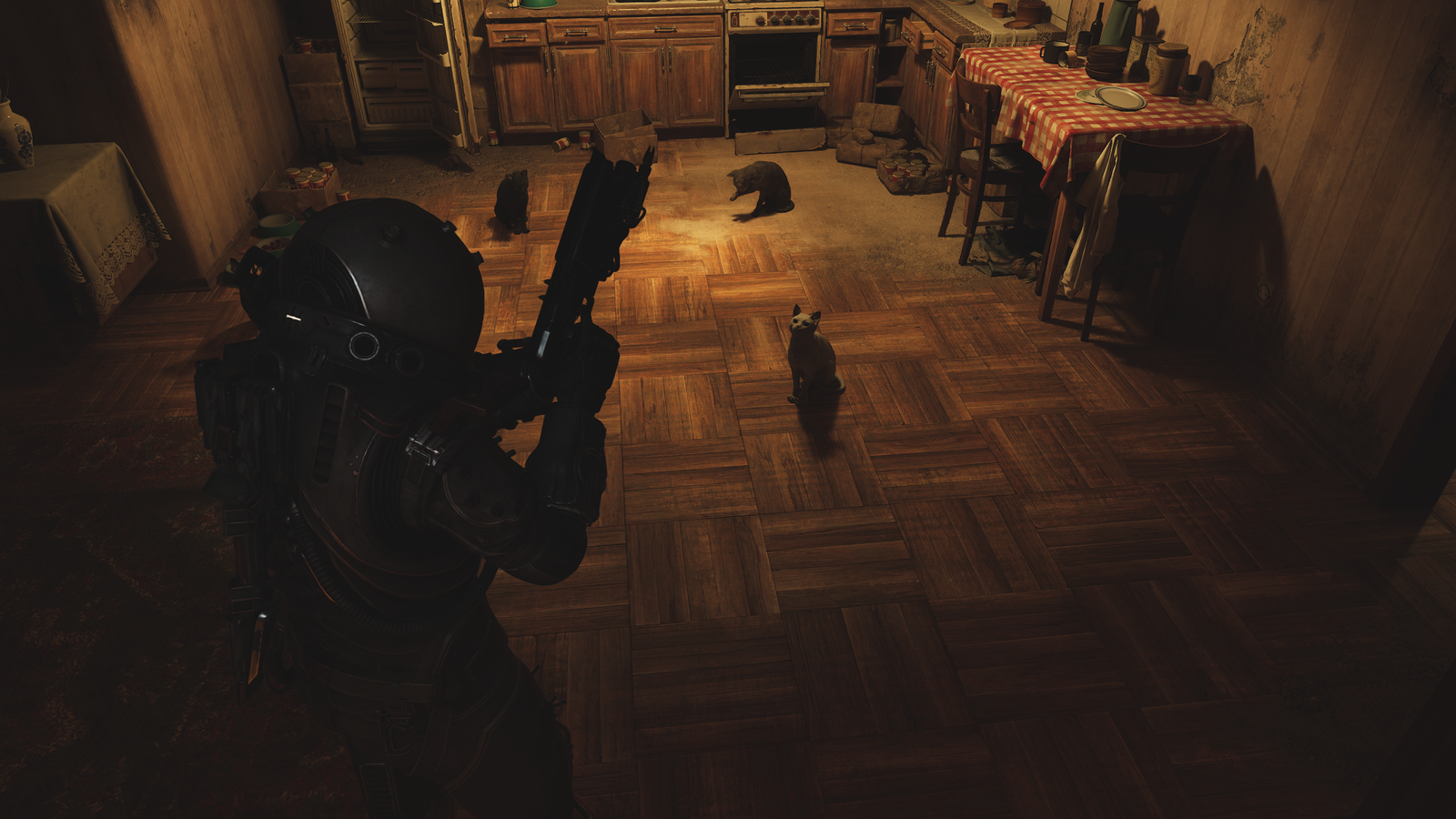
That is, instead of accumulating resources and spending them as needed — on what you really need — sometimes you have to craft for the future, just to pick up another chemical or piece of metal. And again go to the chest to drop all the unnecessary things. Even meeting a cute purring kitty, for finding and stroking which they give out resources for pumping, can eventually turn into a headache — because you will have to turn back again to unload the loot.
It should be clarified: this is not a critical minus, but one of the most noticeable. Therefore, if you decide to get acquainted with Cronos, I recommend that you first focus on pumping the inventory and charges of the "Torch" — this will save you about two hours and enjoy the game without unnecessary headaches.
Cronos as a whole is assembled competently and professionally, but, perhaps, this is where another problem lies — it is impossibly predictable. An experienced player in combat horrors always knows what to expect: by the number of explosive barrels, it is easy to guess the scale of the upcoming fight, and if you find yourself in a hospital, do not doubt that you will have to look for three chemical reagents.
And yet, despite the predictability, the gameplay is satisfying. Exploring this world is still interesting, because one of Cronos's strongest points remains its unique atmosphere and artistic design.
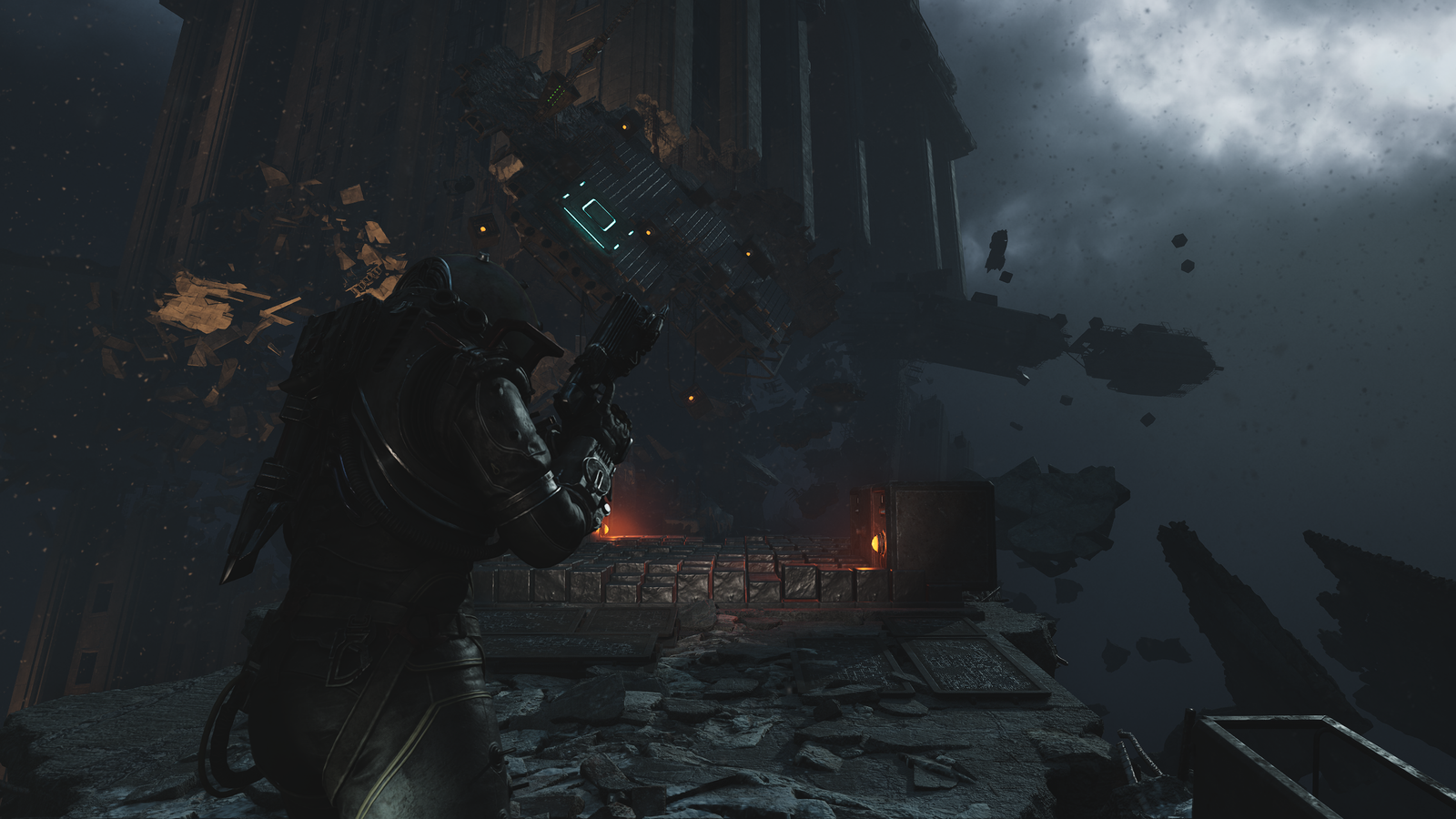
And outside the window everything is the same...
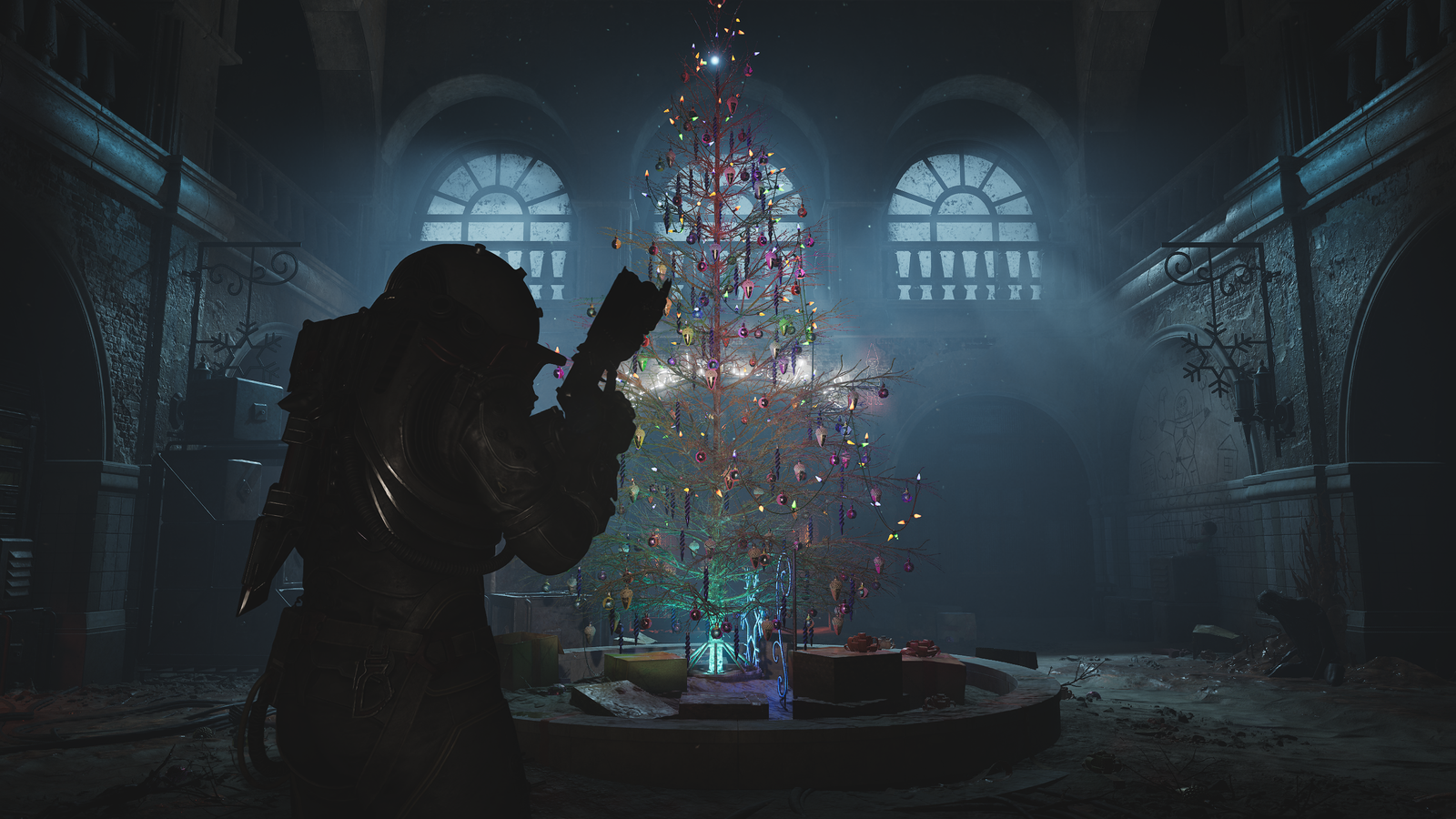
The atmosphere in Cronos pulls on itself the lion's share of impressions. The developers took as a basis a rare setting — mixed retrofuturism and social realism with utopian ideas about the city of the future — and brilliantly implemented it.
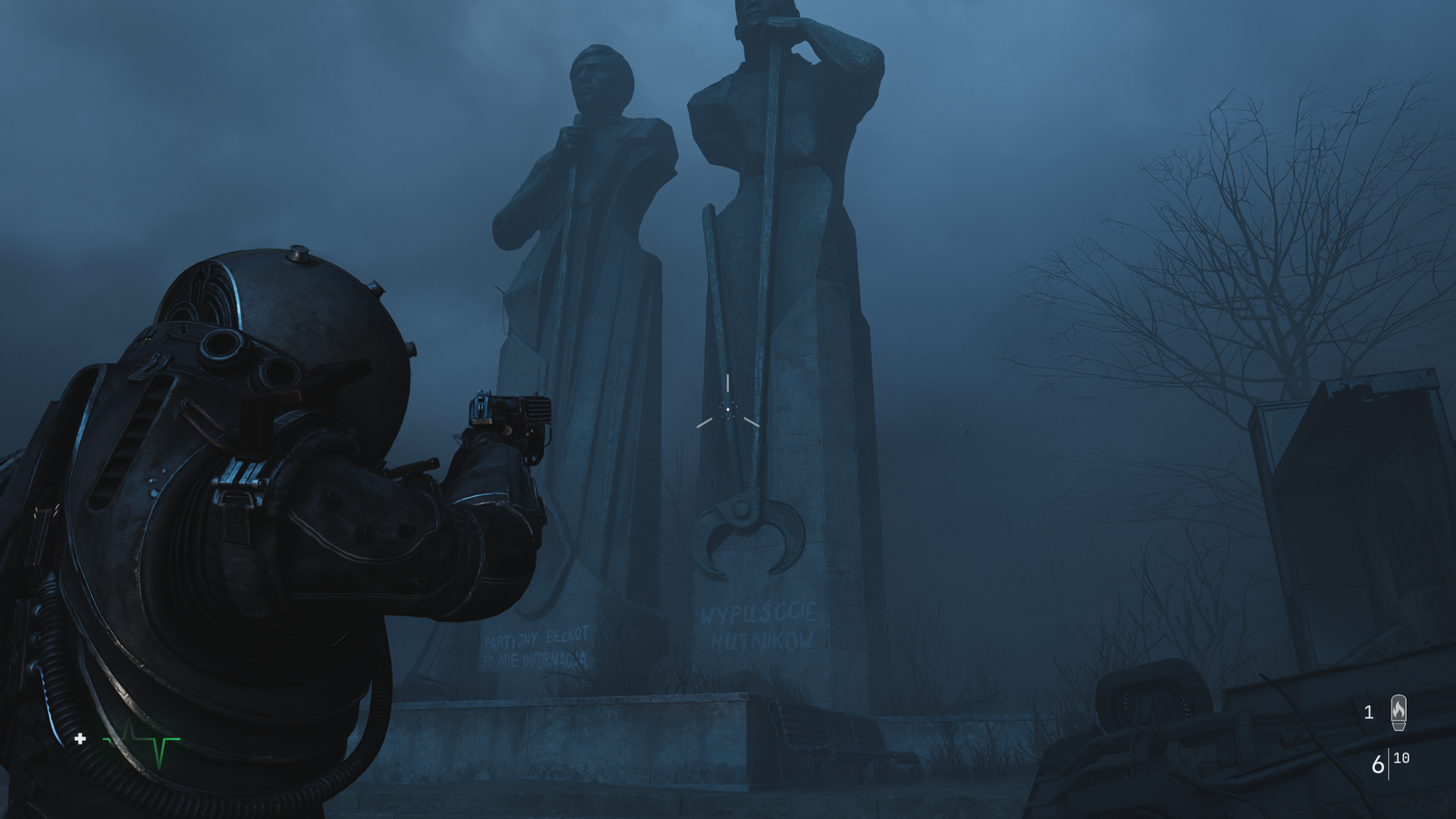
New Dawn appears as a monument to the era of socialist realism: rough concrete high-rise buildings, monumental statues of workers, Soviet mosaics, playgrounds, rusting cars and posters about a bright future are mixed with industrial landscapes, which are absorbed by a ruthless, disgusting biomass of intertwined mutilated bodies.
Exploring some locations starts to feel like a journey through rotting internal organs, where something disgustingly squelching drips from the ceiling — and sometimes even crawls out to try to kill the heroine.
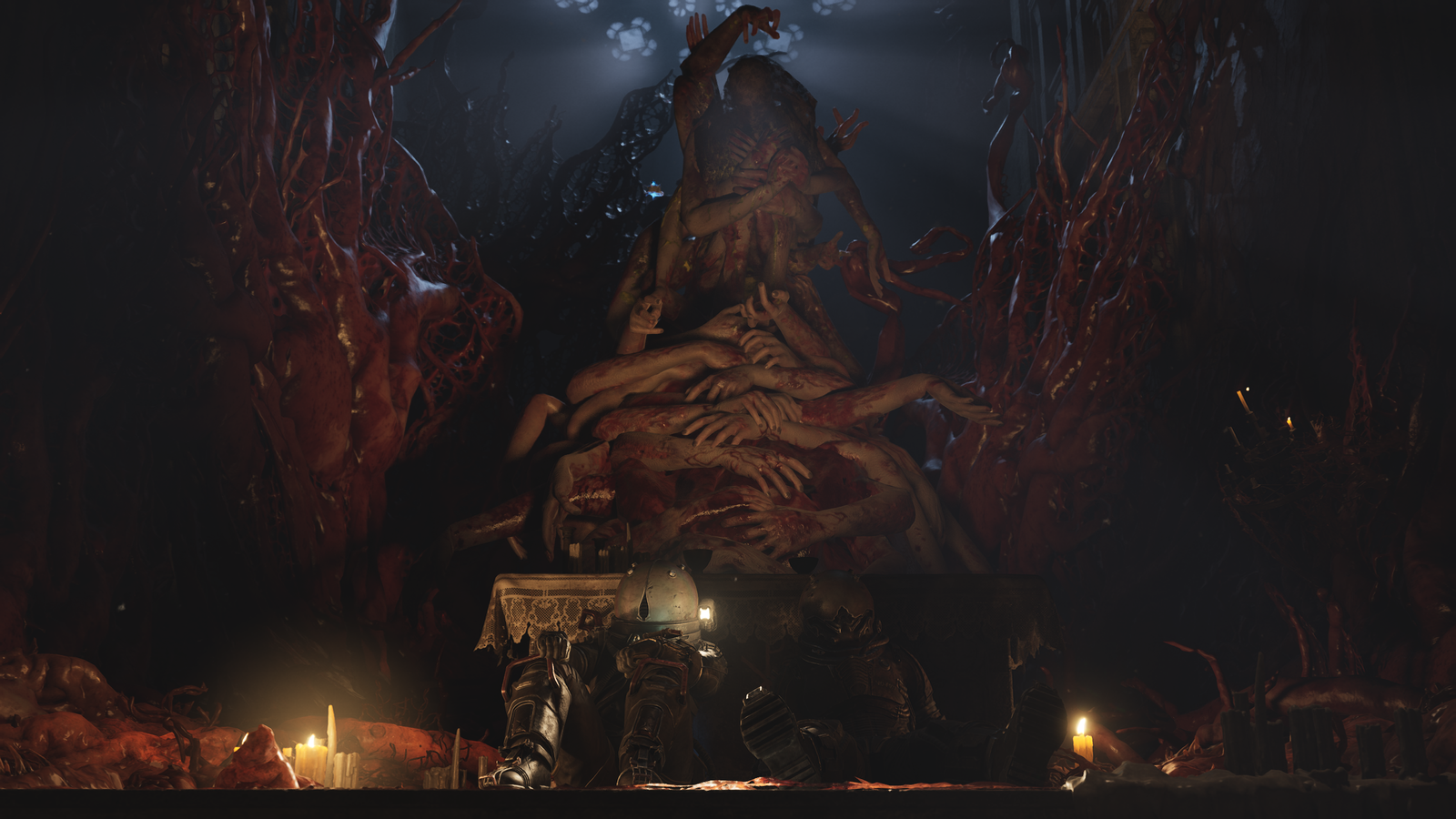
Despite the abundance of gray tones, it's hard to accuse Cronos of being monotonous. Yes, there are many similar decorations here — gray houses, industrial buildings — but in the context of the setting, it looks organic, and the views change often enough. Moreover, our "Stalinist" and "Khrushchev" buildings outside the window also rarely please with variety — that's why the game's Poland seems painfully familiar.
Nevertheless, the game surprises — with high detail of interiors, the scale of destruction, and debris floating in the air, although it never gives a clear answer as to how exactly all this happened.
The level of location design, at the same time, deserves special praise. It is almost impossible to get lost here, the corridors and squares are logically connected, and the routes naturally intersect. At some point, I got so carried away with the research that I almost forgot about the existence of a compass.
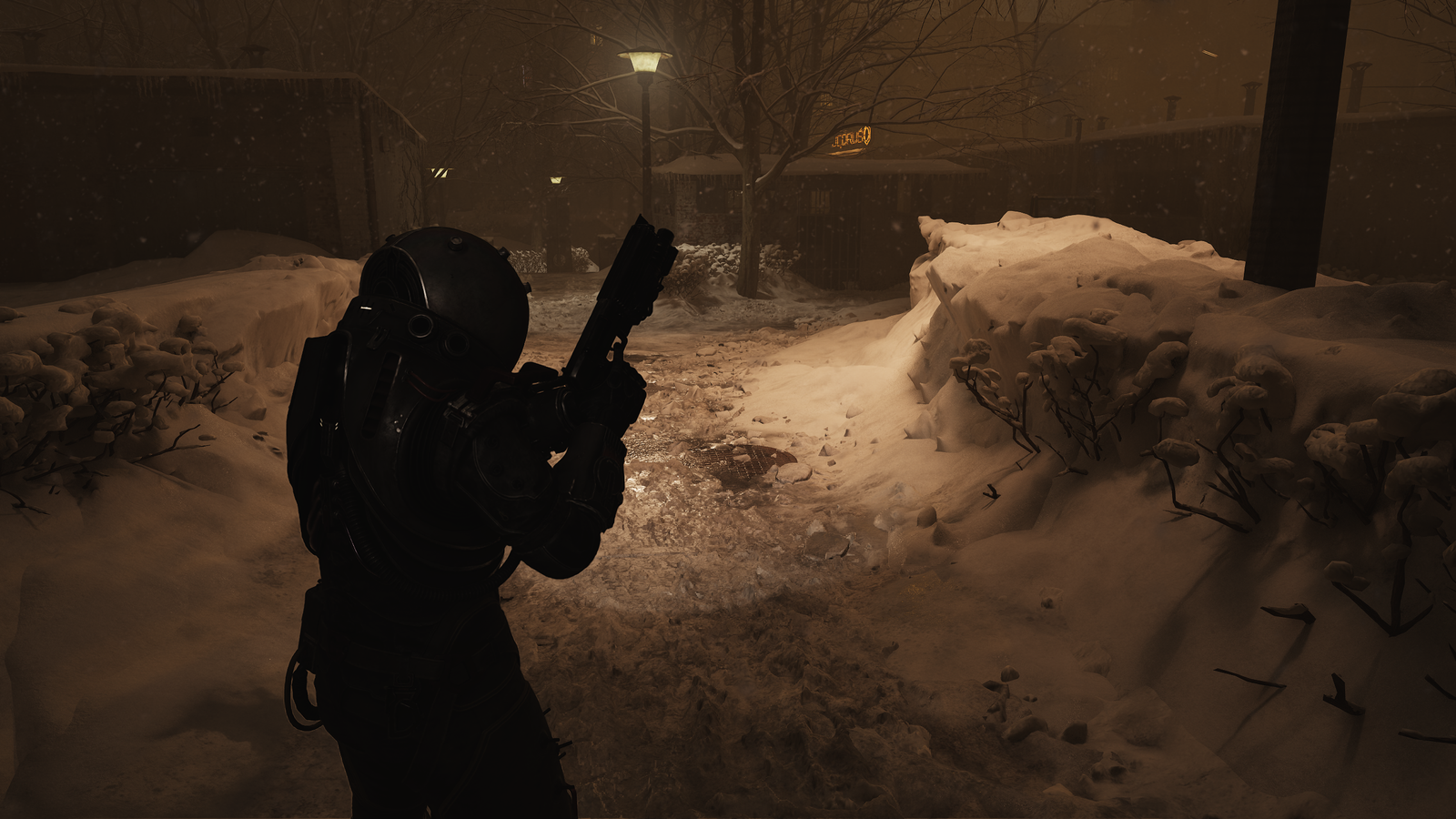
The sound enhances the feeling of a world torn apart by a catastrophe. It is difficult to call musical tracks outstanding individually, but in conjunction with the environment, they work flawlessly. Ambient and electronic "riffs" maintain the level of tension, unbalance, and promise danger even in moments of respite.
Nevertheless, the central motif — in its hypnotic obsessiveness, somewhat reminiscent of something cosmic, as if from Mass Effect — is still imprinted in my head. But, like the whole game, this is a quality craft work. Nothing more.
As for the technical side, the project is surprisingly good. For a game on Unreal Engine 5, Cronos works remarkably stable. At the beginning, the usual compilation of shaders is encountered, non-critical loads occur from time to time, but in general the picture remains clean and stable. On the RTX 4070 Super, the game confidently holds 60 frames in native 1440p, and with ray tracing enabled, you have to resort to DLSS in "quality" mode.
However, there is almost no special effect from ray tracing — there are few reflections in Cronos, and the difference is noticeable only in the fog, which looks slightly more voluminous with tracing. But this is exactly the case when the differences have to be sought with a magnifying glass.
Diagnosis
Cronos: The New Dawn is a tightly knit combat horror without any claims to revolution, but with a clear understanding of how the genre works. The game does not amaze with unexpected finds, but confidently relies on time-tested mechanics. Yes, this makes it predictable, but that's why it gives exactly what you expect from it.
Cronos offers a dark journey through an alternative Soviet utopia, weaving the harsh gameplay of combat horror with a rich atmosphere and an unusual setting. Despite some rough edges, this is a significant step forward for Bloober Team. The game leaves the aftertaste that you expect from a good horror, and encourages you to return to it again — because "that is our mission."
At the same time, calling Cronos a "pass-through" due to the lack of fresh ideas is not so unfair. But this is exactly the case when a "pass-through" made according to the textbook turns out to be necessary and important. In an industry where large studios are afraid to take risks with horror, and indie studios do not always reach the level of quality, such projects become a real breath of fresh air.
After I replayed the Resident Evil 4 remake seven times — simply because the industry had nothing to offer me — I'm glad that Cronos is now available. I will go through it at least twice. And let it not enter the pantheon of the great, but if at least once a year we receive such a project — I'm all for it.
Of course, it is worth mentioning — at the "console" price, Cronos may seem expensive. But for the money they ask for it on Steam, the game pays off in full. This is, without a doubt, the best original game from Bloober Team. And let Cronos not take the next step in the development of the genre, for me it is a convincing proof that the studio is developing. This is still largely a craft product — but independent, made from scratch. And that means there is hope that the Polish team will surprise us more than once in the future.
Pro
- Atmospheric setting
- Stable optimization
- Solid combat system
- Competent world design
- Detailed environment
- Musical arrangement
Contra
- Inventory management is suffocating at the beginning
- Simple boss fights
Never miss our newsAdd this site to your preferred sources to see us more oftenAdd on Google