A Worthy Successor to Great Ancestors! Preview of the Domestic Heroes of Might and Magic: Olden Era
Unfrozen, our developers, face a titanic task - they have taken on the continuation of the Heroes of Might and Magic series. Most games in the series are cult classics, and Olden Era will have to try hard not to incur the wrath of the extensive fan base. Everything we saw in the demo says: the developers know what they are doing. But not all of their decisions seem reasonable.
The developers came up with a depressingly rare idea for modern game development: don't fix what isn't broken, and add something new to the established formula - the game should still differ from its predecessors. The first competent decision was to return the resource set ruined after the fifth part.
The player again needs to collect the usual wood, ore, precious stones, crystals, and mercury. Sulfur has been replaced by a unique resource called alchemical dust - it is needed to enhance spells and artifacts, as well as build improved buildings for the production of creatures. It cannot be mined on an ongoing basis, but it can be obtained by exploring the map and destroying artifacts - you have to think about what is more important.
The development of castles follows the classic scheme, but now the construction of walls is accompanied by the choice of one of three ways to make life more difficult for the besiegers - add traps, new passages in the walls, strengthen the towers, or make them automatic. Alas, the forge that gives a first-aid tent, an ammunition train, or a ballista, as well as a shipyard, have not yet been added.
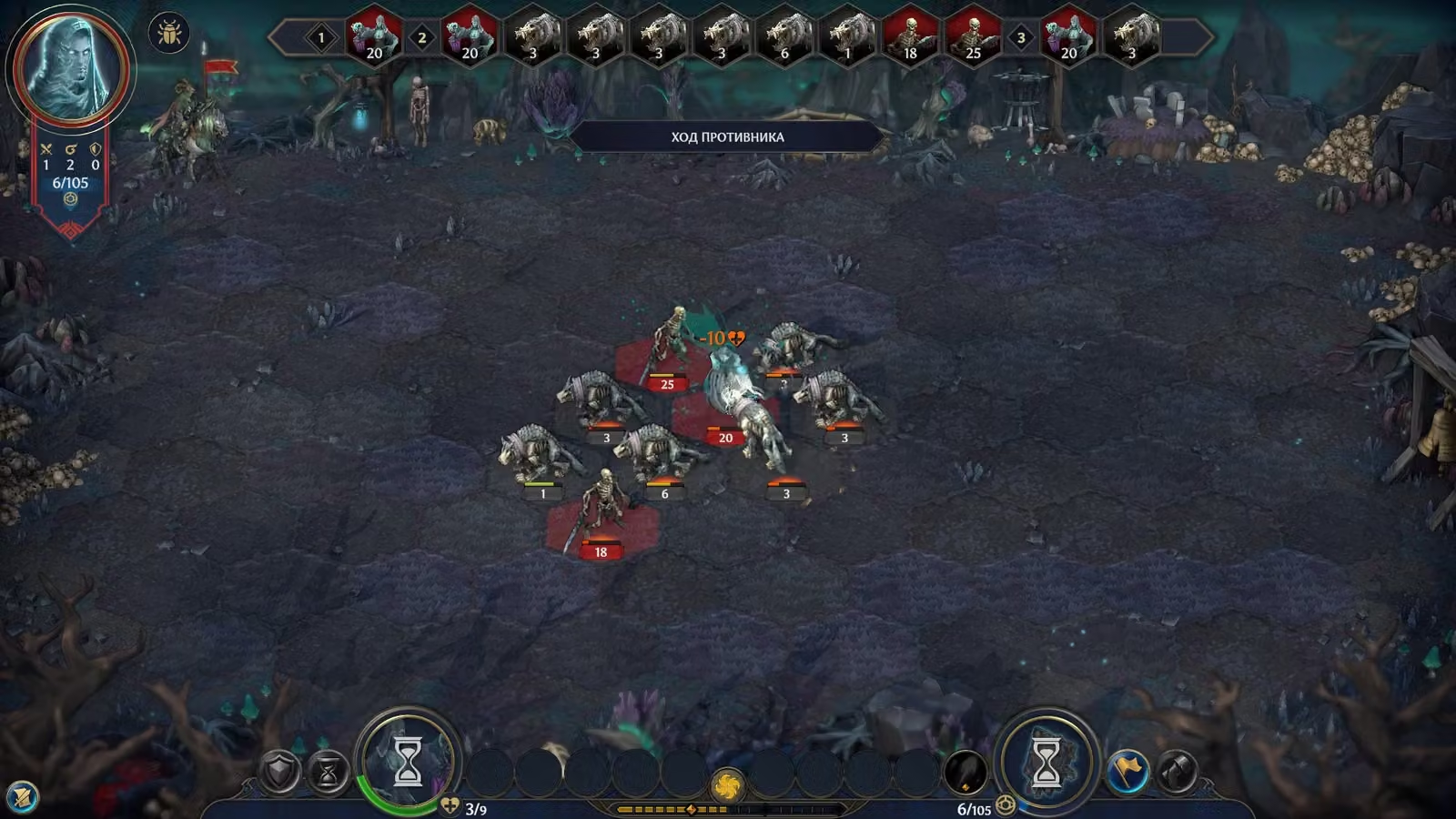
From the addition to the fifth part, Tribes of the East, a branched improvement of fighters migrated, where the player needs to choose from two unique development options - each is good in its own way. During the battle, squads classically take turns moving and attacking each other, but archers are no longer limited by the supply of ammunition. The possibility of repeated action and critical damage depends on the parameters of luck and morale. Concentration charges have been added, which accumulate as you deal damage to the enemy - it allows the hero to attack enemies as in the fifth part, or allows fighters to use unique abilities.
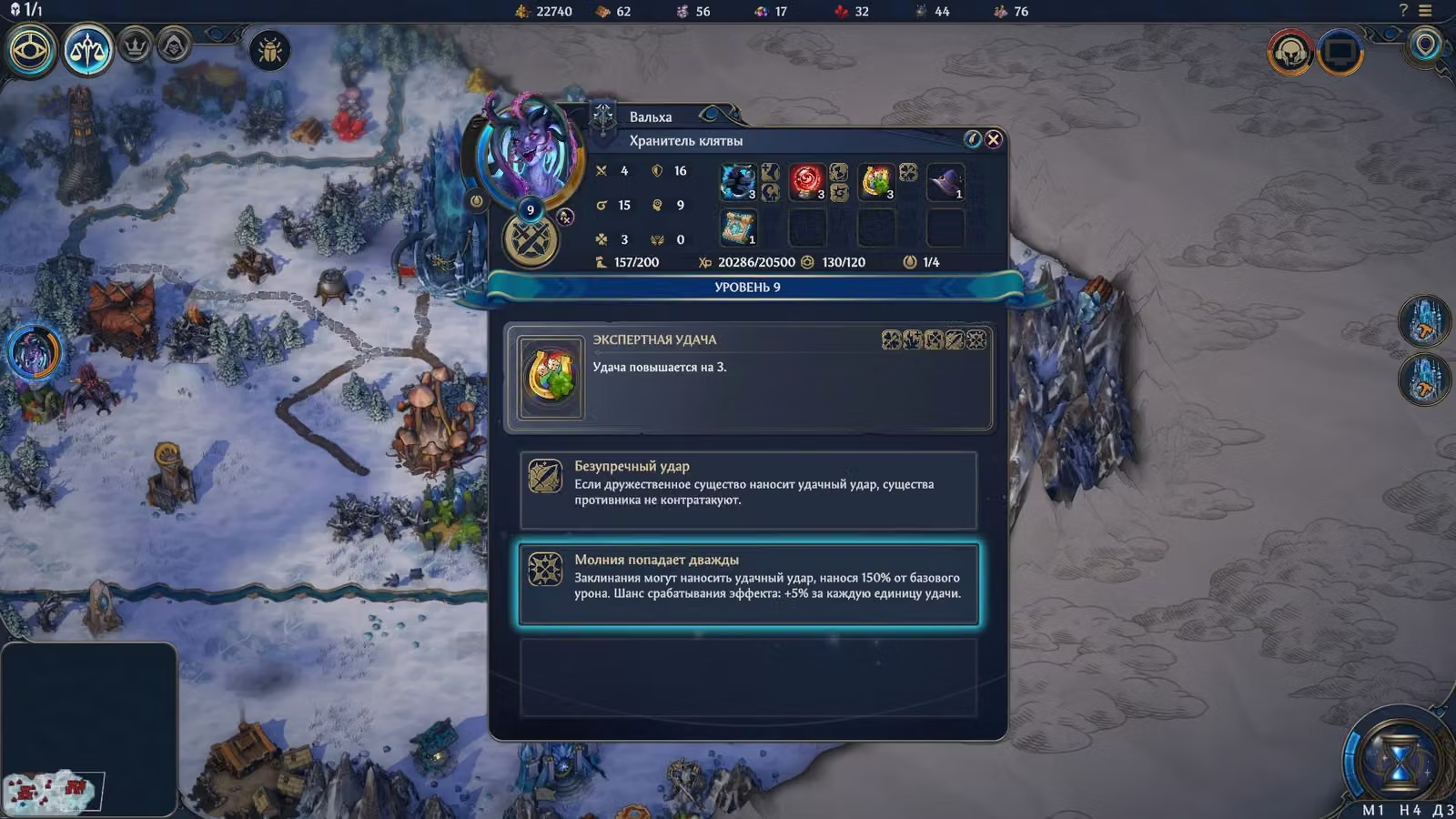
The leveling mechanic has been improved. Now heroes not only learn new skills, but also receive one of three bonuses when improving them. For example, studying advanced luck will reduce the enemy's luck or increase the amount of resources collected on the map. Such nuances allow you to train more specialized warriors, mages, or support heroes. Moreover, now the subclass of your hero also depends on leveling: after leveling five skills from a certain branch to the maximum level, the character receives an ultimate bonus that can change the balance of power.
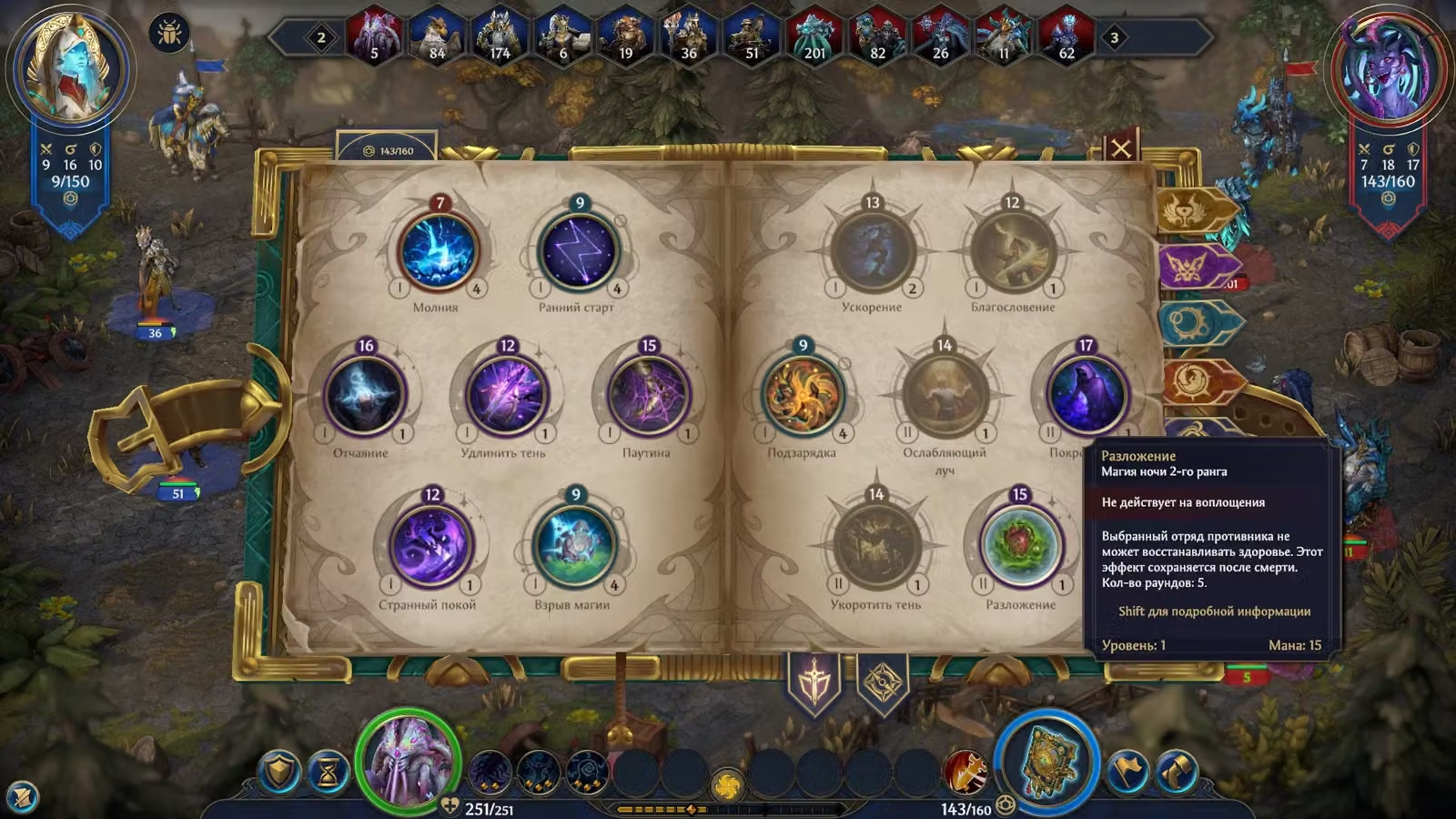
The familiar and understandable division of magic into the elements of fire, water, earth, and air has been replaced by day, night, arcane, and primordial magic. The principle of magic remained the same: on the global map, it helps with reconnaissance and movement, and in battle - with dealing damage, strengthening, and weakening fighters. Interesting spells have appeared, such as depriving the enemy of a counterattack, or dealing damage to him and simultaneously creating a barrier of destructible obstacles.
Many new objects have appeared on the map, where you need to defeat the guard to get resources or powerful fighters. There are unique buildings where you can exchange resources for alchemical dust, or your fighter for another random one. I exchanged a death knight for a peasant with a pig, who "really loves his pet" - a subtle hint at the future addition of orcs to the game?
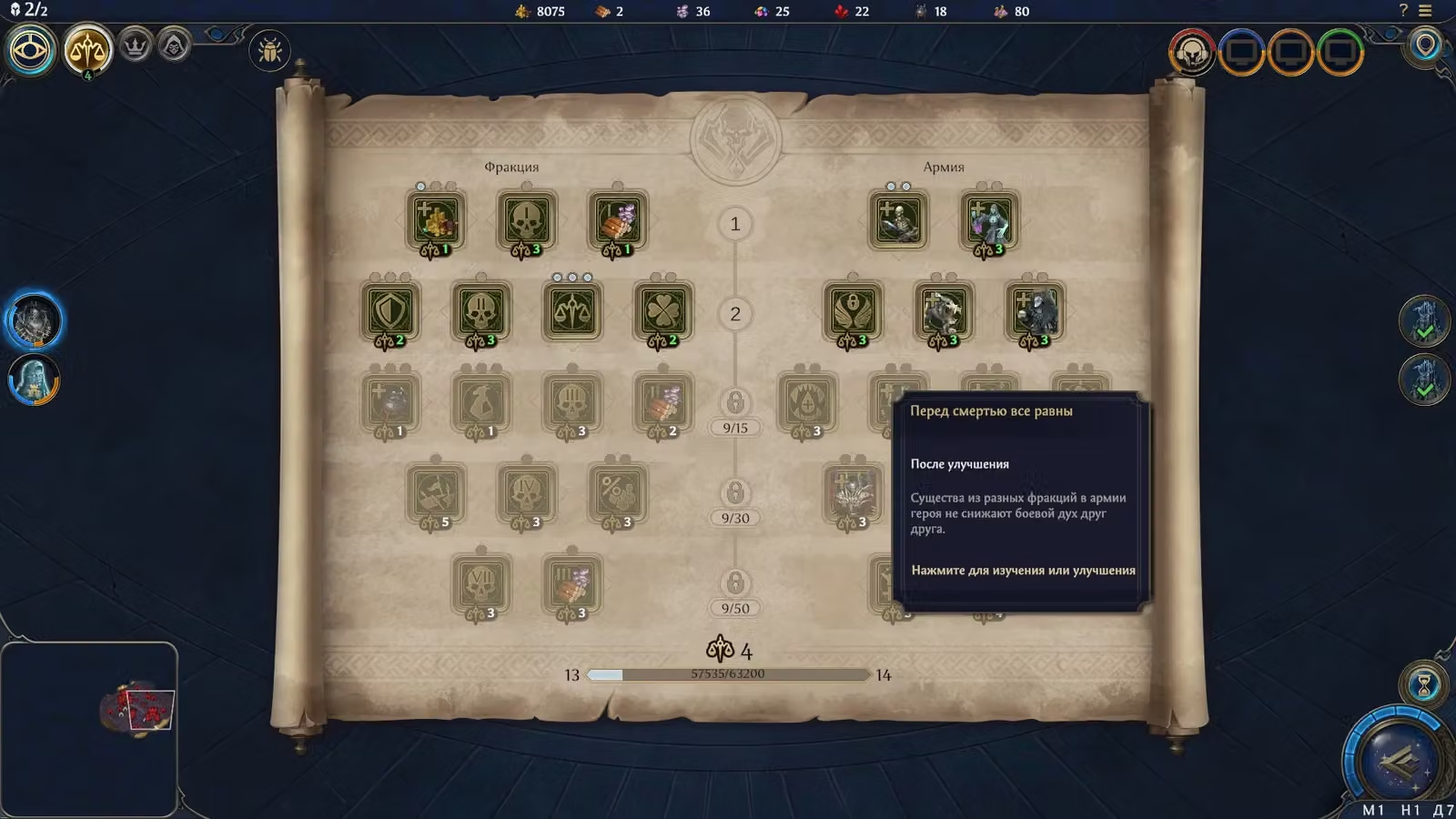
And town halls generate a unique resource that allows you to pass laws. In fact, these are passive bonuses that strengthen the economy, heroes, their troops, and factional features.
New-old factions
In total, four factions are available in the demo version, three of which will be familiar to fans of the series. One, however, arouses the greatest research interest - we are, of course, talking about the Rift.
Temple
A standard and understandable faction of people. Its army consists of the usual balanced fighters such as knights, monks, angels, and griffins. The cavalry was moved to a lower tier, and now under the angels are thick inquisitors who hit hard in close combat. It feels like playing as the Temple is reminiscent of the Haven from the fourth part, where the fighters are especially angry.
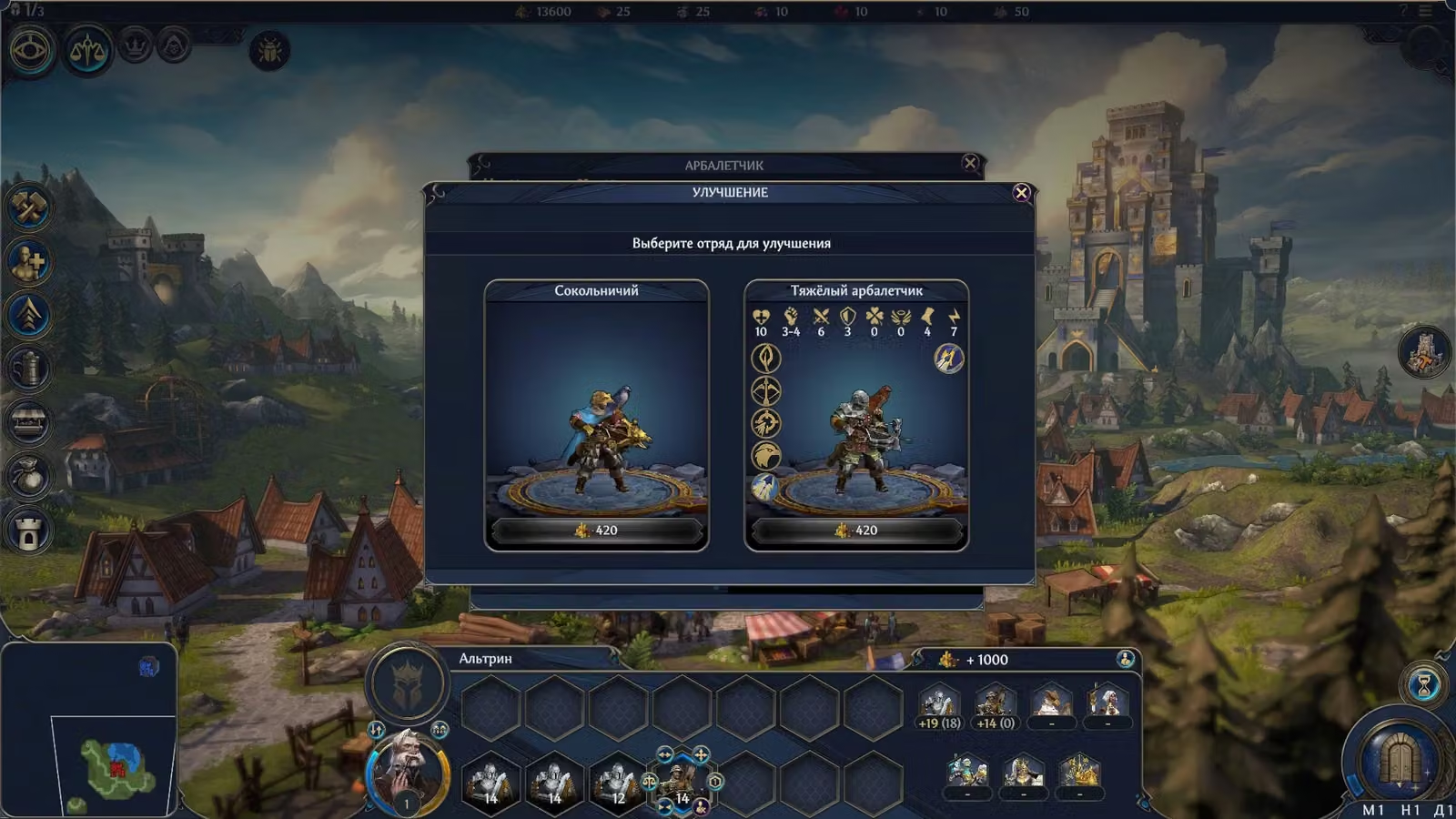
In the case of the temple, the developers managed to overdo it with fantasy - this is taking into account that people are used to having griffins, angels, and monks throwing magical balls in their army. The meaning of people is that they play the role of a down-to-earth faction against the background of the rest, but now they look more like fantasy deities.
Necropolis
Necromancers and vampires who lead an army of the dead into battle. They command the usual skeletons, ghosts, liches, and death knights, and also acquired resurrected dogs and gravediggers. The role of charming bone dragons was taken by vampires, although the former are found as neutral enemies in the world. Necropolis feels like the most broken faction, since they are able to steal health and ghosts, and vampires are the highest tier fighters.
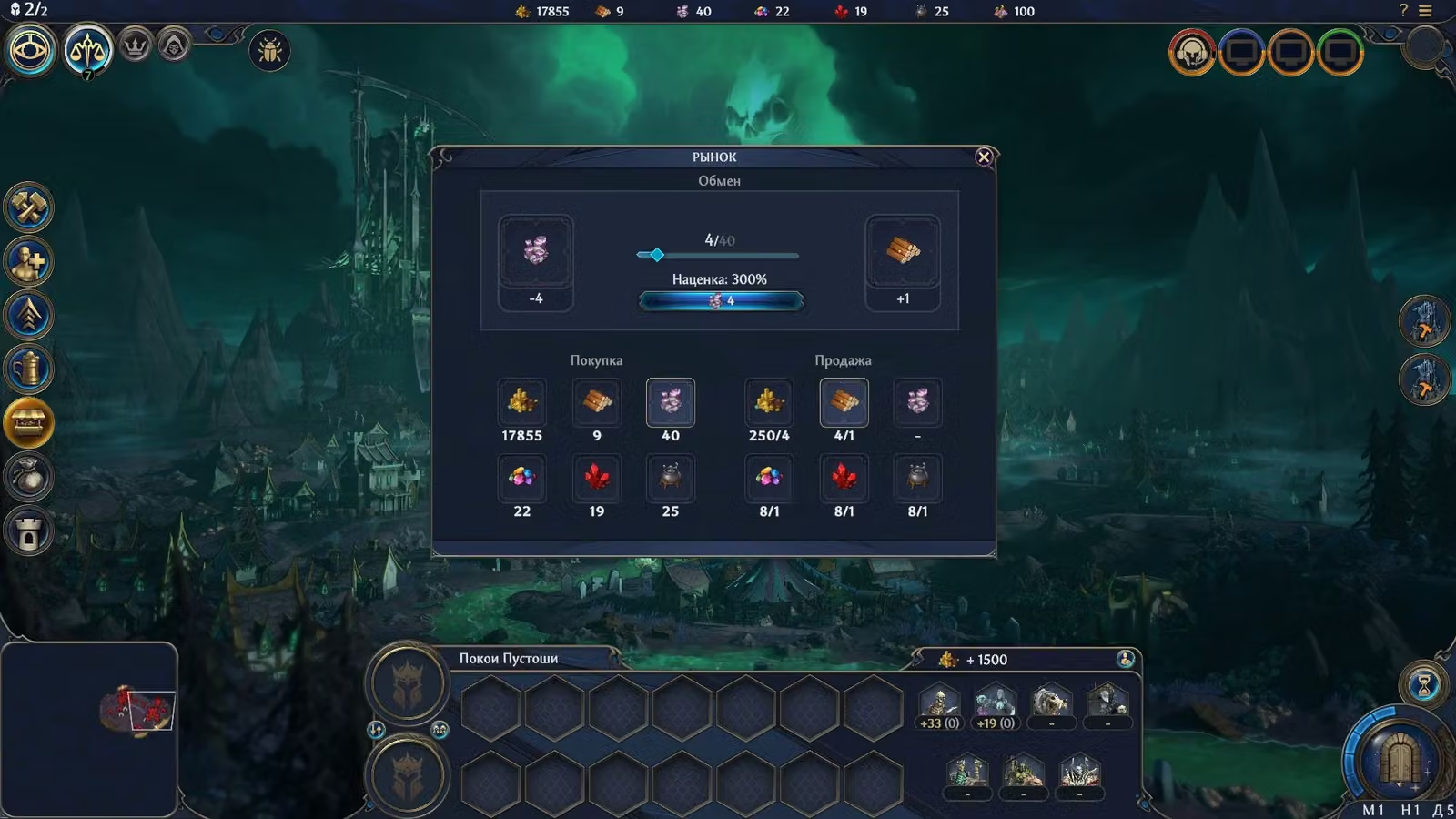
The necromancy skill again allows you to raise fallen fighters as the dead for your army. Perhaps this was done taking into account the balance, but even with expert necromancy, I did not particularly notice the replenishment of my army after battles.
Rift
Finally, the snow elves (also known as the Wori) from the third part have acquired their own faction. Technically, the player fought with them in the Ice Blade campaign from the Heroes Chronicles series of games, but in fact it was the Rampart faction, with elves from AvLee. The legendary hero Gelu, who does not know how to read the instructions for magical artifacts, was half snow elf.
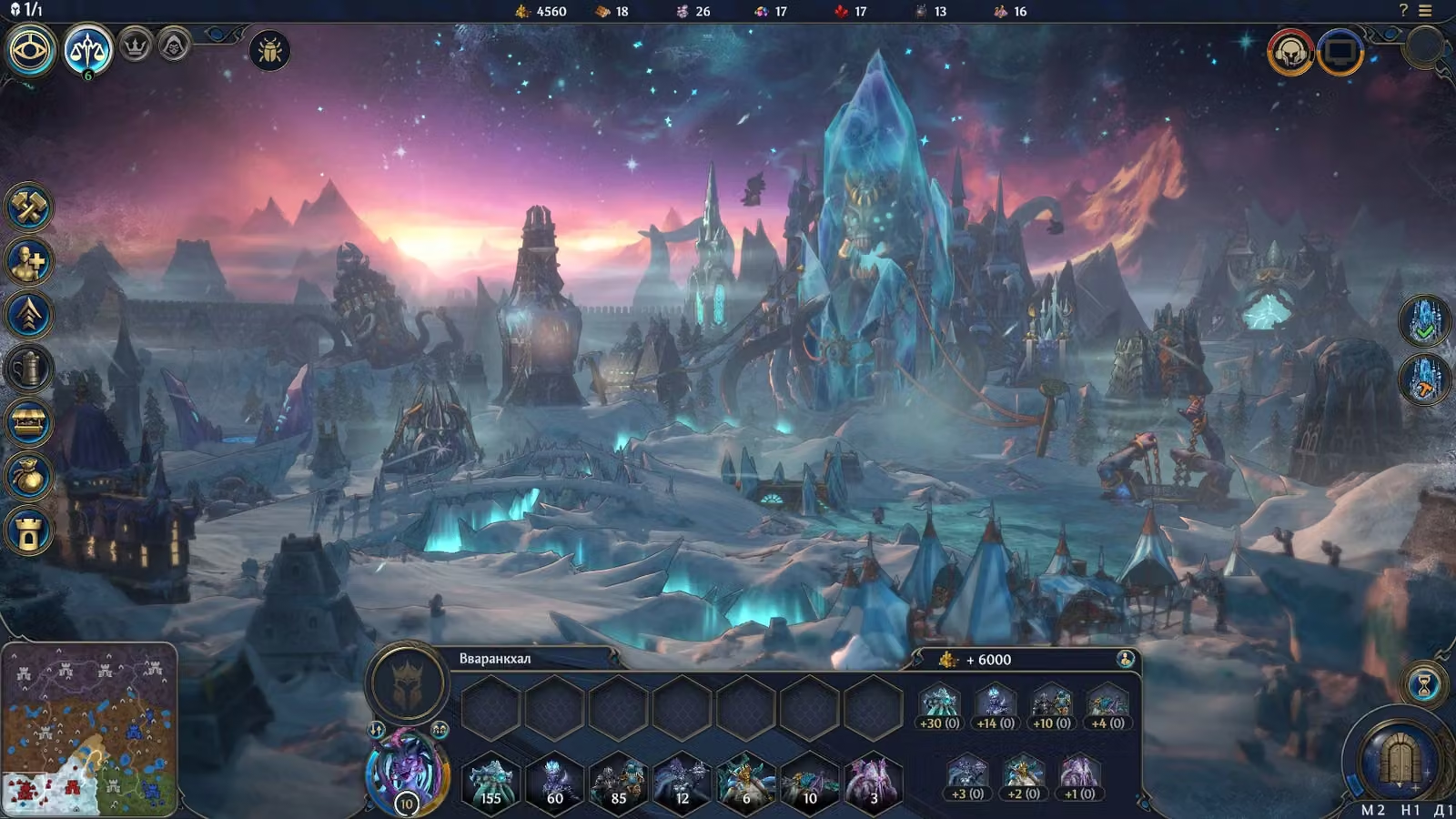
In Olden Era, the snow elves managed to dig down to Cthulhu. Now their armies depend on their connection to the Void, and consist of the elves themselves and chthonic creatures. The Rift armies specialize in causing inconvenience to enemy mages - some disable abilities, and concubines have taken the ability of pegasi from Rampart, and increase the cost of spells.
Many fighters from the Rift know how to "demonize" - this is the name of the tactics of players for Inferno in the third part, who sacrifice their troops and raise powerful demons in their place. The principle of operation of the Rift fighters is similar, but they raise their counterparts in the place of the fallen, who fight very painfully.
(Note from the editor.) It is surprising how the Rift faction resembles the race of Ancient Overlords from Age of Wonders 4: Eldritch Realms. Tentacles, the abyss, creatures altered by order of unknown gods, humiliation of the opponent's magic... Coincidence? Or inspiration?
Dungeon
Nival Interactive made many good decisions when they worked on the fifth part.
The design of the Dungeon is clearly inspired by the Shadow League from the fifth part, but the local army looks much sadder. In the Shadow League, at least it was nice to look at women with daggers, women with whips, and cool lizard riders. In the Dungeon, dark elves are represented by a dull fighter with daggers and a dull dancer with a throwing iron. Well, at least the rest of the creatures look impressive!
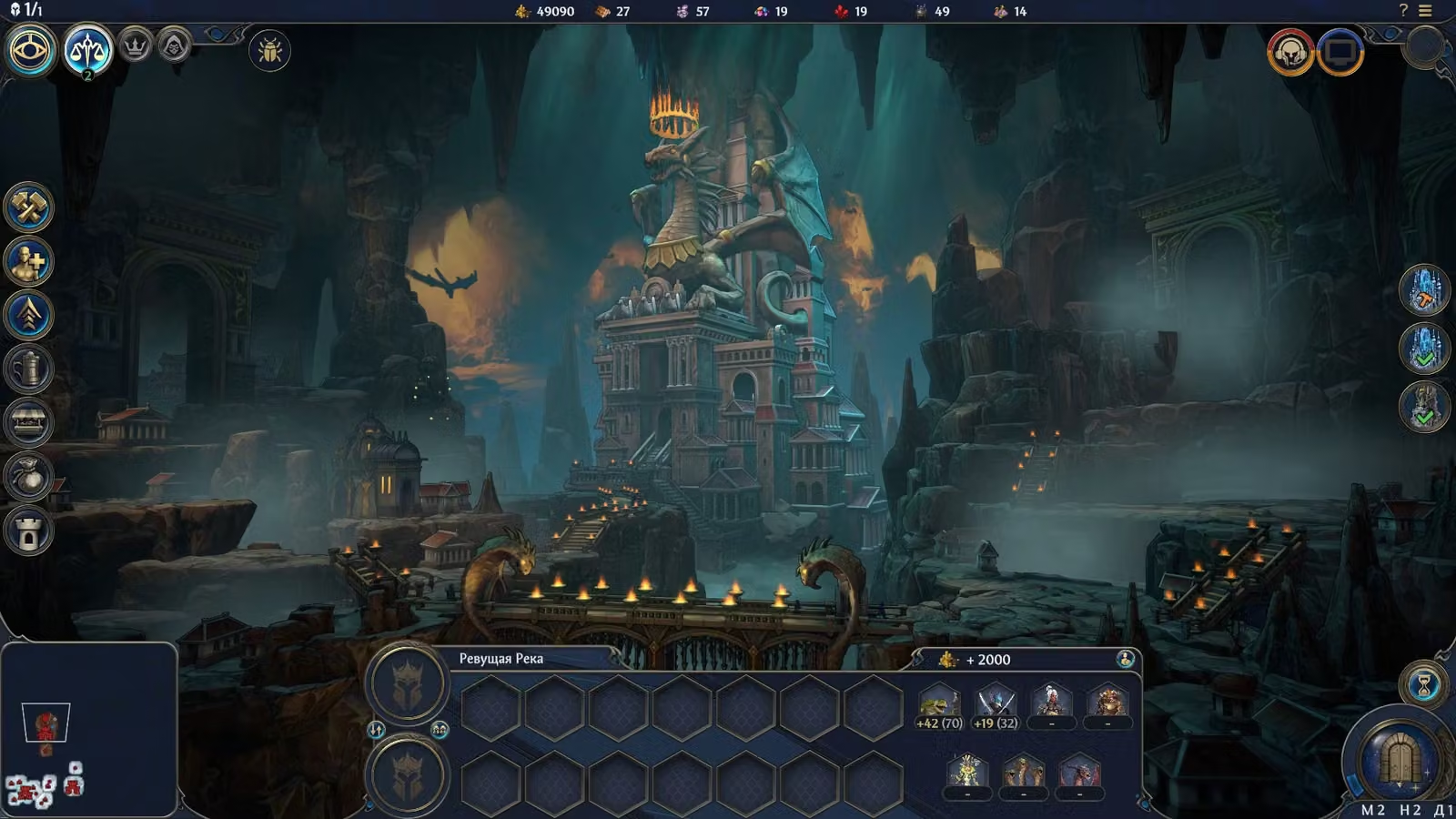
In terms of gameplay, the Dungeon army almost completely coincides with the Dungeon from the third part. If you ignore the appearance, you can again control the usual troglodytes, harpies, evil eyes, medusas, and dragons. Alas, hydras still occupy the role of manticores. How comfortable they feel in close and long-range combat depends on the improvement of the fighters.
Design and details
First of all, sounds and music are important for the atmosphere of Heroes. And Olden Era copes with this task perfectly. The hero's presence on the land of a certain faction is accompanied by unique music, and if you stand next to an object such as a sawmill, you will hear the sounds of its operation. Each city has a magnificent musical background, as it should be in Heroes! But the music and sounds in battle leave much to be desired - I want to believe that this is a feature of the demo version.
The cities themselves look and feel simply magical. They correspond to their theme one hundred percent, and life is in full swing on their streets - even in Necropolis! So far, the problem is that important buildings merge with the rest, which makes it difficult to find the necessary creature dwellings. A similar problem applies to objects outside the city - it is not always clear from the appearance what the purpose of certain buildings is, and the treasures lack "shine" - sometimes they are simply difficult to see. I didn't even see the alchemical dust under my nose!
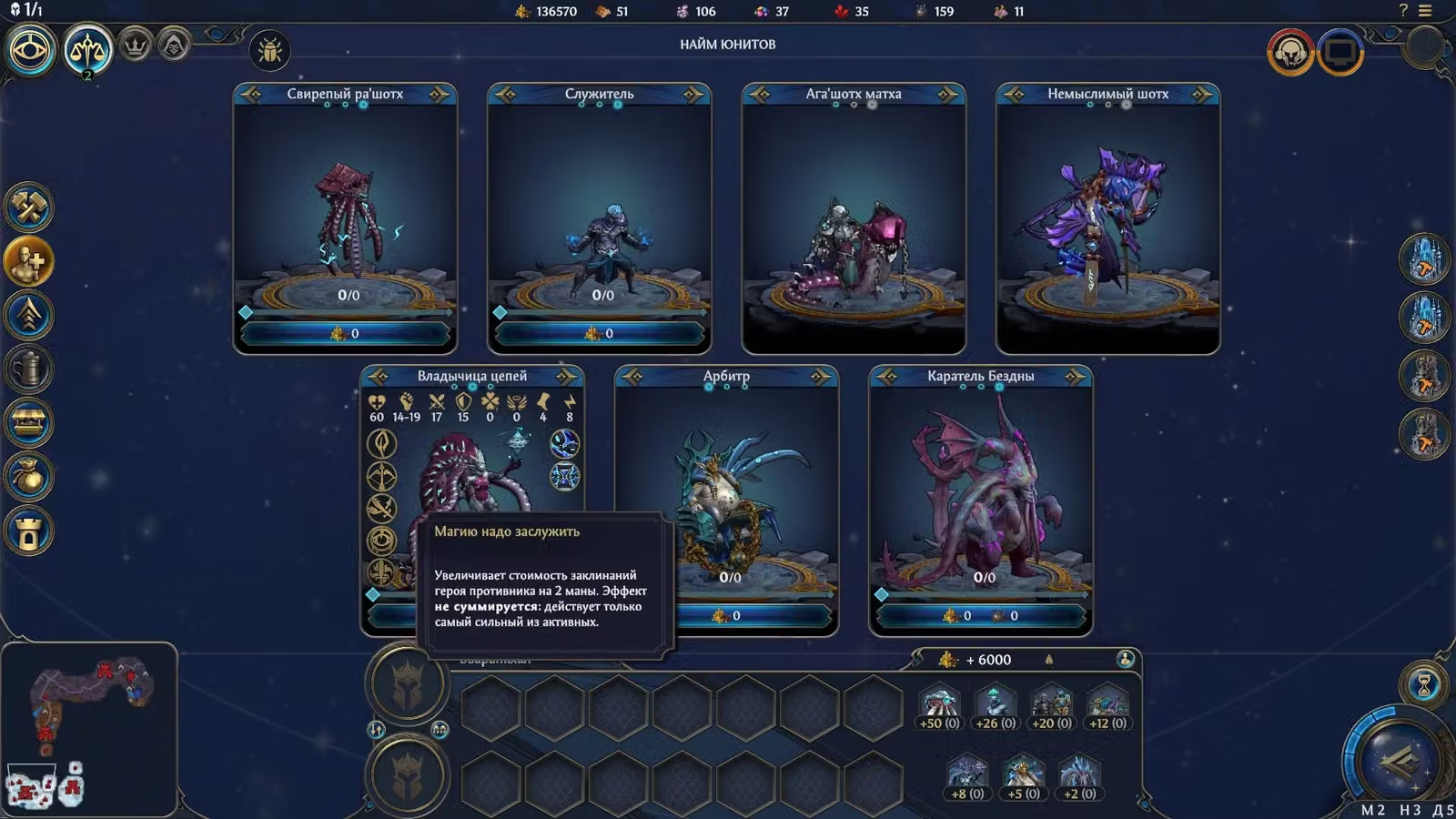
Fighters of different factions and their neutral variety look and are animated magnificently - the phoenixes alone made me burst out laughing. It's a pity that the gait and attack on the screen of creature models are not animated, which makes it possible to get confused in their purpose.
The description of some creatures is exactly what is responsible for the history and culture to which the unit belongs. Now you don't need to open a separate tab to see the character's abilities and features - they are immediately displayed in the unit window when you hover over it: both combat perks and general characteristics. Convenient!
The interface is difficult to call convenient, because it is spoiled by the small size and location of the buttons - inside and outside cities. You click on a creature in your army, and six tiny buttons pop up that merge with the background, which allow you to interact with it. It's easier to use a keyboard shortcut or drag them back and forth with the mouse! You can hire all the creatures in the city at the same time using a small pimple, barely visible above the roster. There is no full-fledged button like in the other parts.
And this is a problem for most modern turn-based strategies. Why did the fans working on the HotA mod improve the interface of the third part, but it remained simple and concise, and in Olden Era I have to spoil my eyes instead of enjoying the game?! I want to believe that the interface will be worked on more by the release in early access.
Diagnosis
The developers from Unfrozen have done a great job! They did not break the working mechanics - as the sixth and seventh parts did - and added so many new features to the game that it feels like a separate product. Already now we can say that Heroes of Might and Magic: Olden Era is worthy of continuing the great legacy.
The total number of new mechanics is confusing. During the game, you need to pay attention to leveling up artifacts and spells; choosing the right creature upgrade; distributing alchemical dust; passing laws, and so on. There is a lot to take care of and sometimes it can be confusing, when before walking with a character - you sit in the menu for 10-15 minutes.
The game is still in the early stages of development, and therefore it can be forgiven for some bugs, flaws, and balance shortcomings. The situation with optimization is worse - loading the map takes a long time, and the game itself eats up RAM like crazy. And there is a possibility that everything will remain so by early access!(Note from the editor. No problems with loading or lack of RAM were noticed on more powerful systems and with the demo installed on the SSD)
Never miss our newsAdd this site to your preferred sources to see us more oftenAdd on Google

![[Video] RIP RTX 5090 / GTA 6 Leak / Blizzard Broke WC3 / Cyberpunk 2077 Movie / Phantom Blade Zero Preview](https://media.ixbt.games/fit-in/312x/ixbt-data/1725650/17ffaa31-1709-4a05-91a5-0ee4b75897d7.jpg)