We've sunk to THIS in the video game industry. A review of the viral brainrot roguelike Megabonk
In recent weeks, the gaming community has been raving about a new Vampire Survivors clone. Hundreds of thousands of players are praising Megabonk, streamers are filling their broadcasts with it, and even our editor-in-chief couldn't resist diving headfirst into the game. But there's a dark side to Megabonk that no one wants to acknowledge...
It seems there are no surprises left in the genre. You appear on the map, hundreds of enemies rush at you, your character shoots back, the screen fills with damage numbers, and in the end, you die due to your own stupidity. A simple, endlessly copied formula, gifted to the world by Vampire Survivors, has spawned a whole wave of imitators. Some focused on visual style, others on pace or content, while others tried to develop the formula further, but most were quickly forgotten.
Against this backdrop, Megabonk felt like a breakthrough in the genre, bringing the format of the original into the 3D dimension, with an expanded set of possibilities. Jumps, vertical arenas, crazy heroes, self-deprecation, and a ton of memes. Everything to turn the familiar process into something fresh.
The first impression is truly inspiring. It seems like here it is-a vibrant indie sensation, created by one person and filled with sincere enthusiasm. But the longer you play, the stronger you feel the catch. Behind the self-deprecation and cozy aesthetic lies a product that doesn't fully understand why it exists. The gameplay seems noisy and saturated, but dead inside. And the initial delight is replaced by another feeling-disappointment. Quiet, but persistent.
From Enthusiasm to Disappointment
The project was created by one person, and that in itself commands respect. But behind this heroism, there is no cohesive idea. Megabonk looks more like a demonstration of a developer's skills for a future job interview than a finished work. Meme humor and retro graphics hide an extremely shaky foundation.
The main mechanic of the Vampire Survivors clone is automatic shooting. The hero automatically chooses the nearest target and continuously fires in its direction. The player doesn't participate in the battle at all: you can't aim, choose priority targets, or control the direction of attack. All that remains is to run around the arena, dodge, and collect loot. And the entire depth of the battles comes down to skillful positioning.
Unfortunately, this works even worse in 3D than in 2D. Adding verticality doesn't make the mechanic more interesting, it just breaks the balance. The player easily assembles a "jumper" build-a character capable of hovering in the air, where enemies physically can't reach them. The artificial intelligence doesn't know how to react: the monsters continue to walk towards you, wait for you to come down, and catch projectiles.
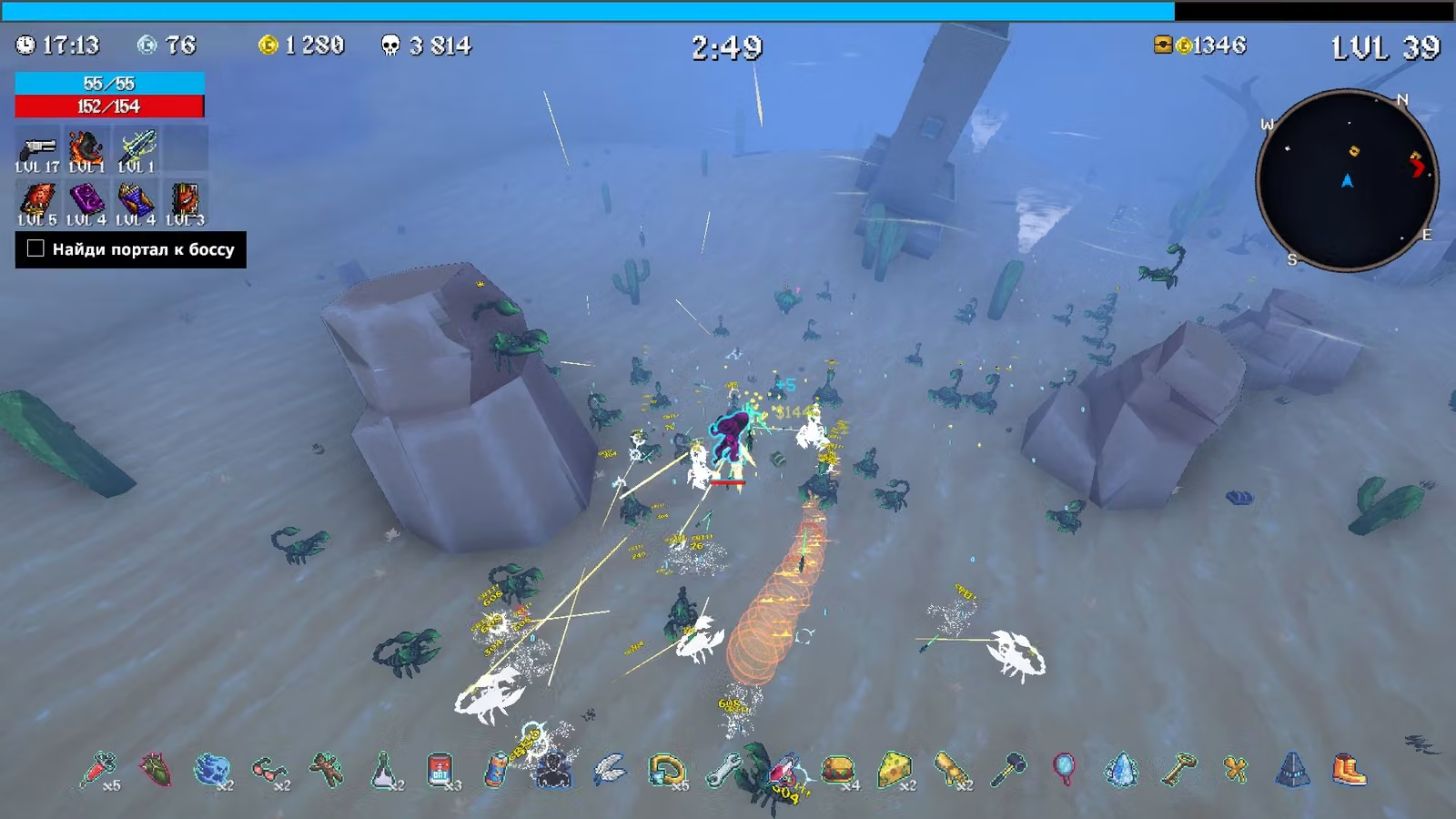
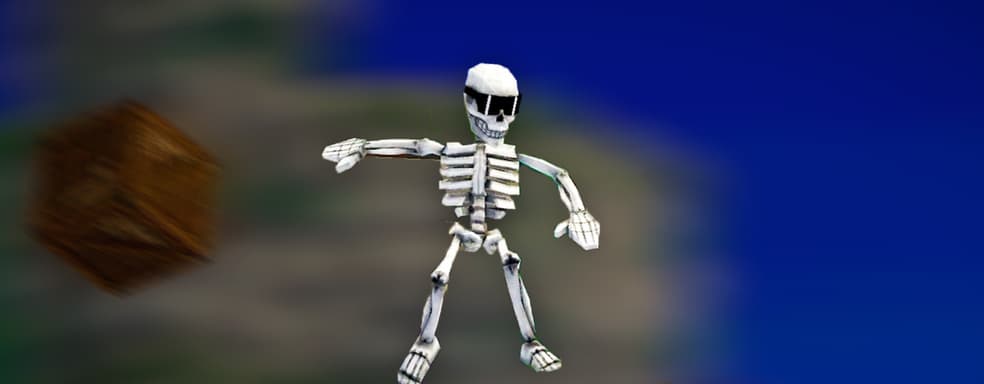
The second map-the desert-slightly saves the situation. Here, the terrain is flatter, the opponents are more aggressive, and the bosses finally begin to pose a threat. Poisonous scorpions, rapidly moving "ball-skeletons," and cactus-mortars can be irritating. Their attacks are diverse, and at the moment of their mass appearance, you need to show maximum reaction and attention to avoid being hit. But this feeling of challenge comes too late, after dozens of hours of monotonous runs through the Cursed Forest-the first map, where the gameplay boils down to jumping and picking up everything.
Quantity ≠ Quality
Another strength of the indie roguelike is considered to be the abundance of content. Dozens of heroes, dozens of types of weapons, hundreds of artifacts and challenges-all this looks impressive until you begin to understand that there is no real depth behind this generosity.
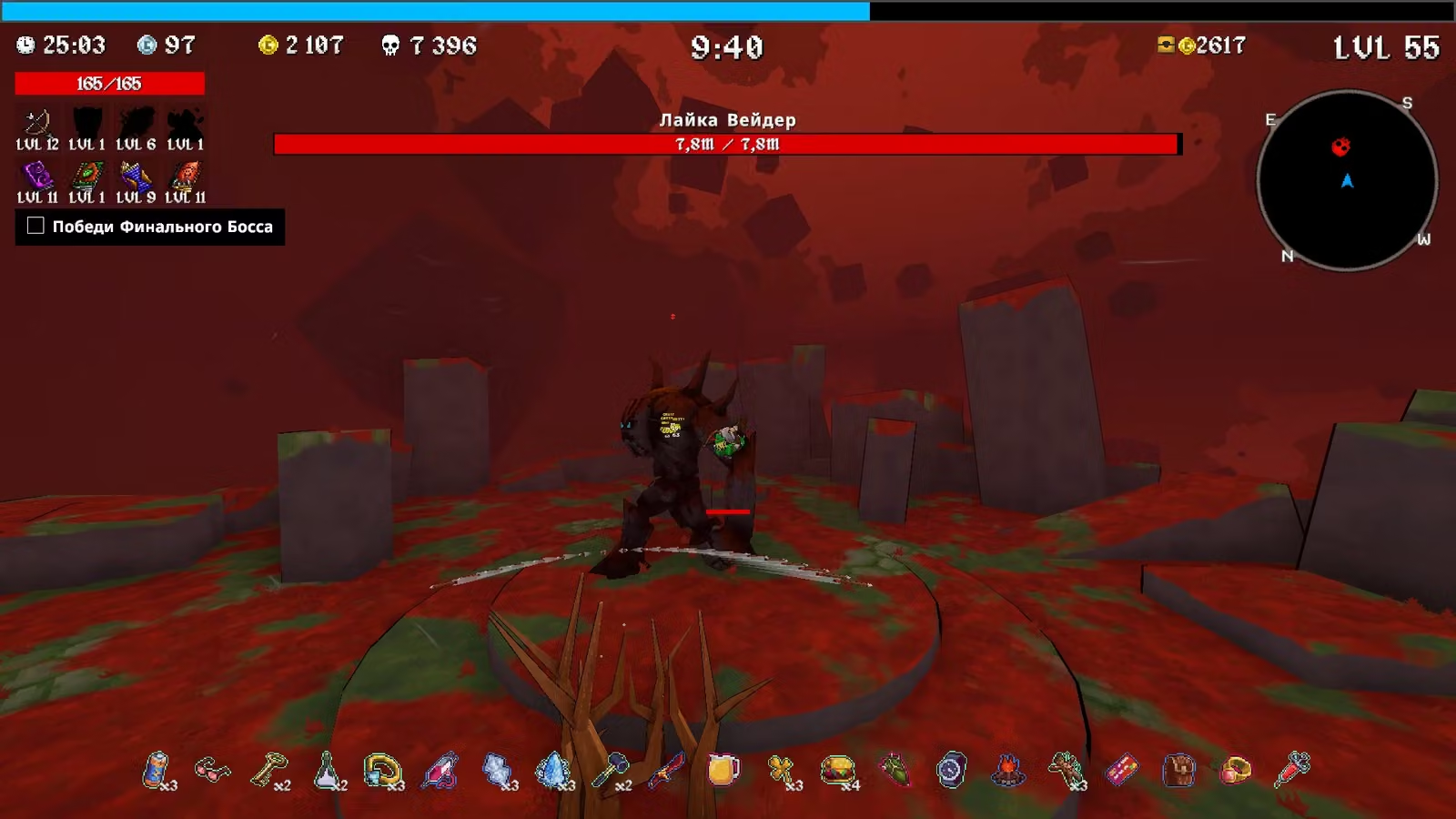
The key problem is the lack of deep progression. MEGABONK generously scatters chests, altars, and artifact merchants across the map. They offer the player various bonuses, from increasing characteristics to unique combat effects. But there is no direct interaction between the items. The game lacks a mechanic for creating unique artifacts, and the effects from identical items are simply summed up without additional bonuses being awarded.
A similar problem manifests itself in the design of characters and weapons. Formally, the game offers about twenty heroes and the same number of weapons, but there is no balance between them. Some heroes and guns are so weak that after a couple of runs, you don't want to return to them: their abilities are useless or too narrowly applicable. Others, on the contrary, turn out to be so effective that they completely kill the motivation to experiment. Once you discover an imbalanced combination, all the other content loses its meaning.
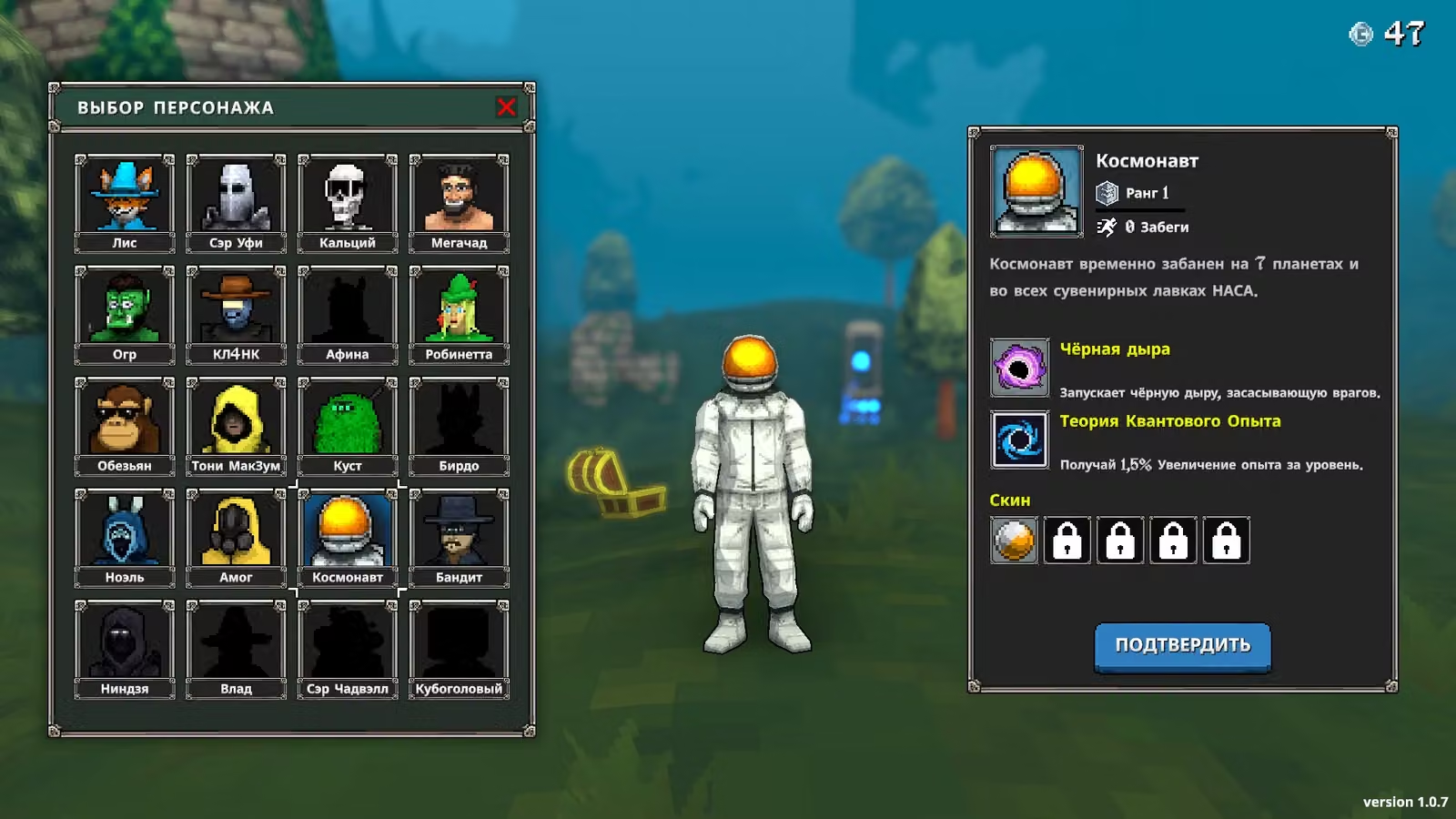
Thus, MEGABONK deprives itself of replayability. Where the player should rejoice at the discovery of new opportunities, he instead remembers a couple of working builds and ignores everything else. A lot of content, but almost nothing really worthwhile.
Diagnosis
MEGABONK is an extremely simple game. There is no thoughtful balance, no depth in the mechanics, no reason to return out of curiosity. It doesn't require reaction, skill, or strategy-only minimal attention to the position of the hero on the map. It's a slot machine where you watch the chaos and try not to die.
Nevertheless, it is this simplicity that has become its main advantage. MEGABONK fits perfectly into the format of modern "viral" content: light, uninspired, mindless, but addictive. Paradoxically, a game in which there is almost nothing to do turned out to be ideal for streamers and viewers. Against the background of explosions and damage numbers, you can talk, joke, react-content is born by itself.
The game has a consistently high online presence on Steam, and Twitch and YouTube are full of thematic videos. This is a typical example of what is called "brainrot" or "slop" content-primitive but hypnotizing entertainment that hooks with speed, sound, and chaos, rather than meaning or idea. It is a product of the era of clip thinking, and in this capacity, it works flawlessly.
The novelty doesn't offer anything new to the genre, doesn't unlock the potential of the 3D format, and doesn't give room for experimentation. This is the phenomenon of Megabonk. It's not a game, but a stream of visual dopamine-primitive, but contagiously successful. And while it may not say anything new about the genre, it perfectly shows what mass taste has become in 2025.
Never miss our newsAdd this site to your preferred sources to see us more oftenAdd on Google


![[Video] RIP RTX 5090 / GTA 6 Leak / Blizzard Broke WC3 / Cyberpunk 2077 Movie / Phantom Blade Zero Preview](https://media.ixbt.games/fit-in/312x/ixbt-data/1725650/17ffaa31-1709-4a05-91a5-0ee4b75897d7.jpg)