Contagion. Review of the fourth season of "The Witcher" series from Netflix
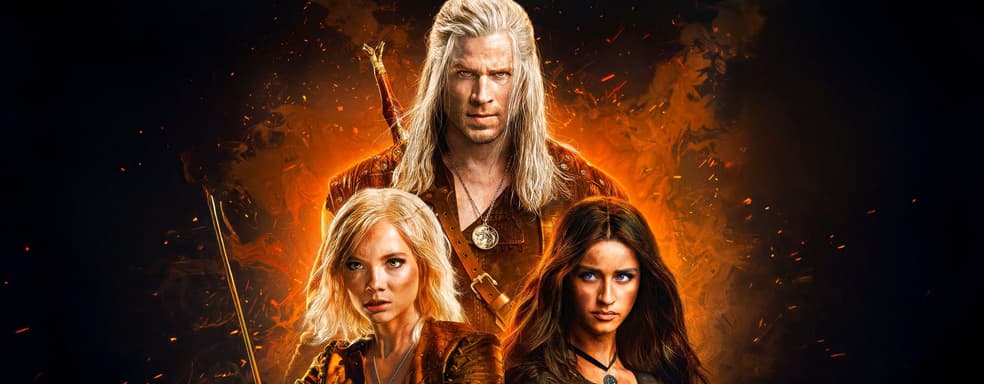
The fourth season of "The Witcher" tried to look like a reboot with a "budget" Hemsworth, but instead of a second wind, it only let out a death rattle. It clearly showed that it was not Cavill who should have left, but those who, for six years, never understood what to do with Sapkowski's universe. In our article, we tell you why you shouldn't waste your time watching it - as if there are still those who need to be dissuaded.
The Australian Elephant in the Room
There's no point in denying that interest in the fourth season of "The Witcher" is mainly due to the change of the main actor. Liam "Thor's younger brother" Hemsworth has taken Henry Cavill's place. This was enough for some viewers to wave their hands in despair, while others began to wait for the premiere with sarcastic impatience.
However, it is logical. Cavill was not just the face of the series, but its heart and the last bastion of everything "fan" in this show. He sincerely believed in the material, defended the books and characters from the arbitrariness of the screenwriters, and kept the project afloat with his devotion alone. With his departure, the series, already lame and crooked, finally lost its support.
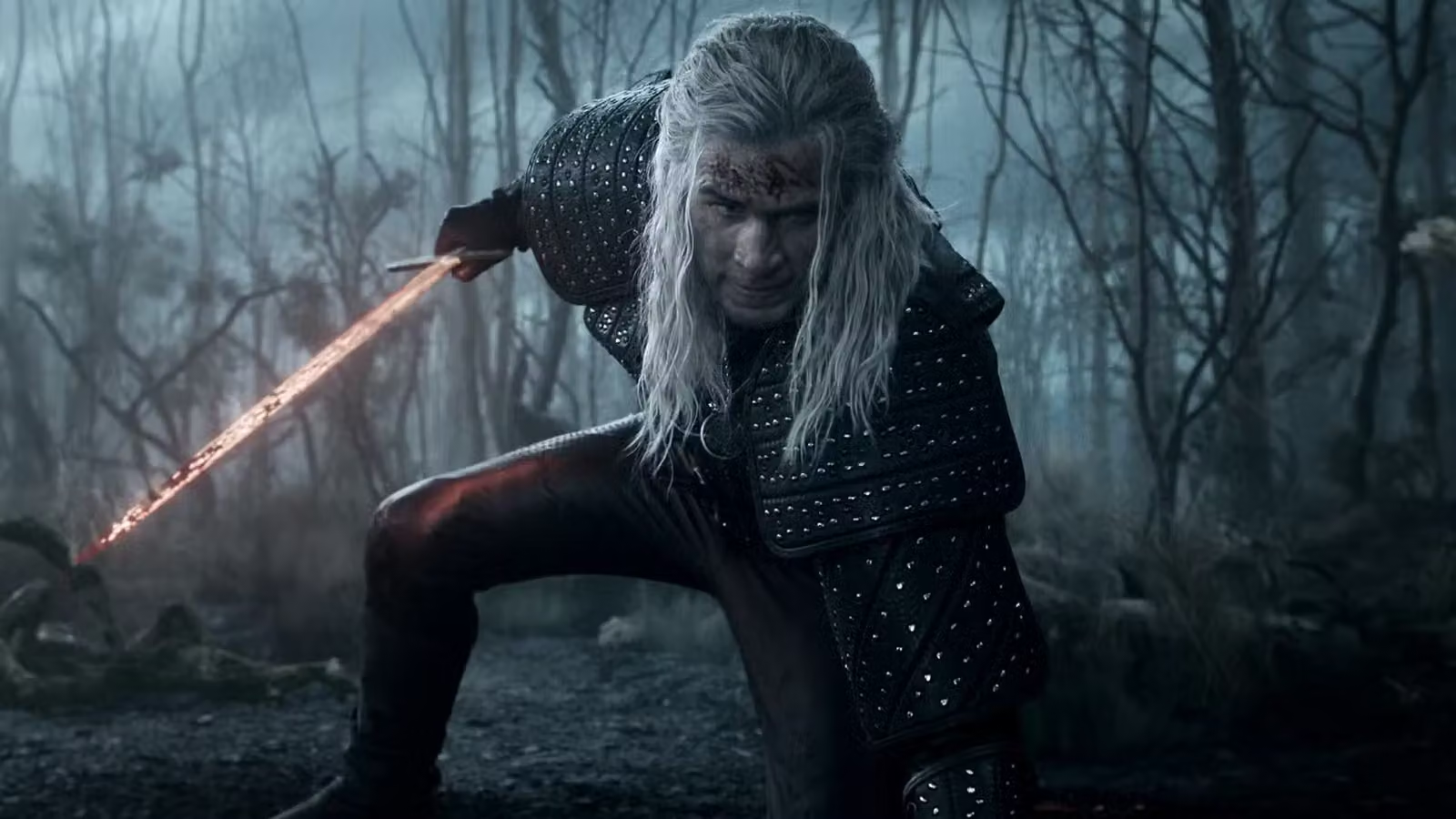
But when we compare Cavill and Hemsworth directly, first of all, it is striking not only the more powerful physique of Geralt performed by Cavill, but also his screen "weight" - the presence and charisma that gave the image credibility. You could feel the weight of the years lived and the inner steel in him.
Liam Hemsworth is less impressive physically: taller, but lighter and noticeably more flexible. And although visually this is not a problem - after all, Cavill sometimes looked even excessively massive - it is this flexibility that plays against him. In contrast, Hemsworth seems not so much agile as soft, almost spineless.
The difference is felt in everything - in the voice, facial expressions, chemistry between the characters. Cavill needed a few gestures to convey the inner ambiguity of the hero; even the "soulless" American "fuck" in his performance sounded with nuances. With Liam, everything turns into routine formalities. All season they sculpt a classic "good guy" out of him, and the only bed scene with Yennefer looks as if we have spouses in front of us who have long cooled to each other and are performing their marital duty on schedule.
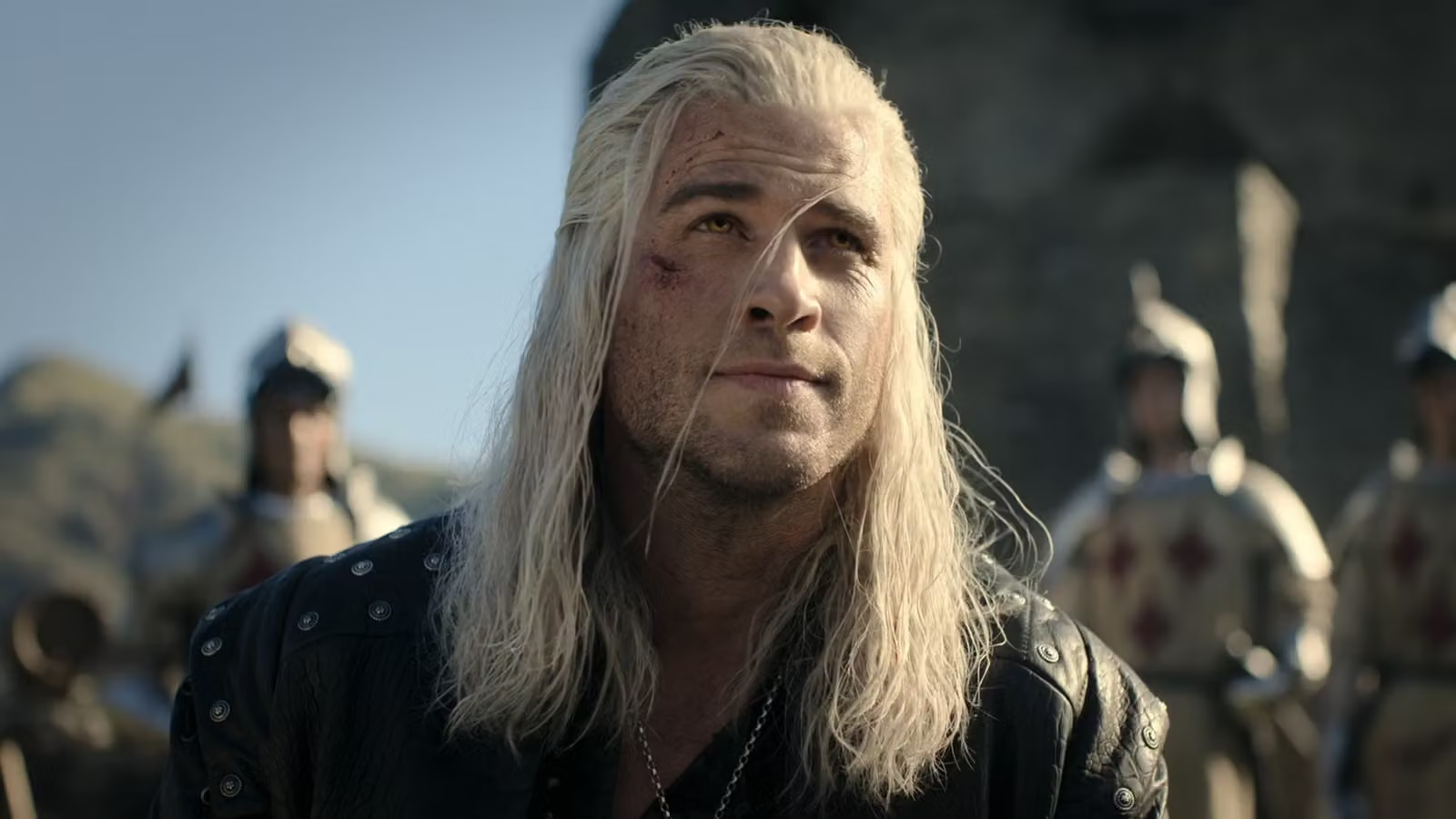
Visually, the series is still capable of making an impression - in combat scenes. The choreography and staging of battles balance on the verge of fan service and spectacularity. When swords cut through flesh, and blood and entrails fly in fountains in slow-mo, the spectacle is both mesmerizing and amusing, especially when Geralt copies the movements of the "game" witcher - with all due respect to the not the most elegant combat system of The Witcher 3.
The season has several impressive creatures and a couple of really successful episodes with the massacre of them - for example, the battle with the monster during the defense of the bridge on the Yaruga. But impressive moments are scattered throughout the series and are not limited to scenes with Geralt. These flashes of violence give the show a brief impulse of life, but they are no longer able to revive it in reality.
The replacement of the actor made the series vulnerable, and the structure of the season only amplified this effect. The story is again divided into three lines, and Geralt gets not so much a third of the narrative as its fragments, divided with an ensemble of minor characters. In addition, the witcher is shown physically and morally exhausted, and therefore Hemsworth has almost no space for acting initiative. His character does not develop, does not look for himself, but simply moves by inertia, dissolving in the general mass.
Nevertheless, replacing Cavill is far from the main problem of the fourth season. I can't bring myself to say that Hemsworth plays frankly badly or doesn't try. Rather, on the contrary: he tries, but he simply didn't have the space to even screw up properly, so it wasn't difficult for me to accept the "new Witcher". The main trouble is in something else - there are enough decisions in the season that are much more controversial and incomprehensible.
Something ends, something begins, and something never ends
The fourth season begins immediately after the events of the third. After the coup on Thanedd, Geralt, Ciri and Yennefer find themselves separated by the war that engulfed the Continent, and each goes their own way. The wounded Geralt, along with Dandelion and the archer Milva, heads to Nilfgaard, hoping to save his adopted daughter, whom he believes is being held by Emperor Emhyr.
In fact, an impostor is in the golden cage of the empire, replacing the real Lioness of Cintra, while the true Ciri, under the name Falka, hides among a gang of robbers known as the Rats. Yennefer, meanwhile, is gathering the remnants of the magical "sisterhood" to repel Vilgefortz, restore balance and prevent the sorcerer from capturing Ciri.
The fourth season adapts the novel "Baptism of Fire" and partially "The Tower of the Swallow", but at the same time it turns out to be the shortest in terms of timing. Hence the crumpled, ragged pace and inevitable problems with logic. Events follow one after another, dialogues break off, storylines appear and disappear without development. Instead of delving into the essence, the story runs over the top, marks the control points and immediately rushes on.
Against this background, it is easy not to notice that the fourth season is one of the closest to the books. It really quite accurately retells the events of the Geralt and Ciri lines. The characters sometimes quote Sapkowski almost verbatim - I specifically compared the episodes with the original. At first it's even impressive, but it soon becomes obvious: "almost verbatim" doesn't mean "good". To understand why, you can draw an analogy from stand-up.
Road without context
In any successful joke, there are two components - the setup and the punchline. The setup prepares the audience, sets the context, builds the situation and creates expectation. The punchline is the denouement, the culmination, the play with expectations, the reversal of the situation upside down. So, in the fourth season, there are enough punchlines, but catastrophically little attention is paid to the setup.
Take at least the episode with the girl whom Geralt saves from a detachment of Nilfgaardians in the first episode. In the book, the witcher is so obsessed with finding Ciri that it seems to him that this girl is like two peas in a pod similar to his adopted daughter, and from this his righteous anger flares up with even greater force.
In the series, there is only a scene of unbridled cruelty in the massacre of the Nilfs, but the authors did not even try to pick up an actress who looked at least a little like Ciri - although they could. Moreover, it could be shown how Geralt really imagines Ciri, and only after the massacre his mind clears, and he realizes that there is a completely different girl in front of him. In this case, the difference of the actress would only emphasize his obsession. But this moment is simply missed, and there are unforgivably many such omissions in the season.
Everything said above, in my opinion, speaks too eloquently about what happens next. The journey and gathering of Geralt's hanza, which in the books resembled a road movie, where the heroes get closer, find themselves and undergo a joint "baptism of fire", in the series look more like a formal sketch, an attempt to quickly bring the plot to the "point of no return" before the final, fifth season.
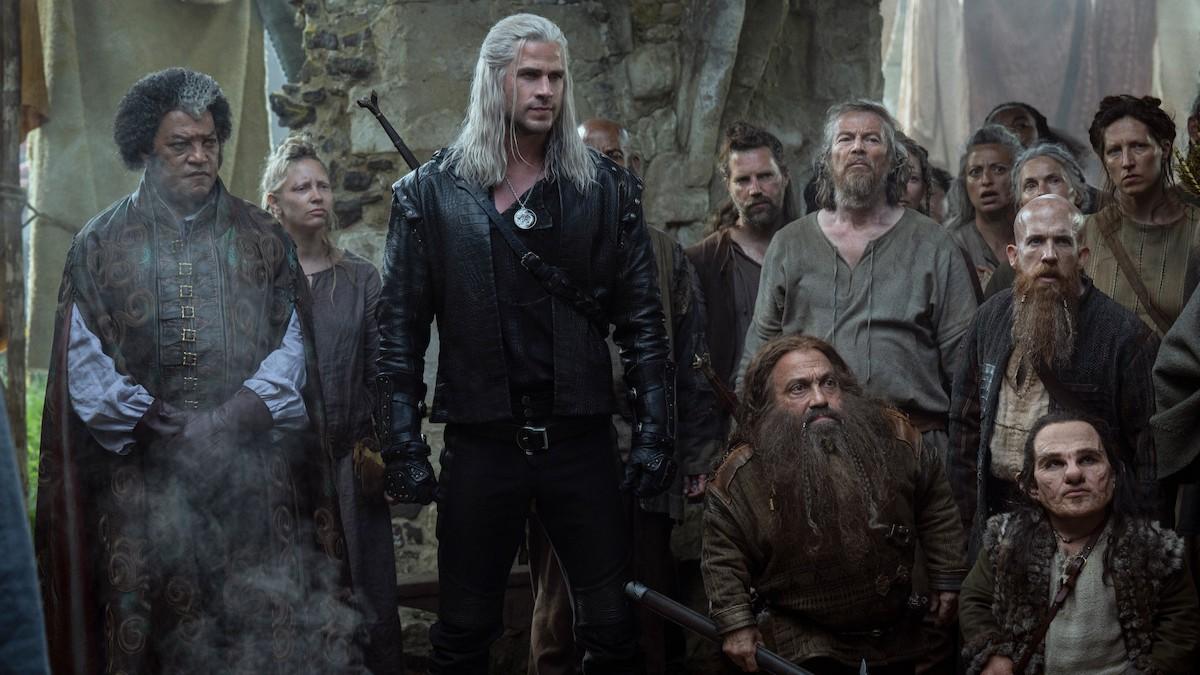
As usual, not only Geralt gets it because of this. Dandelion acts as an ambassador of the "suffering Middle Ages" all season, Zoltan Chivay is responsible for ridiculous phrases, and Regis, played by Laurence Fishburne, is more like a caring grandmother-Morpheus than an aristocratic higher vampire. Even Milva, who in the book aroused sympathy with her sarcasm, in the series, surprisingly, looks even less "strong and independent", and this makes her image more superficial.
To convince you that the authors were really in a hurry, it is enough to give one more example. In the book, there is an episode where the characters discuss the right of women to independently decide the fate of their pregnancy - a fragment that in any other situation the Netflix screenwriters would have grabbed with a death grip, and no one could have reproached them for violating the canon. After all, this is not fiction, but the words of Sapkowski himself, who, if you think about it, is still a feminist. In the series, even this moment is skipped at a gallop, limited to a short "I've already decided everything myself".
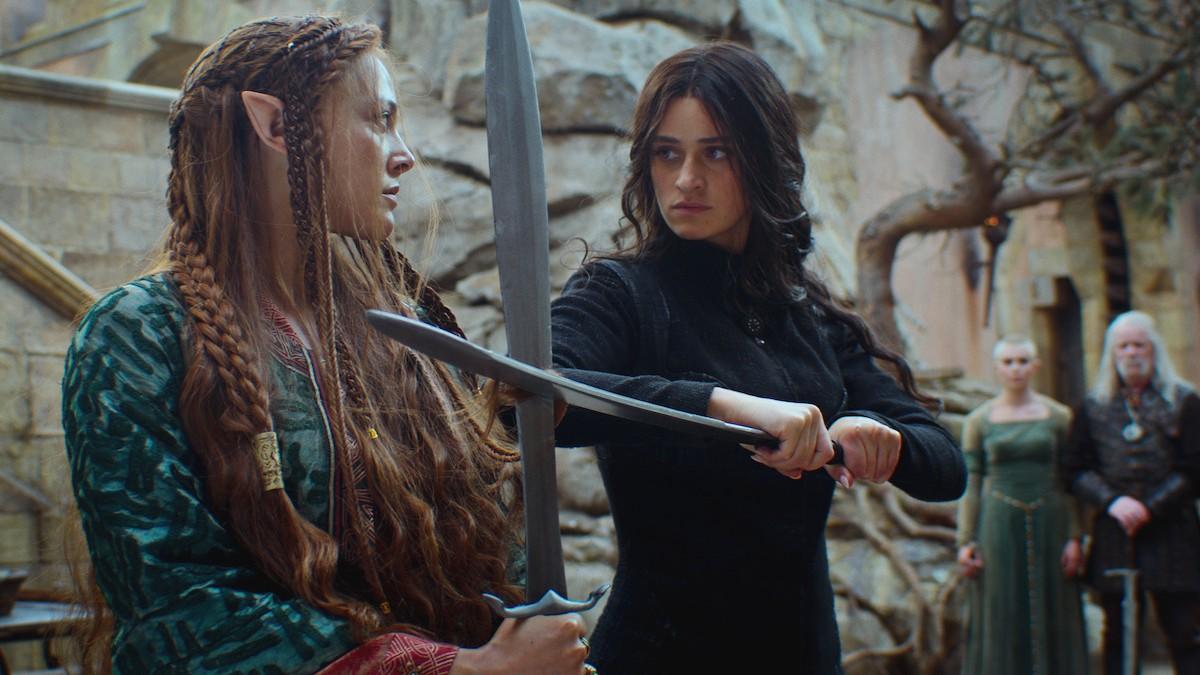
However, everything that the screenwriters "saved" on Geralt, they invested in Yennefer. In the original, she hardly participates in the events of "Baptism of Fire", and here she turns into a central figure of resistance. She gathers an entire army of sorceresses and decides to teach them to fight (attention!) in close combat in order to confront the most powerful mage of the Continent. For this, she invites witchers to Montecalvo - including Vesemir and Lambert.
If this sounds absurd, it's only because it is. This is a completely sucked out of the finger - or where Netflix usually sucks it out - plot, devoid of any connection with the canon. This whole line looks like a budget parody of "Deathly Hallows" with the obligatory "defense of Hogwarts" with the participation of "thirty Spartans", one of whom, by the way, is even bearded.
Swallow without a tower
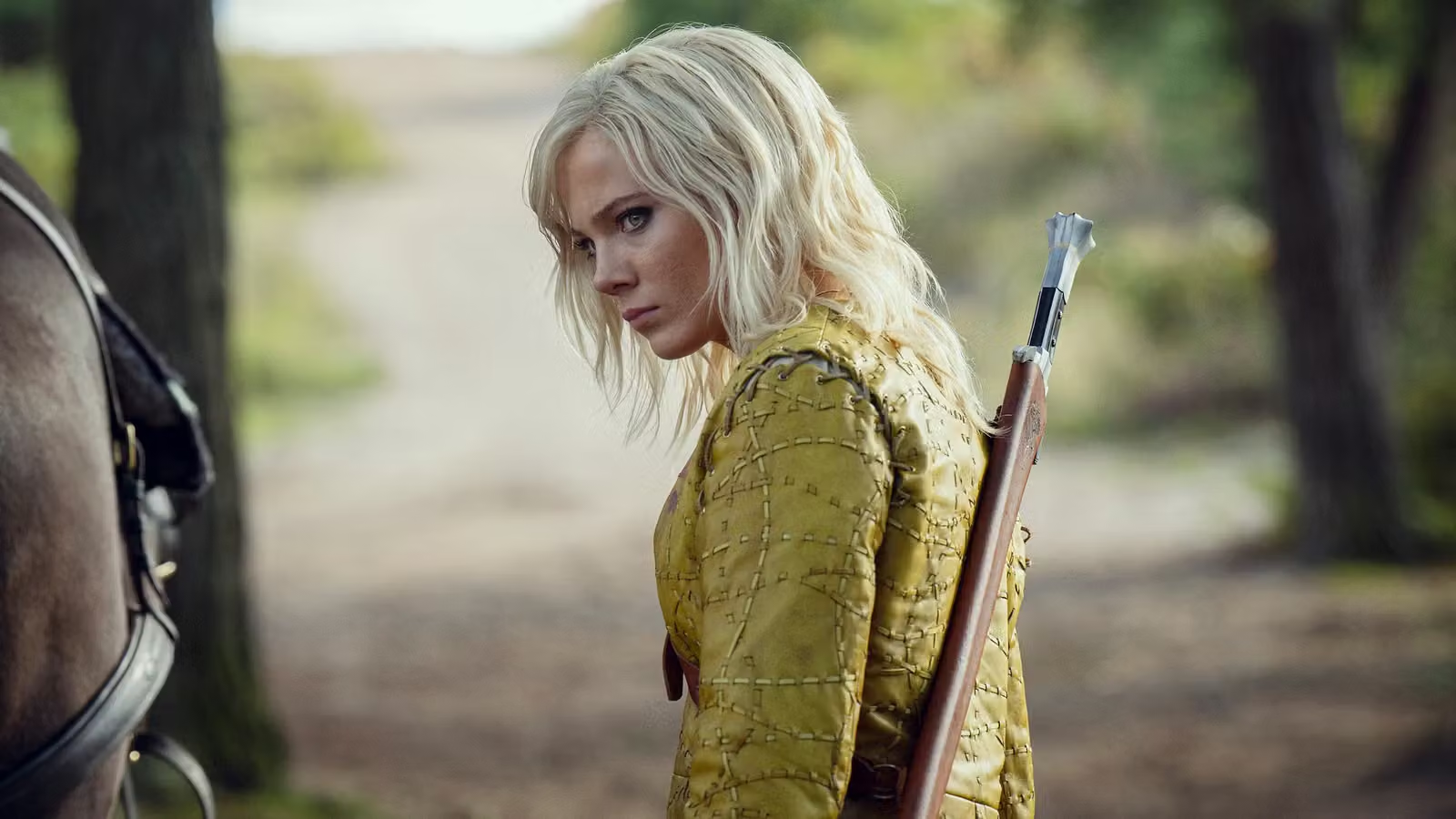
The line of Ciri and her new companions, like much in this season, tries to follow the book canon, but stumbles over the same rake as the rest of the series, while managing to throw in its own along the way. The rejection of oneself, of the past, the transformation of the princess into a bloodthirsty avenger, reveling in her own cruelty, are shown schematically and without emotional depth.
In the books, this is a story of growing up and internal decay, bringing the heroine to the very bottom point, from which she then pushes off so that the Swallow can soar. In the series, Ciri's development is reduced to a teenage rebellion, devoid of real motivation. Even the scene of violence by Mistle, which was supposed to be a turning point and destroy the remnants of the former Ciri, is presented softly - because... Netflix. The arrow still does not turn, so Lauren Hissrich considered it "inconvenient" to show violence by a woman against a woman.
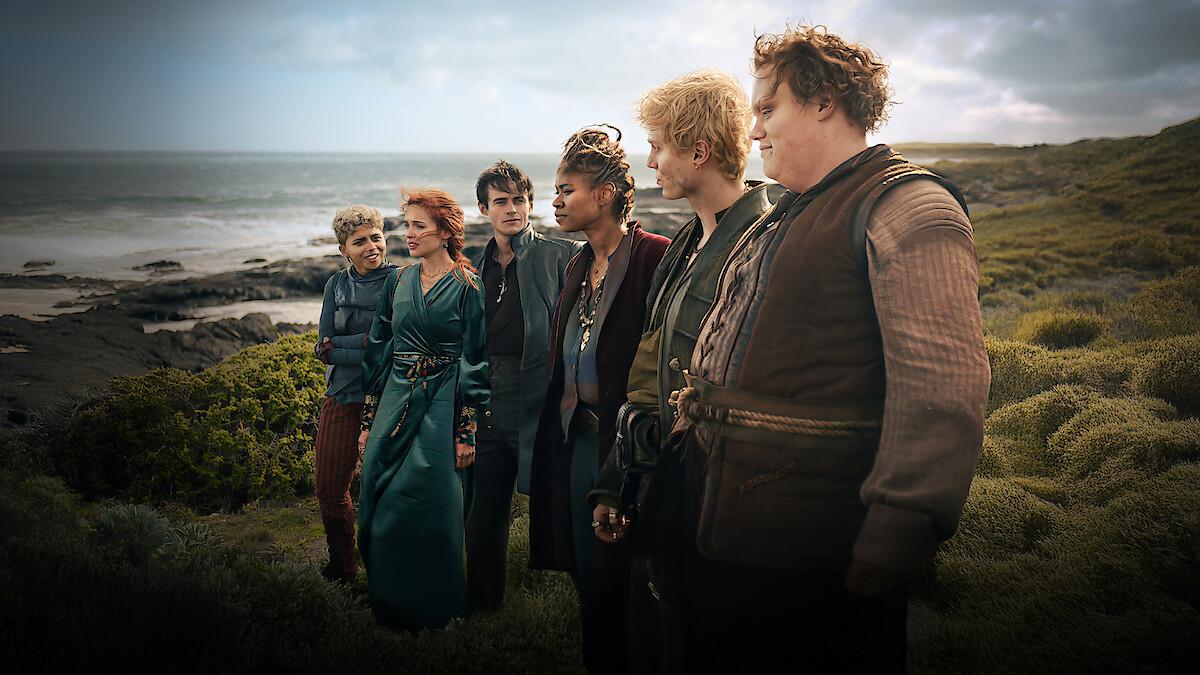
The image of the Rats, which in Sapkowski symbolized a generation crippled by war and deprived of a moral compass, is here turned into a pretentious decoration. They were collected according to the principle of "diversity above all", but even in this regard, the tastelessness is striking. It's frankly unpleasant to look at them. Instead of a gang of obsessed freaks thrown to the side of the road by a cruel world, we see a handful of pathetic teenagers in leather armor. They do not inspire fear, respect, or sympathy - only irritation. Therefore, the appearance of Leo Bonhart becomes a rare moment when the series finally comes to life.
Sharlto Copley brings a crazy, almost "Tarantino" energy to the show. His Bonhart is the embodiment of maniacal chaos, where charm is inseparable from threat. In every frame, he attracts the eye, fills the entire space and creates tension even in static scenes - for example, when he just eats. But even this image did not escape the general superficiality of the narrative. In the books, Bonhart served as a mirror for Ciri, a grotesque reflection of what monster she could become, finally losing herself. Here, this contrast is almost not felt.
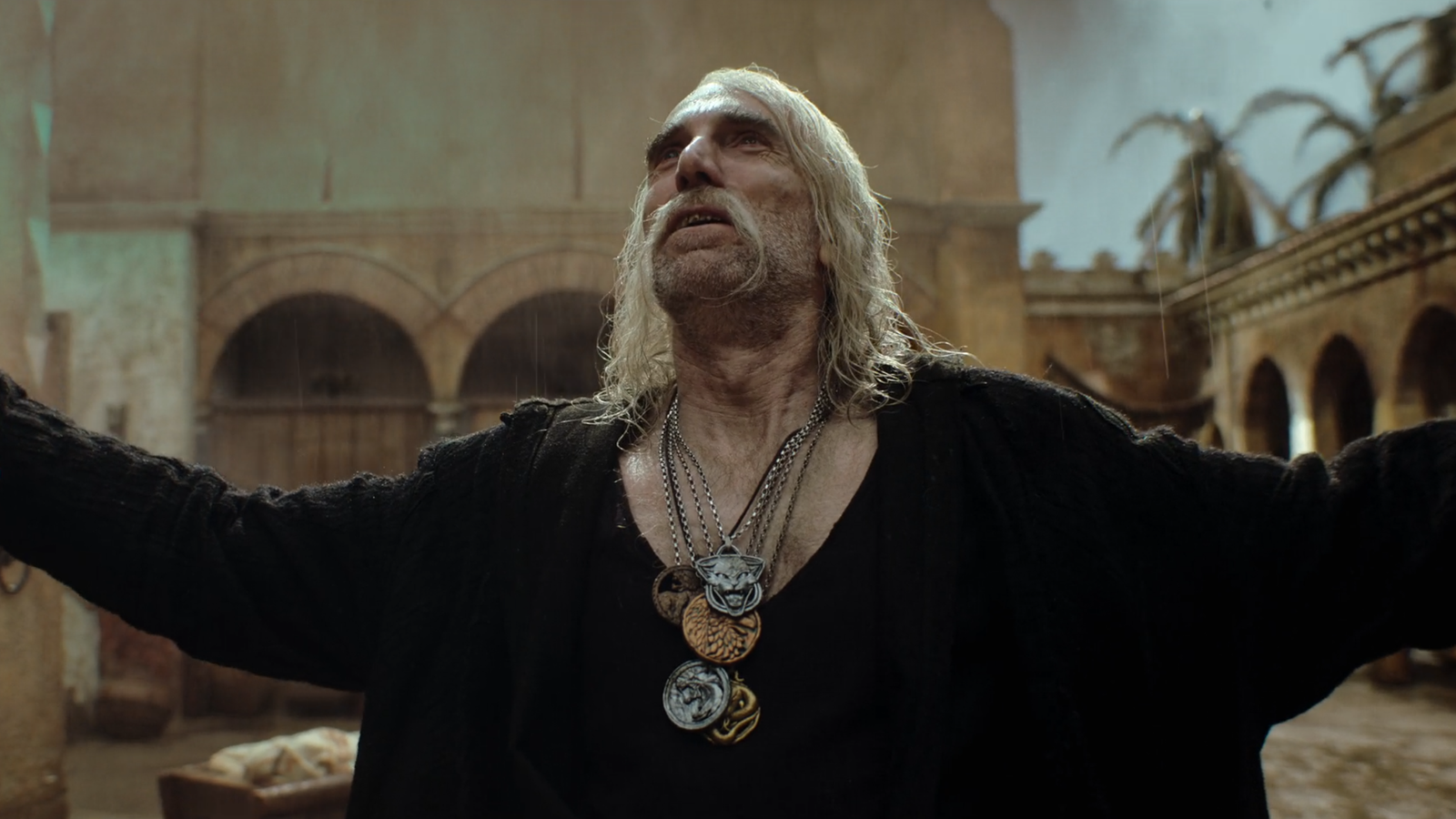
Netflix planted a rat. More precisely, "Rats"
The irony is that it is after the appearance of Bonhart that it becomes clear how toothless the rest of the series looks. Against its background, it is especially paradoxical that the spin-off "Rats. The Witcher Story", assembled from scraps and having survived production hell, turned out to be much more complete and coherent than the main line.
Initially, the project was conceived as a separate mini-series designed to expand the universe and attract a new audience. After the failure of "Origins" and the rapid decline in interest in "The Witcher", Netflix froze production for almost a year. Filming, which began in 2023 in South Africa, lasted only two months instead of the planned six. According to insiders, after watching the footage, the studio management decided that it was not worth showing to people.
The project was recognized as problematic and seriously considered the possibility of writing it off as a loss. Among the alternatives, two options were mentioned - to use the scenes as flashbacks in the fourth season or to release a separate special episode. In the end, they chose the second, but the shame turned out to be so great that viewers learned about the "Rats" only on the day of the premiere of the new season. Netflix literally planted them together with "The Witcher".
I confess, I was sincerely surprised how much better this work looks compared to the main series. With all its deliberate secondary nature, it is more honest in its chaos. Yes, it is still a heap of clichés and hastily sewn characters, but, unlike the original, here at least there is an understanding of what the story is about - about young people who do not save the world, but simply try to survive, albeit in the most wrong ways.
Even the "diverse" composition of the Rats gang, which caused physical rejection in the fourth season, sometimes demonstrates chemistry here. The appearance of the characters - from makeup to costumes - is perceived more pleasantly, and it is the reduction in the degree of caricature that benefits the project.
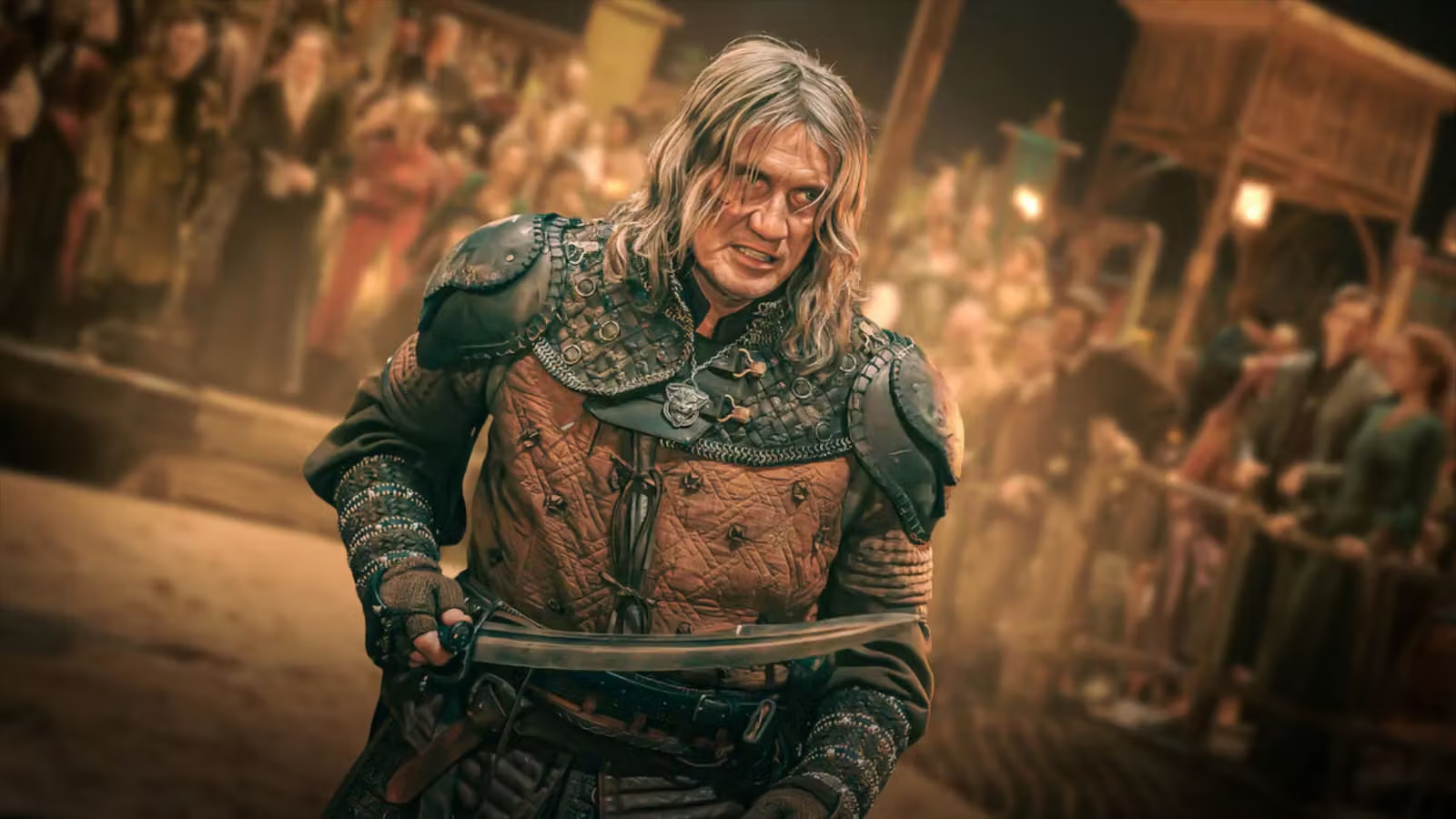
A separate decoration of the special episode was Dolph Lundgren as the witcher Bregen. At first it seems that the star of the nineties action movies was pulled out only to laugh in his face at the generation that grew up on Sapkowski's books. But contrary to expectations, this story really works. Let it be non-canonical, but it turns into a parable about an old witcher who has long forgotten how to save the world, but is still able to protect those who are nearby. Bregen gets a quite tolerable arc of redemption, which the characters of the main series would envy.
But even despite this, I would not advise watching the spin-off. It seems more complete only against the background of the decomposition of the main show, and by itself it has neither weight nor meaning. It's easier not to watch any of this - the franchise has already said everything about itself, and there is nothing new waiting for you in these leftovers.
This is indicative of the entire state of the witcher universe of Netflix. When a spin-off, assembled on the knee from scraps of footage, looks more convincing than the main series - something has clearly broken down completely in the system.
Netflix will continue to pretend that everything is going according to plan, but six years ago we were promised seven seasons. Now there is only the fifth, final one, in which even more material will have to be crammed than in the fourth. And this means that the same mess awaits us - cold, lean and meaningless.
Diagnosis
If earlier it was still possible to argue whether the series is good or bad, how much it deviated from the canon and whether it is deservedly scolded - now there is nothing to argue about. I honestly gave him a chance, because I believed that everyone has the right to their own version of "The Witcher". "No one will take away from me the books, games and the world that I loved," I said. But with each new season it became more and more obvious - there is essentially nothing to argue about. Even the energy of polemics has dried up.
The fourth season no longer irritates and does not cause indignation. Watching this show is like watching the decomposition of a body that is still moving by inertia, although life has long left it. Netflix pretends that everything is under control, but their "Witcher" is already dead. Not because of the replacement of the actor, not because of creative liberties and not even because of the notorious "agenda", which, by the way, Sapkowski had enough of without prompts from Netflix producers. He died of indifference - because there is no longer any passion, meaning, or soul in him.
Ciri once said:"Life is shit, blood and death". About the series "The Witcher" you can say about the same. Only if you remove blood and death - what will remain?
Never miss our newsAdd this site to your preferred sources to see us more oftenAdd on Google
![[Video] Parasite Gamers / GeoW E-Day Catastrophe / Witcher 3 Fixed / HOMM 3 Remake Music / GTA 6 Flip-flops](https://media.ixbt.games/fit-in/312x/ixbt-data/1380934/7c31f3d6-37d0-4be4-9a74-a4790036e7b4.jpg)