Walking on Thin Ice Towards the Finale. A Review of the First Volume of Stranger Things Season 5 [Episodes 1-4]
Nearly a decade after its premiere and three years after the fourth season, Stranger Things is heading towards the finish line. The finale of such a long story inevitably raises fan expectations to the limit, where one wrong move could turn into a disappointment with a taste of Game of Thrones season eight. What is the first part of the final season like, and is it worth the long wait? We tell you in our article.
From Hawkins to Hogwarts
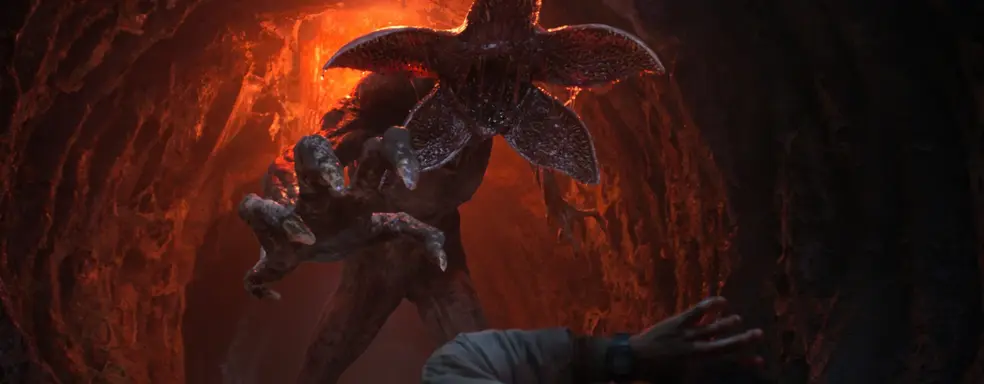
The fourth season of Stranger Things ended in defeat for the first time. Vecna survived, a rift split Hawkins, and the heroes realized that they had failed to stop the threat. The fifth season came out almost three years later, while about eighteen months have passed in the world of the series - enough for the town to change, but not enough to erase the consequences. The story continues at a time when the stakes are particularly high. Vecna has remained in the shadows all this time, probably regaining his strength, and is now ready to implement his plan.
This plot and chronological landscape sets the tone for a story from the first minutes that is both reminiscent of the events of the first season and infinitely distant from the Hawkins that viewers saw in 2016.
The fifth season opens in November 1987 - four years after Will's disappearance and the first encounters with monsters from the Upside Down. This time jump serves not so much a plot necessity as an attempt to smooth out the inevitable divergence between the aging characters and the already adult actors, many of whom were in their twenties at the time of filming.
![Walking on Thin Ice Towards the Finale. A Review of the First Volume of Stranger Things Season 5 [Episodes 1-4]](https://media.ixbt.games/fit-in/1600x1200/ixbt-data/universal_publication/369693/snimok-ekrana-2025-12-03-164230-693043076b19e.png)
During this time, Hawkins has partially emptied - we saw the evacuation scenes in the finale of the fourth season - but even in the face of disaster, there are people here who have nowhere to go or who see no point in it. The rifts have been closed with a metal dome, turning the city center into an exclusion zone controlled by the military. This has preserved the outward appearance of normal life, although in reality the city lives in a prolonged quarantine, and time inside seems to have frozen, bringing it even closer to its dark reflection in the Upside Down.
Against this background, the characters change in different ways: some have become stronger, some have broken down, but almost all have found themselves in their own "Groundhog Day." Everyone is driven by one goal - to find and stop Vecna, whose location is still unknown. They enter the season from different emotional states, but all are united by a sense of incompleteness and growing doom. It was this tone that once opened the last part of a great story, and the gloomy kinship with the Deathly Hallows feels especially clear here.
General Assembly
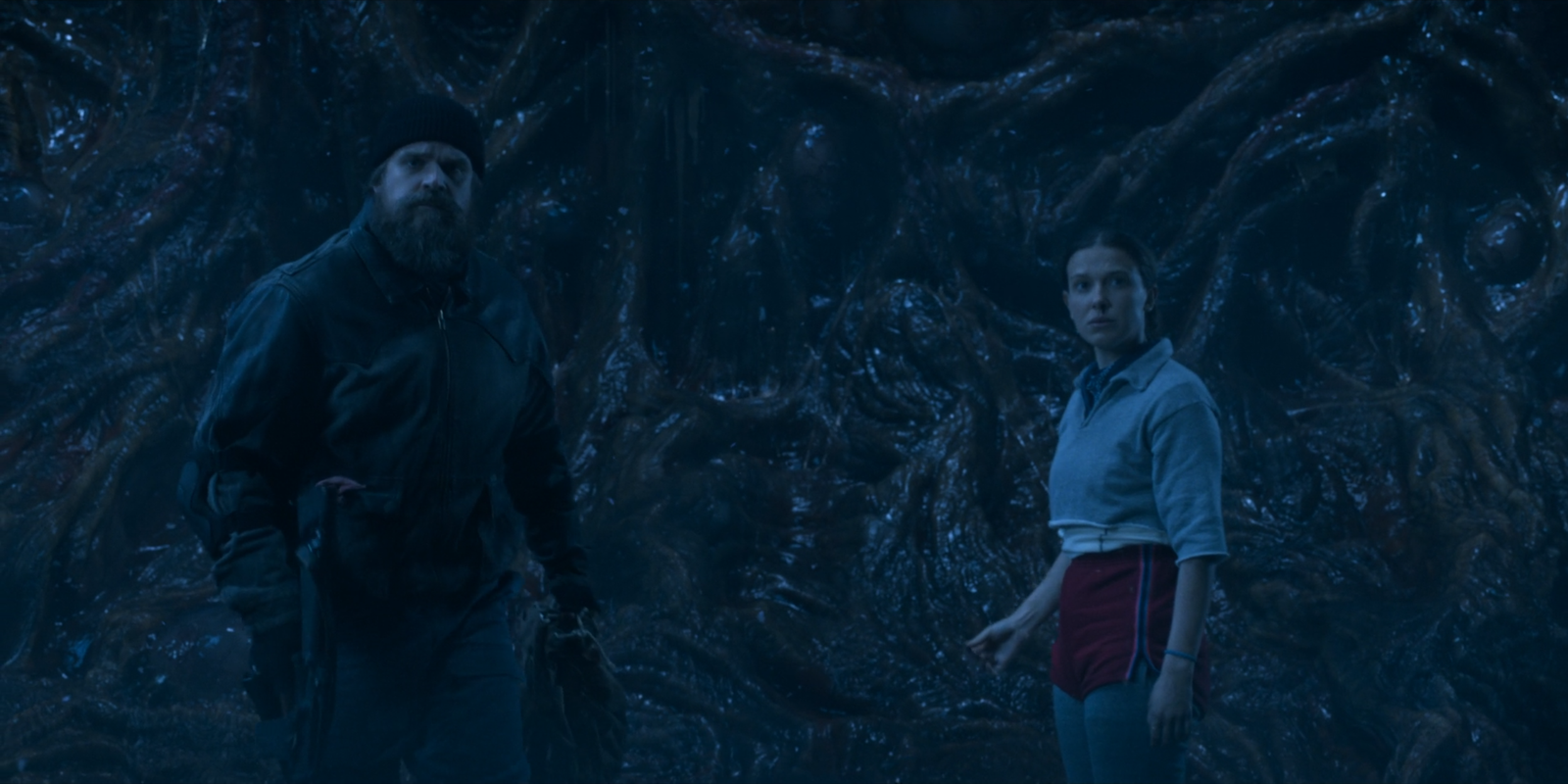
Eleven enters the season in a state of full combat readiness. She undergoes grueling training, trying to strengthen her control over her power and be ready to meet Vecna when he reappears. The red shorts here are no accident: the visual image emphasizes the "superhero" burden that she has taken on. But behind it lies inner tension.
There is a distance between her and Hopper: he seems to be driving her into the framework of excessive guardianship, dictated by the fear of losing his daughter again. Because of this, Hopper unconsciously limits her independence, and Eleven herself perceives his care as distrust. Hopper looks like a man tired of the endless struggle: his exhaustion coexists with the usual heroism "through strength," which rarely bodes well for a quiet life for the character.
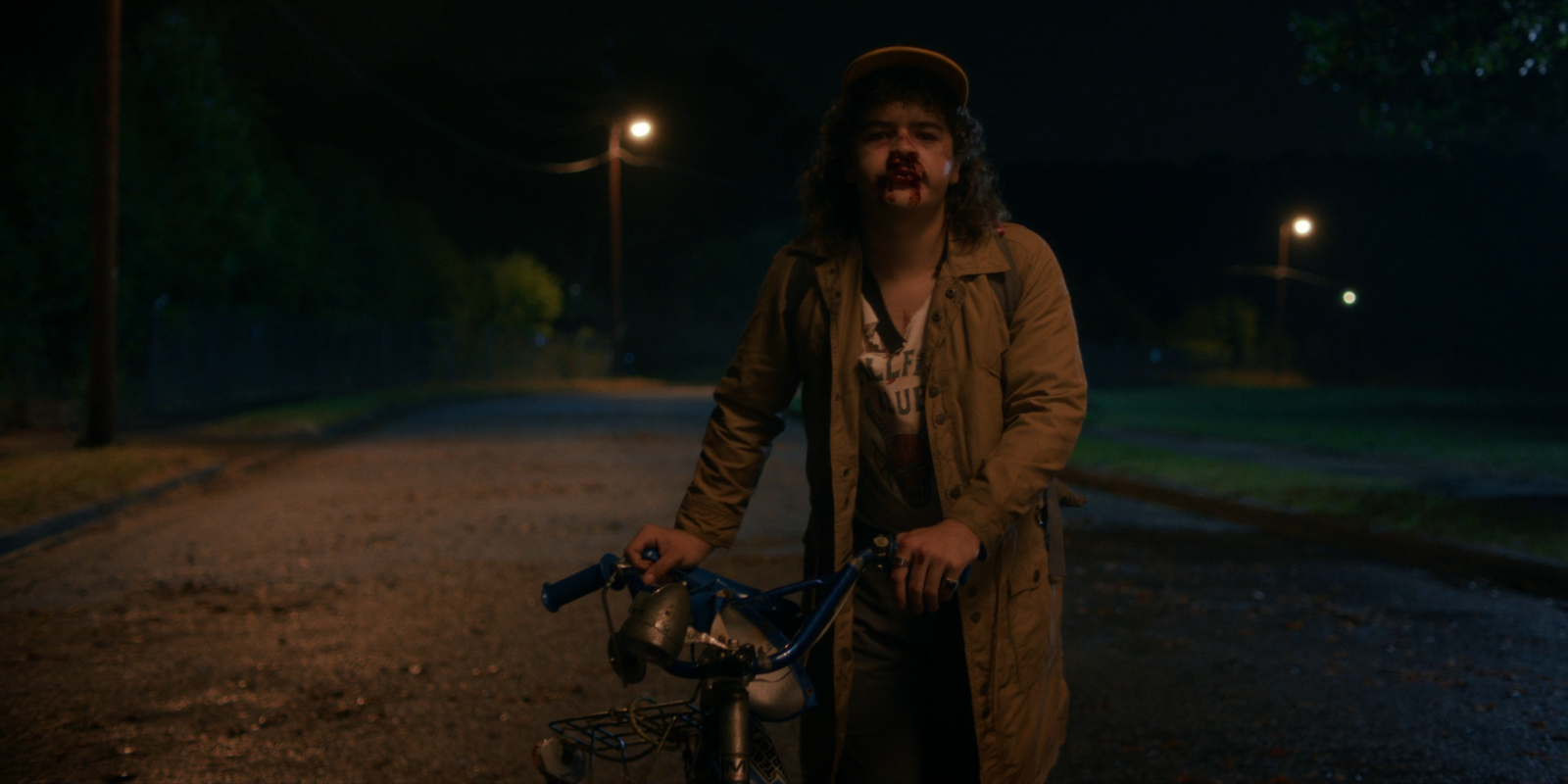
The creators do not ignore the tragic death of Eddie Munson. Here, Dustin, who has noticeably matured, becomes the main carrier of this line. His former enthusiasm and sincere optimism are now combined with an emotional heaviness that he did not have before. He still wears the Hellfire Club T-shirt, defends Eddie's memory, and refuses to accept how the town has turned his friend into a convenient "scapegoat."
But Dustin cannot convince people who have already chosen their version of what happened, and in a sense, Hawkins deprives him of the right to honest grief, forcing him to stand in opposition to the majority. Despite the grim circumstances, it is unexpectedly pleasant to observe this inner growth after so many years - after all, even Neville Longbottom once had to grow up.
Steve and Robin now work at a radio station, transmitting encrypted messages under martial law, including maintaining contact with Murray Bauman, who has become a smuggler and supplies the team with the necessary resources.
A small but important detail: it shows how much Hawkins has changed and how much the logic of interaction between the characters has shifted. The world around them has become tougher, the usual groups have broken up, and the division into "squads" is now more of a tribute to the past. In fact, the characters act as a single team, where everyone has their own function.
Against this background, the love triangle of Steve, Nancy, and Jonathan, which has hardly moved in eighteen months, looks especially contrasting. Sometimes it seems that not a year and a half has passed since the finale of the fourth season, but mere minutes. Against the background of other, more dynamic lines, this pause creates a slight dissonance and makes you wonder whether such staticity is a conscious creative decision or a point to which they will return.
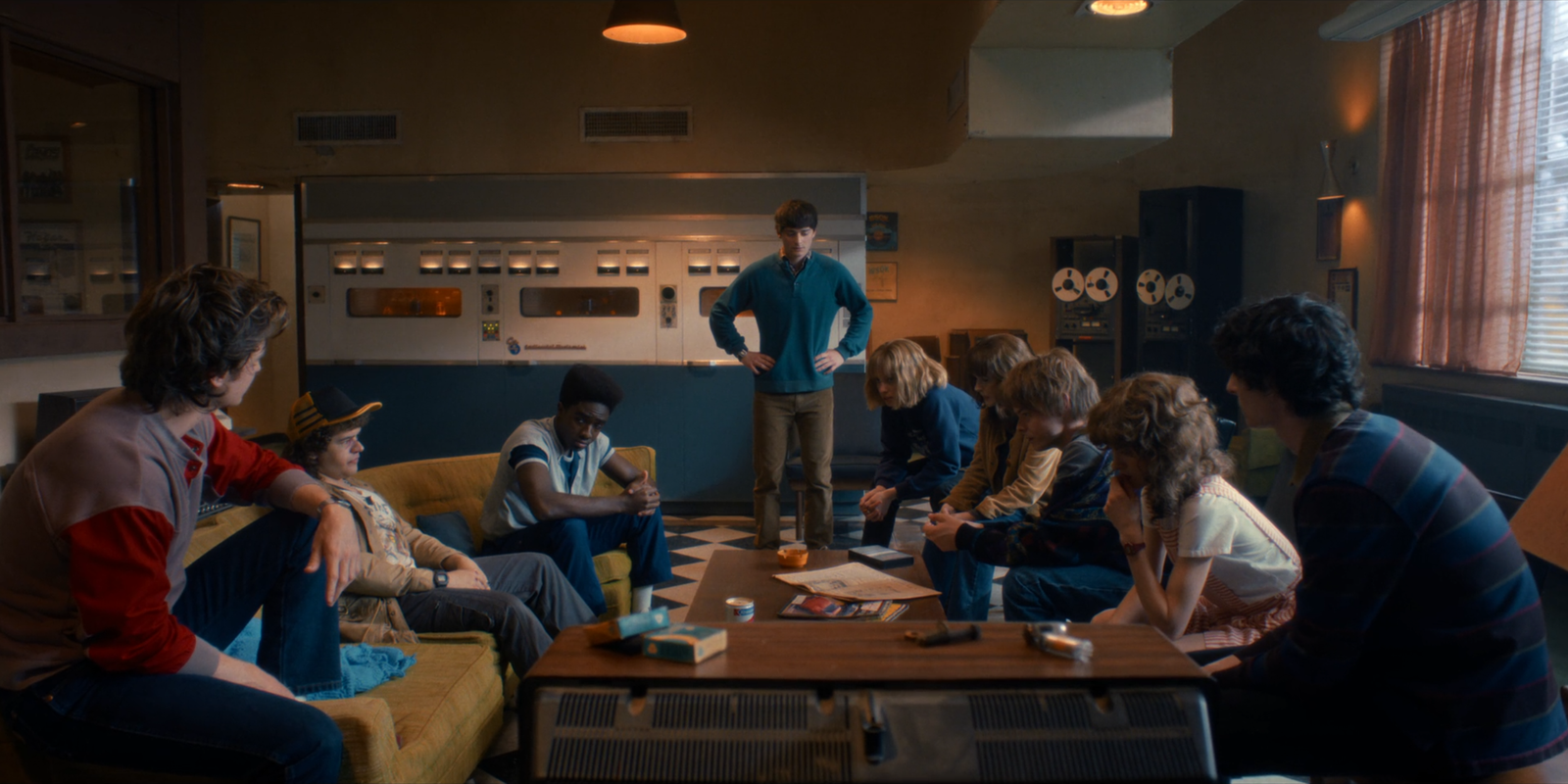
But the strengthening of the role of the Wheeler family, which has long remained in the shadow of more prominent characters, is felt much more clearly. Nancy and Mike become the peculiar leaders of the two "flanks" of the team, and the appearance of their younger sister in the story enhances this effect.
Holly's disappearance becomes a catalyst, pushing the characters to act faster and more decisively, linking several storylines together and giving the story a new emotional direction. This decision seems logical for another reason: the main cast has noticeably matured over ten years, and it is becoming increasingly difficult to maintain the classic "childish" perspective with which the series began. Through Holly, the authors maintain an important connection with the roots of the story, returning to it the spontaneity that once defined the spirit of the first seasons.
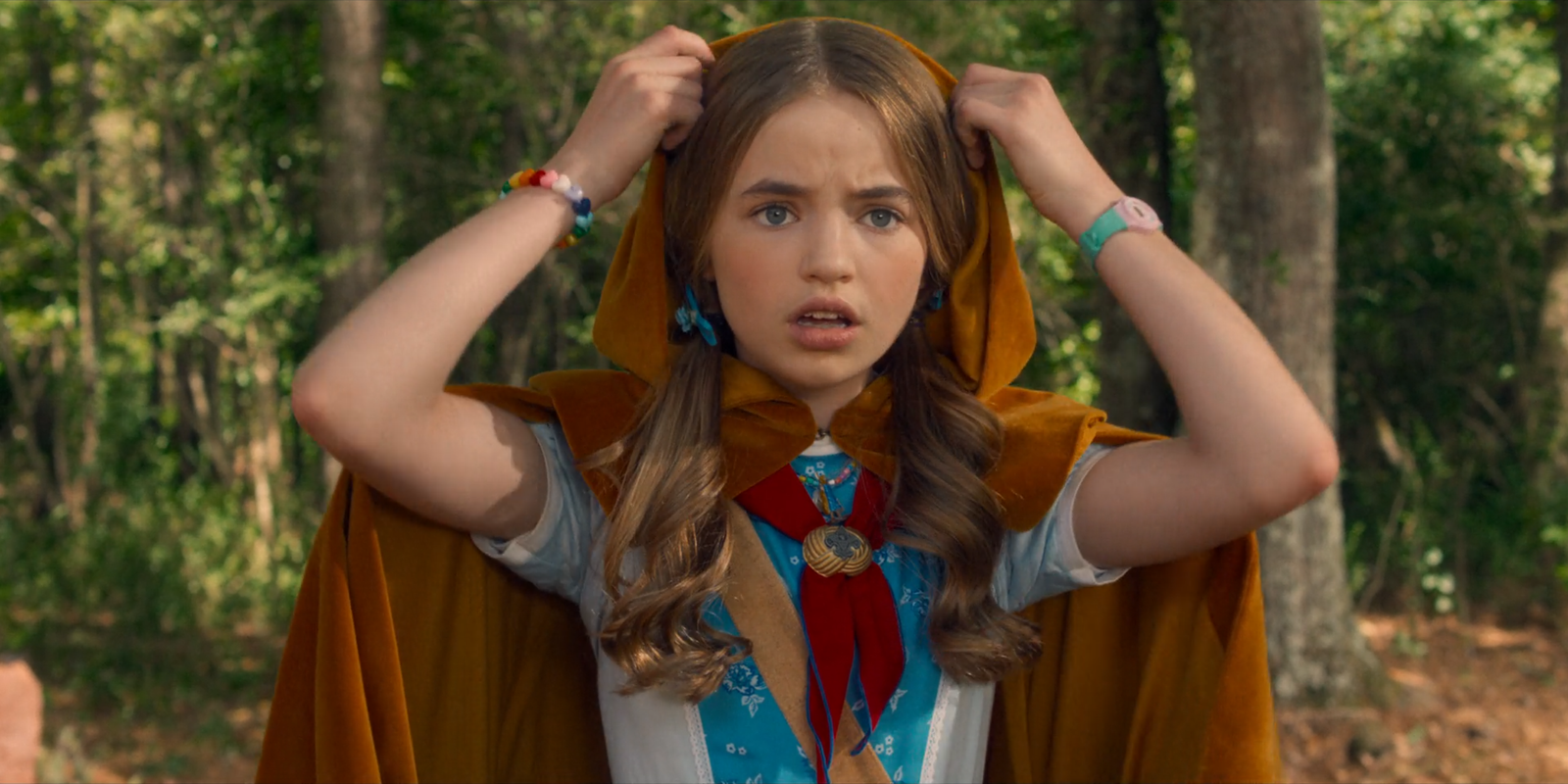
Joyce remains the emotional backbone of the story. She holds her family and immediate circle together, acting more intuitively than rationally. In turn, Lucas is going through perhaps the most difficult period among teenagers. The loss of Max and her coma still prevent him from moving on.
He is emotionally exhausted, looks lost against the background of the others, and seems to be stuck between the past and the present. I want to believe that this stupor will not drag on and the authors will allow Lucas to get out of the emotional impasse along with the development of the Max line.
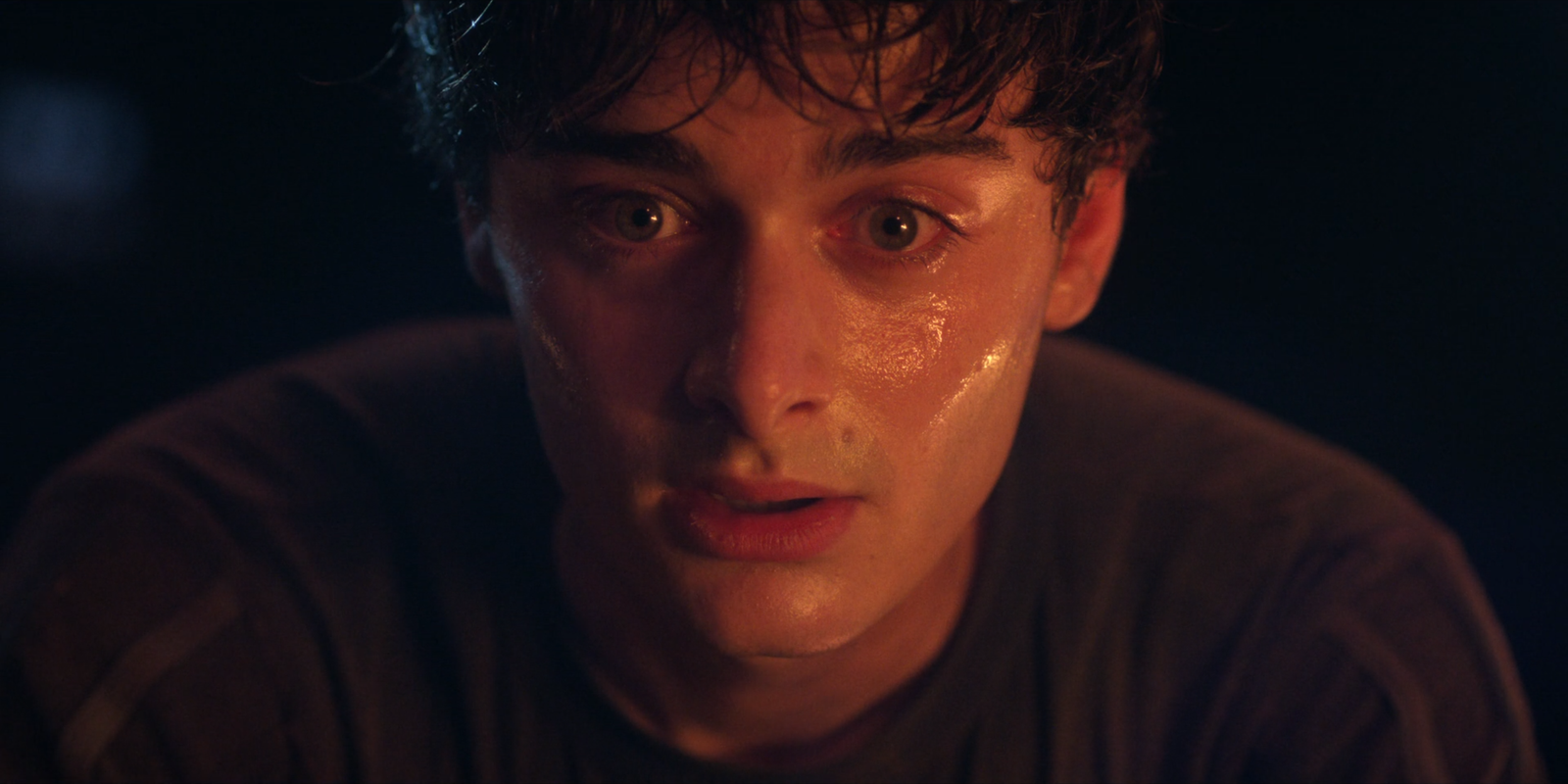
Nevertheless, as the Duffer brothers promised, Will - the one with whom it all began and on whom, according to the authors, this ten-year story should end - is once again at the center of the story. From the very first minutes, it becomes clear that his connection with Vecna and the Upside Down is much deeper than it seemed even a season ago, and that from the very beginning Will was part of Vecna's grand plan.
At the same time, for many years he remained in the background - in the role of a victim whose experiences no one, including himself, could fully understand. All this time, a quiet, exhausting struggle was going on inside him, a person who lived with something he could not explain.
That is why his connection with Robin is so important. A calm, trusting dynamic gradually arises between them, which allows Will to feel support for the first time in a long time and regain his footing.
Controlled Chaos
The first impression of the density of the lines may be a little unfocused or hasty, although the authors' desire to pay attention to each character is easy to understand. Such an ensemble series always runs the risk of disappointing those who expect more from their favorite characters, but the first volume shows that the creators are trying to maintain balance as much as possible within such a large-scale structure.
This is largely because external and internal mechanisms of interaction continue to work within each line, bonding the story together. The chemistry between the characters has long gone beyond the script: formed by years of working together and real friendship outside the set, it makes the interaction of the actors natural and convincing. Such things cannot be faked, and on the screen they turn into authenticity, holding the emotional framework of the story in every significant moment.
Another important layer is added to this. In the fifth season, Stranger Things increasingly refers to its own past: scenes, visual codes, and episode compositions echo familiar moments from the first seasons. This is not just nostalgia and not the exploitation of recognizable images, but an attempt to assemble fragments of the former story into a single structure that acquires new meanings under the weight of the path traveled.
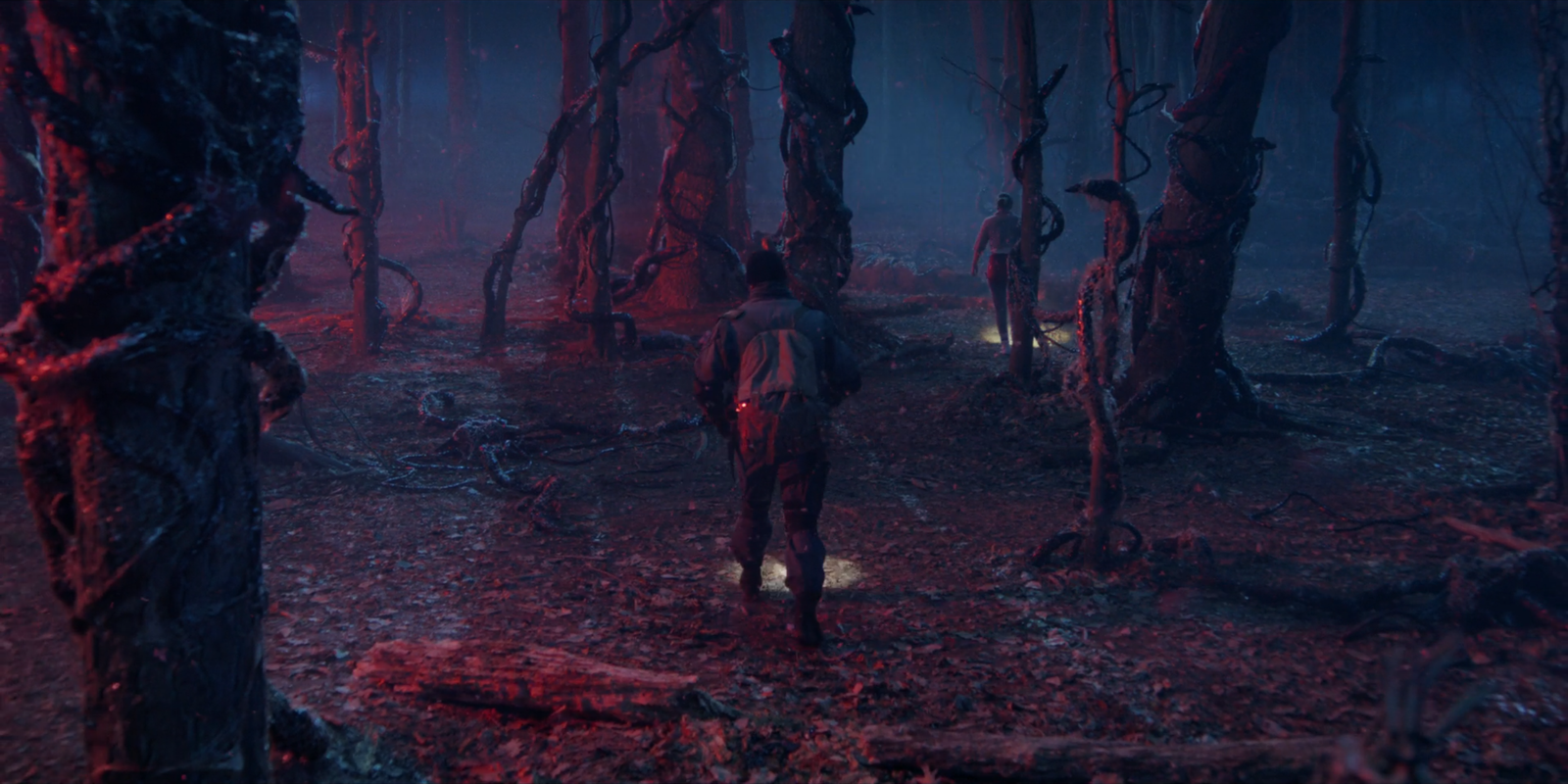
However, when it comes to structure, the irregularities become more noticeable. The pace of the first volume really fluctuates: sometimes it seems that the authors are in too much of a hurry, trying to bring the lines to the positions of the future conflict as quickly as possible. In other episodes, on the contrary, they deliberately slow down, allowing the viewer to live through an emotional moment or digest another portion of exposition.
This approach is understandable, especially considering that some of the audience may have forgotten the details or connected directly to the final season, following the general hype. But for those who have gone all the way from the first season, some scenes may seem redundant.
Despite the fluctuations in pace, the series maintains tension almost continuously. Regardless of what is happening on the screen - a funny episode, a scary moment, or a dramatic scene - the apocalyptic mood permeates every minute.
And even predictable twists work because the lead-up to them is built clearly and logically. The creators do not strive to surprise at any cost: they do not resort to "deus ex machina" and do not pull grand pianos out of the bushes, but carefully bring the lines together where they really should converge, even if it sometimes resembles controlled chaos.
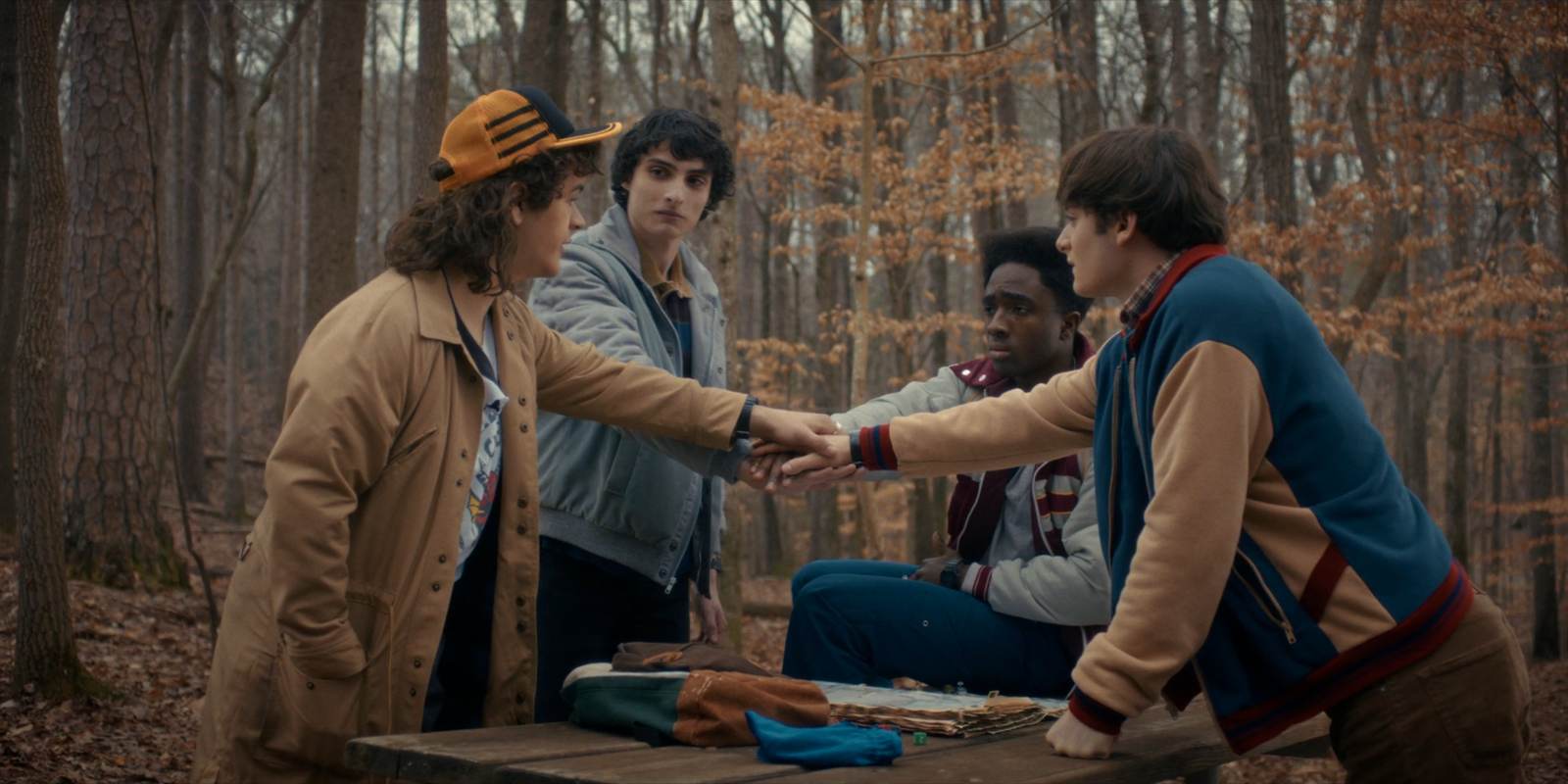
The peak comes in the fourth episode - the strongest episode of the first volume. This is a rare case when the visual language, the rhythm of the scenes, the editing, and the music come together in a single expressive gesture, keeping the viewer in suspense until the credits. And the way the first volume and its final episode are built once again confirms how much Stranger Things gravitates towards "big cinema" in terms of directing.
At the same time, the fifth season significantly expands its cultural layer. If the early chapters were almost entirely tied to the aesthetics of the 80s, now the series is becoming much more complex. The visual codes of the past era are intertwined with modern images, fairy-tale motifs with teenage dystopias, and the style of individual scenes increasingly resembles not classic adventures of that era, but later fantasy stories about growing up.
The fifth season feels like a real "last part": both in tone and plot, we are waiting for our own "Deathly Hallows" with all the ensuing consequences. And since it becomes impossible to talk further without spoilers, it is appropriate to stop here and summarize the first volume - and save the details for the final text.
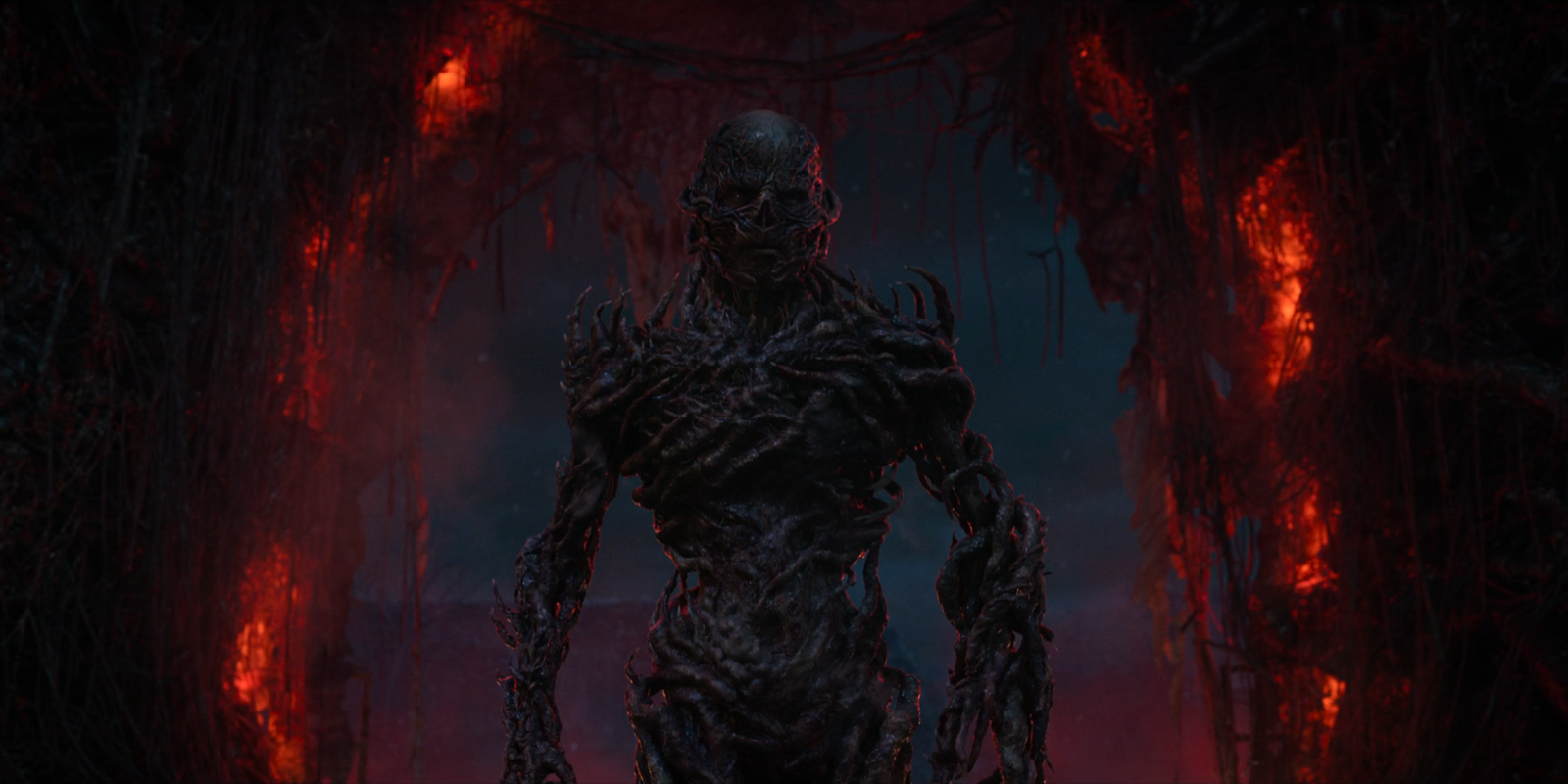
Diagnosis
The first volume of the fifth season of Stranger Things takes the series to too thin ice. Expectations have grown to absurdity, the scale has increased markedly, and the responsibility for the finale has become almost unbearable. And yet, the start of the last chapter looks more encouraging than alarming. Yes, in some places the ice is barely crackling: the intersection of lines confuses the focus, the pace jumps, and some episodes are filmed with an eye to an overly wide audience. But in key moments, the season hits the mark.
This is still a story about growing up, only now the characters are going through its most difficult stage - where decisions have a price, and you need to deal with the consequences not "sometime later," but right now. That is why the fifth season feels like a real "last part." It collects the motifs, themes, and conflicts of past years and leads the viewer to a climax that promises to be both personal and large-scale.
And if the first four episodes teach anything, it is that Stranger Things intends to end its story on its own terms. And like the characters themselves, the fifth season now has only one chance to finish this journey with dignity. I want to believe that the Duffer brothers took advantage of this chance.
Never miss our newsAdd this site to your preferred sources to see us more oftenAdd on Google


![[Video] RIP RTX 5090 / GTA 6 Leak / Blizzard Broke WC3 / Cyberpunk 2077 Movie / Phantom Blade Zero Preview](https://media.ixbt.games/fit-in/312x/ixbt-data/1725650/17ffaa31-1709-4a05-91a5-0ee4b75897d7.jpg)