Template, but Unique Saga About Garbage. Anime Review of "Gachiakuta"
A Story of Revenge and Garbage
The plot revolves around a young man named Rudo. He lives in a world where people easily discard things at the slightest damage. Rudo doesn't like this: he collects and fixes other people's garbage, which irritates those around him. The situation is aggravated by his origin: the hero's biological father was a murderer, which is considered the gravest sin in this society. Because of this, Rudo is an outcast.
One day, an unknown person breaks into the hero's house and kills his guardian. The authorities accuse Rudo himself of the crime and sentence him to death — throwing him into the abyss, effectively equating him to waste. Even those he considered friends turn away from him.
Once at the bottom, Rudo discovers a terrible truth: it's not a garbage pit, but the surface of the Earth. He spent his entire life in the heavens, in an isolated state. Now the hero must join the "Cleaners" — an organization fighting garbage monsters that fall from above. Here, the meaning of the title is revealed: Gachiakuta can be translated as "Real Garbage" or "Real Refuse."
Rudo's goal is to return to Heaven and take revenge: on the guardian's killer, the authorities, and the residents who condemned him without evidence. But will new comrades be able to change the views of a person who has never known true friendship?

Like Everyone Else, But Different
At first glance, we have a typical shonen: lots of fights, mystical powers, and genre clichés. For example, the heroes' strength depends on objects: they "draw" the soul from things to fight. This is reminiscent of the "Fullbringer" arc from Bleach. If desired, dozens of borrowings can be found in "Gachiakuta."
However, upon closer inspection, "Gachiakuta" turns out to be deeper. The project has a number of unique features.
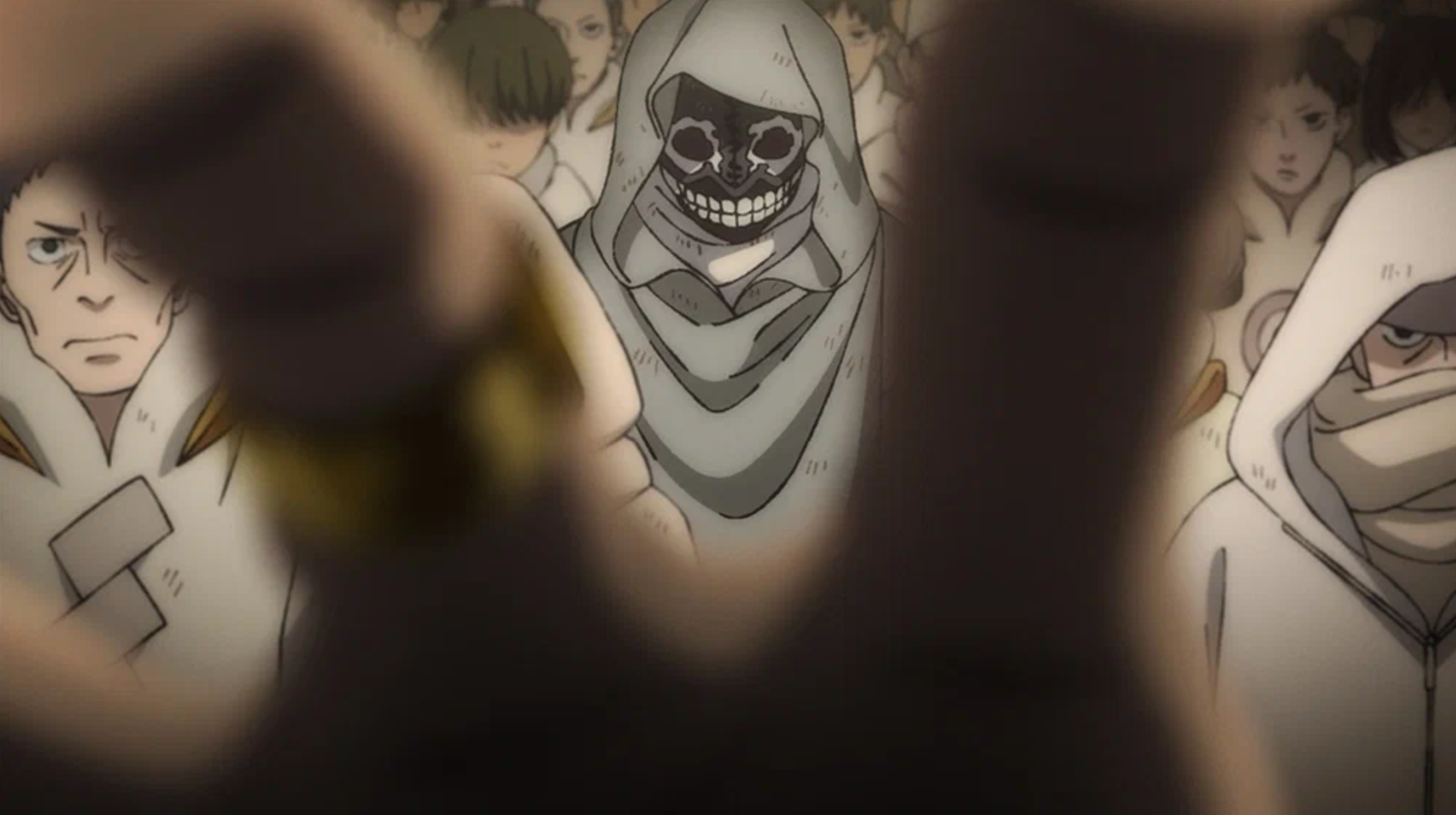
The conflict is more complex than it seems at first. There are more factions here than just "earth" and "heaven":
- Residents of heaven — an arrogant consumer society;
- Residents of earth — survive among the waste and hate the "heavenly dwellers";
- "Cleaners" — defenders of the earth from monsters;
- "Scavengers" — radicals who want to destroy heaven (seemingly the same goal as Rudo, but different methods);
- A mysterious group that killed the hero's guardian.
All of this mixes together and twists into one big story, which has plenty of interesting twists. Including those related to the lore of this world.

The anime raises an important topic — the need for proper waste disposal and environmental conservation. The world is literally drowning in garbage. There are areas where the air is so poisoned that a person dies in 15 minutes without a mask. "Gachiakuta" harshly criticizes the culture of consumption: things thrown away without love turn into monsters and take revenge on people. The author says directly: love your things, and they will last a long time.
It is a pity that the anime is not able to strongly influence this in any way. Neither one thing nor the other.

The project stands out due to its non-standard presentation. The outcome of a duel is often unpredictable, and a tense drama can instantly turn into an absurd comedy. The contrast between external superpower and human vulnerability adds sharpness to what is happening.
Style: Trash-Punk and Dynamics
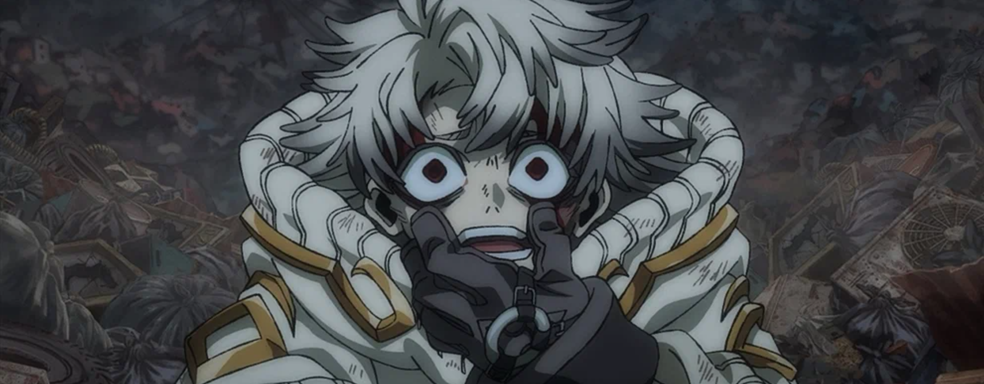
The hallmark of "Gachiakuta" is its visual style. The character design is magnificent: multi-layered clothing, oversized, lots of belts, chains, and patches. Fans have dubbed this style "trash-punk." The heroes look like they collected their wardrobe in a garbage dump, but did it with taste.
Kei Urana loves extreme angles and playing with perspective ("fish eye", shots from bottom to top), and the anime adaptation carefully transferred this to the screen. The staging of fights, the work with color and shadows — is top notch. Special mention should be made of the music: epic tracks come in at key moments, raising the bar of pathos to the heavens.
And, of course, emotions. The faces of the heroes, especially Rudo, are sometimes distorted by anger or fear so much that it becomes creepy. The authors played this out coolly: in battle, such a grimace scares enemies, and in peacetime it creates a comic effect, because the hero simply does not know how to smile normally.
Gathered all together in combination with some unpredictable moments or strongly distinguished characters — there are plenty of idiots, psychopaths and just people who act unusually — these elements create their own unique style, which you will not find anywhere else.

Diagnosis
"Gachiakuta" may seem like another run-of-the-mill shonen, but this is a deceptive impression. If you delve deeper, you will find a mountain of fresh ideas, relevant topics, and an unpredictable plot. And the unique visual style and charismatic psychos in the main roles only reinforce the success.
Let's hope that the series does not fizzle out by the finale, as often happens. The second season has already been announced, but there is no release date yet — we are waiting no earlier than 2027.
Never miss our newsAdd this site to your preferred sources to see us more oftenAdd on Google