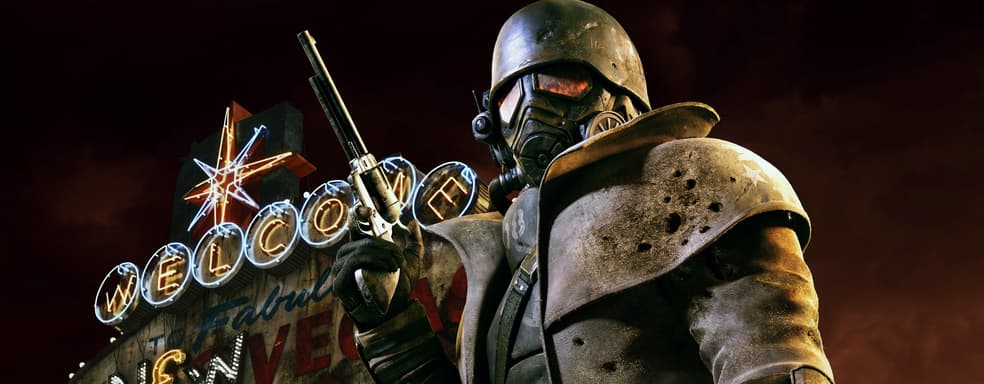
New Vegas in 2026: The Best RPG in 15 Years on a Dead Engine
Translated with AI from the Russian original.
Fallout: New Vegas is 15 years old - and with the anticipation of the second season of the "Fallout" series, it's a good reason to return to the Mojave Wasteland. We played the game in the fan-made Extended Edition build and assessed two things: how strong its story, choices, and role-playing system still are, and how noticeable the age of the engine is.
Vacation in Mojave
Winter is the perfect time to return to the Mojave Desert. Outside the window, there's frost and snowdrifts, while on the screen, the sun-scorched expanses of Nevada envelop you in nostalgic comfort. Fifteen years after the release of Fallout: New Vegas, I'm launching the game again — this time in Extended Edition.
To clarify: Extended Edition is a fan-made mod compilation that combines many improvements (from stability and interface to visuals and balance) into one package. It's based on a rebalance inspired by Josh Sawyer's modification, and on top of that, dozens (and hundreds) of minor tweaks that collectively change the experience. Essentially, it's the closest thing to a "remaster without a remaster" way to dive into New Vegas in 2026.
I rarely replay games. When you regularly write about releases, too much demands attention, and there's simply no time to return to old worlds. Besides, over the years, much fades from memory. The New Year holidays became a convenient opportunity to close this gestalt and finally calmly return to New Vegas.
And even despite the memory lapses, from the first minutes, you're overcome with the feeling of returning to a familiar place. Everything seems to be in place, but now slightly touched up, patched up, and put in order by the caring hands of modders. And next to the updated facades, old potholes are still found — problem areas that haven't been fixed for decades.
Choice from the First Step
The story in New Vegas begins as a fairly typical revenge story, which quickly evolves into a struggle for the fate of the entire region. The main character is a Courier who, in the opening cutscene, is almost sent to feed the worms after being shot in the head, but miraculously survives. Deprived of answers and almost everything he had, he is initially driven by an extremely clear goal — to find the man in the checkered suit who stole the platinum chip and left him to die in the desert.
However, the platinum chip turns out to be the key to the conflict, and the Courier's path leads not only to his personal offender but also to the very center of the confrontation for control over Mojave. The struggle for the Hoover Dam, which provides the region with water and energy, turns a private story into a political one, and the Courier himself into one of those who can influence the fragile balance of power in the wasteland.
But before we are allowed to decide the fate of the world, we must decide the fate of one desert town — and at the same time pass the first moral exam. After the opening cutscene, the Courier wakes up in a backwater oasis called Goodsprings. Dr. Mitchell pulls him from the brink of death and, after a short conversation that smoothly transitions into character creation and stat distribution, sends him to meet the few local residents, whose appearance looks especially modest today.
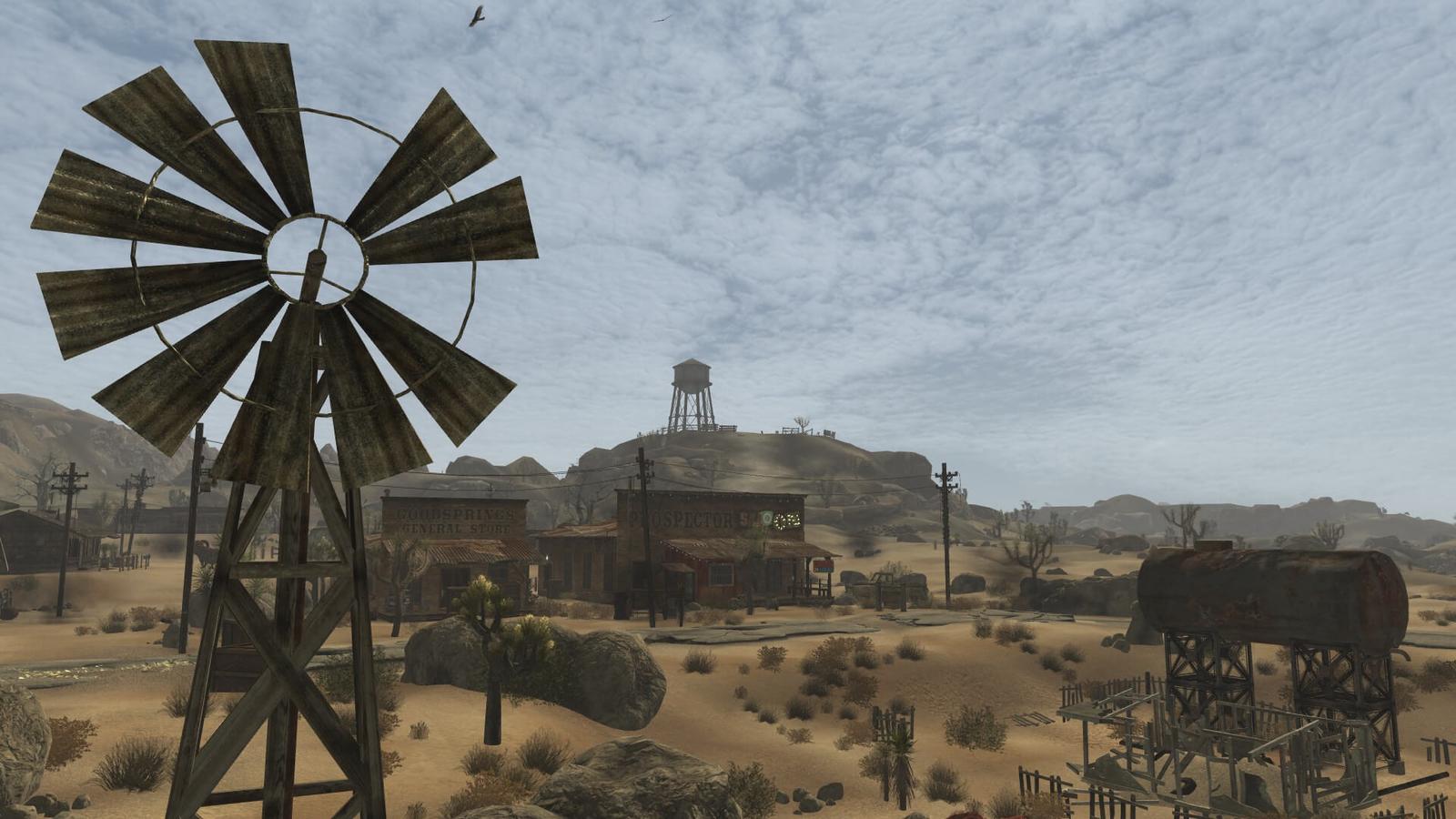
Very soon, the Courier witnesses an unpleasant conversation in the local saloon. It turns out that a caravan driver named Ringo is hiding in Goodsprings, who has "beef" with the Powder Gangers — former prisoners who escaped from prison. The dilemma is formulated extremely simply: the Powder Gangers came for Ringo's head and demand that he be handed over. But it is up to the player, not the residents of the town, to decide how this story ends.
It is here that New Vegas first clearly shows how it intends to talk to the player. You can side with Ringo and help the residents of Goodsprings fight back against the Powder Gangers — which will automatically close part of the quests of this faction. You can defect to the side of the bandits and capture the town, after which Goodsprings will come under their control, and the Courier will be accepted as one of their own in the correctional colony they captured.
This limitation can be circumvented in various ways: postpone the quest, go about your business, or leave the town to deal with the problems on its own. And this is the whole of New Vegas and its key philosophy. The game does not offer a "correct" option and does not smooth out the consequences — it simply records the choice made. The player is given freedom, but with it comes responsibility.
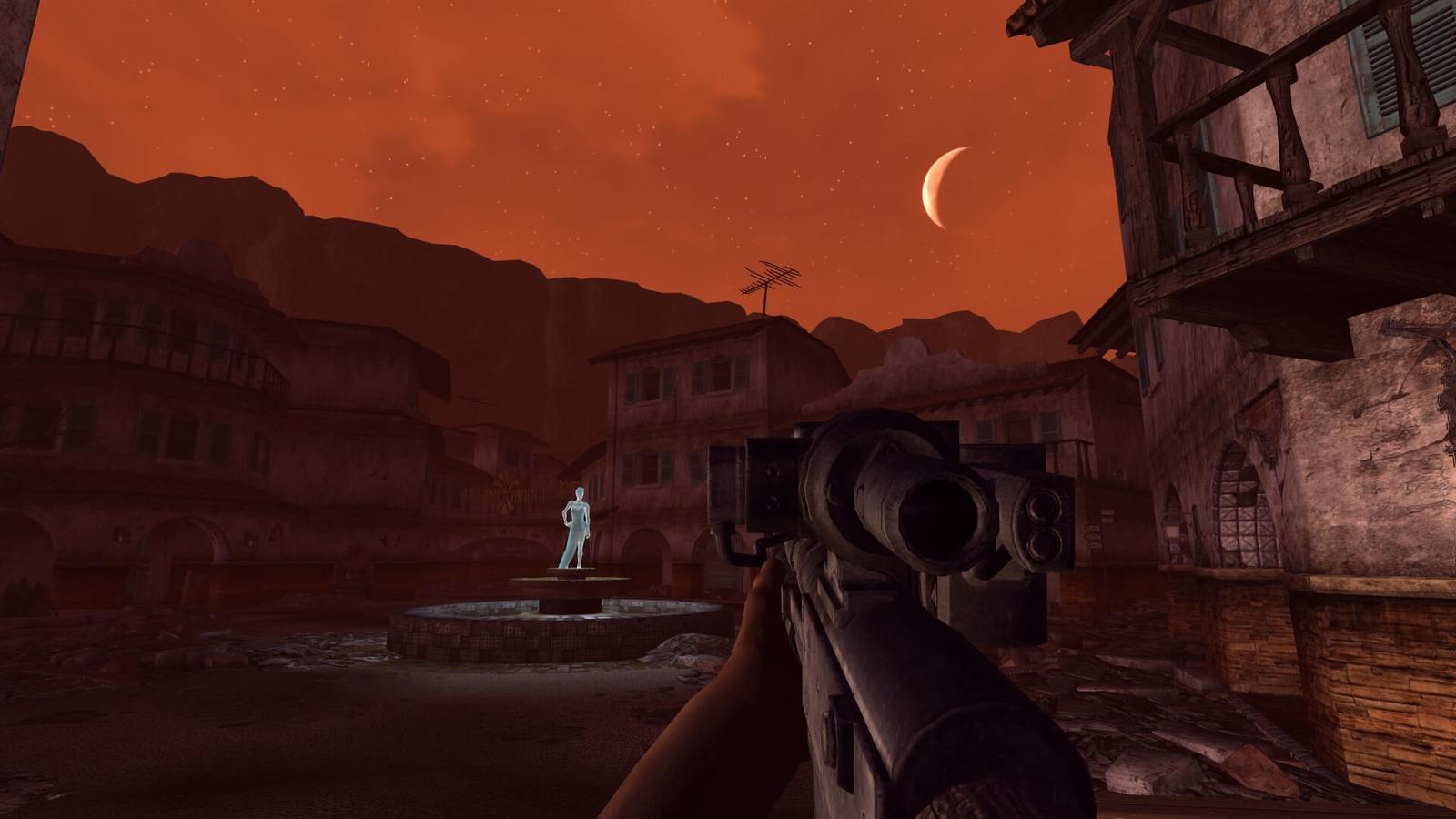
Decisions have both immediate and delayed effects, and the line between good and evil quickly ceases to be obvious, although it is assessed by quite transparent systems of faction reputation and karma. If in Goodsprings the choice still seems relatively simple, then as you progress through Mojave, it increasingly comes down to compromises and choosing between bad and worse.
Freedom is also manifested in the structure of the world. Formally, nothing prevents you from going anywhere right from the start — even directly to New Vegas — but the game, of course, is designed so that on this short route, the player is almost certainly waiting for a quick death from deathclaws or cazadores. Someone will consider this an artificial limitation — and will be partly right.
But even when following the main route, the world is built so that the player gradually gets acquainted with the key factions, conflicts, and territories, visiting most of the really important places. Therefore, it is difficult to write such a limitation in the minuses: before us is a thoughtful and verified element of design that does not take away freedom but gently directs so that the player does not miss all the most interesting things.
The stakes only rise further. And since we already know that the Courier is a key variable in this equation, it's time to get acquainted with the main actors in New Vegas.
Without the Right Side of History
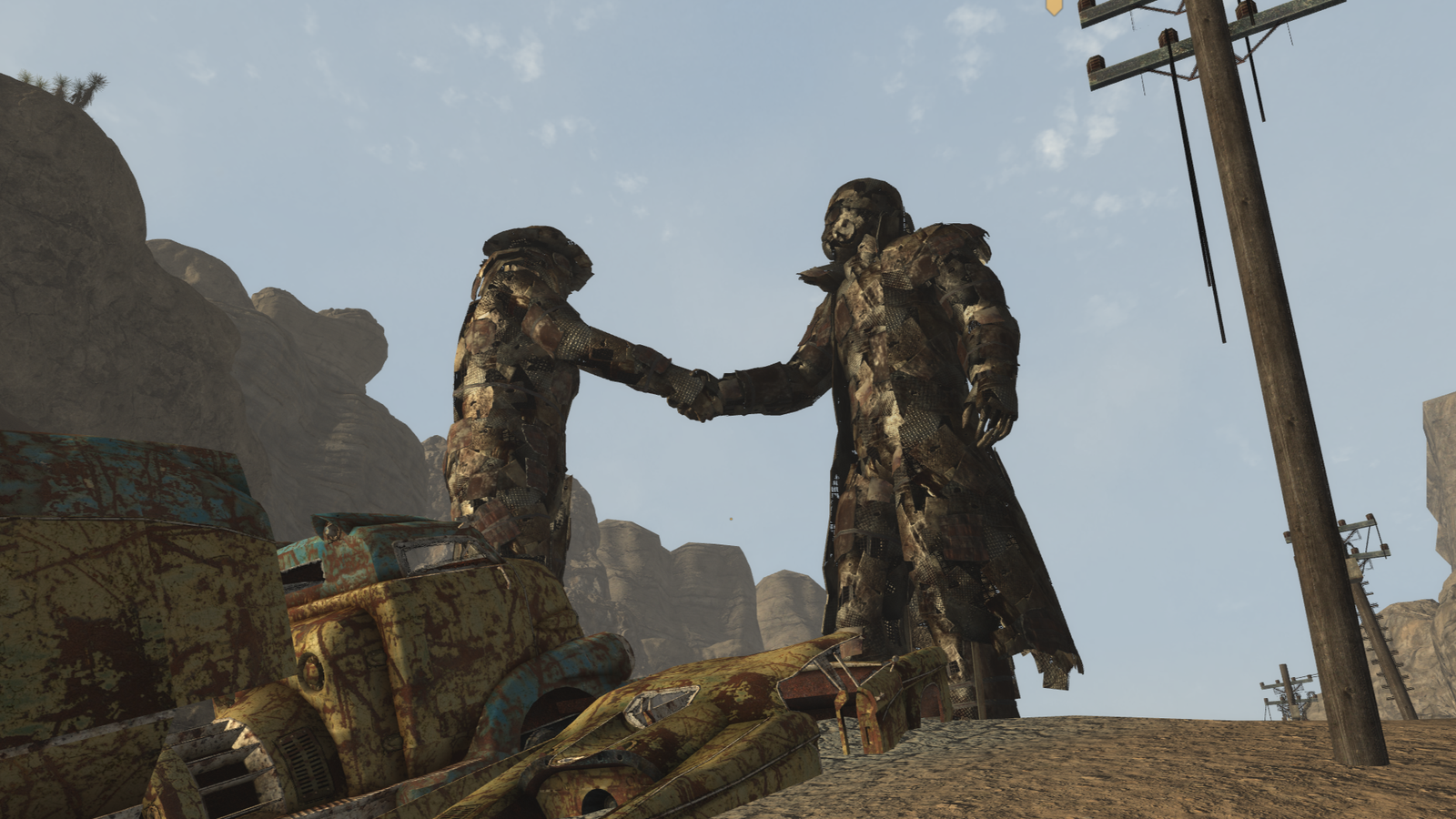
The secret of New Vegas as an RPG lies in the sides of the conflict — and why none of them gives a satisfactory result. You will always have to compromise.
The New California Republic at first glance looks like the most obvious and "normal" option. It is a quasi-state structure that seeks to impose the orders of the "old world" on Mojave: law, order, and democracy. But the deeper you delve, the clearer it becomes that the republic is mired in bureaucracy and corruption and has simply run out of steam.
Trying to maintain control over the entire region, the NCR scatters resources, loses the ability to ensure this control, and increasingly reproduces the mistakes of that very "old world" — it even imposes democracy by force. And the very idea of reviving pre-war America raises doubts: it was this world that ultimately led humanity to nuclear catastrophe. This is evident in quests and everyday details: the NCR simultaneously demands loyalty and resources, and in the field often acts according to the logic of "the end justifies the means." As a result, its "order" looks like protection for some, and imposed control for others.
The alternative in the form of Caesar's Legion looks no less dubious. It is a cruel slave-owning dictatorship, inspired by the image of ancient Rome, with a cult of strength and demonstrative executions. And yet, in the territories of the Legion, it is relatively safe: raiders are simply afraid to go there, which plays into the hands of trade caravans. Such order really works — but at the cost of absolute lack of freedom. And this is its main problem.
The third major player is Mr. House, who turned New Vegas into a personal city-state guarded by an army of robots. It was he who once saved the city from complete destruction and now dreams of reviving civilization, betting on technological progress and a rigid vertical of power. However, doubts about his "bright future" arise even before a personal meeting. It is enough to walk through Freeside, where children chase a rat in the hope of dinner, and then look up at the neon-lit casinos of the Strip, where entire fortunes are burned in one night. This contrast speaks for itself.
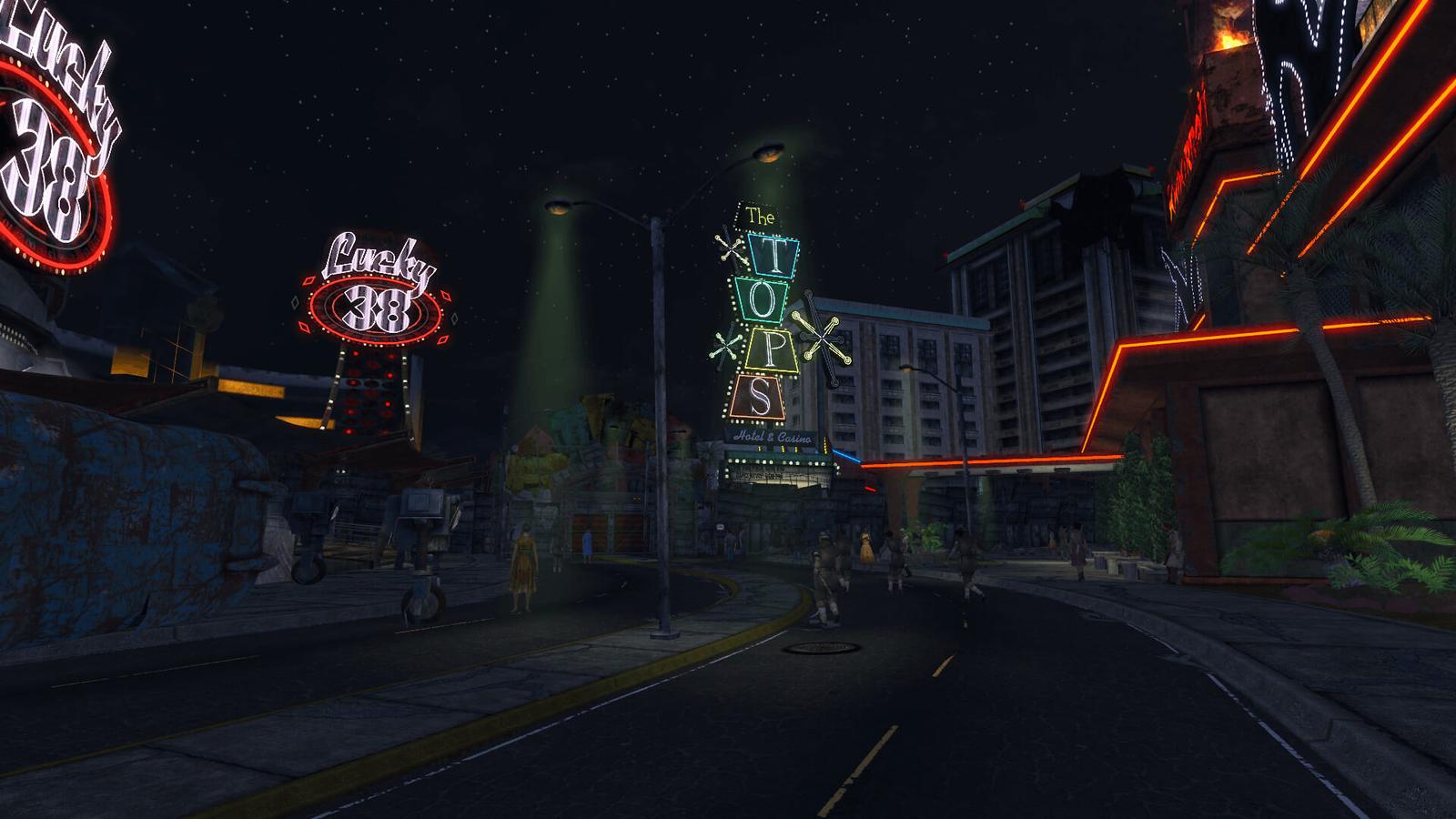
In addition to the "big three," Mojave is inhabited by many minor factions and communities that live according to their own rules and are not at all obliged to become part of someone's "grand plan."
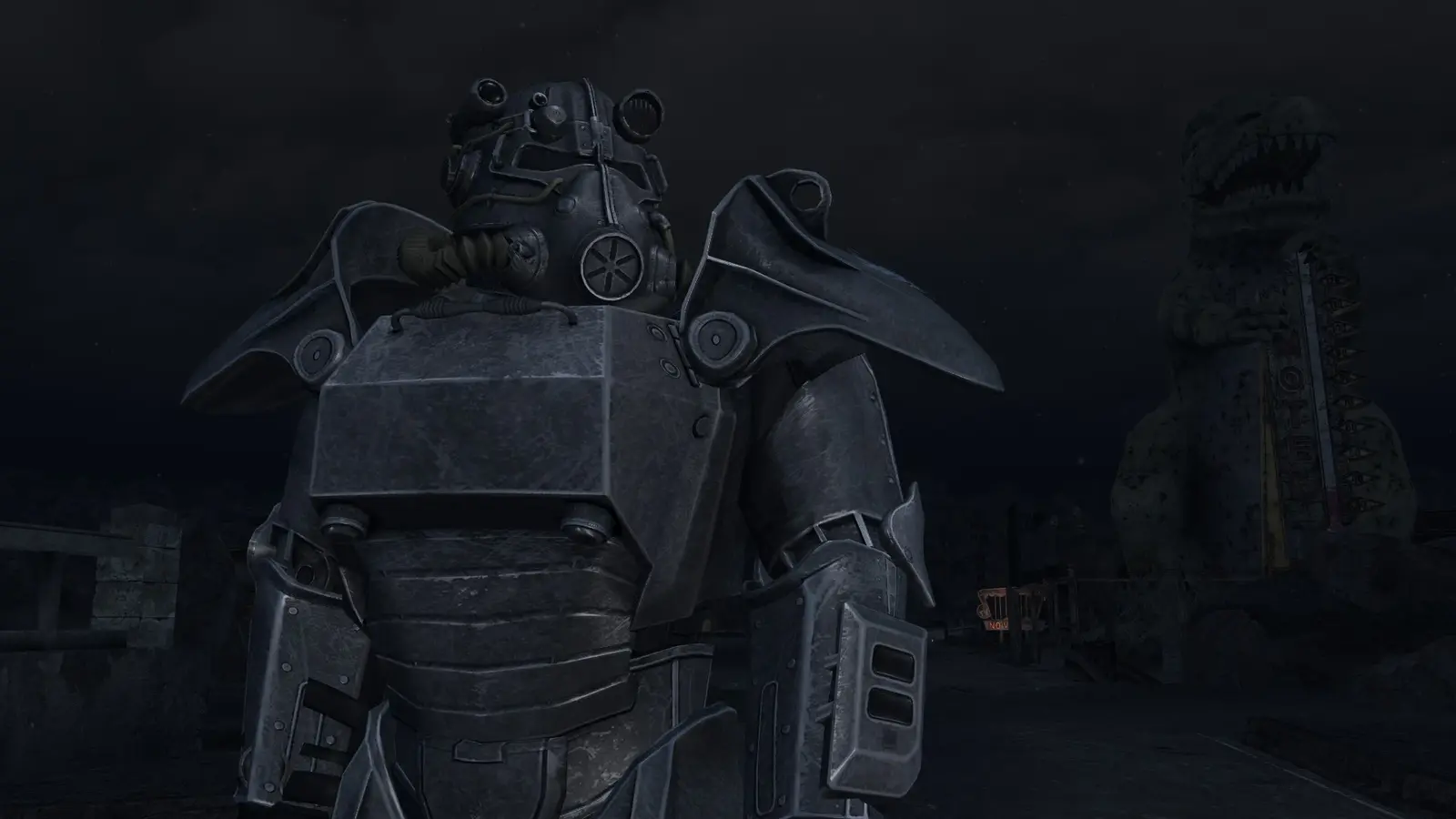
From the closed Brotherhood of Steel, stuck in bunkers with pre-war technology and risking extinction due to fear of getting out, to the Boomers at Nellis Air Force Base, the Kings, living according to the Elvis Presley code, and the cannibals from the White Glove Society — each of these groups exists as an independent subject of the world. The game reveals them not only through exposition but also through quest chains that allow you to understand the motivation and internal logic of the communities.
Helping the Boomers raise a sunken bomber from the bottom of the lake, the Courier can fulfill their long-held dream and enlist support, while also influencing the future of this group. By interfering in the fate of the Great Khans, he can either finally bury the tribe or take on the role of a guide and push it to find a new path.
There are dozens of such stories in the game, and even more possible branching paths, if you want to delve deeper. They don't always seem fateful in the moment, but it is from them that the feeling of a living world and a complex political landscape is formed, where everyone has a past, present, and possible future.
New Vegas remembers such decisions. In the final slides, the game details what happened not only to the NCR, the Legion, or New Vegas itself, but also to those who did not formally claim power over the region. Even a small village or local group can leave a noticeable mark in the epilogue, depending on whether the player intervened in their fate or preferred to pass by.
If you look at the balance of power through the prism of endings, it becomes clear that Mojave has another major player: the Courier himself. The path of independence allows you to eliminate all contenders for power and take control of New Vegas. But even here, the game does not offer a comforting ending. Without the NCR, the Legion, and House, Mojave does not turn into paradise. This is not a victory of good over evil, but another risky scenario where the price of independence cannot be measured by a common yardstick.
This is what emphasizes one of the main advantages of Fallout: New Vegas. The game does not mold the Courier into another "chosen one." He is not offered to save the world; he is given the right to choose what this world will be like. Each major force in Mojave offers its own vision of the future, and none of them can be called absolutely correct. There is no familiar division into "good" and "bad" here; there are systems of values, interests, and a price that will still have to be paid.
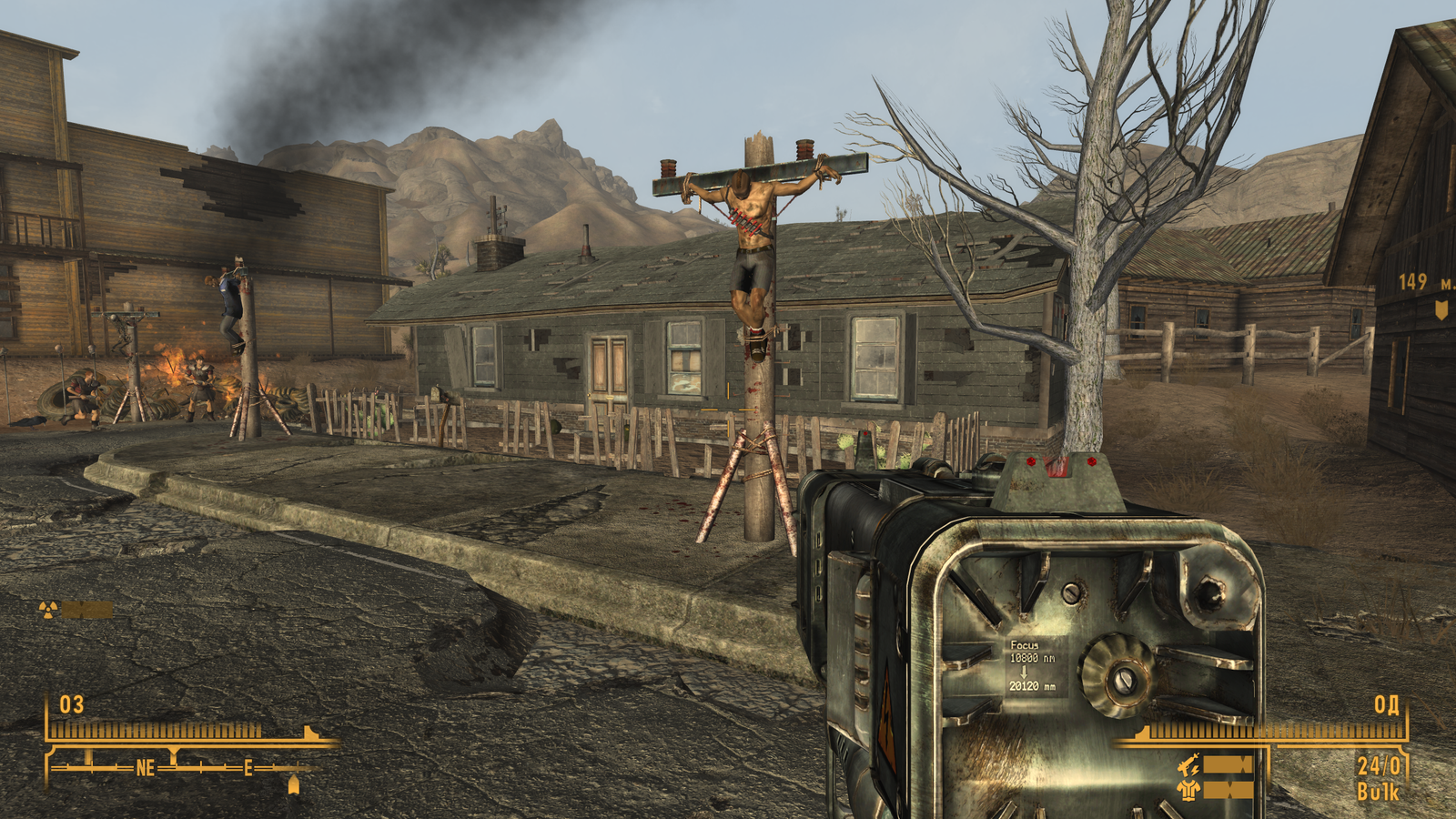
The game does not hide this price. Moreover, it emphasizes it so consistently that at some point you begin to catch yourself on an extremely unpleasant feeling. New Vegas systematically makes you feel like scum, even when you are trying to be a conditional "hero."
Not because you made the "wrong" choice, but because the right choice often does not exist here. By helping some, you inevitably betray others. By compromising, you cross your own principles. The game does not condemn or justify; it simply records the consequences and does not allow you to forget about them.
Companions provide an additional prism for getting to know the world. Not all of them are worked out equally deeply and more often serve as an auxiliary tool in the journey, but some personal stories are remembered for a long time.
Veronica's line, torn between loyalty to the Brotherhood of Steel and the desire to live her own life; Boone's tragedy, whom you can help track down the abduction and murder of his wife, up to the possibility of deliberately framing an innocent person; or the attempt to simply save the life of the cyber-dog Rex — all this leaves a mark and helps to build a connection with the wastelands through specific people, and not a set of functions.
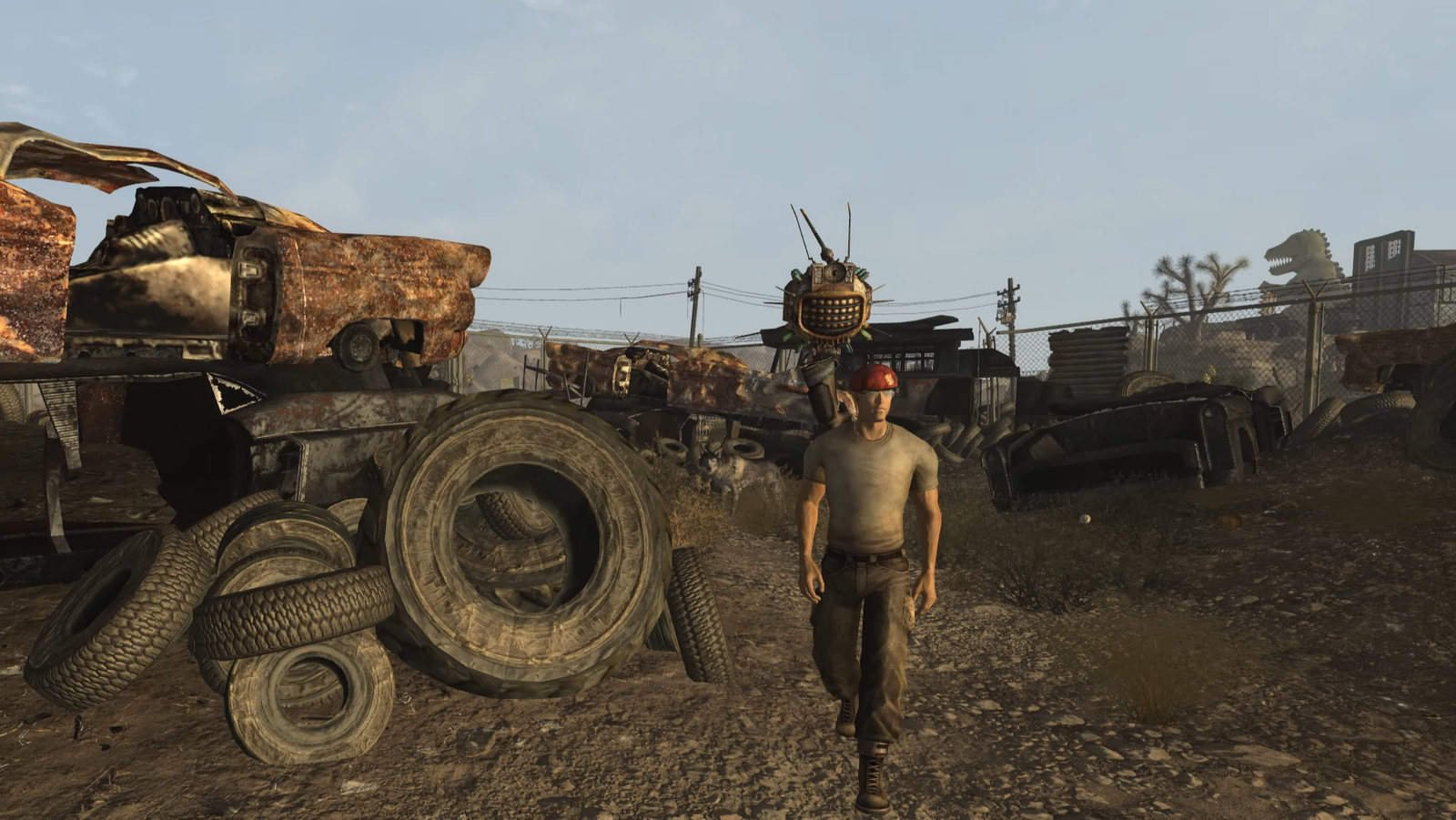
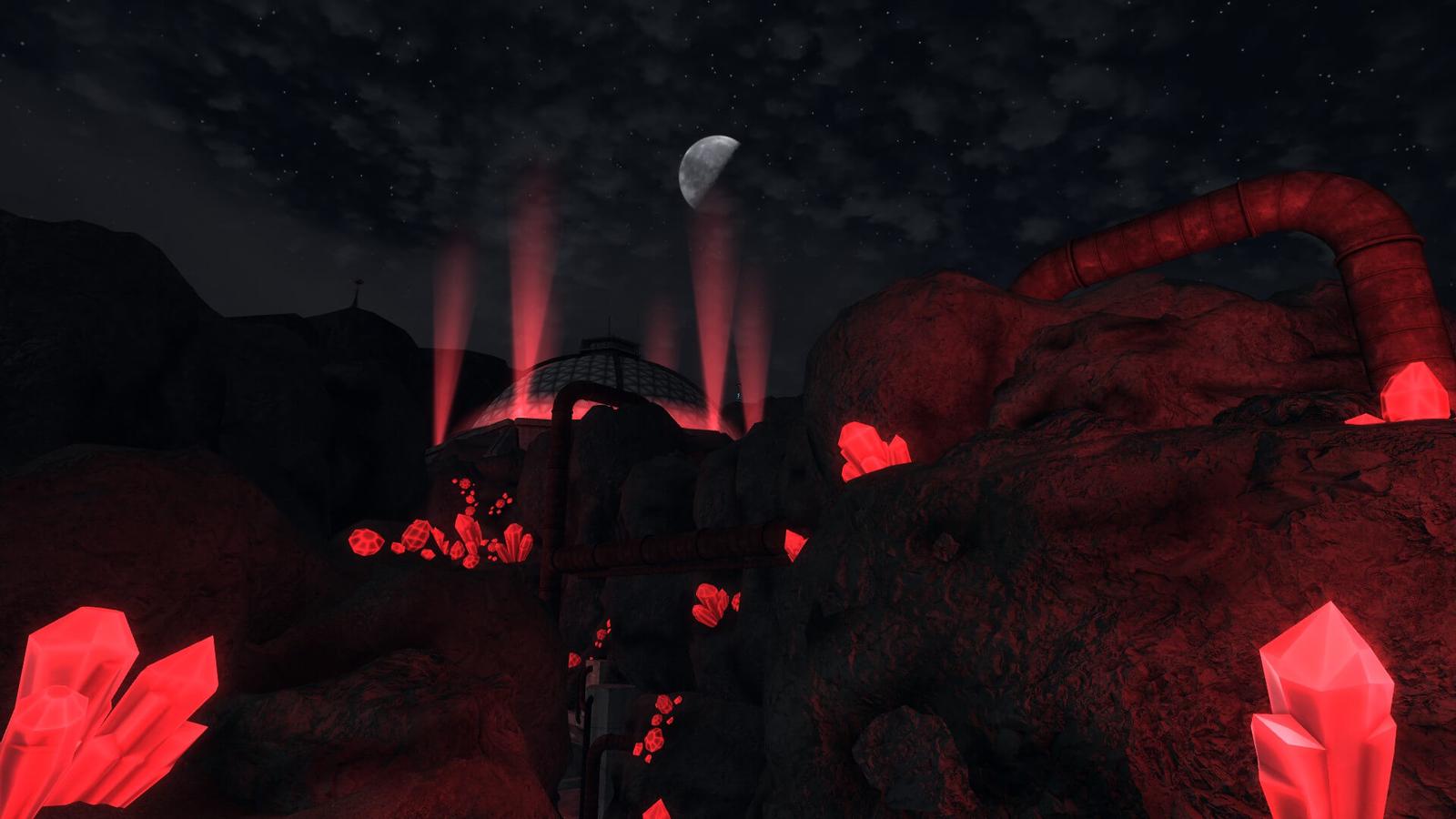
Some bright companions appear only for a while, as part of the add-ons. We will not dwell on each of them in detail, but only outline the essence. So, Dead Money offers a strange and tense mix of "Ocean's Eleven" and "Saw." The Courier is left without the usual resources, with an explosive collar around his neck, and in order to get out, he has to rob a casino vault, teaming up with the same driven-into-a-corner unfortunates.
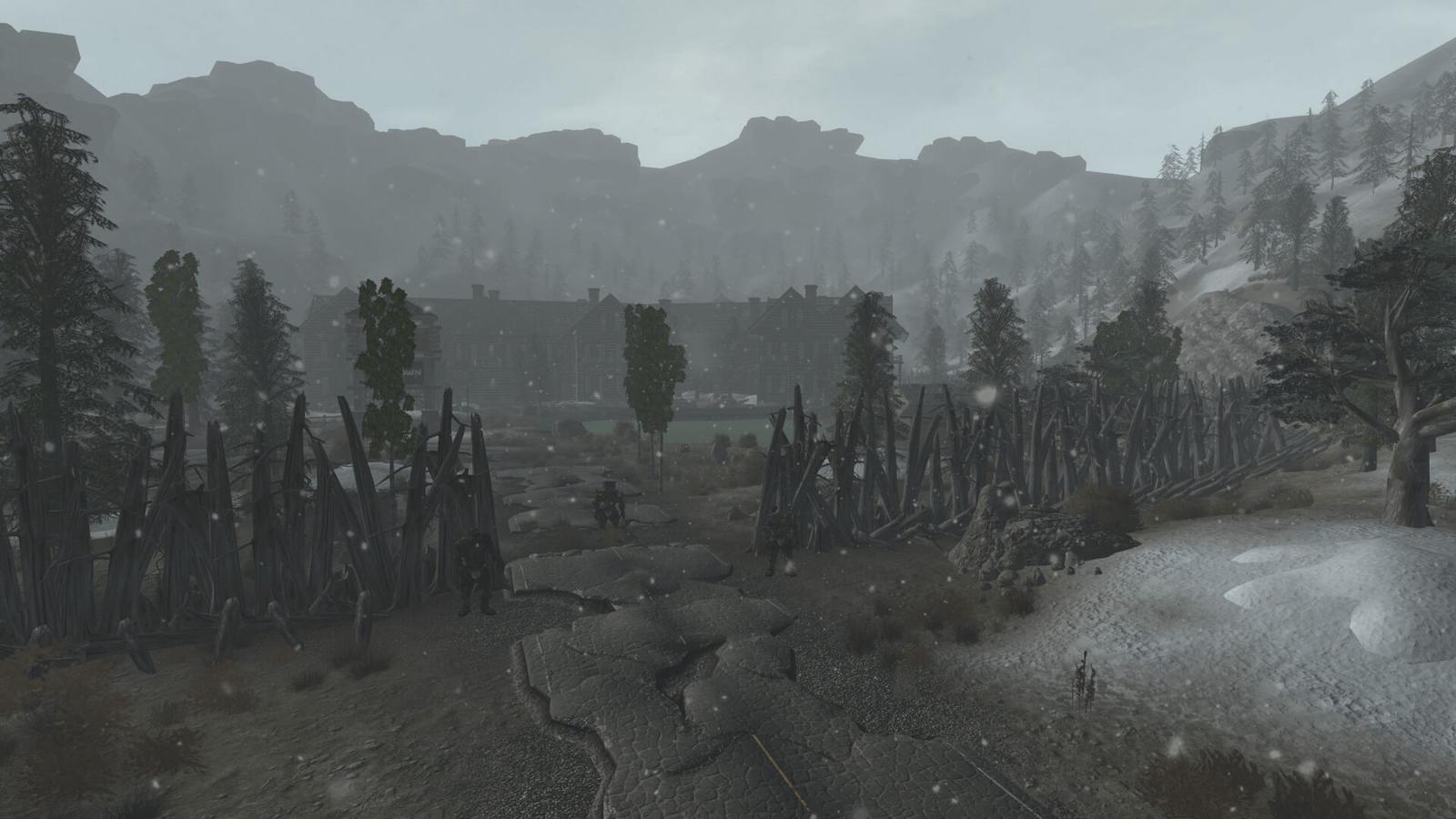
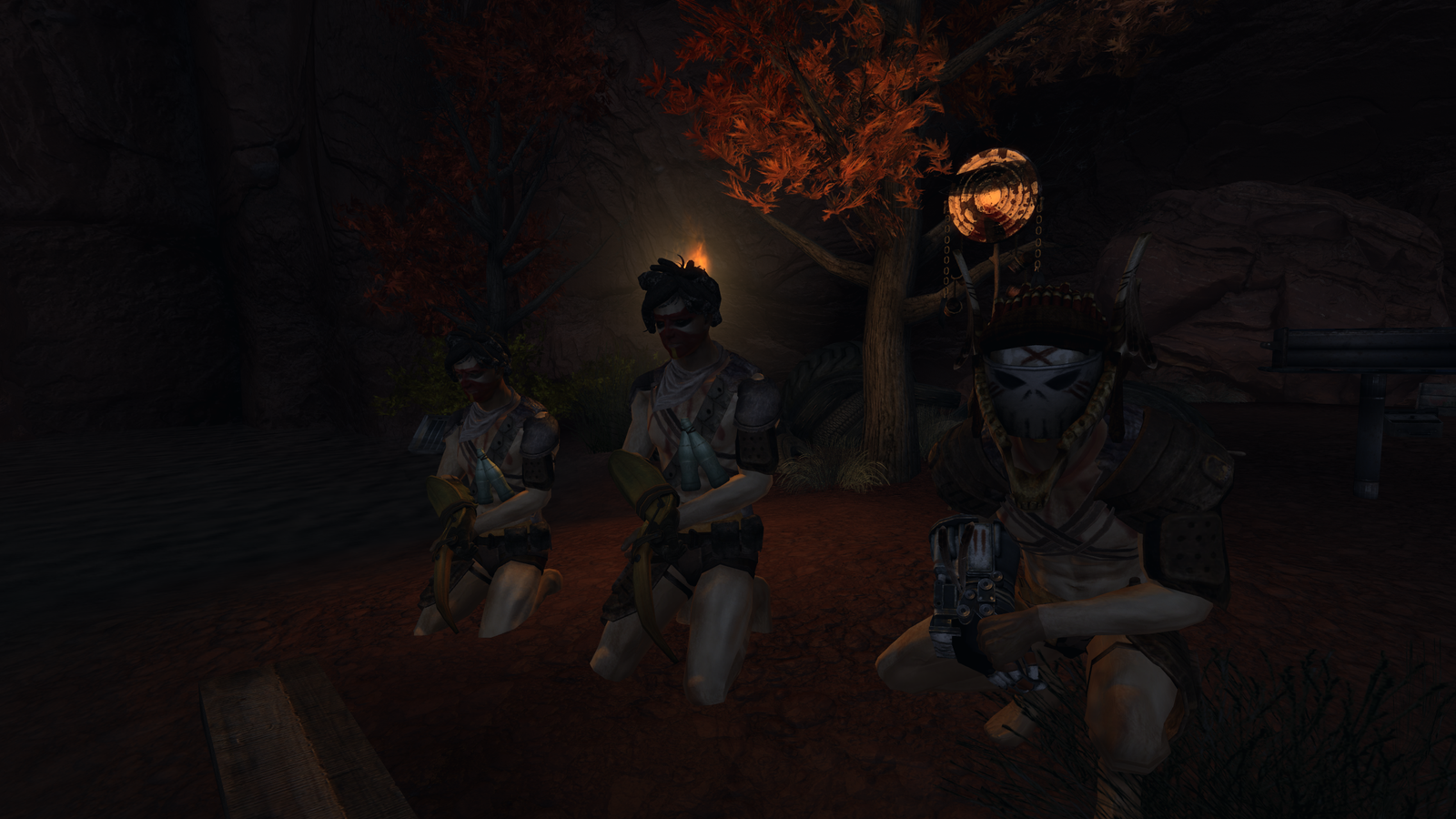
Honest Hearts, on the contrary, takes you away from New Vegas with a caravan and throws the player into the center of a war between tribes, intertwined with the history of the former Caesar's legate. At the same time, the add-on noticeably refreshes the landscapes: here the nature is completely different, sharply contrasting with the scorched Mojave desert.
Old World Blues goes into grotesque science fiction and in mood is more like a DLC for The Outer Worlds. The Courier will have to deal with brains in jars, persuade his own brain to return "home", попутно разобраться с десятком абсурдных проблем и получить возможность модифицировать собственное тело.
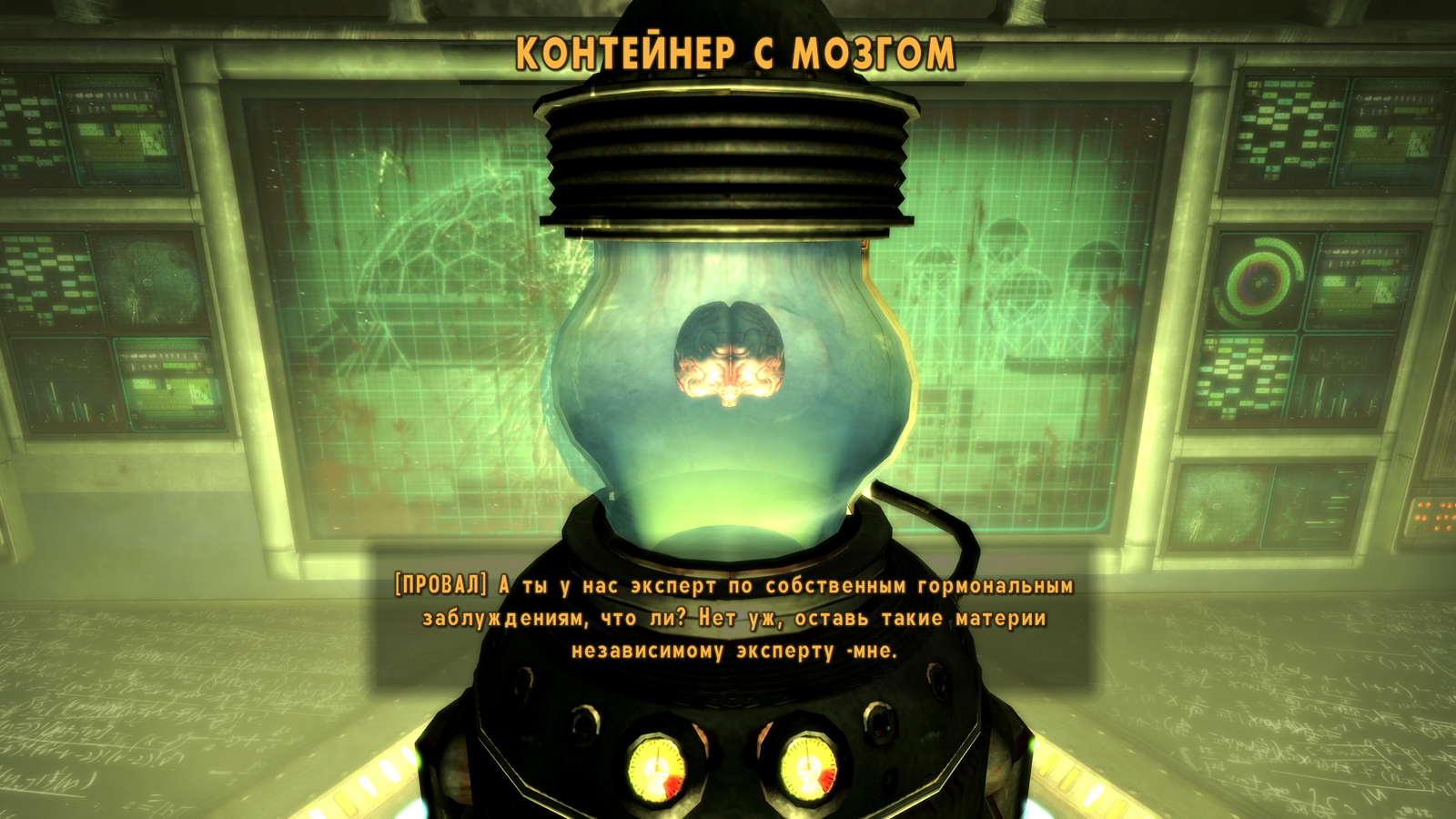
And finally, Lonesome Road is the last in chronology, but not in importance, add-on. It is noticeably more linear, but much more personal and directly addressing the Courier's past decisions and his role in the fate of the wastelands.
What unites all these stories — whether it's the main plot, side quests, companion quests, or add-ons — is the approach to presenting tasks and dialogues. Formally, the game has a quest log, and thanks to mods, there are quite clear marks that do not allow you to get lost. But the tasks themselves are arranged in such a way that they encourage the player to be not a performer, but a listener and observer. I again caught myself reading every dialogue, not missing a line, simply because it is important to me.
The texts here are well written and translated. These are not giant canvases overloaded with terms and clerical constructions, but a living, understandable human speech that quickly reaches the goal and rarely sounds ambiguous. This is important not only to understand what they want from you, but also to delve into the world — and choose answers that resonate with you or correspond to the chosen role-playing.
Choice and rejection
The philosophy of choice in New Vegas works not only at the level of the plot, but also in the role-playing system itself. It is important to understand that in Fallout: New Vegas, choice is almost always also rejection. This rule works not only in the plot, but also in the role-playing system, where characteristics and skills form the hero through limitations, and not through permissiveness. This is especially clearly felt in the Extended Edition.
The build more clearly emphasizes the original philosophy of New Vegas: the character here is not a universal soldier for all occasions, but a role with its strengths and inevitable weaknesses. And it is this, oddly enough, that brings the game closer to The Outer Worlds 2, even though Sawyer himself no longer worked on it.
At the heart of the RPG mechanics of Fallout: New Vegas lies the classic SPECIAL system and a set of skills that affect all aspects of the game — from dialogues to battles. Each characteristic here has a clear purpose. Strength determines carrying weight and melee efficiency, perception determines enemy detection and accuracy in V.A.T.S., endurance determines health and damage resistance. Agility is responsible for the number of action points, luck is responsible for critical hits and rare bonuses. In addition, each characteristic directly affects specific skills and quite early begins to set the style of passage.
Extended Edition makes this relationship more rigid and noticeable. The balance of characteristics has been reworked so that many of them become really significant. Checks of eloquence and barter depend not only on the level of skill, but also on the intelligence of the interlocutor. The requirements for melee weapons directly affect the damage dealt, and perception enhances not only the detection of enemies, but also critical damage.
Perks complement the system — they either emphasize a specific style of play or open up additional opportunities: alternative solutions, new options in dialogues, situational advantages. But it is impossible to take everything at once — especially in the Extended Edition. Perks are given once every two levels, so each choice feels weighty and requires thinking ahead, and not mechanically clicking on the icon you like.
In the original version of New Vegas, the leveling system eventually allowed to smooth out these corners. The base level ceiling was 30, and with the installed add-ons it rose up to 50, which by the final allowed to close most of the skills and turn the character into a universal. This approach gradually blurred the very idea of choice and specialization.
In Josh Sawyer's rebalance, the maximum level is limited to 35 by default, and experience gain is noticeably slowed down. These changes do not work to increase the complexity as such, but to preserve the role and limitations. The game does not deprive the player of opportunities, but does not allow to painlessly close everything at once — unless he himself decides to customize the rules for himself.
We will return to the possibilities of fine-tuning the Extended Edition, but for now it is worth seeing how this whole structure works in practice.
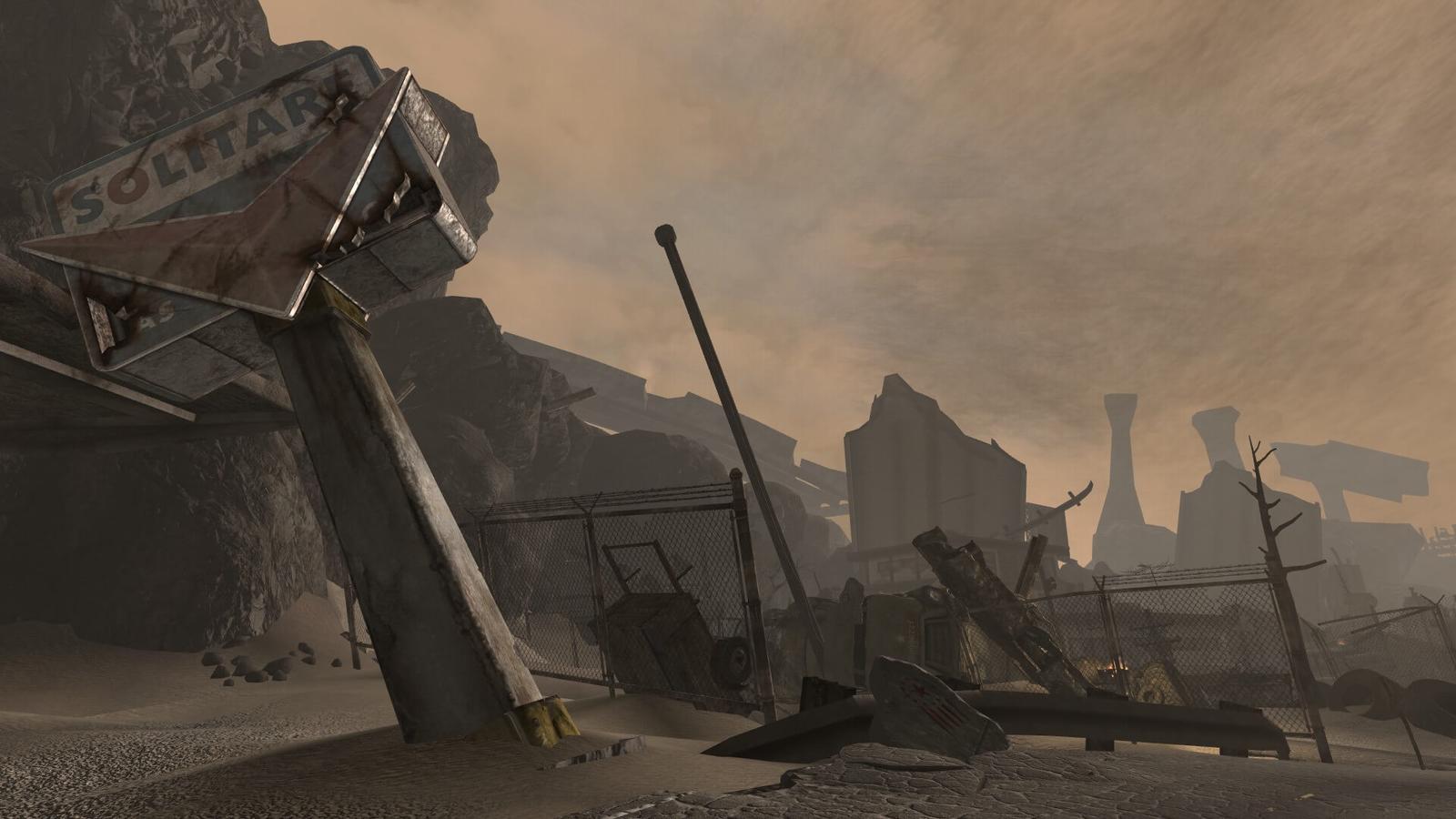
Almost every task in Fallout: New Vegas allows for several solutions, and the decisive factor here is the character's skills. They affect not only the available lines in dialogues, but also the very routes of quest completion. A high level of eloquence allows you to convince NPCs and defuse conflicts with words, developed "Science" or "Hacking" provide access to terminals, safes and detours, and pumped combat skills make a силовое solution the most reliable - although not always the most profitable.
The game does not push you to the "correct" option. Skill checks in New Vegas work straightforwardly: if there is no required skill value, the attempt will simply fail. The system fixes the boundary and offers either to accept the consequences, or to return later, already prepared.
The gap between eras is especially noticeable here. If The Outer Worlds 2 more often offers an alternative path "here and now", trying not to lock the player completely, then New Vegas calmly allows a situation in which you are simply not ready - and must either accept it, or return later.
Because of this, the passage is often built not around the optimal solution, but around the available one. Sometimes this means compromise, sometimes - loss of information or an entire storyline. New Vegas calmly accepts the fact that you simply will not see part of the content in this passage. Options, as a rule, exist, but they rarely lie on the surface and are almost never highlighted directly. Extended Edition slightly softens the most rigid corners, adding additional ways - for example, the ability to break the lock if you are not a hacking specialist - but it does not fundamentally change the situation.
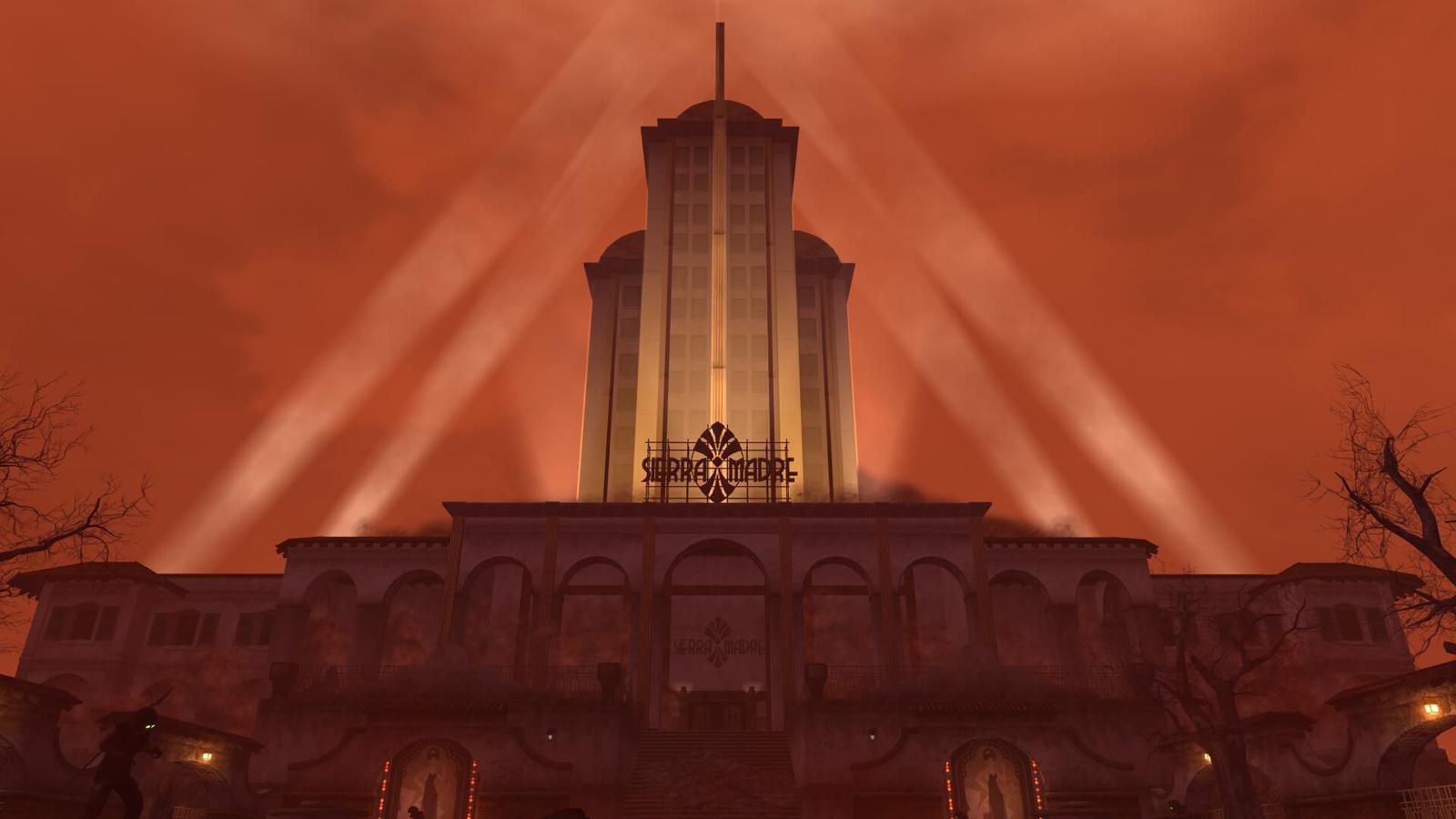
Classics without a headache
The combat system of Fallout: New Vegas is inherited from Fallout 3 and is a hybrid of a first-person shooter and a turn-based RPG. The player can shoot in real time or use the proprietary V.A.T.S. mode, where time slows down and it becomes possible to aim at individual parts of the enemy's body, taking into account the probability of hitting.
This has always been a compromise approach, and Extended Edition does not try to turn New Vegas into a modern action game. But the assembly significantly reduces the pain threshold. Animations have been improved, the weapon finally feels weighty and behaves adequately when shooting, strafing has appeared. As a result, the game without V.A.T.S. has not just ceased to be painful, but has become a full-fledged alternative.
Important changes in the balance of damage and the overall dynamics of battles also helped in this. Extended Edition reworks damage to bring the combat experience closer to a more down-to-earth and intense one. Shots have become more deadly: the enemy can be killed with one bullet to the head, but the Courier himself dies much faster.
Especially on high difficulty, shootouts turn into dynamic clashes, where you have to work with shelters and distance, and the price of an error is felt immediately - including due to disabled saves during the battle.
If desired, Extended Edition allows you to go even further. The hardcore mode of the original game, where you have to monitor not only the level of radiation, but also hunger, sleep and thirst, can be made even more hardcore - or, conversely, turn the passage into an easy walk through the Mojave. It all depends on what version of New Vegas the player wants to get at the output.
At the same time, the assembly takes care not only of complexity, but also of comfort, realism and visual component. This, of course, is not the level of a remake, but it is already very close to an unofficial remaster. There are reworked and tightened textures, improved lighting, weather effects and updated skyboxes, which make Mojave noticeably more voluminous and lively, while completely not breaking the original style.
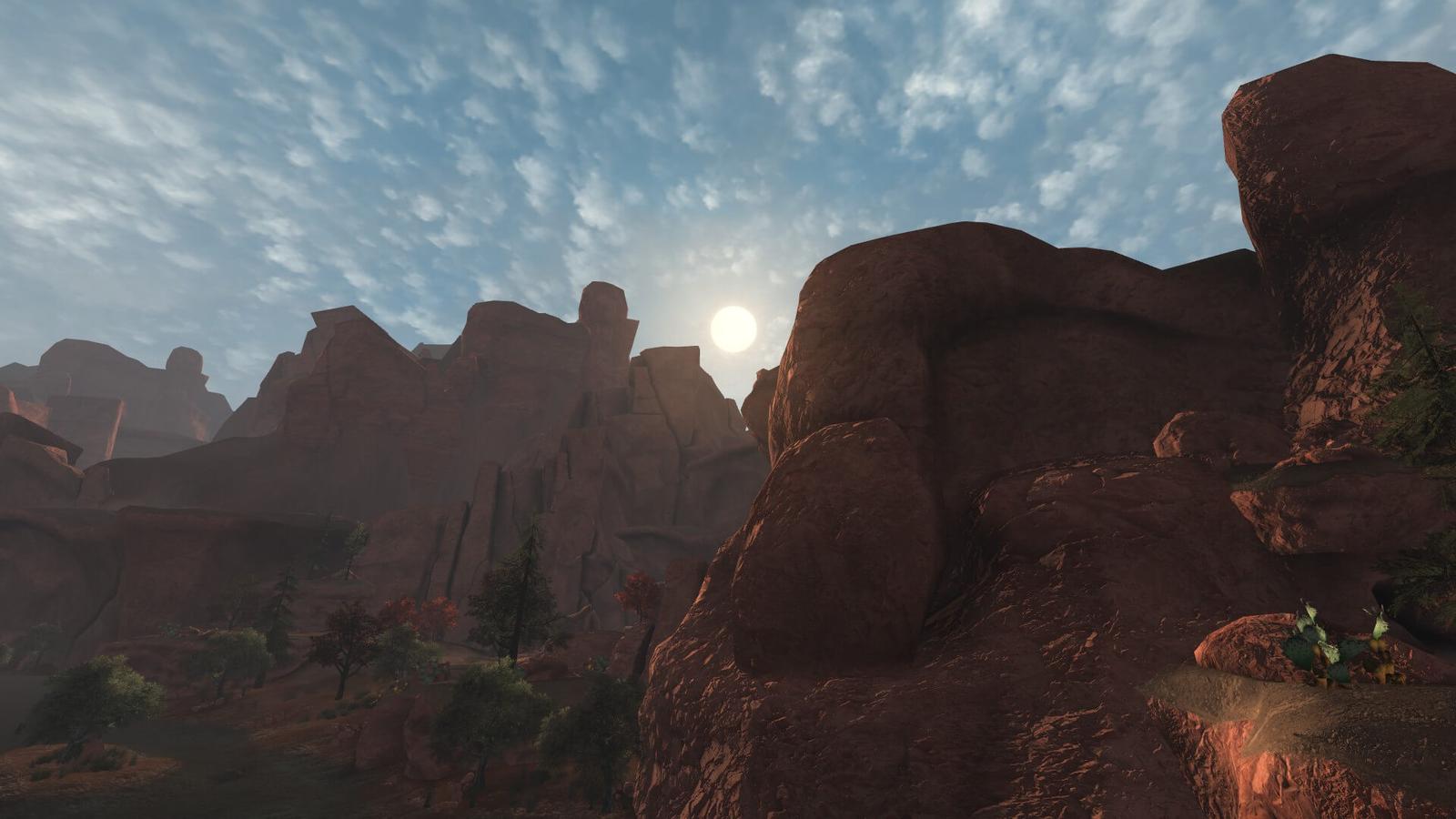
Among the smaller, cosmetic improvements, it is worth noting the quick looting, which allows you to search bodies and containers without going to a separate menu. This saves a lot of time when exploring and makes the routine less tedious.
Special mention should be made of animations and small details that directly work to immerse you: the animation of picking up items that appeared, when the Courier reaches for the object with his hand, and does not just "suck" it into the inventory; inspection of weapons at the first acquaintance; gestures after the battle - like wiping sweat from the face; interaction with unique objects.
All this seems like trifles, but in total it creates a denser connection with the world. The Courier ceases to be a "soaring camera" and feels physically present in the space. You can even turn on the display of the body when looking down - however, I did not do this, since the option has a note about possible bugs with the camera.
And here a strange effect of memory is triggered. Listing all these improvements, it is easy to catch yourself on the feeling that they have always been in the game - simply because without such things today it is already difficult to imagine even a medium-budget project.
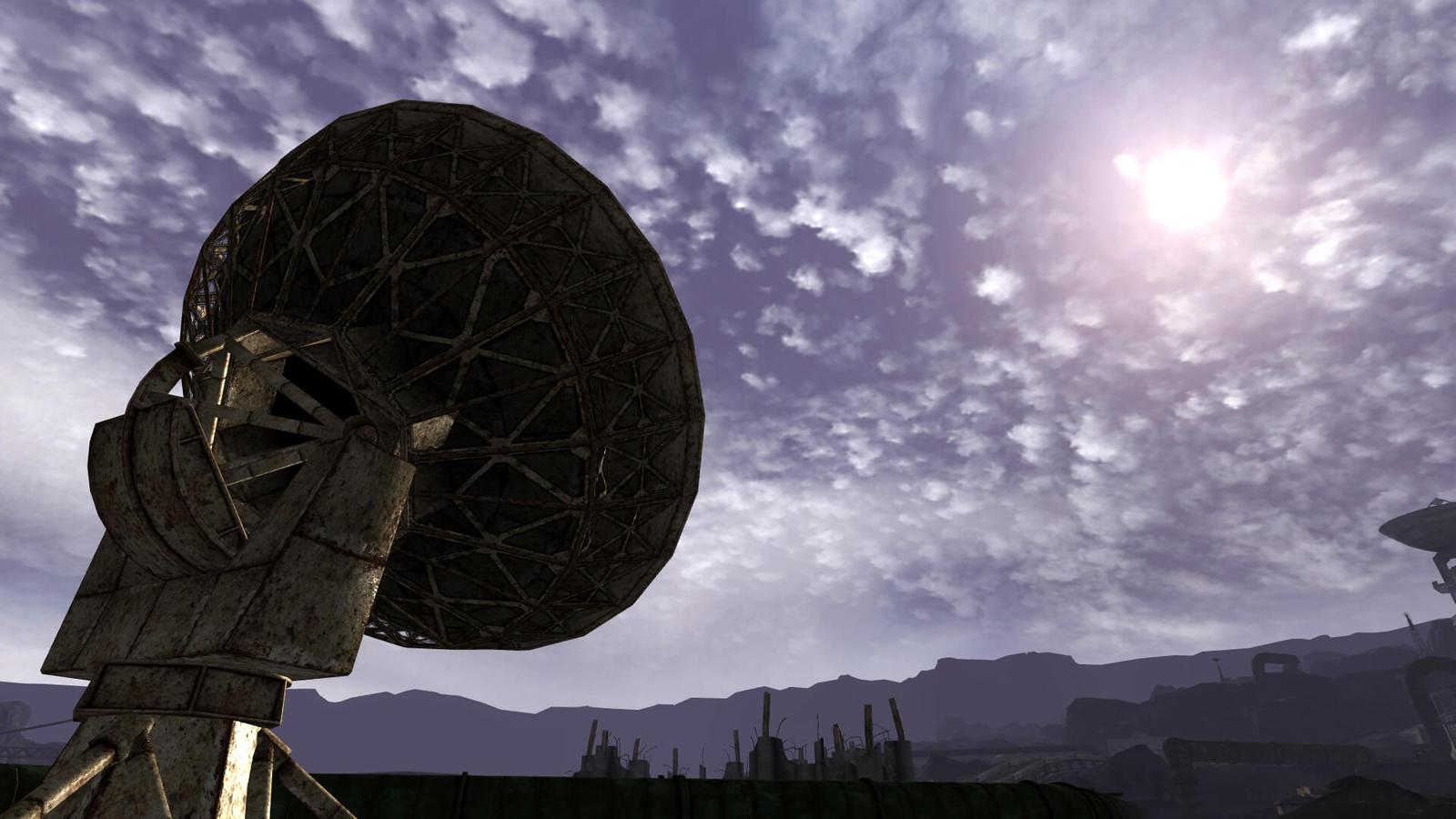
It is important, however, to understand the limits of what is possible. Extended Edition is not able to close all the problems and turn New Vegas into a modern AAA blockbuster. The game remains old: loading when entering each door has not gone away, individual bugs and crashes are still possible, and the engine from time to time reminds of its age. But at the same time, the assembly really allows you to play without pain - not fighting with the interface, technical limitations and minor irritants at every step.
Finally, it is worth clarifying that I, of course, have not revealed all the possibilities of either New Vegas itself or Extended Edition. In addition to all the variety of the original game, my version of the assembly at different stages included about 550 modifications, and an attempt to disassemble what each of them does, or at least individual groups, would turn the text into an endless canvas resembling a patchnote.
At the same time, the assembly comes in a convenient set with a launcher, calmly coexists with the licensed version in Steam and allows you to receive achievements. You can simply download it and start playing, without touching or configuring anything. Or you can - literally in five minutes - "tweak" the game for yourself in a clear menu, where everything is written in Russian and designed in the form of simple items that you either turn on or not. You don't even have to open the mod manager and figure out what exactly is active. And this is the main value of the assembly: simplicity and convenience. The thing that old games sometimes lack the most.
Verdict
Fallout: New Vegas has not lost its relevance or charm even after years. Once it was called the "gold standard" for future role-playing games - and there were good reasons for that. This is a combination of deep role-playing mechanics, a non-linear plot and meaningful gameplay, where the player is really given freedom - moral, plot, gameplay - at a level that is still rare today. All these decisions are organically woven into a well-thought-out world with rich lore, memorable characters and stories, from which the feeling of a living, contradictory wasteland is formed.
At the same time, time, of course, does not stand still. New Vegas in 2010 looked and felt not the most modern game, and over the years its age has become even more noticeable. The engine, interface, animations and technical part as a whole have not been preserved in the best way. It is here that the work of the community comes to the fore - and, in particular, Extended Edition.
The assembly does not make New Vegas a new game, but carefully pulls it up to modern standards, избавив from the most painful heaviness, many technical problems and outdated solutions. Not from all and not completely - but enough so that immersion is no longer accompanied by a constant struggle with the game, in the direct and figurative sense.
And therefore, answering the question of whether it is worth waiting for a remaster, - rather no. In New Vegas, it is better to go now: Extended Edition already closes most of the problems and gives a comfortable entrance without a multi-day fuss with mods. From Bethesda, we will wait for a remaster with tightened graphics, at the level of Oblivion Remastered.
But the key value of New Vegas is not in the graphics, but in how the game works with choice, consequences and the role of the player. This game needs a full-fledged remake, not a cosmetic repair - and you can wait for it for a very long time.
Never miss our newsAdd this site to your preferred sources to see us more oftenAdd on Google