"Former Blizzard Employees" Are Making Diablo II Again - Only Now With a Pickaxe and Blocks. We Played Darkhaven
Old New "Former Blizzard Employees"
Moon Beast Productions was founded by Blizzard North veterans — Erich Schaefer, Phil Shenk, and Peter Hu. They were at the origins of Diablo and Diablo II, including the Lord of Destruction expansion. This alone is enough to attract the attention of fans. However, the industry has long taught caution: projects "from former Blizzard employees" have repeatedly ended in resounding failures.
After the closure of Blizzard North, the team took on new projects that continued the Diablo tradition. All three worked on the infamous Hellgate: London (which still holds a special place in my heart). Later, Schaefer and Hu created the first two parts of Torchlight. This experience sets certain expectations. However, Darkhaven is not just an attempt to make another Diablo II, but a step towards a hybrid model.
The game is positioned as an isometric action RPG in a dark fantasy setting. Elements of a sandbox are added to the classic "Diabloid" formula. The player finds himself in a procedurally generated world that can be destroyed and rebuilt: change the landscape, break through walls, drain reservoirs and build fortifications.
On February 17, the developers launched a campaign on Kickstarter and simultaneously released a public demo version — as confirmation of the viability of the concept. This is not a fragment of the finished game, but a limited pre-alpha: raw graphics, bugs, one class with reduced leveling and the only world event — the Necropolis, gradually absorbing the map. Nevertheless, the demo allows you to evaluate the key mechanics and draw initial conclusions about the strengths and weaknesses of the project.
Genre Classics with Conditional Boundaries
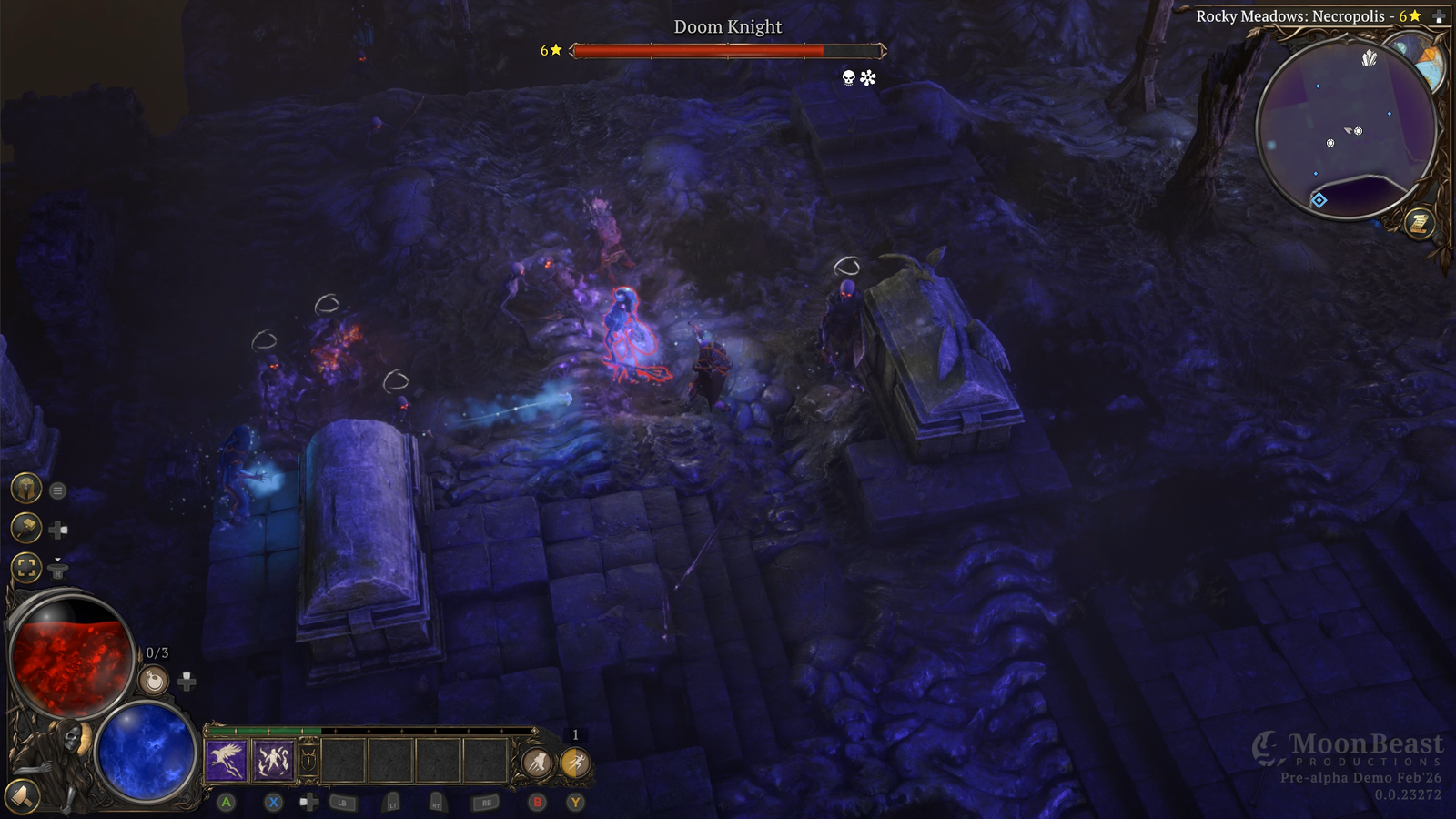
The demo version greets us as a traditional "Diabloid". We take control of a semi-naked girl, choose a starting skill from three branches of leveling and go to destroy crowds of enemies, bathe in loot and master new abilities.
The controls and dynamics of the combat system refer to the proven classics of the 2000s. The developers do not invent anything radically new, so if you have played at least one "Diabloid", you will instantly understand how everything works. Launched — and play.
The differences are most felt in mobility: here you can swim, perform double jumps and dashes. However, all this was already in Diablo IV, so in 2026 it is strange to call it "know-how".
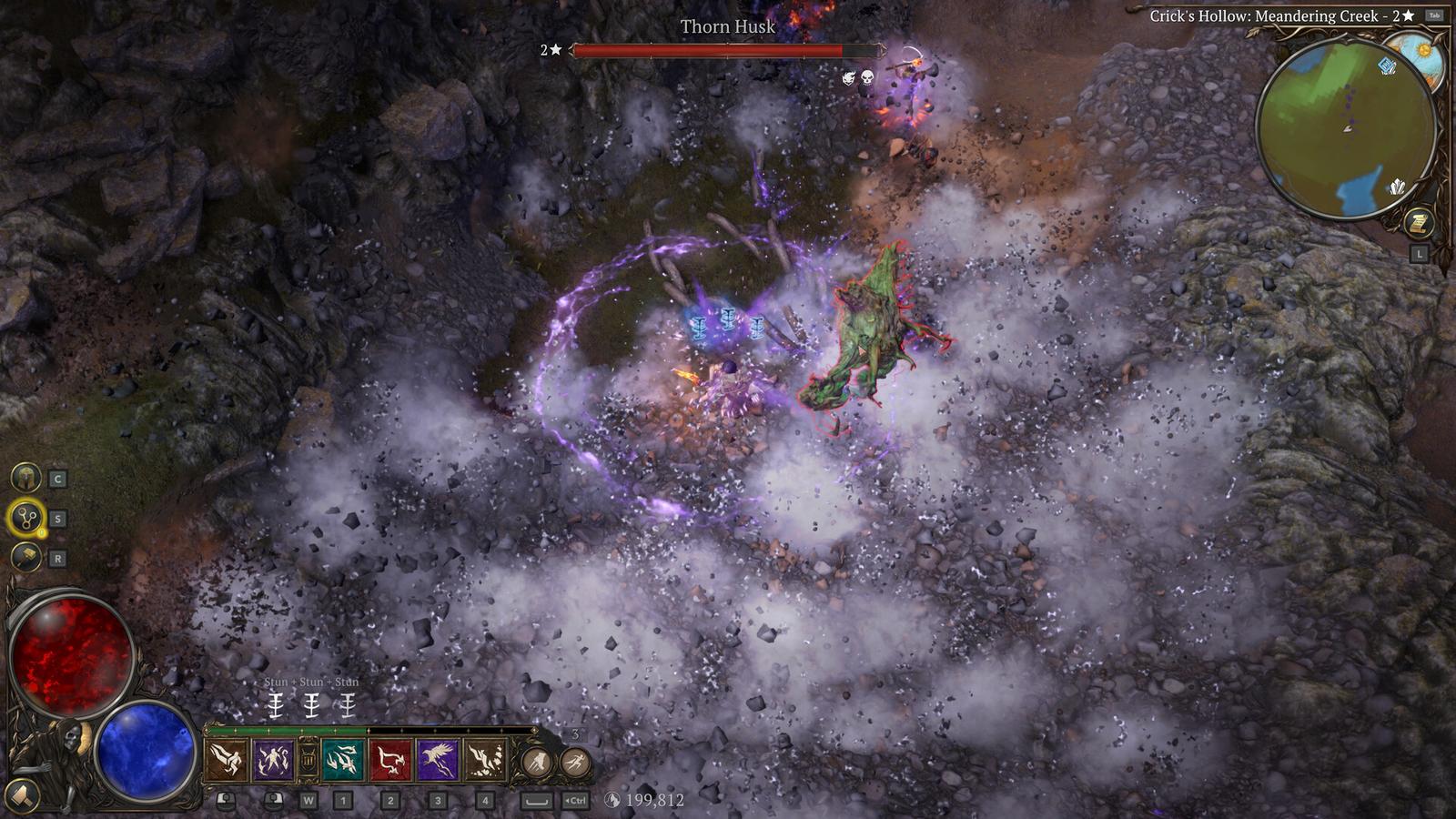
Let's go back to our heroine. As a starting ability, I chose to summon a flock of crows when attacking and went to clear the first clearing. After pecking a dozen goblins, I got the second level and opened another skill. Without thinking twice, I settled on teleportation: when landing, it stuns opponents and inflicts a seismic blow on the ground.
I decided to try it out in an abandoned cemetery nearby. Glistening tombstones beckoned — instinct suggested that valuable loot was hidden behind this glow. I was surprised: from the impact, the ground under my feet collapsed, and I fell to the level below, where skeletons were already waiting for me — probably former inhabitants of these graves.
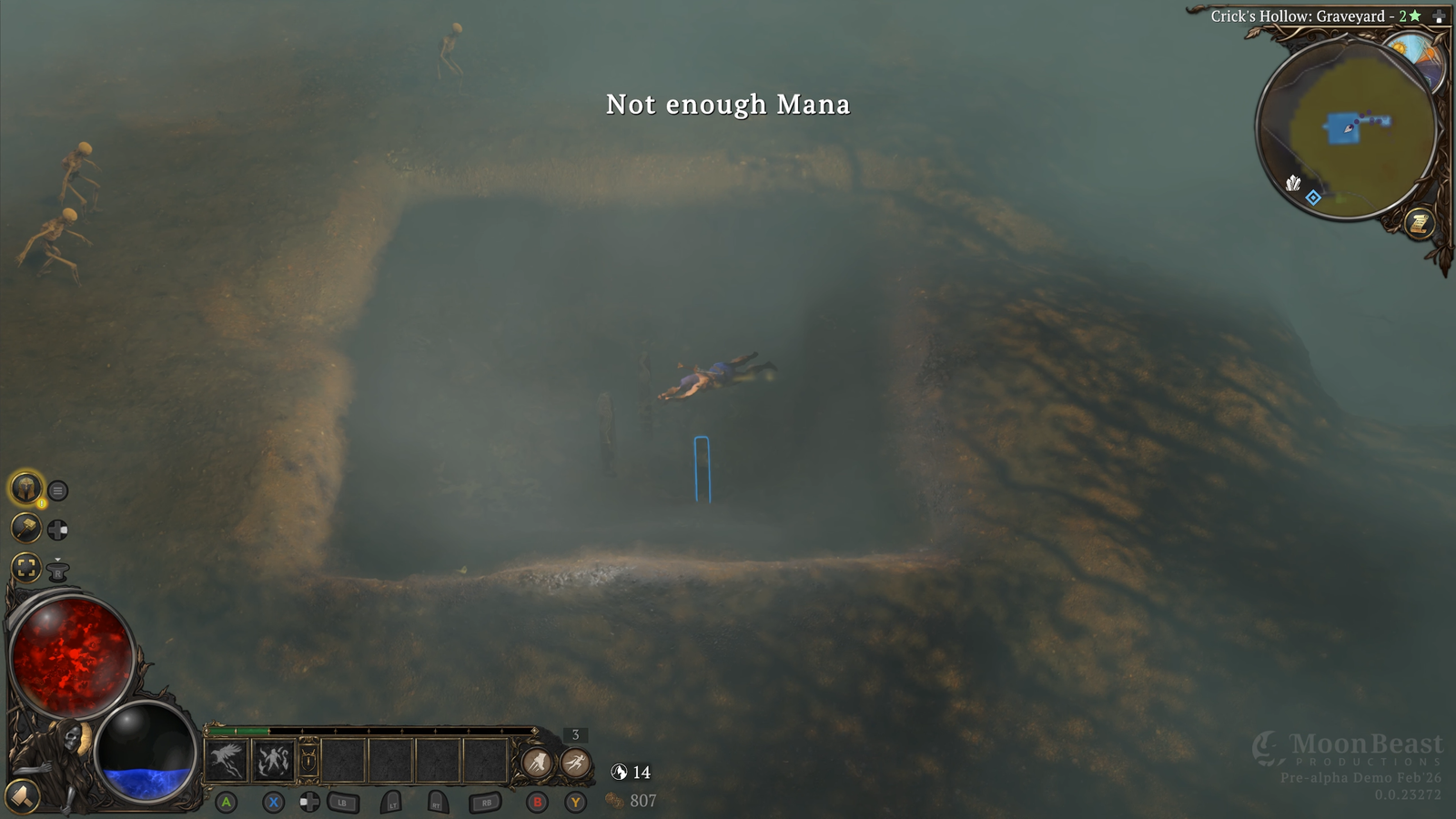
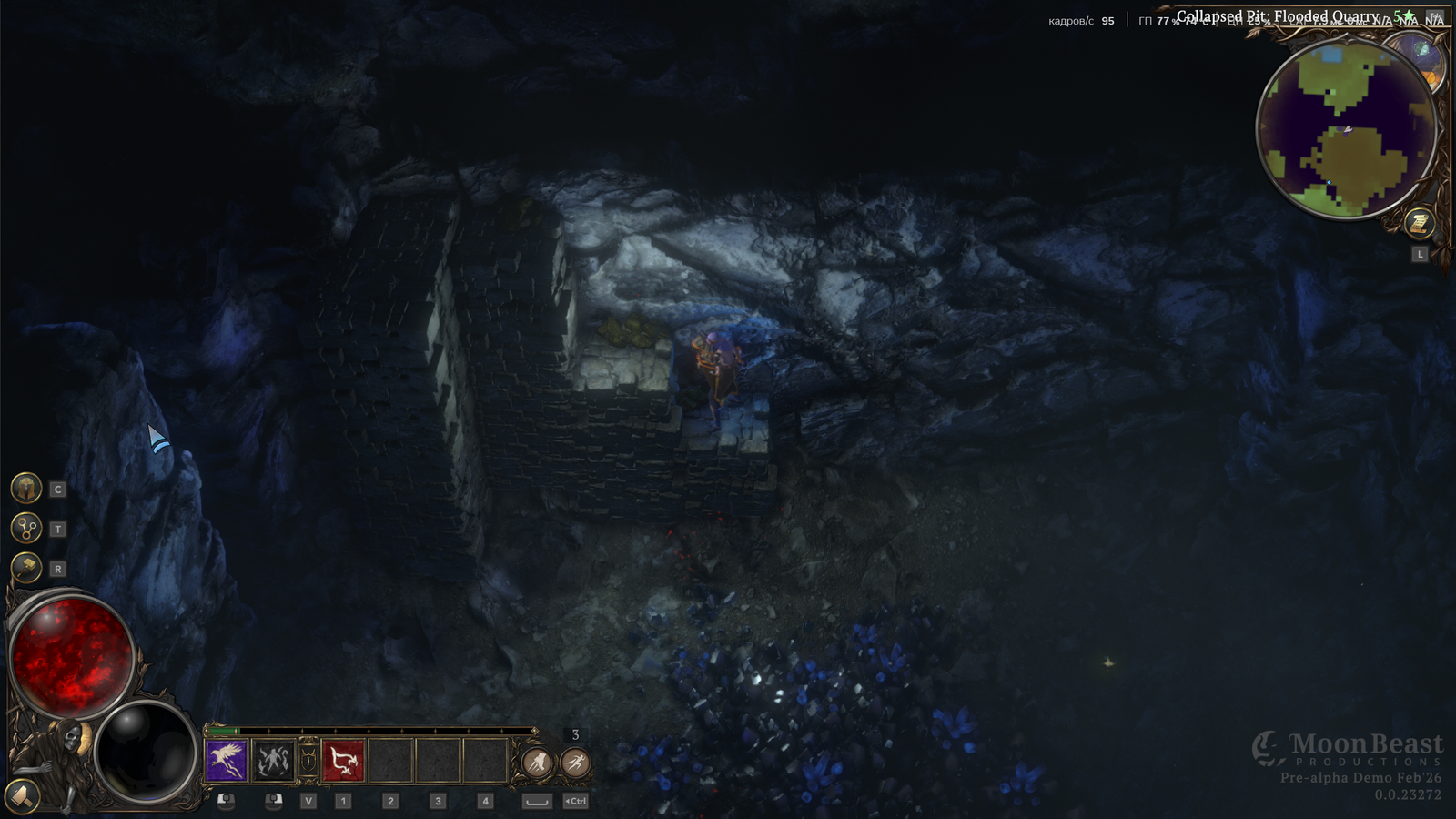
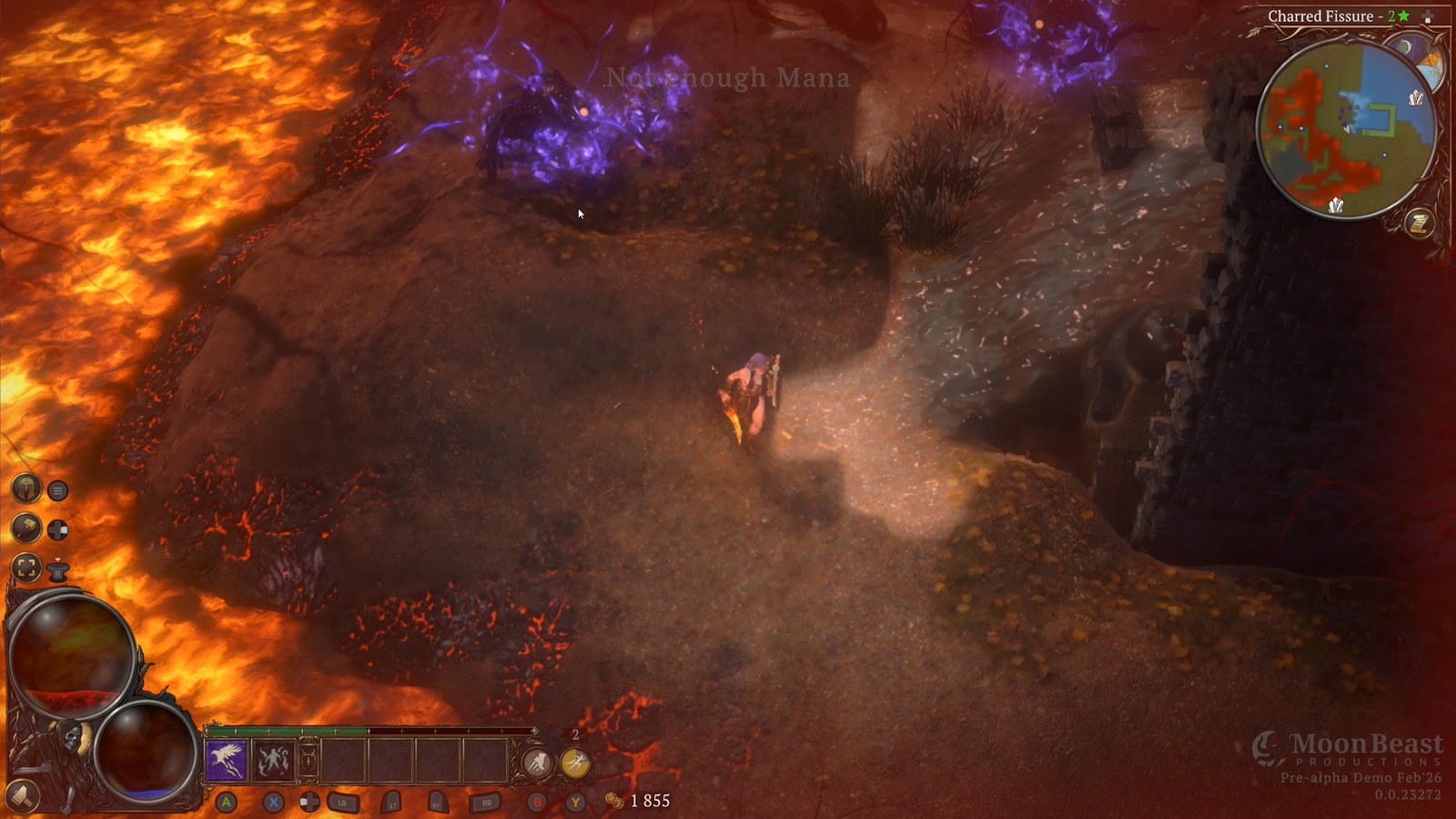
After that, I started experimenting. At first, I just hit the ground near the reservoir — and a small lake appeared at the point of impact. Later, already in one of the battles, I accidentally destroyed a stone tower with water inside. The stream gushed out, cooled the lava nearby and opened a passage to the dungeon, which did not exist a second ago.
I went down and demonstratively ignored the main route, starting to methodically break the walls. To my surprise, I managed to break through into a secret room not marked on the map. Inside, stunned goblins and pots of loot were waiting for me. Of course, this only increased the desire to test the boundaries of what is allowed.
Is it possible to destroy everything at all? No. At some point, the attacks stopped damaging the buildings, and I ran into an invisible border between the procedural dungeon and the surface. When I theoretically could already break through to the outside, the game simply said "stop".
The developers, obviously, provided for restrictions. It will not be possible to completely level the world to the ground — otherwise it would turn into a shapeless crater. And yet, at first, the feeling of freedom works.
Breaking Is Not Building
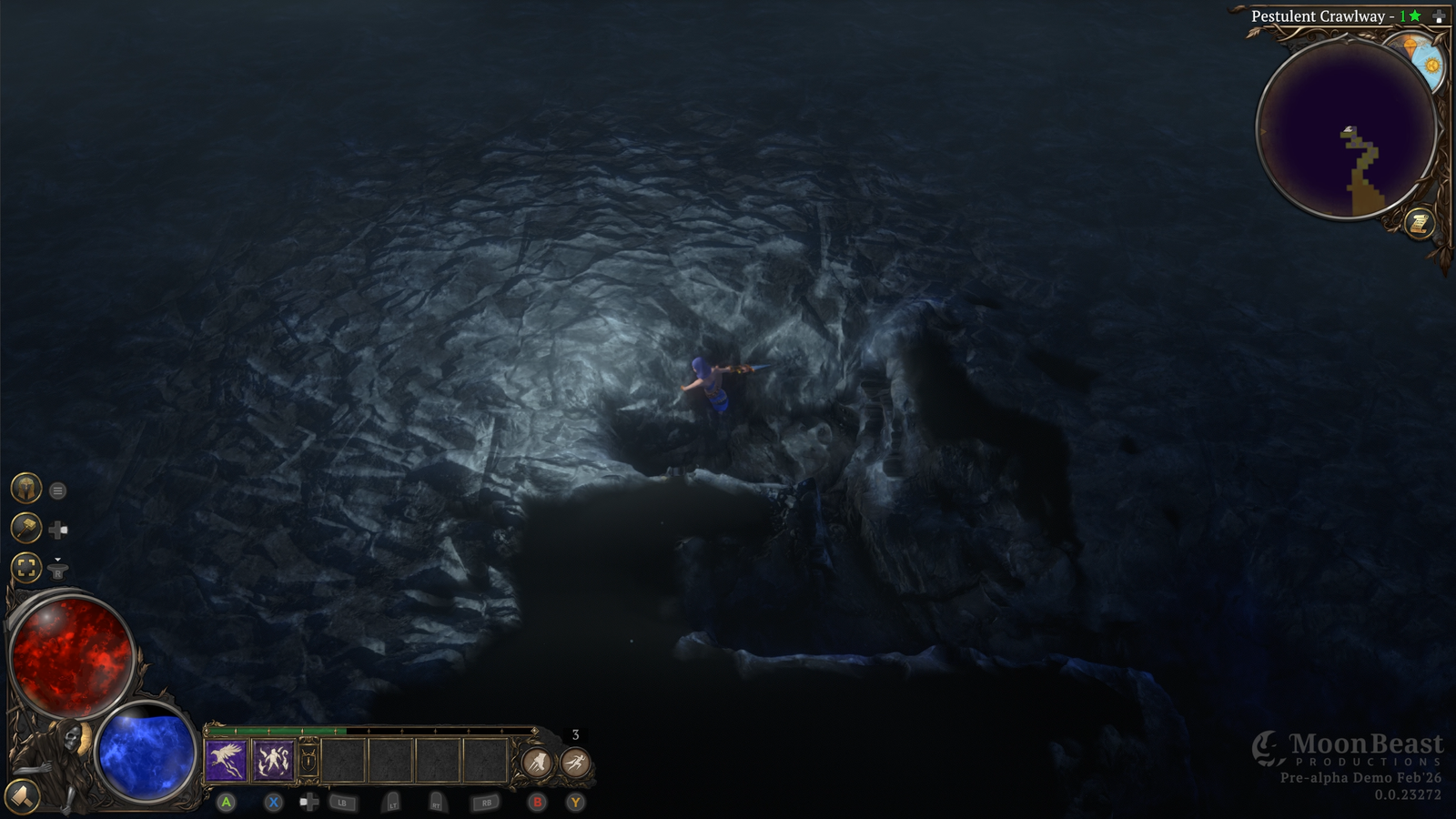
In addition to destroying everything in a row, the game also has a construction mode — this is definitely not what you expect to see in the heiress of Diablo. However, in the current version, there is little benefit from this system. Formally, I can erect stone blocks in the middle of the dungeon, build walls and bridges from them, but no gameplay situation really requires this.
Surrounding monsters with a wall in battle is pointless: it takes time, during which it is easy to get hit in the face. And even if they are isolated, there are no abilities in the arsenal yet that allow, for example, to pour fire on enemies from afar. It is easier and faster to deal with them in an open clash.
Construction came in handy for me only a couple of times. The first — during the exploration of the dungeon: I built a staircase to jump over the wall and shorten the path to the exit. The second — on the way to the local lich: I built a bridge and cut off several tens of seconds. The gain turned out to be dubious, so it is difficult to consider this a serious argument in favor of a full-fledged construction mechanic.
The demo version has a global event — the Necropolis. It gradually captures the map, turning it into a dead zone inhabited by high-level opponents. The goal is simple: to level up enough to get to the point where the Lich lives, destroy it and stop the spread of the Necropolis.
And here construction could theoretically play a role. For example, if the game allowed you to place turrets, place teleportation points, and prepare advantageous positions for raids into the Necropolis in advance. So far, there is none of this — and the question naturally arises, is construction needed at all. Because the next step will almost inevitably pull the game towards Warcraft III or even the tower defense genre. Maybe the feature that is already there is enough? Let's figure it out.
From Order to Managed Chaos
Darkhaven, of course, managed to captivate me for the five hours that I spent in the demo version. Admittedly, it's not that difficult: give me a reason to launch a "Diabloid" and call it work — and I'll disappear for the evening. But the demo convinced me of the main thing: the former Diablo developers are quite competent to make another Diablo, and everything really works in this part.
The leveling system is familiar and understandable. There are skill branches, items with characteristics, stones and hearts inserted into equipment, runes — they can be applied to the character as tattoos or collected into rune words. Loot falls often, combinations add up quickly, the flow is caught almost instantly, and it is fueled by a sense of constant progression. In this sense, Darkhaven does not reinvent the wheel — it confidently reproduces the formula that these same people once helped to perfect.
At the same time, it is already roughly clear where the game is going to develop. The developers openly say that they want to move away from the modern "incrementalism" — endless "+2% to damage" and the sterile balance of service games, directly criticizing Diablo IV for this. Instead, they offer a more chaotic system in which outstanding items can radically change the build and even "break" the game. The logic is simple: if the player has become too strong — great, let him feel like a god.
I like this philosophy. However, so far Darkhaven can easily be confused with dozens of other ARPGs that diligently reproduce the Diablo formula. The problem is that it is almost impossible to compete with Blizzard on their field: Moon Beast has incomparably fewer resources. Even Grinding Gear Games, which created the Path of Exile dilogy, has higher budgets and scales — otherwise the studio would hardly have gone to Kickstarter.
Therefore, a neat repetition of the formula is not enough. To grab the audience, the project needs to offer something more. This "something" became the destructibility of the environment and construction.
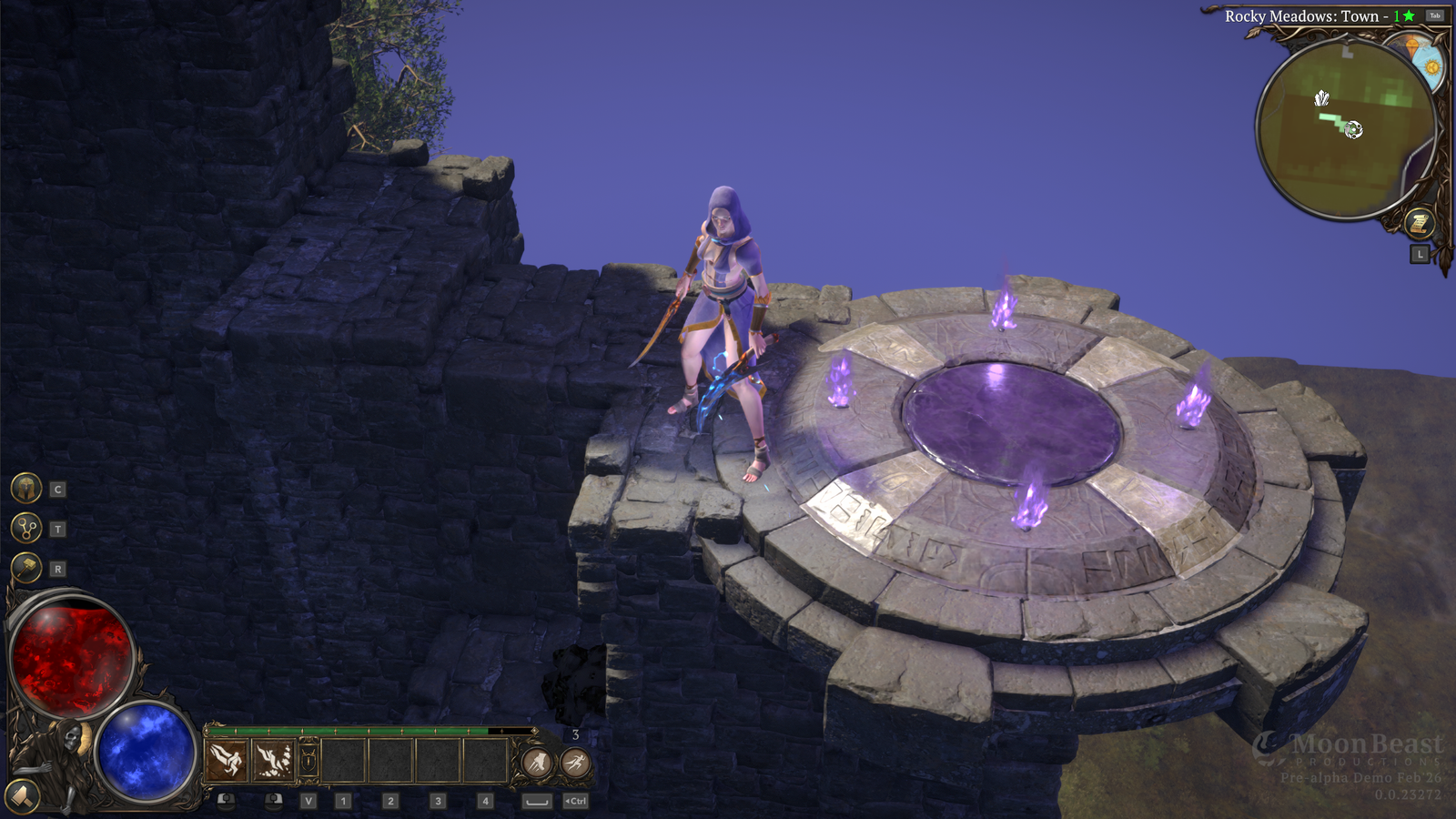
Destructibility really brings an element of chaos and unpredictability to the gameplay, refreshing the familiar formula. I like how it affects the feeling of the character's power and the dynamics of the battle. Isn't it great when a fiery meteorite launched by an enemy doesn't just remove abstract health numbers, but literally breaks through the ground under your feet?
But construction still looks like a foreign layer. It does not enhance the build, does not change the strategy, and does not become part of the main rhythm. At least not now. I don't know what this idea will grow into, but at this stage it is interesting to destroy the world, and almost not required to build.
For Darkhaven to truly unfold, construction should become not just a feature, but a tool for solving game problems. For example, if there are opponents and events that require ingenuity and restructuring of the environment, the mechanics will sparkle with new colors.
Imagine a fortress siege where you have to quickly erect walls and traps to hold back the onslaught, or build bridges and dams to escape the flood. Such scenarios fit into the statements of developers planning events with avalanches, floods and other cataclysms. But all this remains to be implemented. If construction remains an activity for show or an element of variability without real benefit, it will become a weak link in the project.
Even if everything works out, there is still a risk of genre overload. The classic ARPG rests on three pillars: a hurricane pace, continuous growth of power, and dopamine bursts from the fireworks of falling loot. If you regularly force the player to stop and think about where to put the tower or dig a trench in this cycle, it is easy to break the rhythm. ARPG is a flow state: the brain rests, reflexes work. The emphasis on construction can destroy this feeling.
Developers will have to carefully weave in new mechanics so as not to alienate the core audience - in my understanding, this is primarily fans of Diablo, not Minecraft. Perhaps it is worth limiting construction to specific tasks and making it quick and intuitive: not building a city, but selectively changing the battlefield during the battle - closer to tactical action than to strategy. For example, give the player several types of barricades or traps that can be instantly installed at the desired point and gain a short-term advantage. Such a system will not require lengthy micromanagement of resources, but will add depth to the combat system.
Another option is to move the construction to management between loot runs: mined rare resources, erected an altar that enhances the character within a certain radius. In other words, construction should enhance the build as obviously as a powerful rune or a legendary item. So far, this is not happening, construction is perceived as unnecessary ballast and emphasizes the internal asymmetry of the concept.
This is where the main risks of the project lie. It is vital for developers to find a balance between the sandbox and the "Diabloid", and there is still time for this. There is about a year left before early access, and even more before release. It remains to be hoped that the team will use this time to align the concept and not replenish the list of projects "from former Blizzard employees", which are remembered only as unsuccessful attempts to parasitize on their own past.
Verdict
The Darkhaven demo gives a full vertical slice of the project. It already outlines the main systems: combat, looting, leveling, changing the world - everything is in place, albeit in an embryonic state. There are technical issues, but we deliberately do not focus on them, given the "pre-alpha" status. The main thing is that Moon Beast has laid the foundation. Next, the "small thing" remains: to bring all the elements to a single logic and increase the amount of content. Joking aside, this is a titanic task.
The combination of "Diablo + Minecraft" sounds like the developers are trying to please everyone at once. It seems that fans of monstrous meat grinders will get their own, and fans of creation will find an outlet. In practice, everything is more complicated. The paradox is that by mixing two formulas, Moon Beast risks not expanding, but narrowing the potential audience. To appreciate Darkhaven, the player will have to love both genres at the same time. If you are an avid Diablo fan - used to verified builds, clear progress and Baal runs on schedule - you may be annoyed by the need to be distracted by digging tunnels and erecting barricades.
On the other hand, if construction remains secondary and superficial, sandbox fans are unlikely to see Darkhaven as a full-fledged alternative to specialized projects like Minecraft. Then one of the two key elements designed to distinguish the game from other Diabloids will be weakened. As a result, the hybrid risks becoming a compromise that will not suit either side.
Never miss our newsAdd this site to your preferred sources to see us more oftenAdd on Google