This Isn't Call of Duty - You Have to Think Here. Why Pragmata Could Be the Most Unusual Shooter in Recent Years
Translated with AI from the Russian original.
Since 2020, Pragmata has gone from a high-profile announcement at the PlayStation 5 presentation to a near-developmental hell, which for many evoked associations with the fate of Deep Down. At The Game Awards 2025, Capcom once again showed the project, finally announced the release date, and immediately released a demo version. We played it several times and tell you what already works in Pragmata, and what remains in question.
Shooter-Puzzle
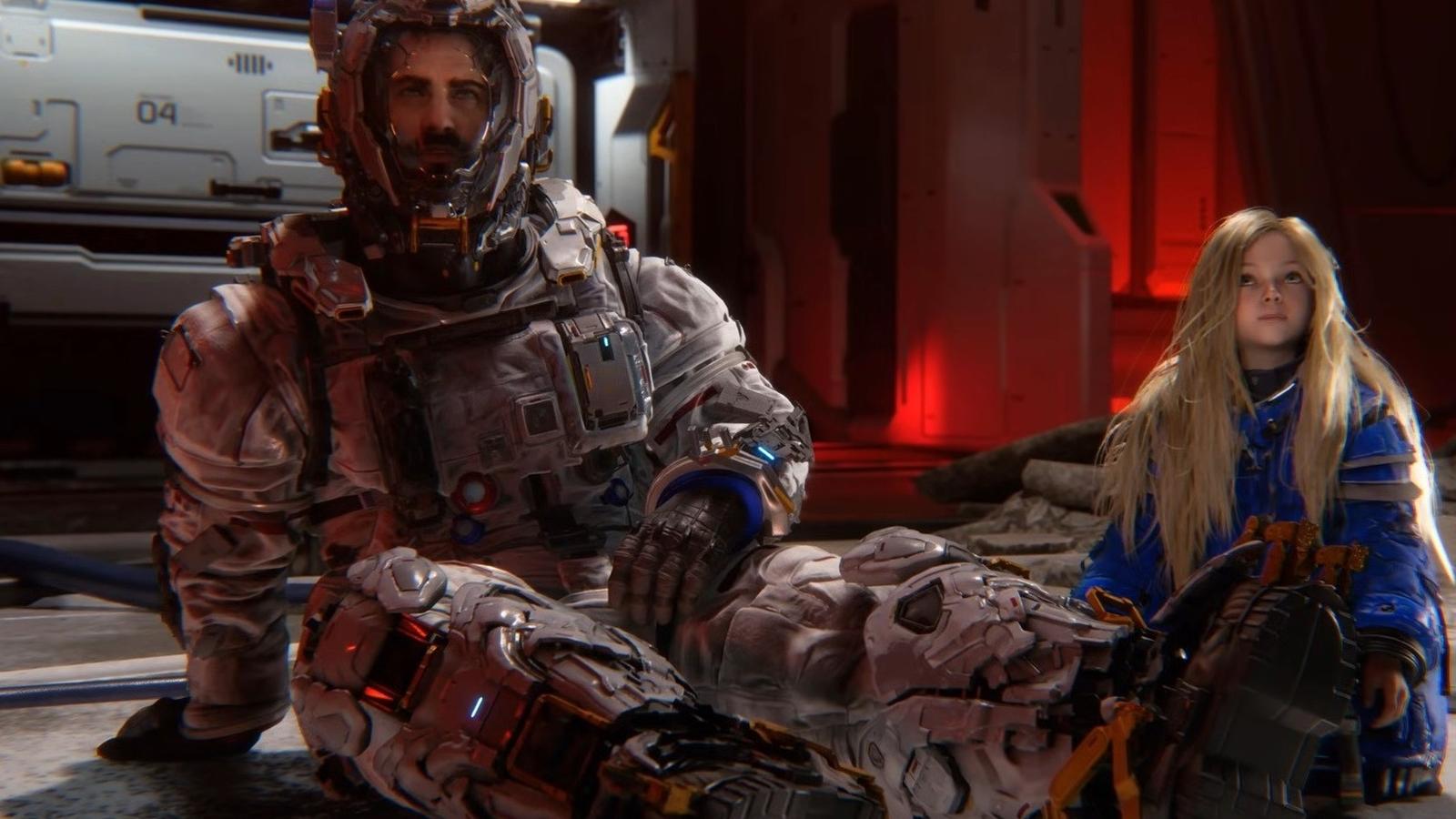
The events of Pragmata unfold in the near future at the lunar station "Cradle." Astronaut Hugh Williams arrives there with a squad to figure out why the facility suddenly stopped communicating. However, the mission almost immediately goes awry. A powerful moonquake partially destroys the station, and Hugh himself is cut off from the team.
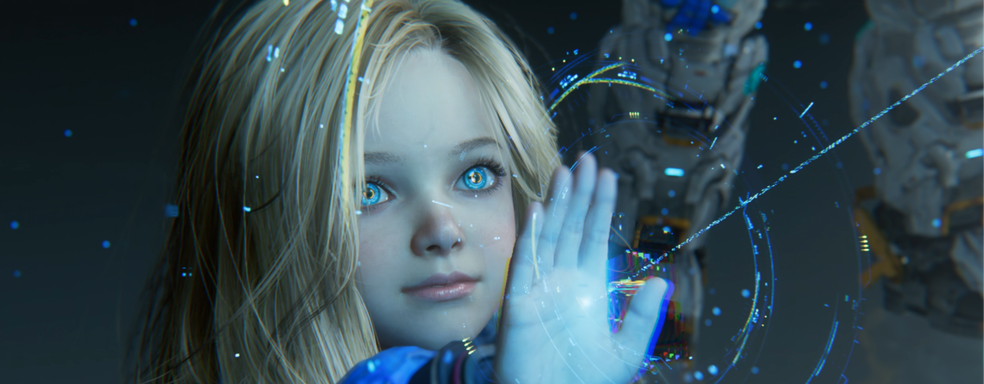
He is saved from death by the android girl Diana, the only one who still has access to the internal systems of the complex. By this point, "Cradle" is already abandoned and inhabited by out-of-control robots. To restore control of the station and find a way out, Hugh and Diana must make their way through the destroyed corridors and emergency compartments, gradually piecing together the picture of what happened.
The Pragmata demo, released immediately after The Game Awards 2025, covers a small section of the lunar station and primarily serves as a demonstration of basic mechanics. There are no staged cutscenes or detailed dialogues here. The game is accompanied only by holographic recordings and fragmented notes, which help to restore the minimal context of what is happening, but do not seek to emotionally involve the player in the narrative.
On the surface, Pragmata can easily be mistaken for a third-person shooter in the spirit of Capcom's old projects, primarily Lost Planet - albeit in a different setting. However, it becomes clear during the demo that the game is not limited to the usual shooting. Capcom is trying to rethink the very structure of the genre, combining reactive combat with analytical thinking and forcing the player not only to act, but also to make decisions under pressure. This, to a certain extent, allows us to talk about the potential emergence of a new subgenre - the shooter-puzzle. How is this possible? We'll tell you now.
Symbiosis Mechanics
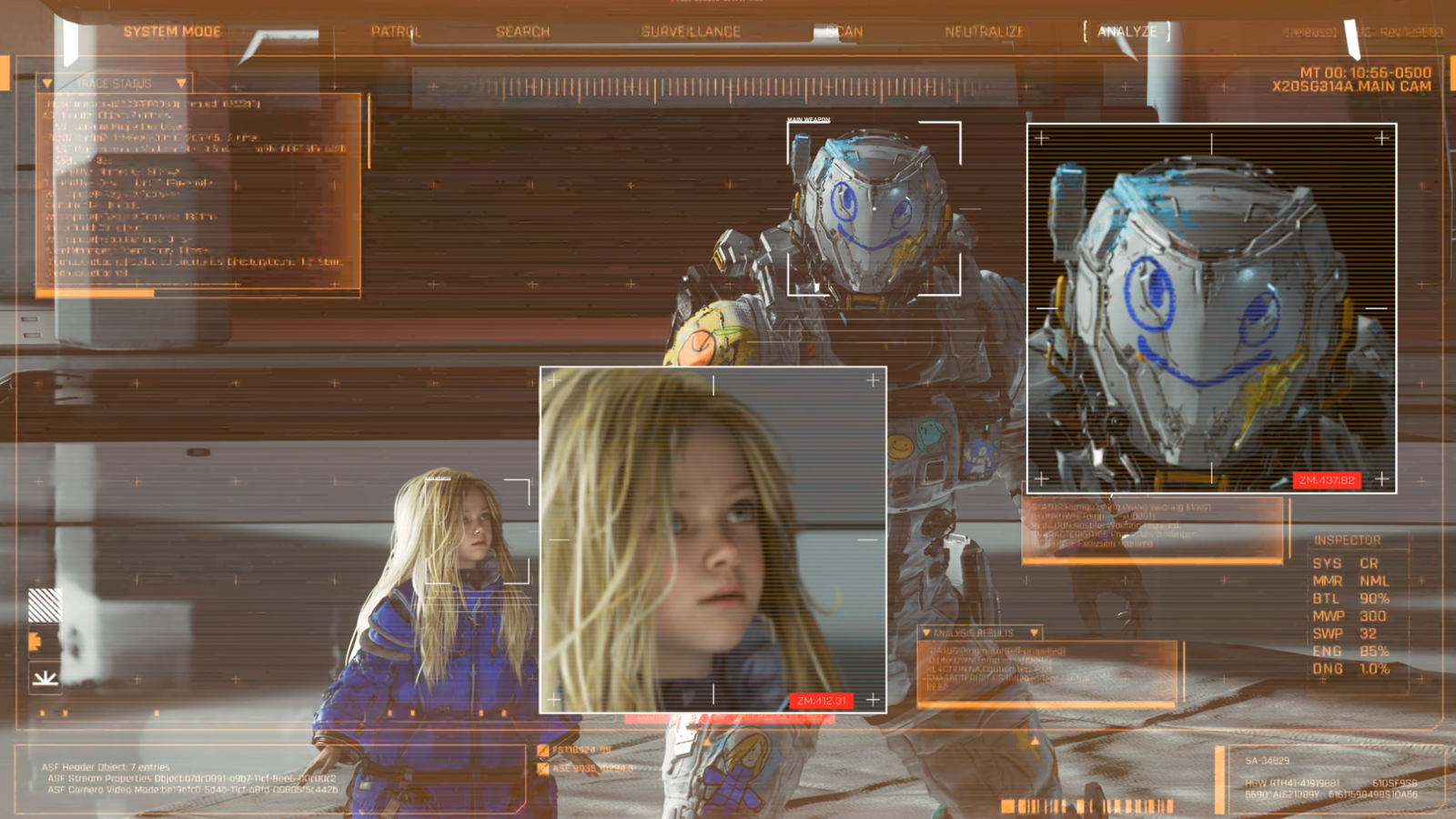
It all starts with how the main characters interact. Unlike the common model, where one character remains active and the second plays the role of emotional or plot accompaniment, as is often the case in games like The Last of Us, Pragmata builds battles around the direct, almost symbiotic interdependence of Hugh and Diana.
Ordinary shooting at robots is practically useless until their armor is hacked. This task is performed by Diana, who launches the hacking procedure in real time. A grid of nodes appears on the screen - a matrix along which the player needs to quickly plot a route to the end point, activating bonus cells with damage boosts and other effects along the way.
It is fundamentally important that hacking does not stop the battle. While the player interacts with the grid, enemies continue to attack. This is not a pause for reflection and not an isolated puzzle, but part of an active process in which speed and intuition are sometimes more important than a perfectly constructed route.
Yes, the system is unusual and requires getting used to. In the first minutes, it may seem inconvenient, especially in battles with several opponents, when reaction time and room for maneuver are limited. However, the grid quickly ceases to be perceived as a separate interface.
Attention is naturally distributed between shooting, positioning, and hacking simultaneously. This is similar to the situation when you try to perform asynchronous actions with two hands - at first nothing works, but over time the brain adapts.
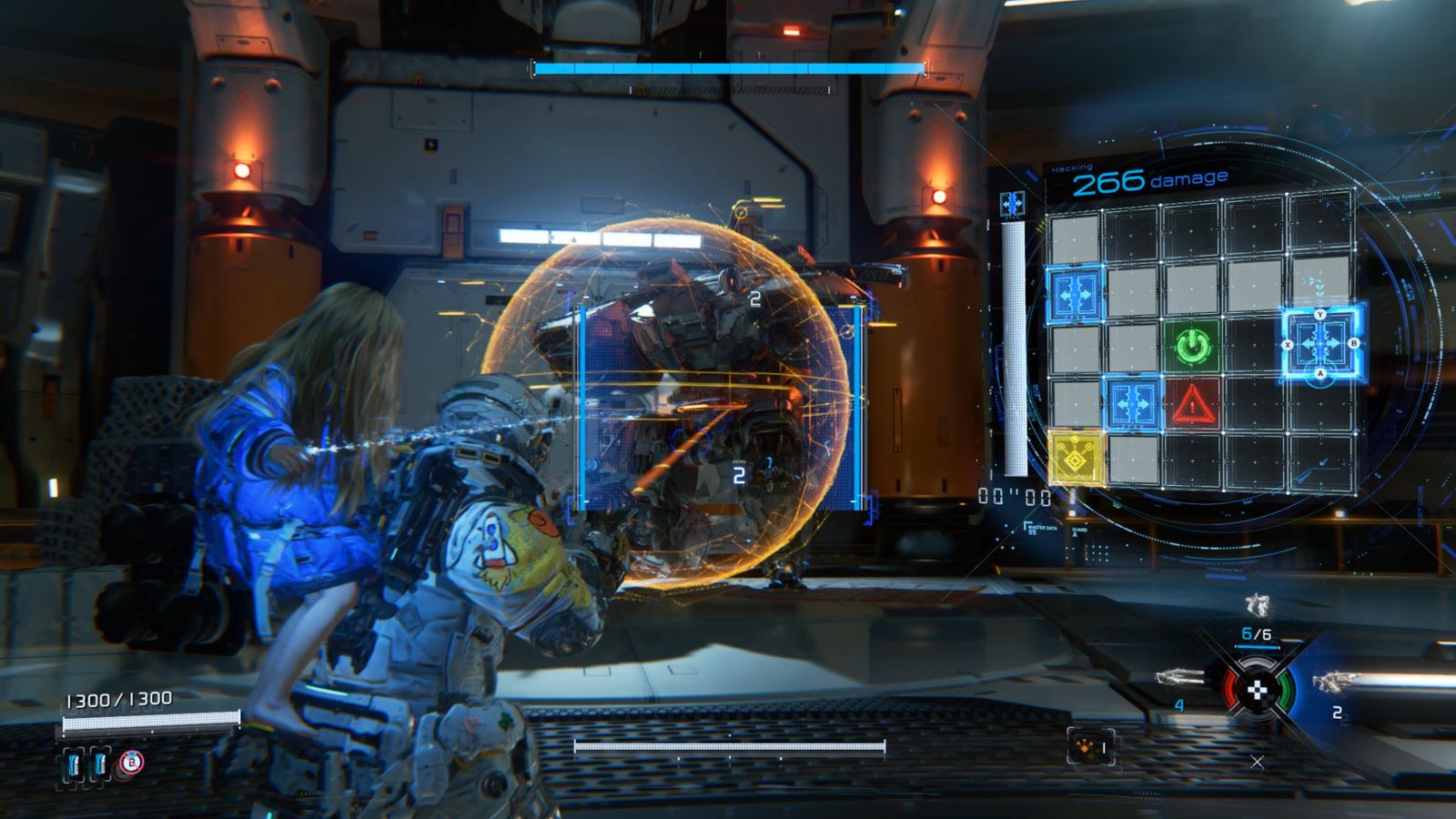
Nevertheless, even after getting used to it, hacking does not turn into an easy walk. The configuration of the grid changes from enemy to enemy. The location of the nodes varies, new effects and limited cells appear, through which you cannot plot a route. It is already noticeable from the demo that the system is designed for further development - but mastering the mechanics alone is not enough, it is also important to apply it correctly.
Here, tactical planning and positioning come to the fore, especially considering that any hit on the character interrupts the hack. The importance of positioning and control is also emphasized by Hugh's arsenal.
The demo version includes a standard pistol with automatic reloading, a shotgun, and a stasis gun. The latter two use limited ammunition. After it is exhausted, Hugh automatically throws away the weapon, but can pick up a new one directly in the arena - while the type of weapon is indicated by a separate color, so the player easily understands what exactly is in front of him, without reading the description and without examining the model from afar.
This solution encourages active movement and constant change of positions, rather than static shooting of opponents, as well as careful use of charges. The stasis gun, for example, allows you to immobilize an enemy for a short time, win a few seconds, and complete the hack, but spending such a powerful resource on ordinary opponents is not always justified.
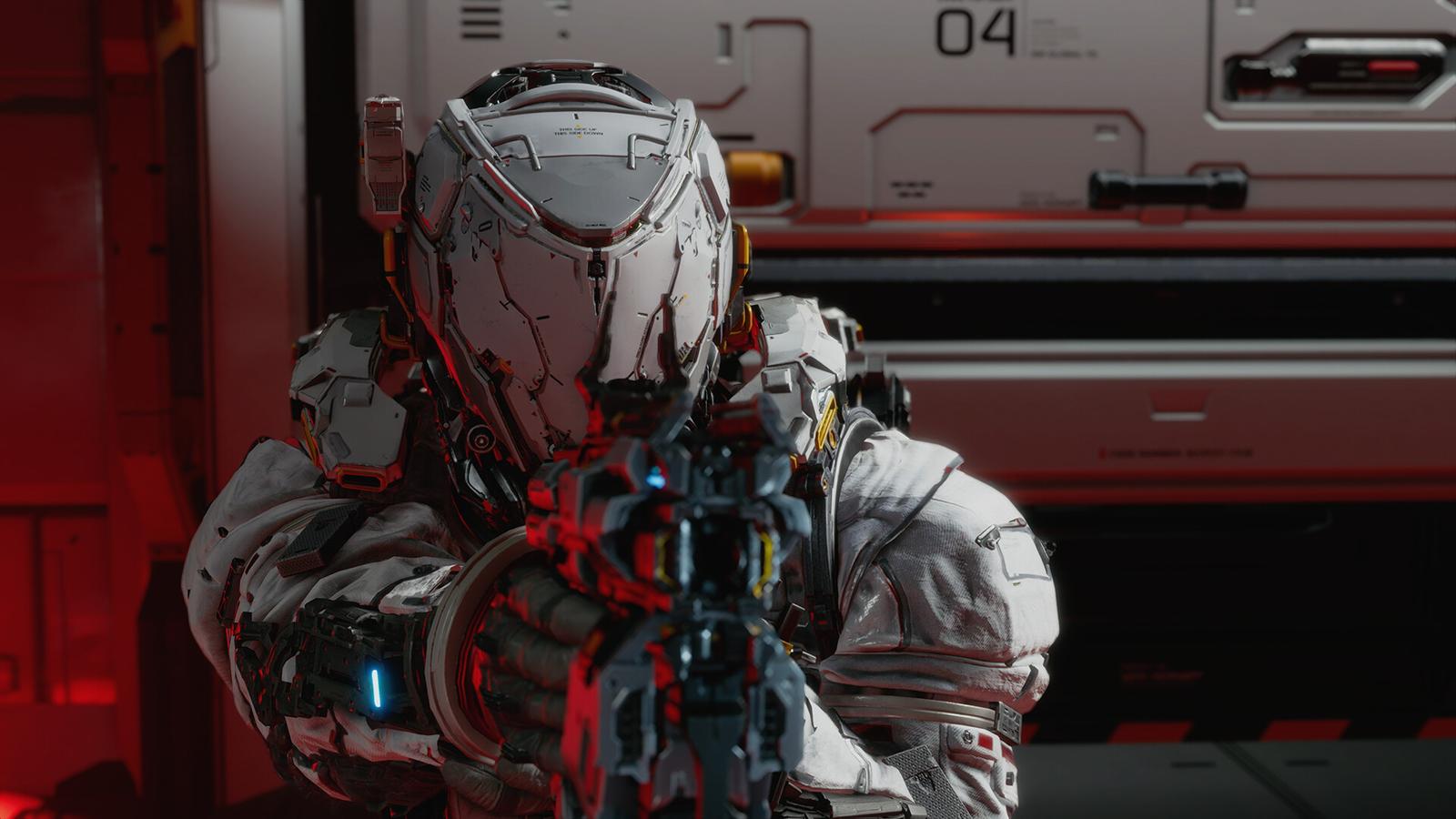
However, from the second playthrough of the demo, the system begins to unfold deeper. The developers acted competently and did not dump all the mechanics on the players at once, allowing them to feel them gradually. Therefore, from the second approach, in addition to a new skin for Hugh's spacesuit, a dash for evasion opens up, which slows down time when performed at the last moment, and a railgun appears, allowing you to keep your distance. As icing on the cake - a new hacking module that connects opponents into a single chain.
A full-fledged strategy is already emerging here. You can stop a group of enemies with a stasis gun, link them together, and hack them all at once, and then calmly finish them off.
The final battle of the demo works as a test of understanding of all the key principles of the combat system. The boss does not require impeccable reaction, but forces you to consciously manage the distance, combine weapons, and choose the moment for hacking in order to have time to deal damage to vulnerable areas.
The battle itself remains relatively simple in structure, but rich in dynamics. When replaying with the railgun, it becomes noticeable that the boss's behavior adapts to the player's style. If you keep your distance, he acts more aggressively, reduces space, and tries to interrupt the hacking cycle, forcing the player to adapt in response.
In addition, the battle introduces the player to the stability mechanic. By knocking down the corresponding scale, you can jump on the boss and deal significant damage. At the same time, Diana opens a super ability of mass hacking, the charges of which accumulate for successful hacks and allow you to radically change the course of the battle.
Hidden Potential
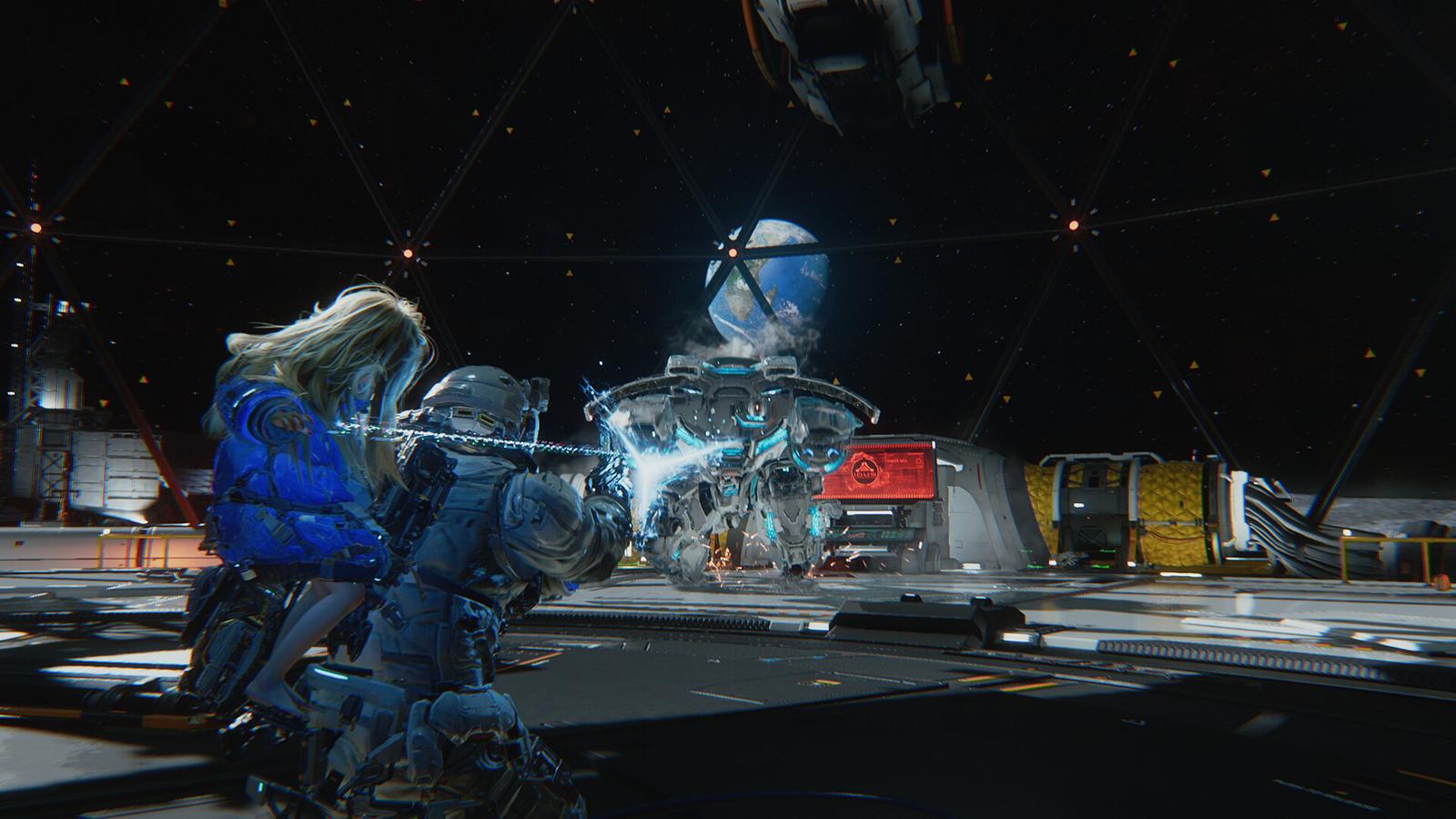
Beyond the training segment of the demo, many questions remain. The presented locations are mainly sterile corridors with small branches, where containers with resources and lore notes are hidden. The trailers hint at more diverse spaces outside the station or inside simulations, but the demo does not give a clear idea of either the scale of the game or how often the environment will change.
At the same time, the demo carefully marks the elements of exploration. Not all loot is located in obvious places, and some improvements are easy to miss. For example, I discovered an increase in the number of healing charges only during repeated playthroughs, which hints at the presence of hidden routes and optional finds away from the main path.
To search for them, you will probably have to use the ability to soar and make dashes in the air. These mechanics are already present in the game, and, judging by the trailers, they will even be used in battles with bosses. However, in its current form, the corridor location and the low energy reserve for the suit do not allow us to assess the potential of these techniques in full.
Currency falls out for defeating opponents and in containers, intended for improvements. The demo does not show how deep the leveling system will be, limiting itself to hints at the development of weapons and hacking modules. The potential for expansion is obvious, but specific directions remain behind the scenes, so I will not guess for the developers.
As for the plot and the dynamics of the relationship between Hugh and Diana - different paths are quite possible here. Capcom can choose a relatively classic model, reminiscent of the "father and daughter" bond, intertwined with the themes of AI self-identification and questions about what makes a person human. But a more ambiguous development is also possible, related to Diana's role in the fate of the station. The demo and trailers only indicate these directions, without giving grounds for unambiguous conclusions.
Pure Radiance of Science Fiction
From a technical point of view, the Pragmata demo gives the impression of an extremely polished project, albeit assembled specifically for public display. On a system with RTX 4070 Super, the game stably maintains a high frame rate in 1440p resolution with ray tracing activated and does not require upscaling for a comfortable playthrough. And after fiddling with the settings a bit - turning off chromatic aberration and depth of field - I completely removed the "soap", and the game revealed itself in all its glory.
The visual design of the scenery in Pragmata deliberately avoids overloading with details and relies on pure, cold science fiction. The lunar station "Cradle" looks sterile and alienated, its aesthetics are based on cold shades, dense lighting, and emphasized geometry of spaces.
At the same time, combat scenes are much more saturated with visual effects. At first glance, the multi-colored debris of robots and resources that fall out after their destruction can be perceived as visual noise. However, like the hacking system, all this quickly becomes familiar and, thanks to the soft color palette, ceases to draw attention to itself.
The characters and opponents in Pragmata are worked out with rare thoroughness. This is especially noticeable in Hugh: the animations emphasize the weight of the spacesuit, you can feel the inertia and weight when jumping, dashing, and shooting. It is especially impressive how the spacesuit system automatically intercepts the pistol and puts it behind the back next to Diana - the developers thought that in such equipment the character cannot reach the lower back on his own.
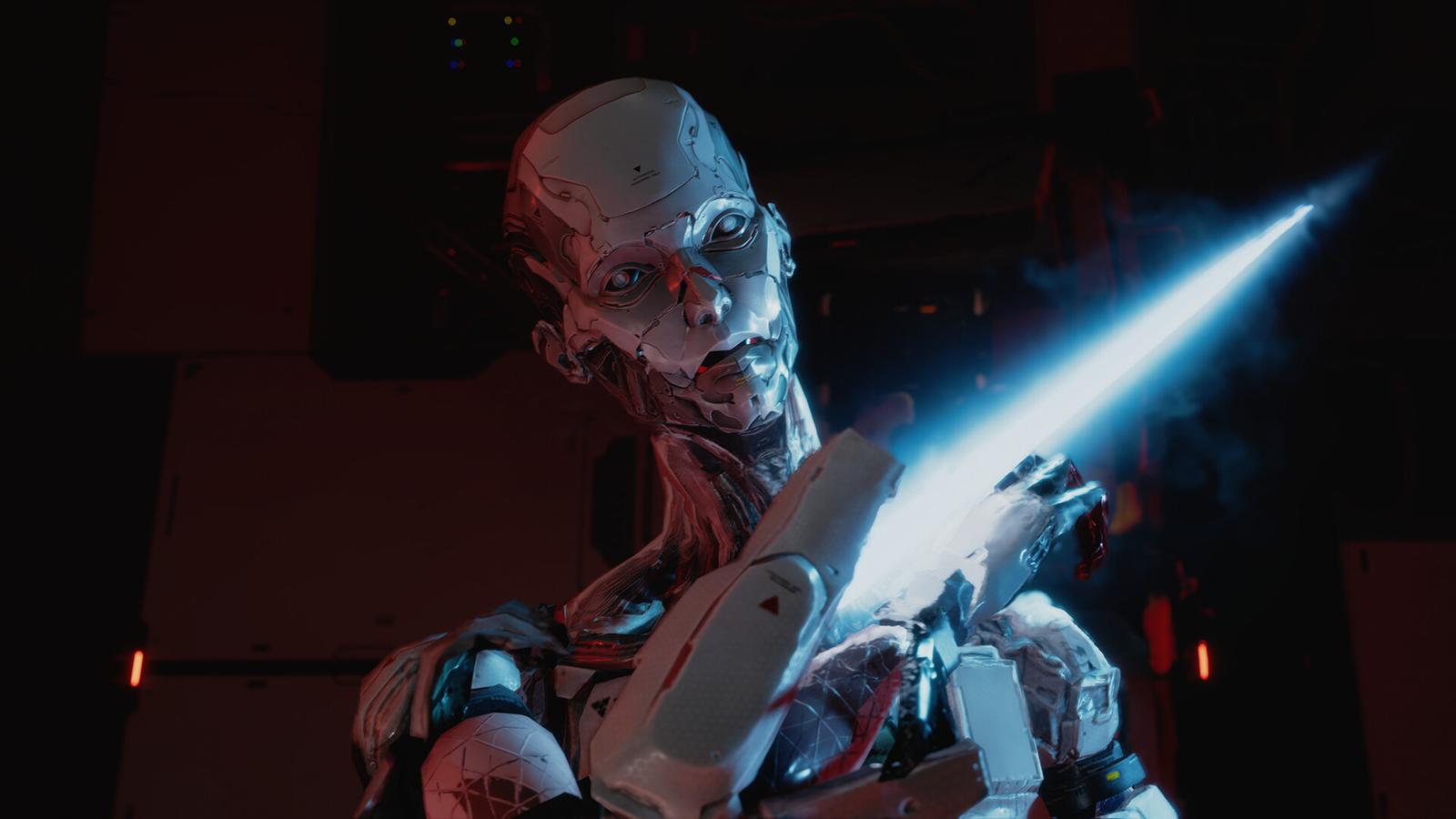
Diana has a soft "uncanny valley" effect, unobtrusively reminiscent of her artificial origin, as well as well-developed hair physics. Robots correctly react to hits on different parts of the body, thanks to which the impact from shots feels convincing. The attention to detail here is truly amazing!
Against this background, the main disadvantage of the visual part is quite simple. Moving from corridor to corridor, you inevitably catch yourself thinking: "I've seen this somewhere before." Nevertheless, it is too early to draw conclusions based on a piece of one location - there were others in the trailers.
Moreover, while I was working on the text, the developers once again emphasized that the demo was created primarily as an introduction to the mechanics, which looks much more complicated in the trailers than it turns out to be in practice, as well as a tool for testing optimization on many user PC configurations.
In any case, Pragmata certainly does not look cheap. According to production standards, it stands in the same row with Capcom's flagship projects, which only confirms that we are not an experiment "for one and a half rubles", but a well-thought-out attempt to offer something truly new and unusual.
Analysis
Capcom rarely allows itself to take risks. In recent years, the company has confidently relied on proven formulas of its flagship series, where everything has long been debugged and predictable. Against this background, Pragmata feels like a breath of fresh air with a mixture of conscious risk, reminiscent of the times of the Xbox 360 era - when large publishers were not afraid of experiments.
And most importantly - this experiment works. The gameplay of Pragmata makes a truly refreshing impression, offering mechanics that, in total, are difficult to confuse with something already existing. At the same time, the system feels holistic and meaningful, implementing the concept of a "shooter-puzzle" not declaratively, but at the level of specific game solutions. In this context, the approach to promoting the project becomes clear: such a system is difficult to perfectly balance, and even more difficult to "sell" through trailers - hence the silence of the developers.
If the full version maintains the rhythm and develops the mechanics without sliding into routine - through variable opponents, weapons, leveling, and hacking modules - then even the format of a compact linear action game for ten to fifteen hours with moderate replayability will look justified.
And if Pragmata offers not just a functional, but a truly catchy plot - with verified staging, development of relations between Hugh and Diana, and consistent disclosure of the world of "Cradle" - Capcom will have a chance to release a project that can stand in the same row with its flagships.
Well, we'll find out on April 24, 2026. See you on "Cradle."
Never miss our newsAdd this site to your preferred sources to see us more oftenAdd on Google