PlayStation's Disk Abandonment: Cynical Calculation or a Step Towards a Brighter Future? Unpacking This Summer's Biggest Scandal
Translated with AI from the Russian original.
Starting in 2028, PlayStation is officially ditching physical disks, depriving players of the secondary market and some control over their own purchases. However, this decision seems inevitable, and it has some non-obvious advantages. In this article, we delve into the anatomy of the digital reform: what Sony's main mistake is, how much corporations earn from it, what Microsoft's response might be, and why console "digital" is not the same as PC gaming.
Gamers are Angry — Investors Rejoice
Summer 2026 risks going down in gaming history as the point of no return on the path to a fully digital future for gaming. First, in late June, pre-orders for Grand Theft Auto VI — one of the biggest entertainment phenomena of our time — began. It was then revealed that the base edition for $79.99 would hit store shelves without the coveted disk: instead, buyers would find only a colorful voucher with a download code. This caused a small wave of discussion on social media, but no major scandal erupted: after all, this is far from the first time a physical edition has contained only a digital code.
However, just a week later, on July 1, a real bombshell exploded in the information space: Sony officially announced that starting in January 2028, it would completely cease the production and distribution of physical copies of all new PlayStation games released after that date.
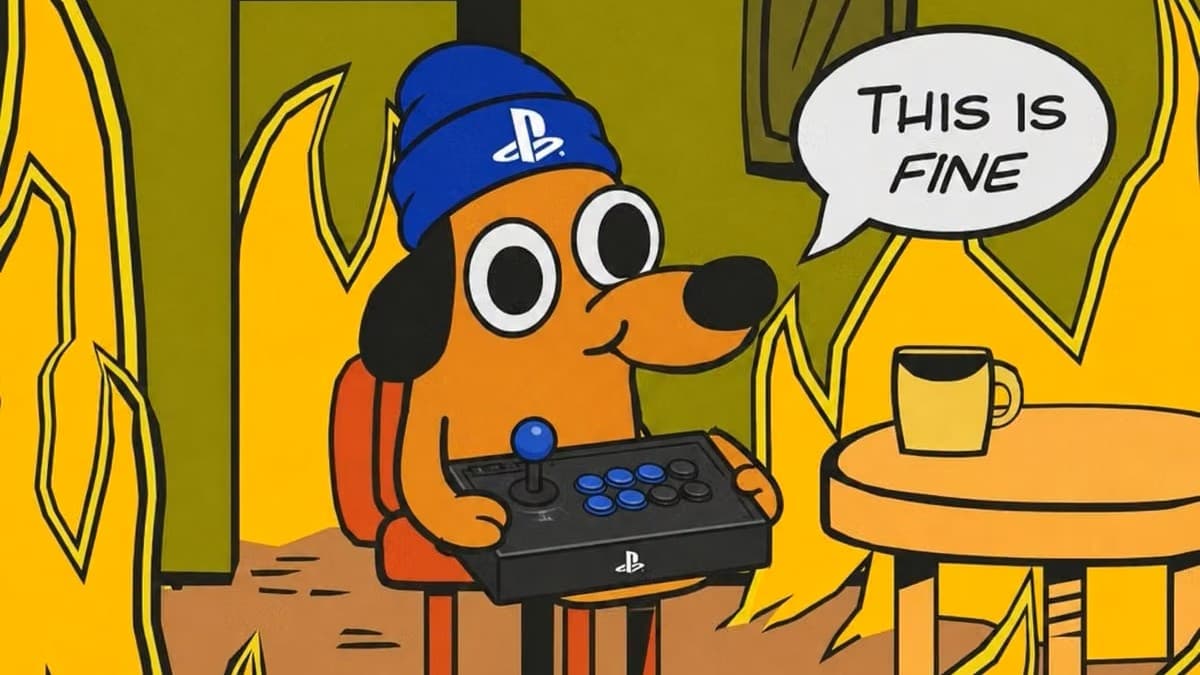
The community's reaction was immediate. The Japanese company's official social media pages were flooded with negativity, and a fan-launched petition, "Don't Kill the Disc," gathered 240,000 signatures in a matter of days. "You've become the very villain you once so fiercely ridiculed," enraged players wrote under a 2013 PlayStation 4 commercial that mocked the secondary market restrictions and DRM policy of the Xbox One. Of course, after widespread criticism, Microsoft canceled the controversial restrictions even before the console's release, but Sony's commercial became a symbol of protecting physical copies and the right to resell games.

Thirteen years have passed since then, and now gamers are threatening to cancel their PlayStation Plus subscriptions, vowing to boycott future releases, and promising to switch to PC, while the stock market demonstrates cold cynicism. Immediately after the announcement of the disk abandonment, Sony's shares on the Tokyo Stock Exchange rose by approximately 7%, increasing the corporation's capitalization. Gamers are screaming with anger, investors with joy. This glaring contradiction, perhaps, represents one of the most significant shifts in the industry in the last twenty years.
But we are not here to join this chorus. Instead, without unnecessary emotion, we will analyze the reasons for Sony's decision, weigh its obvious drawbacks, consider its less obvious advantages, and try to understand how all this will affect the industry and console gaming.

Why Sony No Longer Needs Disks
The main question being asked everywhere today is: why now? Why did Sony's management decide on such a radical step in the midst of the PlayStation 5's lifecycle, instead of waiting at least for the PlayStation 6 announcement? The answer, as always, lies in the realm of dry and relentless corporate logic and reporting.
Implementing such a reform in a few months is impossible: it requires restructuring production processes, reviewing or terminating contracts with some partners, and finally, giving angry gamers time to cool down to mitigate the impact on new console sales.
Sony's financial reports and analyst data show that abandoning disks was practically inevitable. According to Circana analyst Mat Piscatella, sales of physical video game copies in the US halved from 2021 to 2024, and in 2025, they fell by another 11% to $1.5 billion. This is the lowest figure in 30 years of observations, even without adjusting for inflation.
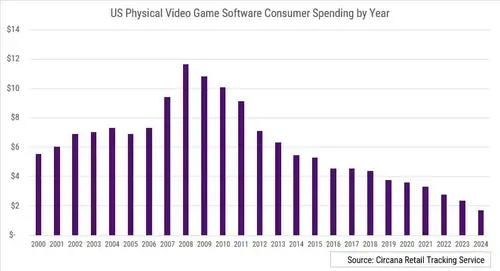
Sony's own reports show a similar picture. By the end of fiscal year 2025, physical game copies accounted for only 3% of the corporation's total revenue — about $830 million. Digital sales through the PlayStation Store during the same period brought in about 23% of revenue, or almost $7 billion.
All this leads us to a simple conclusion: Sony did not "kill disks" overnight. The corporation merely officially acknowledged a process that has been developing in the industry for years. This perspective removes the simplistic framework of "bad corporation versus good players" and shifts the discussion to a more mature analysis.
From the perspective of top management, the enormous infrastructure for manufacturing, pressing, logistics, warehousing, and retail distribution of physical media has become a cumbersome, expensive, and inefficient relic, serving a constantly shrinking market share.
Bernstein analyst Robin Zhu articulated this situation very simply: the words of gamers and proponents of physical copies diverge dramatically from their actual actions. If disk advocates bought them in volumes capable of competing with the digital store, Sony simply would not have the financial metrics to justify abandoning the format.
Moreover, digital distribution provides the platform holder with a significantly higher margin. Bloomberg journalist Jason Schreier thoroughly analyzed the financial side of such a sales model. When selling its own exclusive game priced at $70 on physical media, Sony, after deducting retail markups, distribution costs, and disk production costs, receives approximately $45.5. When selling the same game digitally through its own PlayStation Store, the company retains almost the entire amount — $70 before deducting operating expenses and payment system commissions.
For third-party publishers, the diskless model is even more advantageous for Sony. When selling physical copies, the platform holder receives a licensing fee of about 15%. In the digital store, the commission is a standard 30% of each transaction — that is, twice as much.
However, the diskless model is no less beneficial for third-party publishers. Marek Tymiński, head of the Polish company CI Games, shared figures that unambiguously explain the business logic. According to his calculations, with a retail disk price of $69.99, after expenses for retail, distribution, and production, the development studio receives just over $26. At the same time, the digital version brings in about $49.
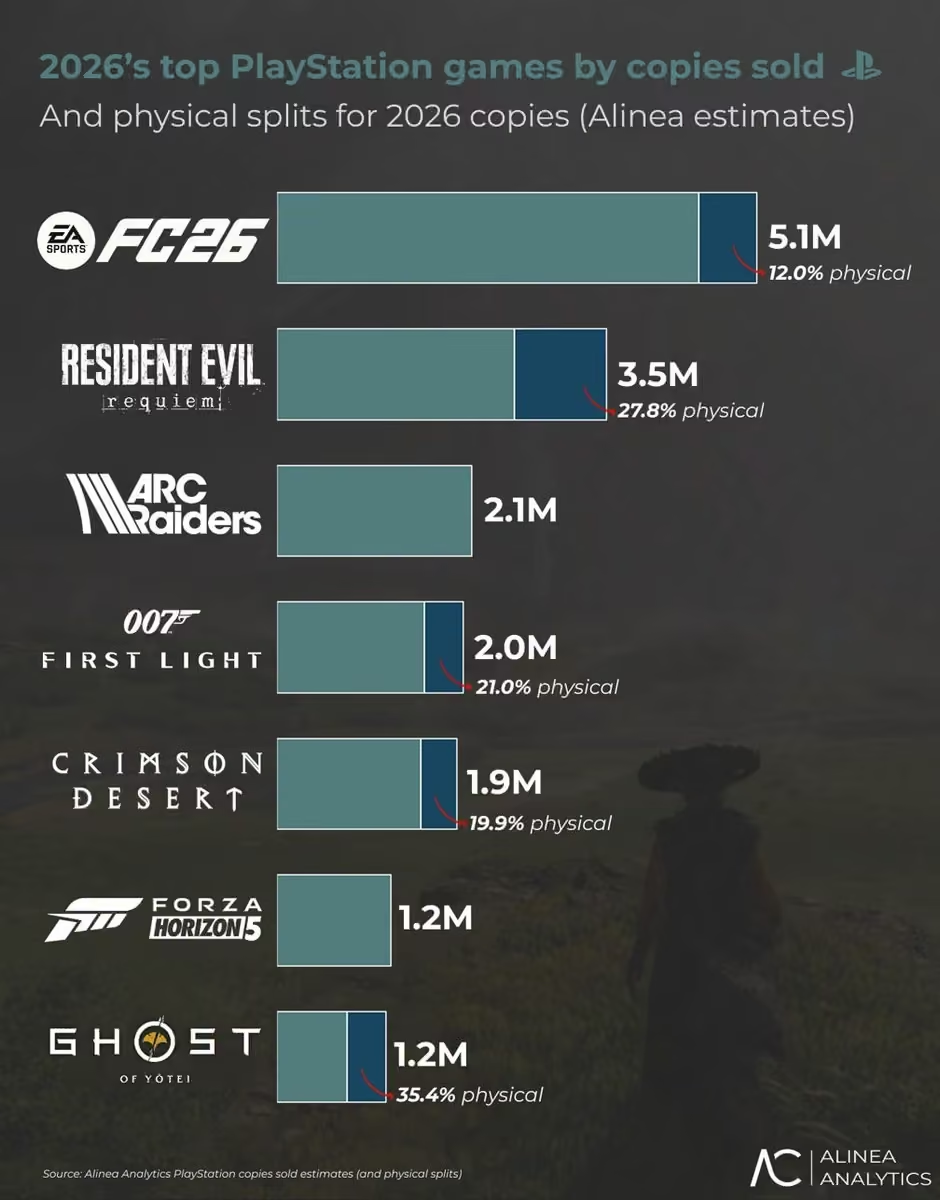
Moreover, abandoning disks will effectively close the classic secondary market — a huge cash flow from which neither Sony nor third-party publishers receive revenue. Recent data from Alinea Analytics for the first half of 2026 clearly demonstrates why many companies are interested in transitioning to a digital model.
For example, Resident Evil Requiem has sold 3.5 million copies on PS5 since its release in February 2026, with almost 28% being physical media. At the same time, about a quarter of buyers completed the story campaign in less than ten hours, after which a significant portion of the disks flooded the secondary market.
A huge number of players buy used games, resell them, exchange them with friends — and copyright holders do not receive a single cent from this turnover. Therefore, many publishers, especially those releasing single-player games without a developed service component, will support Sony's initiative, if not publicly, then at least silently: the platform holder has already taken the main reputational hit.
What Players Are Really Losing
Now that we've established what happened and why, it's time to understand what it means for us — ordinary players. It would be a professional crime to justify the platform holder's actions without highlighting the risks that a fully digital future entails, so let's start, of course, with the downsides.
The main one is the loss of the ability to freely dispose of a purchased game. When you buy a disk, you buy a physical item. You are free to do whatever you want with it: lend it to a friend, exchange it, give it away, or keep it in your personal collection.
A digital purchase in a closed console store is not a purchase of a game in the usual sense. It is a long-term rental of a digital license, which can be restricted according to the terms of service. This is especially acutely perceived now — in a world with an unstable geopolitical situation, where political decisions and laws of specific countries increasingly affect the availability of certain video games.
In addition, a serious blow is dealt to the preservation of video games as cultural heritage. A digital version of a game can be remotely edited at any time: licensed music can be cut from it (Grand Theft Auto IV), voice acting can be changed (as happened with Destiny), or it can be completely removed from sale due to expired licenses or the decision of the copyright holder (Forza Horizon up to and including the fourth part, Forza Motorsport). A disk, however, fixes a specific release version of the work — even if sometimes incomplete, requiring patches and far from ideal condition.
Finally, players with limited budgets will be seriously affected, as they will lose access to cheaper gaming due to the loss of the secondary market.
On the other hand, these arguments should not be absolutized either. Modern games do not always fit on a single standard Blu-ray. Today, the disk often acts as a physical key confirming the right to launch, while the console itself downloads tens of gigabytes of day-one patches and online components from the network at the first start. Try to launch a modern online service or a project with mandatory server binding, like the defunct The Crew from Ubisoft, without the internet — a plastic disc in a box will not help you at all.
In addition, a digital license cannot be physically destroyed or accidentally damaged. A disk can be lost or scratched, while a digital copy can be downloaded on any compatible device — of course, as long as the user retains access to the account and the service itself.
The secondary market will also not disappear without a trace: part of the demand will likely go into the gray zone. Who better than Russian-speaking users, who have gone through harsh sanctions restrictions, payment blockades, and the departure of gaming giants, to know what account sharing, digital rentals on third-party platforms, and so on are?
The traditional used disk market requires a lot of time: finding a buyer or seller, contacting them, driving to the meeting place, checking the disk for scratches. Digital workarounds are faster and simpler, so users for whom saving money is critical will simply completely move to the shadow market, which is much harder for platforms to control.
For collectors, there is only weak consolation: not all publishers will actively re-print copies of old games released before 2028, so the rarity of some editions may seriously increase, and with it, the value of already collected collections. However, this will not help new physical releases: it will simply become impossible to replenish shelves with current games.
Non-Obvious Advantages of the Digital Transition
Sony's reform also has less obvious potential advantages. According to insiders, the cost of the PlayStation 6, due to the AI boom and component crisis, has already exceeded a record $900 — an exorbitant sum for a home device. Increased revenue from digital sales and total control over the software part could potentially allow Sony to sell the PS6 itself significantly cheaper than its actual cost. The corporation will be able to more actively subsidize hardware, being confident that the user will eventually compensate for the difference with purchases in the PlayStation Store — something Valve, for example, cannot be sure of, which is why we got the Steam Machine with a price tag exceeding $1000.
However, price containment may also extend to the games themselves. The industry has long been looking for a way to break the price ceiling and normalize the $80 price tag for AAA games. Due to the colossal growth in production budgets, Western publishers have found themselves in a dead end, but directly raising the base cost of mass-market games to $80-90 would cause a massive consumer crisis of confidence and further collapse sales. In this reality, the elimination of physical disks becomes one of the ways for companies to increase profitability without increasing the final price tag.

But will this scheme work if plastic boxes continue to be produced and delivered to stores, simply replacing the disk with an activation code? Yes, although the exact amount of savings cannot be calculated. The production of the media and related logistics take about $10-15 from the cost of each physical copy, while a box with a paper voucher is cheaper. Of course, printing, transportation, distributor services, and retail markup will not disappear. However, publishers will no longer have to press disks and invest in large print runs in advance, some of which risk remaining unsold.
It is important to understand: there are no guarantees here. Corporations can simultaneously abandon disks and still raise prices. Additional profit is not necessarily going to translate into cheaper consoles, higher quality games, or a rejection of aggressive monetization. However, as a potential price containment mechanism, such a scenario still exists.

Sony's Main Mistake
Ultimately, Sony's main miscalculation lies not in the abandonment of physical media itself, but in the complete failure of communication with the community. The platform holder tried to sell a corporate ultimatum under the guise of natural technological progress — after all, reports show that disks are gradually losing relevance, and there is a "successful" example of the PC market, where digital sales are approaching 98-99%, and gamers don't even think about striking.
And it's true — many PC gamers have long forgotten what optical drives look like. However, the PC market survived the abandonment of plastic solely due to healthy competition among digital stores. If you don't like Steam, you can go to the Epic Games Store, check out GOG for DRM-free versions, legally buy a key on a third-party marketplace at a discount, or use other methods of accessing games — up to raising the "green flag" with a jolly Roger.

Moreover, the PC ecosystem has long established transparent rules of the game: Steam, for example, offers a standardized refund system where a user can get their money back for any game if they have played less than two hours.
On consoles, the situation is fundamentally different — there is no and never has been internal competition within a single platform. The PlayStation Store is practically the only official channel for buying digital games, so Sony's reform is perceived as tightening the screws.
Not only is the company taking away the only alternative from players by removing disks, but refunds on PlayStation are far from ideal. Here, it is more an exception than a rule, fraught with bureaucratic red tape and hassle with technical support. When buying a new release in the PS Store, the player is buying a digital pig in a poke without an adequate protection system in case the project turns out to be of poor quality or simply not to their liking.

At the same time, gamers are not offered any tangible "bonuses" or compromises for abandoning physical editions. For example, Nintendo has already introduced a price difference between digital and physical copies of games — the digital version of Yoshi and the Mysterious Book costs $10 less: $60 instead of $70. This fits perfectly into the logic where the production of a physical copy requires additional costs. It is quite possible that Sony will follow the same path in the next generation, but right now, no top manager of the company has come forward to players and even tried to explain what they will get in return.
Microsoft's potential response shows that this transition could have been organized much more humanely. Insiders report that Xbox is actively testing the Disc2Digital feature. Its essence is simple: the player inserts a compatible disk into the console, the system checks it and issues a full digital license, permanently tied to a specific medium. The disk is no longer needed to launch the game, but if you give or sell it to a friend — the license "travels" with it.
This is an excellent example of how to maintain a connection between players' physical collections and the digital age, combining the advantages of both models. If such a feature is indeed implemented in the future, it could become a serious competitive advantage for Xbox in the fight for audience.
What's Next?
As of today, the obvious disadvantages for the end consumer are much greater, and the listed advantages of the digital format remain conditional, if only because Sony deprives the user of the very ability to choose. Currently, the player decides what is more important to them: the convenience of a digital library or the advantages of a physical copy — the ability to resell it, give it to another person, or simply put it on a shelf. After 2028, this choice will disappear: the digital format will cease to be one of the options and will become the only permissible model.
It is most likely now that Sony will not back down from its plan: the course was announced long before 2028, and the reform requires a large-scale restructuring of production, logistics, and contracts with partners. PlayStation users, however, should not prematurely bury the upcoming PlayStation 6. It is quite possible that the console will be fully digital in its basic configuration, but to avoid a grand scandal over the loss of backward compatibility, Sony will offer a separate removable disk drive to play games from PlayStation 5.
Can the company still reverse the decision under public pressure? Theoretically, yes. But in that case, be prepared for this "reversal" to be sold as a compromise: "To maintain the economic viability of releasing physical editions, we are raising their base price by $10 — to $79.99." In other words, a physical copy will become a premium format similar to vinyl records — an expensive product for collectors and enthusiasts.
However, the gradual abandonment of physical media seems inevitable to me personally, so the fight should primarily be not for the preservation of the disk as such, but against the unilateral deterioration of the user agreement. If Sony does decide to finally deprive gamers of an alternative, it must offer an equivalent replacement: a normal refund system, guarantees of long-term access to purchased games, and lower prices for digital versions.
Until the company has given players anything comparable, its reform looks not like a confident step into a bright future, but like selling less freedom at the same price.
Never miss our newsAdd this site to your preferred sources to see us more oftenAdd on Google