Mushrooms Instead of RAM: Biologists Create Organic Memristors from Button Mushrooms and Shiitake
This won't solve the RAM crisis, though.
Scientists from Ohio State University have shown that mushroom mycelium can be used to store information-at least in laboratory conditions.
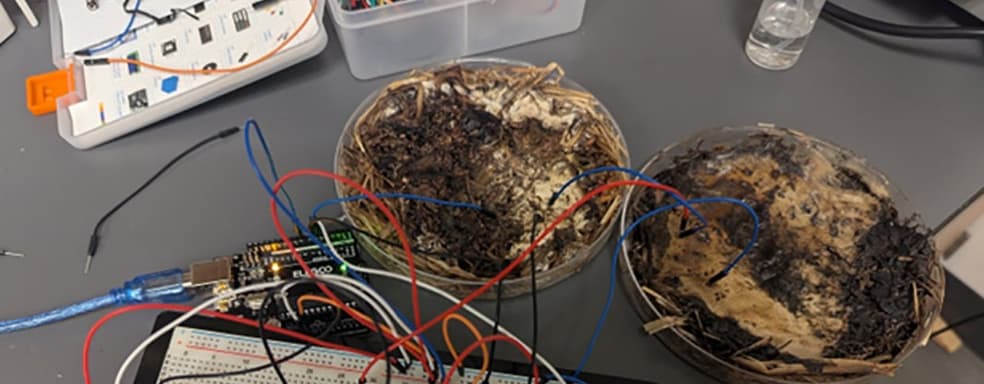
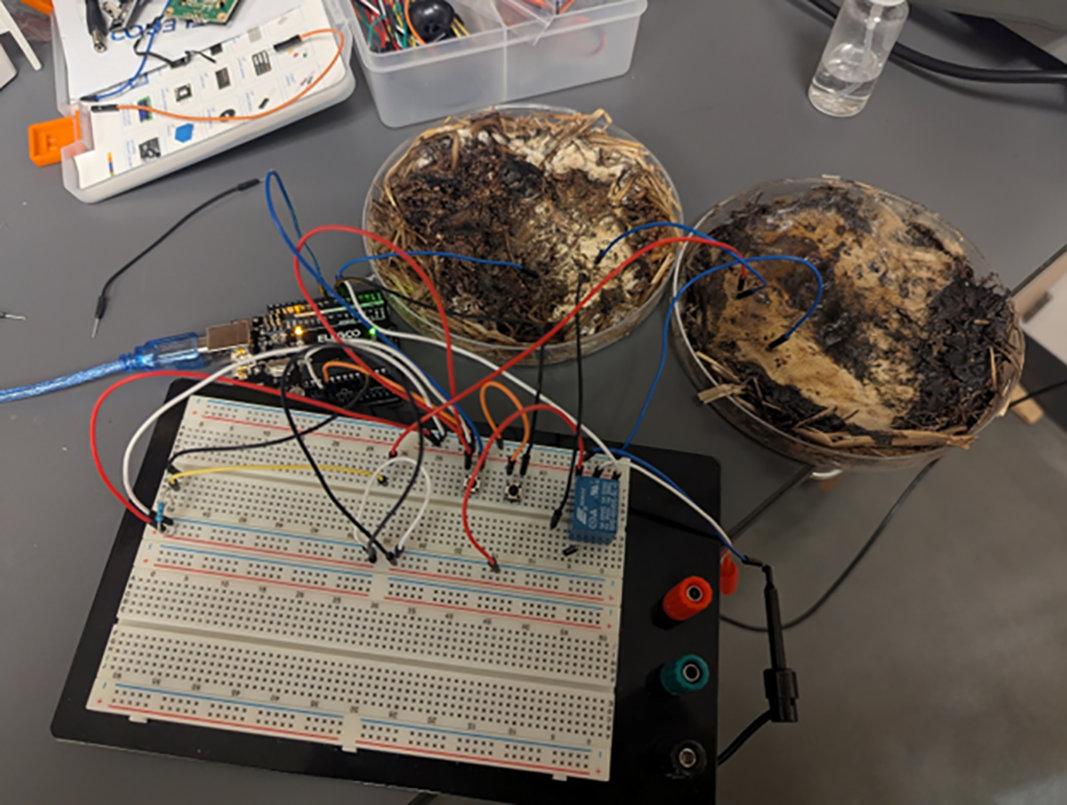
The researchers experimented with shiitake and button mushroom mycelium, testing its role as organic memristors. The mycelium was grown in Petri dishes, then dried to a solid state for several days, after which electrodes were connected and the samples were slightly moistened to restore their conductivity. Then, various signals and voltages were passed through the material, observing whether its resistance was able to "remember" the previous state.
The most stable results were obtained at a voltage of about 1 volt. In this mode, they were even programmed to work like RAM: operating frequencies reached almost 6 kHz with an accuracy of about 90%.
However, practical application of the technology is still a long way off. The researchers emphasize that it is not about storing gigabytes of data-this would require literally fields of mushrooms.
Nevertheless, the very fact that mycelium is able to store and reproduce electrical states opens the way to creating environmentally friendly and biodegradable computing systems. The key advantage of this approach, the authors say, is environmental friendliness: the fungal network does not require rare earth metals, consumes less energy, weighs less, and may eventually become a biodegradable alternative to traditional electronic components. In addition, shiitake mushrooms demonstrate resistance to radiation, making them promising for operation in extreme conditions, including space.
Never miss our newsAdd this site to your preferred sources to see us more oftenAdd on Google