Chinese Memory Won't Save the Market: Why CXMT and YMTC Won't Lower RAM Prices
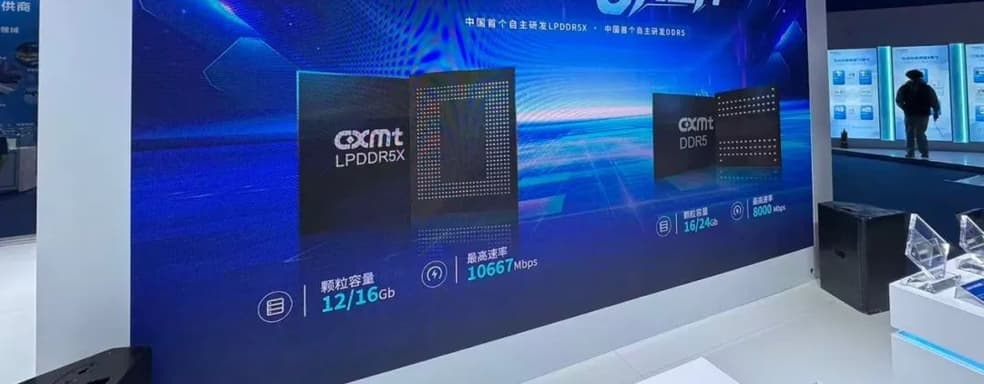
Amidst the DRAM shortage and rising DDR5 module prices, players and enthusiasts are looking to China. Many expect CXMT and YMTC to flood the market with cheap memory and drive prices down. An analysis of supply chains and technological constraints shows the opposite: there will be no cheap salvation from the East.
The situation in the memory market is increasingly complex. Price increases, in some cases reaching 200%, have made DRAM a seller's market. Expectations of price reductions due to Chinese companies are mistaken for two reasons: technological and political-regulatory. A key problem for CXMT is the lack of access to EUV lithography, necessary for efficient DDR5 production. The use of alternative methods, including SAQP, significantly increases the cost.
To produce the same amount of memory, CXMT requires 40–50% more silicon area than SK hynix. This reduces the yield of chips per wafer and increases the price. To achieve speeds around 8000 MT/s, Chinese modules also operate at higher voltages and generate more heat, which deprives CXMT of a price advantage.
Even with increased production, which barely covers China's domestic demand, companies like Apple, HP, and Dell are not ready for a mass transition. Validation procedures are complex and risky. As Professor Sim from Dong-A University notes:
There is no reason to choose a company without a history of quality and reliability when there are Samsung and SK Hynix.
According to DigiTimes, CXMT does not plan to dump prices and intends to raise prices to the level of Korean competitors. Geopolitics finally closes the issue: YMTC has been under US sanctions since 2022, and CXMT falls under US Department of Defense restrictions. In the near future, it is not worth counting on lower prices and solving the RAM crisis through China.
Never miss our newsAdd this site to your preferred sources to see us more oftenAdd on Google



![[Video] RIP RTX 5090 / GTA 6 Leak / Blizzard Broke WC3 / Cyberpunk 2077 Movie / Phantom Blade Zero Preview](https://media.ixbt.games/fit-in/312x/ixbt-data/1725650/17ffaa31-1709-4a05-91a5-0ee4b75897d7.jpg)