Why I Wanted to Quit Romeo is a Dead Man, But Fell in Love With the Main Madness of the Year
Trailers don't convey even a tenth of the madness that happens in Romeo is a Dead Man. Studio Grasshopper, led by Goichi Suda, takes the unspoken rules of game design, tears them apart, throws the scraps in the player's face - and drags them through time and space. And although the elements of this game seem flawed individually, together they form an explosive mixture that is simply impossible to put down.
No Sadder Tale Exists
The main character is Romeo Stargazer, a young sheriff's deputy from provincial Deadford, Pennsylvania. During a night patrol, he meets a mysterious girl, Juliet Dendrobium; a romance sparks between them — but the happiness doesn't last long. Juliet disappears, and soon the town is engulfed in something like a zombie apocalypse.
In one of the clashes with a local "white walker," Romeo loses half of his face. At the last moment, his grandfather, the eccentric scientist Benjamin, appears from a temporal rift and implants an experimental "Dead Gear" system into his grandson's eye.
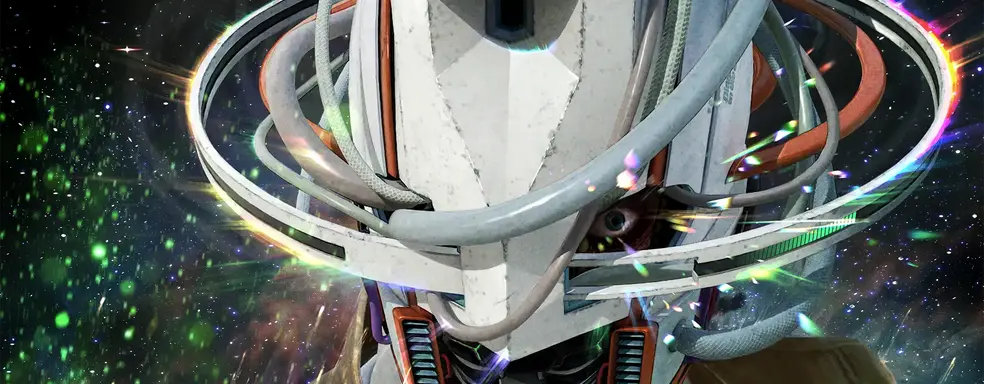
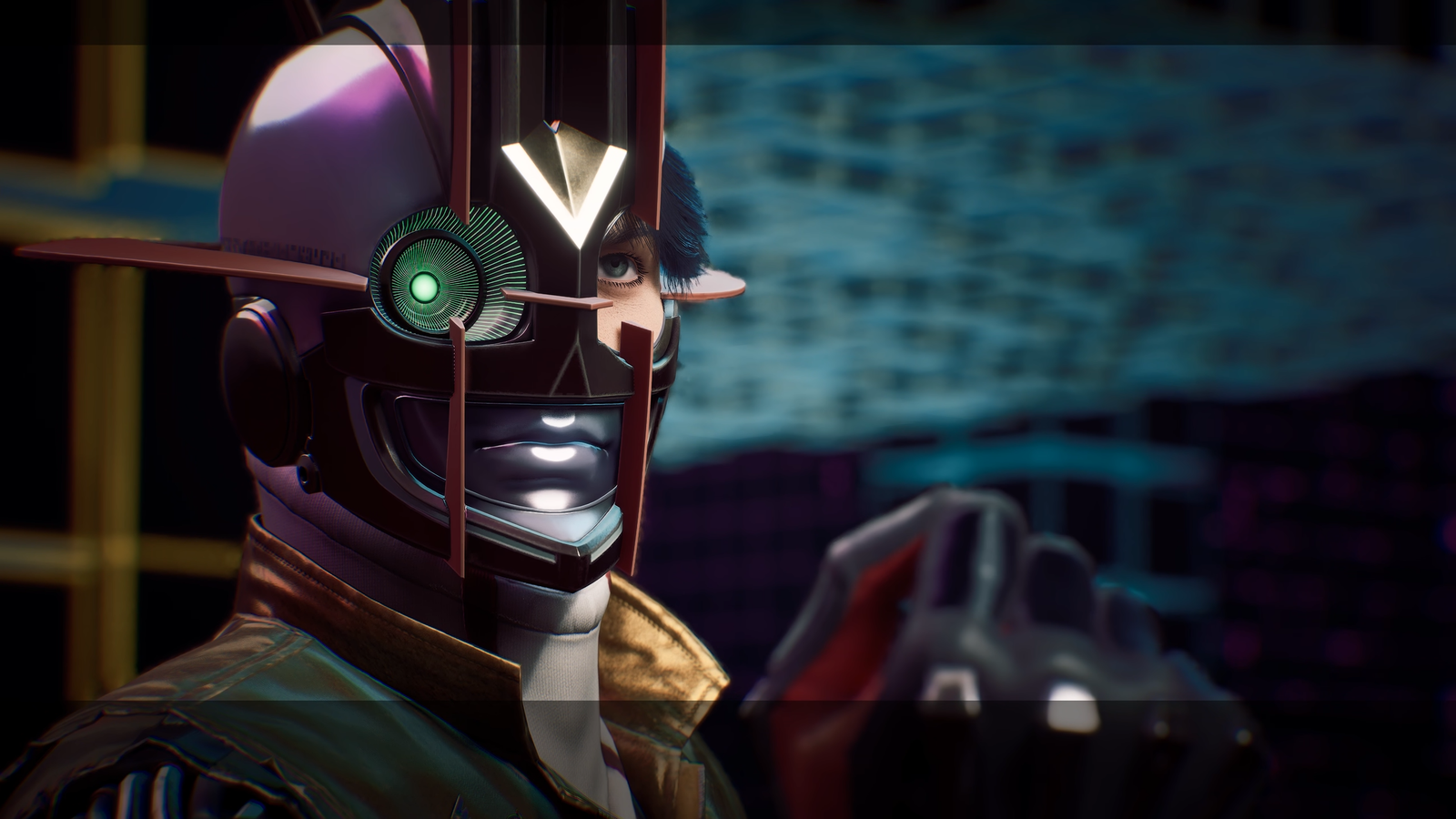
Thus, Romeo transforms into a Deadman. He sports a stylish helmet, almost like Yoshimitsu from Tekken, a mechanical arm, and a cyber katana. Benjamin himself, for a completely inexplicable reason, turns into a talking patch on Romeo's jacket. Or rather, Deadman's jacket.
The action takes place in 2019, after the singularity catastrophe that shattered reality. Control over the rifts is exercised by the FBI's Spacetime Police, where Romeo enlists.
Ironically, Juliet turns out to be one of the most dangerous offenders: wherever she appears, a catastrophe inevitably begins. Romeo is forced to chase her through eras and worlds, to kill his own beloved each time. Truly, "no sadder tale exists."
Kill the Past
It would be a mistake to perceive what is happening as another variation on the theme of Shakespeare. The parallels lie on the surface — names, the motif of tragic love, individual quotes. But the similarity ends there, and even these elements are not used as you would expect from a story where Romeo and Juliet meet.
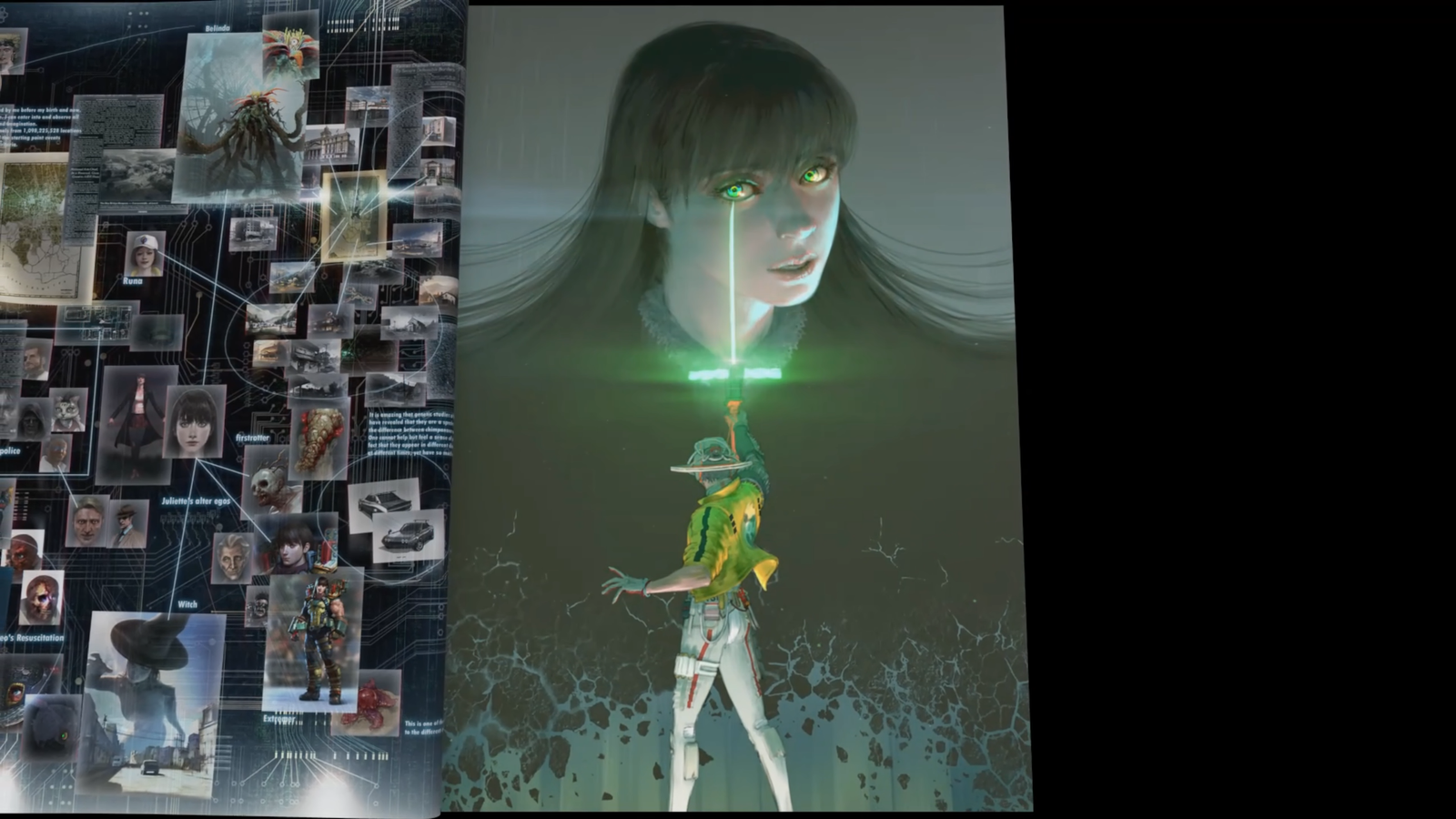
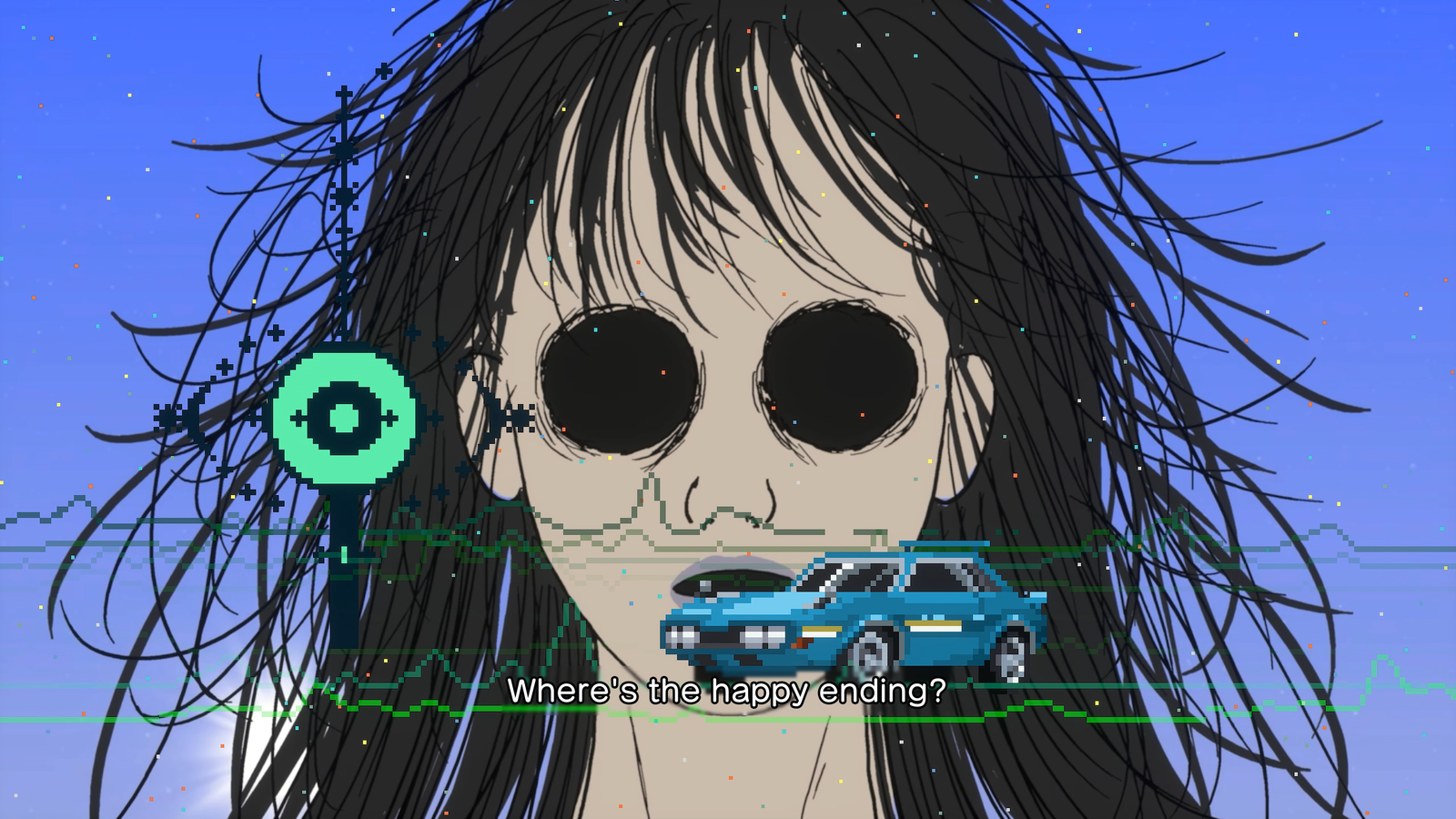
The story is presented in fragments — both in form and content. Suda51 does not work with traditional narrative; he works with emotions, images, and meanings — through comic panels, scenes in the format of a visual novel, music videos, classic cutscenes, and dialogues.
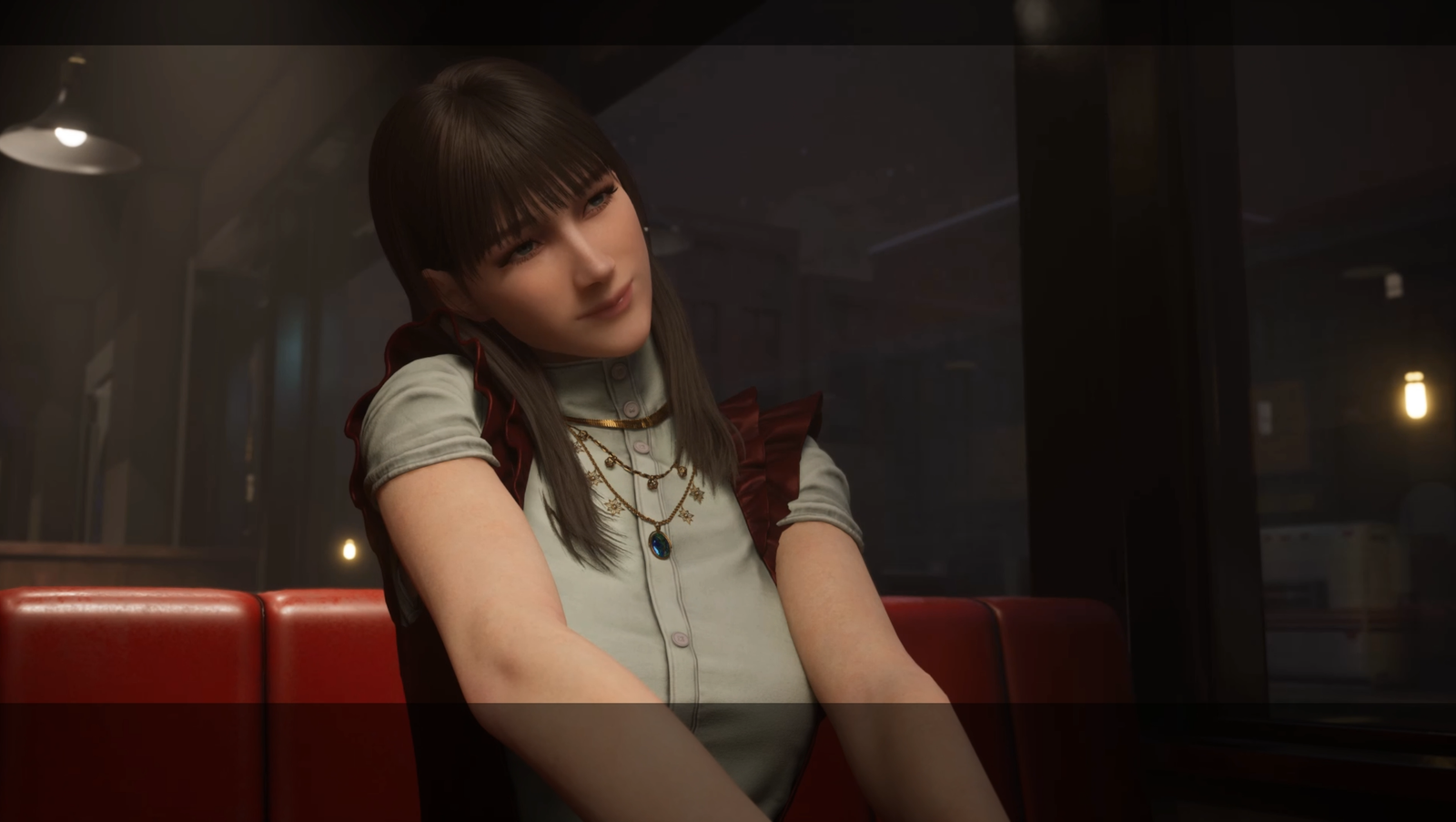
Especially memorable are the flashbacks in the cafe, where Romeo and Juliet simply sit at a table and talk. At first, everything looks almost carefree, but with each new scene, more and more tension and hidden anxiety appear. At the same time, the player understands from the very beginning that this story will not end well.
Separately, it is worth noting the impeccably selected music: it accounts for almost half of the emotional effect. If you get hooked on a track from this scene, it's Nothing Left, Don’t Know Why — Luby Sparks. After completing the game, I had to work hard to find it.
Finally, I note that a quite distinct psychological layer is hidden behind this journey through time and space. It is not necessary to analyze it to enjoy what is happening, but it noticeably adds depth to the story.
In essence, we have a mundane metaphor — deliberately hyperbolized, sad, and at the same time romantic. And, of course, directly related to one of Suda51's key themes — "kill the past."
Old School Slasher
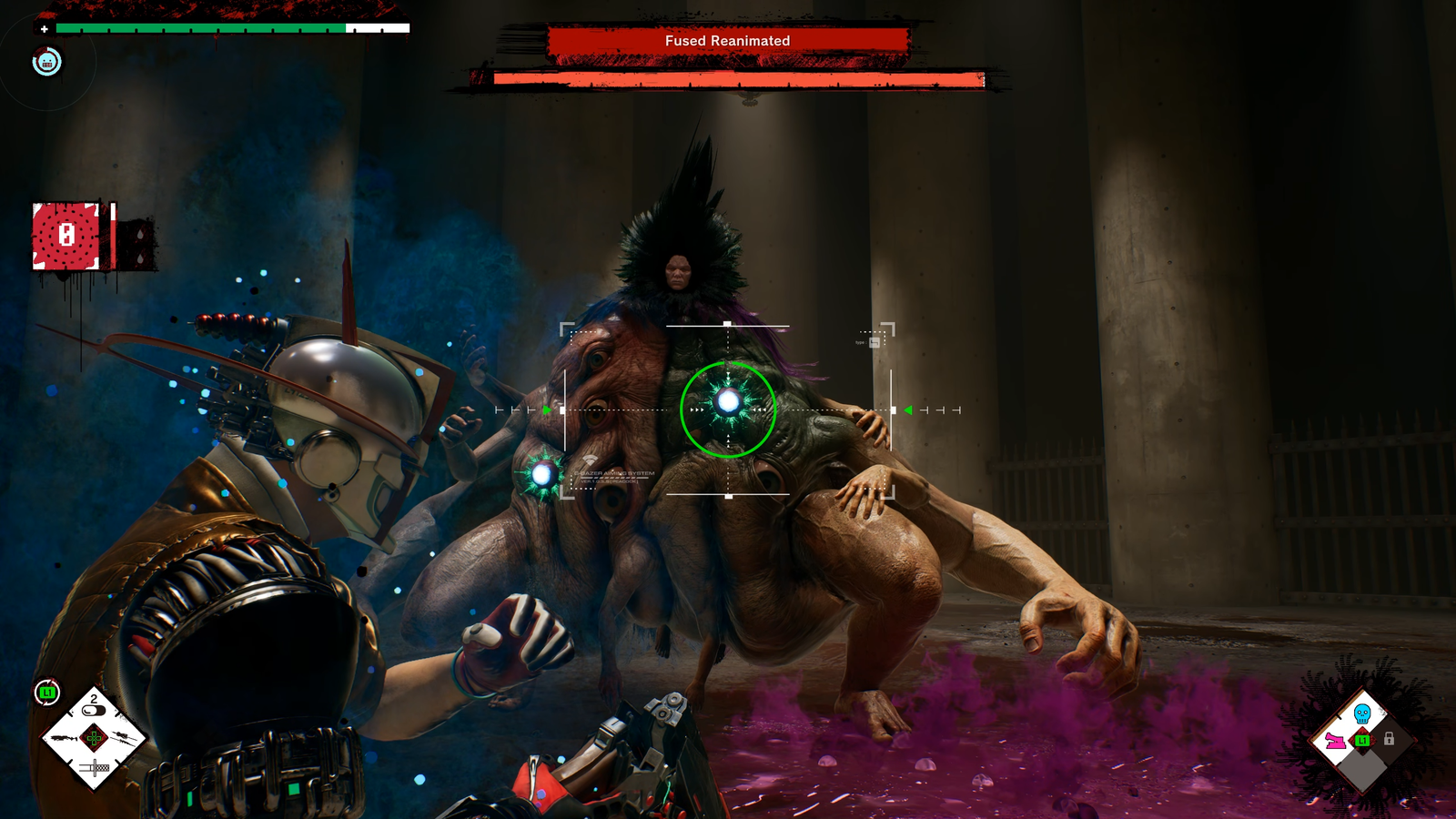
At its core, Romeo is a Dead Man is a classic linear slasher, divided into chapters with mandatory arena clearing and a boss at the end. If you caught the action games of the Xbox 360 era, the feeling will be familiar from the first minutes.
Each chapter represents a separate temporal anomaly, at the epicenter of which is invariably someone crazy enough to cause a local end of the world. Sometimes it's Juliet herself, who can nonchalantly tear off her head and turn into a giant in the spirit of "Attack on Titan" — and the game doesn't even try to explain it.
Ordinary opponents are repeated, but gradually new types of elite monsters appear, requiring you to look for an approach to them, especially when they gather together. Of the obvious minuses — some intermediate bosses return. In a longer campaign, this would certainly look like a serious drawback, but here it simply doesn't have time to get boring.
At the same time, the game does not turn into a simple corridor run from point to point. The levels are built on the alternation of "real" space and subspace. In the first phase, these are quite ordinary places — a city hall, a shopping center, and other locations where you systematically crush monsters and move forward until the path is blocked by a floating television. Upon contact with it, Romeo is transported to a digital labyrinth consisting of glowing cubic cells.
Inside, you will find simple puzzles (which do not develop in any way and are presented in criminal quantities in the finale), a search for key fragments, and attempts to open the next passage to the "real" level. Having collected the necessary elements, you return back — and again start shredding evil spirits. This scheme is repeated from chapter to chapter and sets a clear rhythm for the whole adventure.
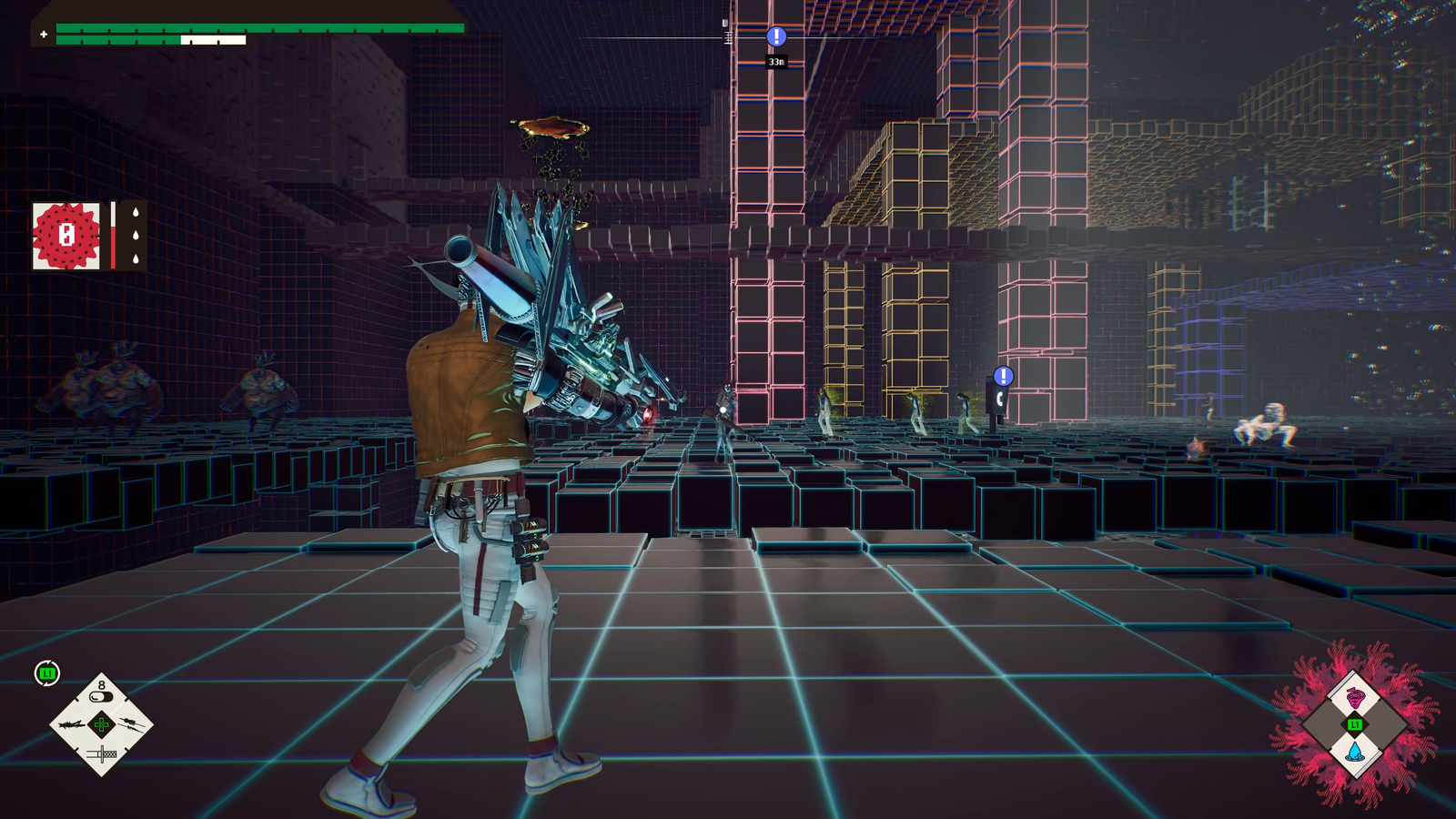
Sometimes subspace starts to tire. It becomes more complex in structure, but almost does not change externally, which makes it easy to get lost, start walking in circles, and frantically remember which television you fell into here from. Not critical, but the pace noticeably sags at such moments — after all, the main thing in Romeo is a Dead Man is battles.
The combat system relies on a standard set: light and heavy strikes, rolls, firearms. There is no stamina bar — after all, this is a slasher, not a soulslike. But the mechanics are far from the depth of Devil May Cry. Combos are as simple as possible: several animation options depending on the number of presses — and thanks for that. Most ordinary enemies are easily dealt with by simply clicking the light attack, often even without the need to dodge.
The secret is that, by cutting enemies, Romeo absorbs their blood. When the corresponding scale is filled, he can activate "Blood Summer" — a powerful area attack that turns the screen into a firework of confetti and liters of virtual blood. At the same time, the ability slightly restores health and is able to interrupt even boss attacks. In the heat of battle, it works almost flawlessly and clearly emphasizes the main principle of the local combat system: the best defense is offense.
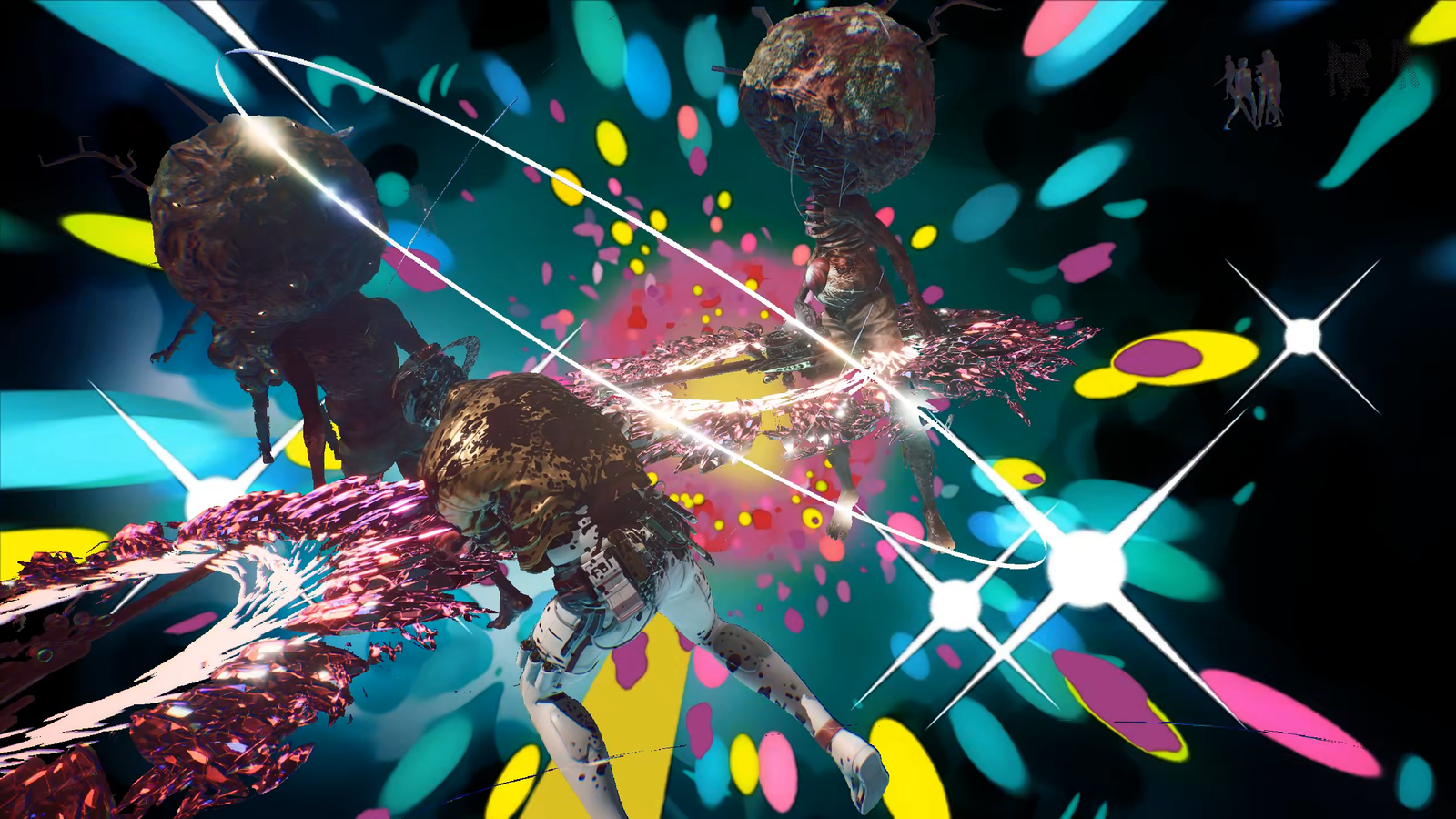
The arsenal opens up quite quickly: four types of melee weapons and the same number of firearms. Katana, heavy blade, mechanical gloves, paired spears; pistol, shotgun, machine gun, and rocket launcher. In the case of melee weapons, the differences are felt more at the level of pace and strength of strikes — faster but weaker, or slower but more painful. There is no deep tactical difference between them, so the choice mainly comes down to personal preferences.
But firearms differ much more noticeably. In the game, there are elite opponents and bosses with vulnerable points that need to be shot accurately, as well as small flying enemies like crows. It is known that firing a cannon at sparrows is a dubious idea, so you have to choose the appropriate weapon for different tasks.
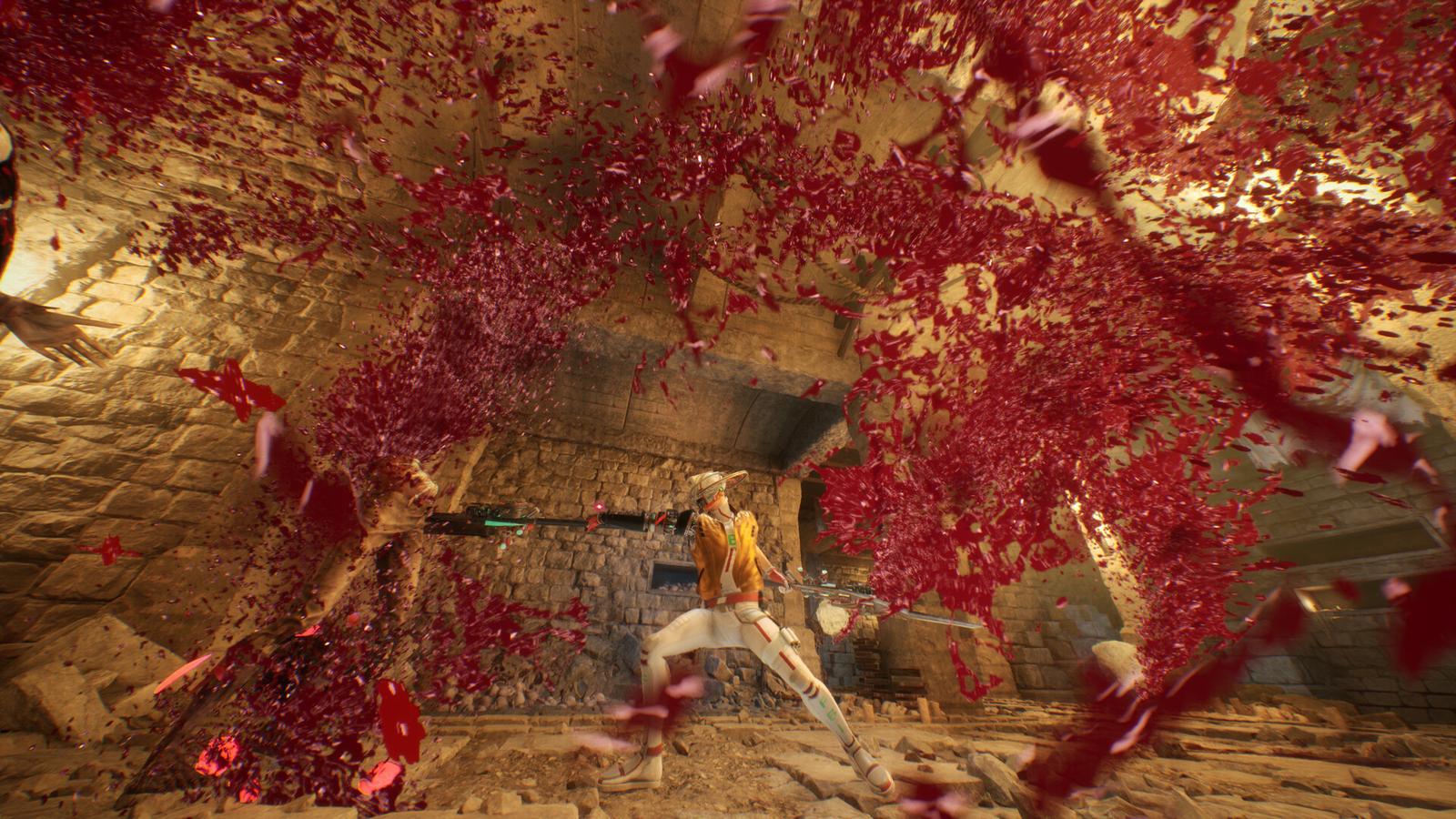
However, it is important to understand that the combat system does not reveal itself immediately and can be frankly annoying in the first few hours. Romeo feels heavy — he easily goes into a stagger from missed hits, aiming with firearms is long and inconvenient, and dense groups of enemies quickly punish any mistake. The lack of normal animation canceling when trying to abruptly switch from attack to dodge is also a hindrance — by modern standards, this looks quite archaic.
As you progress, the situation gradually improves. Leveling up allows you to speed up the accumulation of "Blood Heat", increase aiming speed, and other parameters that directly affect comfort in combat. Patches with passive effects appear — for example, reducing stagger when taking damage.
Yes, from the outside it looks like a classic scheme of "the developer first creates a problem, and then sells its solution", but within the game, such upgrades are really pleasing: with them, you begin to get a perverse pleasure from the chaos happening on the screen.
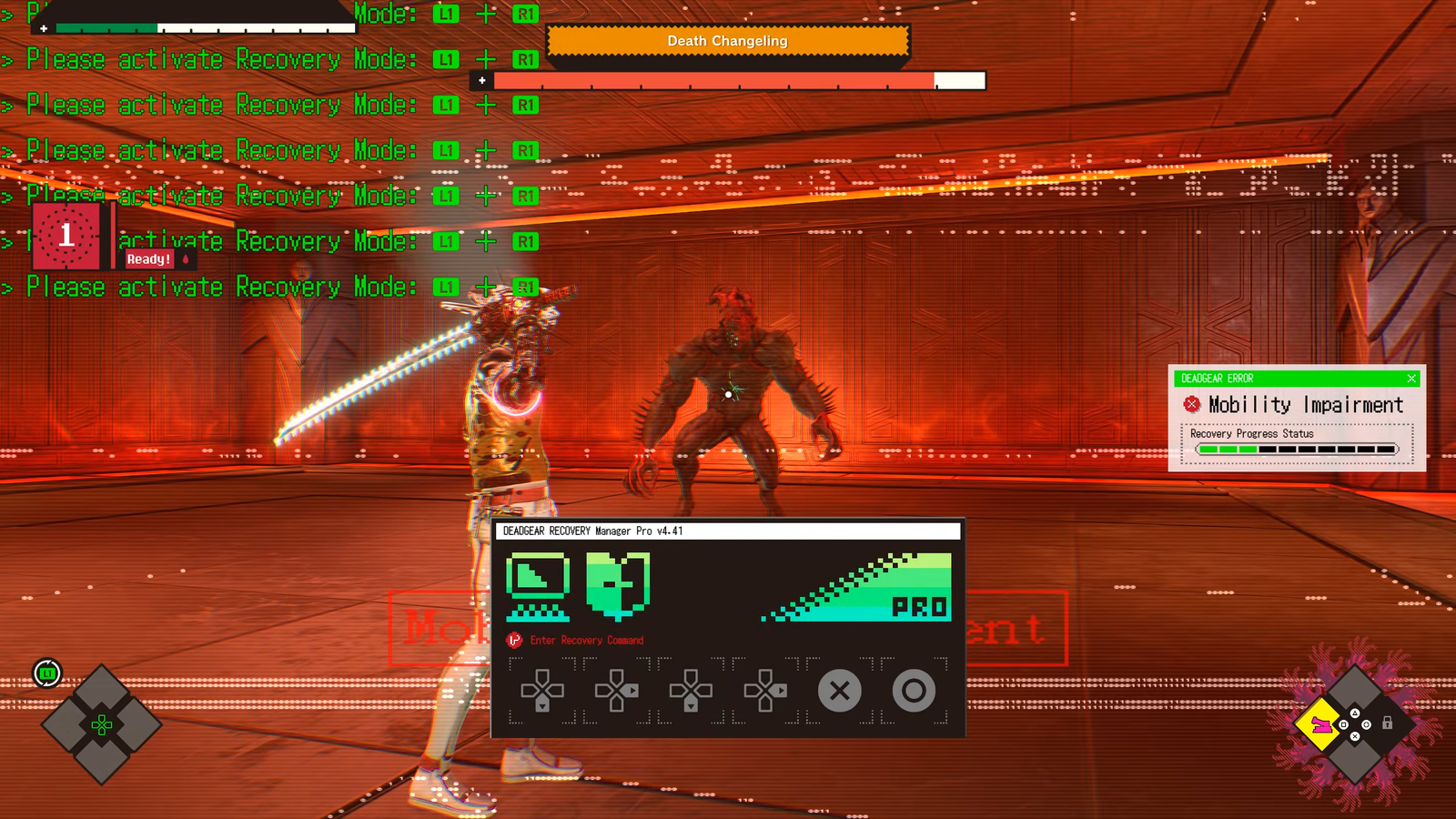
Negative effects deserve special mention. Some bosses and traps impose a debuff that temporarily disables weapons and abilities. To get rid of it, you need to quickly enter something like the "Konami code" while dodging attacks — any hit resets the combination. It sounds like a joke, but this is a fully conscious element of design, subordinate to two key principles of the game: eclecticism and gamification.
A Game Within a Game Within a Game
Outside of the hack-and-slash, Romeo is a Dead Man acquires additional mechanics. Formally, they could be dispensed with — what would remain is a basic, sometimes clunky slasher that is easily forgotten immediately after the credits. But Suda51 seems fundamentally unwilling to allow this. He constantly emphasizes that this is his authorial work, and not just a set of arenas with enemies. Therefore, everything around is generously stuffed with gamification and an eclectic mix of ideas, systems, and visual solutions that form the unique look of the project.
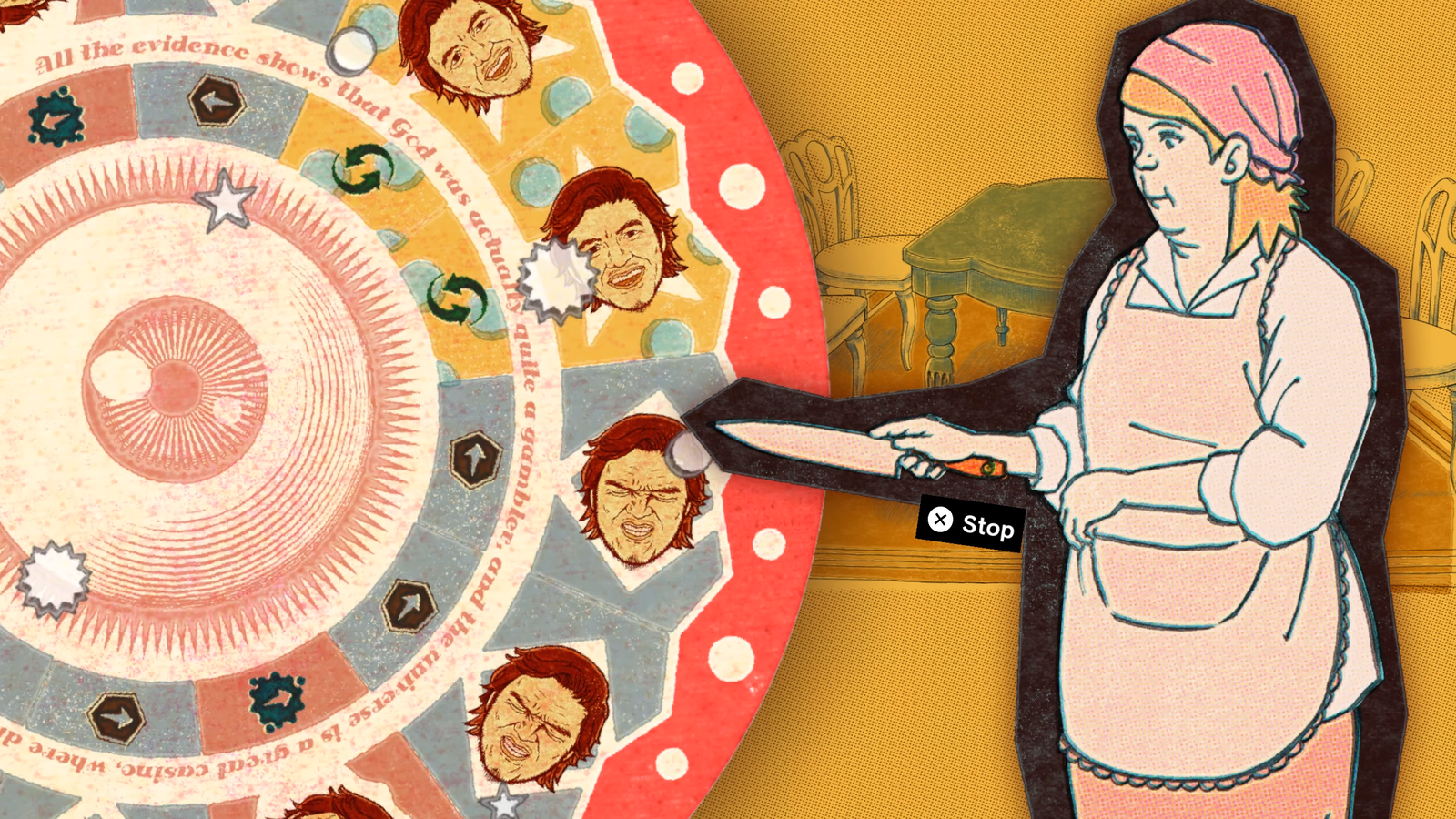
When Romeo dies, a roulette appears instead of the usual Game Over screen. It allows you to get a random bonus upon revival — increased defense, increased damage, or even resurrection right at the point of death.
With a certain skill, the arrow can be stopped where it needs to be, which in theory allows you to resurrect infinitely even in boss fights. This indulgence is disabled on the maximum difficulty.
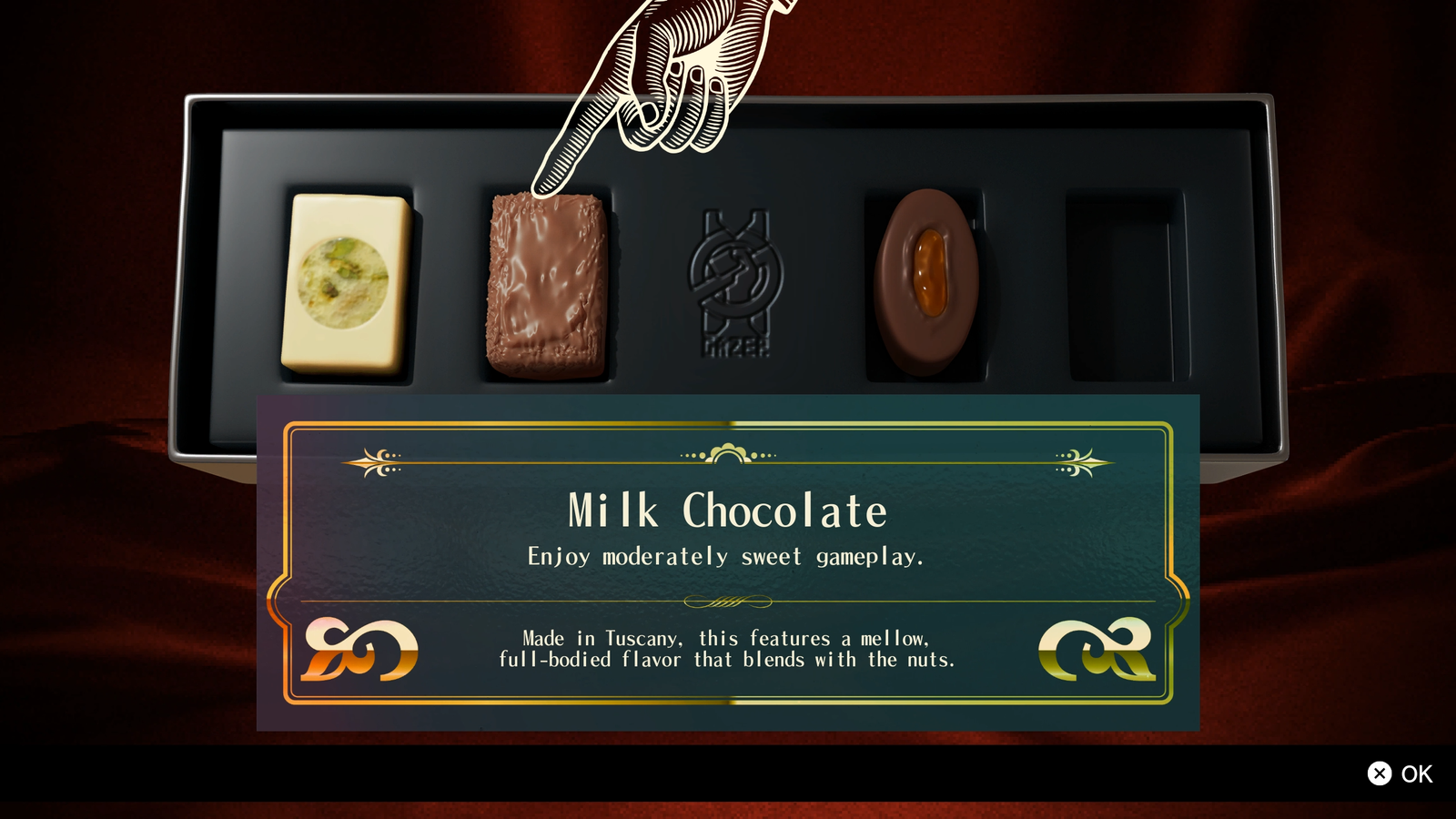
The difficulty, by the way, is also chosen in a non-trivial way — through types of chocolate. This is a direct reference to a scene from "The Grim Adventures of Billy & Mandy", which was shown in the 2000s on 2×2:
- White with pistachios is intended for the most cautious players;
- Milk with nuts is a conditional "normal" for a comfortable playthrough;
- Orange bittersweet with Indonesian cocoa is best left for later. On the first playthrough, it can quickly discourage any desire to play — Mikhail Shkredov will not let you lie.
Between missions, Romeo returns to the Space-Time Police starship "Last Night" — a kind of hub stylized as 16-bit JRPGs with a top-down view. It is inhabited by department employees and the hero's family, including his mother, sister, and an alternative version of his grandfather, who is quite alive and well.
Romeo's mother runs the kitchen. You can play a mini-game with her to prepare curry, and the strength and duration of the temporary bonus after eating depends on how successful everything goes.
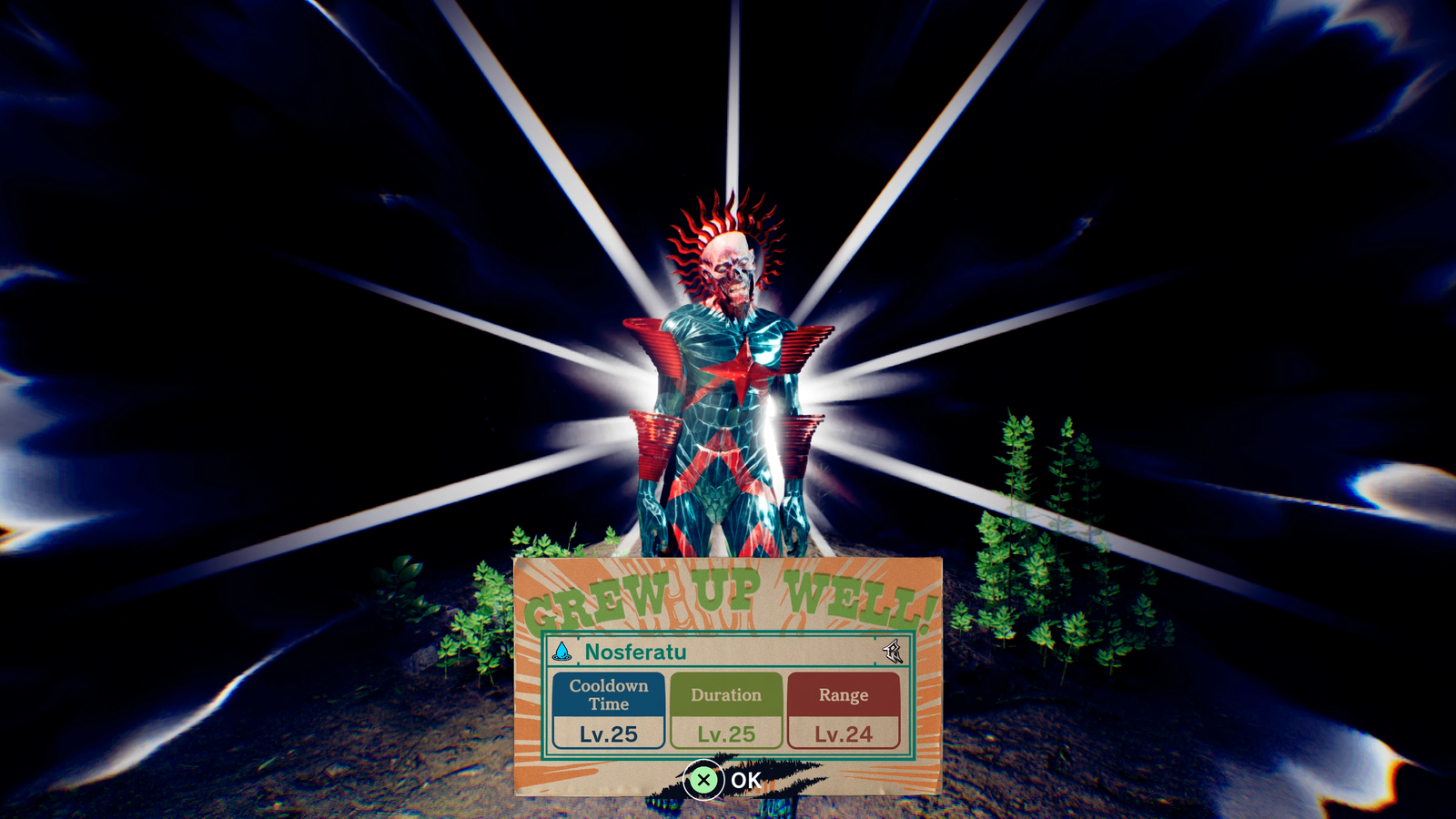
The sister is in charge of the orangery. From the seeds that fall from enemies, Romeo grows the so-called "Bastards" — zombie helpers with various abilities: setting up turrets, self-detonation, slowing field, healing, and other support options.
They can be crossed, arranging gladiatorial fights in which the winner absorbs the power of the loser. In battle, such creatures act as additional active skills, so it is not worth completely ignoring this system.
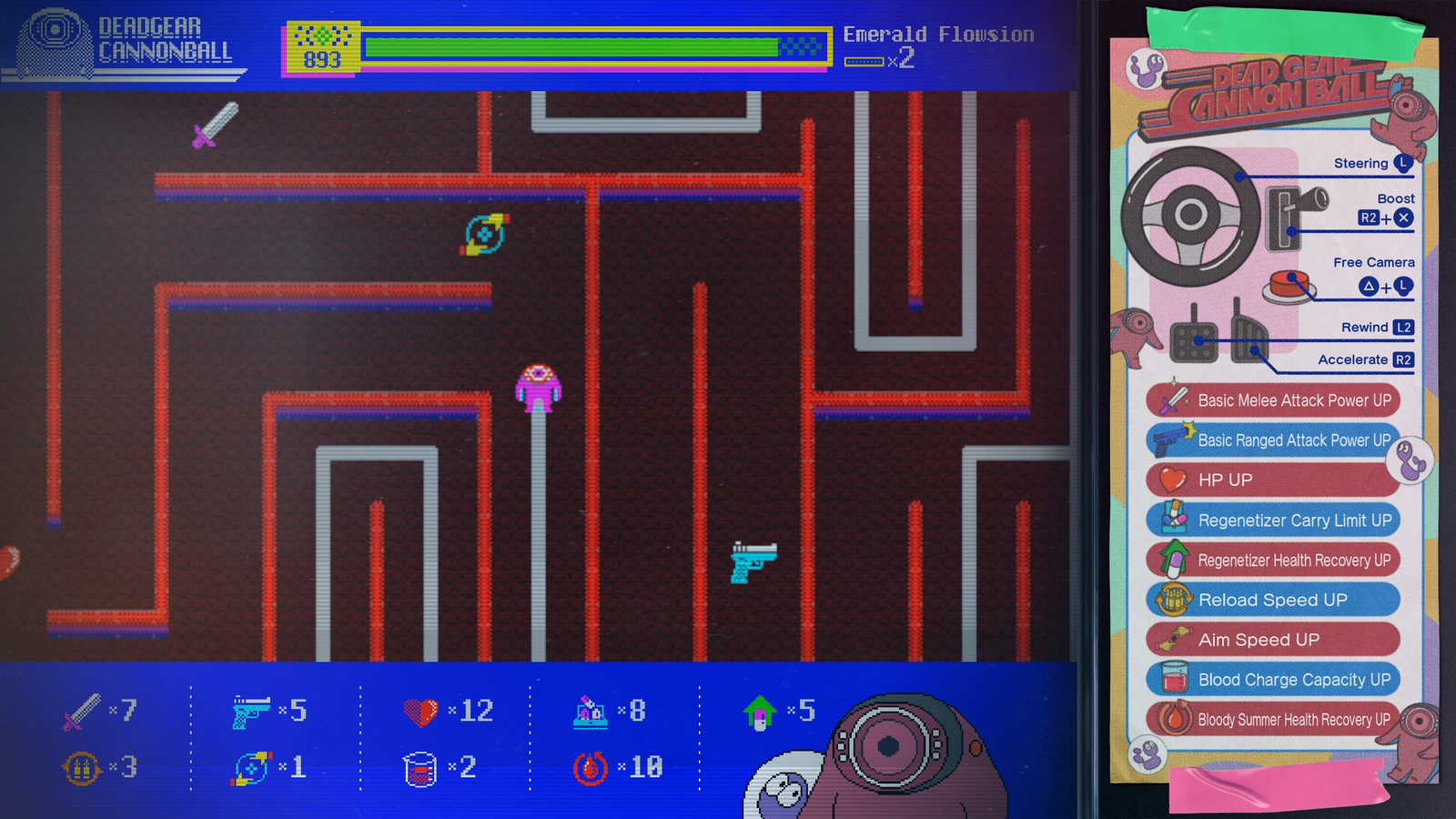
Character upgrades are also taken outside the usual menus with dry numbers. Parameter improvements take place in the DeadGear Cannon arcade labyrinth, clearly inspired by Pac-Man. Icons of health, damage, and other characteristics are scattered across the field, and the length of the available route is determined by the resource accumulated for destroying enemies.
The player's task is to pave the optimal path in order to collect the maximum number of power-ups in one go. As a result, character development turns into a kind of logistical mini-game. At the same time, the build can be reset and redistributed as many times as you like, adjusting the route to the current resources and needs.
The transition between chapters is also designed as a separate multi-stage system. To discover the next destination, Romeo first scans the universe, passing a kind of four-sided arkanoid: controlling four platforms at once, you need to hit the ball so that it hits exactly the center of the field.
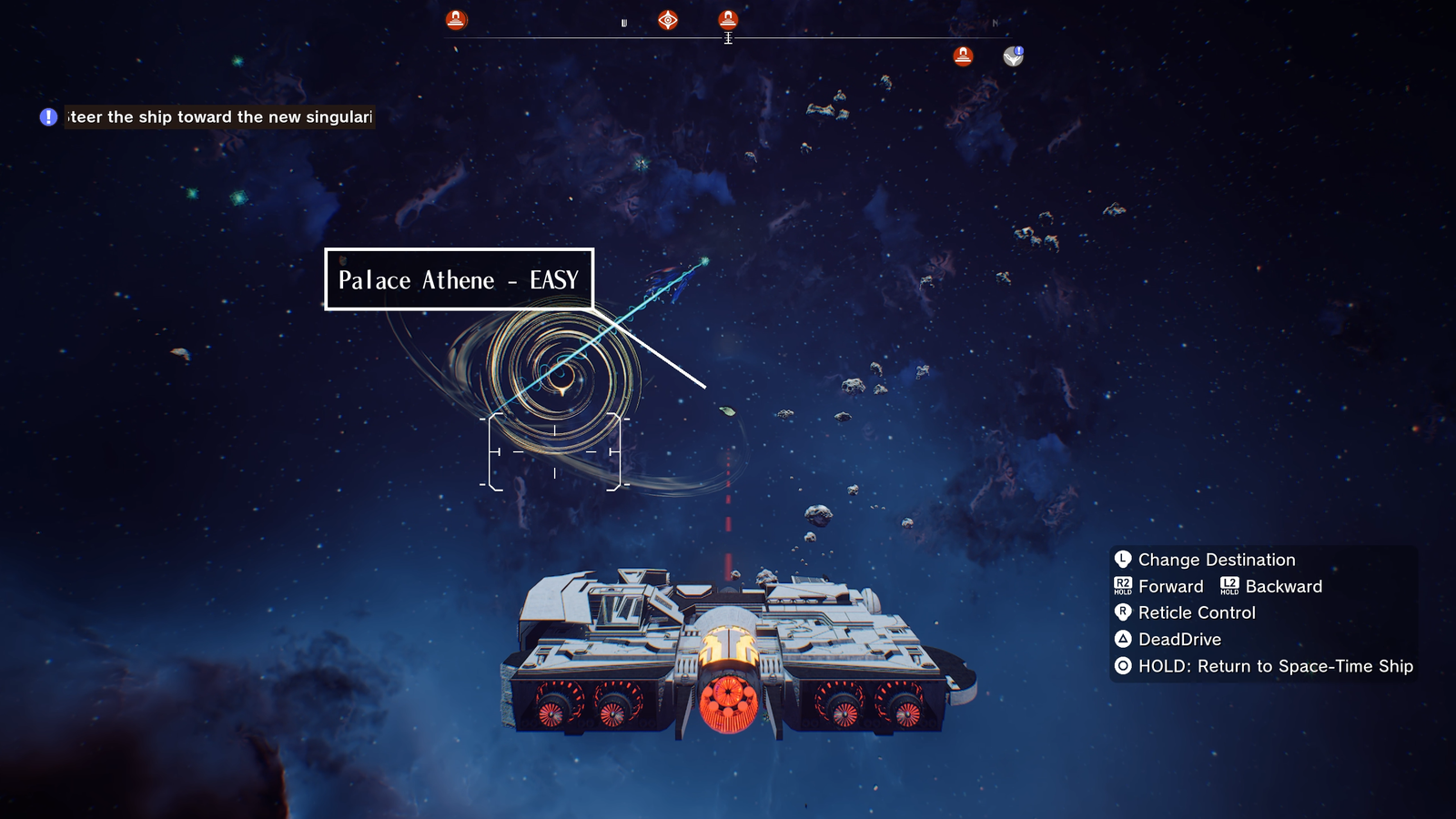
After that, the player can take control of the starship and go into open space. From here, you can either go to the next story chapter, or look into the "Palaces of Athena" — procedurally generated dungeons where patches with passive effects and additional resources for leveling are mined. At the same time, during the flight, it makes sense to intercept passing space debris: the collected materials are then exchanged for components to improve weapons.
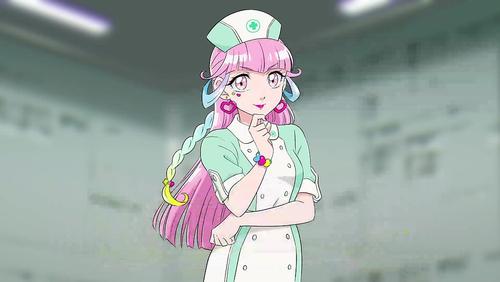
Think that's all? Not at all. Another strange activity is hidden in the hub — a visual novel designed as a ruthless dating simulator with the local nurse. To see the finale, you need to answer 99 questions in a row correctly. For each — only 10 seconds, and any mistake instantly resets the progress.
No special prizes are provided for this feat — only a short comedic scene at the end. It is almost impossible to pass this without hints: there is no Russian language, there is catastrophically little time, and you need to have time to read the question, the options, make a decision — and so almost a hundred times without a single mistake. It sounds absurd, but that's exactly how it works.
Managed Eclecticism
All this is easy to take for overload and designer whim, but with Suda51, every oddity works for one task — not to let the player get bored for a minute. The form of presentation is constantly changing, as if the game fundamentally refuses to be something one thing.
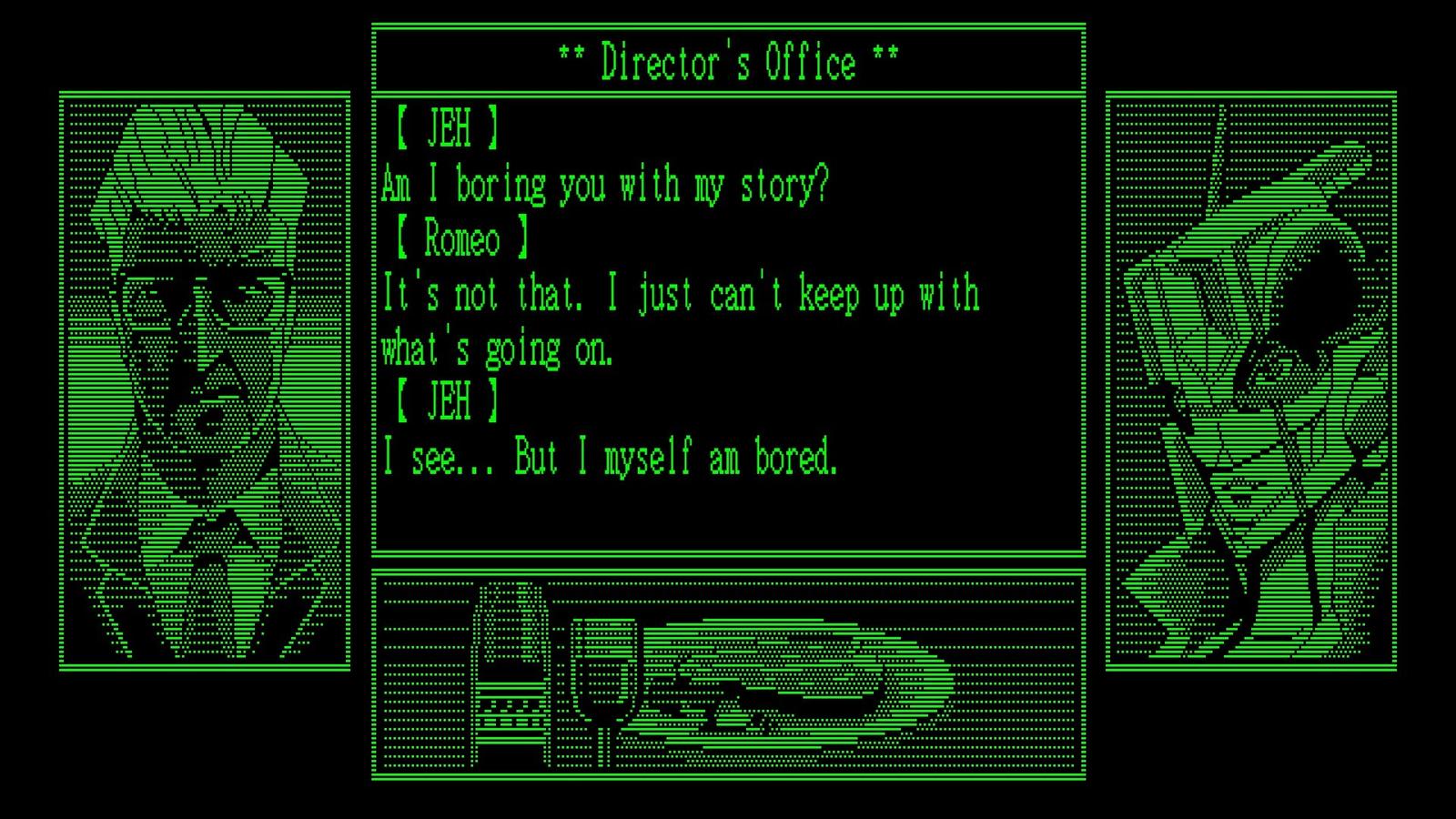
Its visual language is assembled from many seemingly incompatible elements. The settings menu suddenly looks like a ZX Spectrum interface, and individual episodes are colored in the characteristic green phosphor of old 80s monitors.
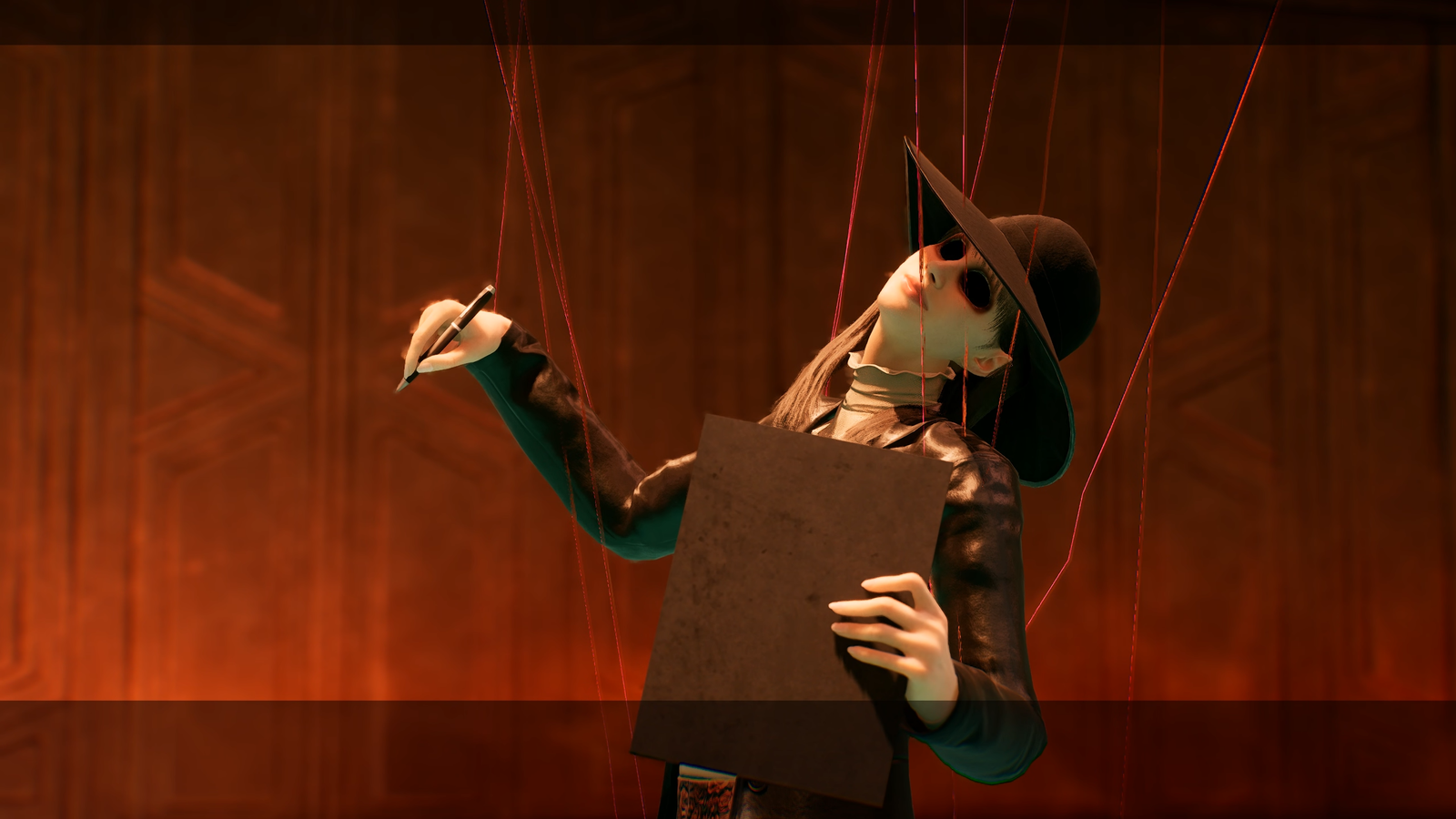
The chapters themselves also do not always remain pure slashers. One suddenly turns into a viscous psychological horror with a heavy, oppressive atmosphere and grotesque tasks where you need to control electrodes in a patient's brain to blow his head off. Another, on the contrary, unexpectedly crosses a pixel visual novel with a level in the spirit of Flappy Bird, which is replaced by an acid clip with Japanese hip-hop.
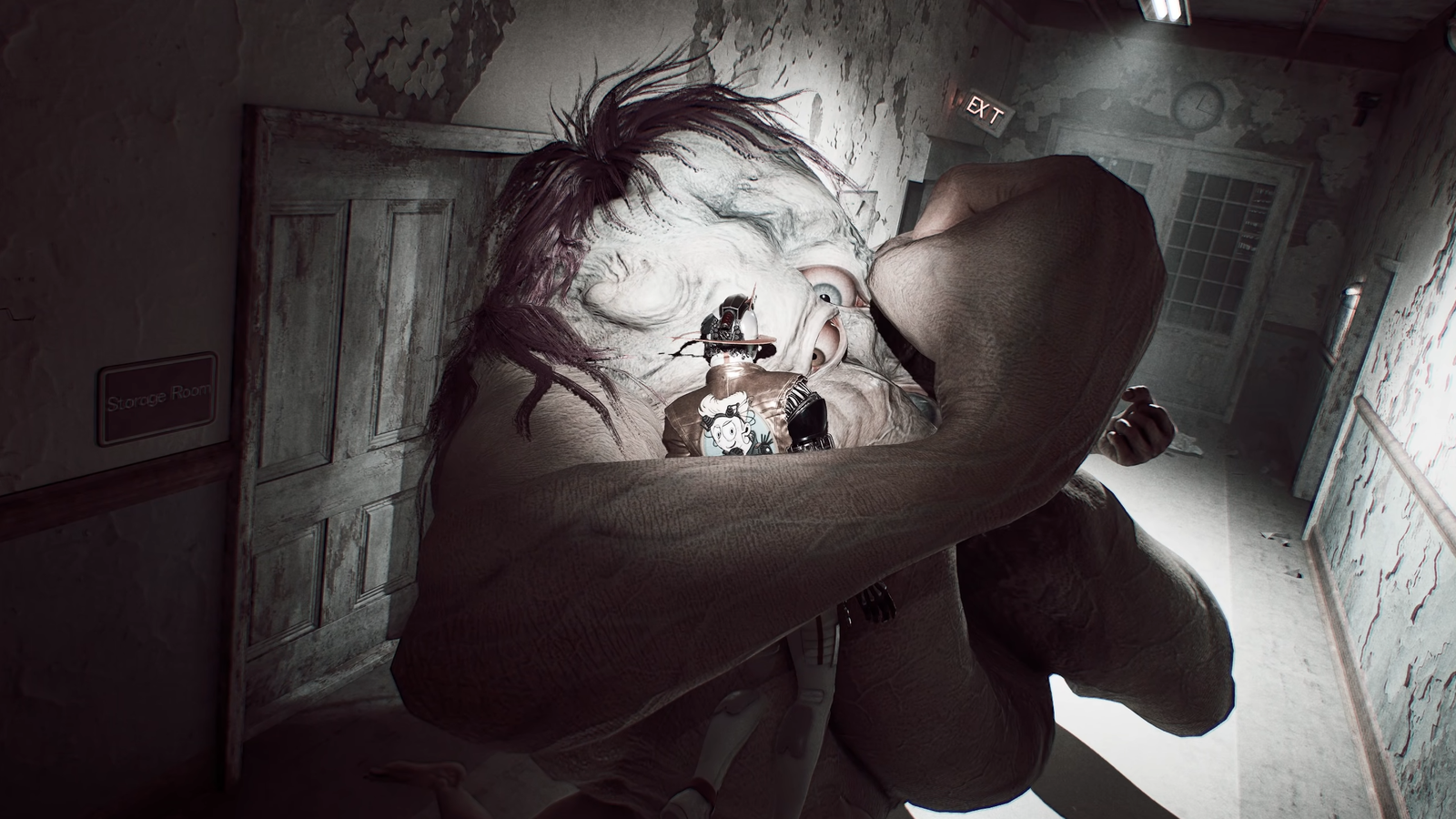
And this is not just a chaotic dump of visual tricks, but a fully conscious journey through different eras of media — from arcade machines of the 80s and 16-bit nostalgia to action games of the Xbox 360 era and modern 3D. The game is imbued with the aesthetics of different generations and frankly postmodern techniques.
References to anime, pop culture, trash horror and previous works by Grasshopper Manufacture itself are not masked, but demonstratively displayed. However, it is not at all necessary to recognize them all — you can simply rush forward, accepting what is happening as an attraction of constant surprise. Romeo is a Dead Man regularly reminds that it is primarily a video game that consciously plays with its own form.
The soundtrack is sustained in the same insane key as the whole game. Here, Japanese hip-hop, nu-metal and punk rock with fat guitar riffs, cheerful electronics, viscous dark ambient coexist, and in some places the classics suddenly break through — of course, Sergei Prokofiev's \"Romeo and Juliet.\"
On paper, such a cocktail looks absolutely incompatible, and out of the context of what is happening, most of the compositions are unlikely to make a strong impression. But inside the game, this eclecticism is perfectly arranged and ultimately works as a single whole.
Finally — about the technical side. At release, the game worked terribly: on an RTX 4070 Super in 1440p, I had to lower the settings from \"ultra\" to \"high\" and fix 60 FPS, otherwise there was no stability. However, the developers released a major patch that closed the most painful performance problems. After it, I got comfortable 100+ frames per second with DLSS on \"quality,\" which for some reason is called Very High here, without any particular compromises. In native 1440p on \"ultra,\" the game stably holds about 70 FPS.
Nevertheless, Romeo is a Dead Man did not suddenly become a technological benchmark. Animations are still rough in places, the detail is lame, and some scenes give out the budget. This is, of course, not about pixel segments — even in the best moments, the game as a whole looks like a neat remaster of an Xbox 360 era project.
But when it, like a roller coaster, takes you through the entire spectrum of emotions, you begin to turn a blind eye to it. During one playthrough, you will have time to be scared, laugh, experience Spanish shame, and enthusiastically chop enemies into bloody shreds. Despite all the absurdity of what is happening, everything adds up to a holistic, vivid experience that stays in your memory for a long time.
Romeo is a Dead Man is able to tire or annoy with its overload, but almost always returns interest with another unexpected move — a sharp change of genre, a suddenly touching scene or another insane episode. This is a unique author's work that is both annoying and charming, and it is for such emotional amplitude that you want to forgive her a lot. And at the end they show a cartoon. Literally — anime in the style of \"Gundam.\"
This is not \"Wolf with Eggs\" from \"Electronics.\" This is Romeo is a Dead Man from Grasshopper Manufacture.
Verdict
Romeo is a Dead Man is one of those games that, according to all the rules, should fall apart. Crooked combat, outdated solutions, frankly controversial design — in any other situation, this would be enough for a verdict. But here everything works the other way around. Before us is an eclectic, impudent, sometimes repulsive, but truly alive author's project that demonstratively spits on the mainstream.
This is not an ideal and not even just a good game. But this is a \"Game\" with a capital letter. Everything here, from the main menu to the final credits, is done with a clear understanding of the idea and a desire to give the player an experience that is not available anywhere else. Strange, sharp, sometimes uncomfortable, it touches the soul and is remembered much more strongly than dozens of carefully verified releases that disappear from memory in a week.
If you are tired of safe projects or just love concentrated \"Japanese stuff,\" try it. Either you will fall in love with this author's frenzy, or you will hate it. It definitely won't leave you indifferent.
Personally, I would gladly \"kill the past,\" erase my memory and go through it all again, without having the slightest idea what surprises the geniuses and madmen from Grasshopper Manufacture have prepared.
Never miss our newsAdd this site to your preferred sources to see us more oftenAdd on Google