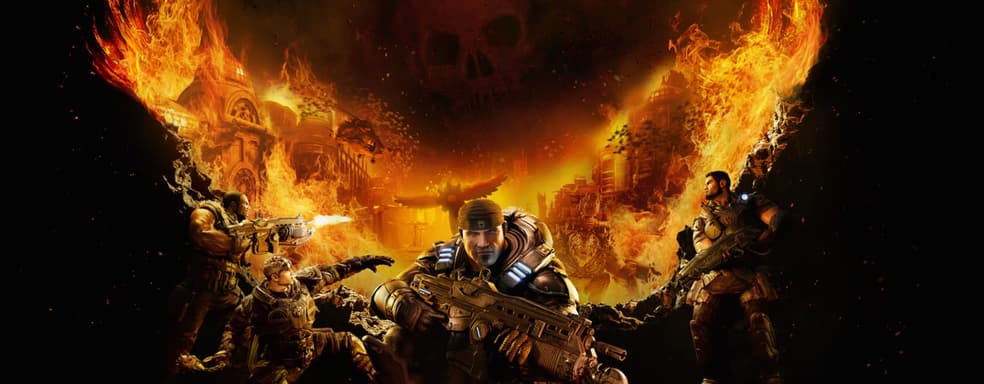
Made for newbies, played by veterans. Gears of War: Reloaded Remaster Review
Today, the remaster industry has become as significant as the production of original games. Therefore, the next re-releases of projects have become commonplace. Most often, such releases are a simple way to capitalize on loyal fans and new players unfamiliar with the classics. Gears of War: Reloaded falls into this category, which will be discussed in the review.
There are always games that become symbols of their era. For the mid-2000s, Gears of War became such a symbol - a harsh, dark third-person shooter that set the standards for the genre and secured Xbox 360's status as a platform with its own franchises. The cover mechanics, the signature heaviness of the characters, the iconic weapon with a chainsaw - all this formed the DNA of the series.
After a successful start, the franchise developed, acquired new story arcs, and experimented with scale, but the first part always remained the starting point - the very step that started an entire era. In 2015, the developers tried to revive interest in the game with the Ultimate Edition, and now, a decade later, Microsoft and The Coalition are once again trying to introduce the young audience to the classics by releasing Gears of War: Reloaded.
However, the release went almost unnoticed. There was no high-profile advertising campaign, no coverage at major exhibitions, and no work was done to attract a new audience. As a result, the game was released very quietly. In the first 24 hours, the numbers were modest: in Steam, the simultaneous online reached 4.8 thousand people. The developers did not report statistics on consoles.
Key feature of the remaster
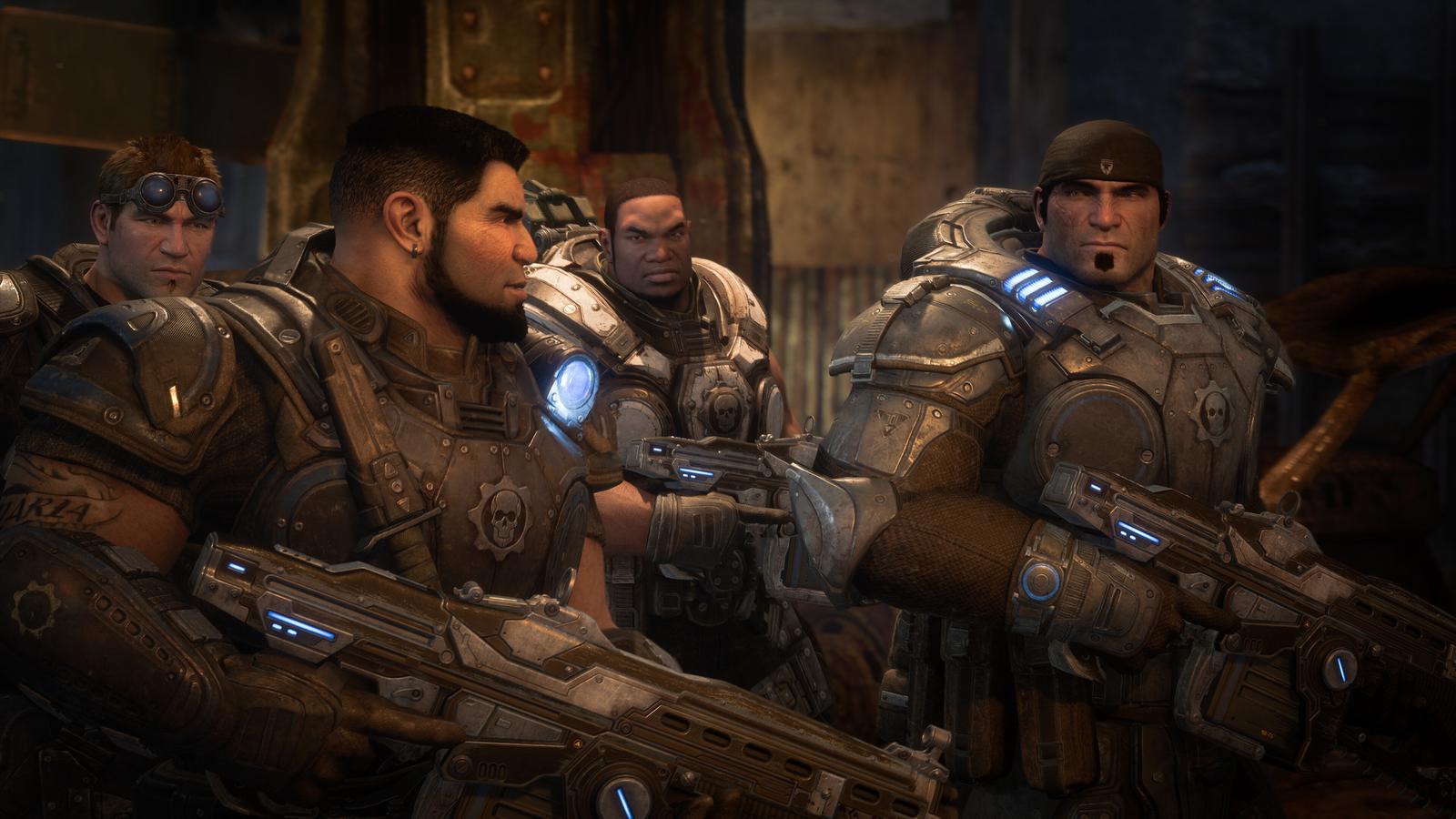
Gears of War: Reloaded has been updated for modern hardware. The edition received HDR support, as well as 120-240 FPS. On paper, this looks impressive compared to the original 2006, which at the time ran in 720p at 30 frames.
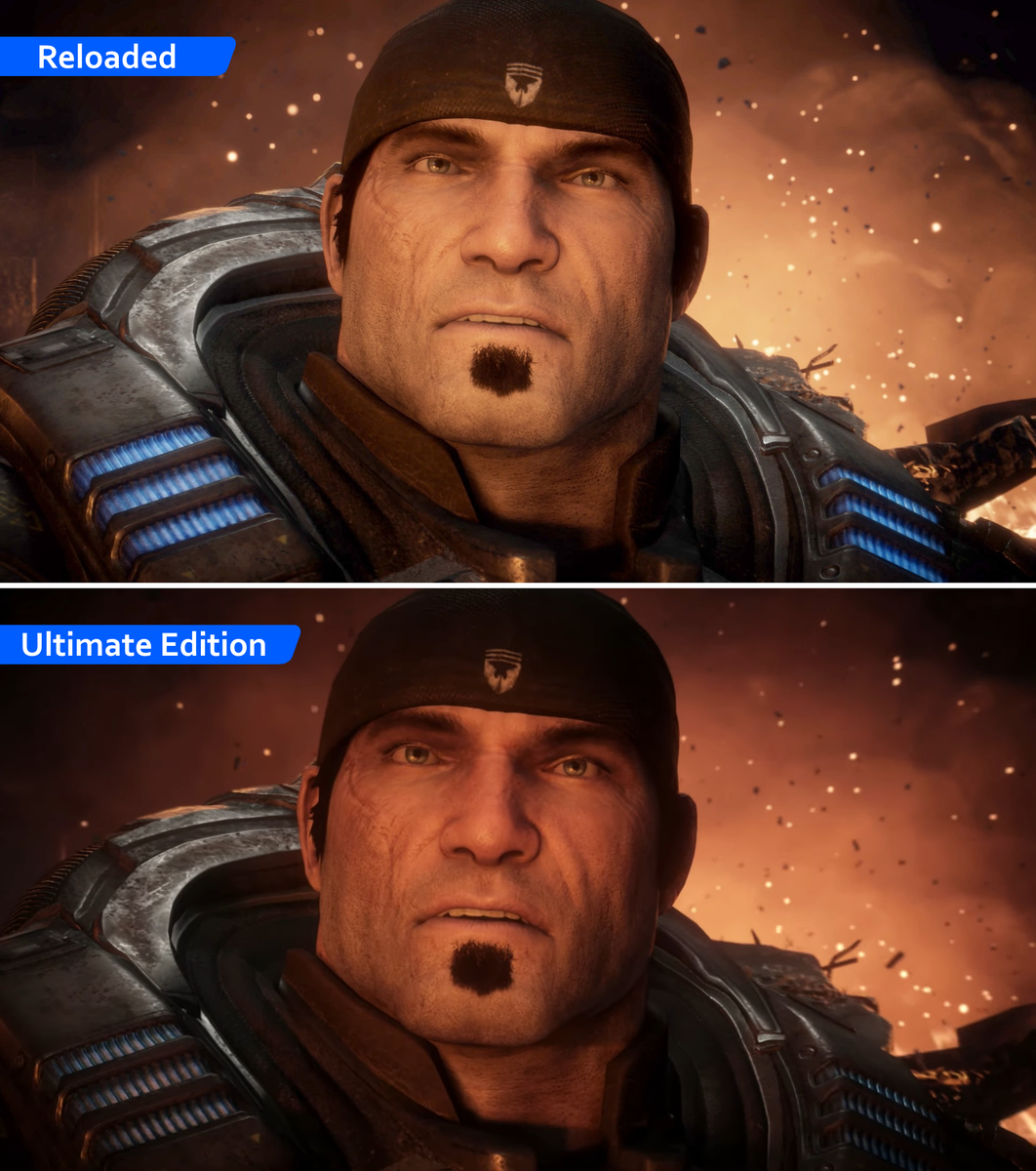
However, it was only on the second day after the release that it was possible to evaluate all the features of the remaster. On the first day, users could not set "ultra" graphics: the game crashed after restarting with the settings installed. But even after installing the patch, the picture does not impress. The sharpness of the textures remained at the same level. The only noticeable change is related to the reworking of the lighting - it has become softer and more expressive due to the transfer to Unreal Engine 5.
However, the changes are limited to this. The visual appearance is still close to what players saw in the Ultimate Edition. This also explains the support for 4K monitors, which was present in the previous re-release, and the system requirements for PC owners. To play with the minimum settings, you need GTX 1660/1050 Ti and their counterparts from AMD and Intel. Because of this, comparing the new re-release with the old one does not play into the hands of the first.
The plot remained unchanged
This is the same story about the war between humanity and the Locusts, presented in the spirit of a category "B" action movie: brutal soldiers continue to fight in the ruins of their own civilization with an enemy that surpasses them in strength. And all this is seasoned with the spirit of combat brotherhood, where there is everything: teamwork, discussions of current tasks, conflicts, as well as ridiculous, but funny moments.
The structure of the narrative itself is simple: the player is guided through a chain of combat operations, where story inserts serve more as a background for another battle than a full-fledged dramatic tool. The dialogues are often extremely straightforward and even primitive, which only emphasizes the age of the game.
Nevertheless, the atmosphere in Reloaded still works. The gloomy ruins, the gray-brown palette, and the constant anticipation of the next shootout create a sense of involvement in this endless war. The musical accompaniment keeps the pace and drive of what is happening at each stage. And although the story offers neither surprises nor depth, its presentation with massive heroes and brutal staging is still able to give the player pleasure.
Therefore, the local scenario and atmosphere today are a good example of what shooters were like twenty years ago. For old fans, this is a return to a familiar world, for new players - a meeting with an era when harsh and straightforward pathos dominated.
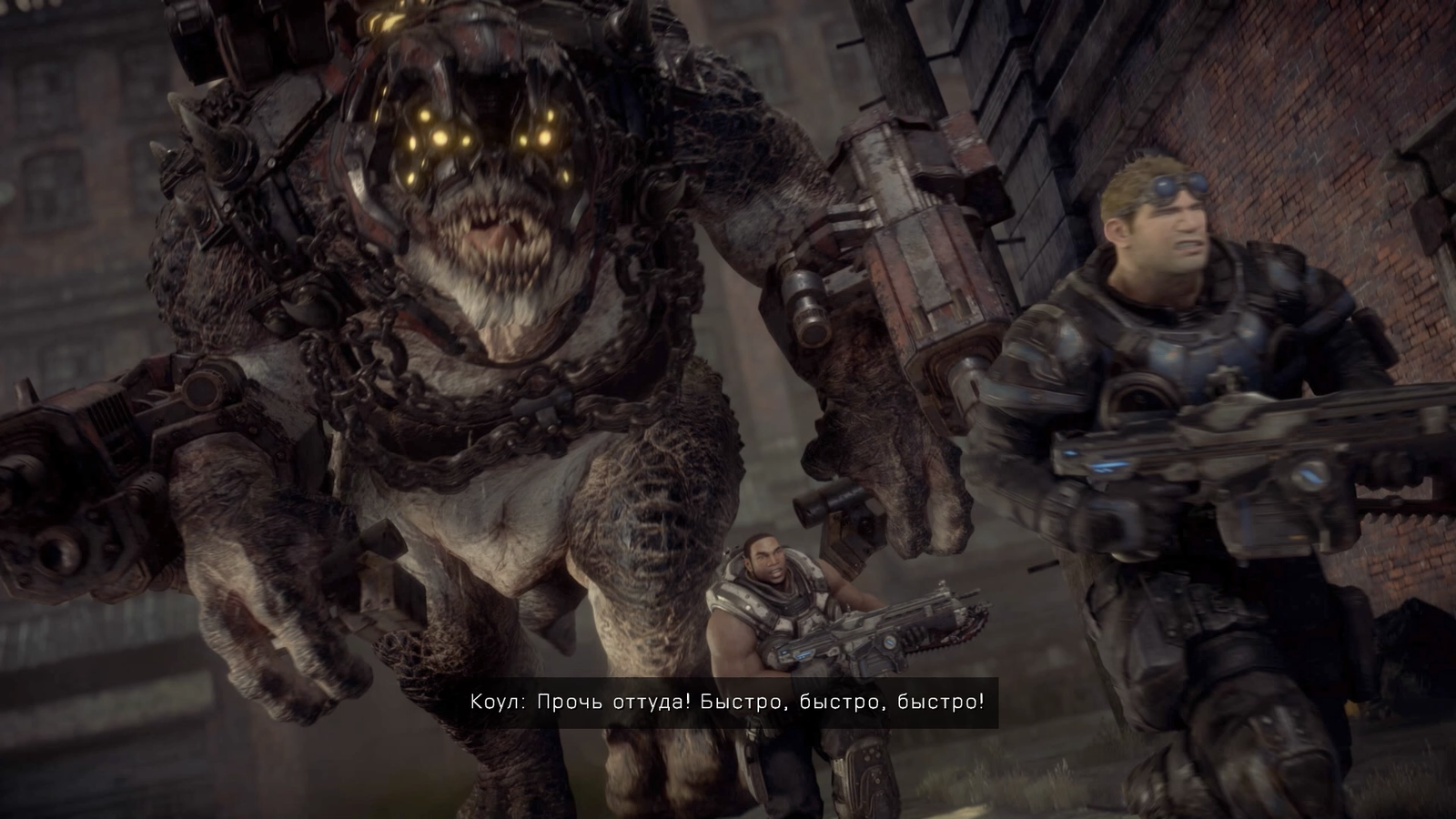
Gameplay of the 2006 model
This is a corridor shooter with a pronounced structure of "corridor - arena - wave of enemies". Movement through the levels is built linearly: short passages are connected to small areas for battles, where the player needs to defeat all opponents in order to move on.
The main unique mechanic - active reload - still distinguishes the game from many shooters. It makes the player more effective in skirmishes, but requires attentiveness. If you press the button in time during the reload animation, you can not only speed up the process, but also increase the damage dealt. An error in such a QTE increases the reload time. This system still remains a rare element of the genre and looks fresh in other projects.
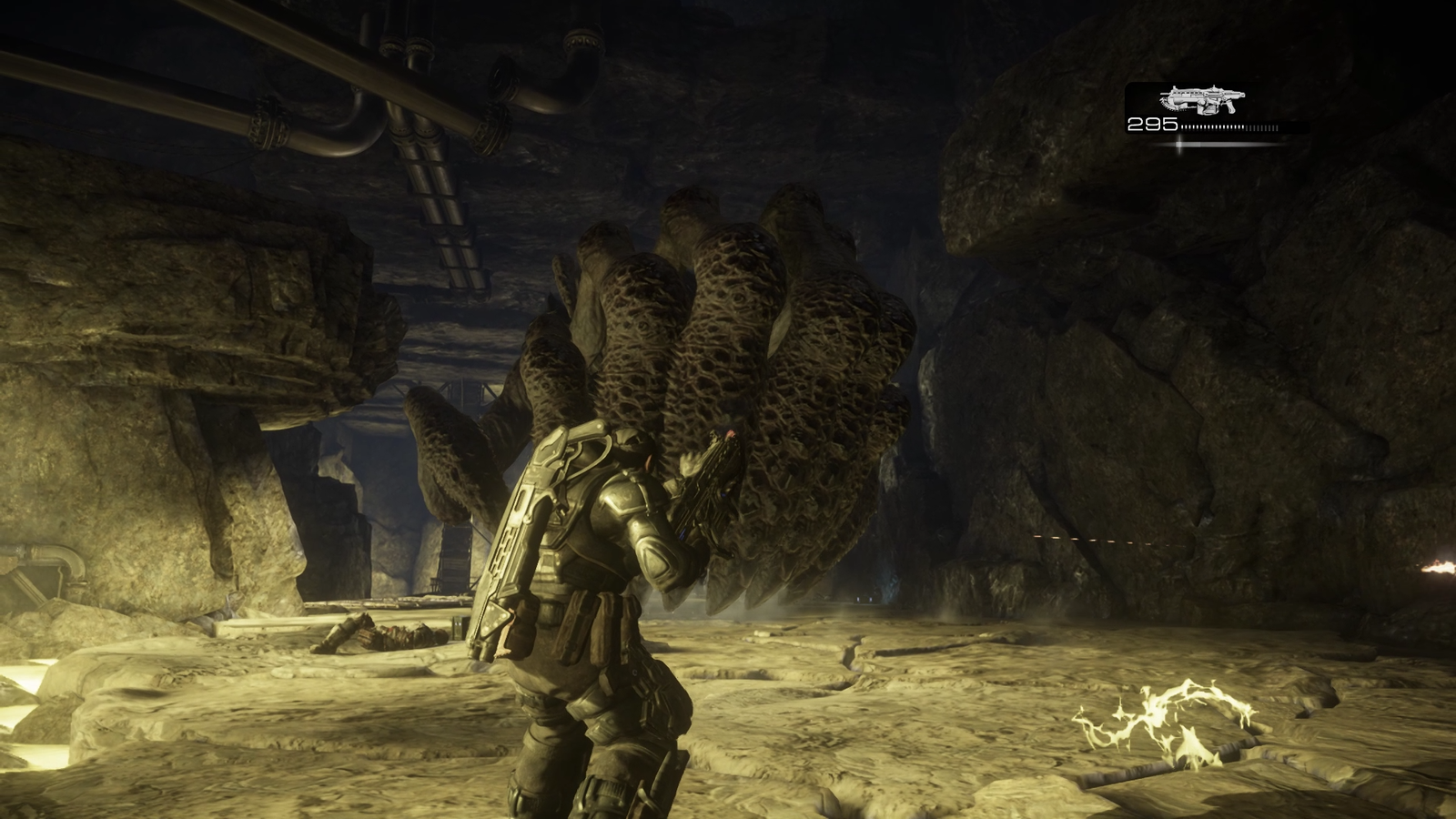
Otherwise, the obsolescence is noticeable. Movements seem heavy and a little wooden, and the controls are overloaded: one button is responsible for cover, roll, run, and jump over an obstacle at once. Because of this, the character periodically does not do what is required in a particular situation. For example, instead of taking cover, he suddenly rolls right under enemy fire.
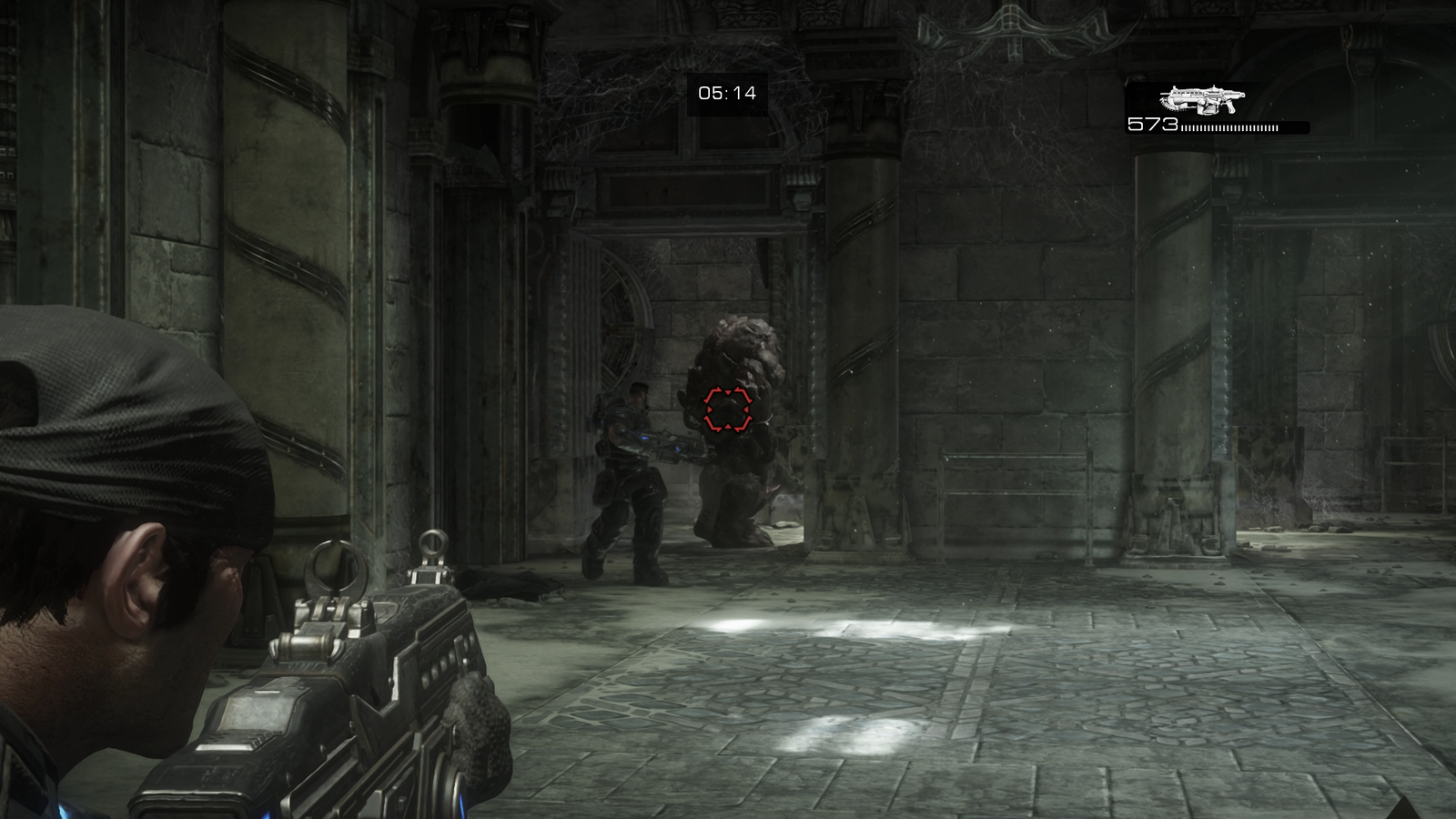
Things are no better with partners. Their artificial intelligence is simply broken: in calm moments, they can get stuck in place and interfere with progress, and in battle they often do not understand where it is better to take cover, what weapon to use, or simply interfere in battles with the boss. As a result, the player has to perceive them more as a burden than as real support. Therefore, in order to avoid problems with partner bots, it is better to find a friend who is ready to go through the game in co-op.
The game is designed for multiplayer
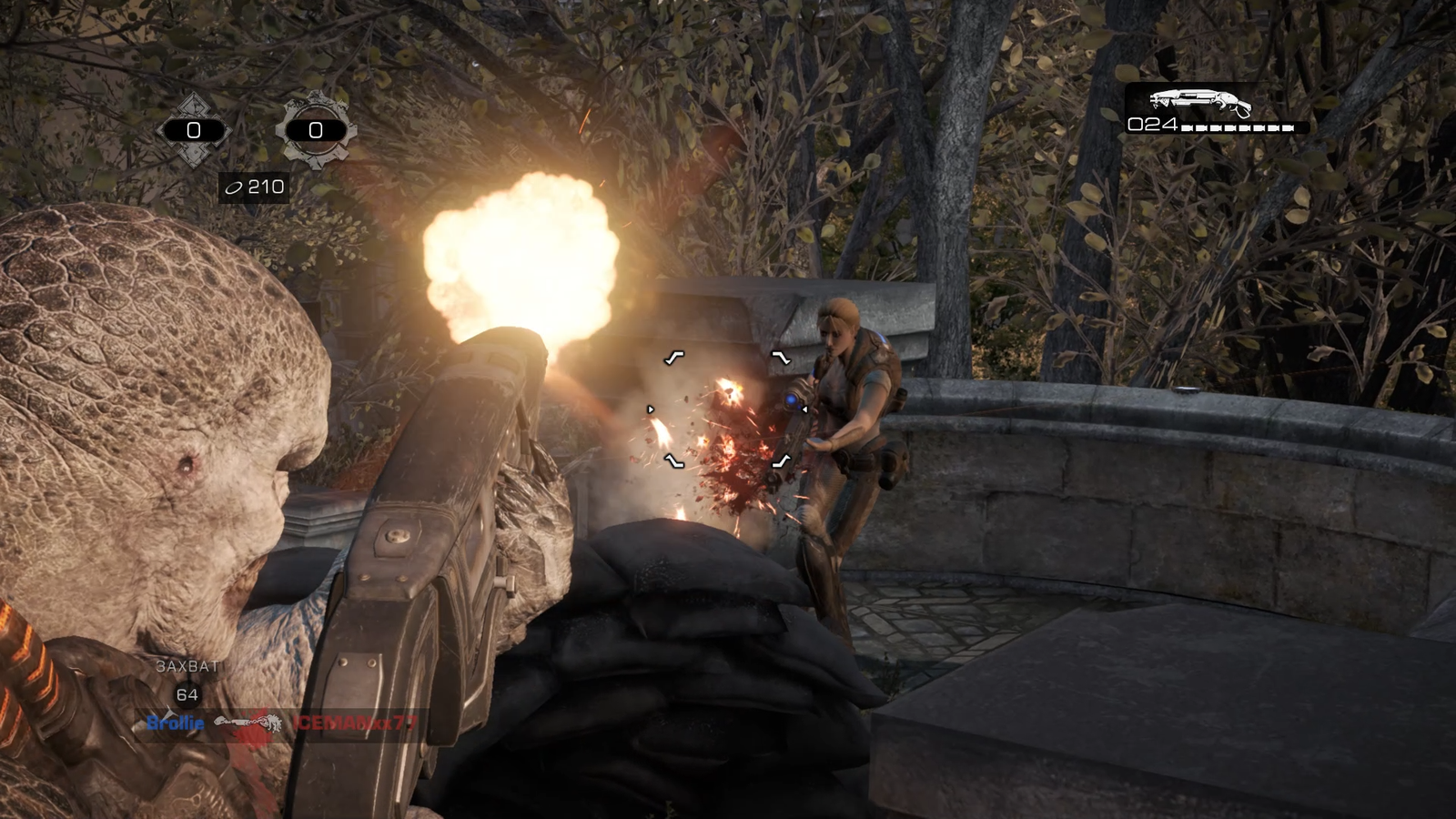
The network part in Gears of War: Reloaded remained true to the classics. Players get a familiar set of maps and modes - team battles, duels, and other options for quick matches without progressions, seasons, and battle passes. There is an old-school charm to this: you can come in, play a few rounds, and leave without feeling regret for the "missed reward".
The multiple increase in frame rate and VRR support have made multiplayer noticeably more enjoyable. In addition, the server processing rate has been increased, which has made shootouts more dynamic and hit registration more accurate. Those who caught the original immediately felt the difference.
However, there are practically no other changes. The game is still based on the arcade concept with small arenas, but the gameplay on them is diametrically opposed to the story campaign. In multiplayer, players are engaged in "speed surfing" between shelters, and the most popular guns remain those that eliminate with one shot: shotguns, sniper rifles, and crossbows. Separately, the absence of the "Horde" mode, which became the hallmark of the series in subsequent parts, but was never added to the first part even as part of the remaster, is striking.
Nevertheless, old problems with the network infrastructure still unexpectedly reminded of themselves. At one time, owners of the original Gears of War suffered from "Games for Windows Live". In Reloaded, a similar situation arose already with Xbox Game Pass: multiplayer functions simply did not work in the version available by subscription. This hit the impression of the release and made the online even less lively. Fortunately, the problem has now been fixed, but the sediment remained - some players did not wait for patches and simply bought the full version in Steam.
Diagnosis
Gears of War: Reloaded gives the impression of a cautious and largely uninspired re-release. This is a cheap "remaster of the remaster": the picture has hardly changed, only the lighting has been improved and the game has been ported to PlayStation. There was virtually no need for such a remaster. The only explicable reason for its release can be considered an attempt to involve a new audience before the release of the prequel to the series - E-Day.
The strengths echo the past editions: the atmosphere of a cult classic with brisk battles in confined spaces - both in single mode with co-op, and in multiplayer, where its own culture exists. For fans of the series, Reloaded is really the most accessible and modern version of the first Gears of War.
But the weaknesses are felt no less vividly. The gameplay is outdated, the artificial intelligence of the partners interferes with the single passage, and it will take several dozen matches to master the multiplayer. The brutal-pathetic atmosphere is not able to attract a new audience accustomed to bright projects with flexible mechanics and multi-stage pumping.
As a result, Reloaded turns out to be a product designed exclusively for the most dedicated fans. For them, this is a nostalgic journey and an opportunity to play the classics again on modern platforms. For the rest, the game is unlikely to become something more than a brief excursion into the past.
Never miss our newsAdd this site to your preferred sources to see us more oftenAdd on Google
![[Video] RIP RTX 5090 / GTA 6 Leak / Blizzard Broke WC3 / Cyberpunk 2077 Movie / Phantom Blade Zero Preview](https://media.ixbt.games/fit-in/312x/ixbt-data/1725650/17ffaa31-1709-4a05-91a5-0ee4b75897d7.jpg)