Pathologic 3 Review: To Save a City, You Must Become a Monster
Translated with AI from the Russian original.
In Pathologic 3, time is not just a resource, but a scalpel with which you have to cut to the quick. The protagonist has already made all possible mistakes, and now the player must correct them. You have to manipulate events, sacrifice ethics for the sake of results, and relive the same horrors over and over again in order to wrest the city from the clutches of the plague. But are you ready to become a cynical puppeteer for the greater good?
The Mistake of a Self-Confident Doctor
The game world is well known to fans of the Pathologic series. Here, the player will be greeted by a city where progress is combined with traditions and phenomena that contradict logic. The residents of the steppes living on the outskirts follow barbaric customs, and the townspeople have not gone far from them – you can’t even find a decent hospital in the city.

The protagonist has not changed:
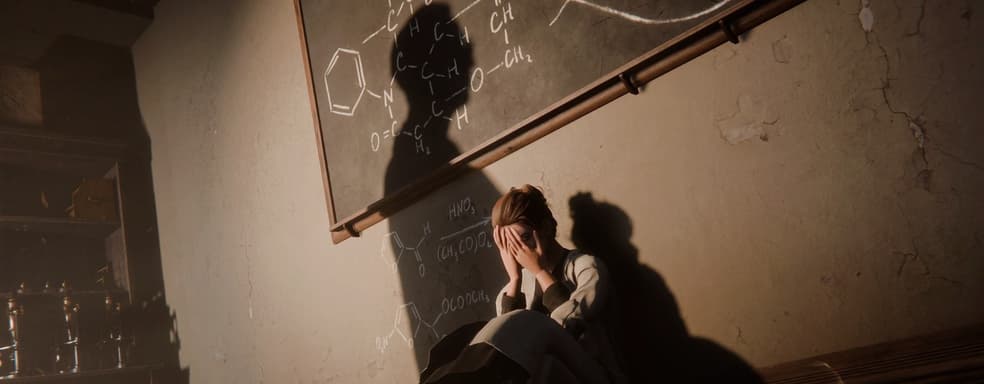
Daniil Dankovsky. Also known as Bachelor, also known as "Capital Dandy". He runs a laboratory whose task is to fight death. He arrived in the city for a breakthrough in research. Bad character. Not married.
The game begins with Dankovsky learning about the existence of Simon Kain, an immortal man whose acquaintance can save his life's work. On the very first day, children steal medical equipment from the protagonist. You need to deal with the rascals wisely, because it is from the children that you can exchange important consumables, such as bullets or medicines.

The quiet beginning is abruptly cut short. Suddenly, the game forcibly moves the events to the fifth day. By this point, it turns out that Simon has died, and the Bachelor has been imprisoned for refusing to fight the plague called Sand Pest. At the same time, he managed to spoil relations with everyone he could. The situation is hopeless, nothing can be done, and only a bad ending awaits ahead.
Surprisingly, the protagonist is simultaneously on the verge of death and under interrogation. A gaunt Inspector lists Dankovsky's crimes and seeks punishment for failure to fulfill his medical duty. It becomes clear that the hero is able to be in several places at once, and this may become an opportunity to correct events.
Using Time to Your Advantage
Each day is limited in time. The protagonist must solve the problems of the characters and look for ways to combat the plague. You also need to find clues in the Simon case. Time is spent walking the streets, moving between districts, and examining patients.
There is simply not enough time for all tasks. Fortunately, each day can be repeated as many times as you like. The completed chain of tasks will be saved after the restart – you don’t have to achieve everything at once. If the task turns out to be failed, then the failure can be canceled and tried again. For example, you can save characters who die under other circumstances.

Initially, the inspector does not allow you to move to other days, motivating this by the fact that everything is already clear with Dankovsky. You need to get rid of the status of a coward, and lead the fight against the plague that has engulfed the city – then some of the charges will be dropped, and you will be allowed to change old deeds and commit new ones.
A convenient map of thoughts helps to understand the events. It marks the events that have occurred, and how they affect subsequent days. On the fifth day, the game went crazy – the events began to contradict each other. I helped a boy named Match find the killers of an important character, but this act was ignored by the game.

An important resource is amalgam. Amalgam is consumed in case of death and when moving between days. You can replenish supplies by breaking mirrors, performing euthanasia, or achieving certain conditions. Too late I realized that the supply of amalgam is finite: searching the city, I found the last whole mirror, but trying to break it led to a crash from the game. This led to a softlock (inability to continue the game) and early completion of the game.
The Yoke of a Leader
To successfully resist the plague, Dankovsky is obliged to become a leader, and use the available resources to survive the city. Power allows you to adopt laws that weaken the plague and open access to new days, in which the doctor's inaction led to extinction. If the laws are too harsh, then the population begins to rebel. The resources and ideas obtained when moving through time allow you to act more effectively.
Ideas for laws appear when completing tasks. To receive tasks, you need to communicate with characters – Dankovsky has a "bachelor's flair", which highlights the necessary characters, and at the same time containers and items available for interaction. Periodically, the game "teleports" quest characters right under Dankovsky's nose, and can also move them to the place needed in the plot – this helps a lot when passing.

Conversations with locals vary in content. The steppe dwellers and "exalted personalities" believe in the supernatural, while the rest are more down-to-earth in their views. You need to find your own approach to everyone, and by all means suppress Dankovsky's desire to be rude to interlocutors. Words can solve almost any problem! You need to be especially careful with the three ruling clans – families that can help more than others.

Dankovsky's patients deserve the most attention. These are people whose disease conflicts with the Sand Pest, which allows them to live longer than others. You need to carefully listen to complaints, inspect the body and examine samples under a microscope. Comparing the data, you need to make a diagnosis — the information received on other days can help in the decision. If everything is done correctly, then a vaccine is created from the patients' samples, which significantly reduces the level of the plague.
During the passage, Dankovsky meets Artemy Burakh and the Impostor. These characters could be controlled in the first part, but not in this one. Perhaps they will become available in future versions of the game, but for now they, as far as they can, harm and help the current protagonist.
Dealing with Danger and Mood Swings
Dankovsky has a changeable mood, and he tends to go to extremes: mania and apathy. Mania increases the speed of movement, but takes away health – if you get too excited, you will not be able to talk to some characters. Apathy reduces walking speed. If its level reaches a maximum, then Dankovsky will begin to "eliminate the problem of Dankovsky's existence". Mood is affected by choices in dialogues, interaction with objects, such as garbage cans or swings, and the absorption of drugs – the effect of the latter weakens after each use.
Mood swings are easy to use to your advantage. Every day I stocked up on first-aid kits and kicked garbage cans, which increased the level of mania. This allowed me to move at great speed, avoid dangers and compensate for the decreasing health – fortunately, first-aid kits are cheap.

One of the dangers comes from rebellious areas – in them people attack Dankovsky. If desired, you can do as in I Am Alive, and scare the attackers with weapons. There is little point in shooting people, since killing increases apathy and removes the enemy – you will not be able to search the corpse.
It is much more difficult in the plague districts: you need to use a prototype with a limited supply to temporarily get rid of miasmas. A successful fight against the disease makes the areas more dangerous - plague whirlwinds appear, sources of spores and infected obstacles blocking passages.

The Sand Pest is ruled by Shabnak: a golem that embodies plague and death. She is in love with Dankovsky, and especially fiercely tries to kill him. The prototype and lit bonfires delay Shabnak. From the side, she looks like a clingy cat that you spray with a spray bottle or distract with shiny objects.
Death can be killed if you find the source of the plague. A special charge is created from it for the prototype, which allows you to inflict a fatal blow. After that, the level of the plague decreases significantly, but Shabnak becomes more aggressive on other days. On the ill-fated fifth day, the game decided that I had already defeated Shabnak - I dare not complain about this bug.
Atmosphere
The game's environment seems both normal and alien at the same time. The usual views of civilization organically contrast with the impossible geometry of some buildings. Here, ordinary people coexist with residents of the steppes, who look and feel different. The picture is complemented by dialogues that are more like scenes from a play, where each participant talks about their own thing.

The beauty of the environment is mesmerizing, where everything can be juicy and bright, or muddy and gloomy. And the music accompanying the views evokes strong emotions - especially throat singing.
Verdict
I managed to get acquainted with "Mor" precisely from the third game. And the impression was strong and positive! At the beginning it was difficult, when the game mechanics went against the developed reflexes. I felt itchy when I couldn't shoot all the attackers, or grab all the items I came across - the storage is limited, and things disappear from my pockets when the day changes.
Getting used to it allowed me to enjoy the unusual and daring presentation of the story. Here you are calmly getting acquainted with the world, and then you suddenly find yourself in the center of events. You need to carefully delve into the dialogues in order to correct the events that you could not influence. Because of this, the characters seem more alive and versatile.
I especially want to thank the game for making many elements less annoying than they could be. Yes, you will have to run errands a lot! But the teleporting characters or saved achievements do not allow you to fall into mania or apathy.
You can't ignore the shortcomings either. The game has enough bugs and outright flaws. Fortunately, the developers are working quickly, and have already made several patches. It remains to be hoped that with this speed, Pathologic 3 will soon come into an adequate state.
Pros:
- Beauty of the environment
- Great music and sounds
- Unusual presentation of the story
- Rich atmosphere
- Mechanics of changeable mood
Cons:
- Bugs and flaws
- One of the key resources is finite
Never miss our newsAdd this site to your preferred sources to see us more oftenAdd on Google