A Beautiful End: Atomic Heart "Blood on Crystal" Review
Translated with AI from the Russian original.
Three years, four expansions, one evil piece of polymer, and Major Nechaev, who just can't seem to save the world. All this chaos of events finally got its resolution, and we really liked it. But Mundfish wouldn't be Mundfish if they didn't stumble upon familiar pitfalls one last time.
The Inside Out of Facility 3826
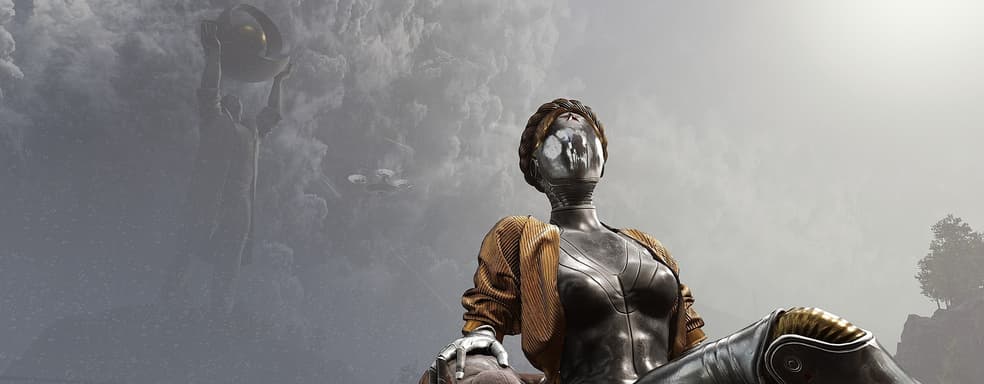
"Blood on Crystal" begins where the previous expansion, "Trapped in Limbo," left off. Nechaev, Katya (Twin), Hunter, Nikolay, and Nastya gather on the beach to go after KHRaz. The first stop of the expansion is the "Wave" complex, where, according to Katya's calculations, P-3's former glove tenant is hiding.
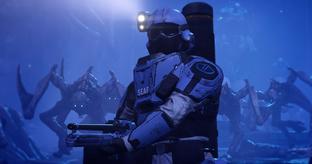
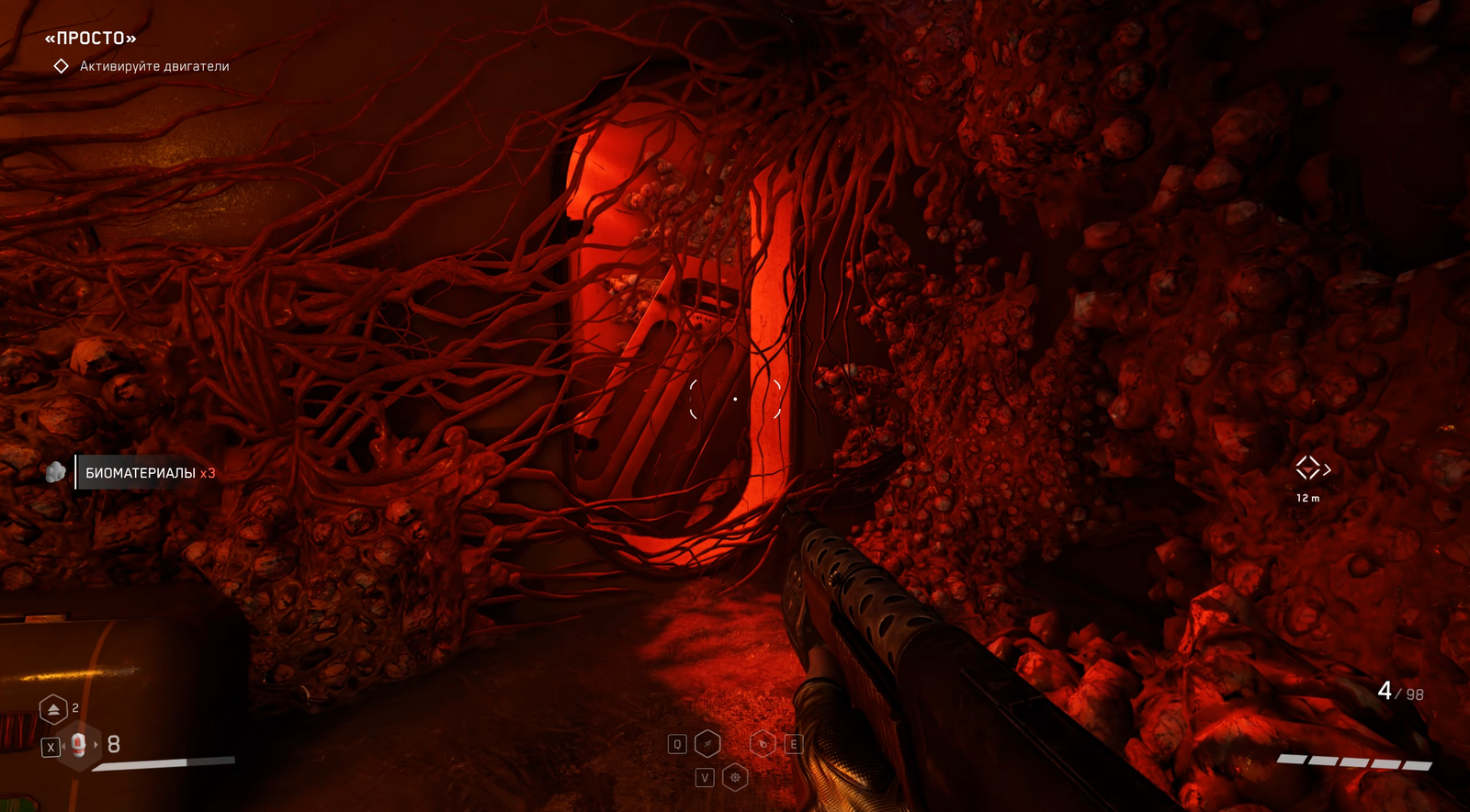
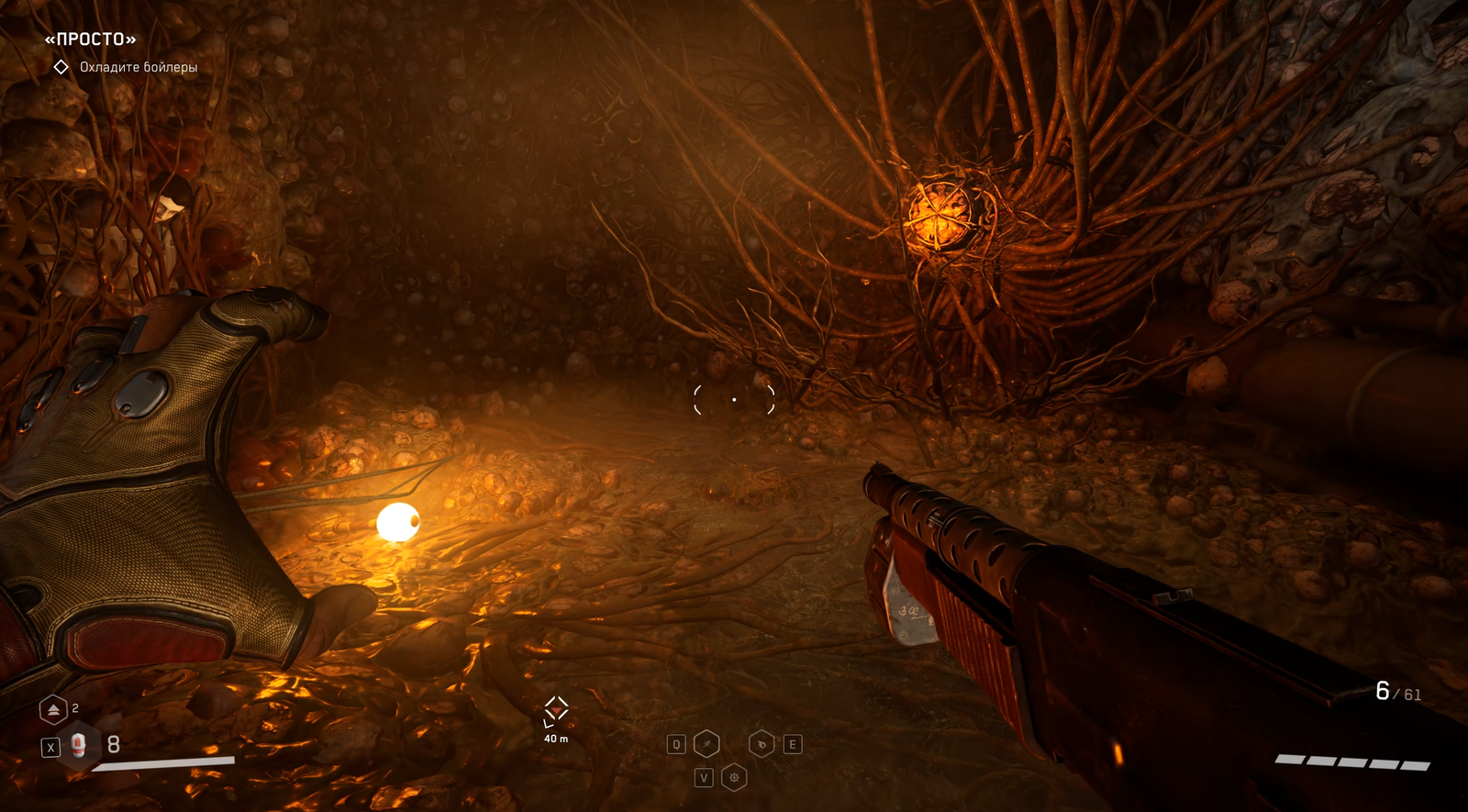
The exploration of "Wave" can be conditionally divided into two parts: the surface with methodical robot shooting and platforming, and an abandoned submarine where, as Nechaev notes, very strange things are happening. The submarine greets with gloomy corridors overgrown with vines, traces of biological experiments, and zombie employees controlled by plants.
The atmosphere and setting so clearly resemble the Upside Down from the Netflix series that it feels like recognizable synthesizer overflows are about to play in the background. There are hints, but not direct enough to catch the developers red-handed. This part of the expansion resembles a lively horror action movie, works flawlessly, and is one of the most atmospheric segments of the entire game. It's a pity it's short.
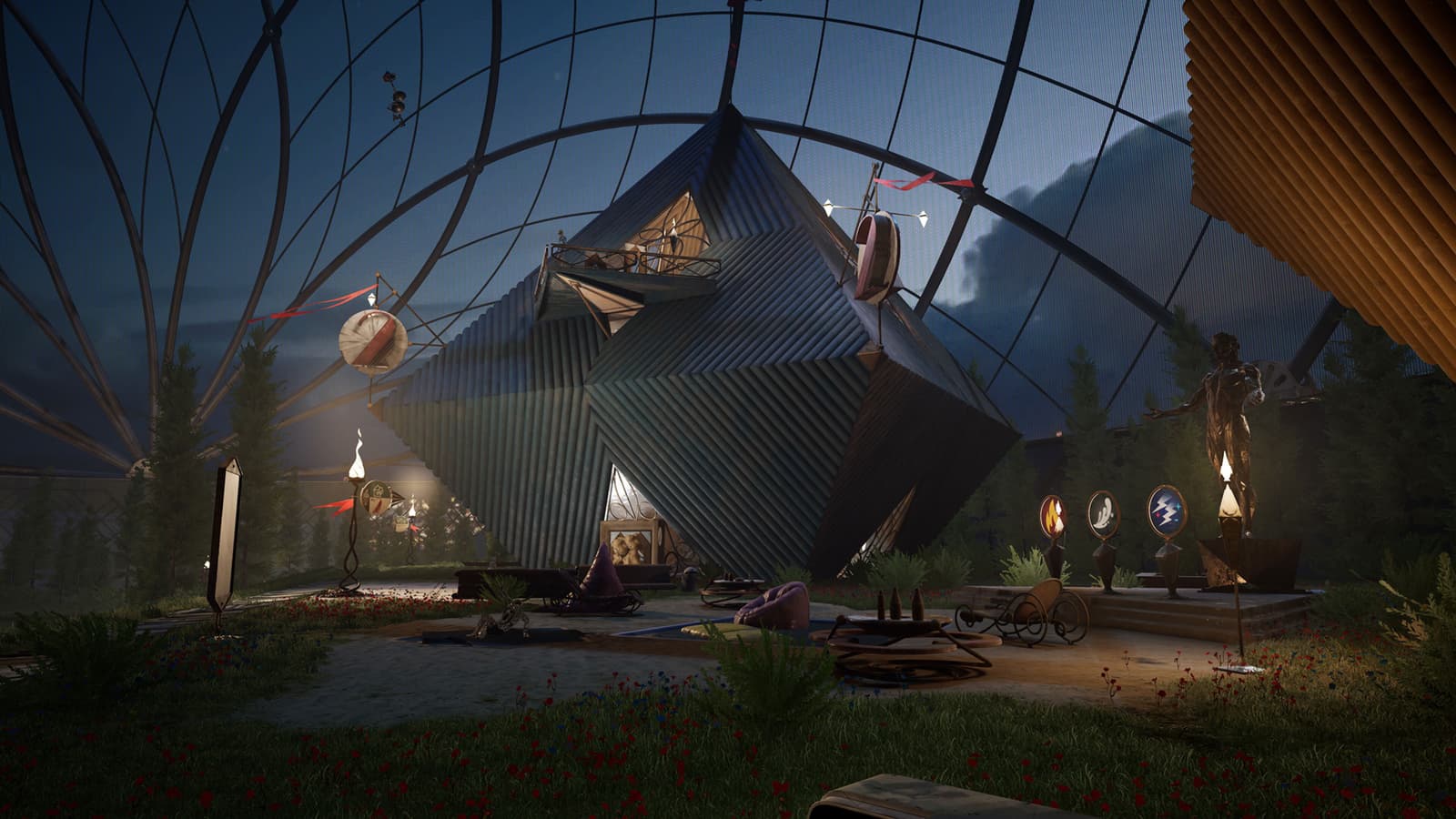
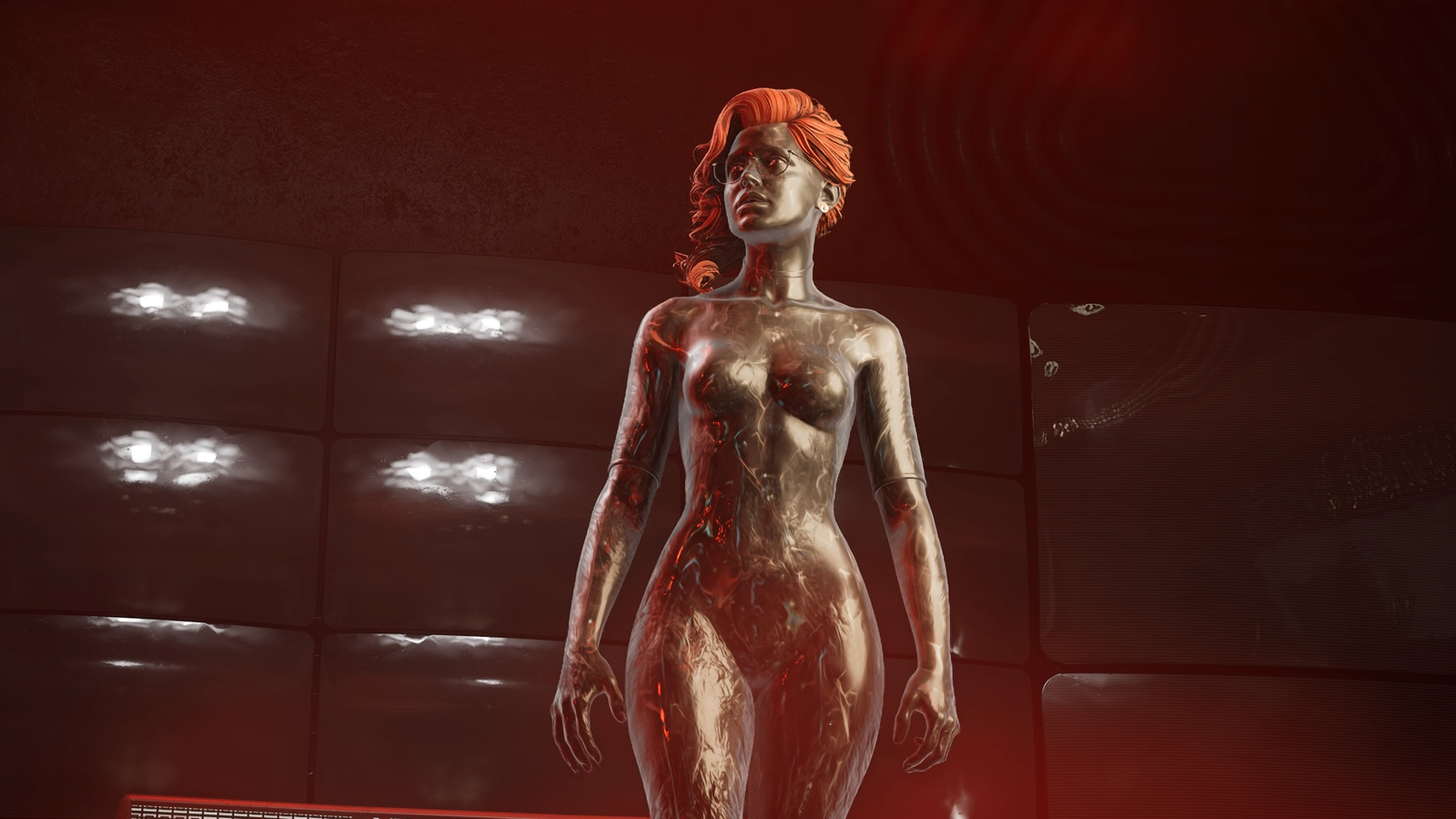
Much more time will be spent in "Crystal" — Sechenov's secret complex, where he wanted to create a new humanity from polymer. Part of the complex is made in the aesthetics of an ancient Egyptian temple, multiplied by technology, Soviet monumentality, and staff irresponsibility.
Egyptian motifs in the hands of Mundfish organically integrate into the overall aesthetic, lore, and function of the complex, once again showing how masterfully the studio's specialists have mastered the tools of visual storytelling.
It is incredibly interesting to study how a new civilization was planned to be built in "Crystal" and to observe how the inhabitants of the complex gradually adapt to life after polymer rebirth. Through notes, environment, and encounters with locals, the player is shown how their attitude towards ordinary people, their own bodies, and the very idea of humanity changes.
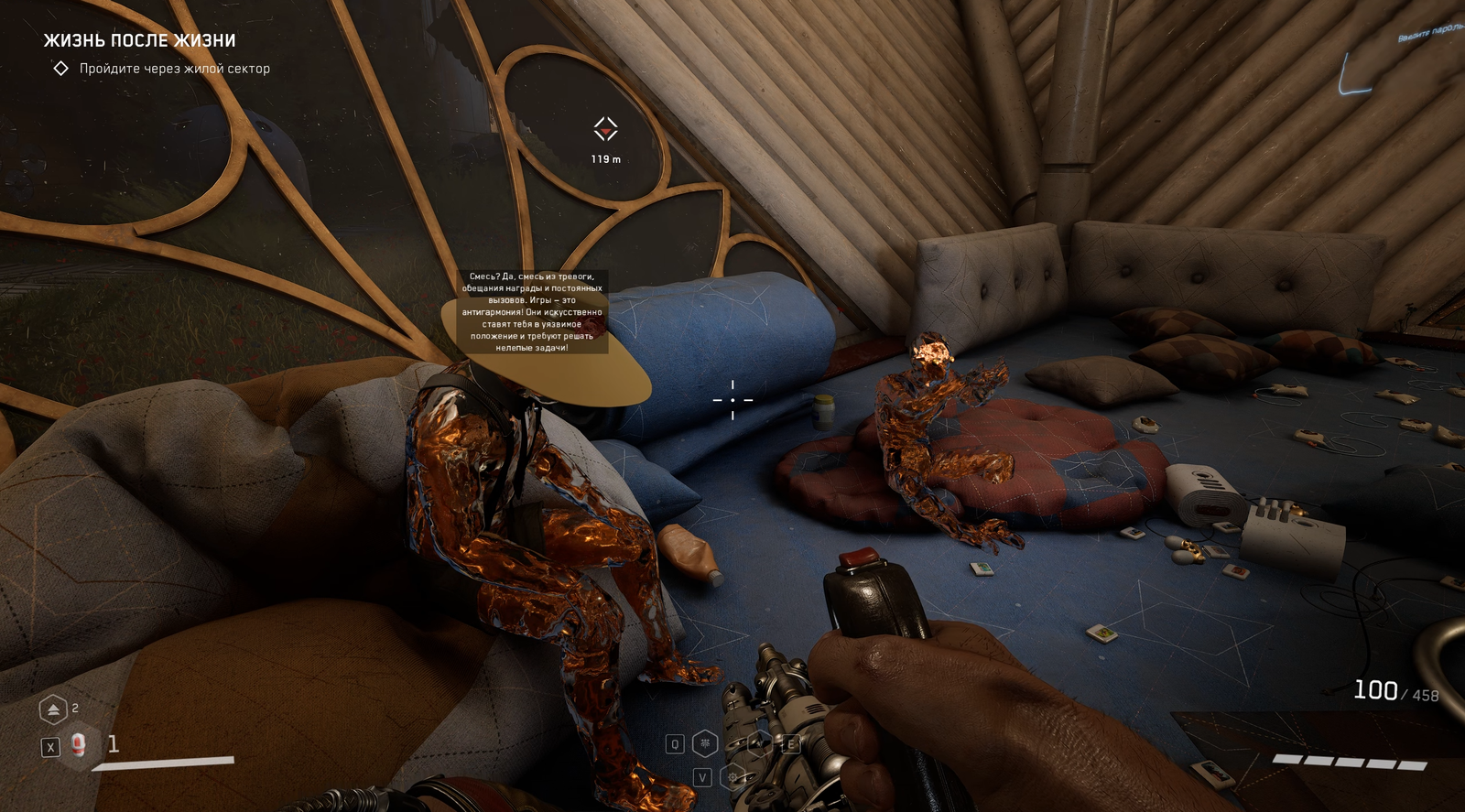
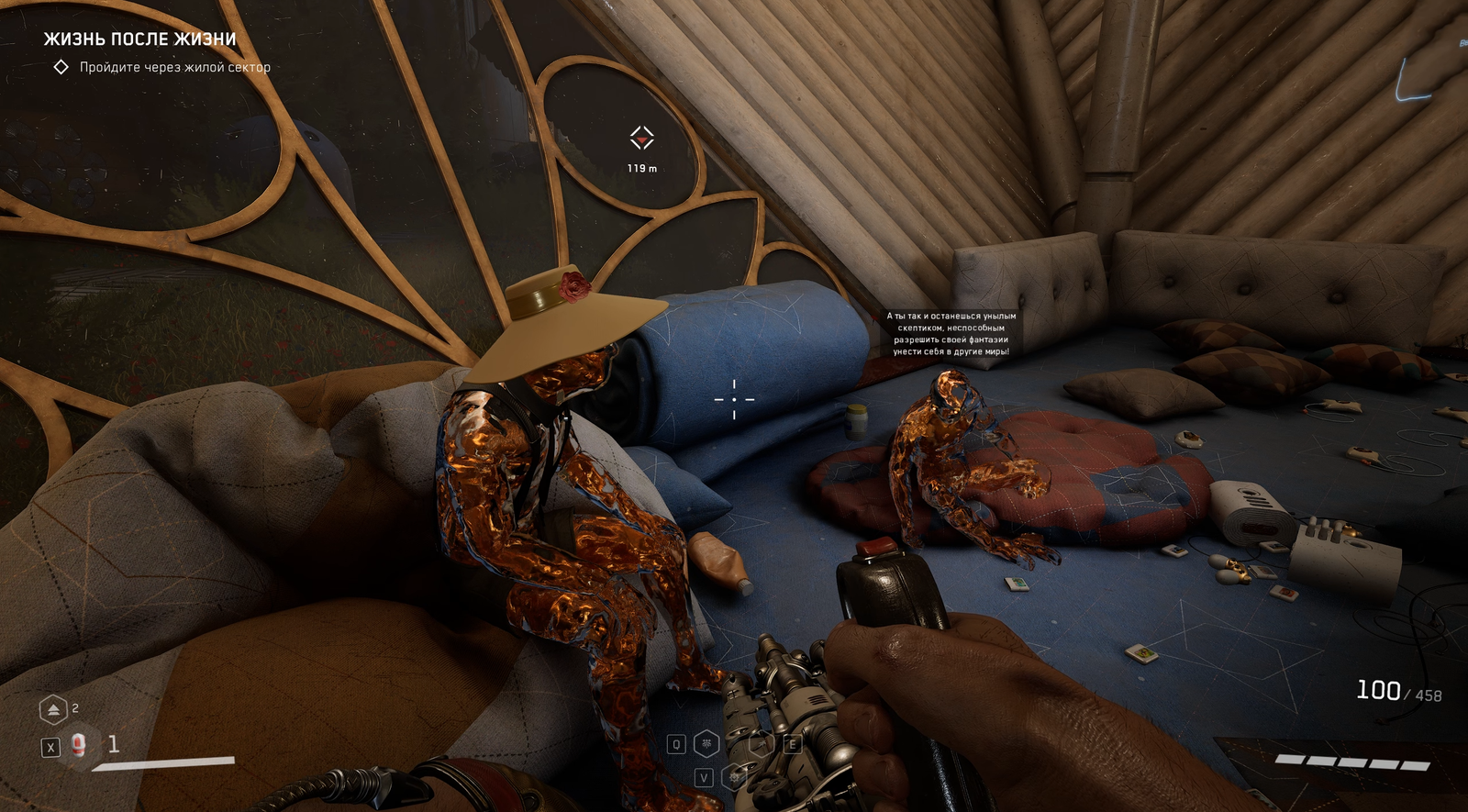
Of course, the developers did not ignore the modern agenda, debates around AI, and more. But they did it, as always, in their own style: they wrapped philosophical questions in a thick layer of grotesque and humor, often not the most elegant.
Memes, references, quotes, jokes about modernity, games, movies, TV shows, bloggers, and songs pour in a dense stream from the first minutes to the very credits. This didn't tire me: I have long perceived such a "Crooked Mirror" as part of Atomic Heart's DNA and consider it a feature that the game should not abandon. But if you were annoyed by something similar in the original, the expansion will cause fits of vicarious embarrassment more than once.
Old Pitfalls
From a structural point of view, "Blood on Crystal" continues the formula that Mundfish found in "Annihilation Instinct" and perfected in "Trapped in Limbo." This is a linear adventure without an open world, where battles, puzzles, and platforming harmoniously alternate with each other, and the game regularly throws new tasks and situations.
Alas, this does not mean that everything was done conscientiously: questions arise both about individual gameplay elements and about the overall protractedness of the narrative.
Completing the expansion took me about seven hours, including reading notes and exploring the environment. There is indeed a lot of content, but in the case of the final chapter, the volume does not always work to its advantage. The direction of the plot is clear from the very beginning: the heroes need to get to KHRaz and put an end to it. Along the way, there are unexpected twists and important lore explanations, but the overall trajectory is too obvious to stretch it out so thoroughly.
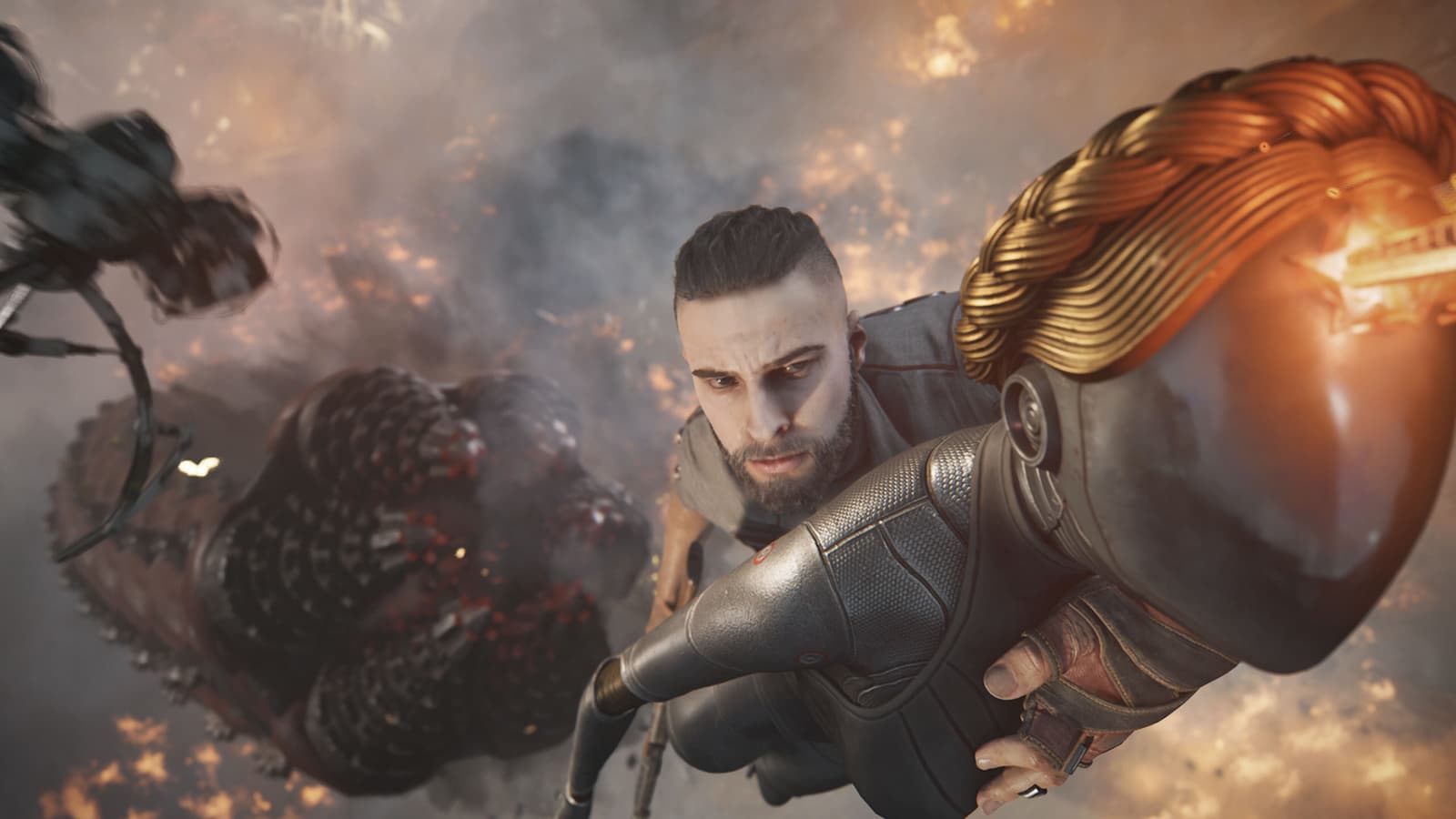
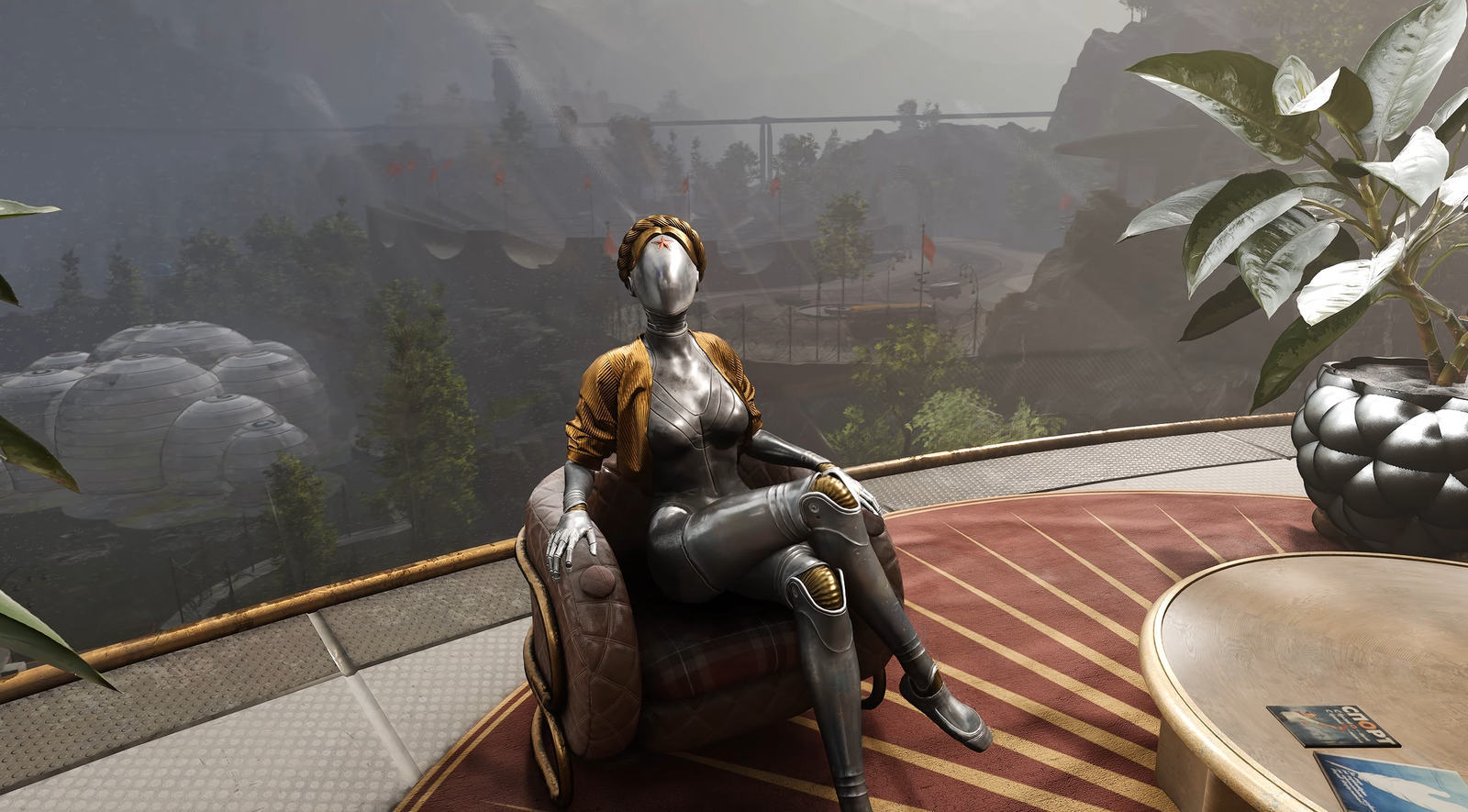
The developers try to compensate for this unhurriedness with constant communication with companions. Nechaev chats with Eleonora, then with Katya, then with Nastya, then with Lebedev, Hunter, and Nikolay, and sometimes with everyone at once. This enlivens the journey: P-3 is almost never silent, and sudden inclusions of allies help fill the pauses between battles, puzzles, and runs through corridors.
The problem is that it quickly becomes obvious: all this chatter, endless jokes, and references not only entertain but also mask voids where game designers are not always coping. By the middle of the journey, you catch yourself looking at your watch, waiting for the denouement — and it still doesn't come.
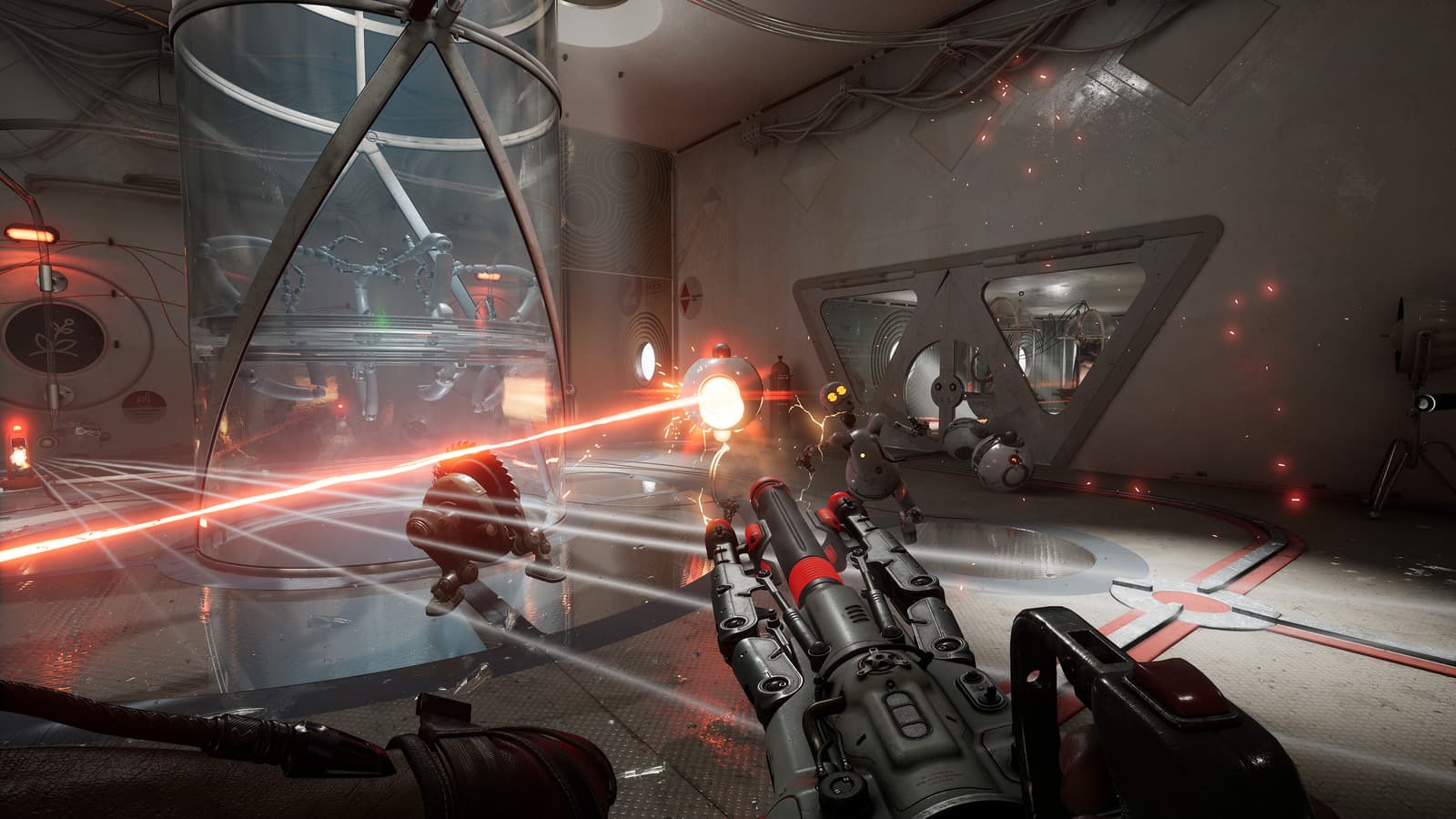
This is not so much related to the content as to the implementation. It would seem, finita la commedia: it's time to give Nechaev the entire arsenal and wreak havoc on the way to the final boss. But it was not to be.
The developers find another plot explanation for why Nechaev does not have access to all weapons and abilities. You have to settle for a couple of glove abilities, a limited set of firearms, search for recipes again, and upgrade weapons, trying to regain at least some of your former power. No new weapons appear at all — if you don't count the "Clusha" and "Secator" returning from the first expansion.
Instead of expanding the arsenal, the developers rely on new enemies and CHANCE system capsules, allowing you to quickly change glove abilities at special stands. For platforming and puzzles, this turned out to be a successful solution because it untied Mundfish's hands. Now developers do not need to adapt each challenge to the player's possible set of skills. It is enough to put a stand with the desired capsule nearby, give P-3 a specific ability, and immediately build a separate task around it. Thus, the expansion has more situational variety.
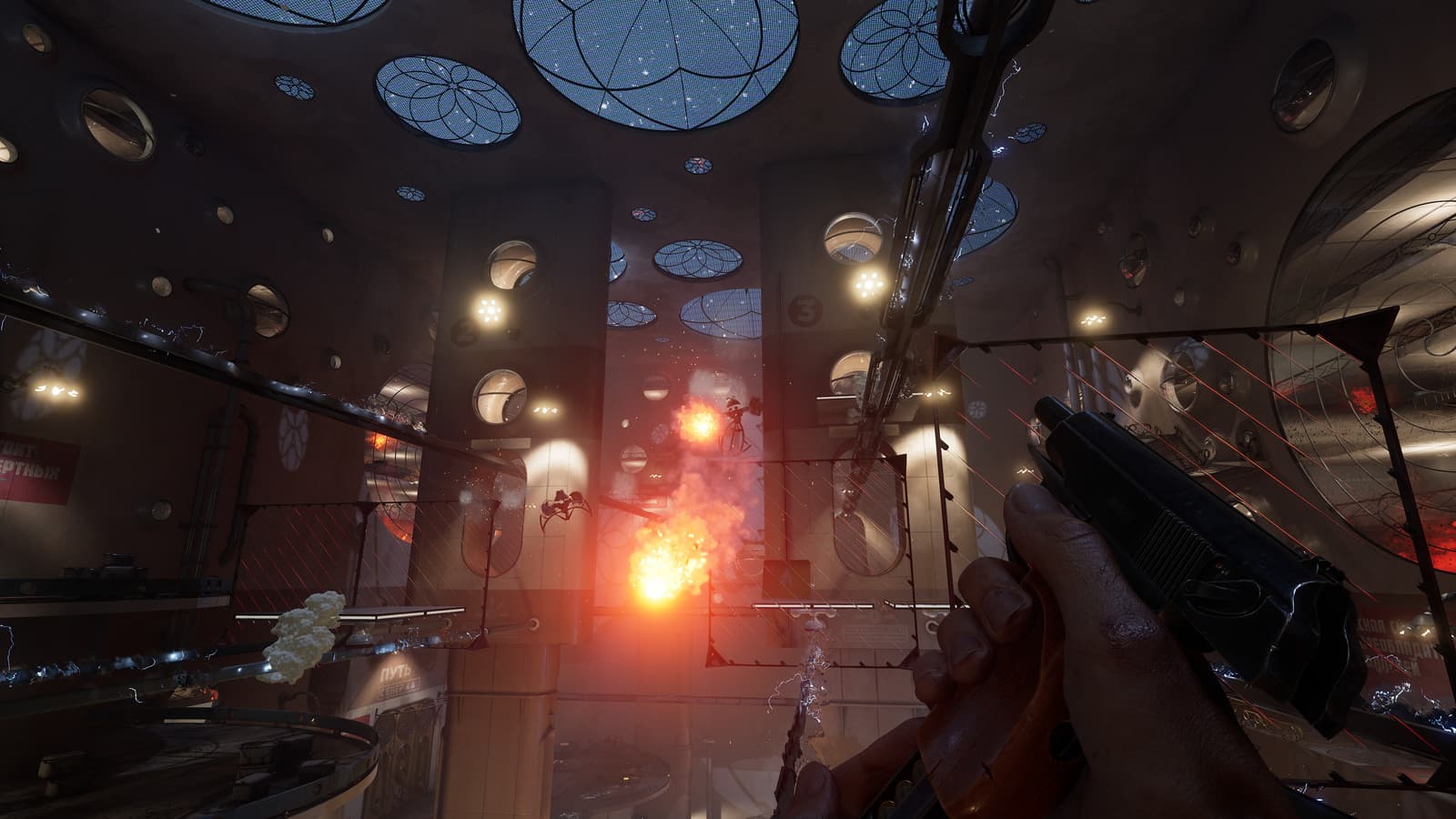
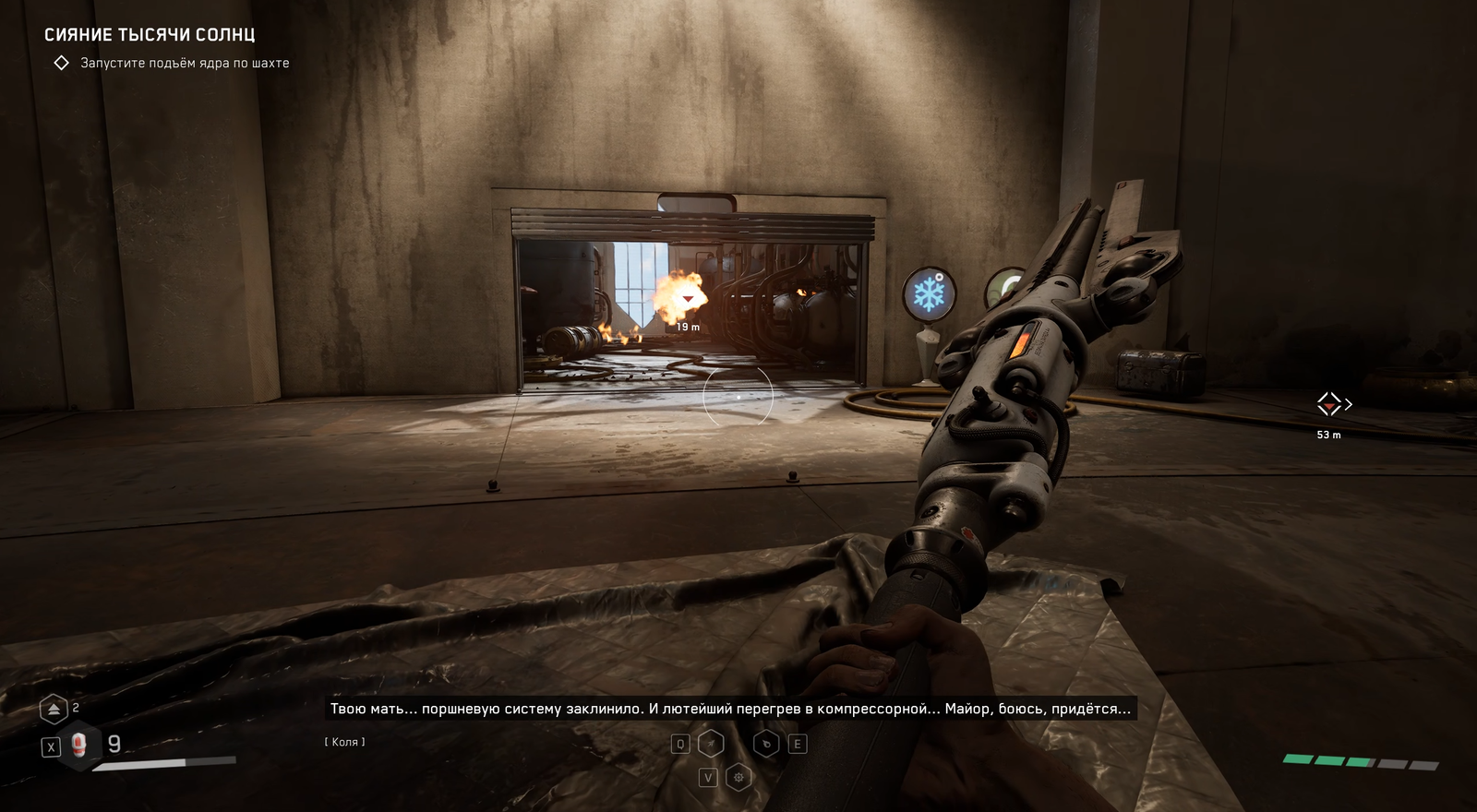
However, in battles with elemental polymorphs, the CHANCE system regularly stumbles. These enemies throw ice or fire, so it is desirable to respond with the opposite element. It is assumed that the player will quickly adapt and change abilities right during the battle. Sometimes this really works, but there are often situations when there is simply nowhere to change the ability. Because of this, the battle drags on, either due to a random error in the arrangement of the stands, or due to a deliberate attempt by the developers to complicate the player's life.
It happened that the task was to put out a fire. You take an ice ability, cope with the task, and on the way back, the game throws ice polymorphs at you, against which the chosen ability is useless. Or vice versa: you go to blow up polymer, take fire, free the mechanism, and at the exit you get enemies against whom fire is useless.
Yes, firearms and melee weapons remain a universal argument against any polymorph. But it is much more difficult and longer to kill enemies this way. As a result, some skirmishes with new enemies are perceived as an annoying element, especially against the background that there are no other fundamentally new enemies, except for bosses, in the expansion. And even with them, there are nuances.
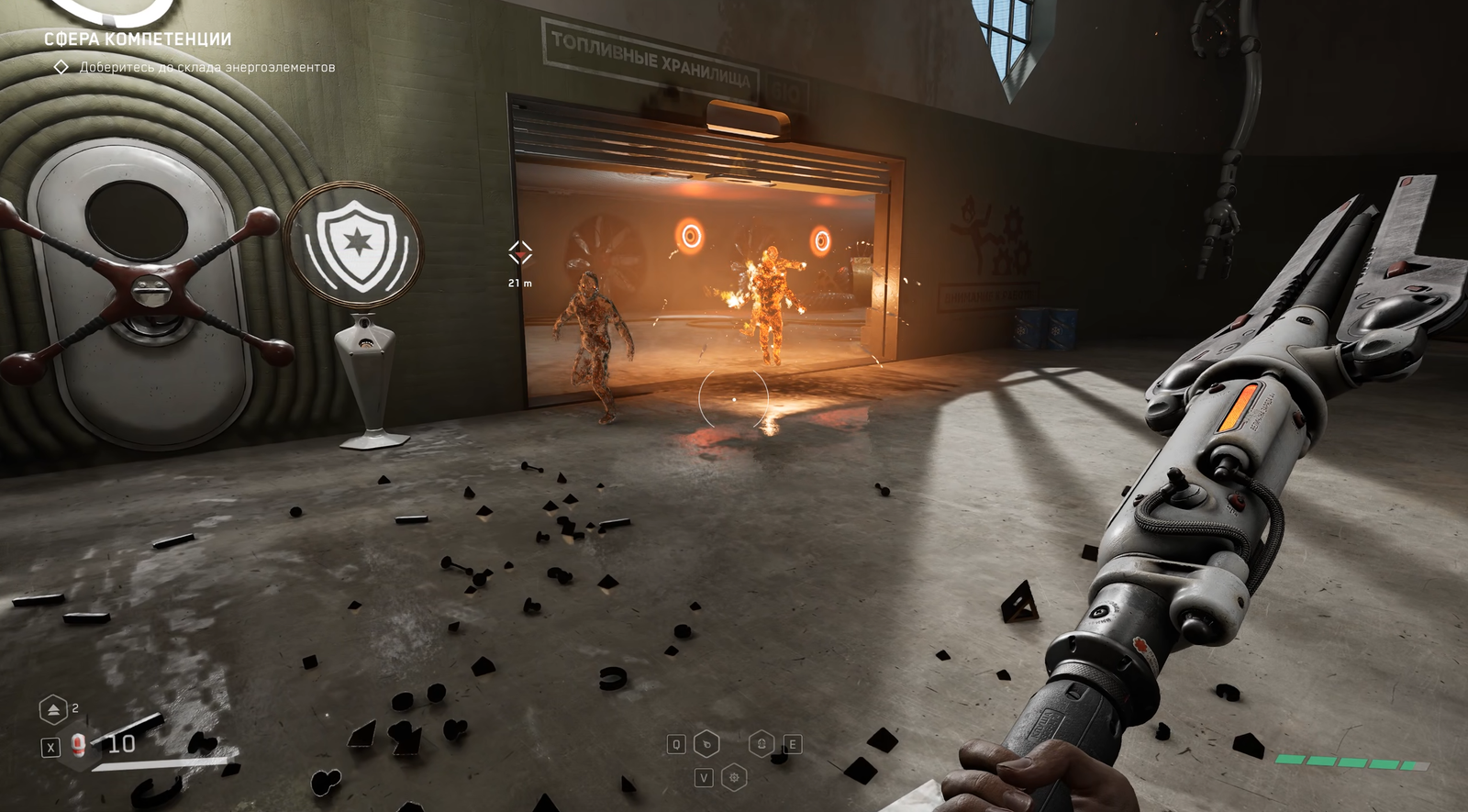
Mundfish still understands well how to turn such battles into an adrenaline-fueled attraction, where design, music, and staging come together as one. But even here, the game lacked a bit of punch.
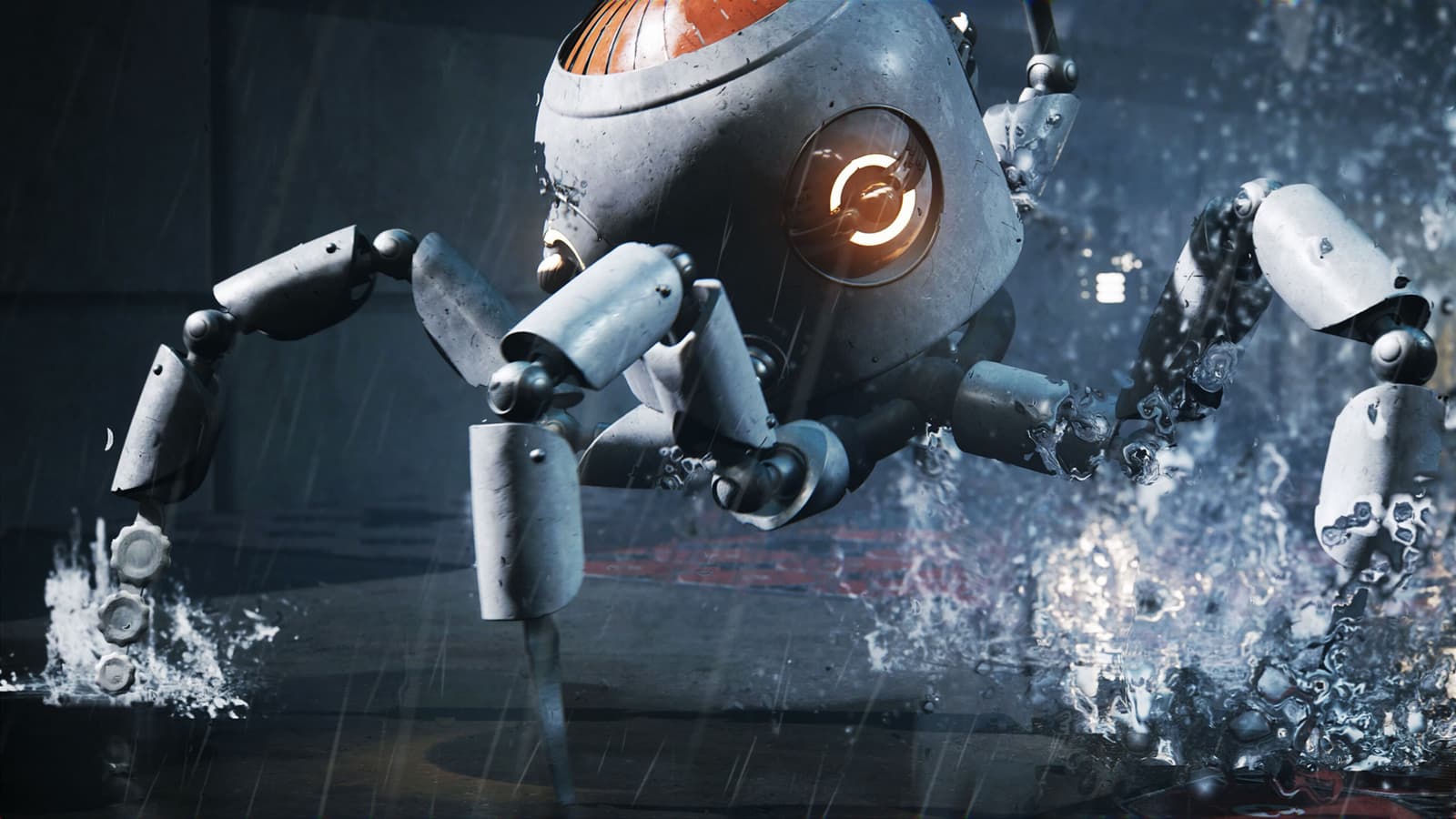
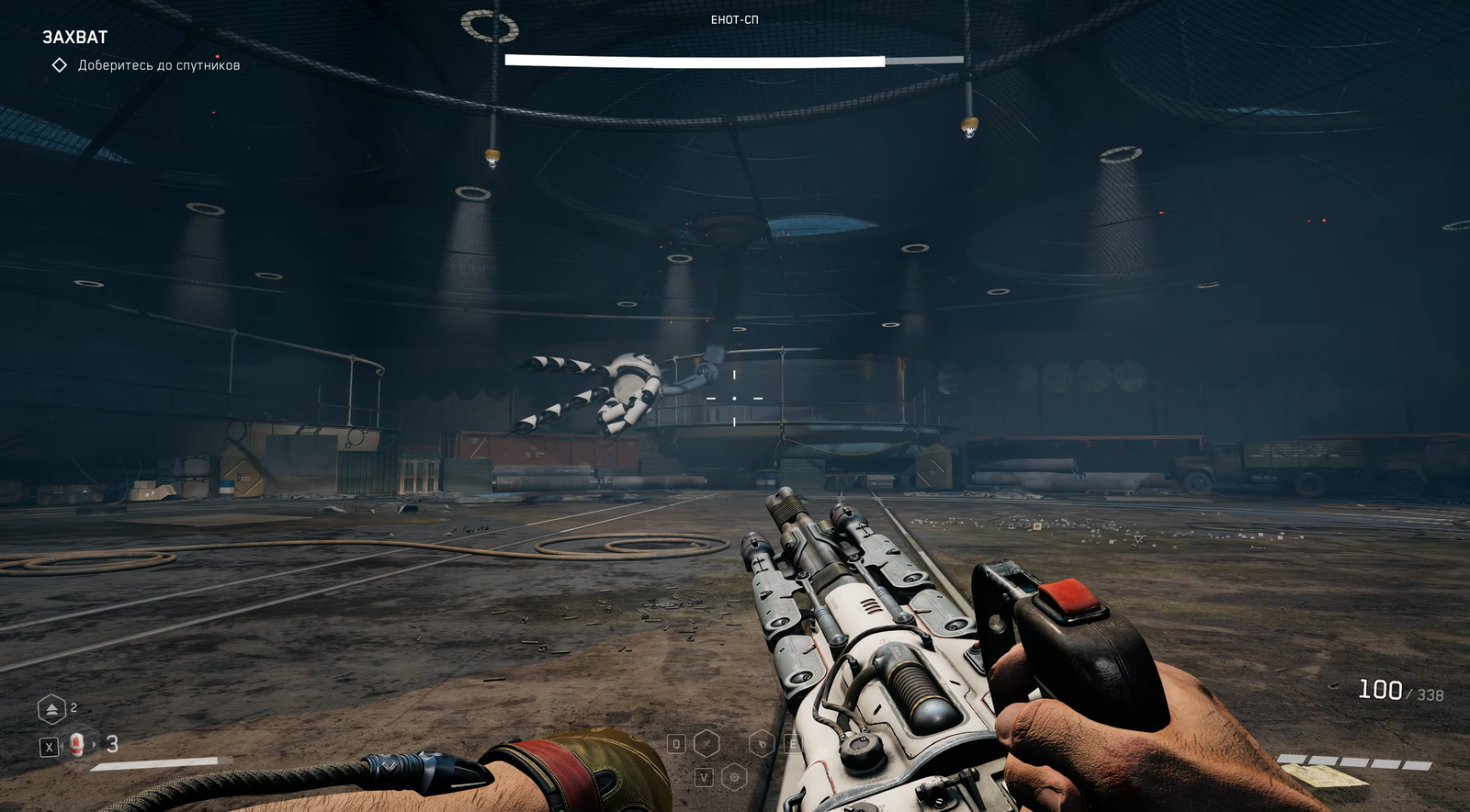
The battle with the mechanical arm ENOT is good in terms of idea and visual design: the player needs to dismantle the boss by vulnerable points, while dodging attacks, fending off small minions, and being touched by how the arm plays "rock, paper, scissors" before each lunge. However, the fewer weak spots remain, the harder it is to hit them, which makes the fight drag on closer to the end.
As for the final battle, even it does not go beyond the familiar Atomic Heart formula, but it gives the right feeling of a last stand. True, the first phase seems too simple: you can practically stand still and shoot until the second, much more spectacular part of the battle begins. It is this that gives the necessary emotions. But overall, the ending, like much in the last expansion, leaves a feeling that it could have been louder, more spectacular, and brighter.
Where is Atomic Heart 2?
Given that Atomic Heart 2 has already been announced, one involuntarily expects a powerful hook from the ending of "Blood on Crystal." Not necessarily a direct teaser, but at least a feeling that you will now be shown the door to the next big story. This does not happen.
The story gets a logical conclusion, many questions are neatly put in their places, and even "Annihilation Instinct," which long looked like a "dog's dream" or an alternative ending, is integrated into the general canon here — albeit with thin threads.
But the expansion ends as if the sequel has not yet been announced. The ending does not make you want to immediately run and look for any crumb of information about Atomic Heart 2. Only a small scene reminds that not only a sequel but also the multiplayer The Cube is in development. However, that's a completely different story.
Verdict
"Blood on Crystal" worthily concludes the story of the Nechaev family. It is not the best Atomic Heart expansion and not the most powerful final salvo, but a confident and beautiful end to the story of the first game.
"Wave" turned out to be one of the most atmospheric segments of the entire game, "Crystal" successfully combined Egyptian aesthetics with Soviet retrofuturism, and the final battle and ending gave a sense of accomplishment. It's just a pity that the path to the denouement was not made denser, and Nechaev should have been given the entire arsenal as a farewell, without hiding behind another plot crutch.
Finally, I want to say: every time I return to Atomic Heart, I catch myself feeling the same thing.
Soviet retrofuturism, polymer fantasy, mechanical monsters, references, crude humor, metal remixes of pop classics that you heard when you were young enough to crawl under the table — all this creates a special atmosphere. It strikes the right chords and evokes nostalgia with a light sadness, for which one involuntarily wants to forgive the game for certain mistakes.
Atomic Heart can be a bit clunky, sometimes excessive, sometimes too loud, and not always polished. But you can feel that it was made with pleasure — and it said goodbye to us with the same pleasure.
Never miss our newsAdd this site to your preferred sources to see us more oftenAdd on Google
![[STREAM] Ultimate Version - Cyberpunk 2077 Update 2.5](https://media.ixbt.games/fit-in/312x/ixbt-data/1730178/b6ca9a8e-de42-4e9a-b1aa-df5e519a7449.jpg)