Don't Miss "Mortal Kombat 2": How to Turn a Sequel into a Real Show
Translated with AI from the Russian original.
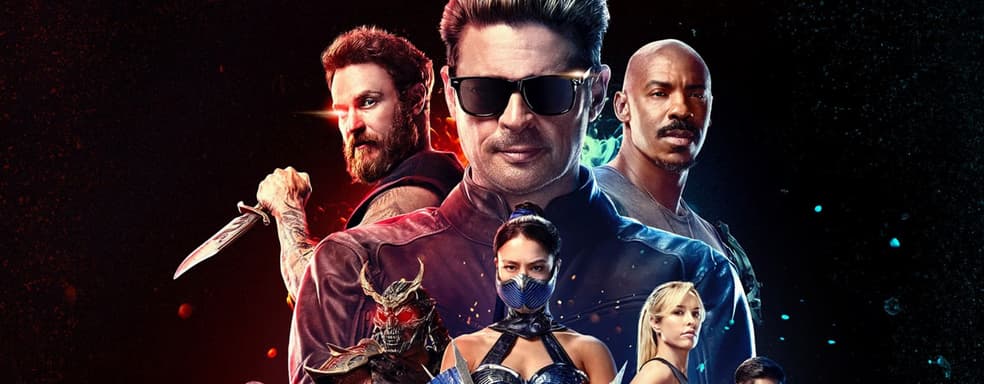
The 2021 reboot felt like a drawn-out warm-up for a fight that never started. The sequel puts on Johnny Cage's signature "cool shades" and remembers what a Mortal Kombat movie should be: fast, bloody, spectacular, and self-aware enough that game conventions don't have to be hidden behind a stone face.
The Tournament Has Finally Begun
The main complaint about "Mortal Kombat" 2021 was almost anecdotal: the tournament mentioned in the title remained just a promise. Heroes gathered, trained, discovered their powers, discussed the fate of Earthrealm, and listened to explanations that the audience would have understood perfectly well without them. It was a drawn-out teaser for a movie that was much more anticipated. We had to wait another five years for it.
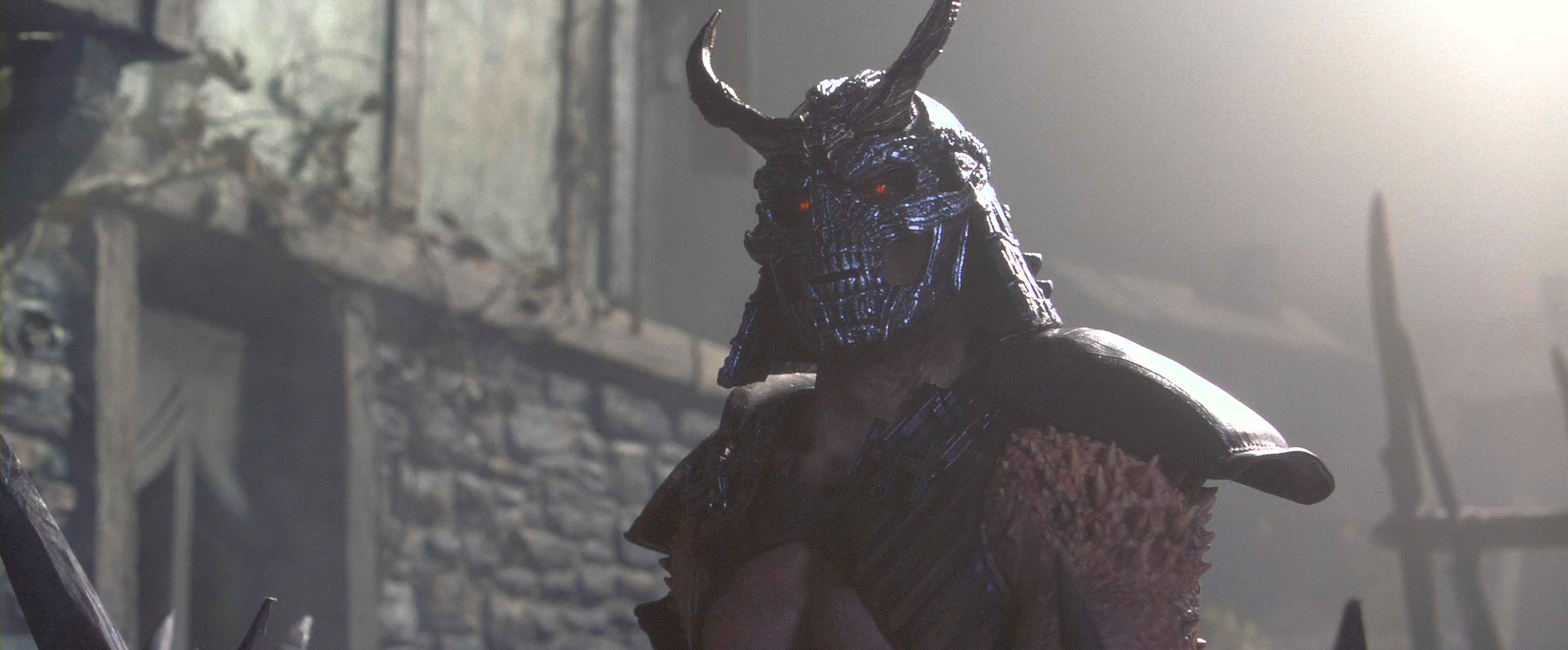
"Mortal Kombat 2" shows from the very first minutes that the creators learned their lesson. The sequel opens with the fall of Edenia — a realm that Shao Kahn brought to its knees after ten tournament victories. In the first eight minutes, the film manages to deliver a spectacular action scene, establish the cost of defeat, and launch Kitana's storyline.
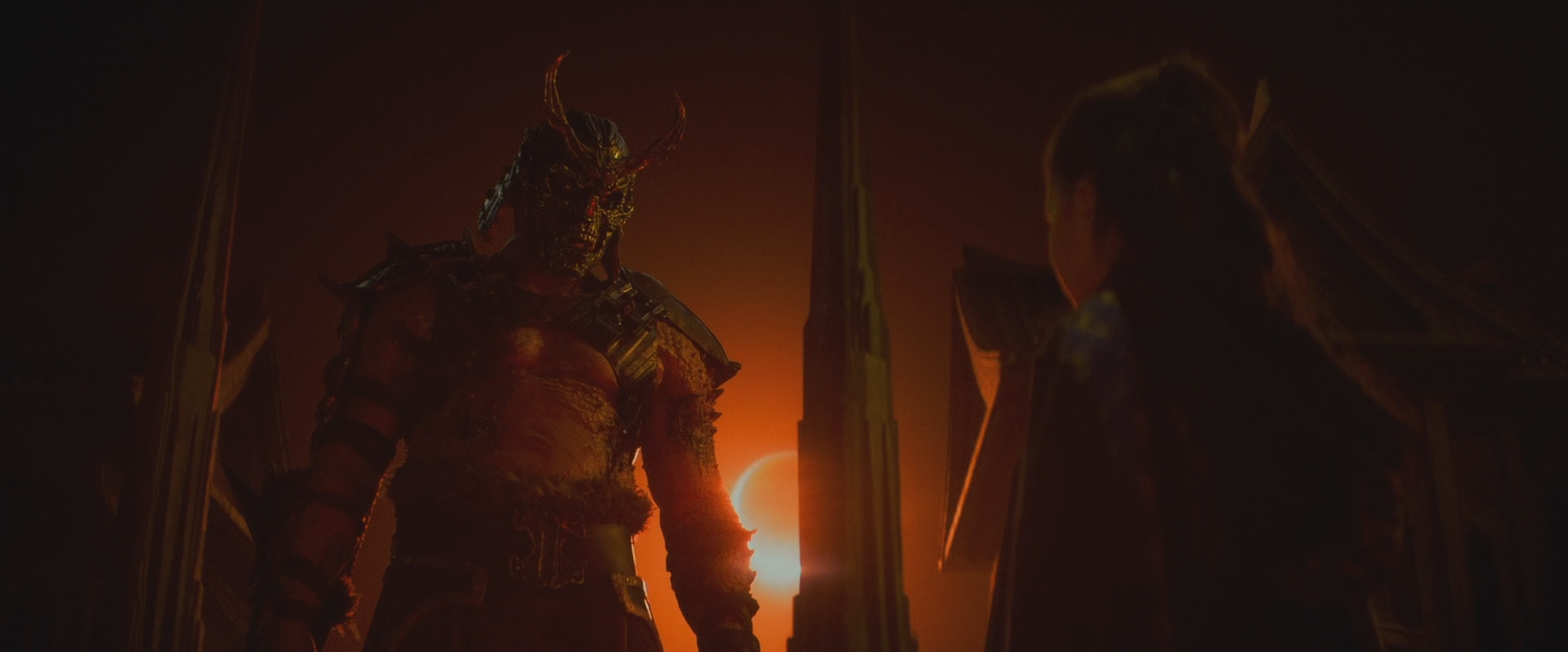
The difference in approach is immediately striking: now the prologue introduces one of the main characters and sets up a conflict that will last until the finale. In the 2021 reboot, the introduction mostly prepared a fan-service meeting between Scorpion and Sub-Zero, loosely connected to the main plot. Here, this storyline, by the way, will get an even more spectacular continuation.
Twenty years after the fall of Edenia, Shao Kahn prepares to conquer Earthrealm. With only hours left until the tournament, Raiden needs to gather fighters, but the team is missing one champion. That champion is Johnny Cage — a forgotten nineties action star, a man with a huge ego, a dwindling fanbase, and a grudge against an era where audiences want bloggers and Keanu Reeves taking down enemies with a pencil.
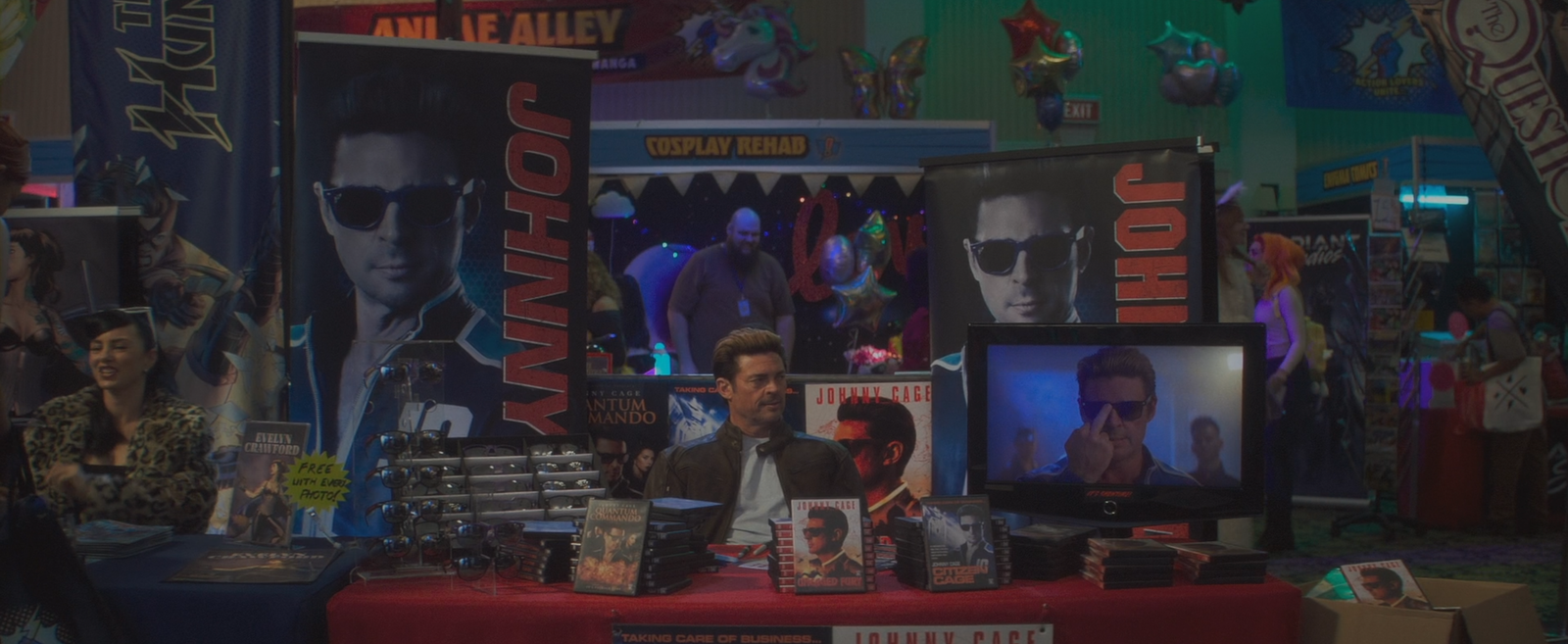
Johnny Cage, played by Karl Urban, is the main, but not the only, triumph of the sequel. He effectively takes the place of Cole Young, whom the film demonstratively pushes to the background. Now Cage becomes the guide to this world and the audience's avatar.
For fans, he's long been one of their own, but within the story, he's an ordinary man dragged into a cosmic "Squid Game." He reacts to what's happening sanely and asks questions that any normal person would ask. For example, why did Earth's defenders know about the tournament in advance but only started looking for a fighter at the last minute?
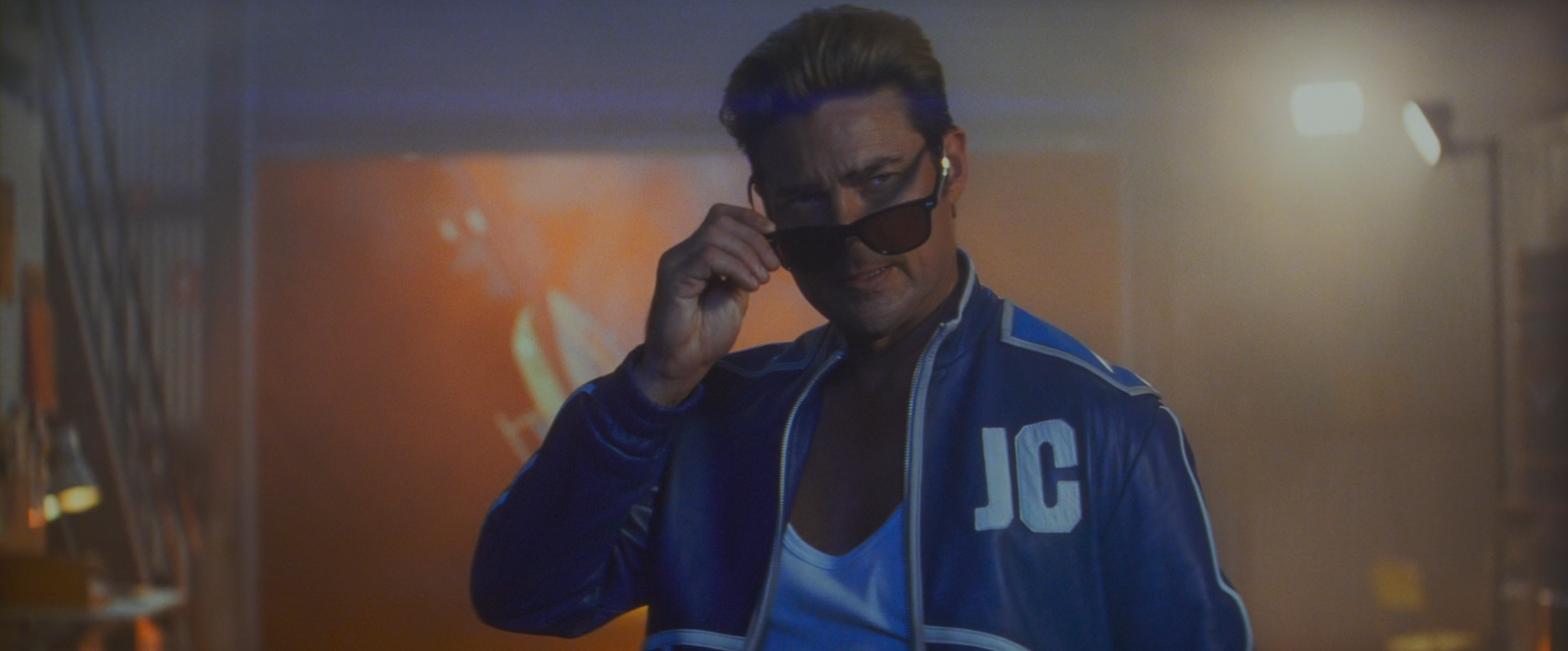
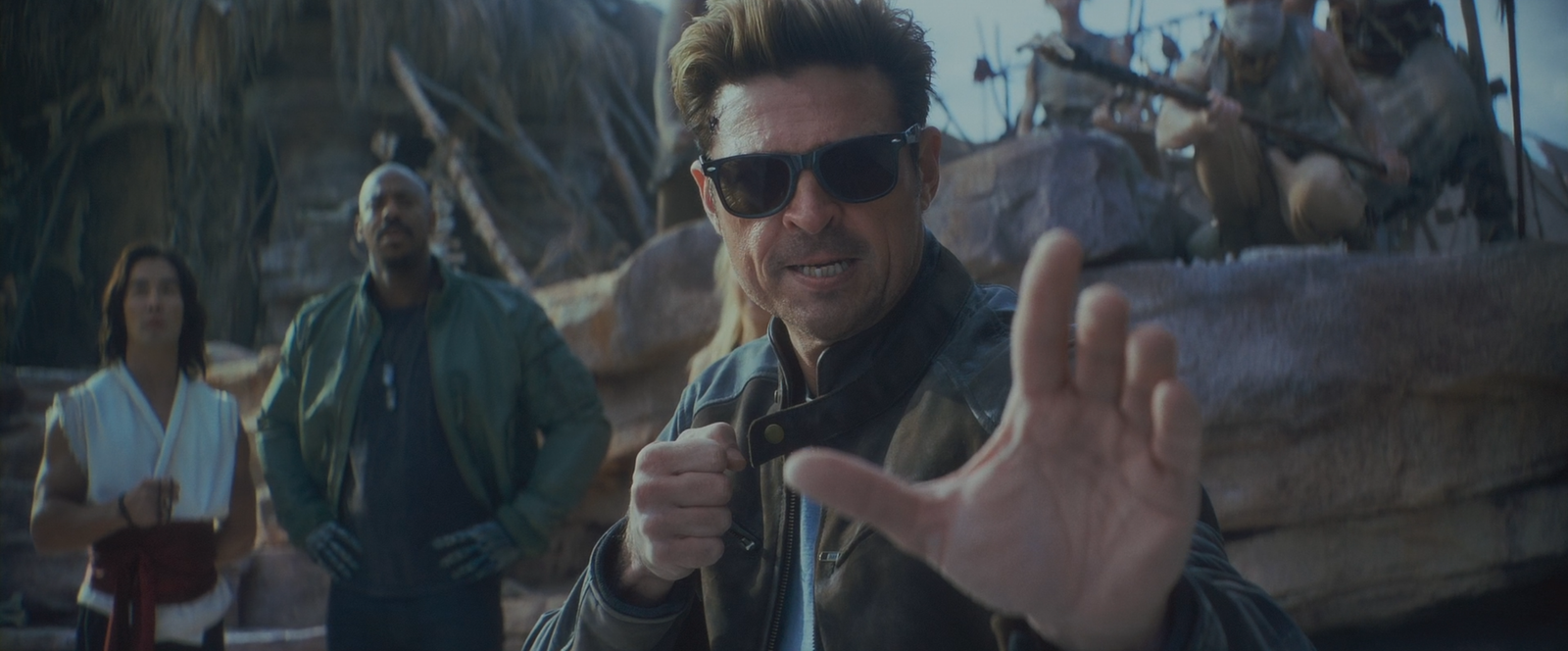
Cage is afraid, doubts, throws out one-liners, references modern pop culture, and regularly deflates excessive pathos. He doesn't have Jax's mechanical arms, Liu Kang's fireballs, or the desire to die in a competition he knew nothing about yesterday. Because of this, the character becomes an ideal counterweight to the defenders of Earthrealm, whom the script too often puts solemn speeches about heroism and the fate of the world into their mouths.
He gets a classic hero's arc — compressed to the pace of a fighting game, without much psychological subtlety, but quite effective. Cage follows a clear trajectory: from refusal and escape to accepting the role of a defender, where even a low blow turns into a point of personal growth. Karl Urban can only be praised here: against a backdrop of skepticism and low expectations, he makes the most of the role and turns every scene with Cage into a show that you want to follow closely.
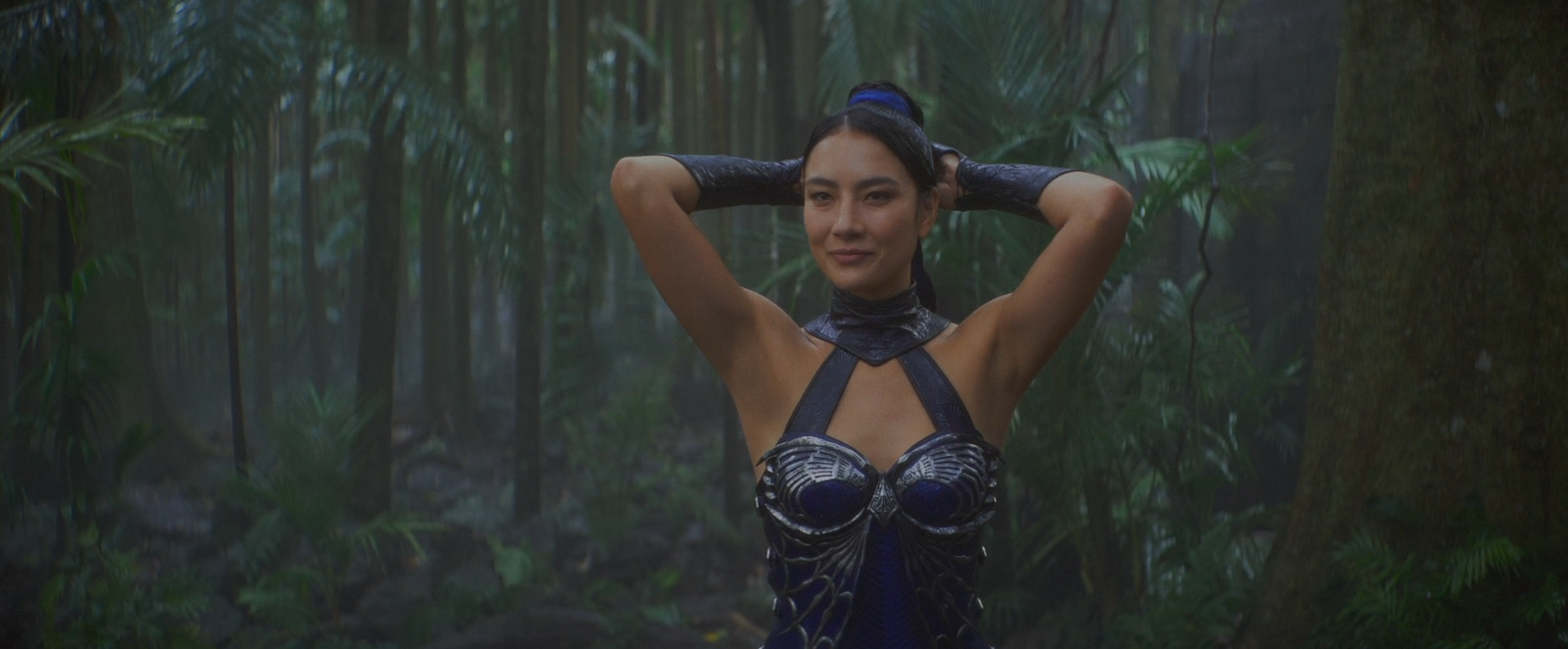
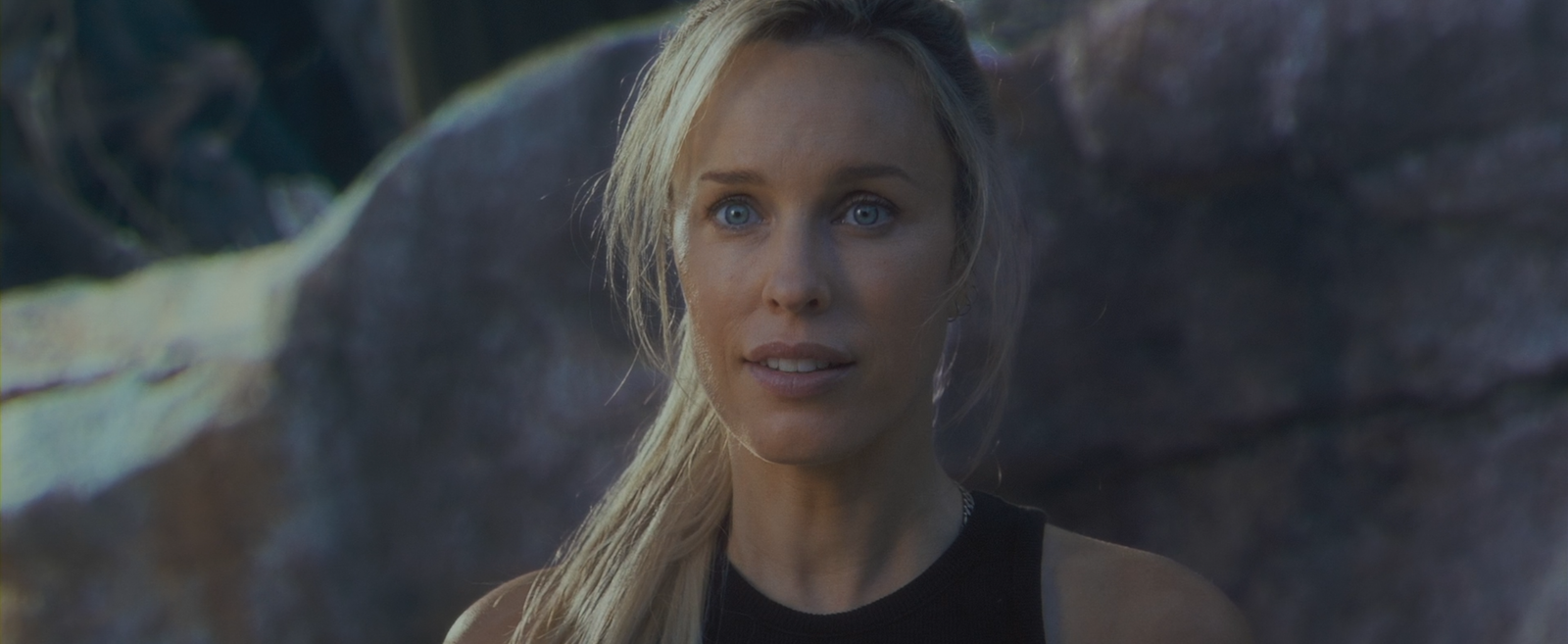
The second important storyline belongs to Kitana. She shares screen time with Cage almost equally and moves towards the climax from the Outworld side. Through her, the film shows that behind the talk of ten victories and the fate of Earth lie specific traumas: a devastated Edenia, a murdered king, life at Shao Kahn's court as an adopted hostage daughter.
Adeline Rudolph truly shines in this role. Kitana also has a rather simple arc of revenge and liberation, but that's enough: Rudolph holds her own confidently in both fight scenes and calmer episodes where the character's inner resilience comes to the fore.
The creators, however, do not turn Kitana into a walking slogan. Her strength is not spoken aloud but manifested in actions — through loyalty to the fallen Edenia, a sense of duty, and a desire to reclaim her own destiny. After the unsuccessful experience in the Resident Evil series, "Mortal Kombat 2" looks like a successful comeback for the actress in a video game movie.
Against this backdrop, the plot itself follows an old formula and serves as a pretext for bloody brawls. Shao Kahn wants to win at all costs and is ready to use the dirtiest methods, but "Mortal Kombat 2" doesn't pretend to be a political saga or a grand drama. The film launches the tournament by the thirtieth minute, sets up the pieces, outlines personal motives, and moves on to the main course: pitting fighters against each other in arenas, showering the audience with fan service, shouting Finish Him!, and checking how spectacularly modern technology has learned to spill guts.
12 Rounds of Pure Action
In "Mortal Kombat 2," battles finally come to the forefront. Yes, of course, battles were an important part of the 2021 film as well, but there they were more like obligatory circus acts to keep the audience from falling asleep — and in some cases, they even managed to entertain. But in the sequel, they form a clear system where each fight is justified not only as an attraction but also dramatically or plot-wise.
There's more fighting, the main scenes last longer and are more evenly distributed throughout the runtime. Because of this, the sequel feels grander, richer, and more substantial than the first part, although the dramaturgy remains extremely straightforward: fighters come out, clash, some are eliminated, some move on.
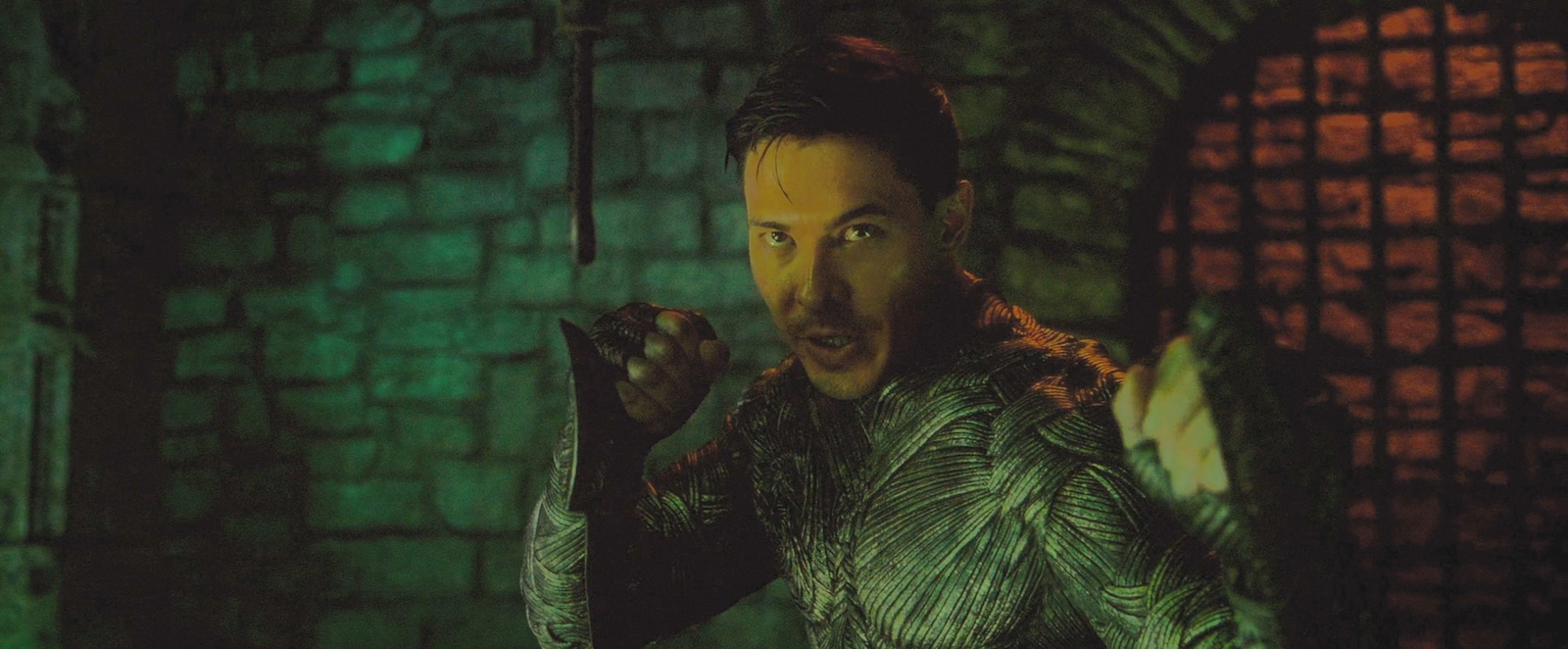
I counted twelve action scenes, and most of them are detailed, intense episodes that are given ample room to unfold. The parallel editing in the final block is particularly impressive: the film maintains attention between two, or rather, three decisive battles that gradually coalesce into one powerful emotional punch.
In the 2021 film, the same technique, on the contrary, often destroyed the tension: battles were interrupted by calm inserts that seemed to tug at the viewer's sleeve and distract from the action. It seemed as if the creators wanted to make it "beautiful," like in a serious movie, but didn't quite understand how or why.
There are also plenty of short interruptions: sometimes characters are allowed to talk right during a battle to set up the next plot twist. This is related to how the creators handle the tournament structure. In "Mortal Kombat," every fight seems obligated to end with a fatality, but if every loser were turned into mincemeat, the ensemble would run out long before the finale.
Therefore, a caveat appears: the winner decides whether to finish off the opponent or spare them. As a result, there are fewer killings than you'd expect from a film with such a title, but they function as plot nodes. Death removes a character from the game and closes an arc, sharply raises the stakes, or sets up a sequel — and thereby supports the main idea of the sequel: every battle should be more than just another attraction.
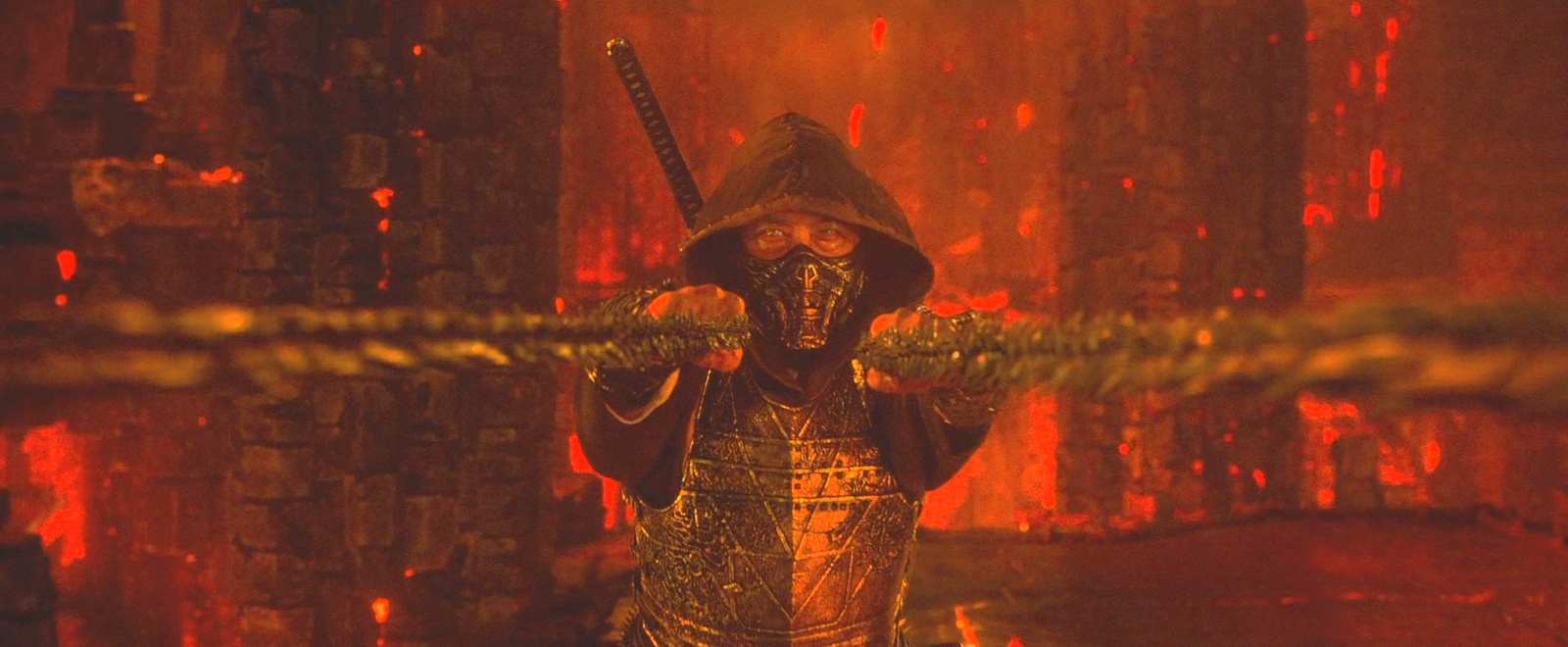
The film's visual variety is fine this time. Each fight gets a separate location or at least a new atmosphere. Even when arenas repeat, the time of day, light, color, and mood change. The film leads the viewer through the Tarkatan camp, Shao Kahn's palace, a pit of spikes, the acid Dead Pool, and the Netherrealm, where one of the most spectacular and mesmerizing battles involving Scorpion and Bi-Han, who became Noob Saibot, unfolds.
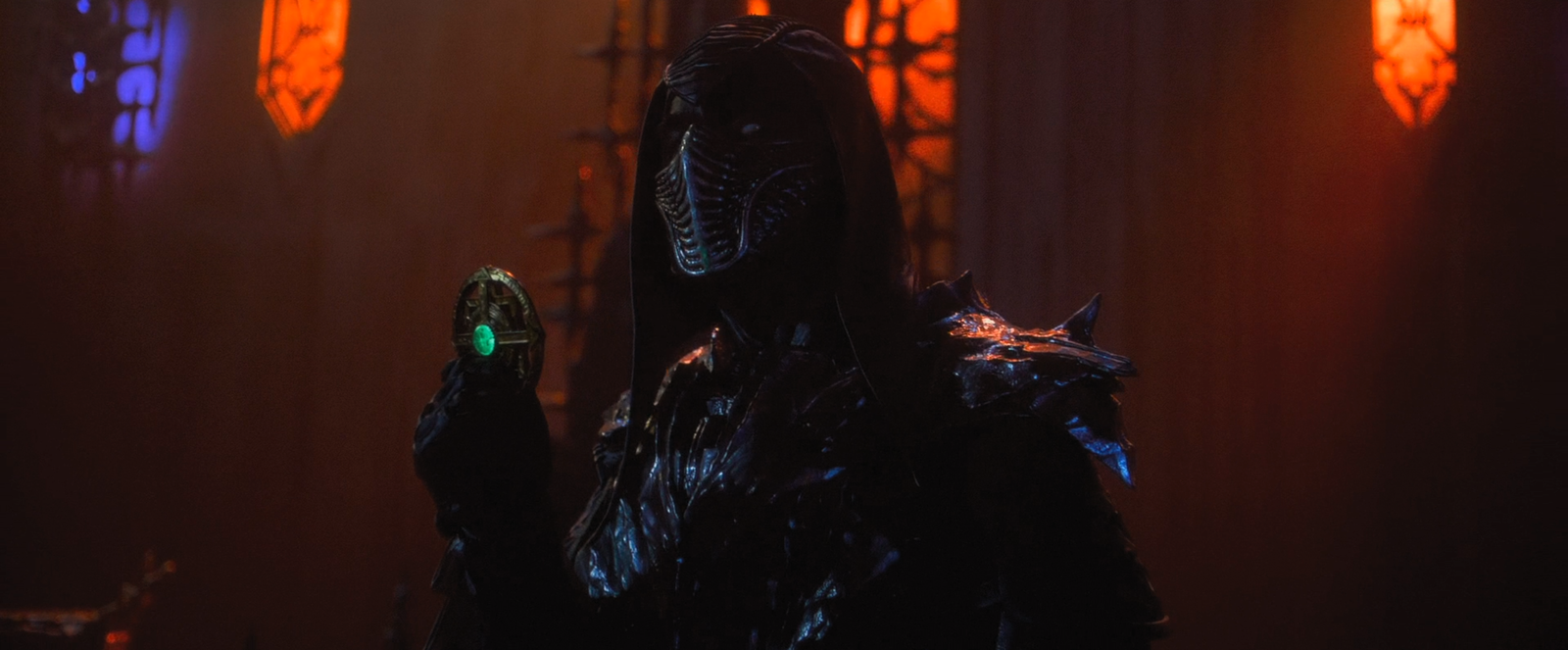
Additionally, Johnny Cage significantly expands the tonal range of the action. Johnny and Kitana's fight, which opens the tournament, is amusing in its absurdity: Cage enters the arena unprepared, scares his opponent with a Saturn Award for Best Fight in a Film, and Kitana plays with him like food.
Johnny's fight with Baraka goes even further into comedic farce but doesn't lose its spectacle. Cage panics, backs away, jokes, takes a beating, and "fights" the way a comedic action hero in a deadly situation would.
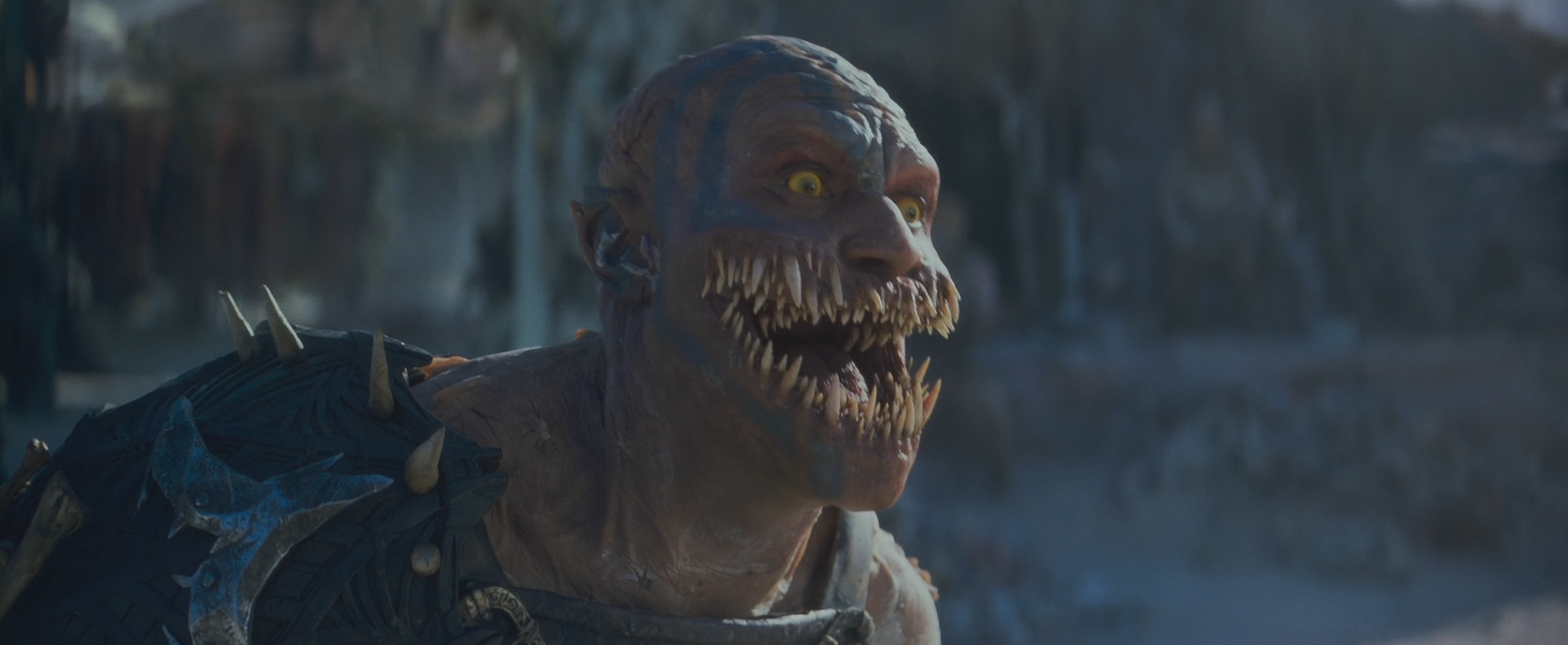
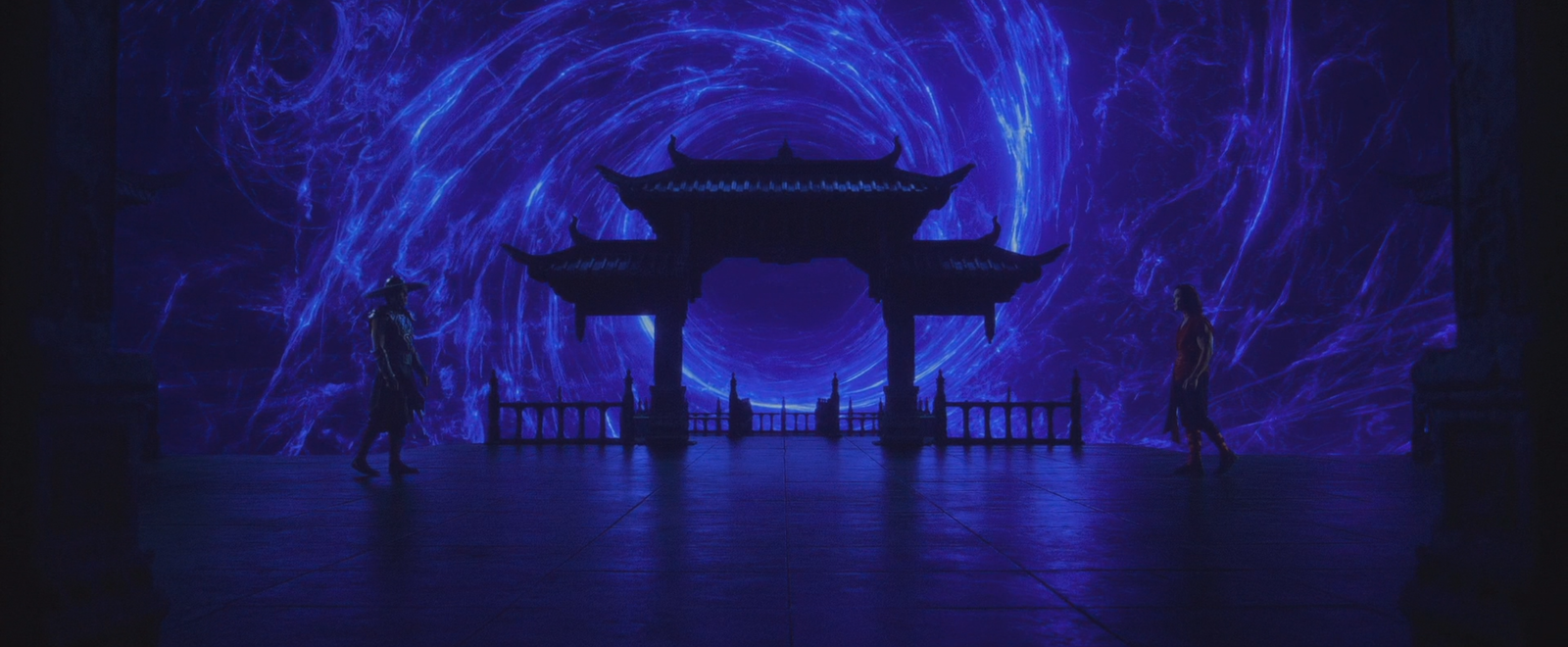
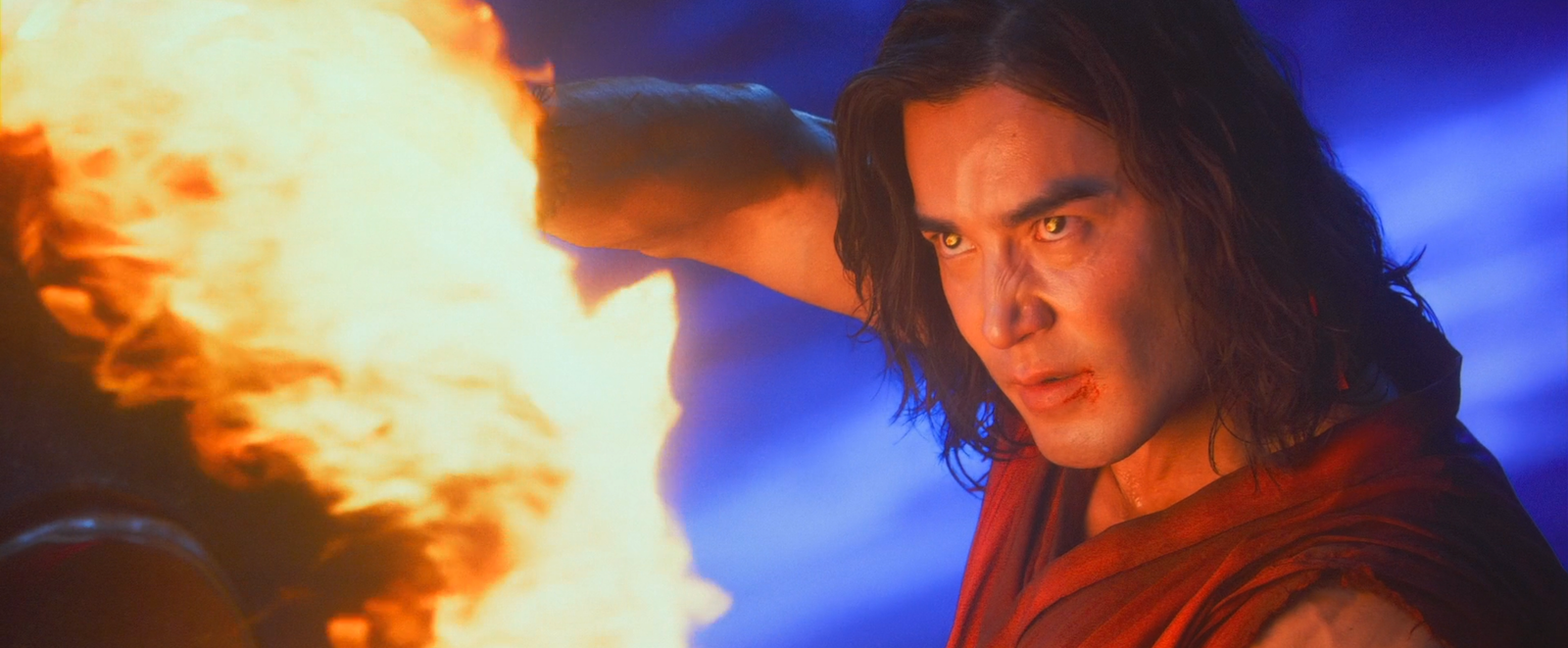
At the other pole is Liu Kang versus the resurrected Kung Lao in the Blue Portal arena. This is one of the best fights in the film: two people who considered themselves brothers meet on screen, now forced to fight to the death, and two actors with the most confident physicality in the cast. When the Techno Syndrome remix kicks in, the scene soars on fan ecstasy and powerful dramatic charge. A casual viewer will appreciate the staging and energy of the action, but for players who know these characters, the fight will additionally resonate with the moral weight of what is happening.
Not a Flawless Victory
Despite successful finds and a heap of corrected errors, "Mortal Kombat 2" is easy to criticize: old ailments have not completely disappeared. In cinematography, staging, and graphics, shortcomings and a lack of budget are still felt.
In wide shots, missed hits are sometimes noticeable: the camera chooses an unfortunate angle, there is no physical contact, and the actor simply plays out the hit. Sometimes the work of wires is too clearly visible. There are few such micro-flaws, but with so many battles, something inevitably catches the eye. But in close-ups and medium shots, everything is fine: hits feel tactile, bodies react convincingly, and the characters sell pain, rage, and fatigue just enough for a film about fantasy deathmatches.
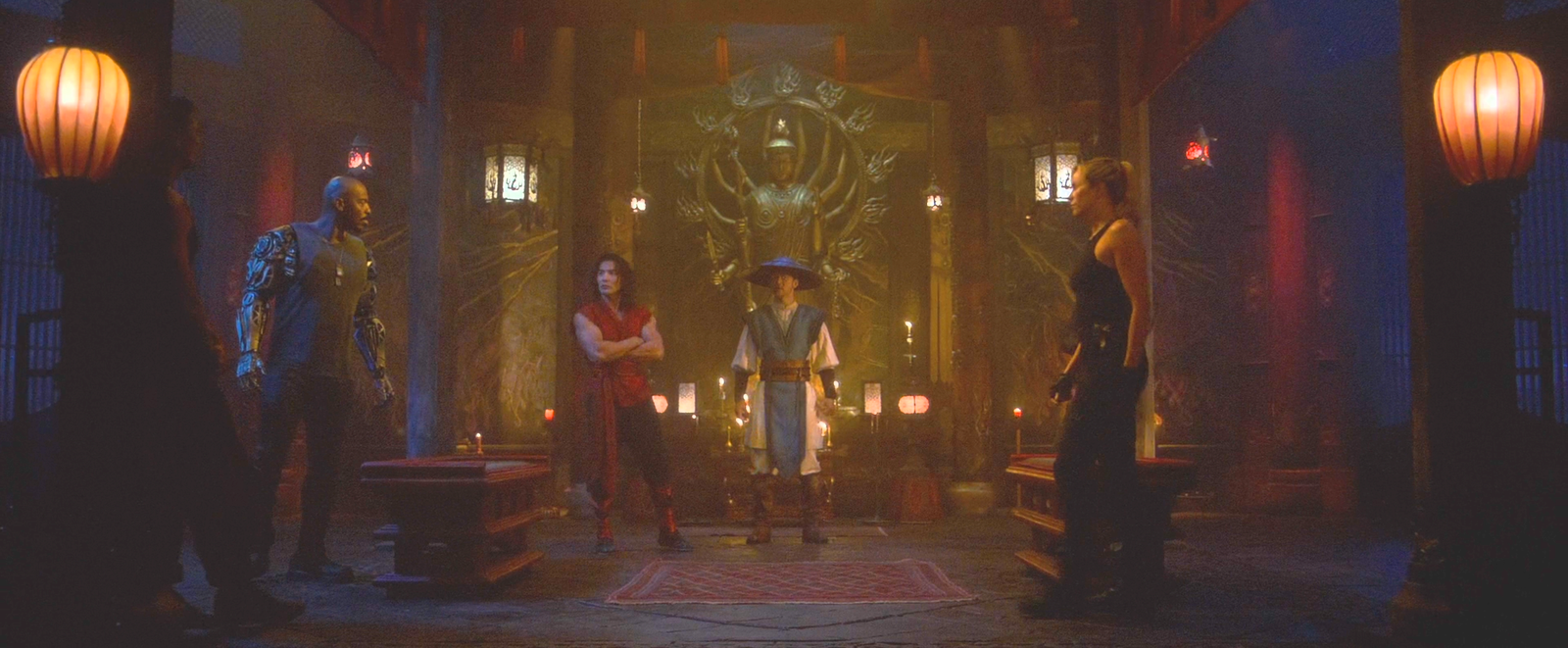
Personally, I don't want to nitpick the script, but it's still conditionally assembled, and some twists exist mainly to propel the story. Some characters remain functions: Raiden acts as a passive mentor, albeit with varying success; Sonya and Jax work as combat units of the roster, who can be replaced by anyone; Liu Kang gets a strong emotional episode with Kung Lao, but otherwise seems to be waiting for his moment in the next film.
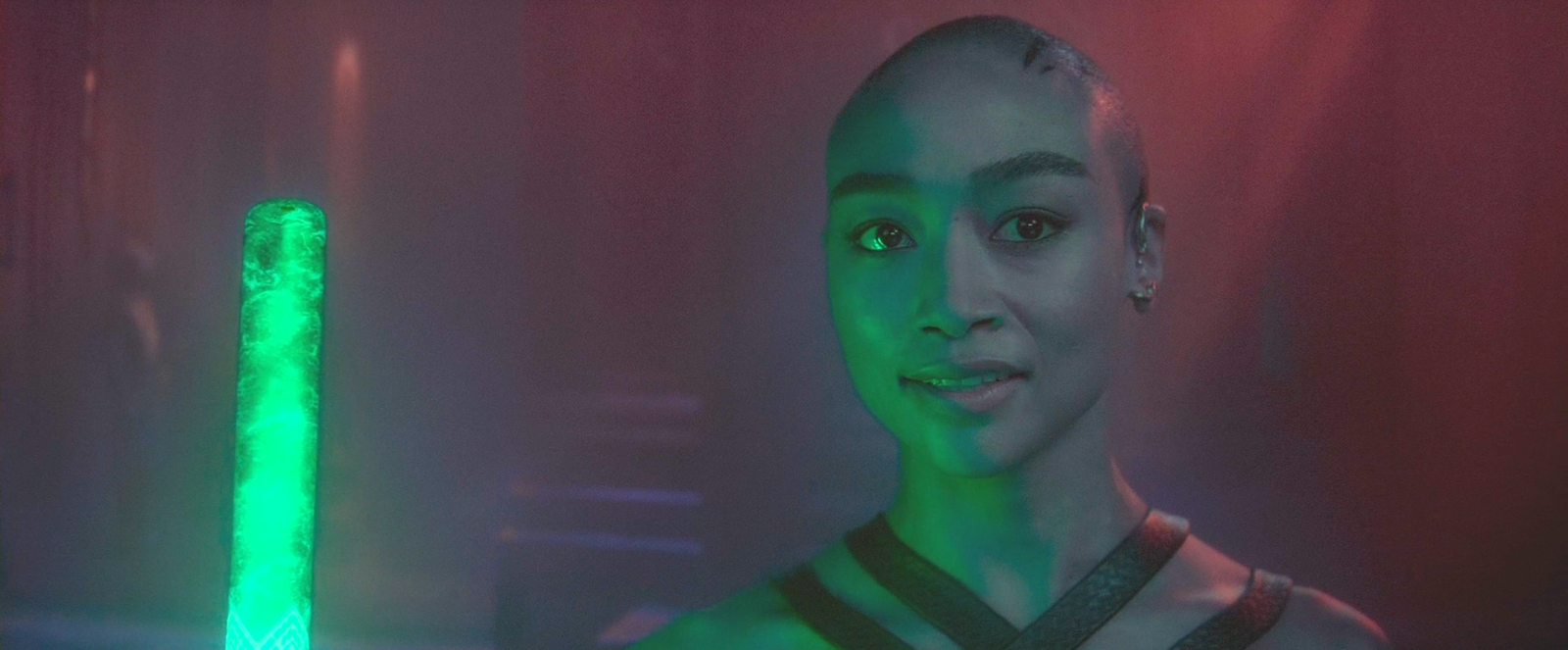
In the Outworld, the situation is similar. In addition to Kitana and Shao Kahn, Quan Chi, Sindel, and Jade appear on screen, but only the latter of this trio plays a significant role in the plot. Tati Gabrielle looks appropriate in this role, but her storyline is too closely tied to Kitana, so it's difficult to perceive Jade as an independent character.
And yet, the sequel is much more organic than the first part. It spends less time on explanations, works more confidently with humor, actively uses game canon, provides more familiar fighters, and stops being shy about fan service. And when Kano appears next to Cage, the film begins to walk the line of bad taste and risks descending into farce, but against the backdrop of the dark main story, this somewhat crude comedy helps the film not suffocate.
Verdict
If you look at "Mortal Kombat 2" through the lens of strict criticism — not Johnny Cage's signature glasses, but a cold analytical monocle — a long list of complaints can be made: from conditional dramaturgy with functional characters and formal dialogues to individual failures in battle staging.
But as a Mortal Kombat adaptation, the second part surpasses the first in almost every aspect. Moreover, it makes the existence of the 2021 film almost meaningless.
The sequel better understands the source material. It's more tightly constructed, more spectacularly staged, richer in fan service and visual variety. Director Simon McQuoid and screenwriter Jeremy Slater seem to have addressed the complaints about the first part and adopted a simple principle: this time, fans should have fun, and the creators shouldn't be ashamed.
The result is a film very similar to the story campaign of the modern NetherRealm Studios lineup: a kitschy, bloody, energetic adventure that tries its best to please its audience — and largely succeeds.
"Mortal Kombat 2" stole my heart with Adeline Rudolph and Karl Urban and energized me in a way you usually expect from big summer blockbusters. Where strict film critics will likely give their sour-faced "meh," we, the gamers, greet the sequel with enthusiastic applause. Because this is exactly the "Mortal Kombat" we were waiting for back in 2021.
Never miss our newsAdd this site to your preferred sources to see us more oftenAdd on Google