
Next-Gen Xbox Could Cost Twice as Much as PlayStation 6, and Xbox-Branded PCs Will Lose Backward Compatibility - Insider
Microsoft's attempt to turn the next generation of Xbox into a hybrid ecosystem with support for third-party platforms promises technical flexibility but will result in financial costs - it seems that the players themselves will have to pay for it.
New comments from insider Kepler L2 on the NeoGAF forum have revealed details about the next-generation Xbox device. He confirmed that the previously leaked AMD Magnus APU with 11 Zen 6 cores and 68 RDNA 5 compute units will form the basis for both the console and the line of Xbox-branded gaming PCs. According to him, it is the features of the architecture and business model that could make the new platform the most expensive in Microsoft's history.
The main feature will be not only increased performance, but also support for third-party stores, including Steam and GOG, which will allow you to run a wide range of games. However, this openness threatens the company's traditional business model with a 30% commission for sales in the proprietary store, which could lead to a significant increase in the cost of the console itself. According to forecasts, in order to compensate for losses from the lack of commission, Microsoft will have to raise the price of the device to $1,000-$1,500. This is almost twice the expected cost of PlayStation 6.
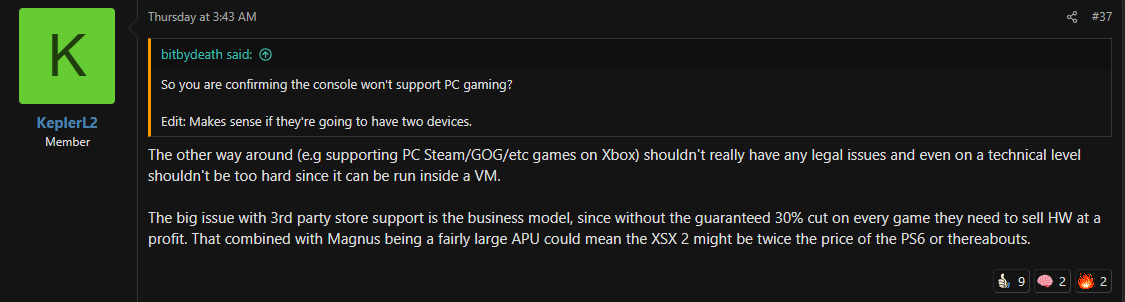
Consoles will retain backward compatibility with games of past generations, while Xbox-branded PCs will not receive this feature. The reason lies in licensing. The Xbox Play Anywhere system formally allows you to use one purchase on both Xbox and Windows with shared saves and add-ons. However, according to the insider, many publishers are already unhappy with the current level of cross-platform compatibility and are against the automatic transfer of licenses. Microsoft's attempts to move further and turn Xbox games into full-fledged PC versions could lead to lawsuits. Even the idea of dual boot (Xbox/Windows) is considered in this context as legally dubious.
Thus, Microsoft will have to strike a balance between user convenience and the sustainability of the business model. According to insiders, the technical flexibility of the next generation of Xbox may result in a noticeable increase in price for end customers.
Never miss our newsAdd this site to your preferred sources to see us more oftenAdd on Google