AMD Prepares a "Killer" of Entry-Level Discrete Graphics Cards - Leak
Analysis of the code shows that this family is a technological development of the current generation, positioned between RDNA 3.5 and full-fledged RDNA 4. Although the internal nomenclature refers to them as the GFX11 series, the new cores have received instructions characteristic of more modern solutions.
Key changes include hardware support for FP8 and BF8 data formats, as well as WMMA matrix operations. These improvements are critical for working with AI, in particular for FSR 4 scaling technology, which will rely on neural networks and machine learning.
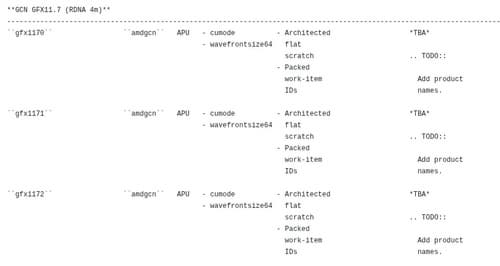
Experts point out that RDNA 4m will find application in Medusa Point mobile processors based on Zen 6 cores. They should replace the current Strix Point chips. In parallel, AMD is developing the top-end Medusa Halo line: these solutions promise a real generational leap using the RDNA 5 architecture and ultra-fast LPDDR6 memory.
Never miss our newsAdd this site to your preferred sources to see us more oftenAdd on Google