The Art of Sand Surfing. A Review of the Meditative Adventure Sword of the Sea
Today, not everyone will remember, but back in 2012, the game Journey was released on the PlayStation 3 console. The game was quite short, but even in a couple of hours of acquaintance, it managed to show an incredibly beautiful world and tell a touching story (most of which the player had to come up with himself) about what happened to this world. So, Sword of the Sea does practically the same thing - only much better.
A New Journey
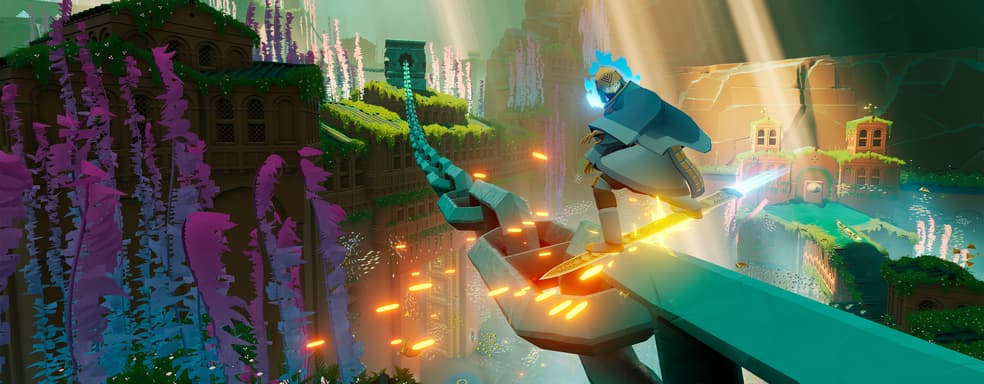
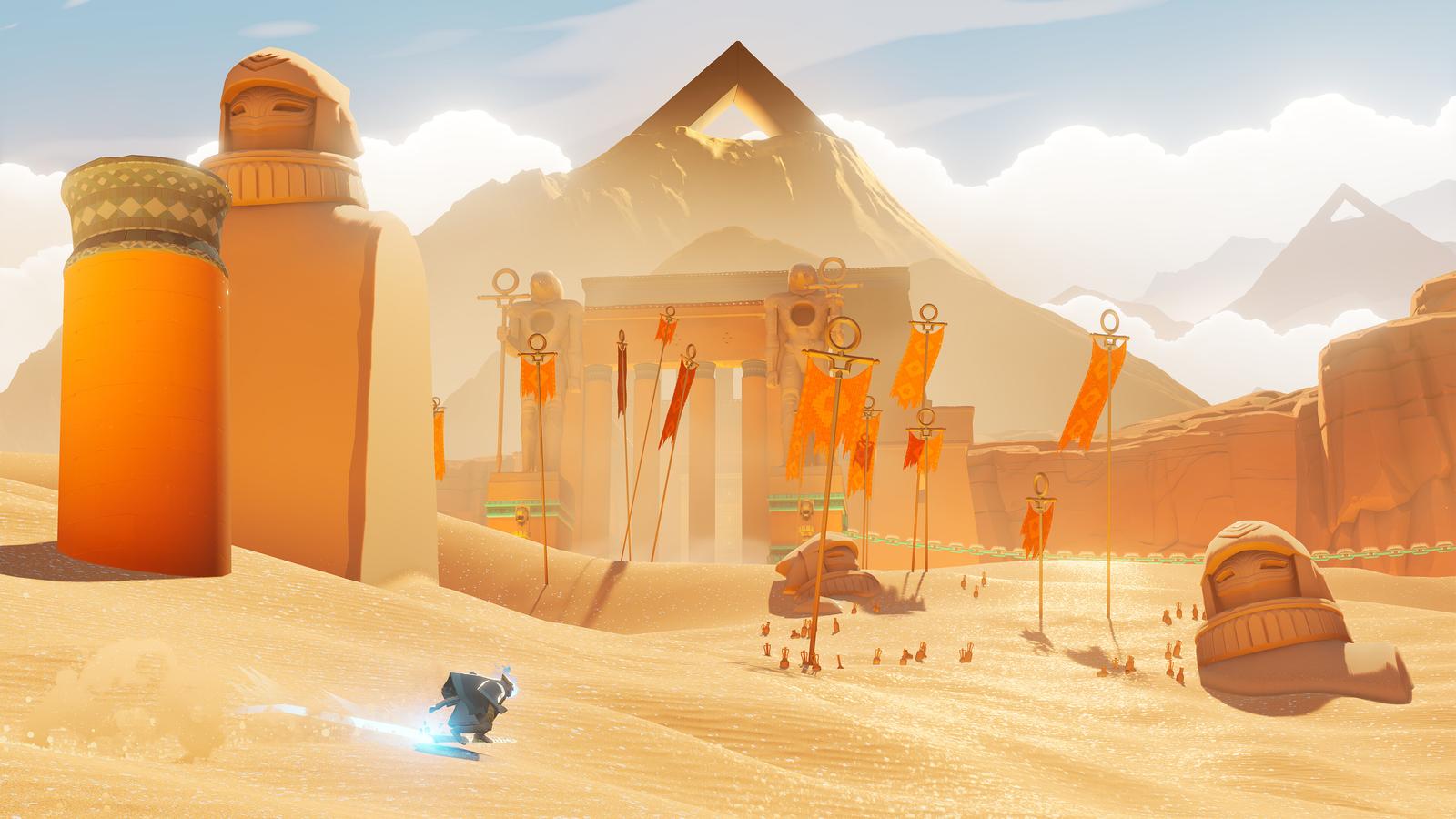
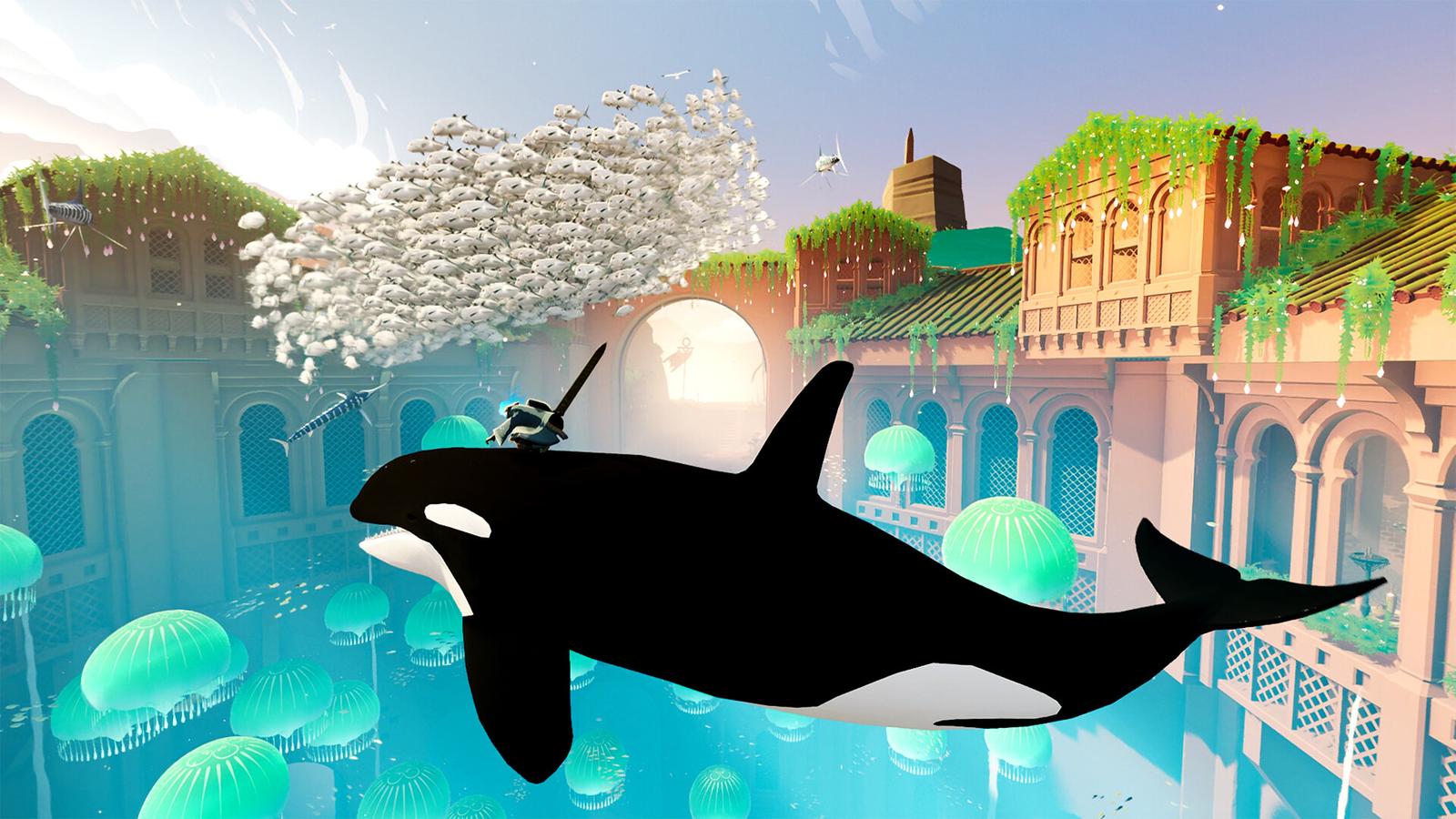
Sword of the Sea combines ingenious game design with a captivating story about a brave spirit trying to restore an ocean that has turned into a lifeless desert. To do this, the protagonist uses a magic sword that not only revives enchanted springs of life-giving moisture, but also serves as a surfboard - only instead of water and waves, there is sand and dunes here.
In Sword of the Sea, there are no long cutscenes full of meaningless pathos that introduce the game world and characters. The player receives all the information necessary for understanding during the passage - from various obelisks or simply by being observant, as it should be in games that respect the player's intelligence. The environments themselves perfectly explain the reasons for the fall of this civilization and suggest how to help it recover.
The whole adventure boils down to getting from point A to point B. There are no puzzles or enemies here. There is only one boss, and even he can be defeated while playing with your feet. Blindfolded. Standing on your hands. Difficulties may arise only in rare additional tests with a set of points for performing tricks, but they are overcome from the second or third attempt with due diligence. As a result, everything is reduced to the fact that the player simply enjoys exploring the world of Sword of the Sea and searching for secrets.
Secrets and Melodies of Vanished Waves
Deviating from the route, you can easily find yourself in an inconspicuous cave with one of the aforementioned obelisks, which will help you better understand how the once beautiful ocean, full of life, turned into a lifeless desert. Or get tiny golden prisms, which can then be exchanged for new abilities from the merchant. Additional spirit skills do not fundamentally affect the gameplay, but they allow you to perform more spectacular aerial tricks - if you suddenly want to make a poser out of the savior.
Sword of the Sea generously rewards curiosity, and each location is built so that you can get almost anywhere. Did you spot a strange hill shining under the scorching sun, or some kind of ledge? And what is this dilapidated bridge doing here? There is guaranteed to be a solution to another puzzle or a secret hidden there. If it seems that a secret is hidden somewhere nearby and it is worth lingering at the location to search for it, then that is the case.

In addition to the design and gameplay itself, another strength of Sword of the Sea is the musical arrangement, to which the well-known Austin Wintory contributed. The maestro has already written music for The Pathless and Abzû, on which Giant Squid worked, and also created the soundtrack for Journey. As in the case of the same Journey, the music in Sword of the Sea not only sets the tone for what is happening on the screen, but also becomes an integral part of it, inspiring you to move on and discover new secrets.
The only thing that Sword of the Sea can be criticized for (whew-ha) is for the sometimes overly responsive controls. The spirit reacts with particular zeal even to light movements of the sticks and jumps over obstacles too willingly, sometimes breaking off the route and ending up in the abyss.
Diagnosis
Sword of the Sea is a beautiful, soulful and exciting adventure for a few hours that fly by almost unnoticed. It is a wonderful combination of music, meditative gameplay and great design.
Pro
- Great design
- Beautiful graphics
- Amazing music
- Interesting world to explore
Contra
- Sometimes too responsive controls
Never miss our newsAdd this site to your preferred sources to see us more oftenAdd on Google