Cairn Review: A Mountaineering Simulator That Makes Your Hands Tremble and Your Heart Sink
Translated with AI from the Russian original.
The new project from The Game Bakers, the creators of Haven and Furi, can easily be mistaken for another "friendship simulator" from the screenshots. But Cairn quickly makes it clear how wrong that impression is. This is a single-player mountaineering simulator where meditation and picturesque landscapes conceal a fierce struggle for survival on Mount Kami, which is almost nine thousand meters high. No one has ever stood on its summit. Will you accept the challenge?
Control at Your Fingertips
Cairn begins with a warm-up scene at a climbing wall. The main character, Aava, diligently warms up her muscles. The game wordlessly makes it clear: this is not a random tourist. She is a professional mountaineer, ready for challenges far beyond the training center. At the same time, the player themselves needs to learn a lot before they are even released from the climbing wall.
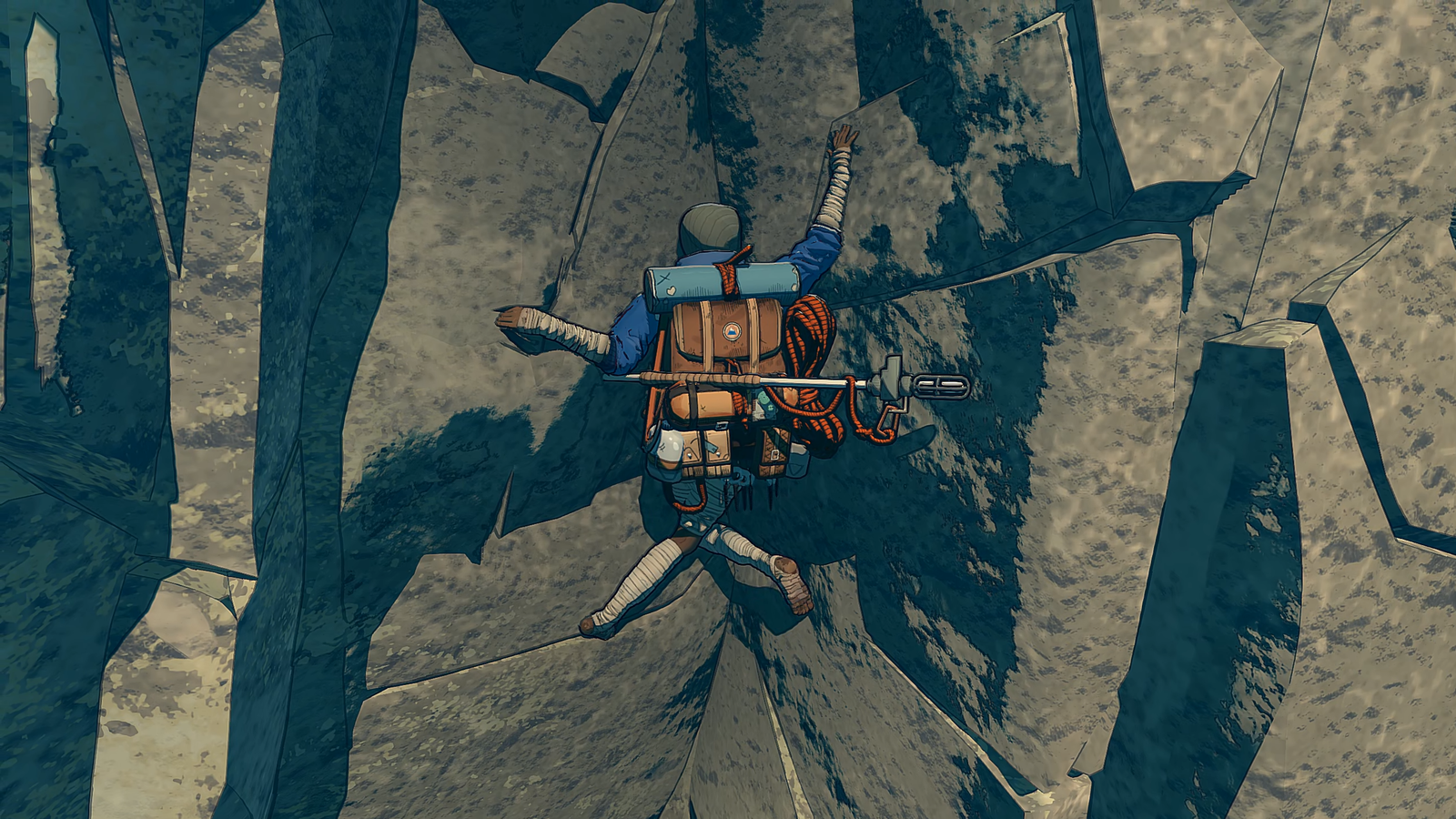
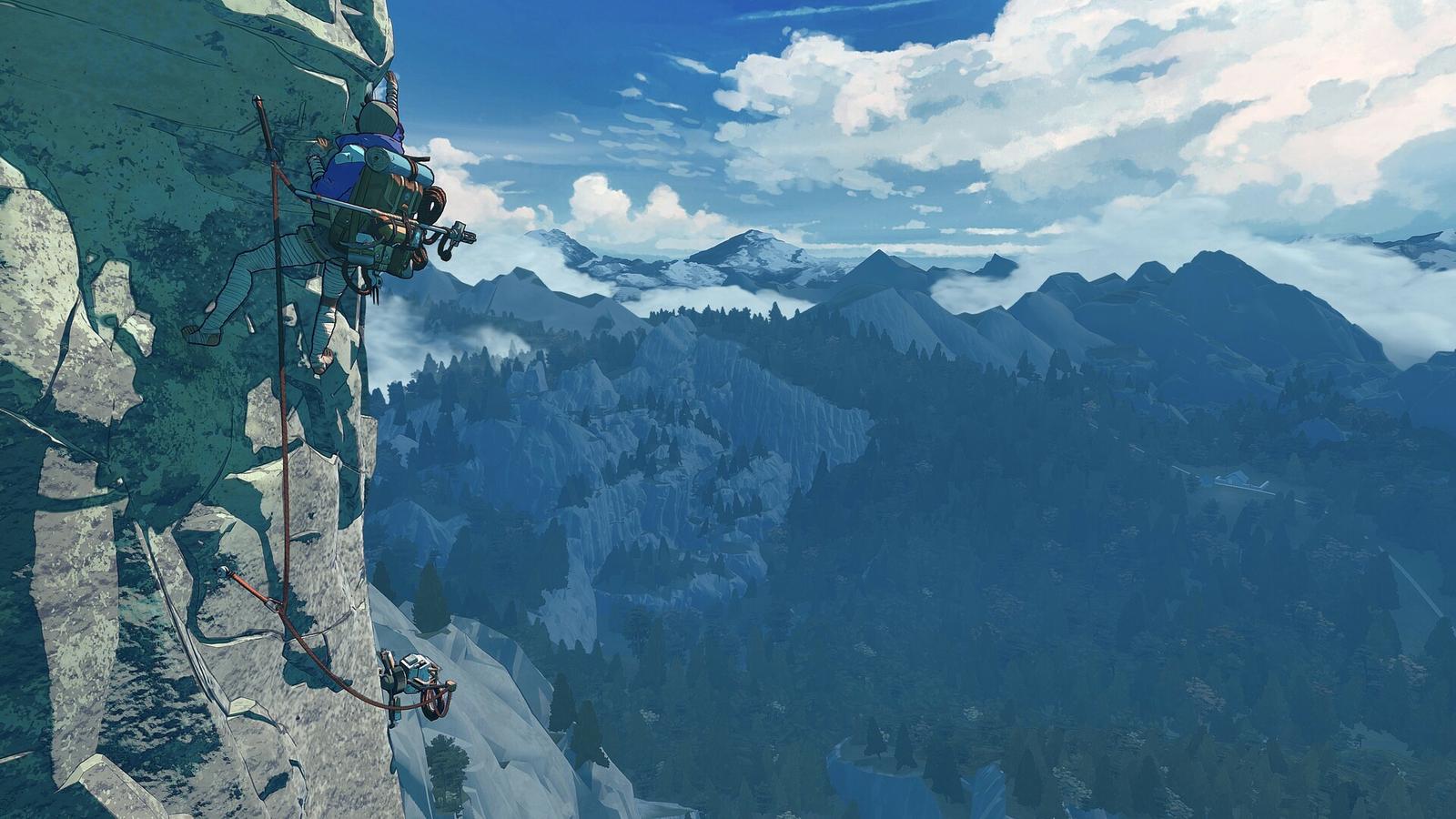
The main mechanic of Cairn, as you might guess, is climbing rocks. It requires the player to literally feel the character's body. We control her every movement: separately with the left hand, right hand, and each leg. By default, the game itself chooses the next limb based on Aava's position, and this is enough in most situations. But if desired, you can intervene and manually specify the desired limb — this is especially useful where more precise control is needed.
From here (excuse the pun) grow the legs of Cairn's unusual physics. It is far from realism and allows you to twist Aava at unimaginable angles. At first, such a convention is perceived as comical and raises a legitimate question: what kind of simulator is this then? However, looking ahead, as someone who did make it to the top, I can say the following: if the physics in the game were more realistic, it would be almost impossible to do this.
The thing is, Cairn already squeezes everything out of the player. You need to monitor vital signs, balance, endurance, and body position, plan a route taking into account the terrain, and make decisions in stressful situations. All this happens almost without an interface, and the game does not forget to punish mistakes with loss of time and resources.
More "honest" physics would turn the gameplay into a suffocating simulation for the sake of simulation. The price of each movement would become prohibitively high, and the game would simply fail, scaring away a significant portion of the audience. Here, the developers consciously made a compromise — and it allows the mechanics to work normally as a single whole.
Freedom and Meditation
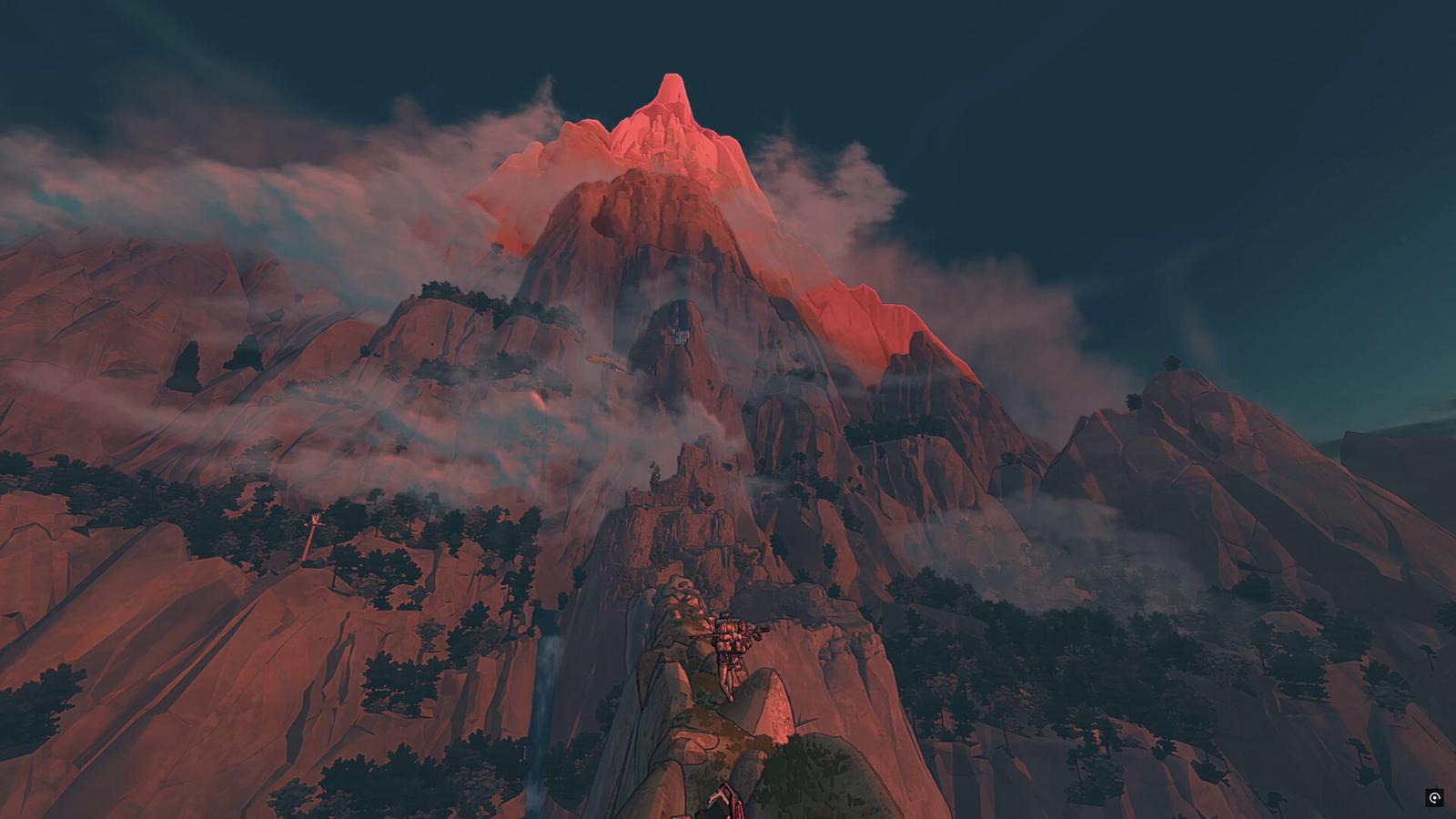
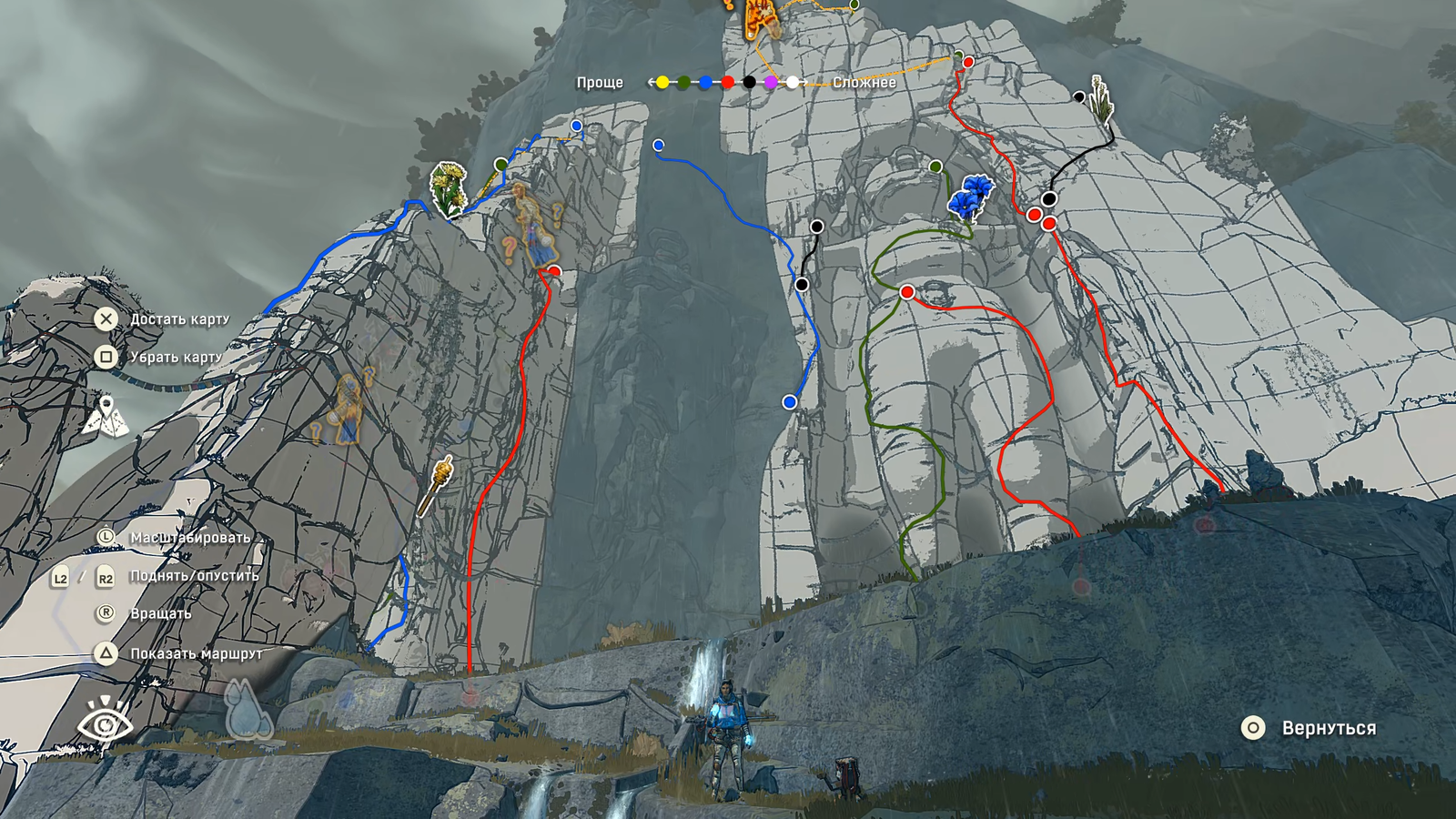
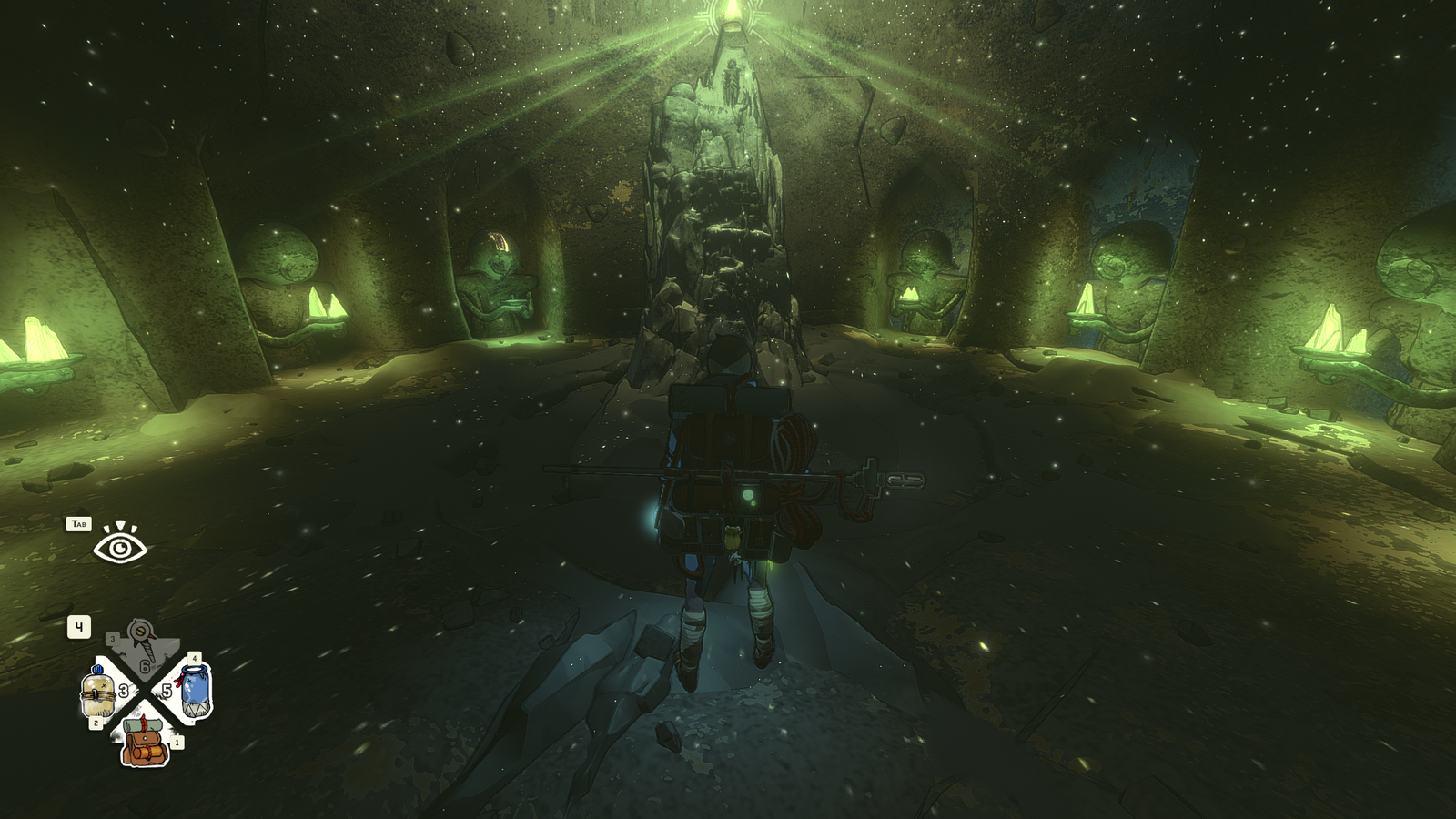
In Cairn, the player has a clear ultimate goal — the summit, but in everything else, the game almost does not limit freedom. There are no fixed routes to climb up. Instead, there is uneven terrain that allows you to lay dozens of paths: shorter but more difficult, or longer but safer. You can go along gentle slopes, take a risk and climb directly up an almost vertical wall, or turn aside to explore a cave beckoning with a mysterious glow.
At first, planning is really difficult, but you quickly learn to "read" the terrain and estimate where you have enough strength to reach, and where you should not climb. A separate viewing mode is provided for this. In it, the camera flies away from the heroine, allowing you to survey the surrounding space, see the path traveled, and plan the next step.
There are no visual cues like yellow paint here — you have to navigate by the terrain itself. Exceptions are rare: sometimes Aava finds maps of the area with already marked routes. They are usually associated with side quests and lead to specific improvements.
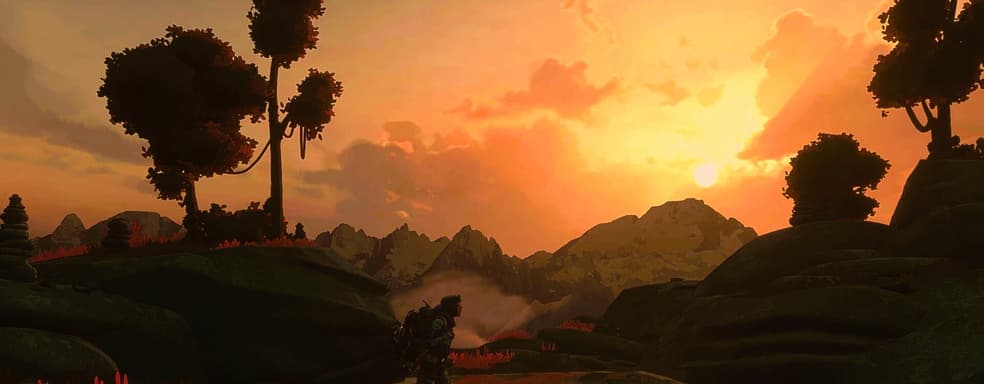
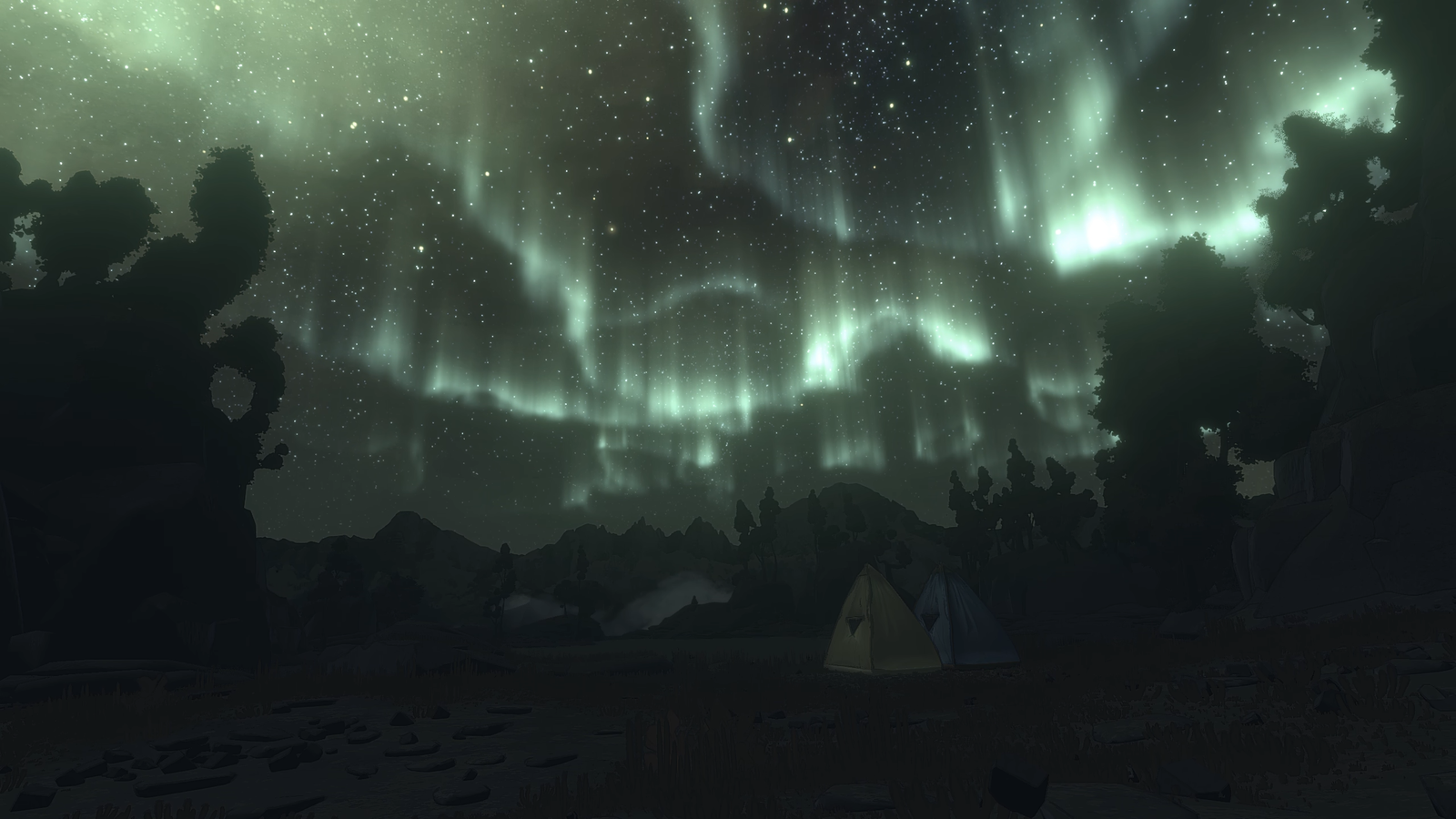
At the same time, additional paths do not always reward with useful items. Sometimes the reward is the view itself — a panorama of the valley at the foot of Kami, a sunset, or a night sky that is truly breathtaking. Despite the stylized cel-shading visuals, Cairn can be truly beautiful and regularly gives a sense of unity with nature.
The sound design only enhances this feeling. Most of the time, the game dispenses with background music, leaving the player alone with Aava's breathing, the wind, and the sounds of the environment. Therefore, in those rare moments when music does appear, it works flawlessly: it emphasizes the beauty of the moment or provides emotional relief after a particularly difficult stretch of the path.
All these episodes remind us that no matter how difficult the ascent is, Cairn is still about contemplation and meditation. And the developers emphasize this by allowing you to adjust the difficulty to your liking.
Insurance, Death, and Survival
The price of an error in Cairn directly depends on the chosen difficulty. It is better not to touch the maximum "free-solo" mode for the first playthrough: there are no saves or insurance here. I played on the medium level, where progress is saved at bivouacs — tent camps scattered along the route — and safety hooks are available.
Hooks can be hammered into the rock right during the ascent. They fix a safe point from which you cannot fall and allow you to unfasten from the wall, hang on the rope, and catch your breath — this restores endurance. At the same time, it is convenient to climb into the backpack: eat, drink water, or rub your hands with chalk, temporarily improving grip.
The number of hooks per climb is limited. They can be returned when you get to a flat surface, but they can break. The installation of hooks is designed as a mini-game where you need to press the button at the right moment. At first glance, this is a trifle, but in critical situations, everything feels different. When the heroine is holding on to the rock with her last strength, her hands are shaking, her breathing is erratic — at such moments, the player's hands begin to shake. Several times I fell precisely because of haste and fear of not making it.
For those who do not want the game to pose a serious challenge, there is a story mode. In it, saves occur more often, strict resource management is disabled, successful grips are emphasized by animation, and any fall can be canceled by rewinding time back.
Those who decide to accept the rules of the game should take into account: climbing in Cairn is a full-fledged struggle for survival. It is important not only to understand where to climb, but also to assess whether there is enough food and water to get there, or whether it is worth looking around for supplies. The heroine has indicators of hunger, thirst, cold, and health. When any of the first three drops into the red zone, health begins to decline.
In my playthrough, it once happened that in the middle of the ascent I was left without water and was just quietly dying, hanging on a safety rope — until I reloaded the save and went another route.
Management at Altitude
The backpack here is arranged much more interestingly than it seems at first glance. Instead of the usual inventory grid, there is an empty space where all the junk falls as it pleases, like Tetris figures. Canned goods, pills, plasters, bottles of water, plants, mushrooms, broken hooks — things of different shapes and sizes lie mixed up.
At best, you can shake the backpack and redistribute the luggage. Sometimes this makes it possible to free up some space and pick up something else, but you won't be able to carry everything with you. Often you have to choose between an extra pack of noodles and a spare bottle of water.
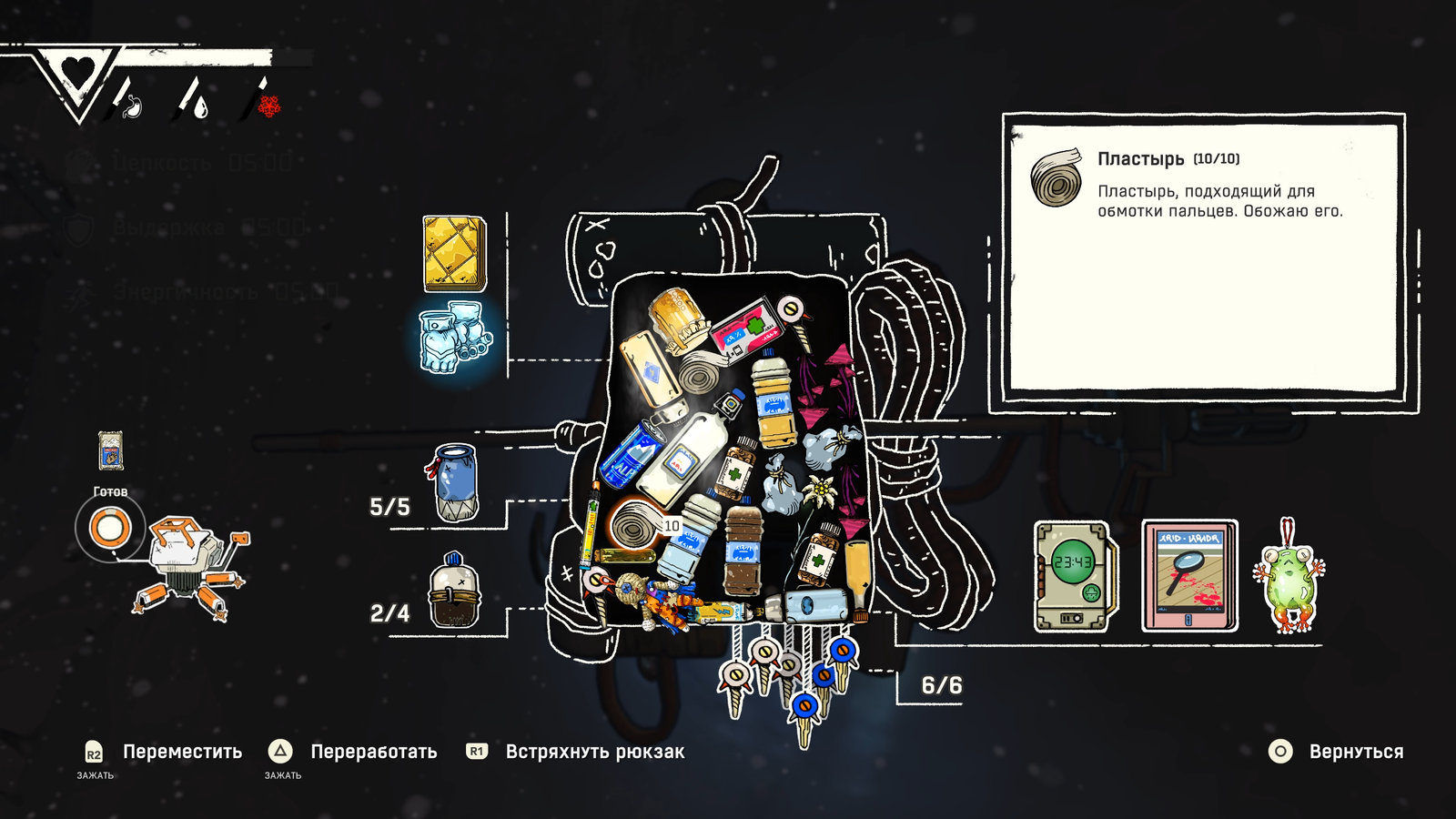
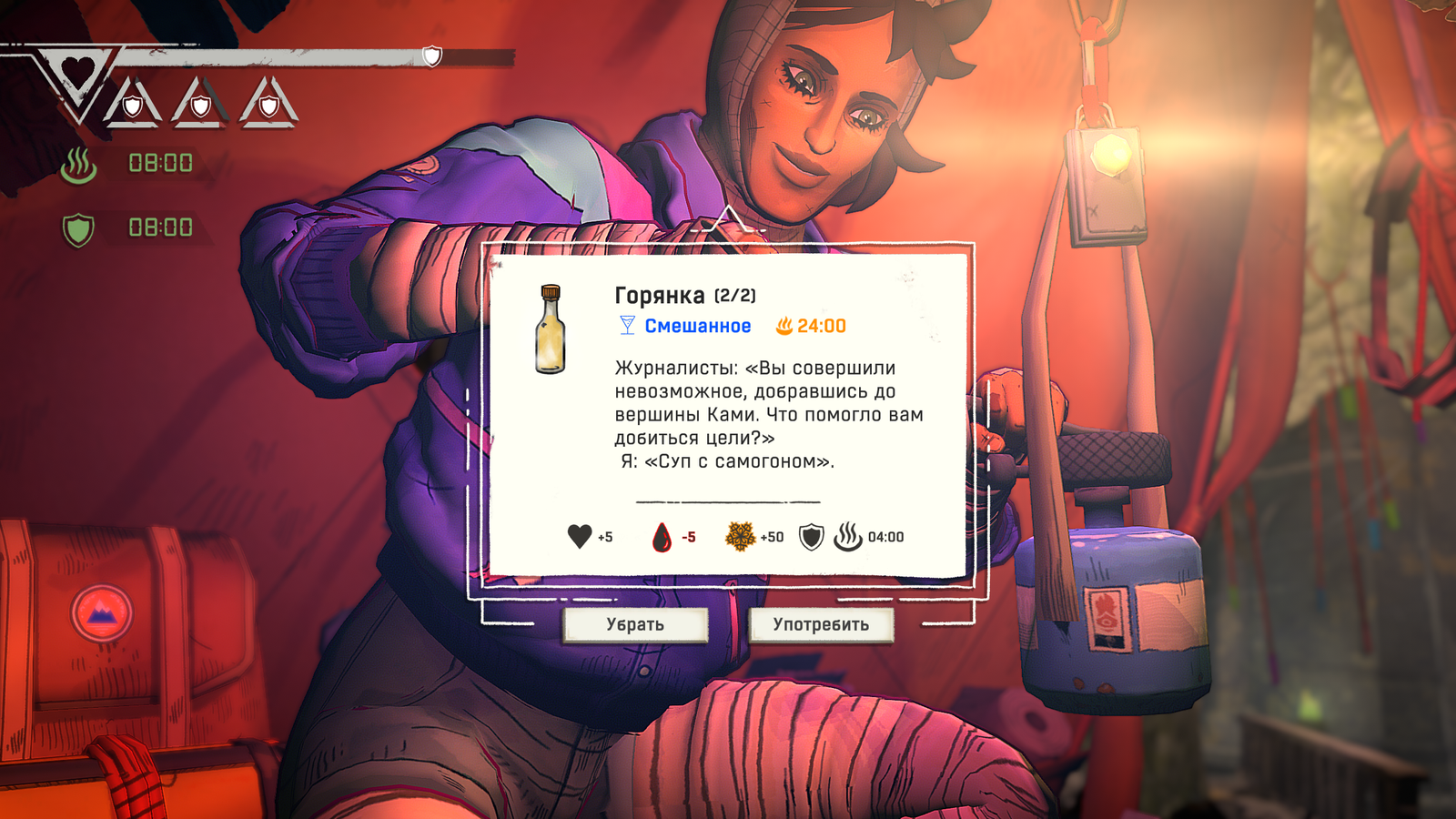
A multi-tiered cooking system noticeably helps with inventory management. In the camp, you can, for example, boil milk and add collected raspberries to it. This drink simultaneously quenches thirst, partially reduces hunger, reduces the effects of cold, and provides a short-term boost to stamina. In addition to the basic effects, food and drinks provide temporary bonuses to grip, movement speed, and other parameters.
Prepared dishes and drinks can be further mixed with other ingredients. This frees up space in your backpack and provides a new effect. The game shows the result of the combination in advance, so it's worth paying attention to. For example, out of habit, I turned herbal tea into mushroom soup several times, expecting to get a conditional "tea with mushrooms" — and as a result, I lost some of the bonuses.
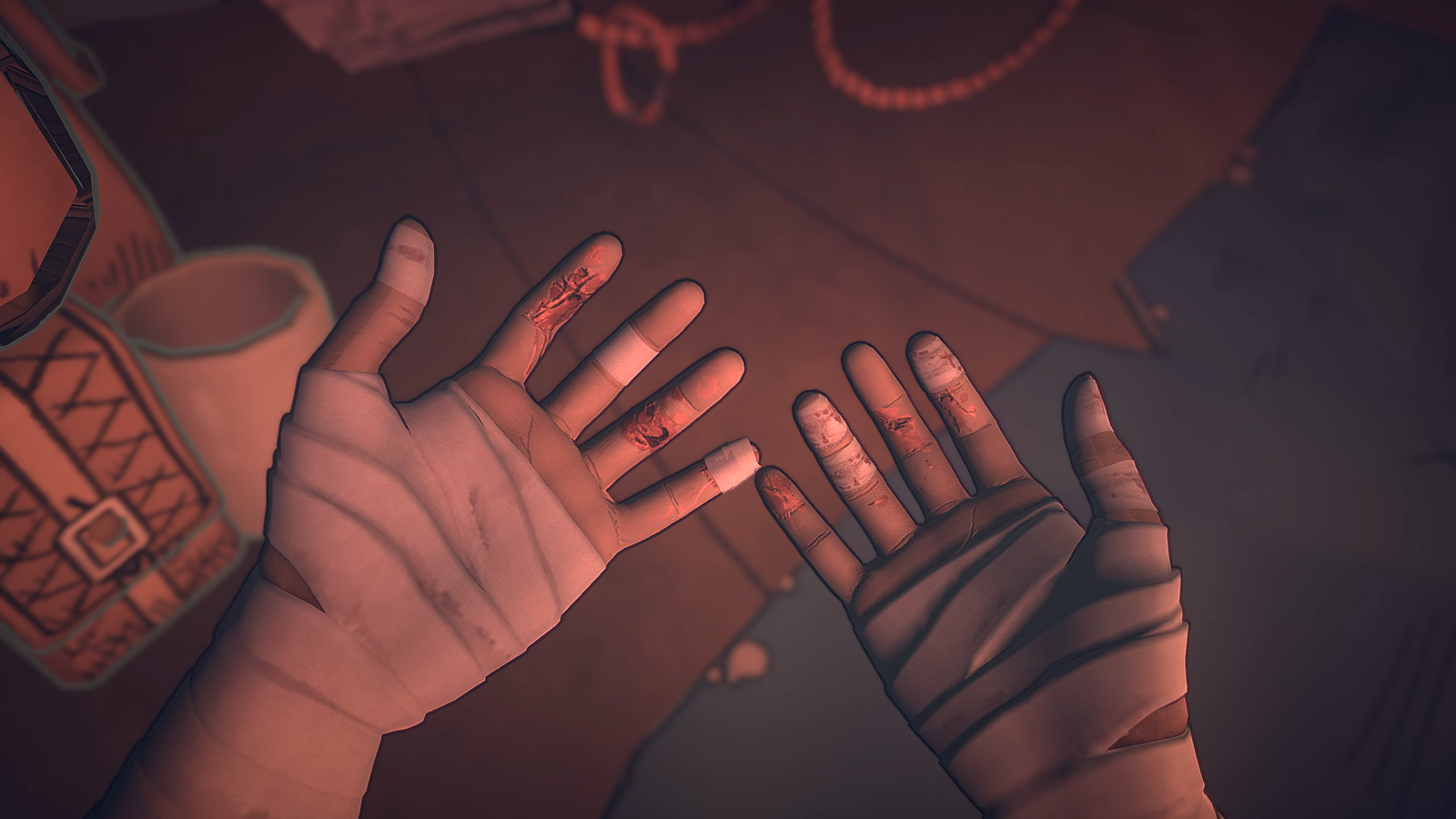
The camp is generally a key hub for the entire ascent. Here you can repair broken safety hooks, which are carefully collected by the karabot — a silent mountaineering robot assistant that follows the heroine throughout the journey. Here, Aava's hand bandages are renewed when her fingers are worn to the bone. This increases grip and reduces the rate of stamina consumption when gripping.
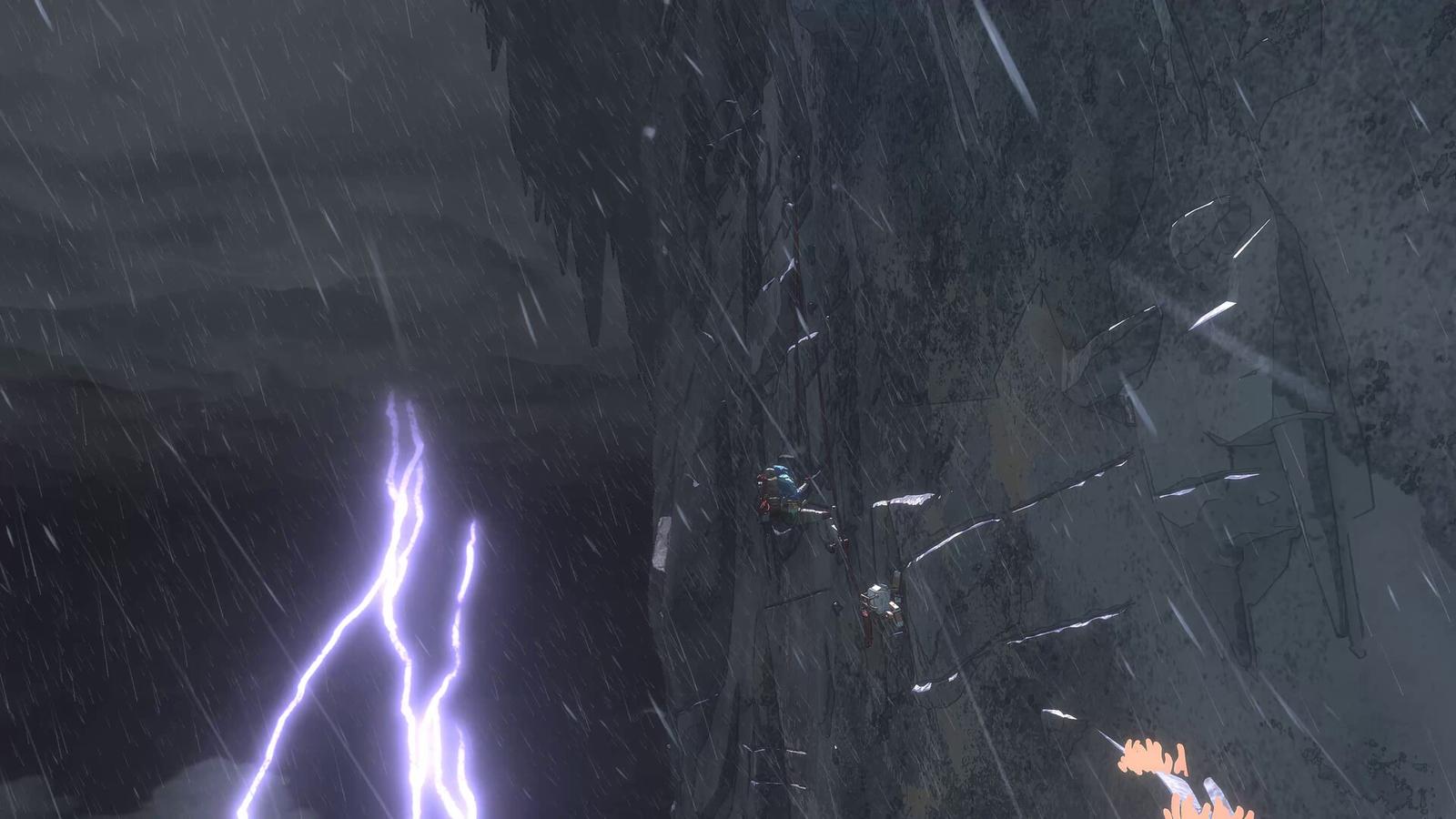
Here you can also sleep to restore health and rewind time, as well as find out the weather forecast to plan your further ascent. This is important, as grip decreases during rain, and strong winds can literally "blow away" any plans.
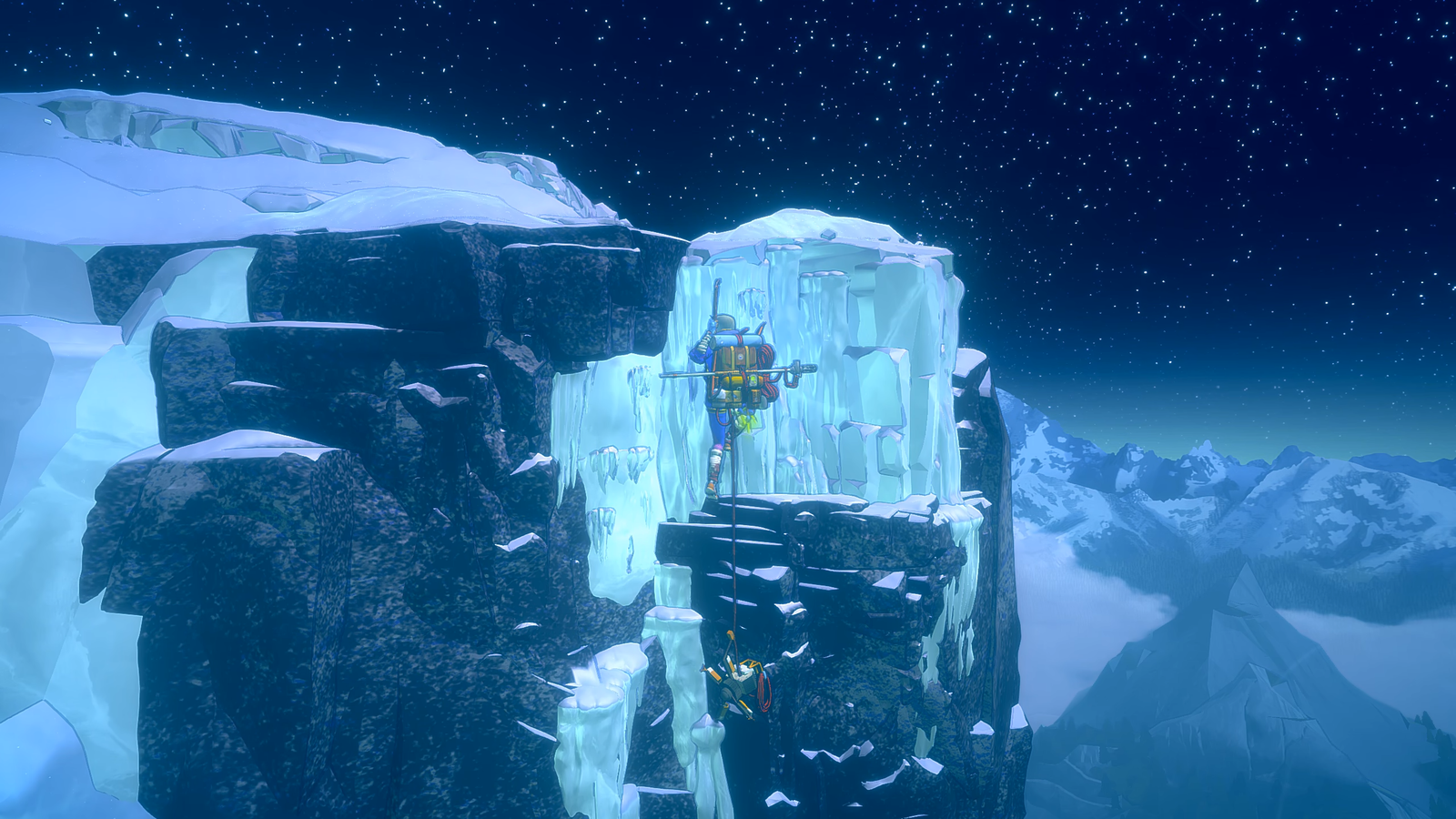
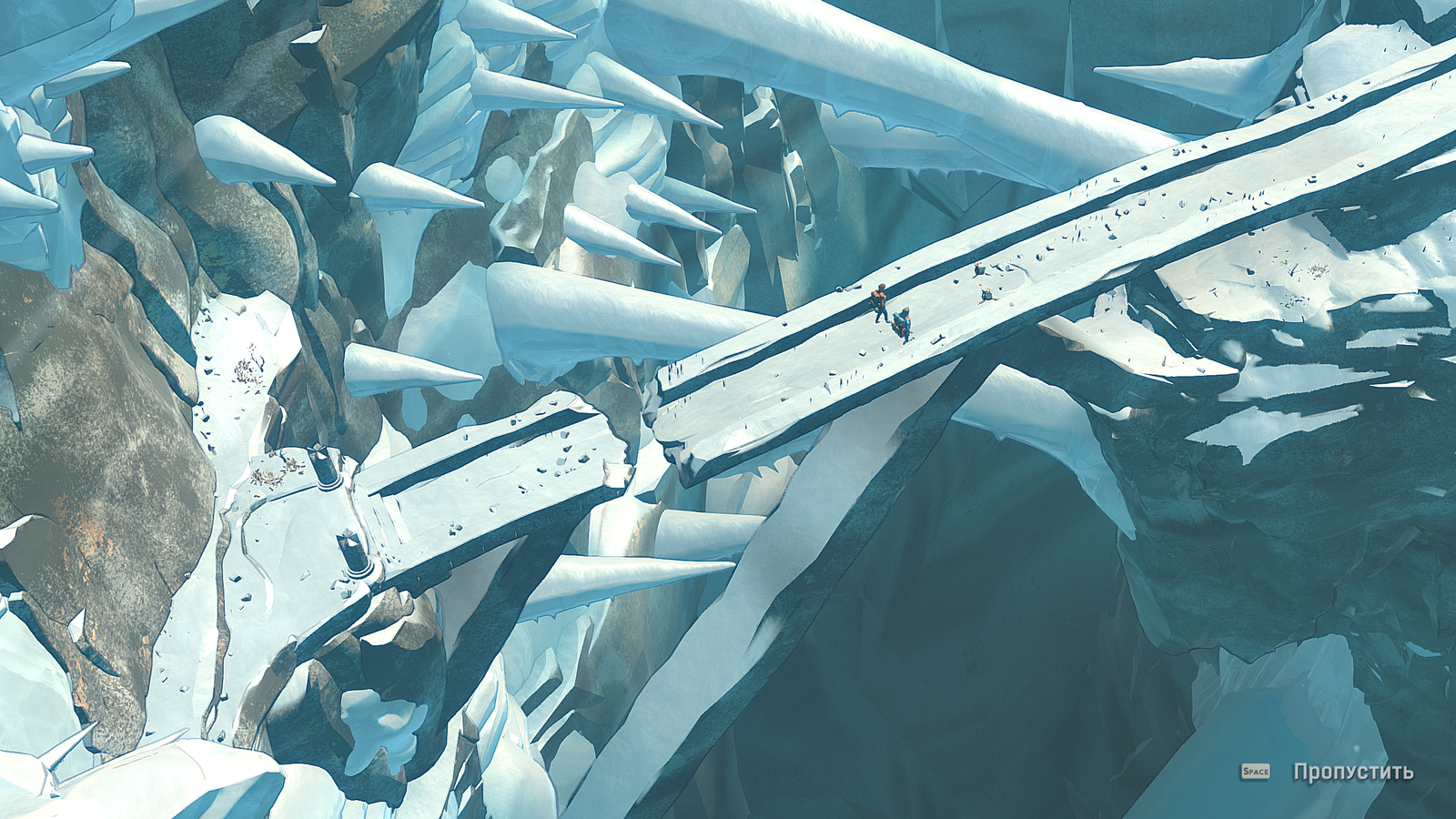
New mechanics appear closer to the summit. Rocky areas are increasingly giving way to icy ones, and it is no longer enough to simply find a hold. Ice axes and special shoes come into play. Now, before each movement, you have to "charge" the strike, assessing how hard you should "drive" into the ice. Sometimes it's enough to just press the button, and sometimes you need to hold your finger to secure yourself more reliably. But this takes more stamina, which means the risk of falling increases.
In addition, closer to the summit, Aava's vital signs decrease threefold — due to the cold and rarefied air. At some point, the ability to use safety hooks also disappears. And here it's no longer about the competent distribution of resources, but about endurance and survival on the edge.
Fortunately, the game allows you to prepare for this in advance. It doesn't come to an outright catastrophe, and the final push becomes a natural culmination of a long journey — when you have not only difficult trials behind you, but also a whole string of stories and secrets that Kami holds.
Stories for those who will come after
Side quests in Cairn are not recorded in a conditional "quest log" — it simply doesn't exist here. Exploring anything extra remains solely on the player's conscience. Nevertheless, as you ascend, it becomes clear that the mountain itself tells its story — through the environment, finds, and rare encounters with other people.
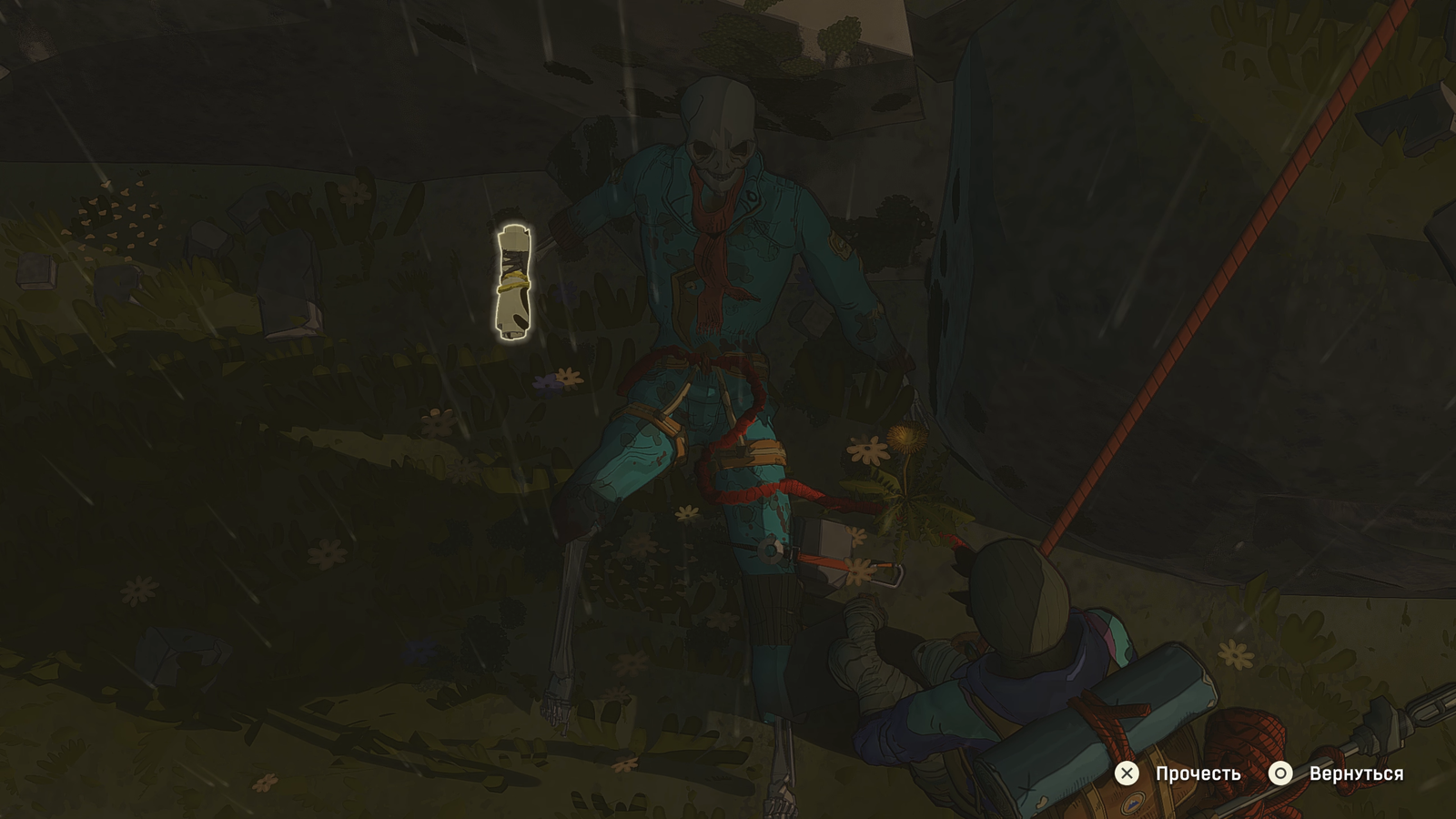
Aava comes across the bodies of dead climbers, the remains of tourist routes, abandoned camps, scraps of letters and diaries. All this does not guide the player, but gradually adds up to the history of a place where many found their last refuge. The higher you climb, the more such finds — and the darker these stories become.
I especially remember a guy who went in search of a magic flower to save — either his brother or a friend — with whom they grew up together in an orphanage. One of them was terminally ill, and the second desperately tried to pull him out. He found the flower. Well, I found him — more precisely, his bones, with that very flower in his hands.
A separate line of narration is connected with the troglodytes — a people who once lived in these mountains. Their presence is felt through ruins, symbols, and objects, and mythology is revealed fragmentarily, without direct explanations, remaining more of an atmospheric background. This knowledge is optional, but careful research allows you to understand how people's attitude to Kami changed, what customs and beliefs were associated with the mountain.
However, curiosity about the past sometimes gives quite material rewards. Exploring side routes can lead to improvements: talismans that affect the weather, glowing gloves that help you climb in the dark, or particularly strong troglodyte hooks that hold where ordinary ones don't.
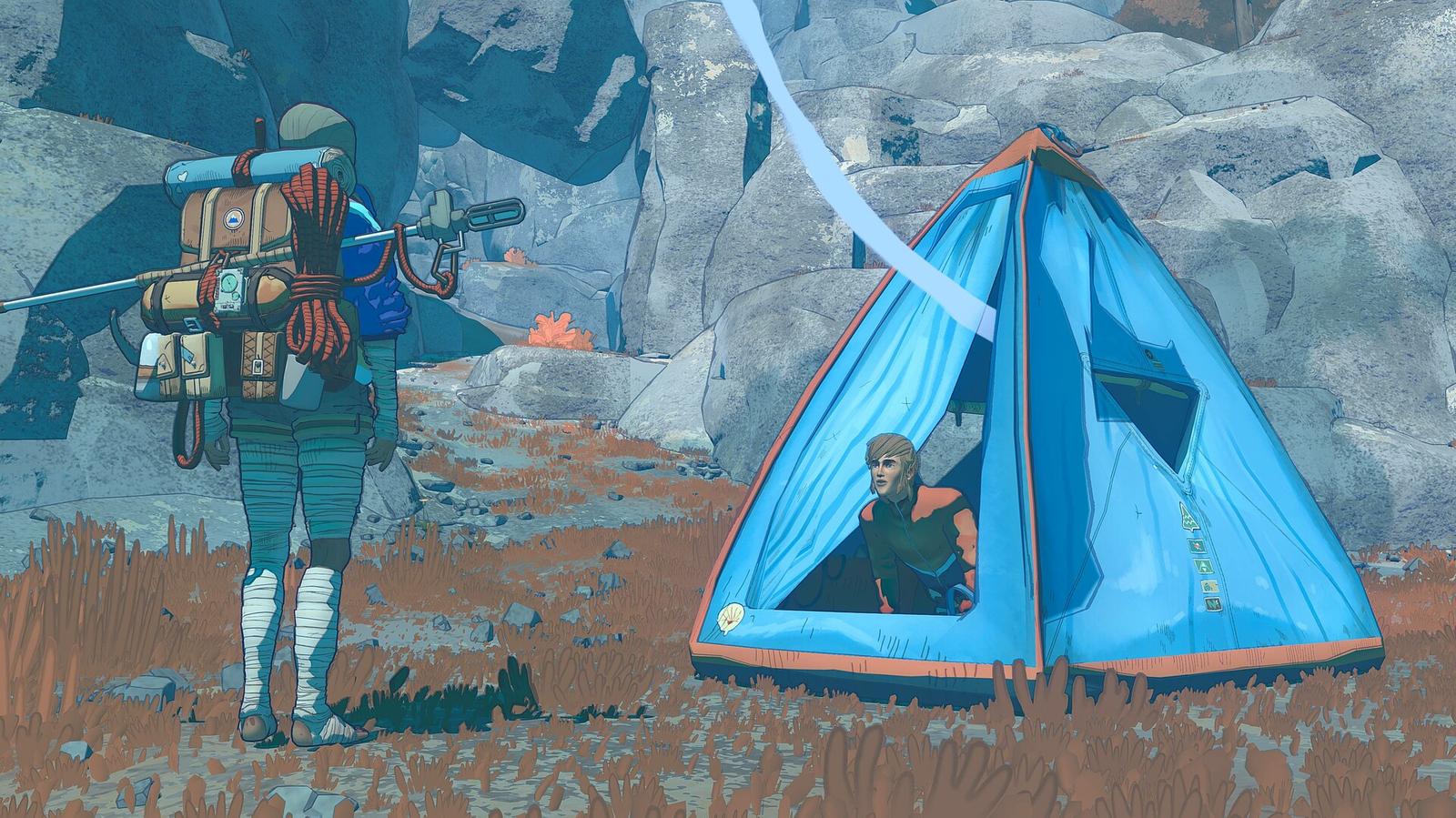
In addition to the silent testimonies of the past, Aava periodically meets Marco — a young climber who sincerely admires her and wants to be "like her". Against the background of the cold and withdrawn heroine, he looks like her complete opposite. Marco, of course, dreams of reaching the summit, but thinks much more about returning from there alive. He perceives his karabot as an ally and even gives it a name — while for Aava, the karabot remains nothing more than a tool.
These meetings, like rare messages from people "below" that the karabot transmits, emphasize the key features of Aava's image. For her, the ascent is more important than anything else. She has lived mountaineering since childhood and perceives those who left Kami alive as weak — people who have suffered defeat. In her eyes, even those who died on the slope deserve more respect than those who gave up.
Therefore, for Aava, there are only two outcomes — the summit or death on the slope. She considers both acceptable. As she ascends, this position begins to crack, and in the game there is even the possibility of not reaching the summit, but turning around and descending. However, the story does not end there: after reloading the save, the choice can be changed and the ascent continued.
I don't think this is a serious spoiler. Ultimately, in Cairn, it is not the plot itself that is important, but the path that the player takes side by side with Aava, and the experiences that they share along the way.
Verdict
Cairn is one of those games that they say "not for everyone". There are enough such projects, but here this definition works especially accurately. This is a slow, exhausting ascent, where individual mechanics are not as important as what happens to the player as they climb. The grip system, freedom of route planning, and strict resource management work in conjunction with sound and visuals, making every meter of the path feel physical.
At first, Cairn seems awkward and almost hostile. The controls take getting used to, and mistakes have to be learned through falls and death. But the higher you climb, the clearer it becomes: this game is not so much about conquering the mountain as about conquering yourself.
In the finale, the game gives a real catharsis. The developers accurately conveyed the feeling that a person probably experiences standing on top of the world, previously unconquered by anyone. At this moment, you realize that the whole difficult path was not in vain. Therefore, Cairn is worth trying for those who value not comfort and entertainment in games, but genuine, sometimes painful experiences that leave a bright mark.
Never miss our newsAdd this site to your preferred sources to see us more oftenAdd on Google




![[STREAM] Ultimate Version - Cyberpunk 2077 Update 2.5](https://media.ixbt.games/fit-in/312x/ixbt-data/1730178/b6ca9a8e-de42-4e9a-b1aa-df5e519a7449.jpg)