Finished with Resident Evil Requiem? Check out Crisol: Theater of Idols - the Spanish "best bang for your buck"
Translated with AI from the Russian original.
What if you moved Resident Evil to an alternate Spain and replaced bullets with the hero's blood? Crisol: Theater of Idols is the debut of Madrid-based Vermila Studios. The game does not reinvent the genre, but assembles it so confidently that you already want to call the studio the "Spanish Bloober Team." And that is not only a compliment, but also a warning to the Polish "original."\n
The War of the Sun and the Sea
Crisol: Theater of Idols takes place in Hispania, an alternate version of early 20th-century Spain. The events unfold on the island of Tormentosa, torn apart by a religious war between the cult of the Sun and the cult of the Sea.
We play as Gabriel Escudero, a soldier and servant of the God of the Sun, sent there on a mission to seal away a hostile deity. His "crusade" ends almost immediately. The hero is killed by the very first enemy — a living statue that ordinary weapons cannot overcome.
But the Sun does not abandon its servant and brings him back to life, granting him the ability to turn his own blood into a weapon.
Upon reaching his destination, Gabriel learns that the seal is sustained by the blood of the island's four lineages. Now he must find their heirs and absorb their blood to complete the ritual.
This premise defines the structure of the entire game. Gabriel receives the first blood already in the cathedral, after which he only has to obtain three more. The main part of the campaign is built around this task. Each chapter is devoted to finding the next heir and, at the same time, exploring a new district of Tormentosa and another fragment of the island's tragic history.
In terms of structure, Crisol is closest to classic survival horror. The areas are enclosed spaces with locked passages, shortcuts, and mandatory returns to previously visited zones. To move forward, you have to search for key items and tools that open new paths — not a step without bolt cutters! The map helps you navigate by marking fully explored areas and showing locations you have not yet visited. This removes pointless wandering, but does not eliminate the need to carefully inspect every corner.
The developers do not reinvent the wheel and follow the genre textbook to the letter. Solving note-based riddles, searching for safe codes, matching items, activating mechanisms — everything is here. None of the puzzles inspires a wow effect, but there are almost no outright boring ones either. A reasonable number, moderate difficulty, and competent integration into the plot and lore provide an almost perfect balance.
The story is delivered just as fragmentarily — through notes, visions, and memories extracted from the blood of people who died on the island. Gradually, a picture emerges of a religious conflict intertwined with a deeply personal tragedy. For a long time, what is happening remains tangled and ambiguous, raising doubts about the righteousness of the mission. However, by the finale, plot twists appear that put everything in its place and leave an emotional aftertaste.
Blood for Blood
Crisol's main feature is that blood here serves not only as a health indicator, but also as ammunition. All weapons transformed by the power of the Sun are studded with sharp spikes: when reloading, they dig into Gabriel's hand and literally drain life from him. Every "bullet" is paid for with your own health reserve, and most of the project's mechanics flow from this idea.
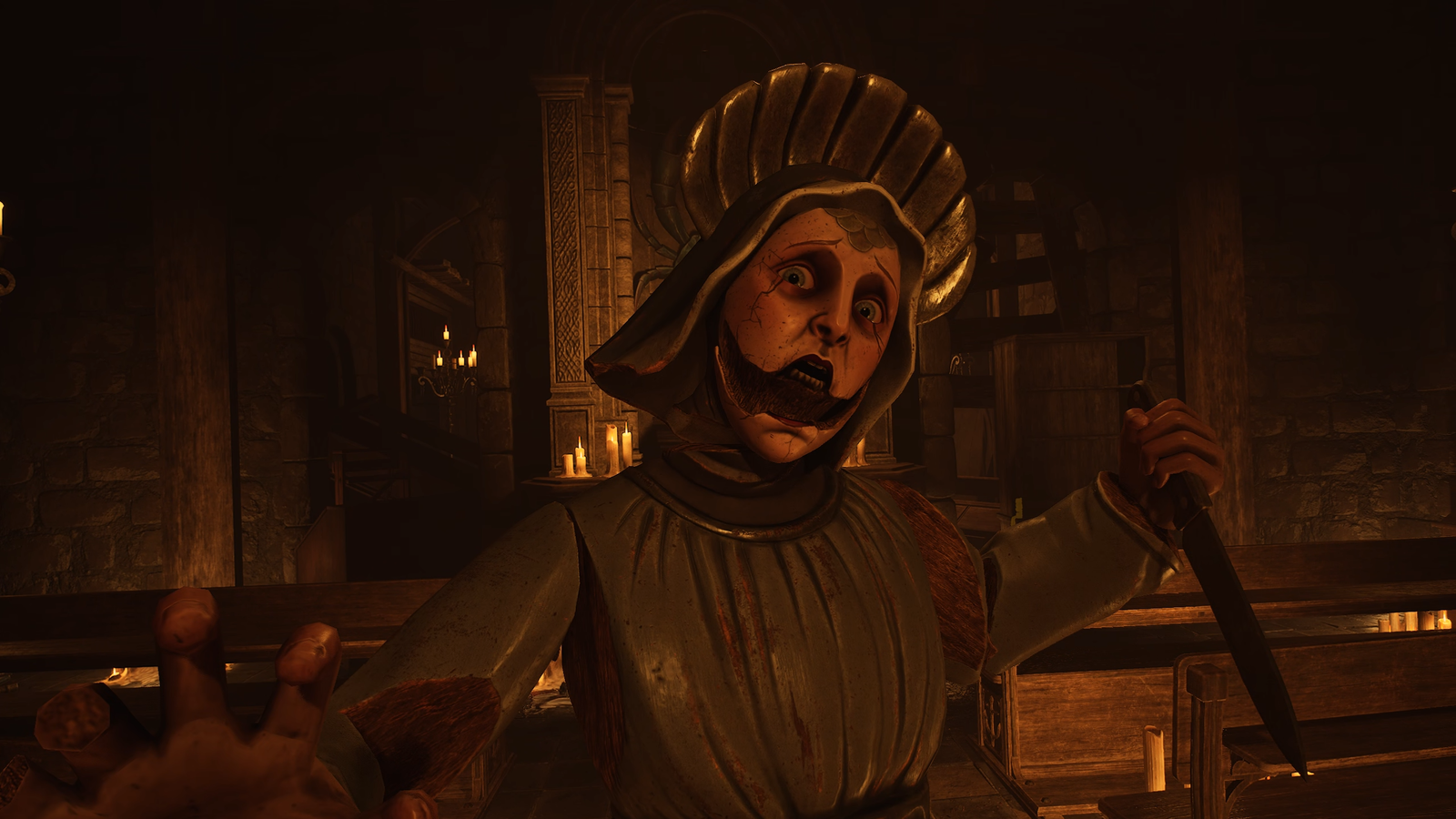
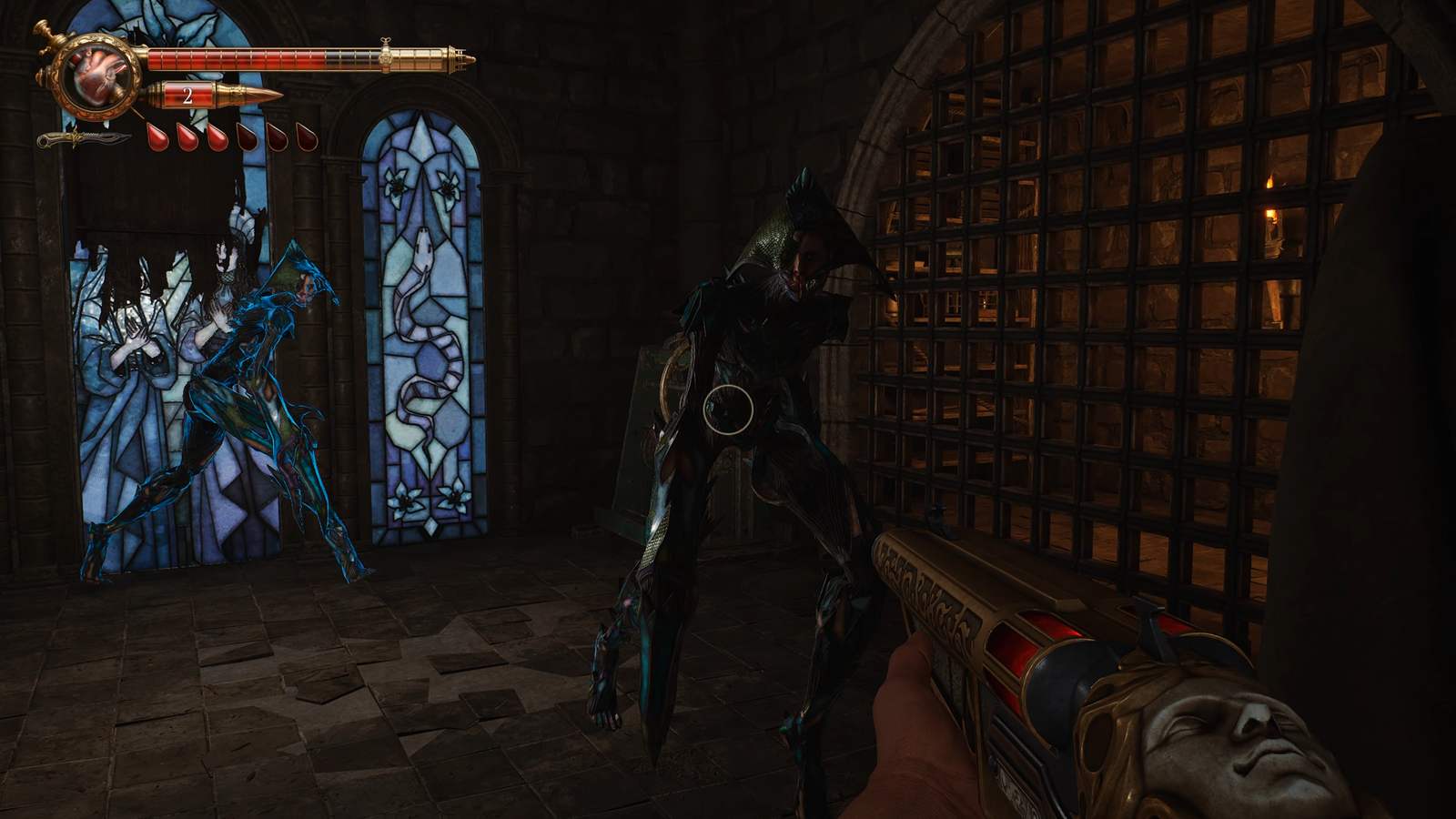
The bulk of the enemies are living statues and various mannequins. Slow, clumsy, and at the same time astonishingly durable, they keep moving even after losing their heads or limbs — until they are finally destroyed by righteous fire that ignites after a series of hits from blood bullets. The problem is that there is no blood in their "bodies," which means Gabriel cannot replenish resources after battle and is forced to look for alternative sources. Thus, even victory in a fight results in a loss of health.
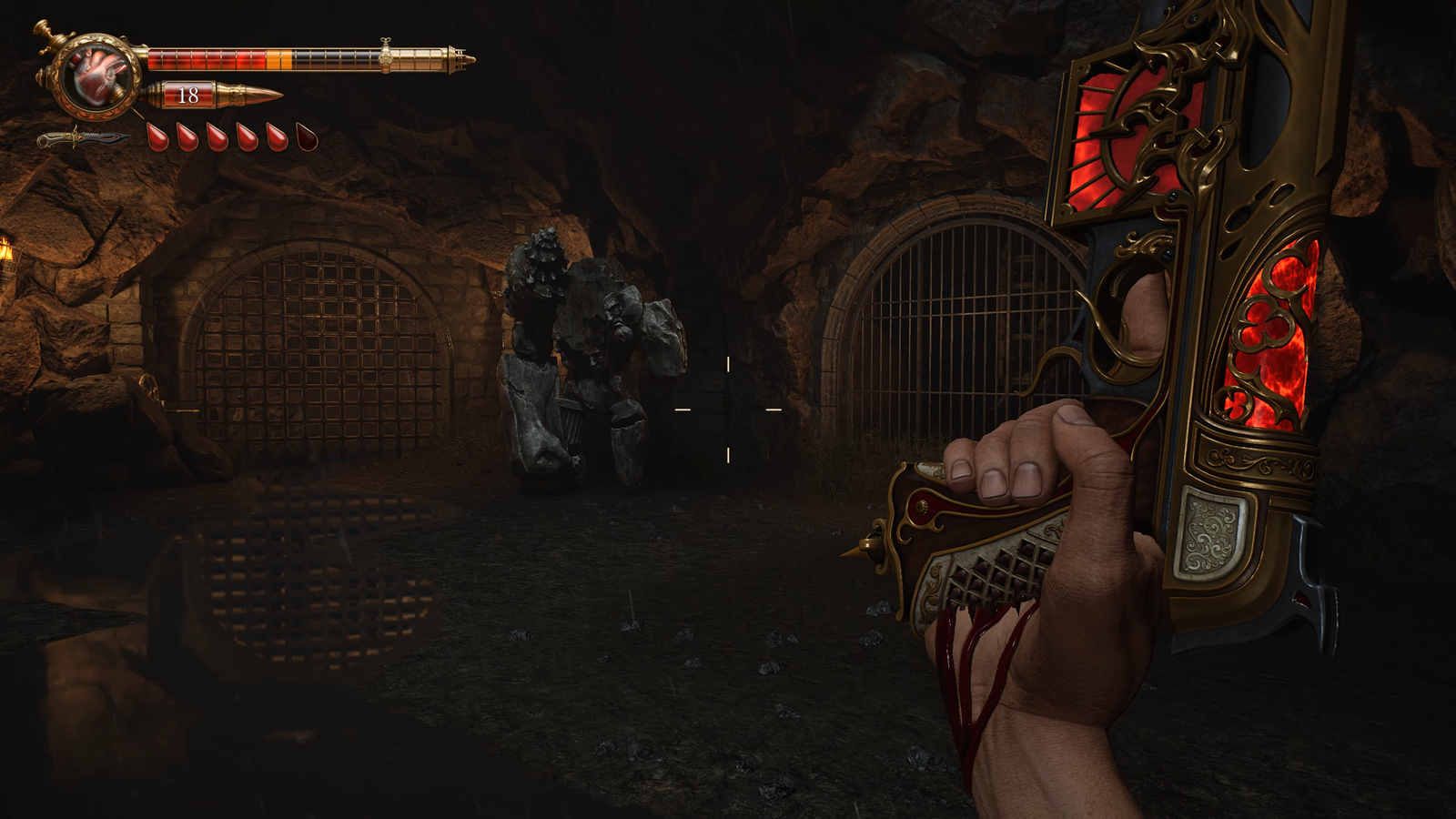
At first, the hero only has a knife and a pistol at his disposal, but the arsenal gradually expands: a shotgun, rifle, automatic weapon, and harpoon launcher appear, the latter essentially serving as a grenade launcher. Formally, there is a choice, but the game almost never pushes you toward actively switching weapons. The pistol remains the most versatile and cost-effective option throughout the entire playthrough. It uses blood sparingly, reloads quickly, and after upgrades, reliably deals with several enemies at once with a single magazine.
The enemies really are extremely tanky — it takes about six pistol bullets to destroy one ordinary foe. When the shotgun appears in the middle of the first chapter, it seems like the perfect solution: one shot — one corpse, minimum time and movement.
However, starting from the second chapter, enemies noticeably "bulk up," and the shotgun stops guaranteeing a one-hit kill. Perhaps I suddenly forgot how to shoot, because sometimes they still died from the first shot, but with a tiny two-shell magazine, that inconsistency feels critical.
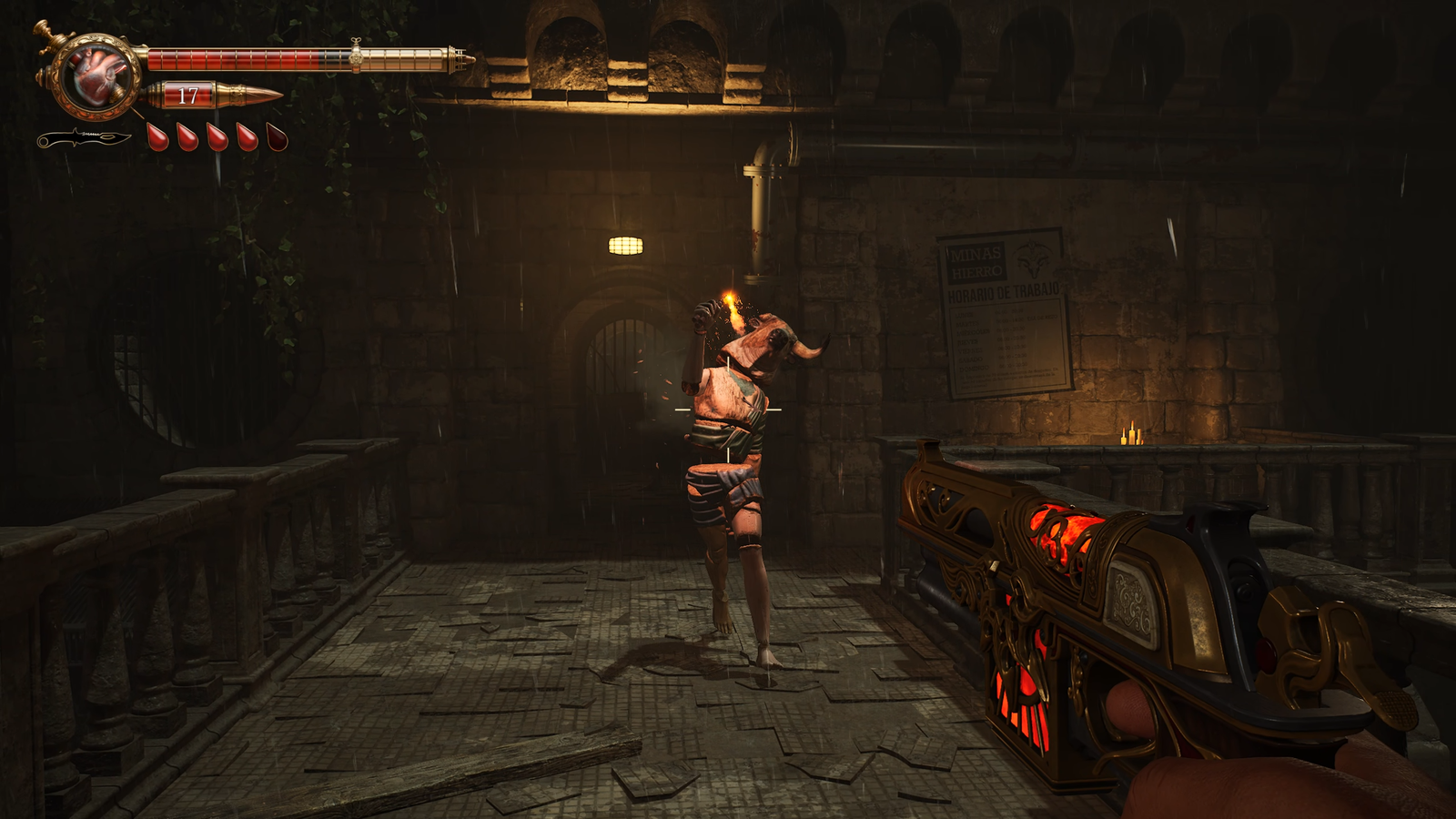
At the same time, a fully upgraded pistol allowed me to reliably deal with as many as three enemies for a comparable "price" in blood, so there was little reason to go back to the shotgun. It is a similar story with the automatic weapon. At first, it impresses with its rate of fire, but because of the large magazine, reloading turns out to be excessively long — so long that even after upgrades, you do not really want to use it constantly. As a result, I only took out the rest of the arsenal during prolonged fights with crowds, when instead of reloading it was easier to switch to another weapon.
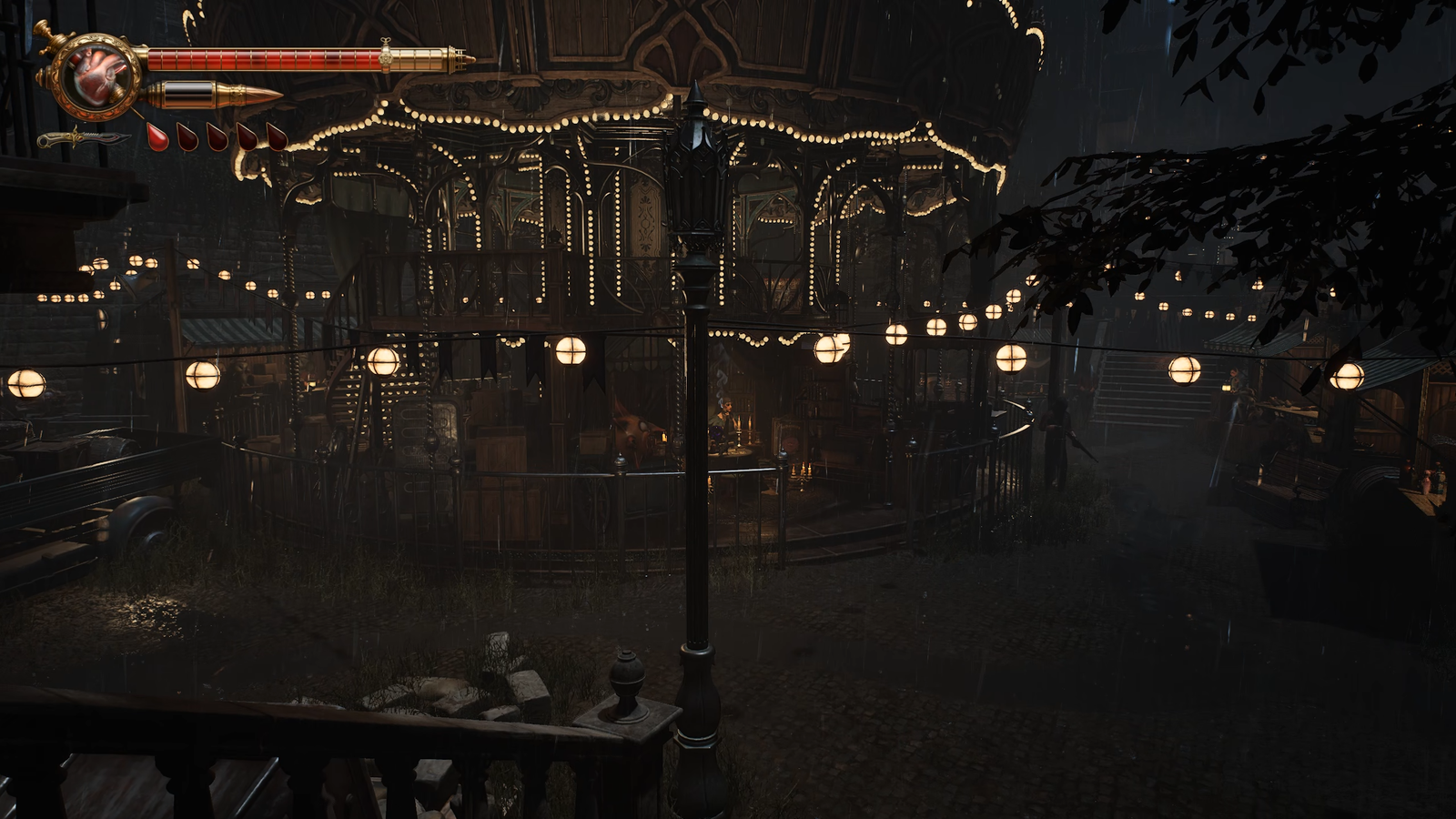
Weapons and skills are upgraded by the local counterpart to the Merchant — La Planyidera. She lives in the central hub at the Fair, where the player returns between chapters, and occasionally appears in separate locations. Here, collected coins can be used to increase weapon damage, magazine capacity, reload speed, and other parameters. Crow charms and the energy gained from killing enemies unlock passive bonuses — for example, instant healing upon receiving lethal damage, an empowered "last bullet," or reduced blood consumption when reloading in combat.
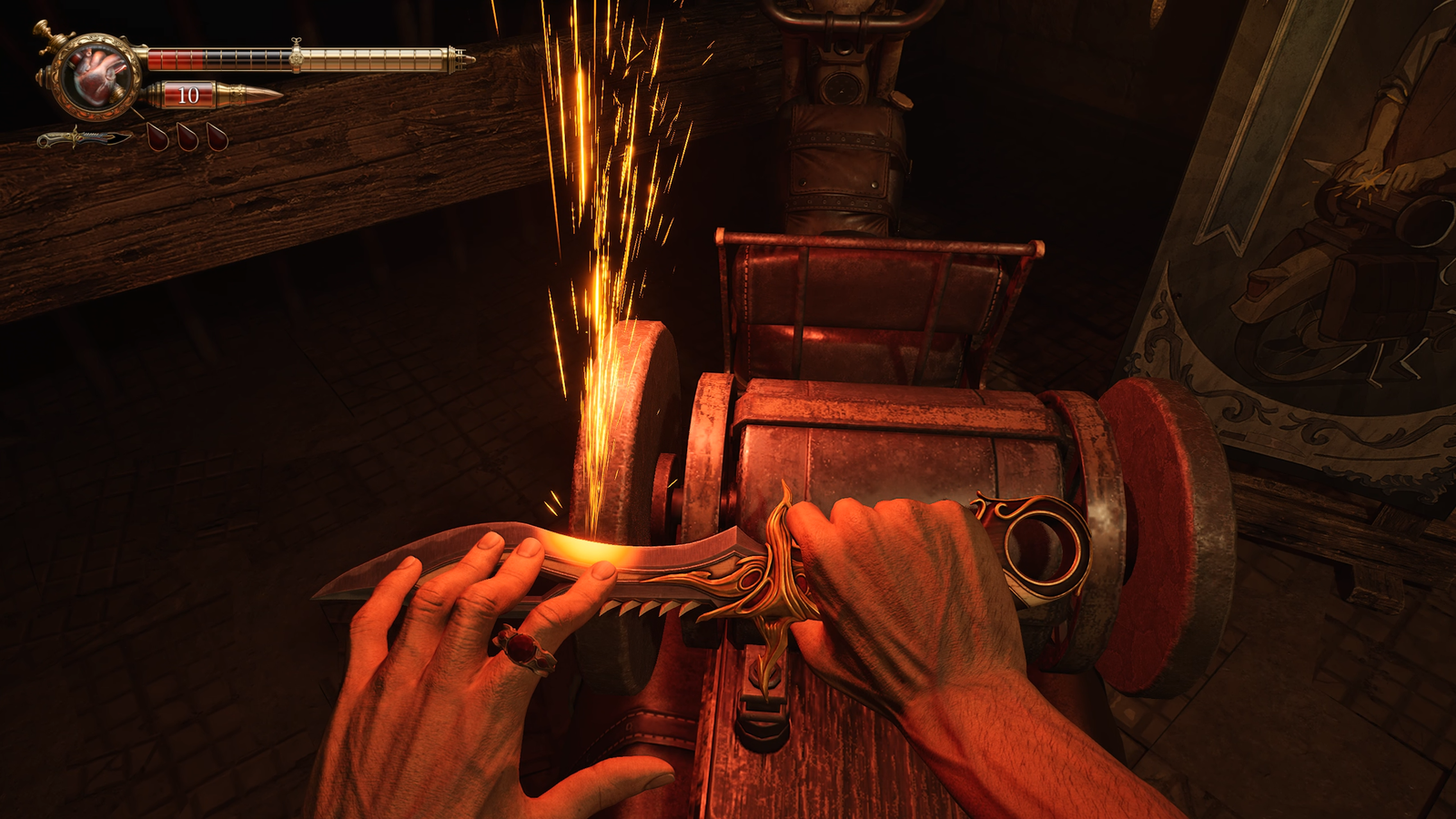
Of the entire arsenal, only the knife does not require blood. It is intended for close combat and parrying, allowing you to block attacks and finish off enemies while saving health. However, the blade dulls quickly: its damage drops, the ability to defend effectively disappears, and at some point it turns into an almost useless piece of metal. You can restore the blade's sharpness only on the so-called "sharpener's motorcycle." This is not a joke: fuel canisters are scattered throughout the locations, and you need to refuel the motorcycle with them in order to use the sharpening stone attached to it.
This mechanic, absurd at first glance, fits organically into the strange logic of Crisol's world. It is just a pity that the game almost never encourages you to use it actively — I finished the playthrough with fifteen unused canisters. One could say that I would have liked to parry more often if enemies were stunned afterward and allowed for a flashy spinning kick finisher, but Madrid-based Vermila Studios is not Capcom, and the hero's name is not Leon. Most likely, though, the issue lies in the difficulty balance.
Survival in Soft Mode
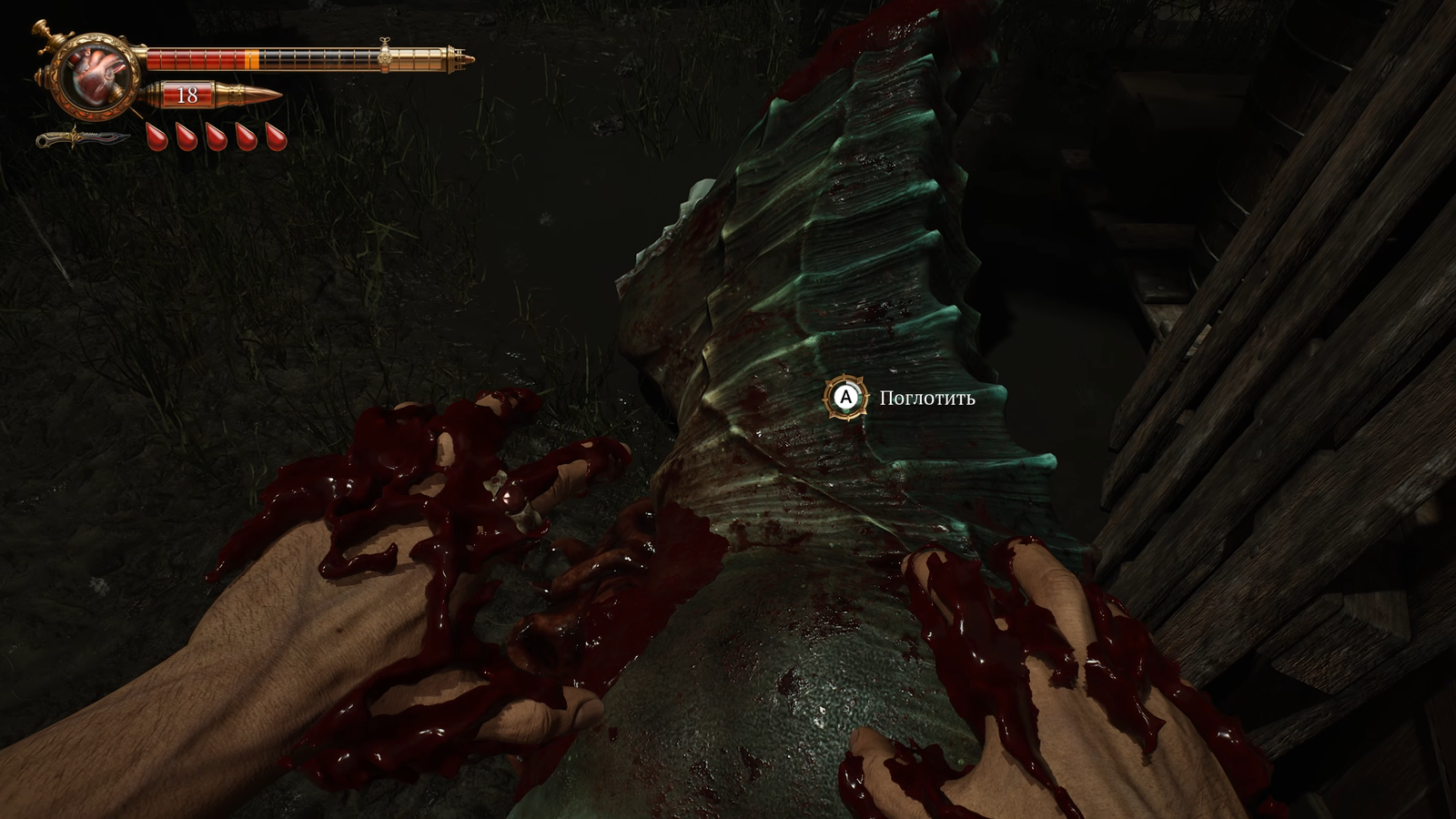
Health can be restored in several ways. The most reliable is plasmarine injections, which are encountered fairly often. An alternative is absorbing the blood of animals or human bodies scattered around the locations. In theory, the "health = ammunition" link should create a tense survival balance, but on normal difficulty this is barely felt.
Throughout the entire playthrough, there was not a single situation where I truly had to conserve resources. On the contrary, I constantly knew where new syringes were lying, but I could not carry them all with me even after fully upgrading capacity. At one point I even regretted not starting the game on maximum difficulty: perhaps that is where this system unfolds the way the developers intended.
In the end, I died only twice, and both times because of my own stupidity. One of those was when I did not immediately realize that a scripted chase sequence had started, in which Gabriel dies from a single strike by Dolores, although normally she only takes away a quarter of your health.
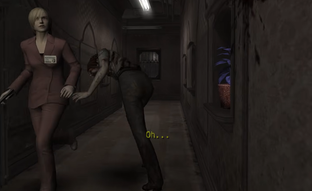
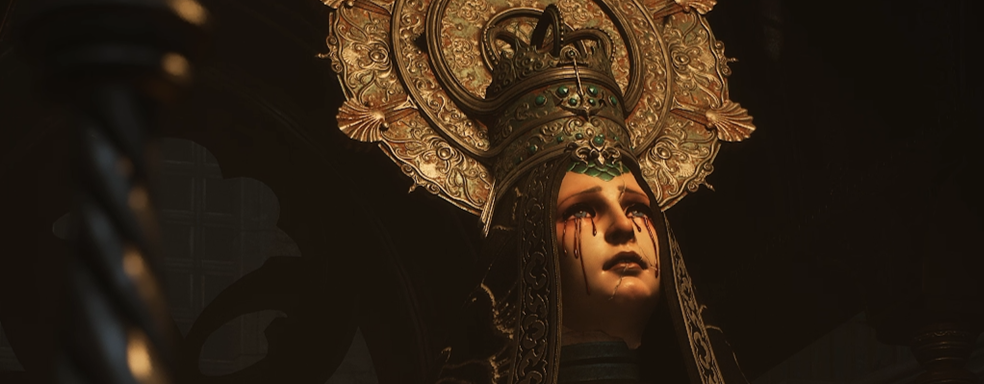
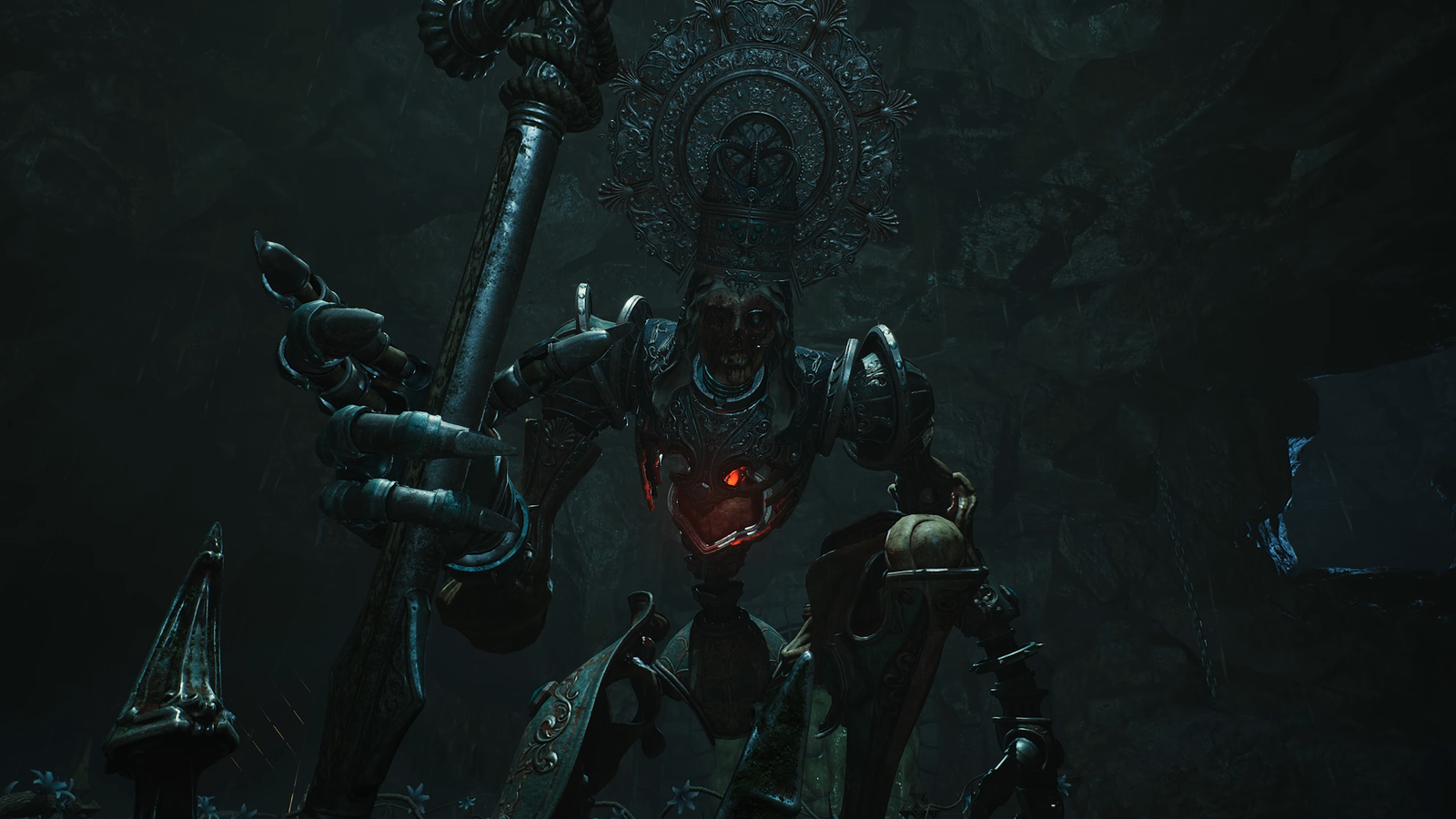
Dolores is the local unkillable pursuer, a kind of counterpart to Nemesis or Mister X from Resident Evil, and at the same time the creepiest source of tension in the entire game. Her image combines cold biomechanics with the distorted appearance of the Sorrowful Virgin Mary, creating the feeling of something both holy and deeply wrong. Unlike ordinary enemies, she cannot be destroyed — all you can do is hide, avoid her, or flee. Like her "colleagues" from Capcom games, she does not appear constantly, but in predetermined segments, to shake up the player and add nervousness to exploration.
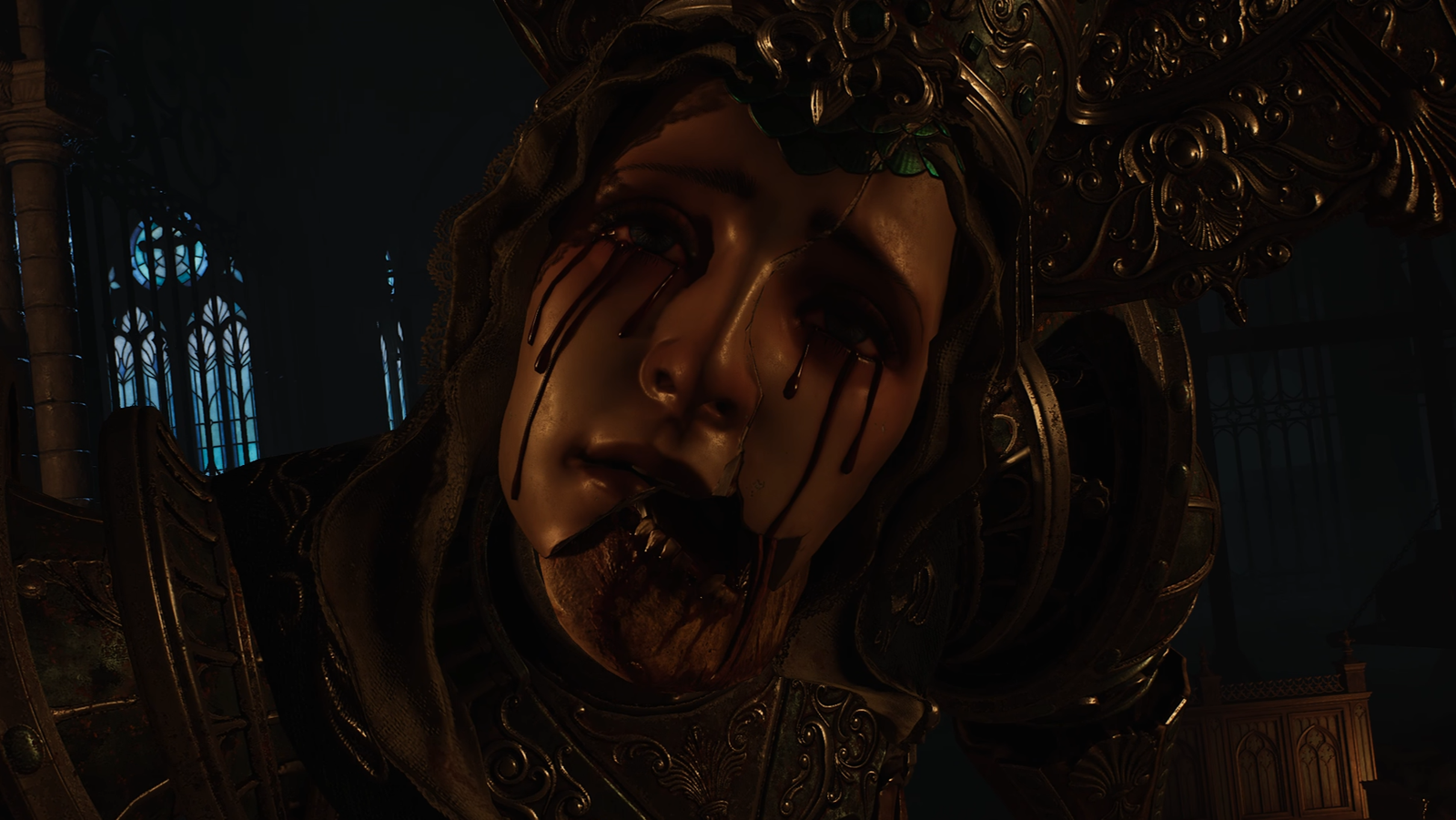
Unfortunately, even this does not push the game to a truly high degree of horror. The atmosphere in Crisol is built excellently: the gloomy districts of Tormentosa, religious symbols, empty streets, ceaseless rain, and strange doll-like aesthetics create an unsettling sense of wrongness. However, for an experienced horror player, there is frankly nothing to be afraid of here. All that remains is to once again complain about the forgiving balance of normal difficulty, which does not put the player's life under real threat.
That said, genuinely unpleasant episodes do still occur. For example, segments in dark labyrinthine rooms, where you have to explore the space almost by touch while water monsters rush through it, bursting literally out of the paintings on the walls.
At moments like these, Crisol comes closest to true horror, making you nervously peer into the darkness and keep your finger on the run button. But overall, this is more an unsettling journey through a sick world than a ride built on cheap jump scares — there are literally only a couple in the whole game. This approach may disappoint lovers of "pure" horror, but it works well for the overall mood and atmosphere.
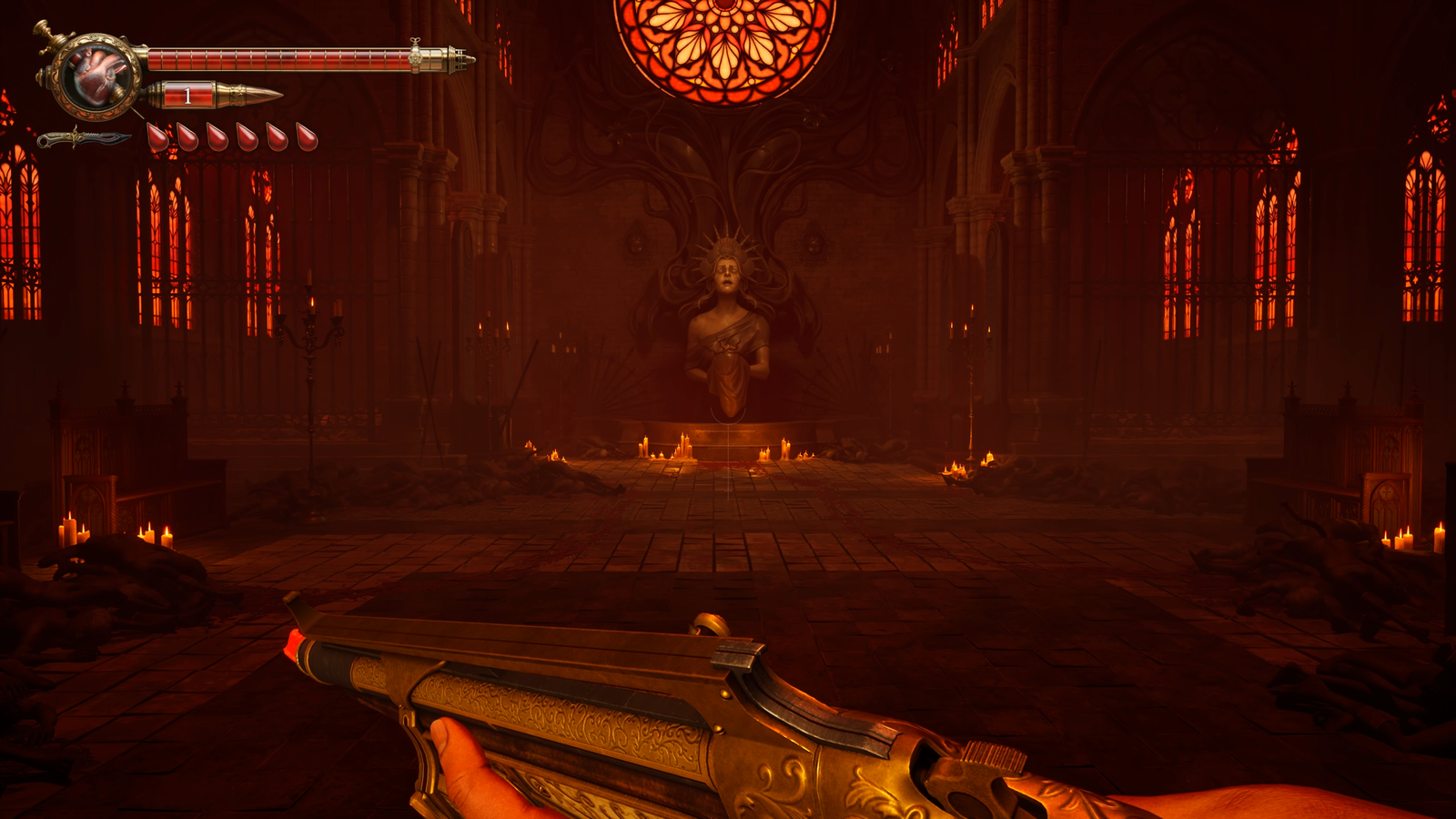
Cheap, but Angry
The game does not try to impress with graphical power — this is not a technology showcase like, say, Resident Evil Requiem became — yet the art style is so cohesive and recognizable that the budget limitations quickly fade into the background. Tormentosa feels not just like a "gloomy city," but specifically like a Spanish space with its own architecture, cultural codes, and religious heritage. That makes Crisol's world unusual and memorable: the game takes what usually inspires awe and turns it into a source of anxiety.
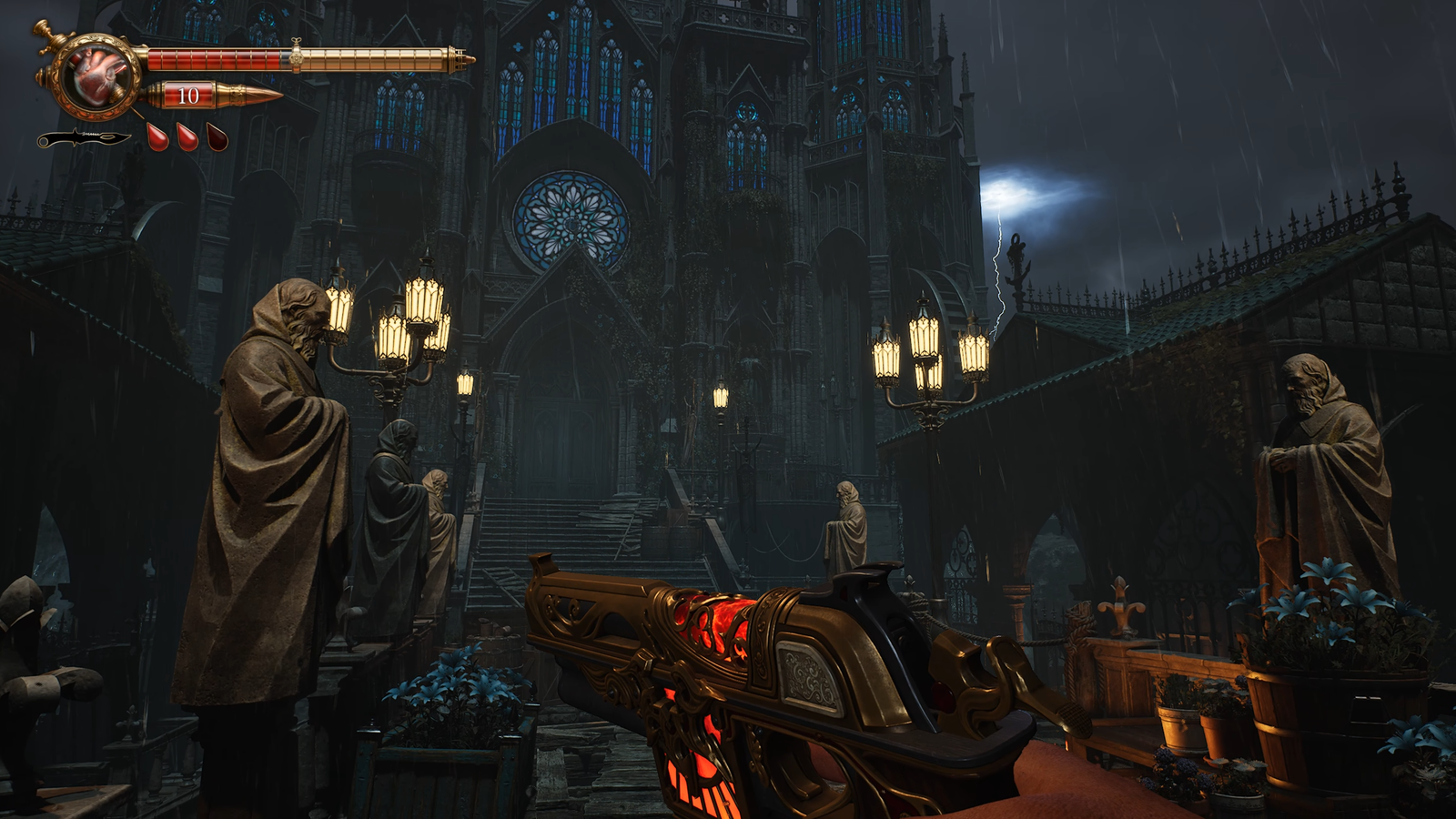
The sound design supports the same idea, but there is almost no pronounced soundtrack here — mostly Spanish classical music plays, which will not appeal to everyone. Personally, I would only single out the main menu theme: it is chosen with astonishing precision. The very first time I launched the demo, the composition gave me an aching feeling, and after finishing the game it opened up in a new way and began to feel like an emotional postscript to the entire story.
From a technical standpoint, the game gives the impression of a neatly assembled mid-budget project. At the time of my playthrough, DLSS and FSR were absent — the developers promise to add them later; only Intel XeSS is available. Nevertheless, even without upscalers, performance remains stable: at maximum settings in 1440p with Lumen activated in Unreal Engine 5, I was getting a comfortable 60–70 frames per second on an RTX 4070 Super. Over the entire time, I encountered neither serious bugs nor crashes nor critical performance drops.
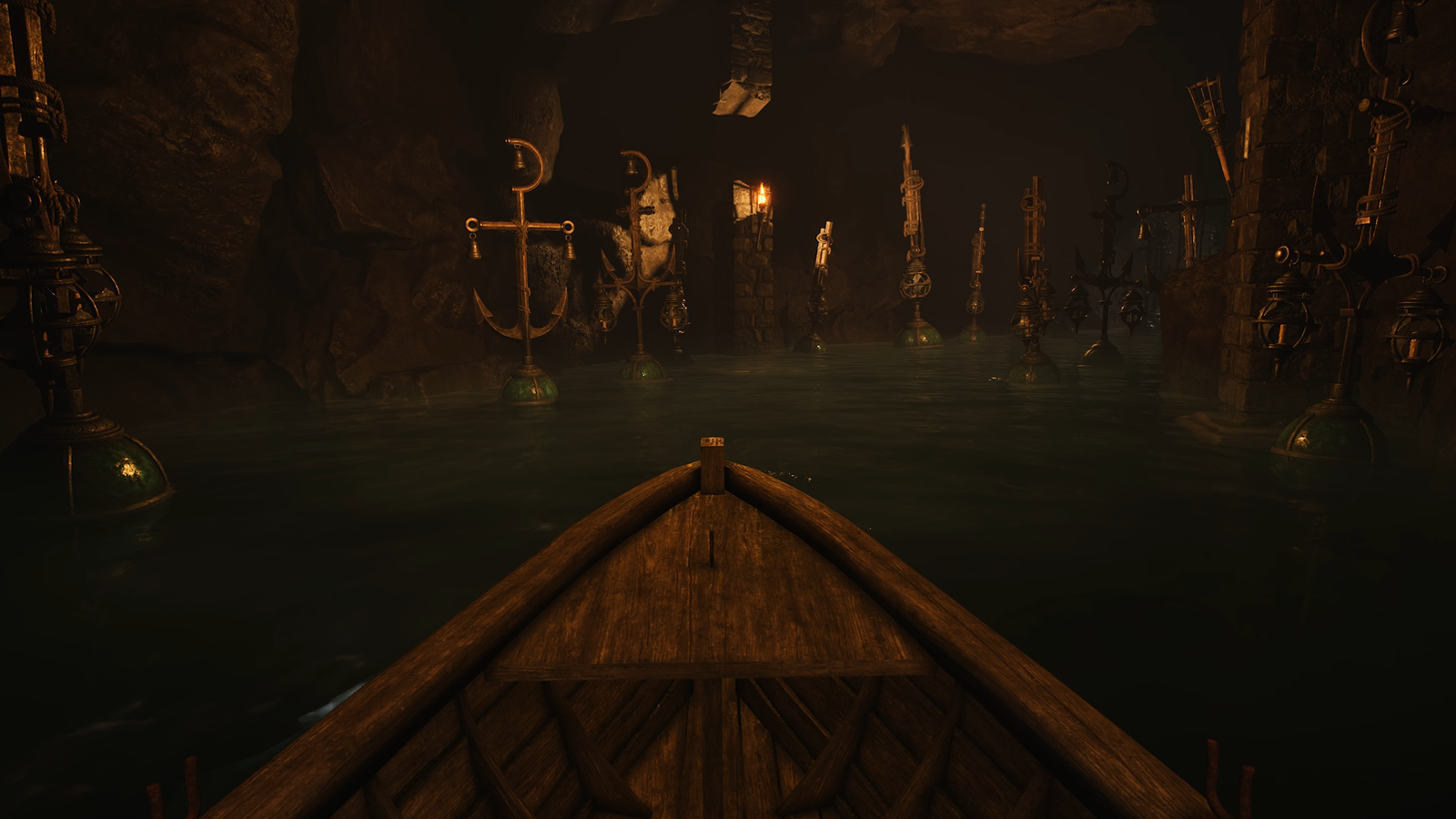
Of course, some issues are present. In places, the animations are somewhat simplistic, interaction with the environment does not always feel responsive — especially when moving along ledges or through narrow passages, as well as in the boat segments, where the boat moves frankly slowly.
The amount of the notorious yellow paint marking interactive elements sometimes seems excessive, and the number of bosses for such a relatively short game looks criminally small. I mention this not so much out of pickiness as because it is better to know about such things in advance.
Still, none of these rough edges is capable of ruining the playthrough. Rather, they are markers of a debut project by a small team with a limited budget. And that leads to some interesting conclusions.
Verdict
I am not a fan of this word, but in this case, calling Crisol: Theater of Idols a competent game is probably the most accurate definition. This is a classic survival horror, carefully assembled from elements that once shaped the genre, and it hardly tries to invent anything fundamentally new. What makes it stand out above all is the unusual combination of "blood = health = ammunition," its strong grounding in Spanish aesthetics, and its tragic story, which leaves a bitter aftertaste.
I got the impression that the developers truly squeezed the maximum out of the resources available to them and assembled a cohesive project without any obvious failures. At a price of around 650 rubles, it offers about 12 hours of tense atmospheric adventure that feels noticeably more expensive — in scale, in artistic craftsmanship, and in the overall level of execution.
For all the caveats, the game won me over so much that I am ready to say this: we may be looking at a potential "Spanish Bloober Team," only with a tilt toward combat horror rather than psychological horror. That is the most unexpected conclusion I came to after finishing it.
If you want something in the spirit of Resident Evil, then Crisol is one of the best implementations of the formula among "budget" titles in recent times. I would say it is the "best bang for your buck."
Never miss our newsAdd this site to your preferred sources to see us more oftenAdd on Google