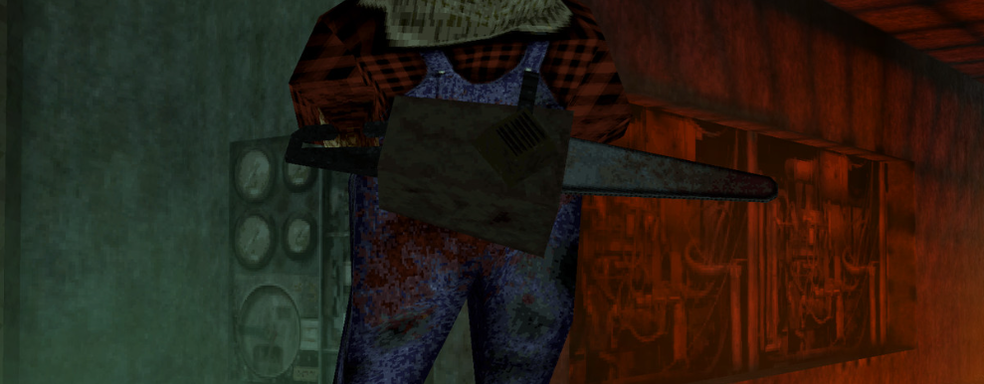
"Nothing has changed in 10 years": Dusk and Ultrakill Publisher Criticizes Epic Games Store and Doubts the Future of GOG
Recently, the head of New Blood Interactive spoke with RPG Site. Dave Oshry shared his opinion on well-known digital game stores on PC.
He noted that he has always loved GOG, but after Steam changed its policy, he began to doubt the future of this service:
Before Steam "opened the floodgates" and started accepting any old games at all, everything was perfectly arranged. Steam was for new games, and GOG was for old ones. And then Steam allowed you to upload anything at all — and who needs GOG now?
Dave admitted that GOG is now engaged in preserving and updating old games, as well as hosting projects like Fallout: London (which he considers a "cool" decision). However, its market share is getting smaller:
For people like me, messing with files and installing mods the old-fashioned way is not a problem, but now people are either too old or too young and don't understand how it all works at all. And now you can just say: "I want to play Heroes of Might and Magic 3", go to GOG — and there is already a one-click installation so that everything works on Windows 11, and even with ultra-wide screen support. And the fact that they spend time on such things is great. The problem is that sales on GOG are still 1–5% of Steam, although it used to be closer to 5–10%.
Dave wondered: "how long will GOG last?" under such market conditions. As an example, he cites his scenario for using the store:
I personally have no reason to use GOG or GOG Galaxy instead of Steam. The only things I have installed through Galaxy right now are Fallout: London and The Journeyman Project series. I recently launched them again — ***, it was so difficult to get it working on a modern system. Just a nightmare. But I still launched it, played for five minutes, caught a dose of nostalgia — and deleted it.
In addition, the head of New Blood Interactive spoke about the Epic Games Store — in his opinion, "nothing has changed in 10 years":
EGS once had a good start and good ideas, but to compete with Steam, you had to make a better store. It is not enough to arrange free distributions and give developers a large percentage of the profits. You can give them 100%, but if no one buys, what is 100% of zero? Who cares anyway? They had an idea, but in the end they didn't make a better store and didn't provide a better user experience — and nothing has changed in ten years. The end of the story.
Never miss our newsAdd this site to your preferred sources to see us more oftenAdd on Google

![[Video] The Stench of Old Blizzard - How Space Marine 2 Crushed GeoW E-Day](https://media.ixbt.games/fit-in/312x/ixbt-data/1724052/319b2778-25ff-44aa-9e9b-d2183bb875eb.webp)
![[Video] Not Recommended - CONTROL Resonant (Review)](https://media.ixbt.games/fit-in/312x/ixbt-data/1724049/49f1a0f6-6ac5-45a8-abb0-970aa676d14d.png)