Intel's Z-Memory Receives Support from Japanese Government
Translated with AI from the Russian original.
NEDO has selected ZAM as a promising memory standard and is considering it as an alternative to HBM.
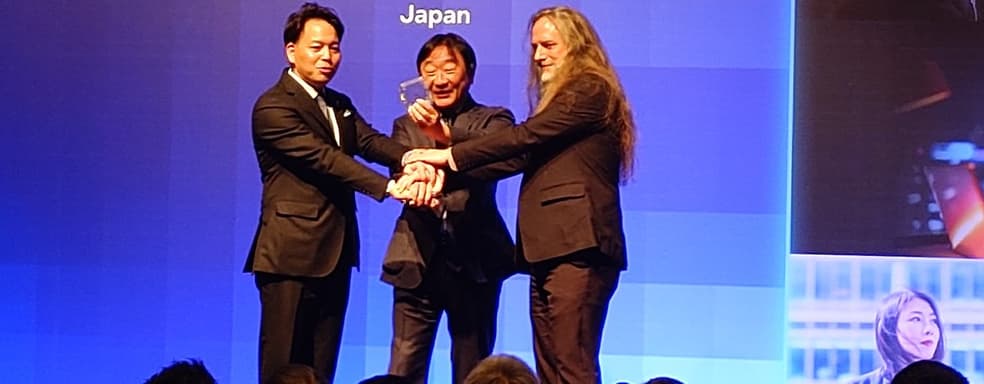
Intel announced significant progress in the development of the new generation ZAM (Z-Angle Memory), implemented jointly with SoftBank. In an official statement, Intel Kabushiki Kaisha (Intel K.K.) and partners reported that the Japanese organization NEDO (New Energy and Industrial Technology Development Organization) has selected ZAM as a promising memory standard, which is being considered as a potential alternative to HBM.
It is noted that NEDO's decision provides for state funding of the project, which should accelerate its development. The main goal is to eliminate the memory deficit in the artificial intelligence and high-performance computing markets, where demand continues to grow rapidly. Support from Japan also implies attracting a wide network of technological, manufacturing, and logistics partners both domestically and internationally.

The ZAM project was first introduced in February of this year as a joint initiative by Intel and SoftBank, aimed at solving the global memory crisis. The Z-Angle Memory architecture focuses on achieving high density, wide bandwidth, and low power consumption. According to Intel K.K. President Makoto Ono, the company's many years of research – from US national laboratories to the Next Generation DRAM Bonding initiative – have confirmed the viability of the technology and brought it closer to global implementation.
From a technical perspective, ZAM promises to reduce power consumption by 40–50%, simplify the manufacturing process, and provide capacity up to 512 GB per chip. The memory will be built on the basis of dense stacking of DRAM dies, connected via Z-shaped interconnects. Each stack will be integrated with the main computing chip using EMIB technology, located under the base die.
Read more on the topic:
Never miss our newsAdd this site to your preferred sources to see us more oftenAdd on Google