Cyberpunk 2077 launched with path tracing on PS5 - resolution reduced to 348p for FPS
Translated with AI from the Russian original.
Digital Foundry specialists tried to run modern games with ray tracing on a regular PlayStation 5.
Recently, tech enthusiasts learned how to install Linux on the regular version of the PlayStation 5 console. Digital Foundry specialists decided to conduct an experiment and run games with path tracing on it, such as Quake 2 RTX, Portal RTX, and Cyberpunk 2077 in RT Overdrive mode.
As it turned out, the PS5 is indeed capable of handling such a load, but players will have to put up with low image quality, and performance leaves much to be desired. For example, when upscaling in Portal RTX from 540 to 1080p with “low” graphics settings, the picture in the game looks “too grainy to be acceptable — and drops below 30 FPS are also not pleasing.”
In the case of Quake 2 RTX, the performance at basic settings managed to “impress” Digital Foundry. Specialists were able to run several built-in demos at 11.4 and 10.7 FPS at 4K resolution (the very fact of ray tracing working at such a resolution on PS5 is an impressive achievement). By enabling dynamic resolution scaling with a minimum value of 25% (i.e., “540p resolution”), stable 60 FPS was achieved.
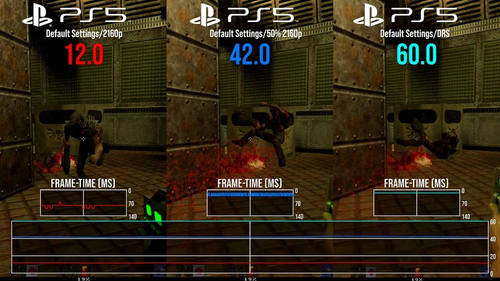
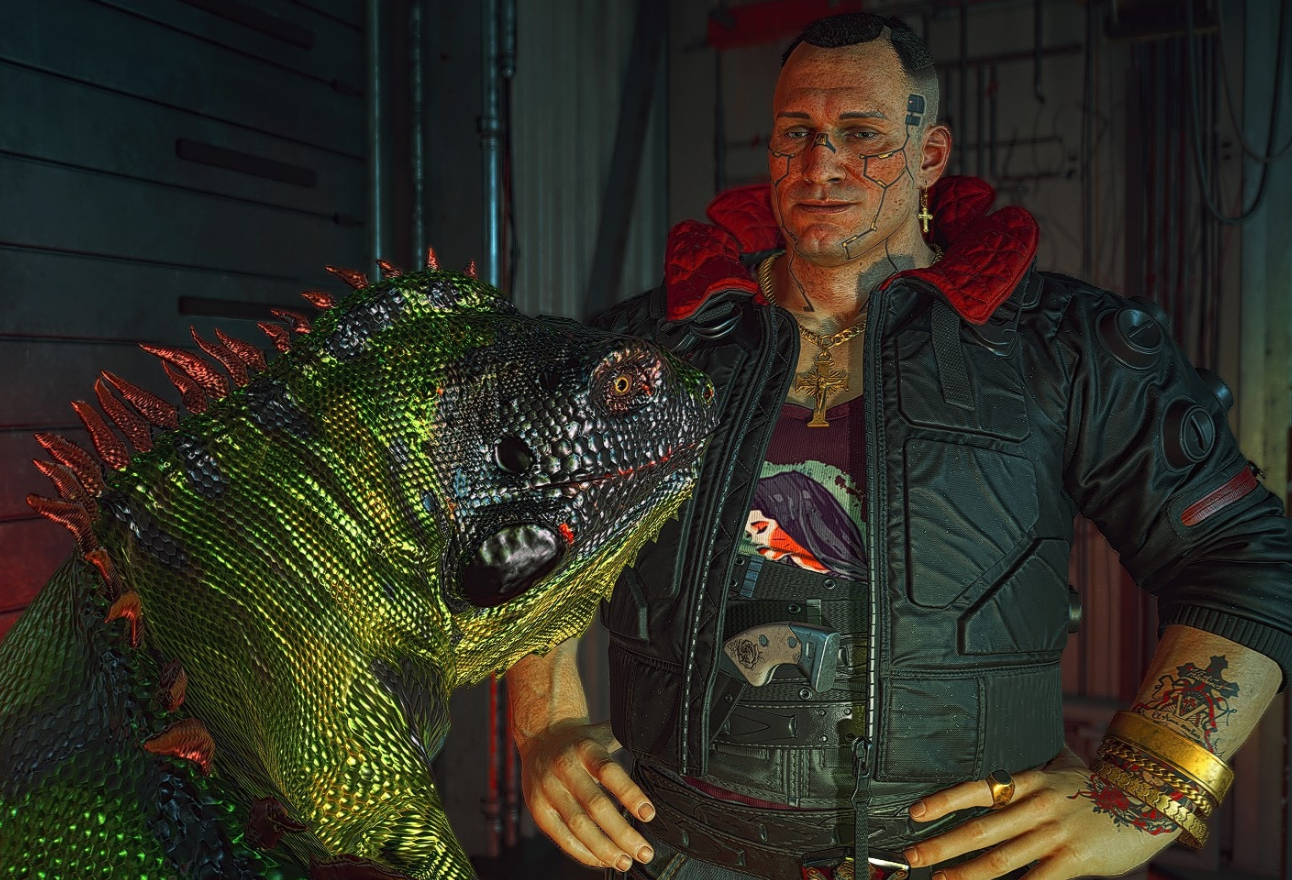
Cyberpunk 2077 with path tracing on a regular PS5 is “formally playable, but doesn't look particularly good.” Thanks to experiments with resolution, Digital Foundry managed to increase FPS:
In the first screenshot, full RT Overdrive at 1080p output resolution (internal — 470p) using XeSS performance mode, where we get an average of 22.6 FPS. Then I increased the frame rate by 19% by switching to 1920×800 resolution — essentially an ultrawide format — which reduces the internal XeSS [render] resolution to 348p. The result of 26.9 fps is better, but significantly more is needed for a stable 30 fps.
Thanks to a modification to optimize path tracing, the number of ray reflections was reduced from two to one. In combination with rasterization settings similar to the Switch 2 version of the game, a performance increase of another 32% was achieved. The benchmark showed an average of 35.5 FPS. FSR 3.1 frame generation helped increase the frequency to 70 FPS, but “shimmering appeared instead of real anti-aliasing,” so this idea was abandoned.
The video is available at the following link.
Never miss our newsAdd this site to your preferred sources to see us more oftenAdd on Google