The full release of The Rogue Prince of Persia from Evil Empire, founded by former members of Motion Twin - the creators of Dead Cells, took place on August 20. The project had been in early access since May 2024 and received a lot of criticism from the very beginning. We analyze what the final version turned out to be in our review.
Persian Night
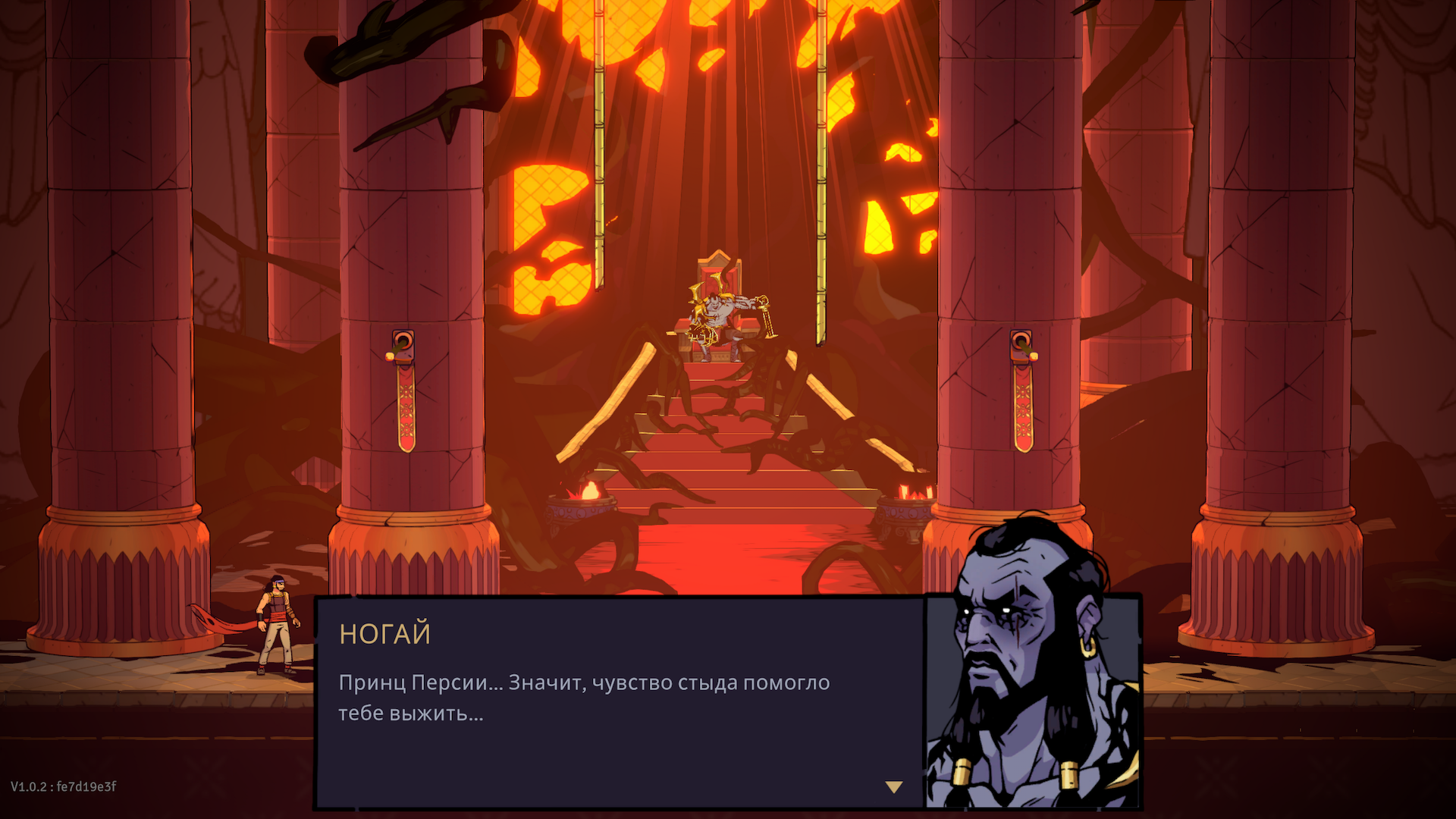
The game's plot begins with the invasion of Persia by the Huns, led by King Nogai. The Prince of Persia himself confronts the invaders, but suffers a crushing defeat in the battle with Nogai. However, the fiasco does not become fatal: the young prince has a magic amulet with him that does not allow him to die completely. After each death, the hero wakes up in the last resting place — an oasis that serves as a hub — even before he entered into battle with the invaders.
The Rogue Prince of Persia is a representative of the "roguelite" genre in the spirit of the sensational Hades, but made in 2D. The narrative and gameplay are built according to the usual formula: the player makes runs through locations, each of which is created according to one scheme, but with elements of randomness. Levels are always generated anew, but retain common features — for example, the location of important NPCs or the main levers that open key passages.
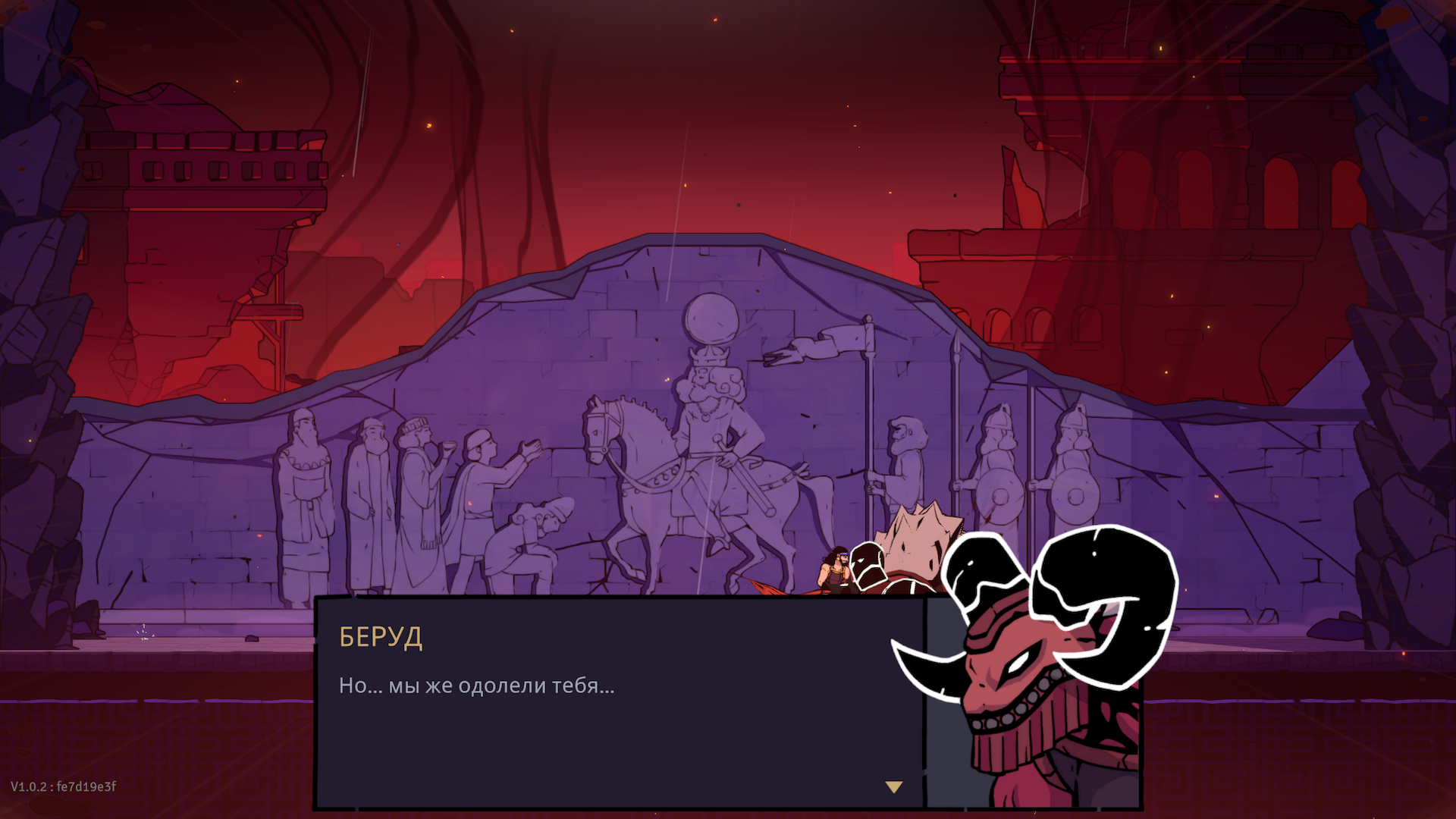
The story here is very simple, even rather functional — at least at first glance. After each return to the oasis, the plot receives a small development: new dialogues open, characters found during the exploration of locations appear, pieces of lore are revealed. Over time, the protagonist forms a mental map — a place where everything related to the plot is recorded. It also tells the player what to do next: find out who the Huns are holding captive, or figure out how to open the water in the aqueduct to save the prisoner. All this gradually moves the narrative forward and makes the story a little deeper than it seemed at first.
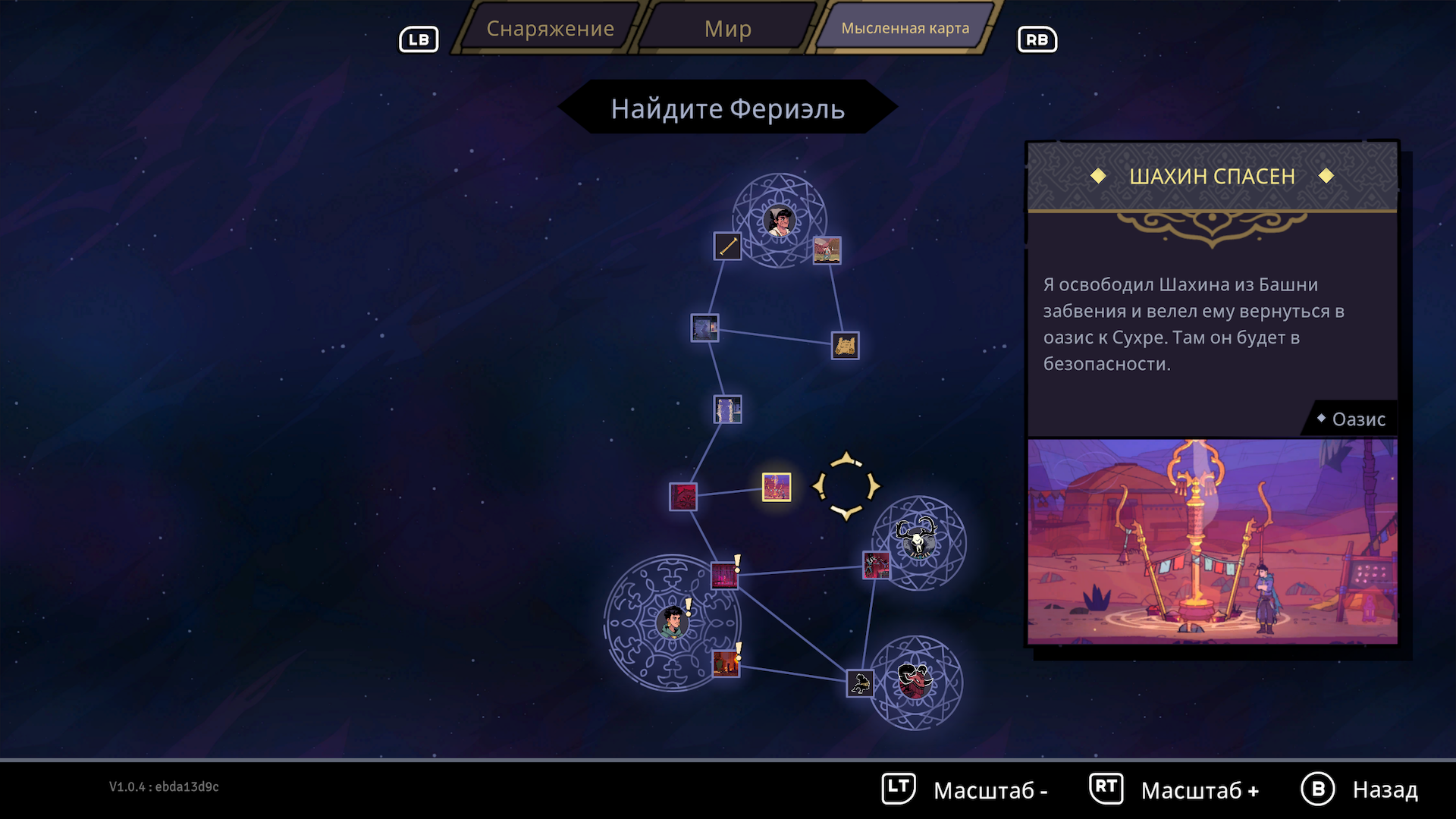
But there is a nuance: although the player regularly receives new information, he has to hear the same dialogues over and over again. And sometimes there are blatant anachronisms. For example, the prince's brother may appear even before the hero learns that his relative is alive, and later, already having received this information, he is still surprised.
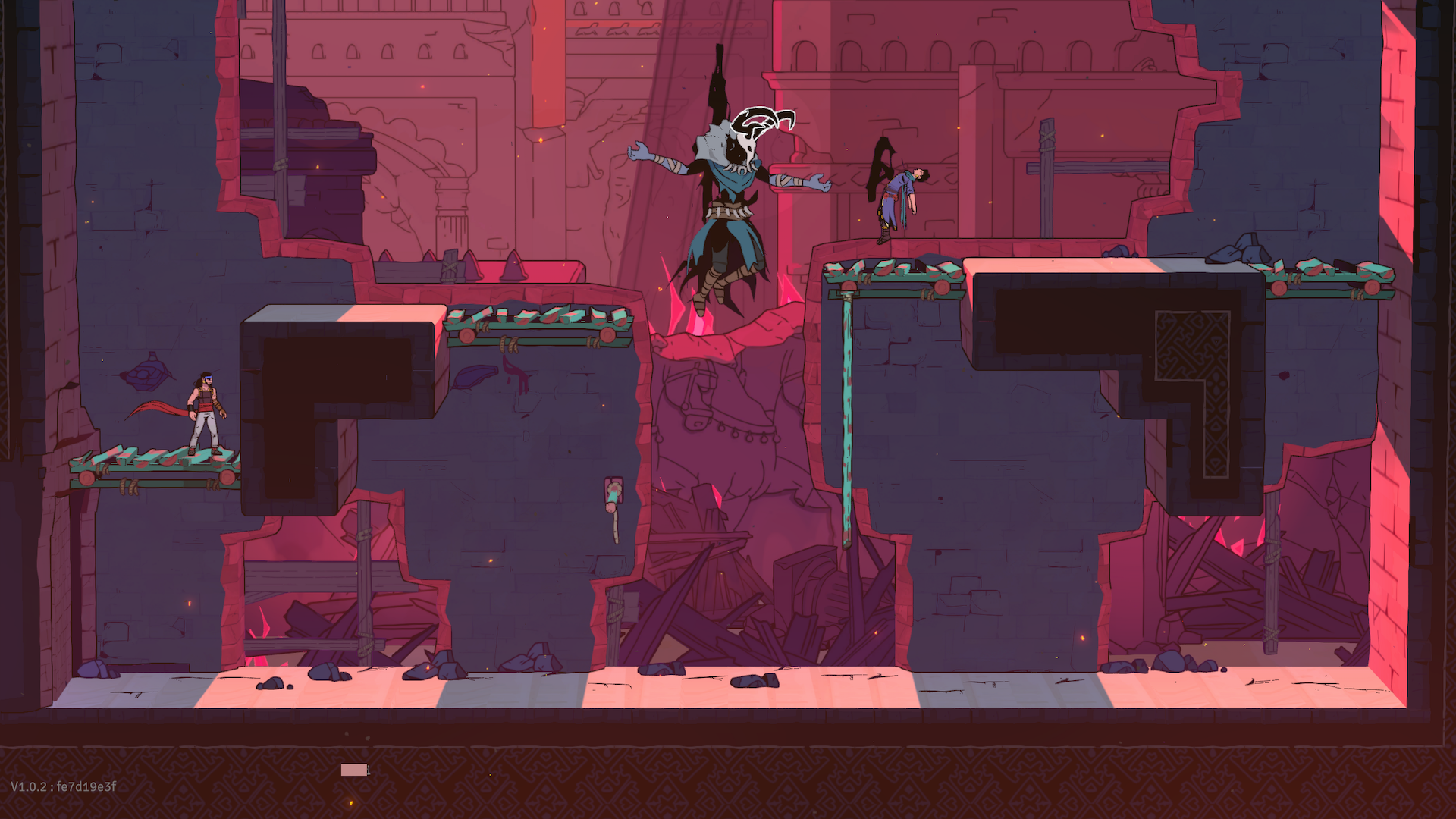
However, these are minor details, largely explained by the genre of the project and its theme — time loops. There are also advantages to this approach. Continuing the example with the brother: having first met him during a battle with the boss, the hero can later save him even before this battle, and then the boss himself will appear in a slightly different form. Although it is unlikely that this will significantly weaken the enemy.
The levels turned out to be diverse: there are several biomes here — a village destroyed by the raid, an aqueduct, a trap-filled library, a temple, a palace, and others. Each of them offers unique enemies and its own ways of exploration. In addition, teleports are generously scattered around the locations, allowing you to return to previous points if you run into a dead end. This makes the passage a little more convenient.
To get to Nogai, the prince will have to overcome seven locations — but this does not mean that each time he will have to go along the same routes. During the exploration, you can find notes telling about events in other places, after which alternative versions of levels open. So, instead of the starting village, you can start with the Hun camp, and instead of the aqueduct, you can get to the library and other zones.
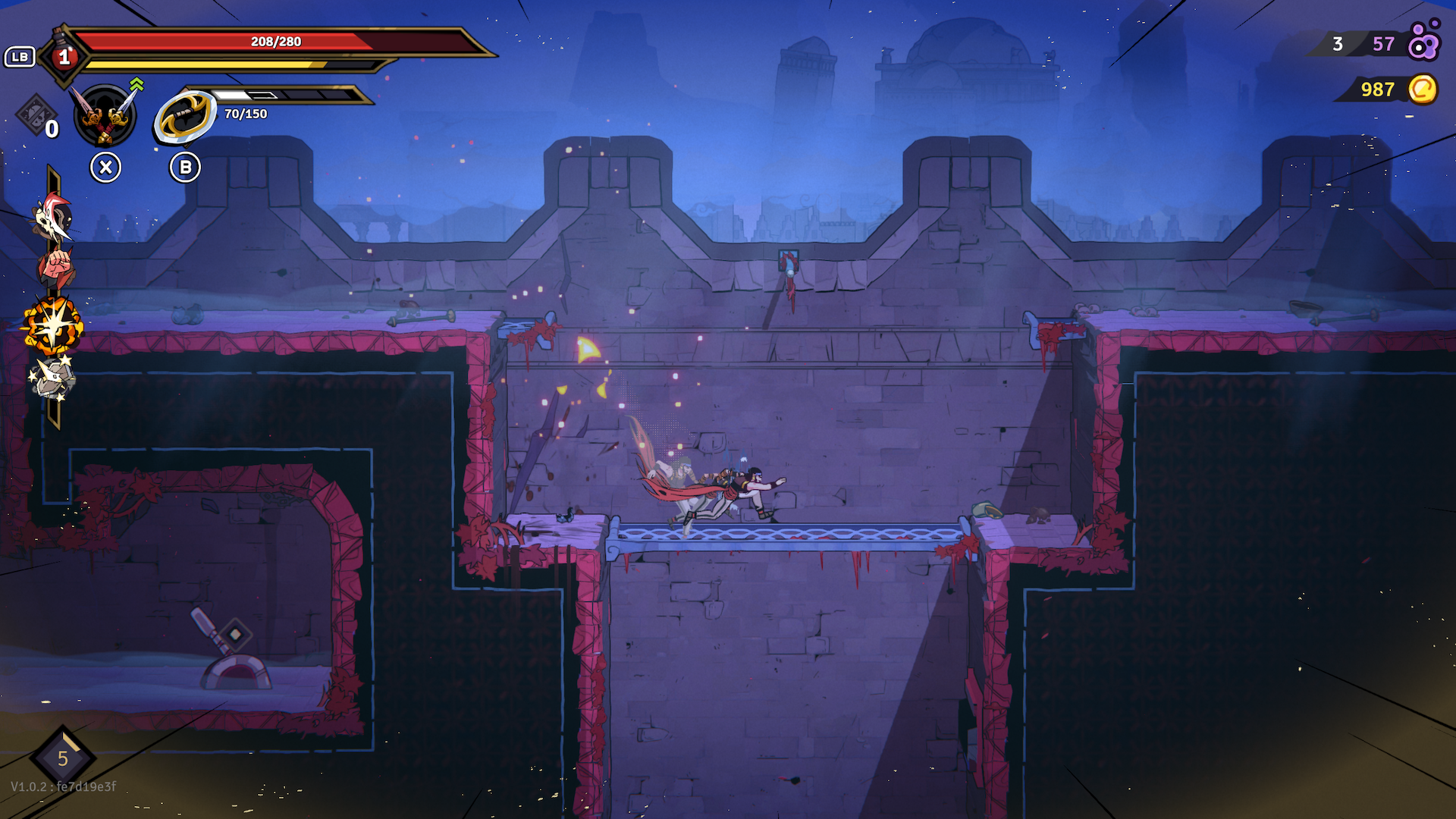
Parkour is an important part of the gameplay: each location is a kind of platform puzzle, and it is the level design that has become one of the main advantages of the project. The prince can run along the walls — both vertically and horizontally. To do this, the player has to deftly combine several buttons, clinging to ledges and bouncing in different directions. Delay can lead to a fall, although it can be slowed down: by holding down the button, the prince plunges the blade into the wall and slowly slides down. There is no damage from falls, but there is always a risk of landing on spikes and losing some health.
Everything depends on luck with the spikes: sometimes there are relatively few of them in the locations, and the passage seems easy, and sometimes the game generates truly "overgrown" levels, where any mistake can be fatal and quickly turns the process into irritation. Especially if you have not yet had time to get used to the controls.
Combat system and leveling
Battles in the game are simple, but exciting. The player has several techniques:
- Normal attack with the main weapon. Swords, axes, spears, censers, brass knuckles and more are available in the arsenal.
- Special attack. Activated by holding down the strike key, unique to each weapon and can give bonuses such as setting enemies on fire or a guaranteed critical strike.
- Attack with an additional weapon. You need to accumulate energy with normal strikes for it. The player has access to a bow, throwing disc, saw, poison dart and other things, and each weapon requires a different amount of energy.
- Kick. It can be used to knock down enemies or, for example, push stones found in locations. A hit stuns opponents.
- Falling strike. For it, you need to climb higher and press the jump button twice: the prince will make a dash down and stun the enemies.
- Evasion. You can avoid damage both with a normal jump and with a separate button, after pressing which the prince makes a dash in the specified direction.
In battle, you can and should use elements of the environment. So, in a battle with the first boss, it is convenient to cling to the walls to dodge some of the attacks. The game encourages ingenuity: enemies, unlike the prince, take damage from falls, so it is advantageous to push them into the abyss. And if you drop an opponent on spikes, he dies instantly.
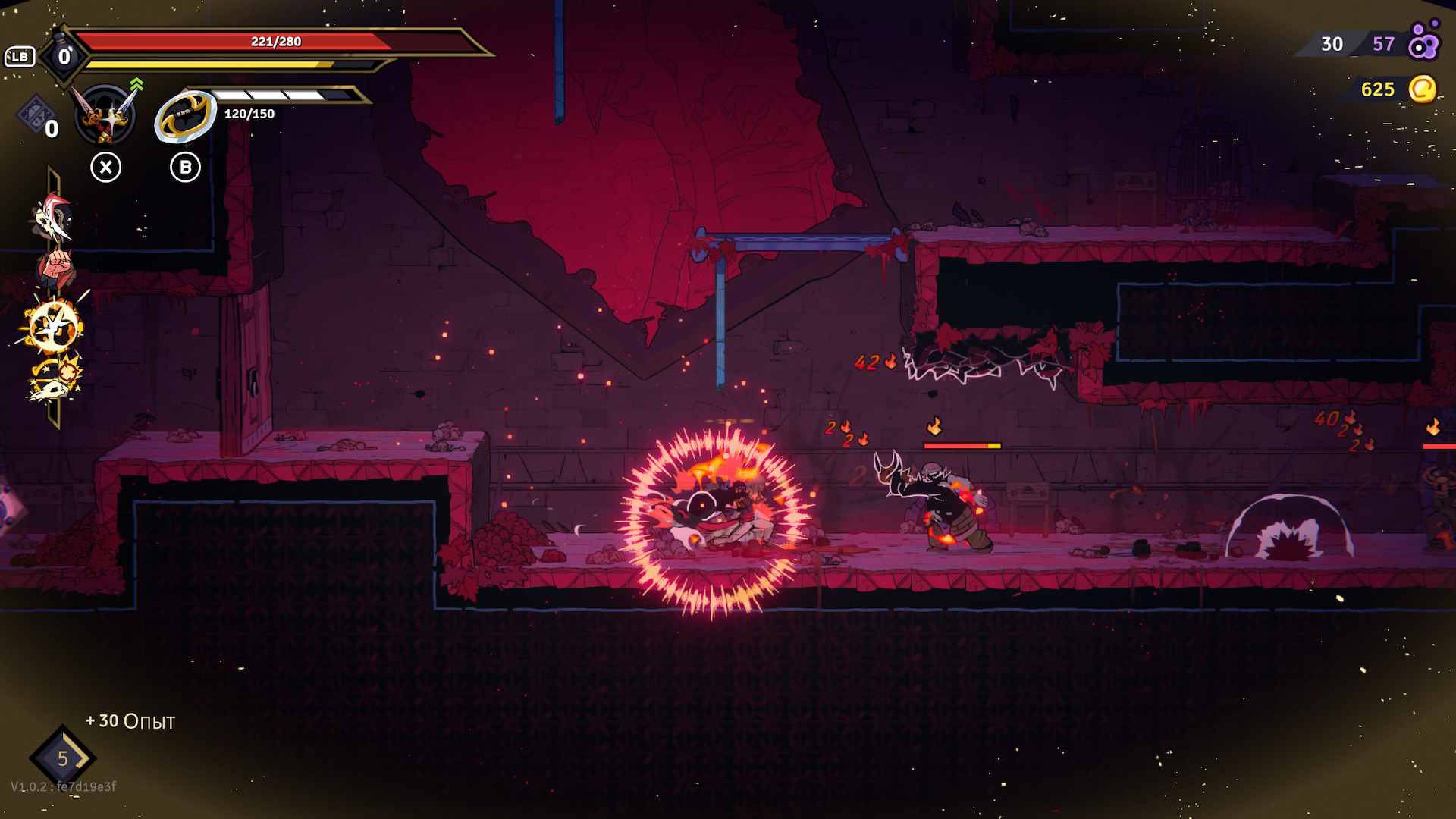
The number of opponents here is impressive: there are many monsters with different skills in the game. Some throw bombs under their feet, which can be skillfully manipulated, forcing enemies to blow up each other or even themselves. Others hide behind shields, summon creatures, or constantly evade the player. And the further you advance, the more diverse enemies you meet.
The bosses turned out to be ambiguous. The first one fights interestingly, but after several passes his movements begin to be read so easily that victory is given almost automatically. The second is the most "stuffy": he constantly updates shields, deals massive damage that cannot always be avoided, and regularly teleports. The third and fourth, on the contrary, are noticeably simpler: they have a lot of health and attack power, but their movements are easy to predict, and there are no annoying mechanics like the second one. If you have enough damage, it will not be difficult to cope with them. At the same time, the second boss can be replaced with a simpler one — if you open another path for passage.
In addition, for a series of successful actions — whether it's successful parkour or a series of kills in battle — the prince receives a short-term boost called "Breath of Vayu". It is displayed as a yellow bar next to the health and energy indicators. While the effect is active, the hero's movement speed increases significantly.
Each new run begins with the player receiving a randomly selected main and additional weapon, as well as a small bonus: an increase in health, additional currency for leveling (one of two), or an additional slot for medallions — runes that are inserted into limited slots and give various buffs, allowing you to build builds.
These bonuses can be different — from a simple increase in damage to special effects. For example, during the "Breath of Vayu", the damage dealt may increase, and a kick or evasion for a few seconds fills the floor with resin, noticeably slowing down enemies.
The game has three types of leveling.
Firstly, during the exploration of locations, you can find and replace the starting weapons — both main and additional. It is found on altars, in chests or from merchants. You can also find an analogue of an existing weapon, but with higher characteristics. The same applies to medallions — everything depends on luck here. Periodically, there are merchants and blacksmiths: the former sell useful items, the latter improve the main weapon. This will require gold, which drops from enemies and is found in locations.
Secondly, in the hub you can upgrade the catalog of weapons and medallions. A special purple currency — spirit particles — is used for this. They need to be given to special altars in time when entering each new location, otherwise they will disappear after death. Leveling expands the roster of available equipment: you can study blueprints found during raids (including trophies from bosses) and unlock bonuses. For example, see what equipment awaits you at the start of a new location, or increase the number of items available at the beginning of the run — which gives a small, but still a choice.
Thirdly, for killing enemies and bosses, the player receives experience points. When reaching a new level, a characteristic point is given, which can be distributed in the leveling tree. Here you can increase the basic parameters of the hero, increase the number of available healing potions (initially only one), open the possibility to resurrect one or more times with half health directly during the raid, and much more. There are no combat combos here, however.
In addition, if you find the right NPCs and send them to the oasis, additional bonuses will open. It will be possible to perform tasks such as "kill ten monsters of one type" and receive experience, spirit particles and other rewards for this. It will also be possible to create various skins for the prince, but they only affect the appearance of the protagonist.
Other elements
From a technical point of view, the game has absolutely no complaints — it is a simple project that takes up very little disk space: on Xbox, the game "weighs" only 1.6 gigabytes and works very stably.
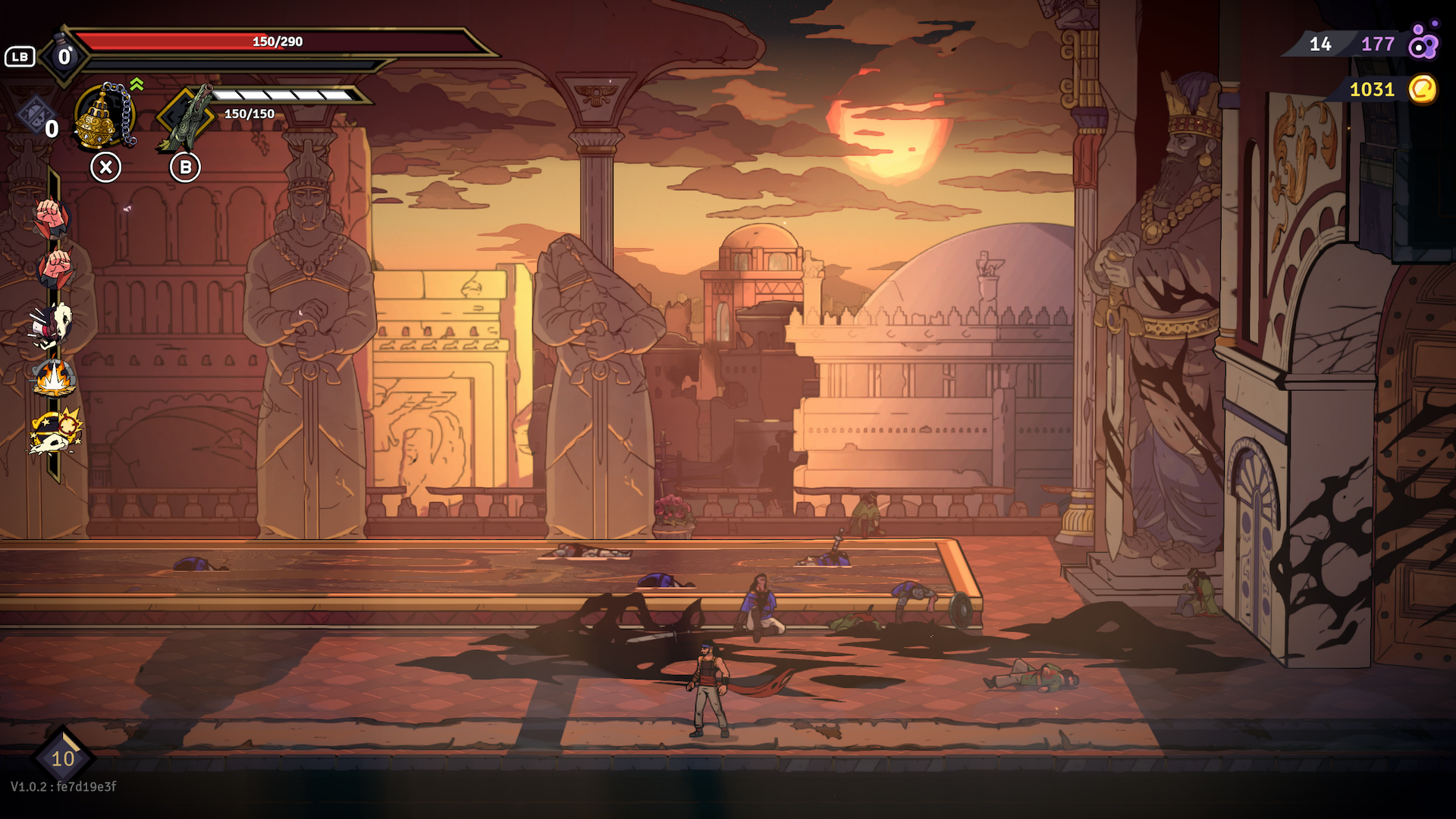
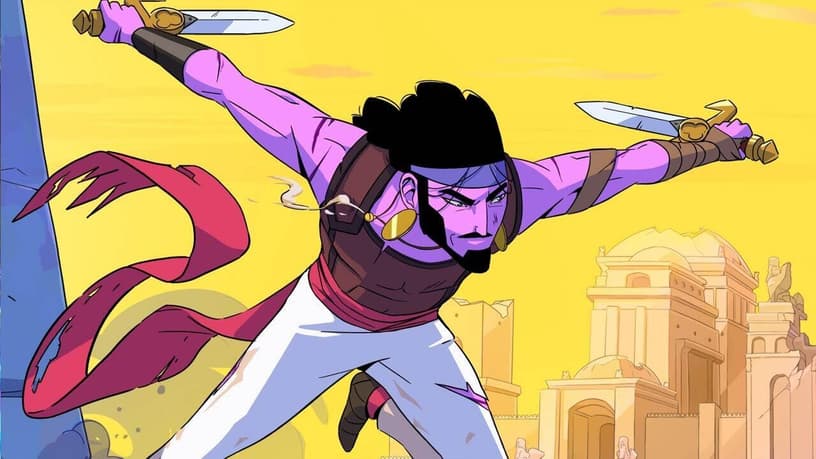
The art design of the project is pleasing: the landscapes of the locations are mesmerizing and immerse you in the atmosphere of what is happening, whether it is a view of a burning palace or desecrated dungeons. There is something to admire. The character design is also неплох — enemies and bosses are impressive, and the prince has begun to look more human, while his original purple appearance can now be obtained as an additional appearance from the corresponding NPC.
The music in the game is прекрасна — these are enchanting oriental motifs, presented in a modern performance. I don’t often go to listen to soundtracks separately from games, but this is that rare case.
There is also a неплохая Russian localization in the form of subtitles — there are no voiced dialogues in the game in general.
You can complete The Rogue Prince of Persia — that is, get to Nogai and defeat him — in 10–15 hours, it all depends on luck during sorties and your skills. But after you defeat the adversary, the game will not end: you will be offered to choose one of three complications, randomly selected, and sent for a second round — the law of the genre.
Diagnosis
The Rogue Prince of Persia is a добротный «roguelike» that will delight you with увлекательным gameplay, a functional story and a чарующей atmosphere of Persia. It is achieved through excellent art design and великолепной music.
The gameplay turned out to be dynamic and spectacular: fast battles with crowds of enemies and platforming sections are perfectly combined with each other, creating many interesting situations in battle and testing the player's skills and reaction. The progress of the hero is well felt.
Battles and build-making, although not as diverse as in Dead Cells — the previous project of these developers — but still give room for replaying in different styles. Such a simplification, although it deprives the game of the depth of its predecessor, but makes it more compact and focused on completion, and not eternal returns to it.
We definitely recommend The Rogue Prince of Persia — especially if you like oriental themes and projects in the «roguelite» genre. The game is available in the Game Pass service, and at least there it is definitely worth trying.
Pro
- Увлекательные battles, perfectly combined with platforming
- Великолепный design of locations
- Чарующая oriental atmosphere
- Состояние «flow», in which the game introduces and does not let go until the very end
Contra
- История «for show»
- Sometimes platforming can be annoying
![[Видео] Игра всех игр. Highguard](https://media.ixbt.site/312x192/smart/ixbt-data/1115420/01KG7S6JACBNCE1RFY0TZ95NS8.avif)