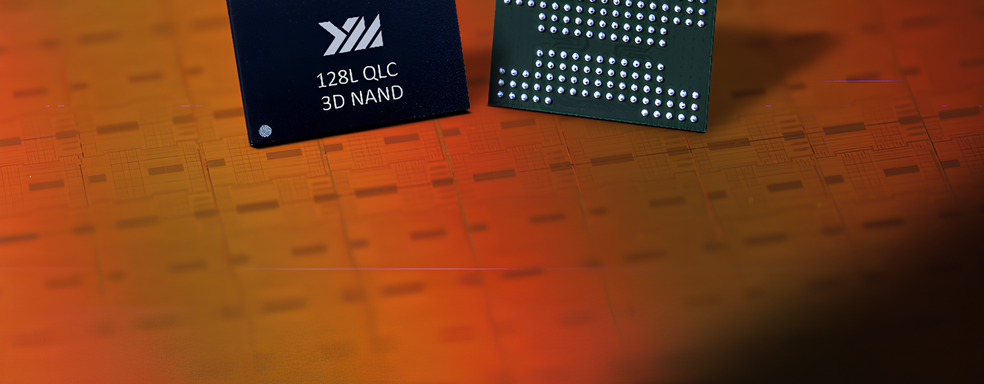
AI Boom Boosts NAND Market Cap 3.5-Fold to $46 Billion in Just One Quarter
Translated with AI from the Russian original.
Meanwhile, the consumer solutions segment is becoming increasingly unaffordable for the average person.
The rapid development of artificial intelligence continues to shift the balance of power in the memory market. According to a fresh study by Counterpoint Research, in the first quarter of 2026, the global NAND market demonstrated unprecedented growth: the total revenue of the segment reached $46 billion, an increase of approximately 3.5 times compared to the previous year.
The main driver of growth was Agentic AI-based solutions, which require enormous volumes of data storage. The large-scale construction of data centers with petabytes of storage led to a sharp increase in demand from the corporate sector. Enterprises already account for about 43% of the entire NAND market, and by the end of 2026, this figure could exceed 60%.
It is noteworthy that the industry's revenue for the first quarter of 2026 was higher than the entire NAND market volume for 2023.
Samsung remains the market leader, maintaining the largest share in the SSD segment. It is followed by SK Hynix, Kioxia, Micron, and Sandisk. However, the main discovery of the year was the Chinese company YMTC, which increased its market share to 13%, demonstrating an impressive growth of 246% year-on-year. Judging by the dynamics, the manufacturer managed to win back a part of the market from leading industry players.
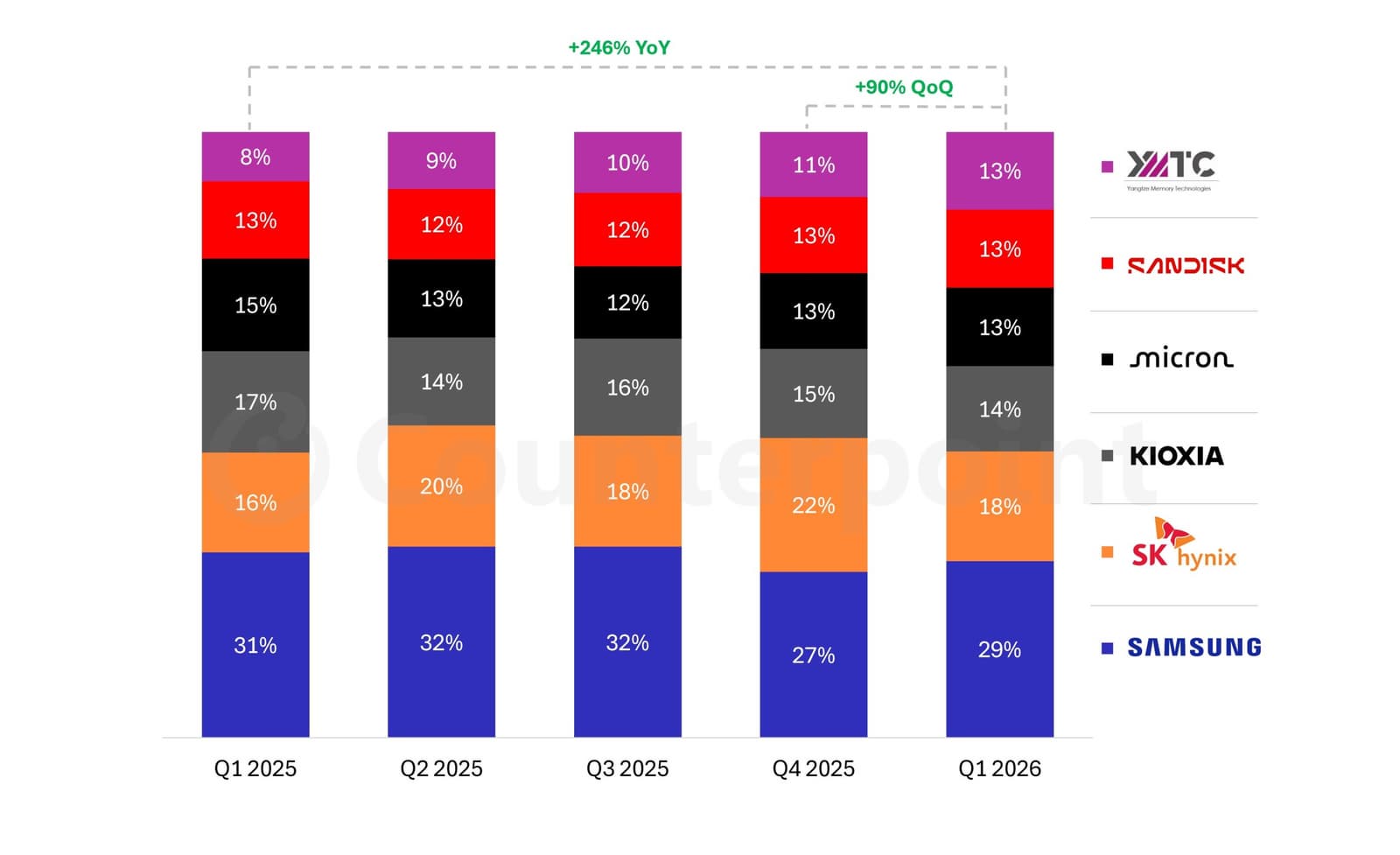
YMTC's successes coincide with the company's preparations for an IPO on the Chinese stock exchange. DRAM manufacturer CXMT is following a similar path, actively expanding its DRAM business. Both companies are participating in a large-scale production expansion program, which includes the construction of new facilities and a significant increase in silicon wafer output.
While the DRAM and NAND segments are experiencing a real boom thanks to the AI "hypercycle," the situation in the personal computer market remains challenging. According to IDC, global PC shipments will decrease by 11.3% in 2026, and negative dynamics are likely to continue into 2027.
Never miss our newsAdd this site to your preferred sources to see us more oftenAdd on Google