Trails in the Sky: 1st Chapter Review - A Remake That Opens the Door to a 20-Year JRPG Saga for Newcomers
Translated with AI from the Russian original.
Nihon Falcom has updated the first part of the cult series: the graphics have been updated, voice acting has been added, and the gameplay has been simplified. We examine whether it was possible to turn the archaic 2004 JRPG into an entry point for a new audience - and whether it is worth diving into a large-scale franchise of 13 games.
Before analyzing the re-release, it is important to understand which franchise it belongs to. Trails are turn-based RPGs from Nihon Falcom, which in the 90s competed with Square Enix: while they were releasing Final Fantasy, Falcom was developing The Legend of Heroes, where there were already two lines - Dragon Slayer and Gagharv. At that time, the studio also made the action series Ys, which is still alive today.
Falcom is often called a "forge of talent": many famous developers came from its walls, for example, Makoto Shinkai - the author of "Your Name" and "Weathering with You", who created graphics and openings for Ys II and The Legend of Heroes III.
The key point of the competitive struggle is the focus on platforms: Final Fantasy went to consoles, and Falcom chose the PC, which played a cruel joke on it and led to financial difficulties. In the early 2000s, the developers abandoned advanced graphics and technologies, focusing on the plot and scenario. This is how the new generation of The Legend of Heroes: Trails appeared.
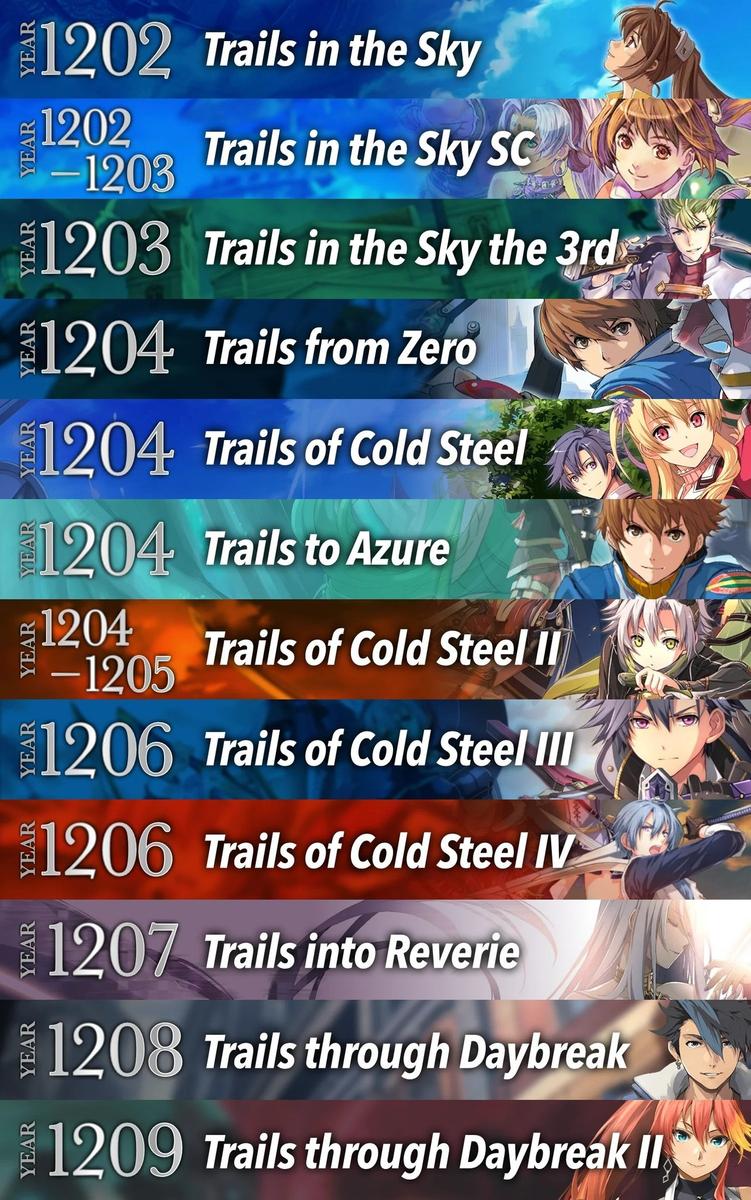
Today, Trails is the company's second main franchise with a large audience in Japan. The series reached the West with delays: for example, Trails from Zero appeared in 2010 on the PSP, and its English version for the PC was released 12 years later. But the Trails in the Sky remake was released simultaneously around the world for the first time, which is important for both sales and introducing new players to the series. Previously, the original was scaring away with its "archaism", and the re-release is designed to fix this.
A Small Historical Digression
The world of Trails is an unusual combination of science fiction and fantasy. Here, technologies are not opposed to magic, but are closely intertwined with it. It all started with the discovery of the Septium mineral and the creation of orbments - devices for controlling energy, which launched the industrial revolution. In just decades, the world has moved from steam to electronics, transport, telephones, firearms, and even computers have appeared.
But scientific progress is only one side. The second is politics: the Zemuria continent is divided into many states, each with its own interests and conflicts. Empires, republics, kingdoms, secret organizations, conspiracies, and even wars are involved here. The player finds himself not only inside everyday stories, but is also involved in multi-way intrigues.
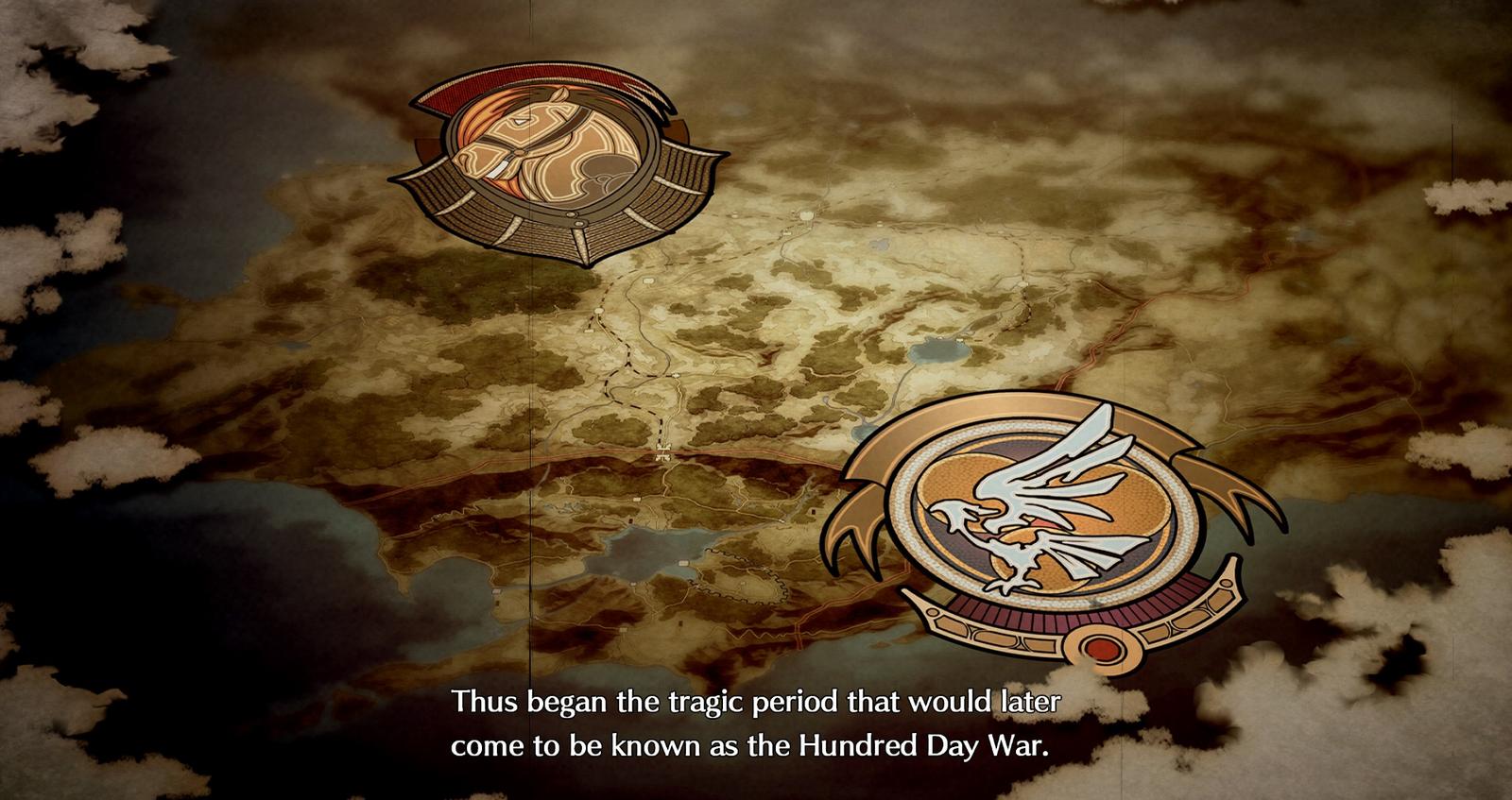
All this is presented through the prism of ordinary heroes: someone serves in the army, someone in the Bracer Guild - peacekeepers who protect citizens. Thanks to this, events are seen not through the eyes of monarchs, but through the eyes of "ordinary people". There are already thirteen games in the series, divided into four large arcs, each telling its own story and revealing another state with all its secrets.
The series already has thirteen main games, united into four large story arcs. One game tells a self-contained story, but they are all connected by a common world and cross-cutting themes, and each arc introduces another state, its philosophy, secrets and problems. Now that you have a general idea of the series, it's time to move on directly to the remake.
Remake, Not Remaster
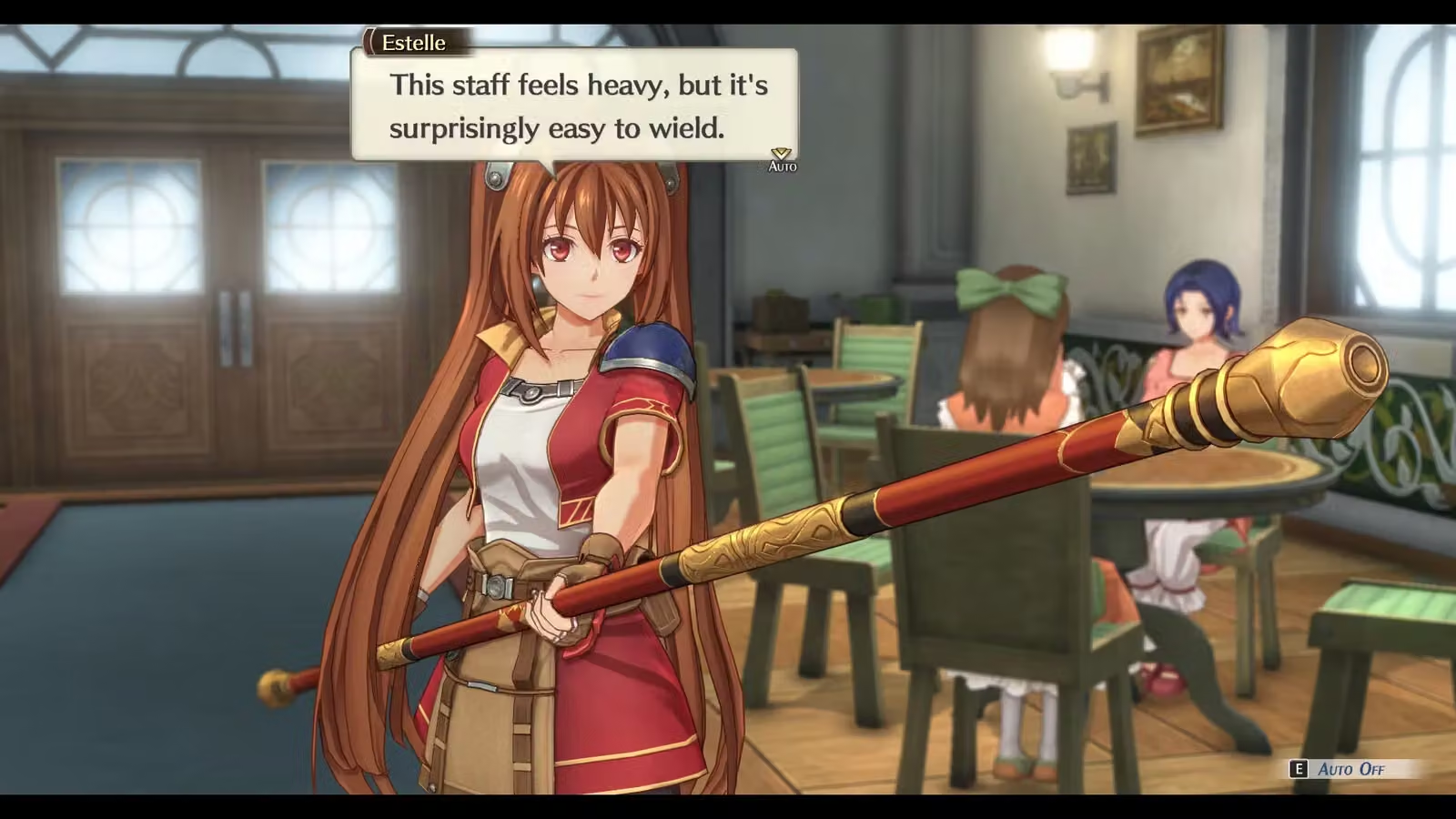
You can feel the difference between the re-release and the original right from the start. 2D isometry has been translated into a full-fledged three-dimensional space with almost seamless locations. Now you can see with your own eyes all the beauties of the Liberl kingdom: urban and rural architecture, road paths and their landscapes, the life of local residents and, most importantly, the sky. The original setting with a top view and the fragmentation of whole locations into small blocks did not allow you to fully appreciate the beauty of the world.
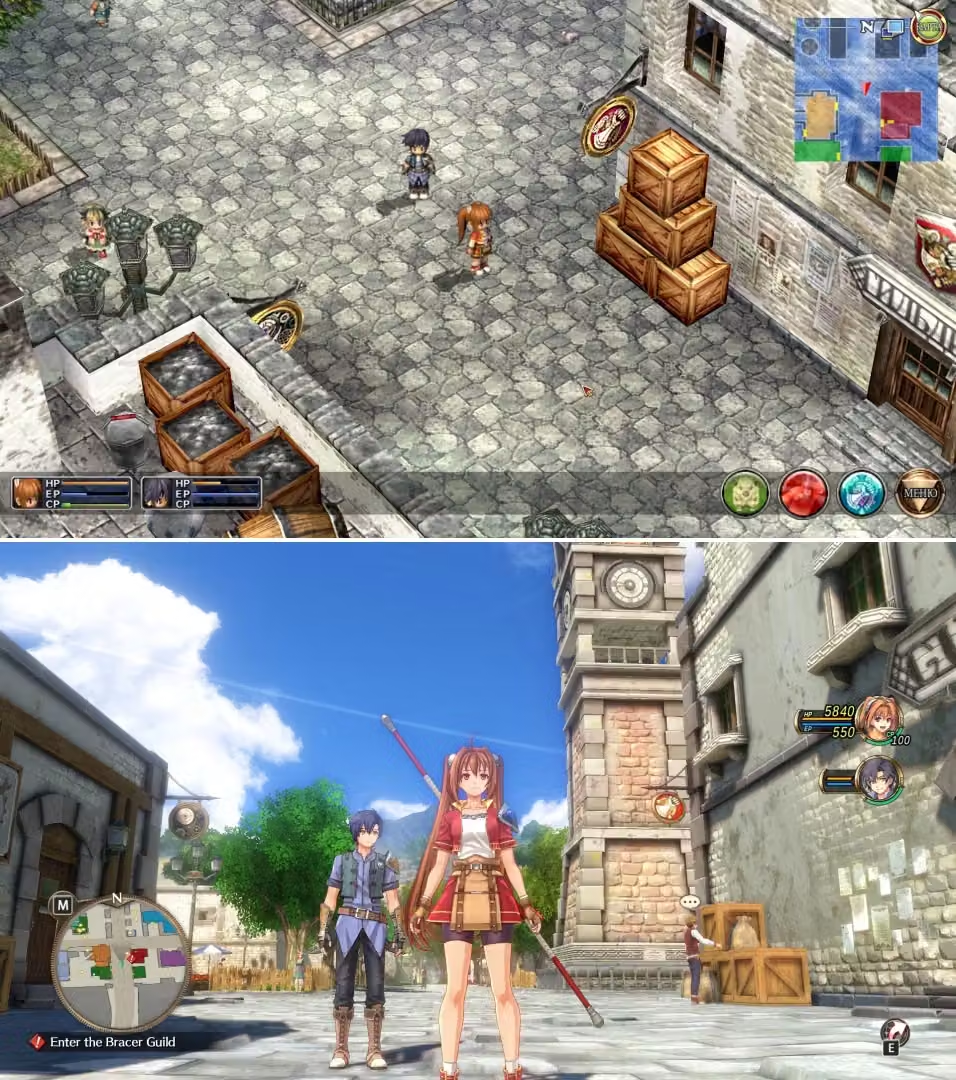
The re-release also added full voice acting for the characters and reworked the script. The main characters regularly comment on situations during travel and battles, and new tasks have been created for a number of secondary characters, allowing them to be revealed as full-fledged personalities. Therefore, the game has become a little bigger than the original.
The soundtrack has undergone a similar update. Music is one of the strongest aspects of the series, and for the re-release, the developers presented three versions of the accompaniment at once: from the original from PSP and PC, from the port for PS Vita and a new arrangement for the remake. The player can easily switch between them in search of the very version that can resonate with your soul, mind and heart.
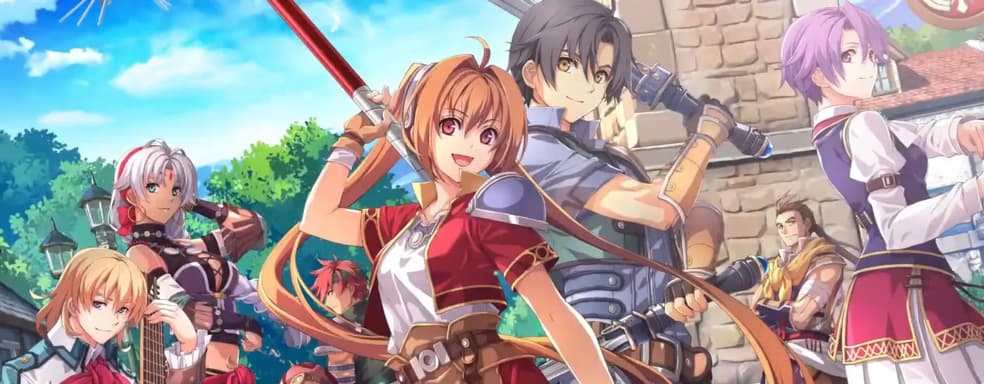
The plot remains the same: as Estelle and Joshua, we go through the path of bracer trainees, visit the regions of the country, reveal local conflicts, help heroes and gradually get involved in a major conspiracy. During these adventures we will meet other heroes who are ready to offer their help in the next case. Thus, we will be given the opportunity to play as 8 well-written personalities with unique game styles. And all these actions will be indirectly related to the second key task - to uncover the conspiracy that is happening in their native country.
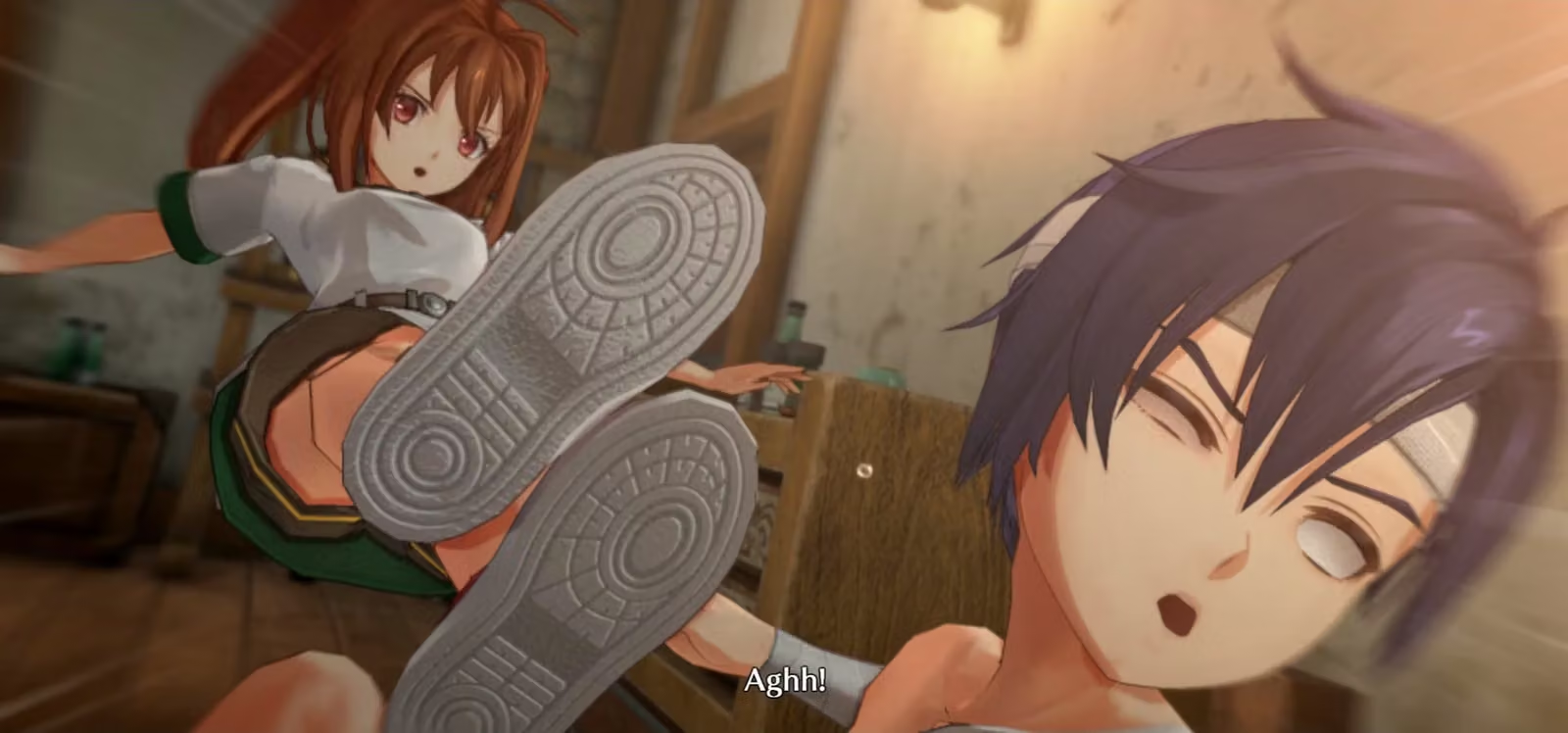
Special attention is paid to the direction of cutscenes - now they are really cinematic, and emotions are conveyed much more vividly. The remake thoroughly approached the reconstruction of productions: the scenes received impressive camerawork, spectacular choreography and careful use of angles that the original could not afford.
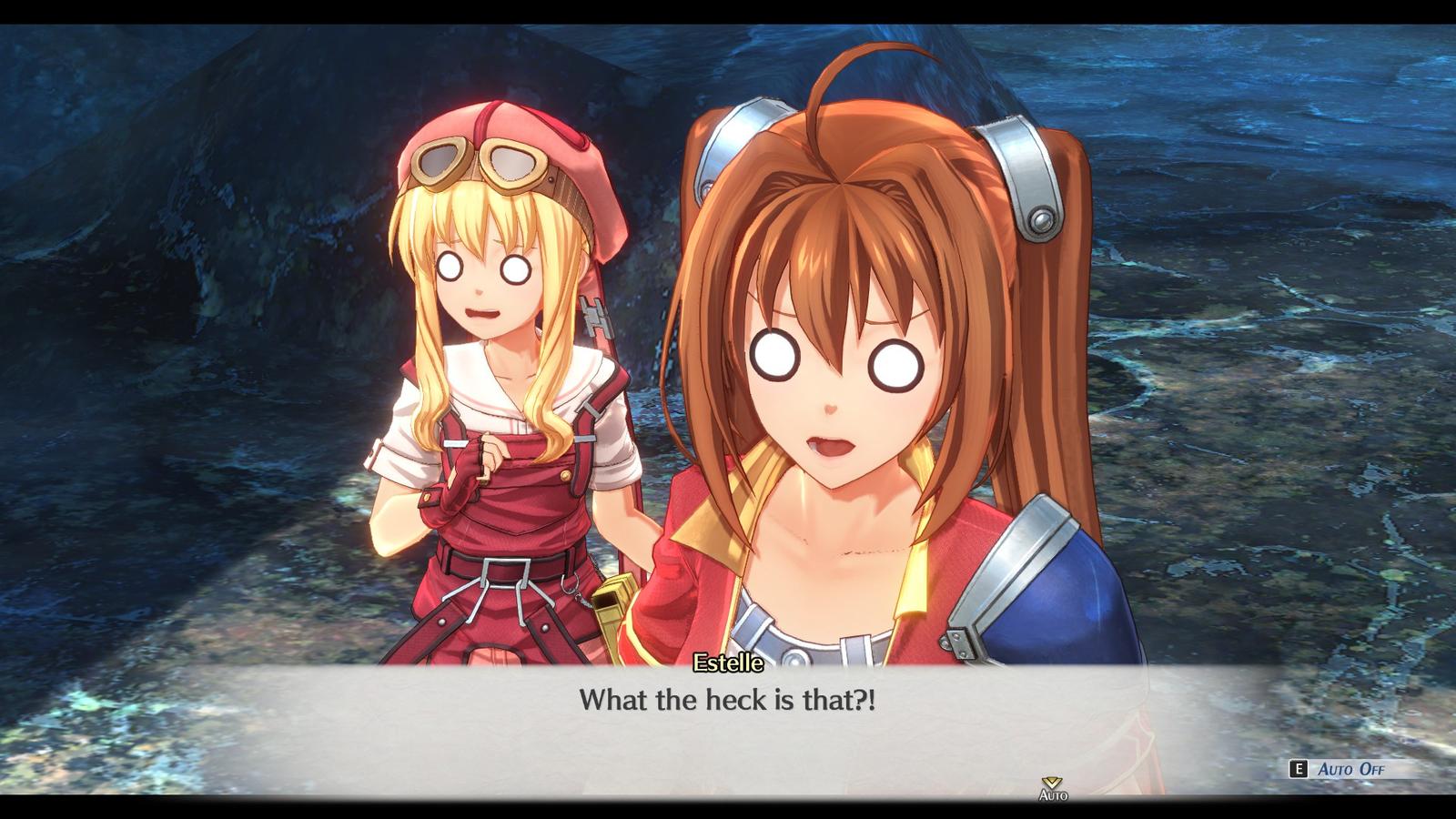
Visual flaws, however, exist, but they are subjective: the faces of the characters are not always expressive, and the style is classic anime with big eyes and typical forms. This may alienate part of the audience: this design is not perceived by everyone in the same way - someone simply does not like this style.
Gameplay According to All the Covenants of JRPG
The gameplay of the Trails in the Sky remake is built on three pillars of JRPG: world exploration, leveling and combat.
The main plus is a living and holistic world. Liberl is divided into five large districts, each of which is a separate chapter, plus a large prologue. All areas are carefully designed and closely related to the plot. Cities, villages, trails, ruins and dungeons are connected by roads; exploring routes is an important part of the adventure. Only a few zones are needed for leveling, most have their own aesthetic and plot value.
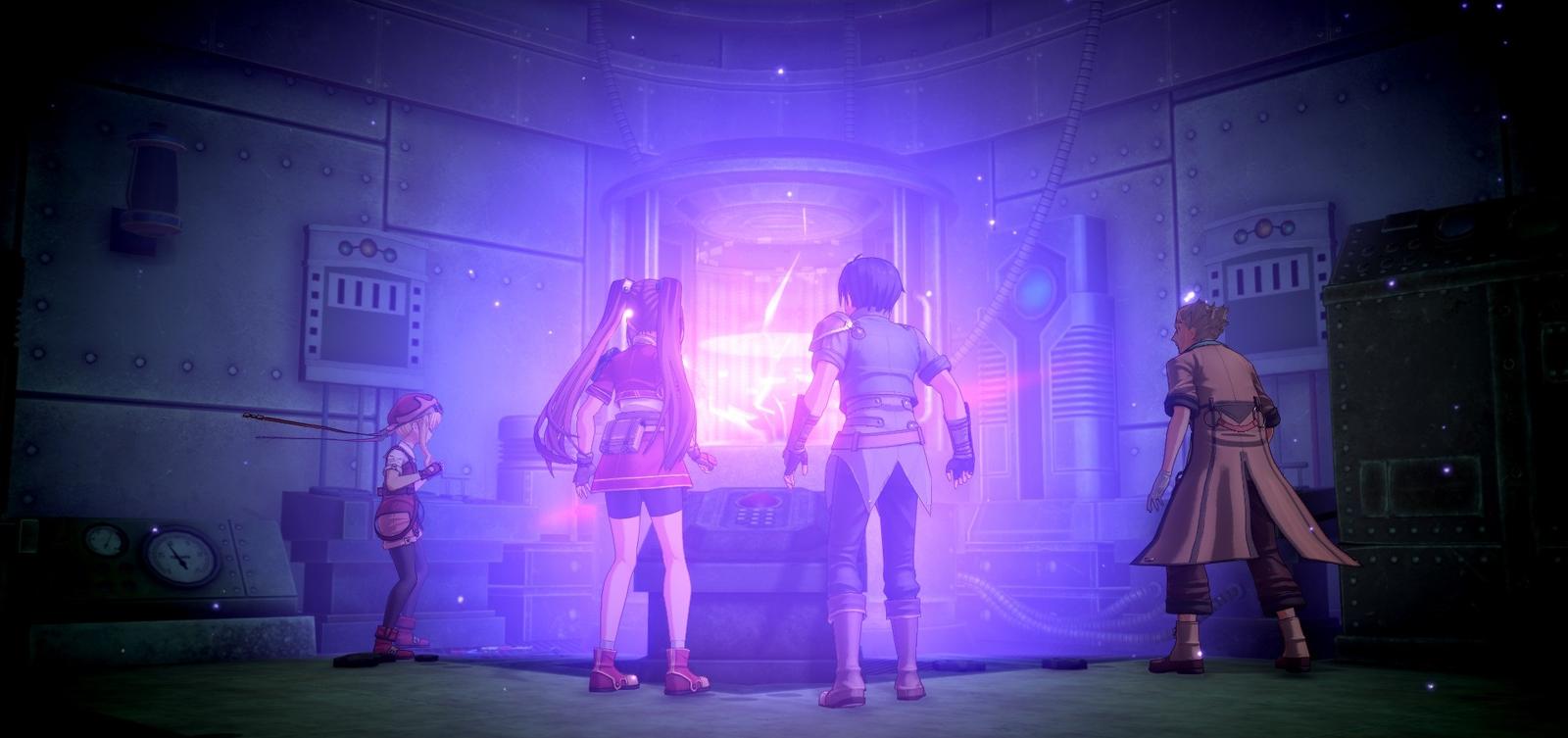
Exploration is closely related to working in the Bracer Guild. The hero takes on tasks: search, investigations, hunting monsters. Such quests bring rewards and reputation points, help to better know the regions and their inhabitants. The replicas of the characters of the world change during the story, revealing details about the surrounding world. Sometimes a simple conversation with a local adds a new facet to the picture of the continent.
Character leveling is classic: levels, characteristics, skills, equipment. The main difference is the magic system.
Each hero has a device for installing special quartz crystals. They determine available spells and enhance parameters. Each device contains six cells, combined into lines - the longer they are, the more powerful magic is available. But characters have different inclinations: some collect one element more easily, others have many lines, but cannot open destructive links. Such characters rely more on bonuses from stones.
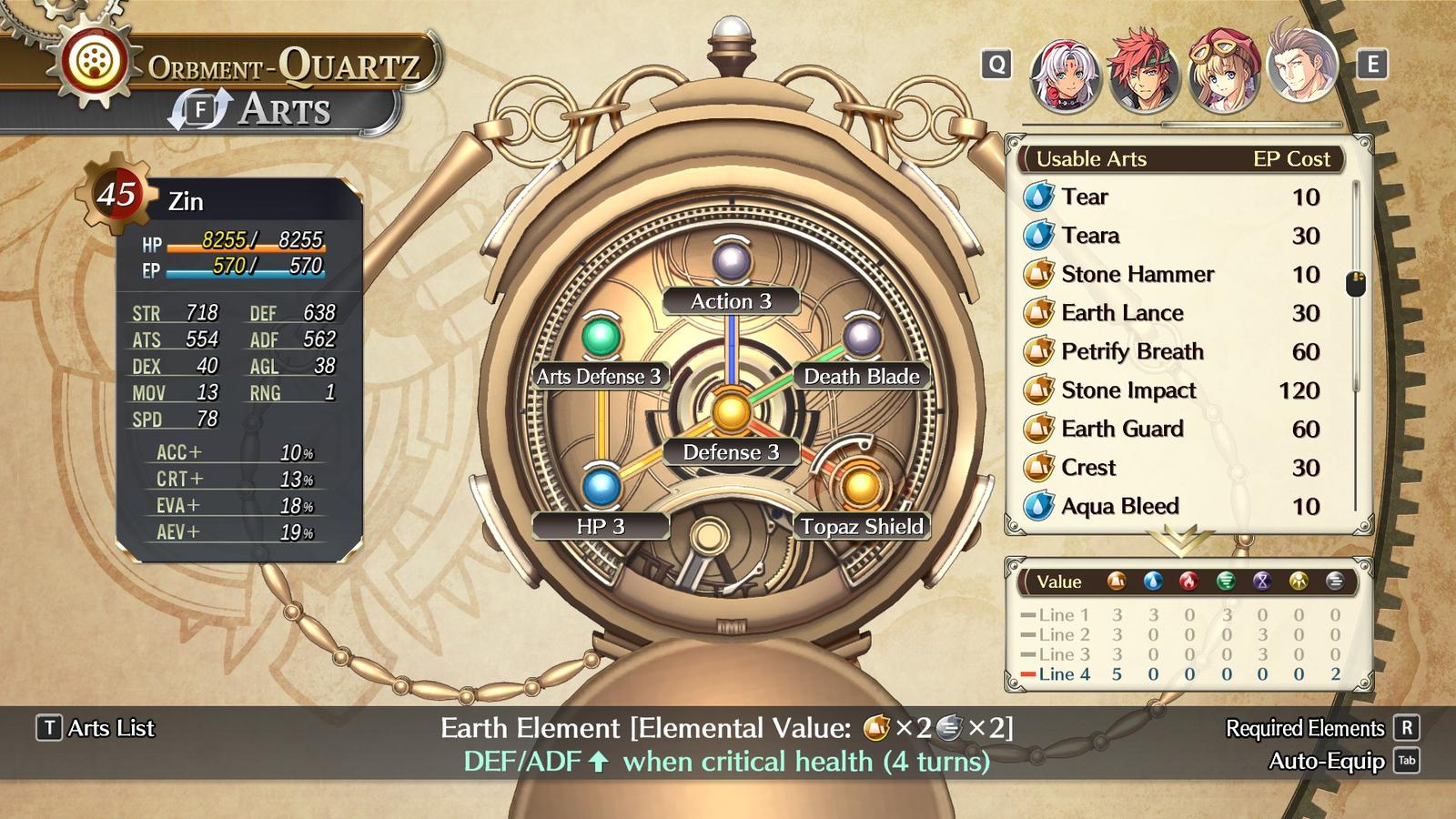
The alternative to magic is personal skills. All characters have a unique set of active and passive skills. Active ones are unlocked when receiving levels, spend combat points. Passive skills are hidden in a separate branch and are triggered randomly in battle.
If the development of the world and heroes remained the same, then the combat system of the remake relies on new developments from Trails through Daybreak and Beyond the Horizon. It combines real-time battles and turn-based mode: you can switch between them.
When meeting ordinary enemies, the battle begins in real time - quick strikes, dodges, combos. This allows you to quickly deal with small enemies, stun strong ones and switch to turn-based mode with an advantage. Turn-based battles remain the basis, allowing you to implement team tactics. Battles take place on a free field, where it is important to choose a position. Techniques are more effective from a certain angle, and when casting spells, you need to take into account the enemy's resistance and elements.
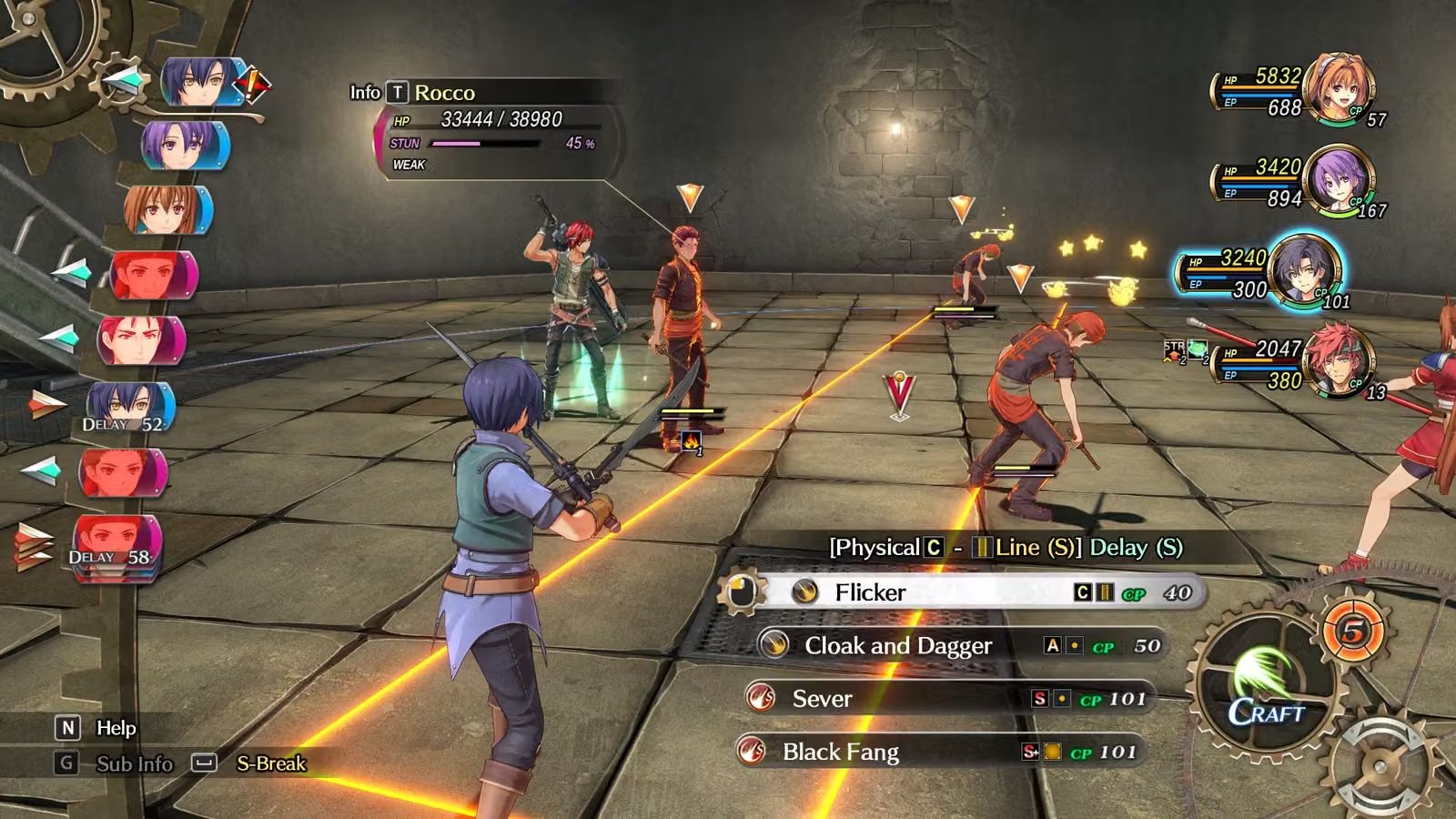
The initiative scale works in battle: characters and enemies take turns, but the order can be changed by skills, acceleration spells or absolute abilities. Bonus effects (crit, magic amplification, healing) are attached to cells and become a reason for tactical decisions. The remake has a bonus theft mechanic - if you fill the stun scale or use a unique technique, you can take them away from the enemy.
In addition to stunning, you can deprive the enemy of a turn with status effects. The game has a large set of consumables: potions, remedies for ailments, but food is especially useful - now it enhances parameters and heals better than purchased remedies..
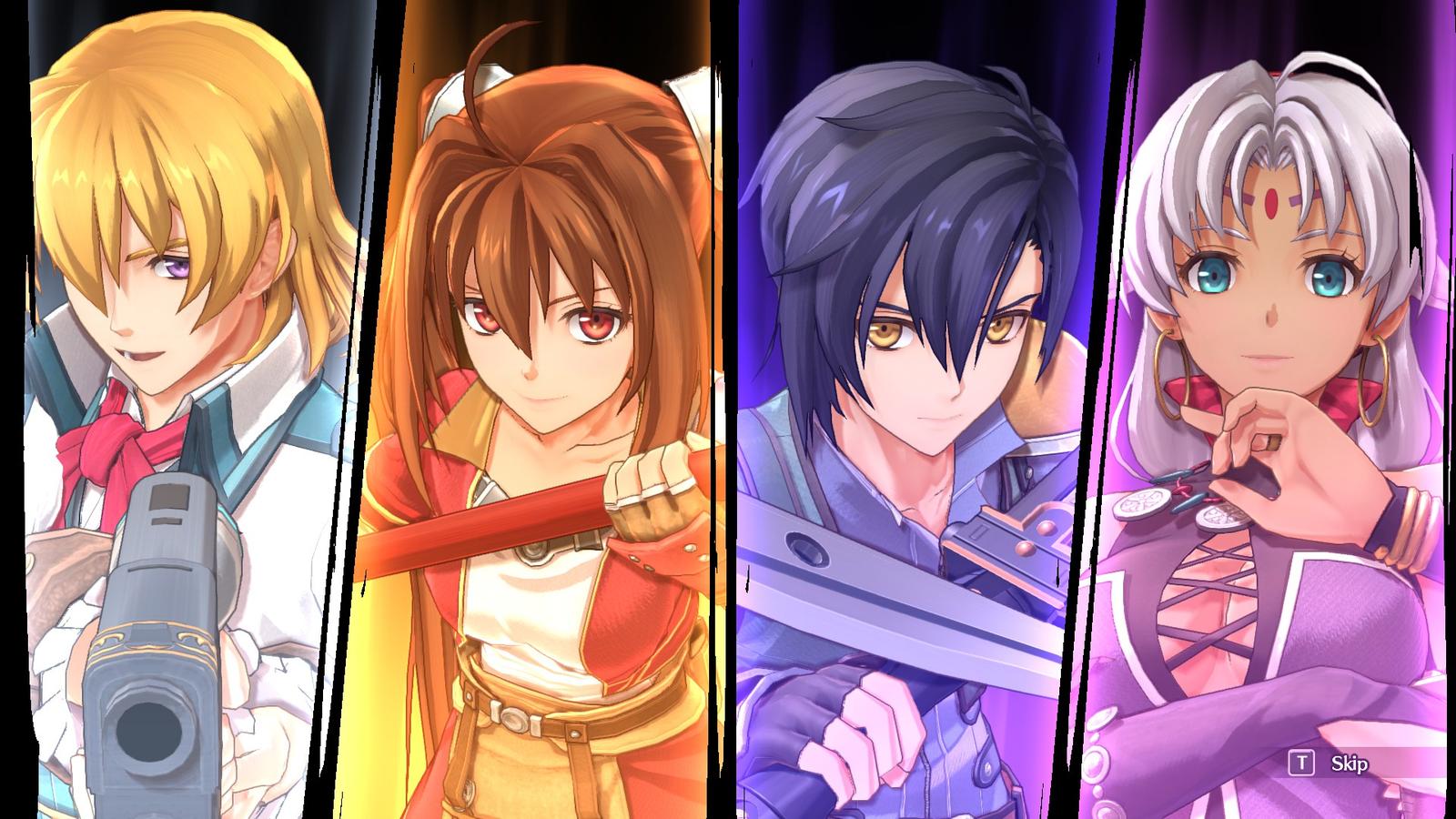
The last and most spectacular mechanic of the battle is combined attacks. After each successful stun and critical hit, you can perform one of three combined techniques: a simple strike from a partner, a paired interaction, or a full team attack on all enemies on the map. With the competent use of the updated combat system, you will win without giving the enemy a turn.
The Game Wants to Please Everyone
The remake tries to please everyone. Its task is to retain and expand the audience. The plot has been edited, the gameplay has become simpler and more beginner-friendly. The original required reading all dialogues and notes to understand the tasks. The remake has quest markers, teleportation, special locations for farming and new zones for hunting experience and resources. The need to wander around the entire map in search of leveling has disappeared.
But the developers got carried away with easing: the markers now not only help, but literally lead by the hand, turning many tasks into moving from point A to point B. Only occasionally the task gives an area to search for evidence. Similar markers will hang on other non-story activities - even those that allow you to get the best weapon in the game!
Another element of casualization: an achievement system has appeared. More than 200 tests, and for each completed - rewards, consumables, improvements and equipment. All are available from the very beginning of the game, so you can assemble an effective team from the first hours of the passage, which breaks the balance.
A controversial simplification is the maximum difficulty. The remake is well balanced for the Nightmare mode, but most enemies and bosses have been simplified, including the iconic ones from the series. However, there is a New Game+ mode, where you can increase the level of enemies by 50 points - there will be enough content for hardcore fans.
Diagnosis
The overall impression is that the remake is similar to the updated Resident Evil: modern graphics, convenient gameplay, the atmosphere is preserved. At the same time, the game works great on any hardware, even on Steam Deck.
Trails in the Sky: 1st Chapter retained the spirit of a fairy tale - here you can laugh, think, and experience different emotions. The re-release has lost some complex quests and mechanics, but the plot is still interesting: perhaps this is a reasonable price to pay for the influx of a new audience.
And despite the lack of Russian subtitles and the removal of the game from the Russian region, the remake has only one big disadvantage - the game ends at an important plot point. It remains to wait for the remake of the second part or return to the original with 2D isometry - everyone decides for himself.
Never miss our newsAdd this site to your preferred sources to see us more oftenAdd on Google