A Beautiful Game, a Terrible "Silent Hill"? A Review of the Controversial Horror Game Silent Hill f
Translated with AI from the Russian original.
Even before its release, Silent Hill f managed to divide the community. Some saw the relocation of the action to Japan as a betrayal of traditions, while others saw it as a chance for a full-fledged revival of the cult series. NeoBards Entertainment has changed the DNA of the franchise so that it has a chance to evolve. After all, in nature, it is not the strongest that survives, but the most adaptable - but mutation can either save a species or destroy it. What did the new Silent Hill ultimately turn into - and will it be able to survive in the conditions of "wild game development"? We'll figure it out in this review.
Old Horror in New Scenery
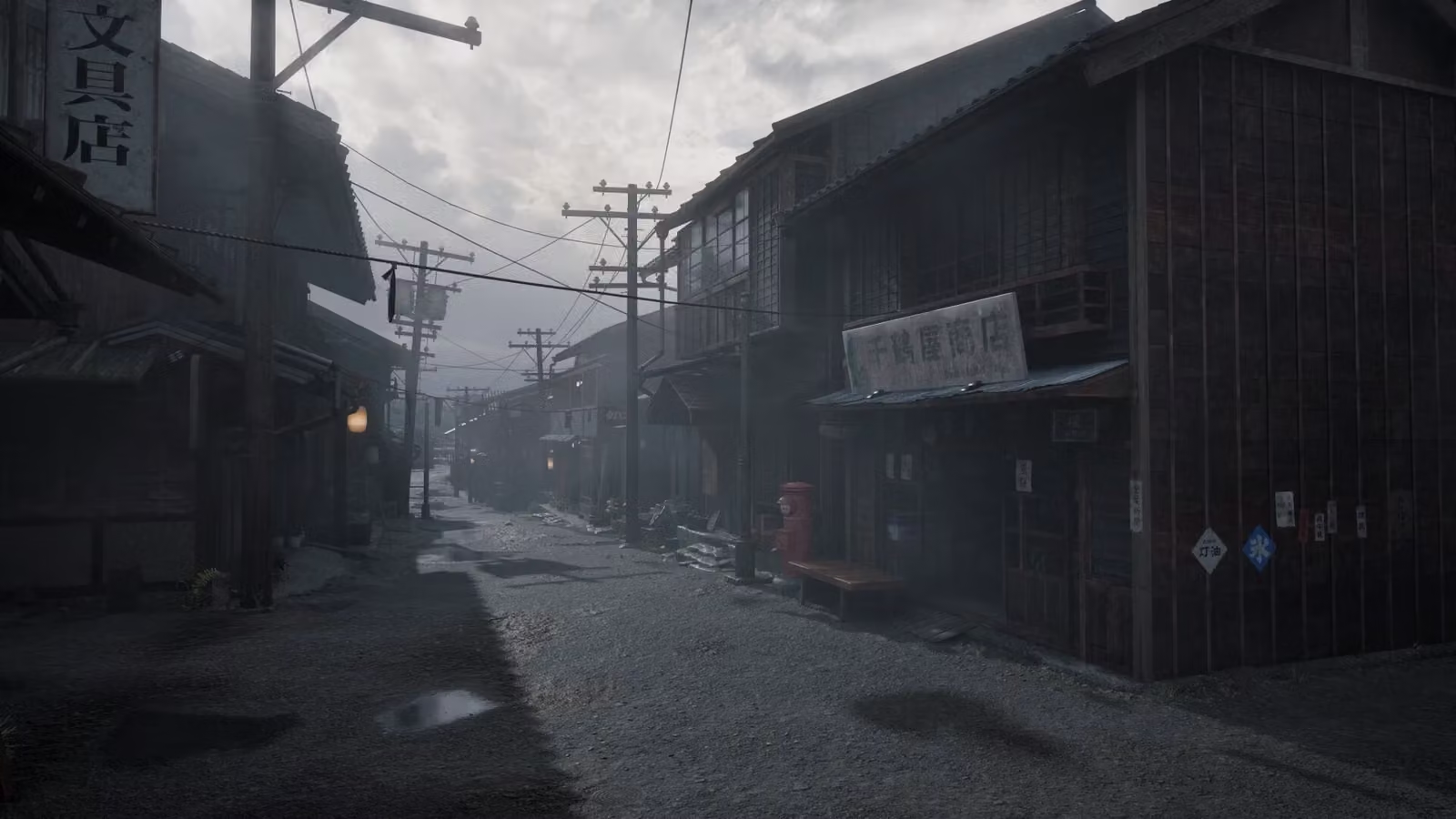
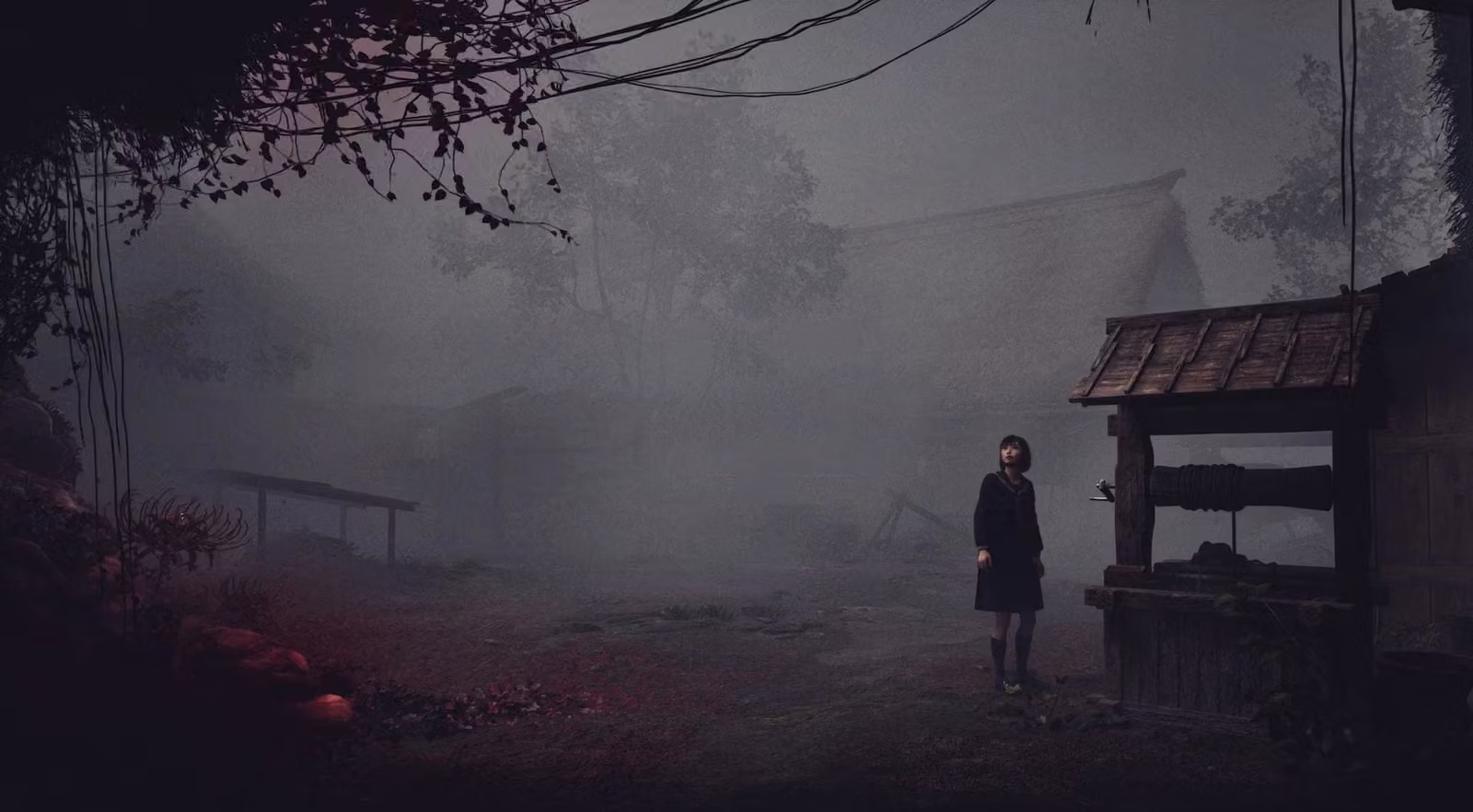
Silent Hill f throws players into unfamiliar scenery. Instead of a foggy town in the American heartland, we are greeted by Ebisugaoka - a fictional post-war Japanese village of the 1960s. Its prototype was the real city of Gero in Gifu Prefecture, famous for its hot springs. The lion's share of the territory is buried in mountains and forests, where old temples hide between the trees - and it is here that a new nightmare is born.
Hinako Shimizu will have to live through it - at first glance, the most ordinary schoolgirl. Tired of the nitpicking of her tyrant father, she leaves home and goes to her friends, hoping to talk, throw off the loneliness from her shoulders and at least distract herself.
Descending from the mountain along the narrow streets of Ebisugaoka, the game reveals its trump cards for the first time. Low houses with tiled roofs, peeling signs, strange lampposts - the developers recreated the architecture, life and cultural landscape of post-war Japan with amazing thoroughness. This authenticity in detail creates a tense contrast: the streets are absolutely empty, but painfully real, and this creates a sense of anxious curiosity - a kind of "calm before the storm."
Meanwhile, we get acquainted with Hinako's friends. From the first seconds, their behavior feels strangely detached, unspoken - as if they are looking not at her, but through her. But there will be no answers right away: as soon as the company gets together, reality cracks at the seams.
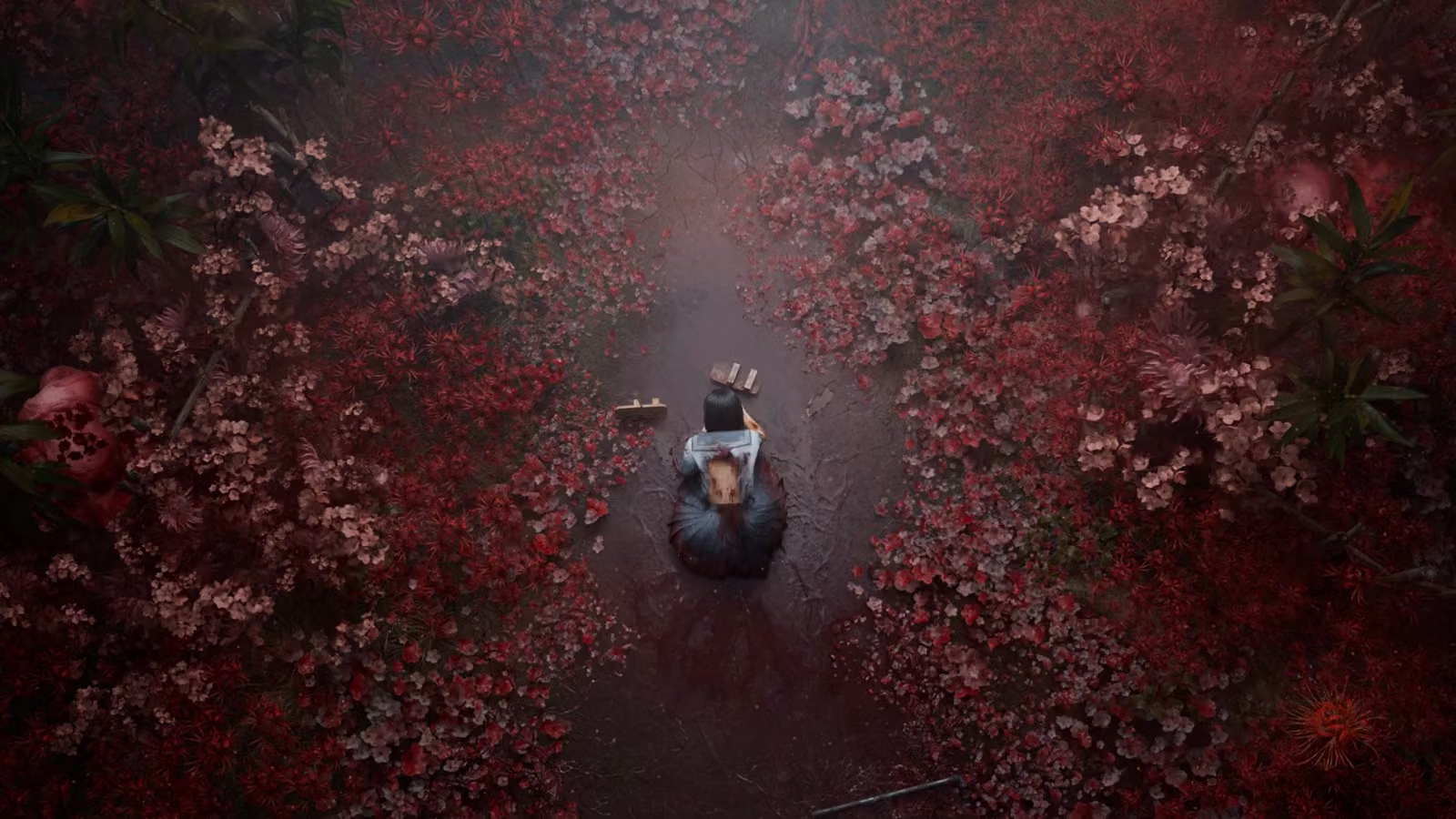
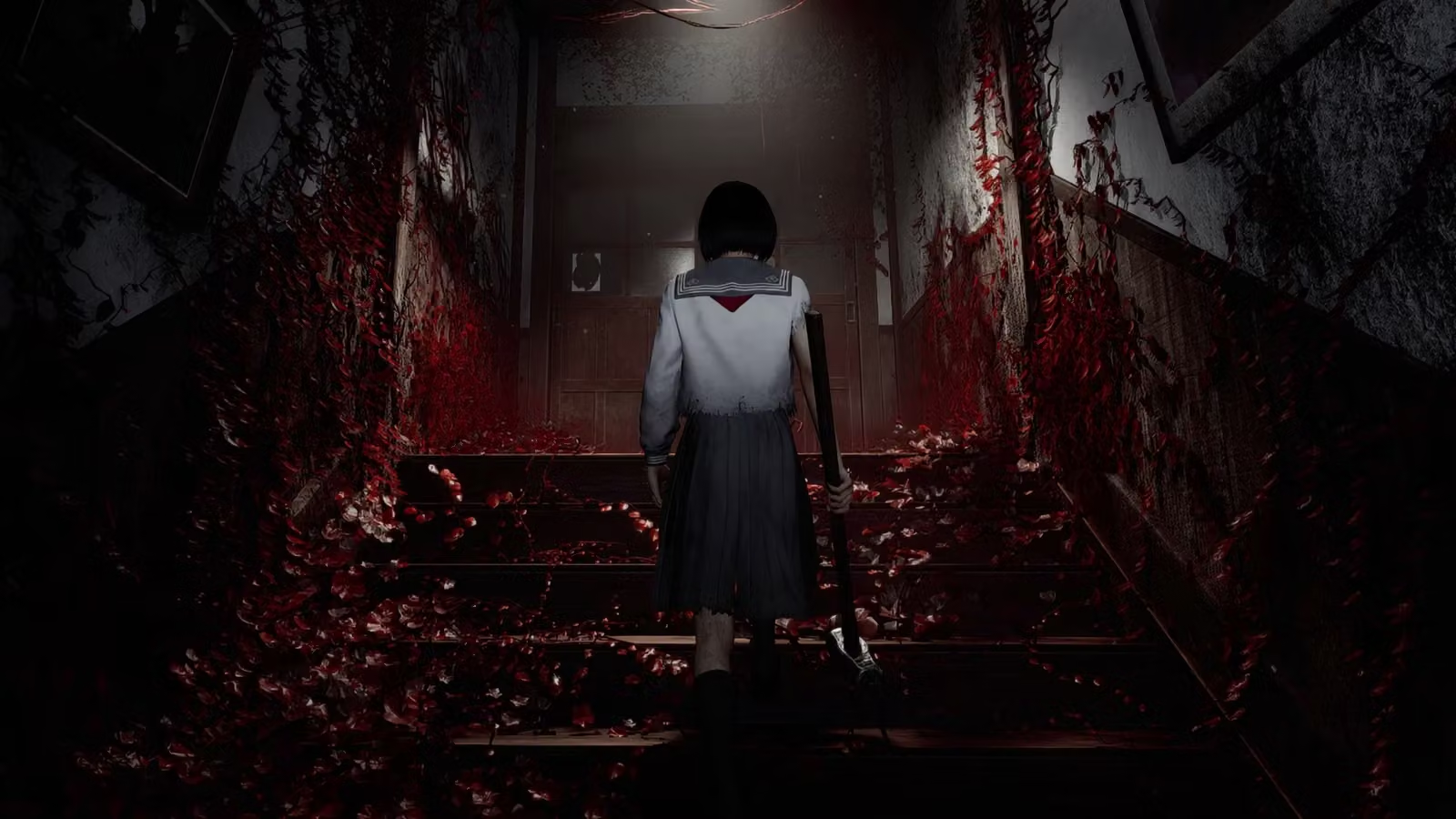
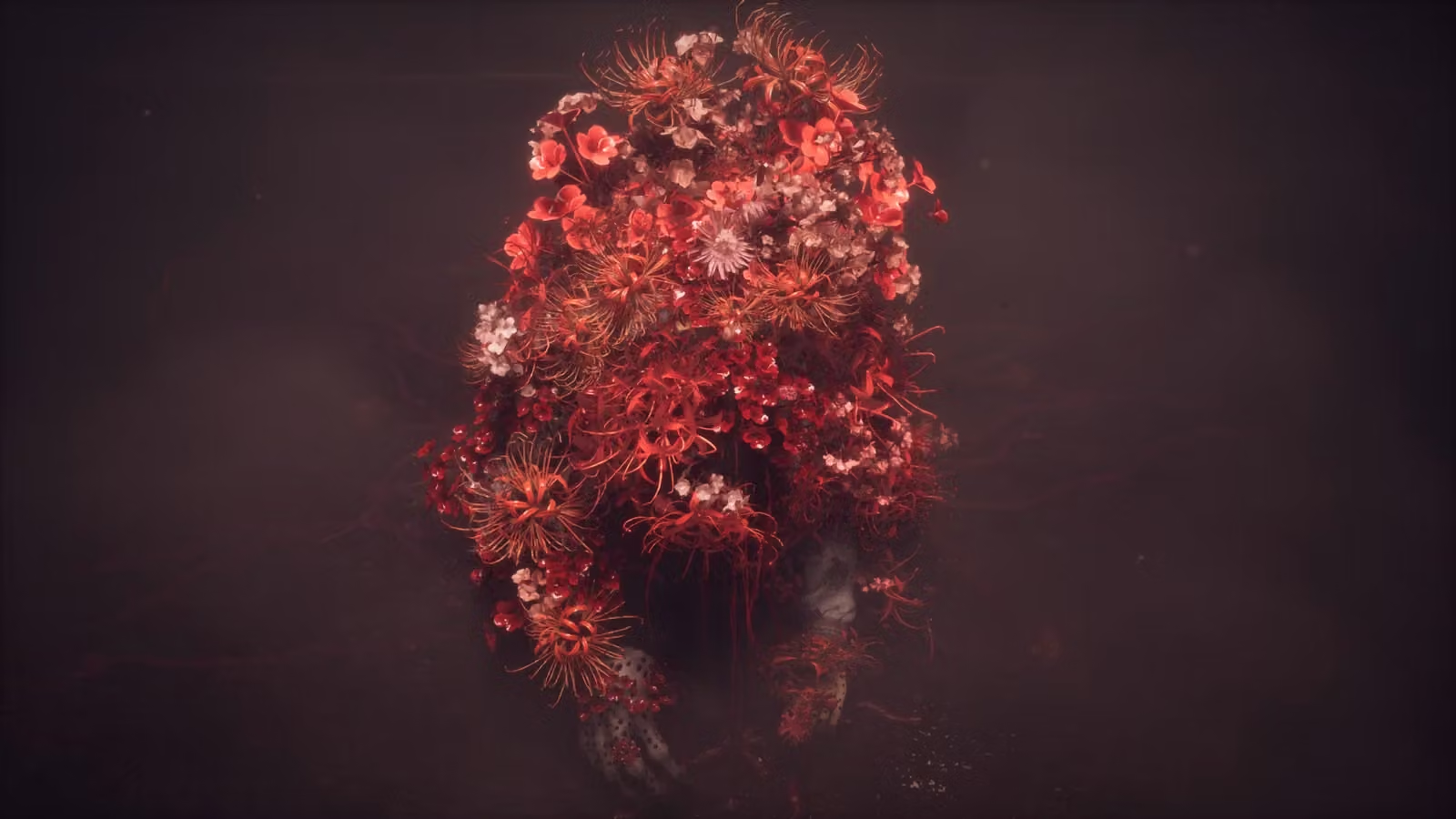
The city is enveloped in a foggy shroud, spider lilies - lycoris - sprout from under the ground, and one of the friends, Sakuko, is swallowed up by a floral nightmare. Space shrinks, streets are distorted - and soon Hinako is left alone in a gloomy city.
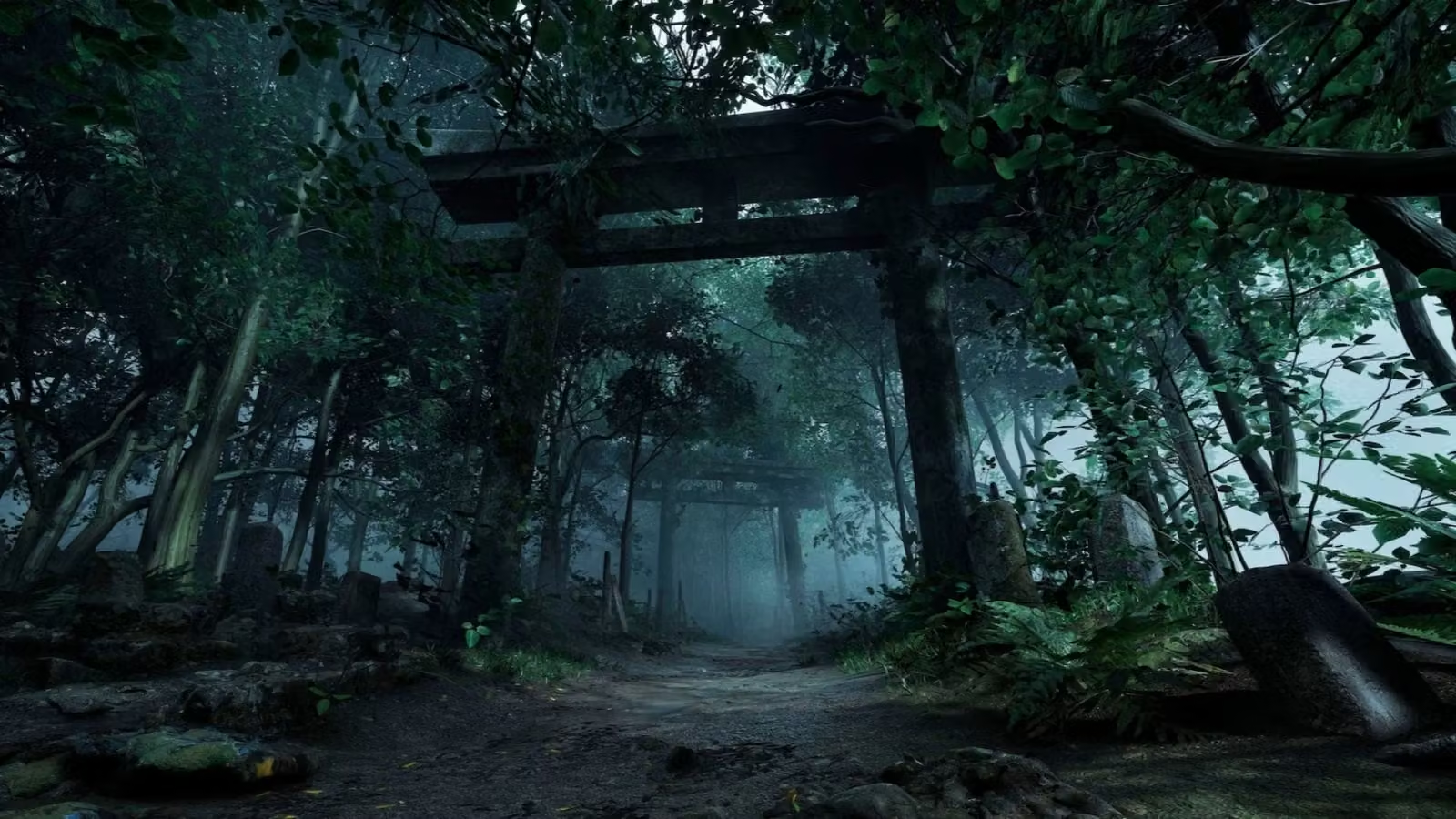
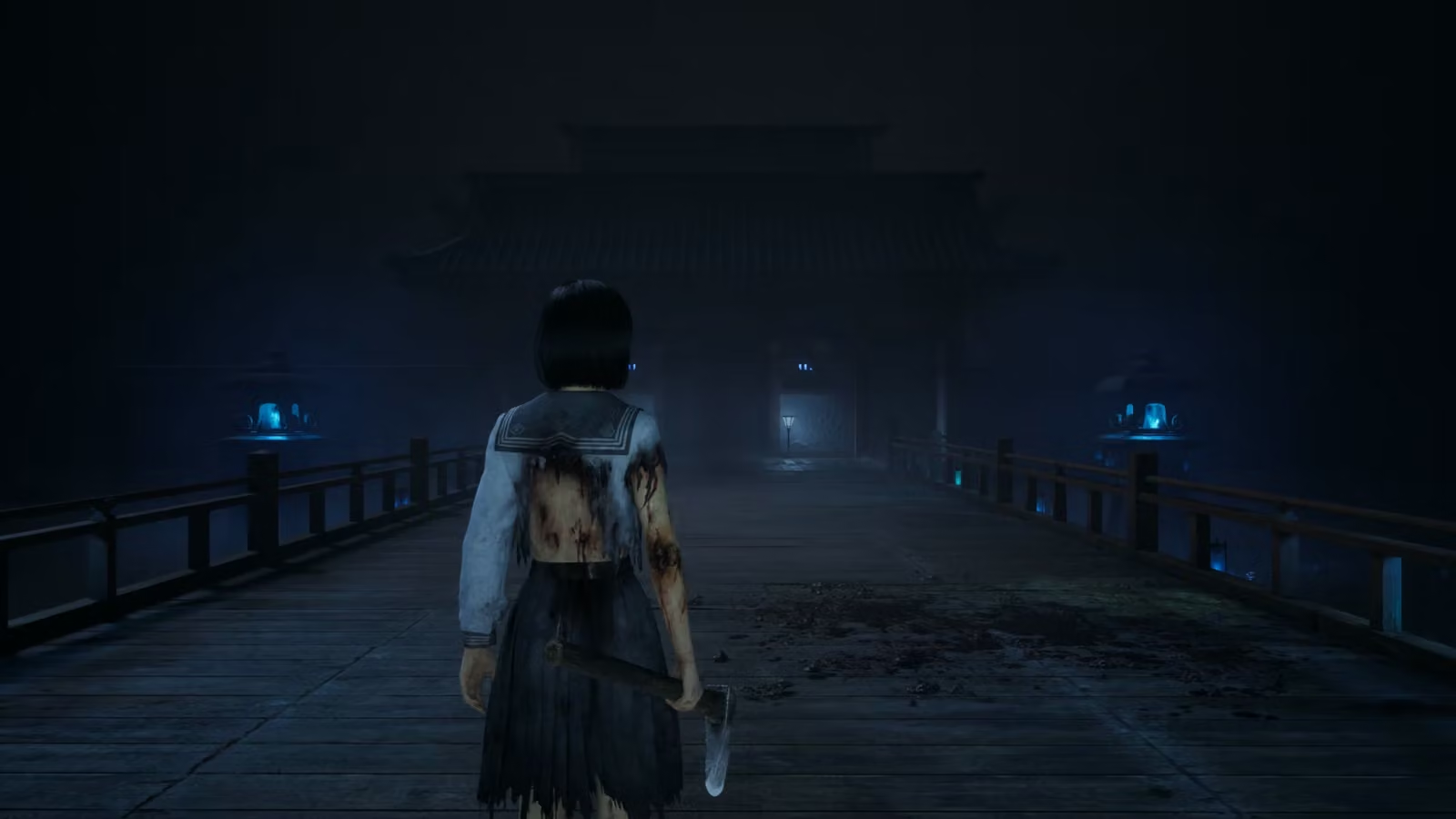
With the first steps along the fog-covered streets of Ebisugaoka, there is a clear feeling that this is really Silent Hill - albeit in an unusual setting. The developers kept their promise to combine horror and beauty: the streets, entwined with living flowers, growing, it seems, on rotten flesh, are both frightening and mesmerizing at the same time.
Thick gray fog, abandoned quarters, rice fields with dilapidated village houses, a sense of isolation and disturbing "wrongness" - every centimeter of Ebisugaoka is saturated with this atmosphere, which can be scooped up with spoons. But very soon Silent Hill f turns in an unexpected direction for the series.
Magical Surrealism
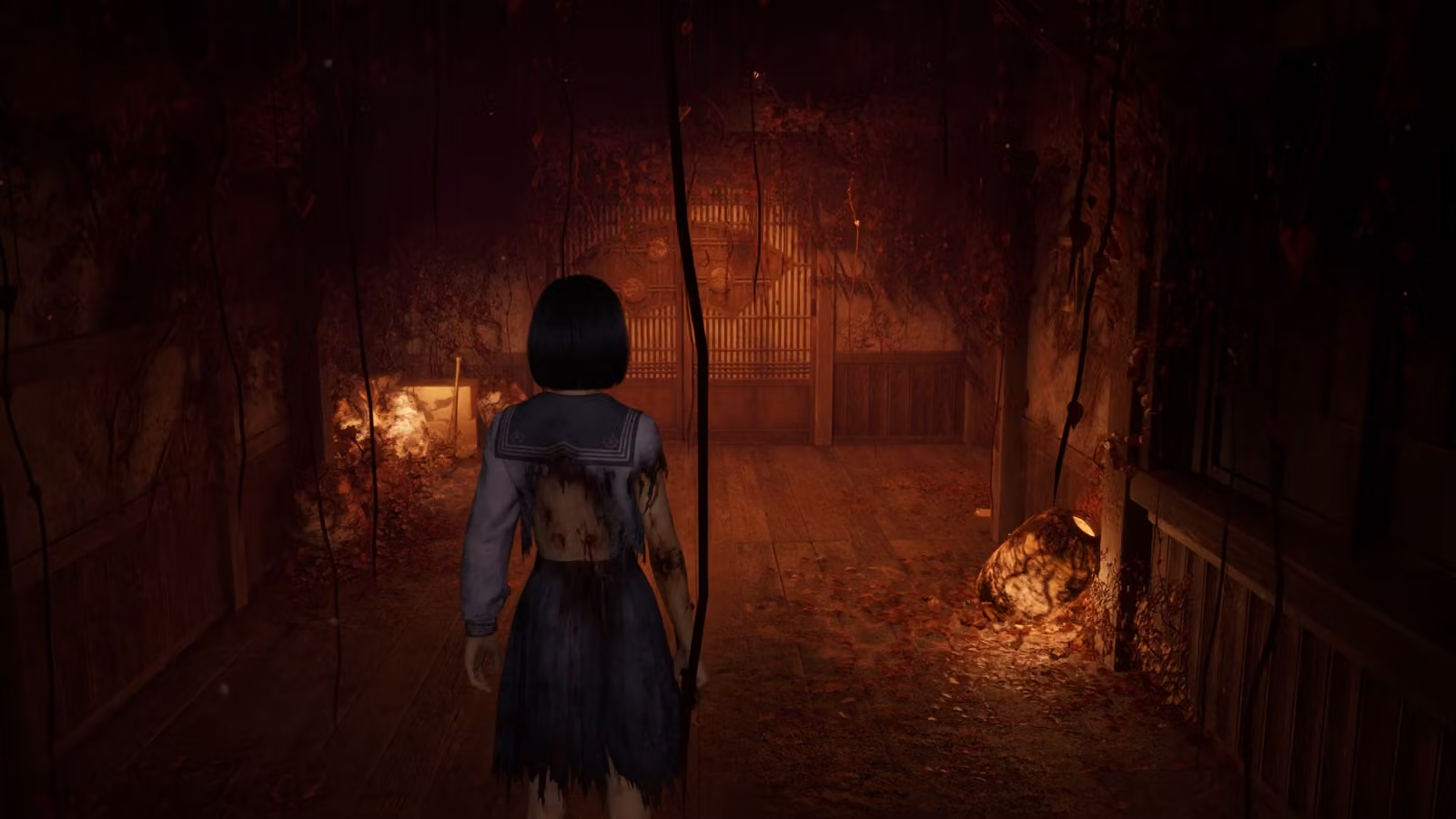
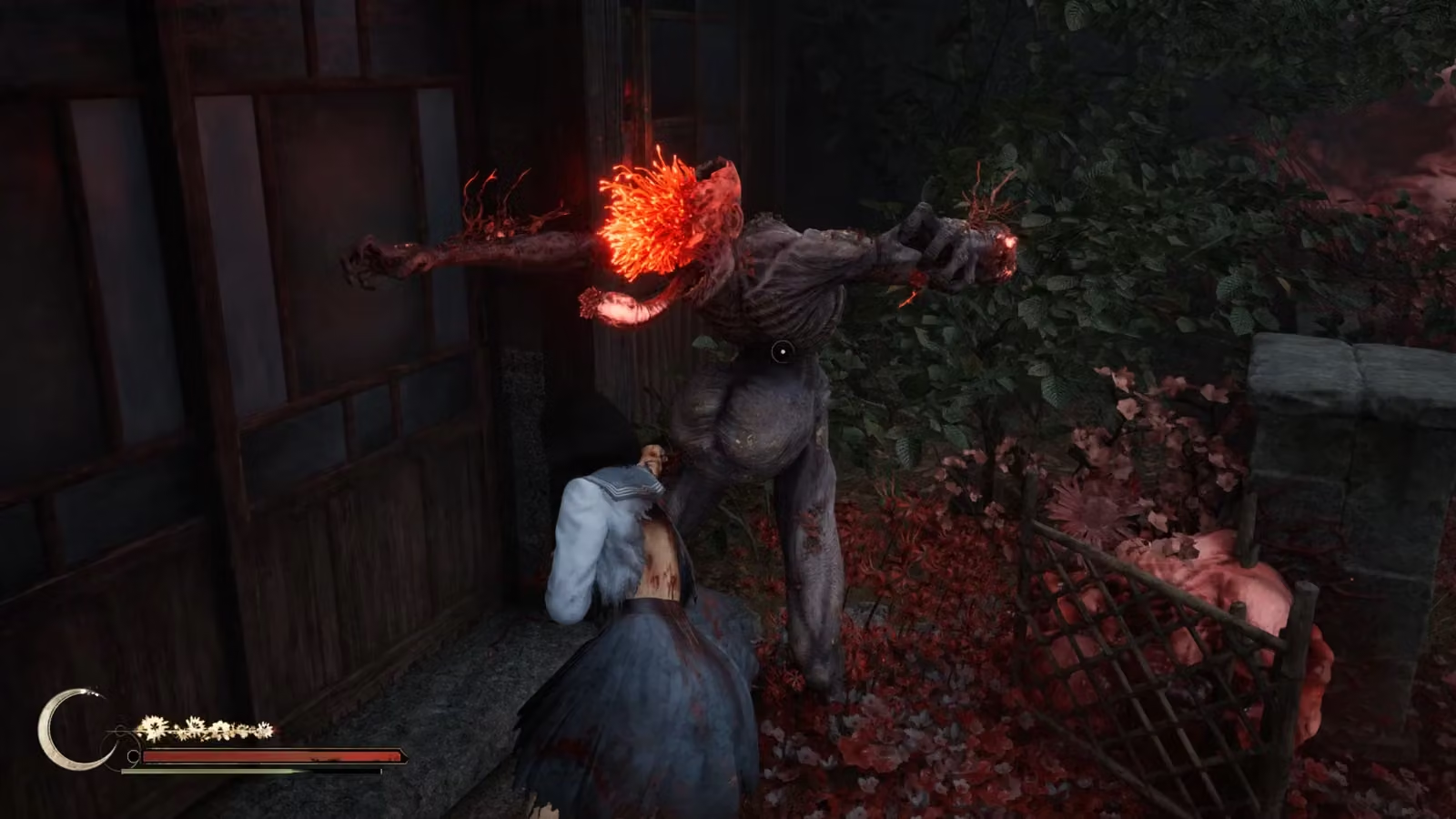
The game maintains a high density of events and interactions, especially in the first half. Companions regularly appear nearby, and the player is not left to wander along monotonous streets without a goal for long. But the main thing is that there is no familiar "alternative version" of the city. Instead, Hinako loses consciousness or falls asleep time after time, and wakes up in a completely different place - the Dark Sanctuary, which sharply contrasts with the "rusty hell" familiar to fans.
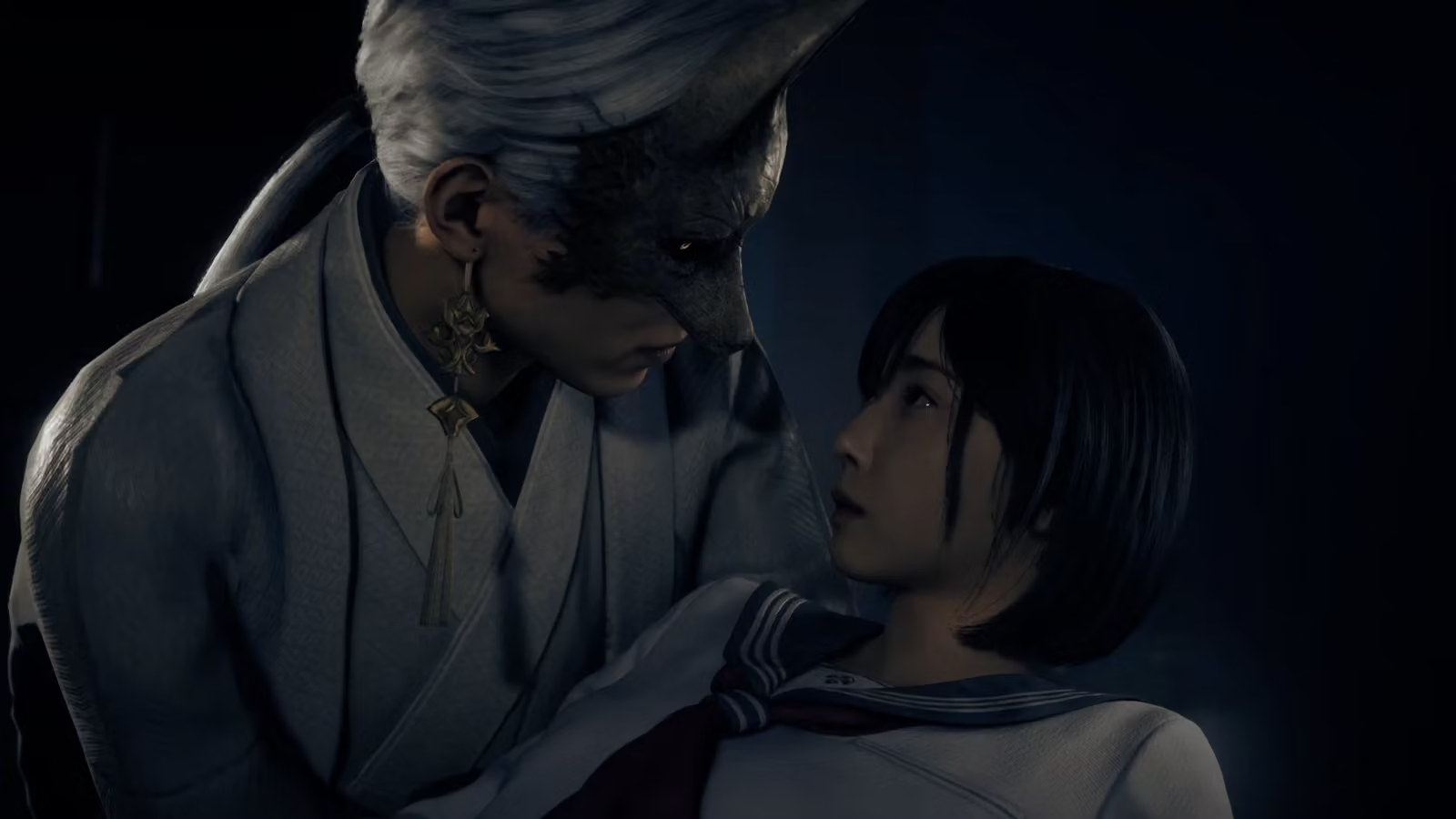
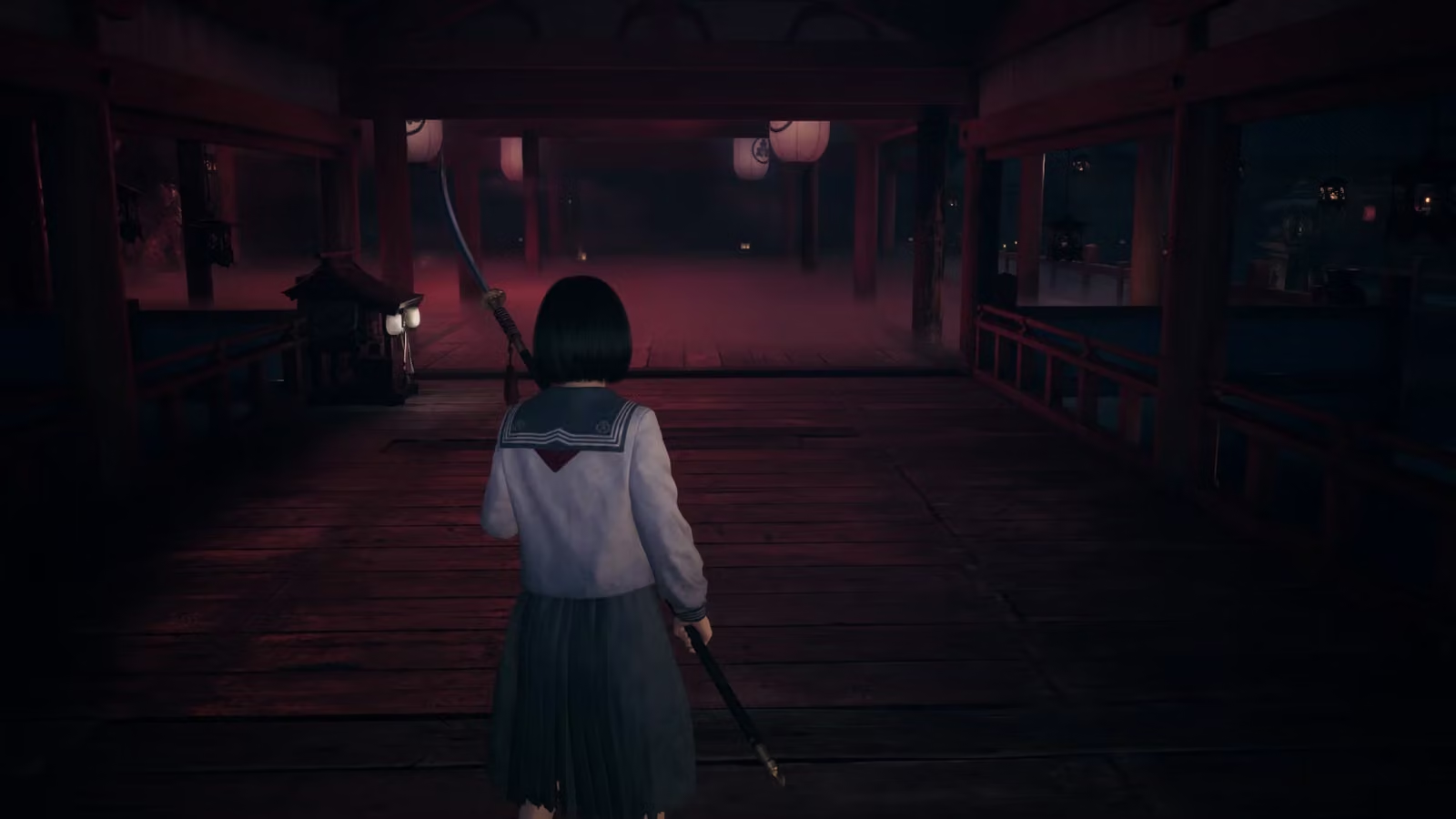
This is not a disfigured copy of Ebisugaoka, but a separate world with its own laws and aesthetics of a gloomy temple complex. It is here that the heroine encounters the Fox Mask - either a human or the embodiment of Inari-sama, the deity worshiped by the locals. In Japanese folklore, kitsune are multifaceted figures: they can be guides, deceivers, guardians, or all at once.
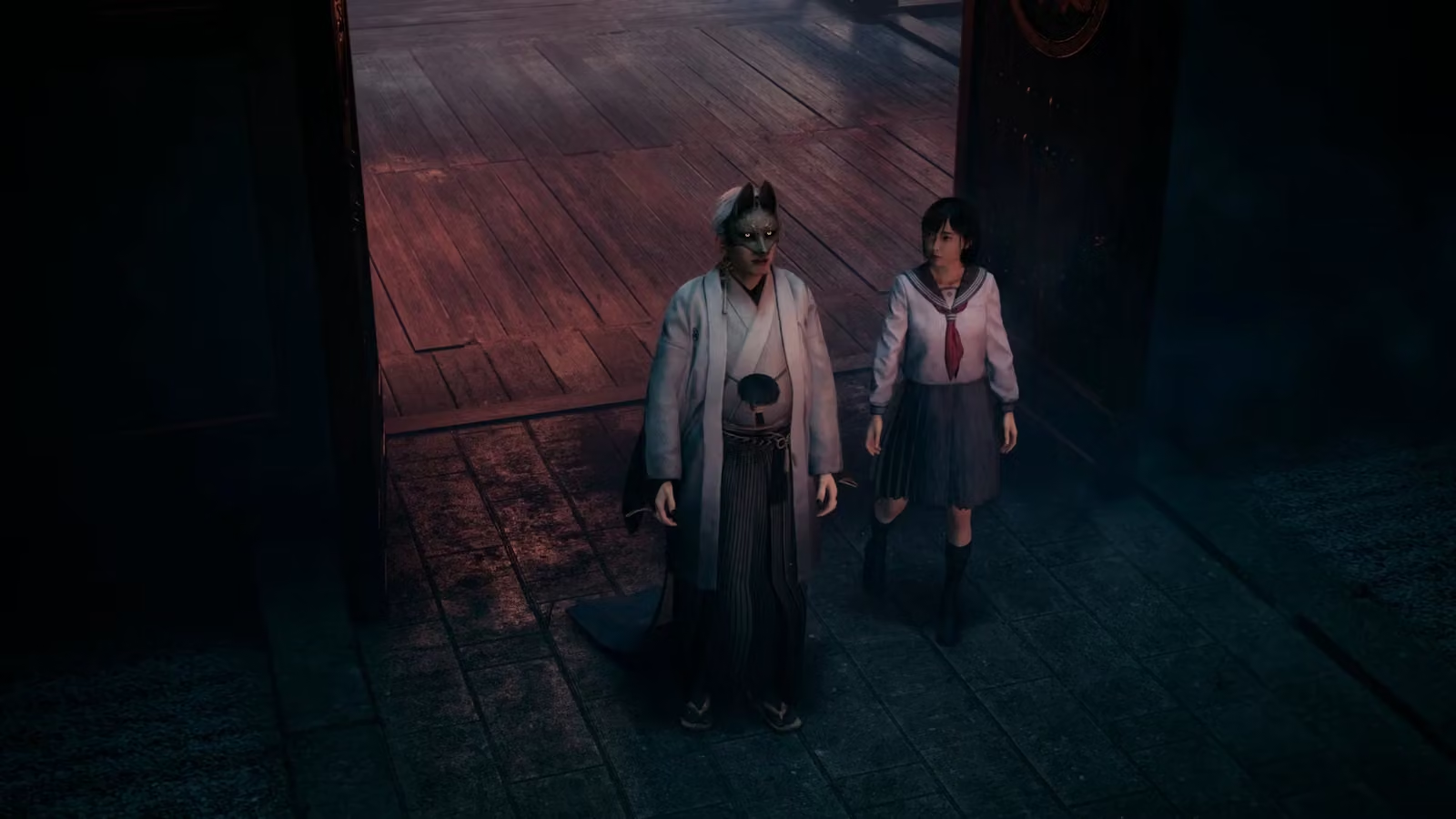
The game deftly uses this archetype, adding a layer of ambiguous mystery to what is happening. It is this "mystical" innovation, in my opinion, that has become one of the main targets of criticism. Players have accused Silent Hill f of being overly "anime" (although, to be honest, it's more of a dorama, pfft-ha) - Therefore, it is worth dwelling on it in more detail.
Yes, the developers have departed from the straightforward concept of "personal hell" - and this really feels fresh. After all, the story here is not bound by the predictability of the classic tropes of the series. But it is important to emphasize: it was not completely abandoned. Silent Hill f rather synthesizes symbolism, psychologism and mysticism, turning the familiar formula into something completely new.
When Japanese Girls Cry
The story of Silent Hill f is written by the famous Japanese writer Ryukishi07 - the author of the cult (in narrow circles) visual novel "When the Cicadas Cry". I can't call myself an expert in his work, but for the sake of this review I took the time to get acquainted - between the first and second playthroughs. And I must say that the signature style is felt from the first minutes.
Ryukishi07 is unhurried, generous with hints and symbols, but does not give direct answers without a good reason. Each event leaves behind a heap of questions, and each scene matters - whether for the plot, for revealing the character, or simply to confuse the player. But the realization of this comes later, when the pieces of the puzzle finally come together.
Isn't this the perfect candidate for a screenwriter for a game called Silent Hill? Rhetorical question.
Despite some localization flaws, the text reads easily, there is no feeling of overload. Hinako's personal diary stands out in particular: it allows you to take a deeper look into her thoughts, feel guilt, fear, family pressure and the gradual devaluation of personality, and at the same time - see the world through her eyes.
Records and drawings turn dry descriptions of monsters and events into emotional sketches, where each creature acquires symbolic weight. Yes, in some places the presentation is too straightforward, but this is easy to forgive, understanding that we are only seeing the tip of the iceberg.
Of course, this perspective will not appeal to everyone. Not only does the story unfold in Japan, but you also have to empathize with a teenage girl whose problems are rooted in the patriarchal structure of post-war society. But accusing the game of a "agenda" of the Western type would be unfair: it is rather an honest snapshot of the era than an attempt by the author to impose his ideas.
However, in order to fully feel the story, you need to reach the final, get the first - "basic" - ending, which cannot be influenced, and go for a second round. Here Ryukishi07's handwriting is manifested again: as in "Cicadas", the first playthrough is more of an "arc of questions" with hints and a powerful twist at the finale.
But the second playthrough answers more meaningfully. Familiar scenes acquire a new weight, are supplemented with fresh shots, angles and lines; additional cutscenes, fragments of lore appear, and along with them new, previously inaccessible locations open up. All this allows you not just to review the events, but to rethink them, descending to the next level of the iceberg.
Of course, not everyone is ready to replay games, but Silent Hill f has a rather modest timing: two cycles will take about twenty hours, no more. However, there is a nuance: to see the "true ending", you will have to go through the game at least three times, observing a number of conditions. There are five endings in total, including one joke.
The very presence of several endings is quite in the spirit of the series, but here it is played out more interestingly - each new cycle slightly changes the game. At the same time, the developers do not leave the player to guess, and after the first playthrough, a list of conditions for obtaining each ending opens. But will the game be able to maintain interest for three playthroughs with something more than just a desire to get to the truth?
An Elephant in a China Shop
The gameplay of Silent Hill f stands on familiar "elephants": exploration and puzzles, combat system and survival. All this is well known to every fan of the series, but in the new part some elements have noticeably changed.
The developers from NeoBards tried to preserve the spirit of the classic survival horror, seasoning it with "modern" mechanics and Japanese flavor. It turned out controversial, sometimes heavy, but in general - unexpectedly organic. And since we're talking about "elephants", let's start with the most noticeable and noisy one in this Japanese china shop - the combat system.
The combat system of Silent Hill f shares the lead with the mystical "anime" in the plot in terms of the number of disputes around it. Of course, only the lazy one did not joke that the "combat" has always been a weak point of the series, and the developers carefully preserved this tradition. I can also admit: it really sucks here, but, oddly enough, over time I managed to get into it.
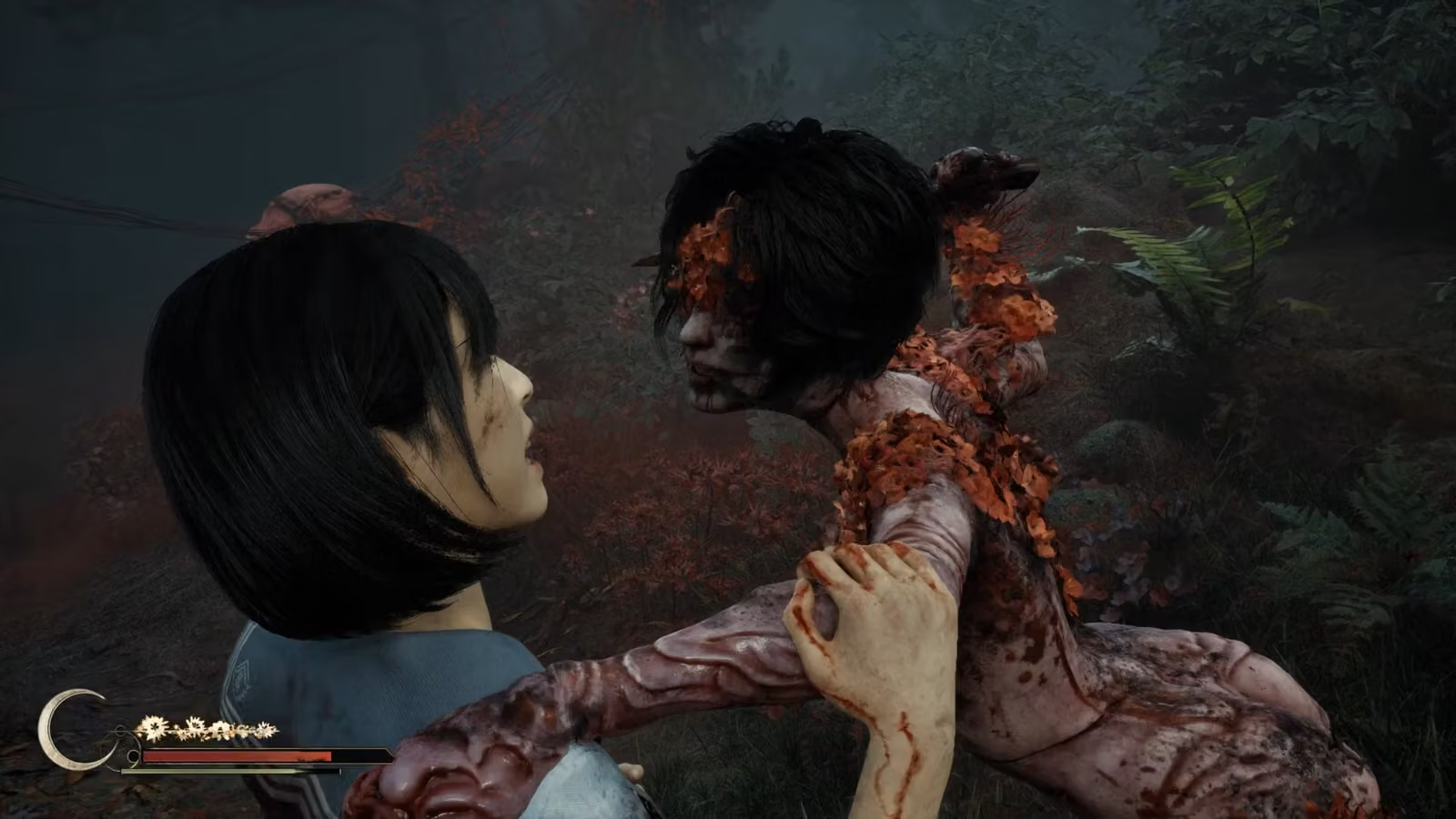
It is based on the usual set: melee combat with cold weapons and deliberately heavy control, depriving the player of a sense of omnipotence. You can carry only three types of weapons with you, and each of them breaks sooner or later. On top of this classic scheme, the developers have added elements a la "soulslike".
The heroine has a stamina scale, which is spent on attacks and dodges, as well as a sanity scale, which literally represents mental health - it decreases when receiving mental attacks (usually when enemies scream frantically).
As soon as the scale is empty, mental attacks begin to take away real health - which is clearly not without symbolism. Sanity can also be spent voluntarily to strengthen an attack or activate focus mode.
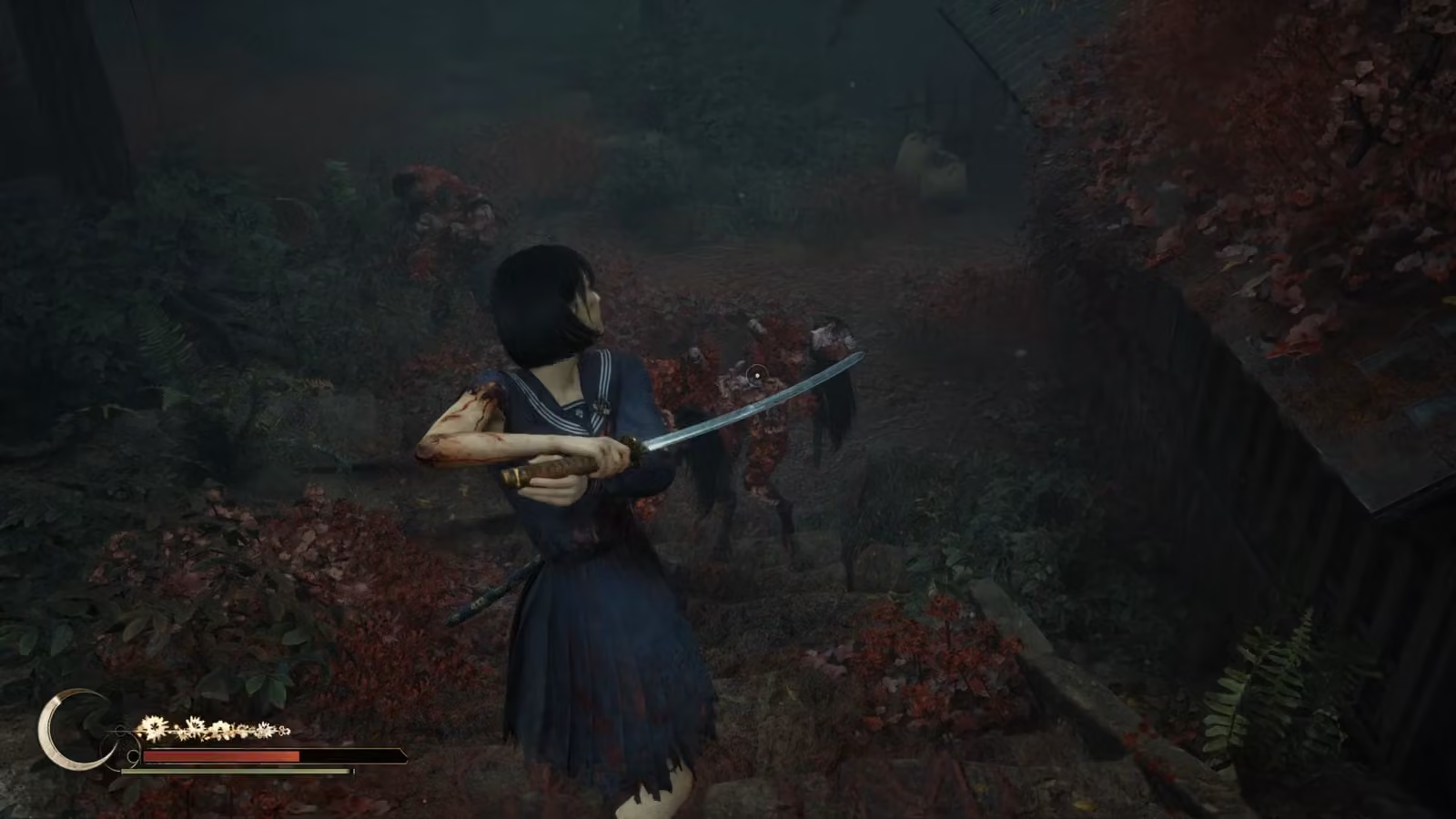
Hinako can parry enemy attacks, counterattacking at the moment of visual indication, and focus mode allows you to significantly expand the window for its implementation.
Nevertheless, it is possible to actively use this only at the basic level of difficulty - "Story", where the sanity scale is automatically restored when resting at the hokora shrines, local save points.
In addition, Hinako has frankly little stamina - no matter how much she brags about her light athletics classes. Therefore, the moment for the attack has to be chosen with special care, especially if there is a heavy weapon in the hands, which treacherously takes a long time to swing. And given that the opponents are constantly moving, it can be difficult to accurately calculate the distance of the strike.
Many creatures move chaotically, in jerks, disrupt the rhythm and force you to constantly adapt. All this keeps you in good shape and does not allow you to feel like an almighty warrior - especially in narrow passages, where the camera suddenly becomes the main enemy, and one unsuccessful blow to the wall or an element of the environment can "stanlock" the heroine, leaving her defenseless for a short time.
Monsters Inside Us
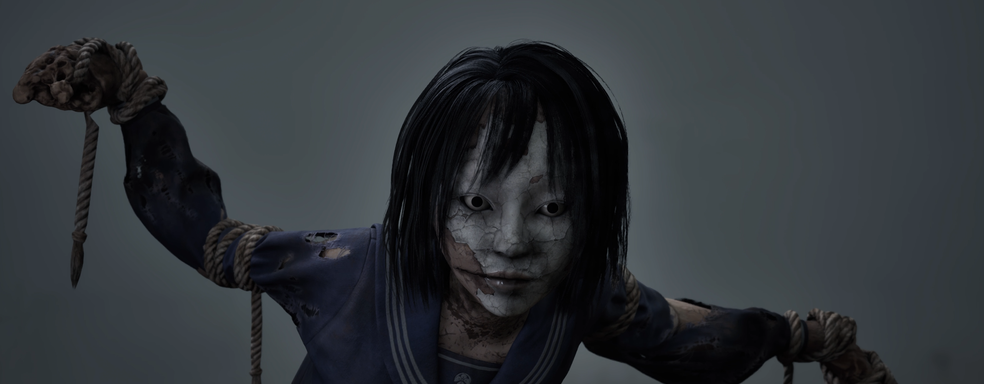
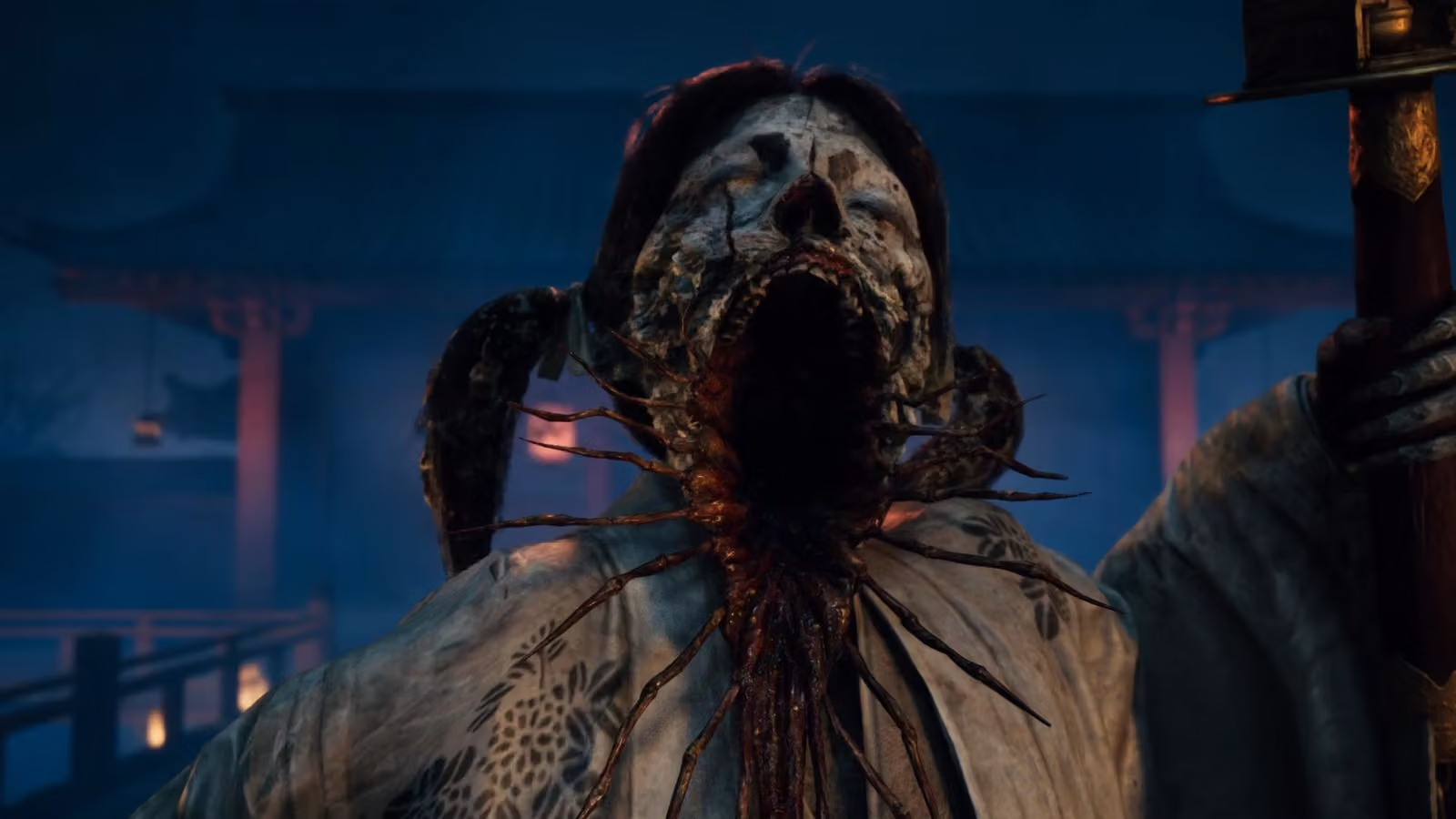
Silent Hill f continues the tradition of metaphorical monsters - even without the participation of Masahiro Ito. Each image is built on grotesque and allusions: whether it is multifaceted creatures, personifying public condemnation for the fact that Hinako is "not like everyone else", or a local liqueur-scuff with a beer belly, attacking exclusively girls and seeking to "lick" the heroine to death. Especially noteworthy is a creature consisting of pregnant bellies, endlessly spewing new monsters.
"It is impossible to call this a miracle of birth. This is a disgusting demonstration of procreation. It is better to die than to become like this", Hinako writes in her diary. Yes, this remark leaves no room for interpretation - but even without this, the monster remains deeply disgusting.
We won't talk about bosses for a long time, so as not to slip into spoilers - especially since some battles become available only with certain endings. But it is important to emphasize: these are already full-fledged "soulslike" battles. At high levels of difficulty, you have to learn attack patterns, dodge at the right moment and carefully monitor stamina.
Battles with bosses become the culmination of individual emotional arcs - they are presented stylishly and effectively, but strange timings and no less bizarre hitboxes clearly do not add points to the combat system. However, in order not to overdo it and not to heat up the atmosphere "below the back", the developers have provided a progression system.
Investment Horror
The fact is that there is a full-fledged pumping and the rudiments of build construction. All key characteristics - health, sanity and stamina - can be increased in the hokora shrines for "faith", which the player receives through offerings.
Special items, as well as most consumables, act as offerings. This forces you to choose: spend an item to restore, for example, "sanity", or sacrifice it for the sake of a long-term investment.
It is in such decisions that the "elephant" of survival is especially manifested. Any resource here is worth its weight in gold: a first-aid kit postponed "for later" can decide the outcome of the battle, and a thoughtlessly spent consumable can delay the next upgrade of characteristics.
The situation is similar with weapons: they can be repaired with a set of tools, but it will not be possible to store a whole arsenal "in reserve".
Thus, the constant shortage and the need to choose between "now" and "later" become part of the overall tension, which creates the very atmosphere of "survival horror".
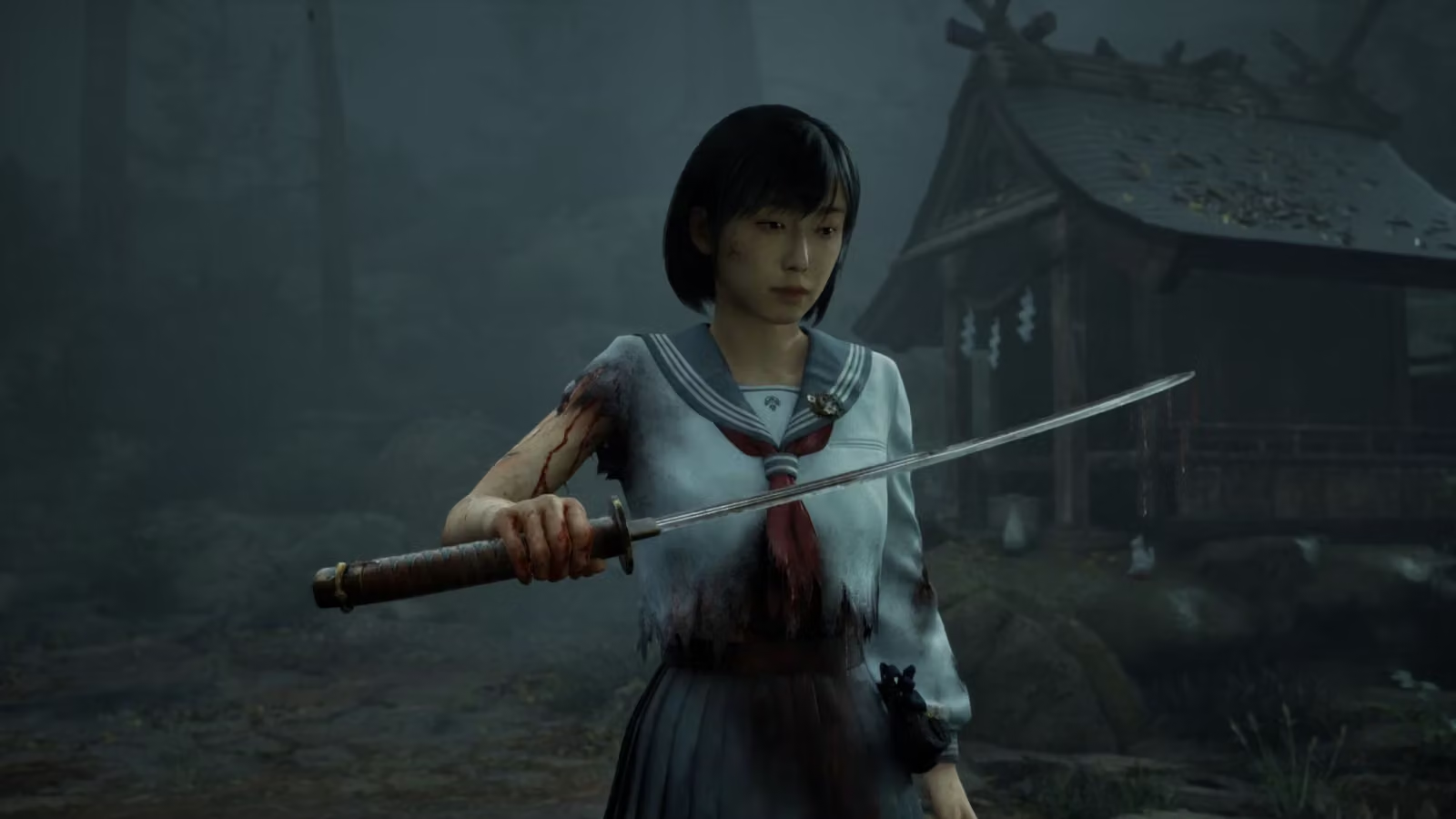
In addition to the basic characteristics, there are also omamori amulets, giving a variety of bonuses: from simple ones - such as increasing parameters or reducing the range of view of opponents - to much more serious ones. For example, simplifying perfect dodges or even automatically activating counterattacks (!). But here, too, there is a familiar "nuance": it will not be possible to fully feel the system on the first playthrough.
The maximum pumping and the number of portable amulets are limited to one cycle, and some of them are opened only in "New Game+". Therefore, on the first visit, they are perceived more as pleasant bonuses. But on the second round, when the stamina reserve has grown, the number of available amulets has increased and there is room for build construction, and the player himself has already mastered the combat system, the mechanics begin to play with new colors.
As a result, not only the plot, but also the game systems are revealed in repeated playthroughs, forming a single structure that pushes for several visits.
Hinako's Mysterious Cycles
In turn, this is supported by difficulty modes. In my opinion, the best Silent Hill f experience is given by a consistent playthrough: start with the basic "Story", then move on to "Difficult" and complete "Lost in the Fog". This order allows you to gradually piece together the plot and feel the mechanics without sudden jumps in difficulty - without being "strangled" by the combat system already at the start.
On the "Story", most of the resources can be directed to pumping, which makes it possible to approach the second round more prepared. I did just that - and by the next playthrough I got into the combat system, learned to compensate for its weaknesses and even began to enjoy what used to seem heavy.
And here we smoothly approach the next "elephant" - puzzles. They are quite classic for the series and the genre as a whole: searching for keys and codes, carefully studying notes with hints, arranging objects in the correct order. But many of them are imbued with Japanese flavor, which turns them not just into obstacles, but into a reflection of the culture into which the player is immersed.
These tasks rarely lead to a dead end for a long time, although without knowledge of local realities, you will still want to look into "google" a couple of times. Interestingly, almost every puzzle contains details that are important for the plot or the disclosure of characters. Thanks to this, they are perceived not as artificial "slowers", but as an organic part of the narrative.
Traditionally, puzzles also change slightly depending on the level of difficulty - which in total gives enough new material to maintain interest for three playthroughs. In the end, thirty hours is not so much, especially when repeated cycles become part of the author's intention. Of course, nothing prevents you from going through all the circles on one difficulty - if puzzles are secondary for you, and you want to simplify the battles even more.
Beautiful in the Terrible
The technical part of Silent Hill f turned out to be no less controversial than everything else. If you judge only by my experience - everything was at the level. On a system with RTX 4070 Super, the game stably held 90-100 frames per second with DLSS in "quality" mode or 60-70 without upscaling in 1440p, occasionally sagging to 55. During the entire playthrough, I did not encounter any crashes, bugs, or graphic artifacts.
Nevertheless, at the start, Silent Hill f frankly worked poorly on a number of configurations, including even the flagship RTX 5090, and the console version for PlayStation 5 suffered from artifacts visible to the naked eye.
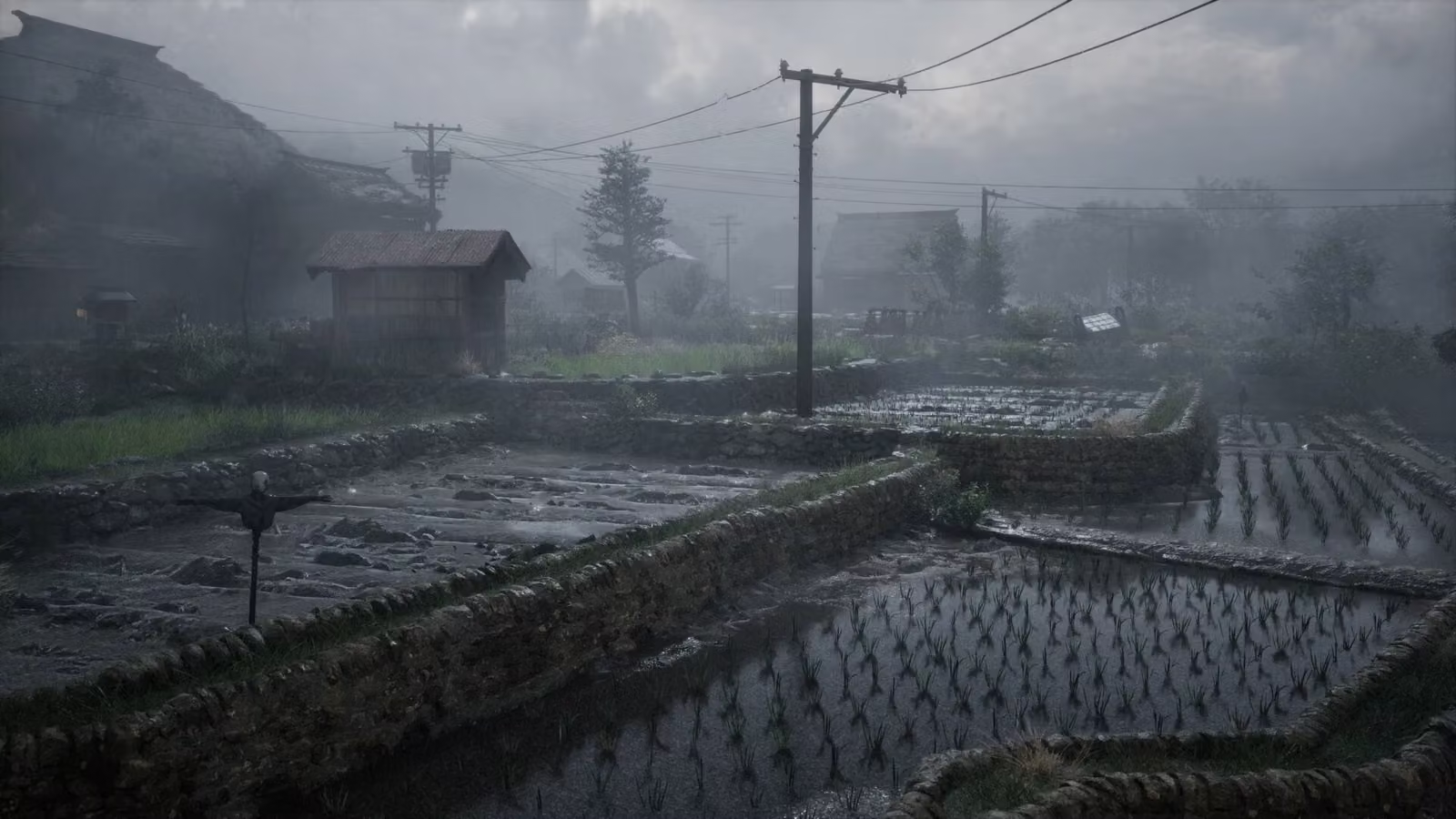
At the same time, it is difficult to call the picture truly "next-gen" or overly detailed, and the Japanese outback itself does not have visual abundance. But you can't call the game "soapy" either - and this is already a compliment for Unreal Engine 5. Still, the main strength of graphics here is not at all in technical sophistication, but in atmosphere.
The art here is magnificent: Shinto shrines, wooden houses, rice fields, drowning in fog and absorbed by floral abomination, look mesmerizing - and I am ready to repeat this again and again. At the same time, the design of the Dark Sanctuary sometimes seems monotonous and overly sterile - although it is possible that this "temple sterility" is deliberately conceived to emphasize the feeling of detachment.
Symphony of Mysticism and Metal
Silent Hill has always been famous for its sound design, and the new part does not break the tradition - although here, too, it was not without reservations.
The sound design is brilliant: the game masterfully balances between viscous silence and a dense acoustic background, in which details stand out especially clearly - drops of water in a wooden tub, the creak of floorboards, the squishing of steps on a mixture of flesh and flowers. These pinpoint accents enhance immersion, maintaining the authenticity of the visual appearance.
Interestingly, since the action takes place in two worlds at once, the musical accompaniment was entrusted to two composers. The legendary Akira Yamaoka was joined by Kensuke Inaga - and thanks to this, each of the worlds sounds in its own way.
The soundtrack surprises with a rich mix of styles: classic Japanese instruments coexist with piano, guitars, mystical choirs and even throat singing, which unexpectedly fits organically into the Japanese setting (although personally I have never associated it with it).
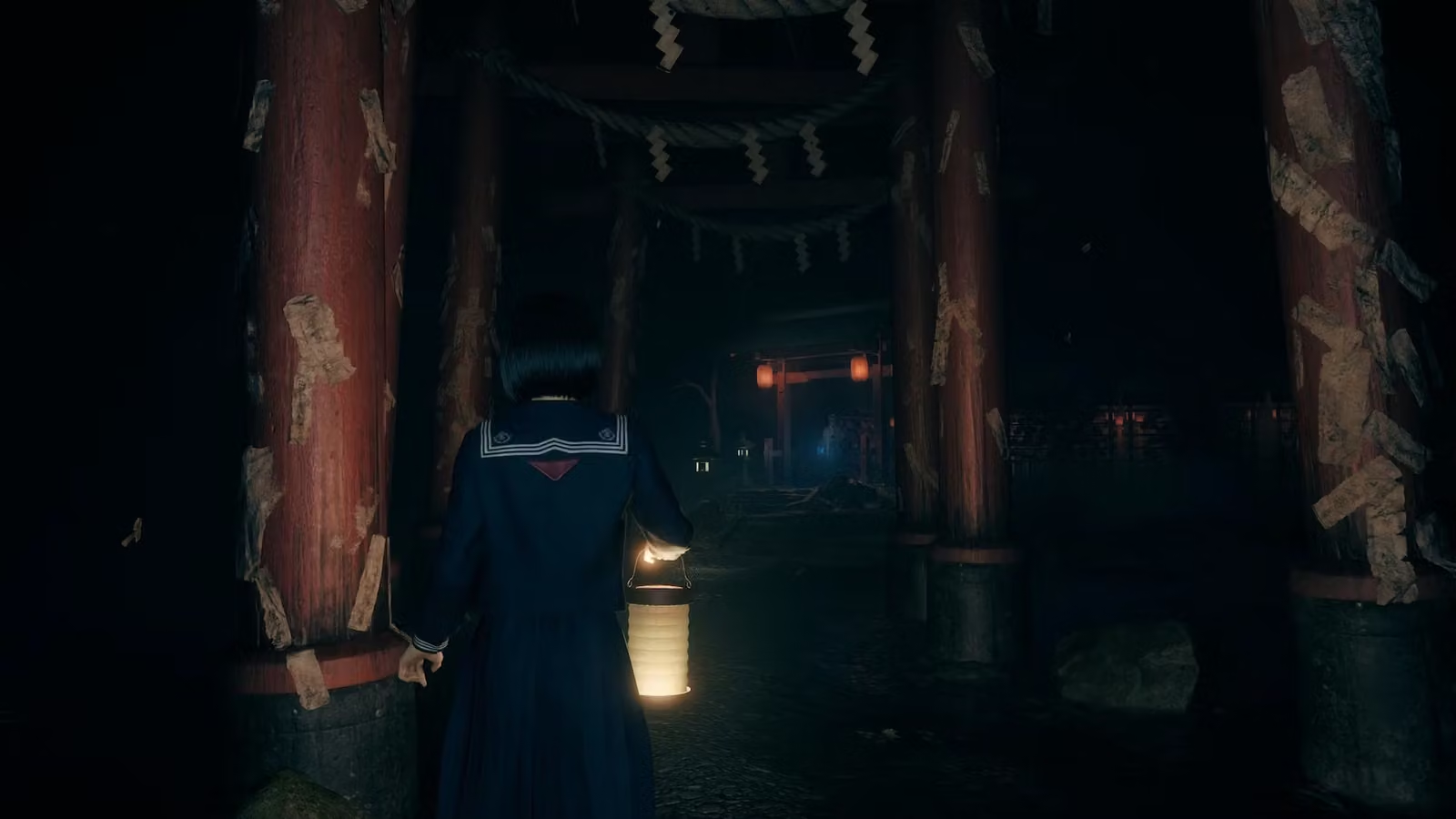
Traditional motifs and a sense of mystical depth prevail in the Dark Sanctuary: even in battle, the music remains restrained and bypasses excessive electronics. But in the town, Yamaoka's industrial accents break through from time to time - as if reminding: no matter how rustic it looks, it still exists in relatively modern realities.
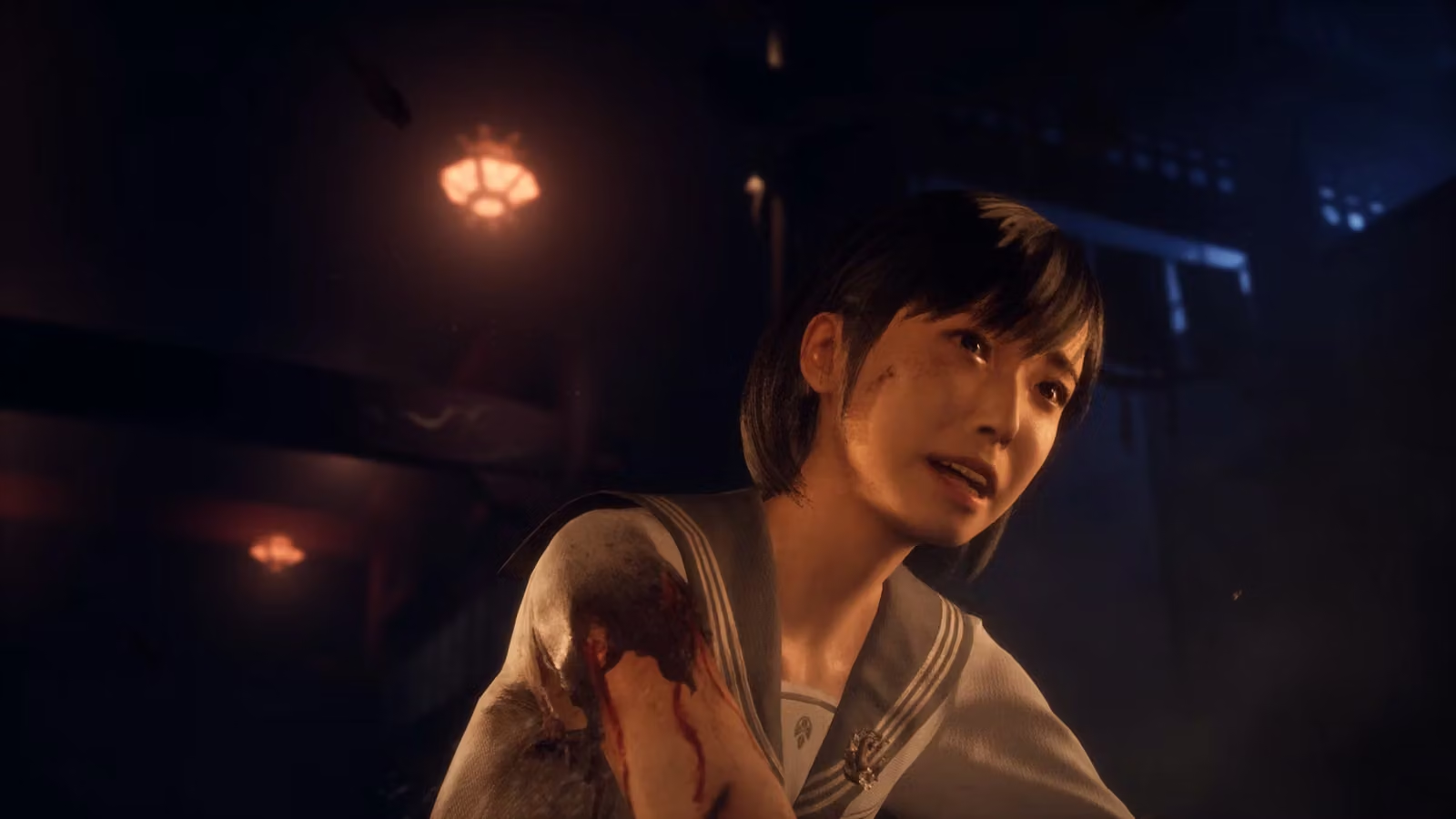
The picture is complemented by the voice acting of the main character, which deserves special praise. The actress conveys emotions with amazing accuracy: rupture, despair, quiet sobs, moans, heavy breathing at the end of stamina - everything sounds frighteningly realistic and gives the image additional depth. However, this is not surprising, given the level of the Japanese voice acting school. True, you should be prepared for the characteristic hyperbolization, which partially compensates for the lack of facial animation.
Nevertheless, the musical compositions themselves mostly passed by. The hypnotizing title theme, of course, remains in memory without a chance, and the guitar solo in The Bird's Lament awakens nostalgia for the best tracks of Yamaoka... and the more interesting is that it was not written by him at all, but by Kensuke Inaga. This only emphasizes the level of synergy that has arisen between the authors.
Otherwise, the music in Silent Hill f conscientiously performs its function: it emphasizes the drama, builds up tension in battle, accompanies leisurely walks around the city. But as an independent soundtrack, it sounds less bright than in the cult parts of the series. In my personal top, even the title theme from the free Silent Hill: The Short Message will definitely be higher than any composition from SHf.
As a result, even the technical part accurately reflects the essence of Silent Hill f itself: everything is done soundly, in some places - exquisitely, but with reservations that not everyone will understand and accept.
Diagnosis
Well, it's time to return to the question I asked at the beginning. What did Silent Hill f ultimately become?
After many years of stagnation, the series has finally received a project that respects its heritage and at the same time offers something new. If you distract yourself from the controversial combat system and the change of setting, we are left with a surprisingly accurate atmosphere of the "ghost town" in the Japanese outback, a multi-layered plot, rich in symbolism, and puzzles organically woven into the narrative.
All this, complemented by the work of artists and sound engineers, forms a holistic image - an image of psychological horror, capable of touching the soul and stirring the mind. He deserves to be given a chance. But does he deserve to be called a "terrible Silent Hill"? I don't think so.
Yes, if the game had a different name, it would most likely have been greeted more warmly. So many Japanese horrors - even those created by a Chinese studio - are simply not made today. Even Keiichiro Toyama, the creator of Silent Hill and Siren, has gone into even more controversial experiments like Slitterhead - a project that is difficult to call not only horror, but also just a good game.
The paradox is that if the game were called differently, it would sound at every step: "This is a real Silent Hill!" - without all the prejudice and irritation fueled by fan conservatism. Already Silent Hill: The Short Message showed that Silent Hill is not a point on the map, but a state of mind. Silent Hill f only reinforces and develops this idea. In the end, it's nice to finally get out of the hell of "duckling syndrome" and love something new as much as the story of James Sunderland once did.
The new part is especially vividly revealed in parallel with its heroine. Silent Hill f, like Hinako herself, does not seek to meet other people's expectations, but persistently seeks its own path. She is not afraid of the anger of conservative fans and is not shy about seeming "alien" against the background of the classics. Yes, Silent Hill has changed. But it is thanks to these changes that the series has really returned for the first time in thirteen years. Whether to consider this a metacommentary from the developers or from Konami itself - everyone will decide for himself.
Pro
- Atmosphere of Japanese horror
- Strong script
- Symbolism in the details
- Stunning art design
- Interesting approach to repeated playthroughs
Contra
- Heavy combat system
- There are problems with the camera
- Unmemorable soundtrack
Never miss our newsAdd this site to your preferred sources to see us more oftenAdd on Google