Twelve years have passed since the release of Splinter Cell: Blacklist, and now Sam Fisher returns - albeit with an animated series from Netflix, rather than a new game. "Deathwatch" proves that showrunner Derek Kolstad has a sincere love and respect for the franchise, but he finds it incredibly difficult to resist turning everything he touches into a dynamic action film in the spirit of "John Wick." We discuss how Sam Fisher's return turned out in our article.
A New Theory of Chaos
The series wastes no time getting started and kicks off with a dynamic scene that you'd expect from a project called Splinter Cell. Along with the agent in the famous trifocal goggles, the viewer finds themselves in the middle of an extraction operation by Fourth Echelon — an elite unit reporting directly to the President of the United States. Cinnia McKenna acts quickly, skillfully, and quietly, methodically littering the corridors of the enemy base with bodies. But, of course, in the first episode, the operation is doomed to fail.
McKenna finds her partner dead, loses her composure, and brutally deals with the remaining enemies, sustaining a serious injury in the process. At this time, the Fourth Echelon headquarters is subjected to a hacker attack that collapses the entire network. Now there is only one thing left to do — turn to the person who they didn't want to disturb for many years.
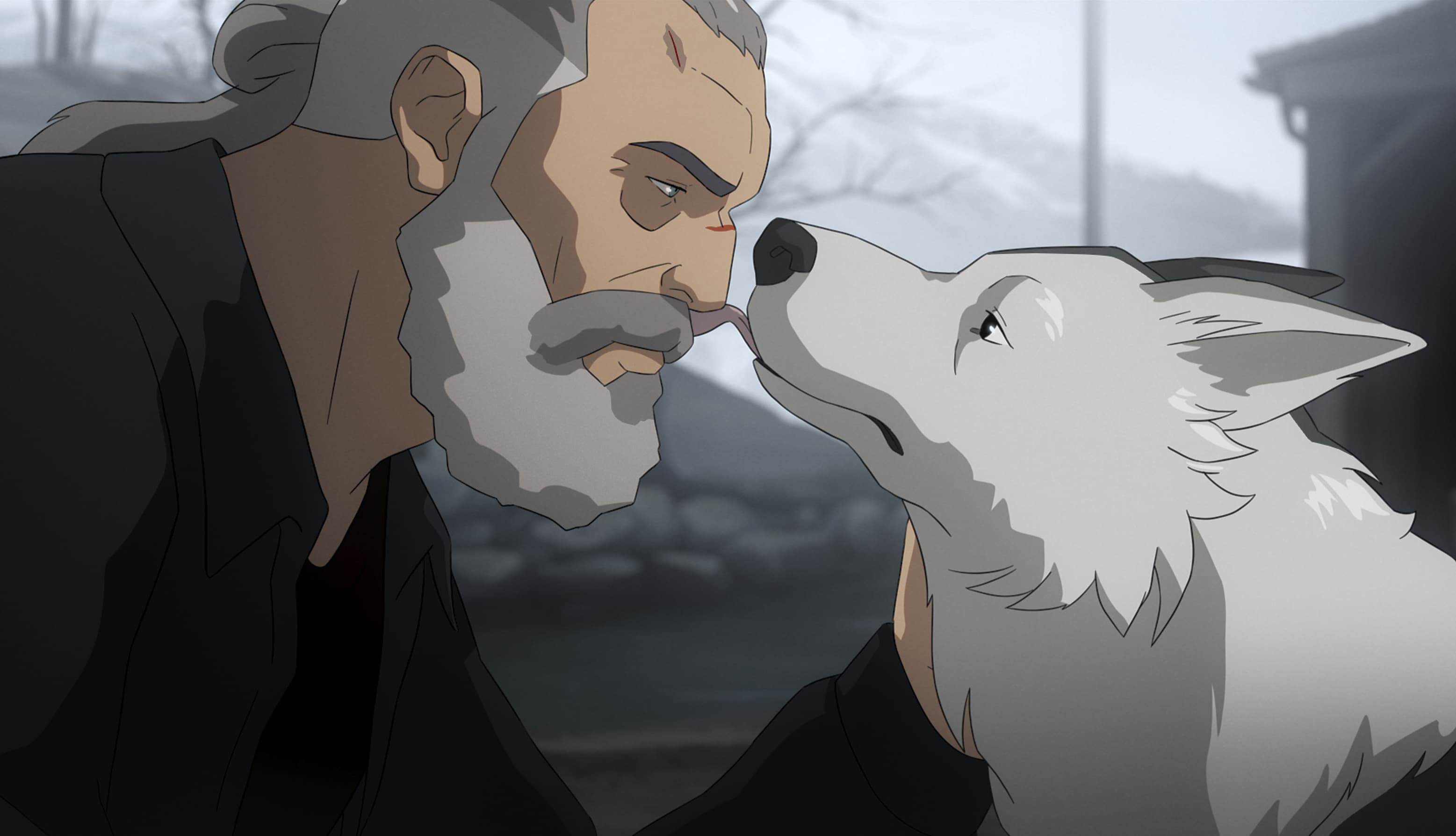
Gray-haired Sam Fisher meets us in the Polish countryside, where he leads a quiet, measured life with his dog Kaiju: chopping cabbage for dinner, reading "Moby Dick," and sipping whiskey on the rocks from a faceted glass. But the past catches up with him suddenly — when Diana Shetland's name is heard from the TV, and a car with a bleeding McKenna flies into the barn, followed closely by enemy agents.
This turn of events saves the viewer from the obligatory scene with the veteran lamenting that he "retired a long time ago." Fisher is forced to return to duty, protect his home, and soon become a mentor to young McKenna and uncover a global conspiracy that threatens to turn into an energy crisis for all of Europe.
A Classic of the Genre
What follows is a fairly classic spy plot. McKenna and Fisher find themselves in possession of secret data that is of interest to powerful adversaries. A whole army of mercenaries begins hunting the girl and the veteran who has suddenly returned to active duty. The heroes have to understand exactly what they stole from the enemies and how this information is connected to a large-scale conspiracy.
The trail leads to the private military corporation Displace International and its head, Diana Shetland — the daughter of Sam's old acquaintance, the deceased antagonist from Splinter Cell: Chaos Theory. Diana is trying to change the company's course, turning it from a PMC into a player in the "green" energy market, but the methods she uses to achieve her goal are, to put it mildly, dubious.
The story in the series can be called simple, even banal — in the sense that the script does not strive for multi-layered constructions that require deconstruction and deep analysis. But in this case, this is not a disadvantage: the authors are careful with both the timing and the viewer, not overloading the narrative with unnecessary lines and explanations.
Each episode lasts just over twenty minutes and uses this time wisely — to give the viewer a dense spy action with a minimum of words and a maximum of bloody, brutal, and technical action in the spirit of "John Wick."
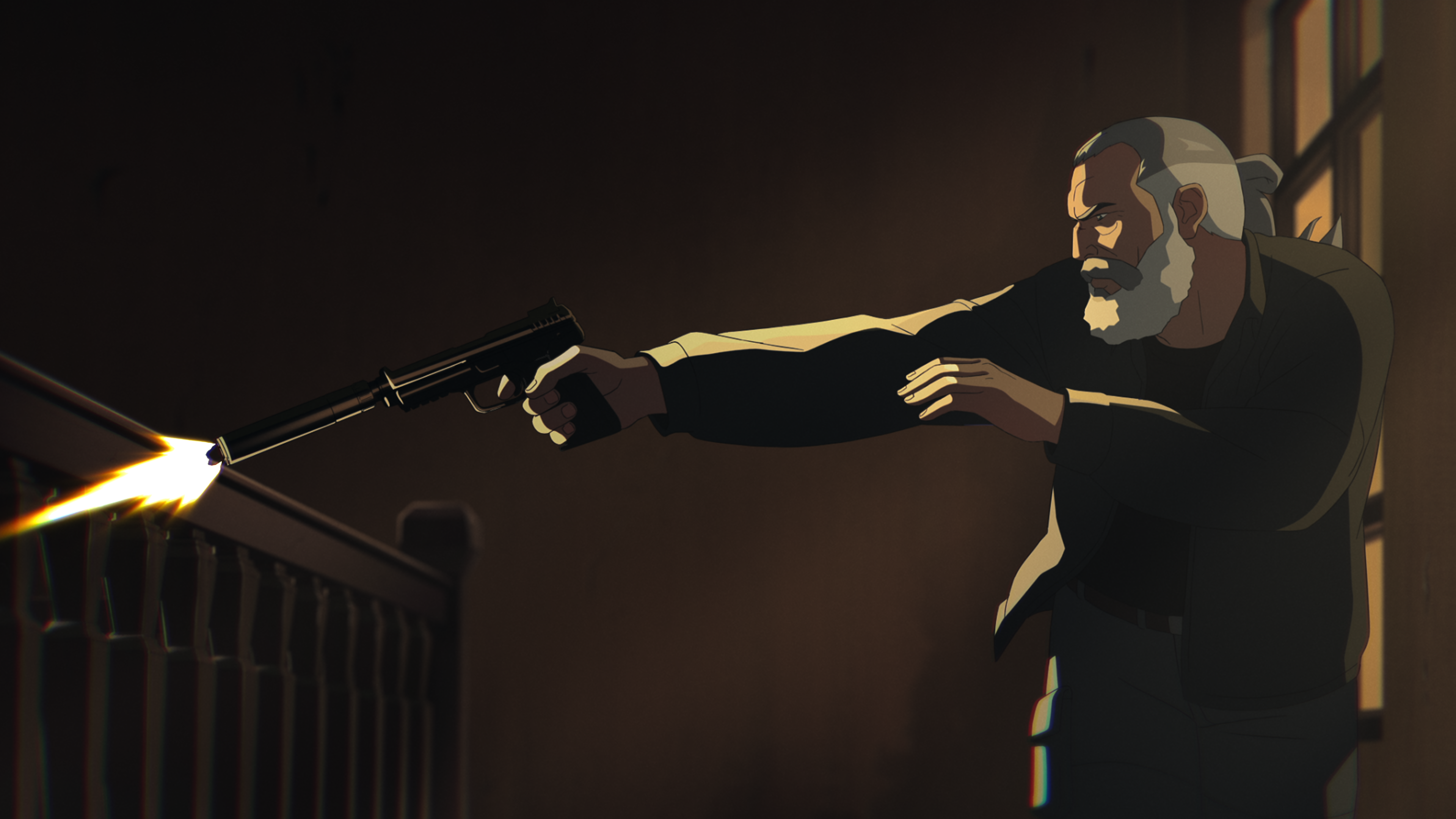
Of course, the creators do not forget about stealth, but pay equal attention to other types of action, not focusing on just one thing. Perhaps I would not refuse an experimental episode entirely dedicated to a covert operation, where not a word would be heard throughout the timing, and the viewer's attention would be directed only by music and visuals. But even without this, there is no feeling that you are missing something really important.
At the same time, "Deathwatch" is designed not only for dedicated connoisseurs of the lore. All the key motifs and terms are explained through flashbacks and dialogues. Yes, sometimes it looks a little clumsy, violating the principle of "show, don't tell," but it remains a justified measure — especially for a project that exists within the framework of a single canon with a series of video games, the history of which already spans two decades.
Veterans will be pleased with pleasant Easter eggs and cameos — from the signature sound of activating the night vision device to the return of Anna Grimsdottir. Of course, if you are not one of those who are used to measuring skulls with calipers.
Yes, there are enough strong women here — but, I assure you, there is no need to be afraid of them. Firstly, this is not "Bondiana," and no one promised to surround Fisher with femme fatales. And secondly, no one is shoving any agenda in your face. At all. Here, even the "greens" are villains, just think about it. So you can relax.
The Mission Is Always a Person
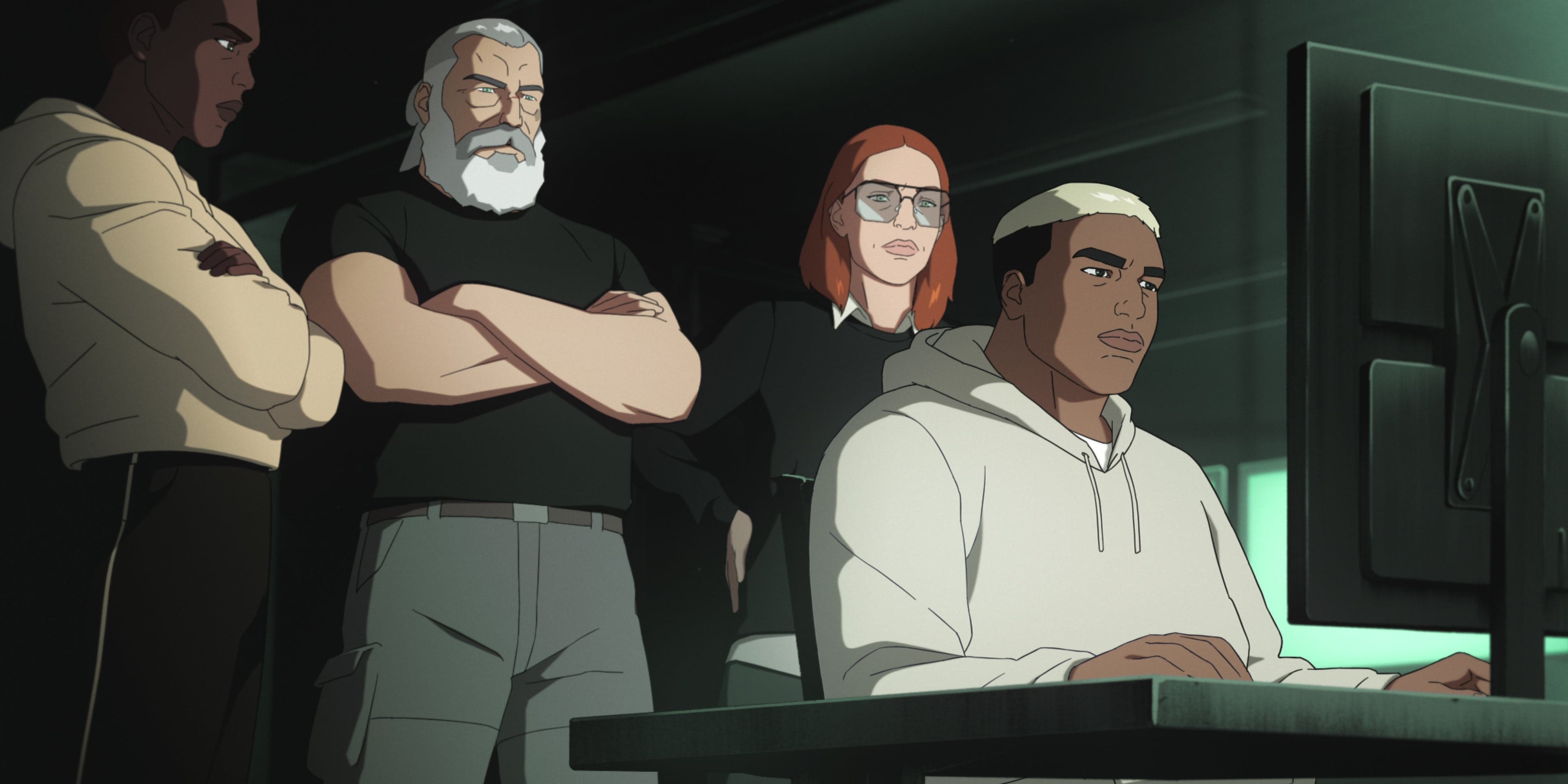
McKenna in this story plays not the role of a savior and not a replacement for Fisher, but rather a catalyst and reflection. She is impulsive, which sometimes makes her make mistakes and may disobey orders — but these are humanly understandable mistakes. After all, she lost a loved one. Sam has already experienced all this and knows what it's like. She reminds him of himself as he once was, and that is why their interaction works.
There is no false conflict of generations between them. Fisher does not fall into nostalgia, does not lecture, and does not try to prove his authority with age — he simply remains himself. In one of the first dialogues, when McKenna admits that she imagined the legendary Sam Fisher to be completely different, he smirks: "Well, that's just me — I never live up to expectations. "
Perhaps the very idea of generational succession is hackneyed, but here it sounds without falsehood. Sam balances McKenna's impulsiveness, and she eventually learns to control herself better. Watching her, he seems to regain the excitement that he has long lost. Their scenes are not overloaded with words, but short dialogues and glances are captivating with humanity, sincerity, and the burden of the past that sometimes stands behind them.
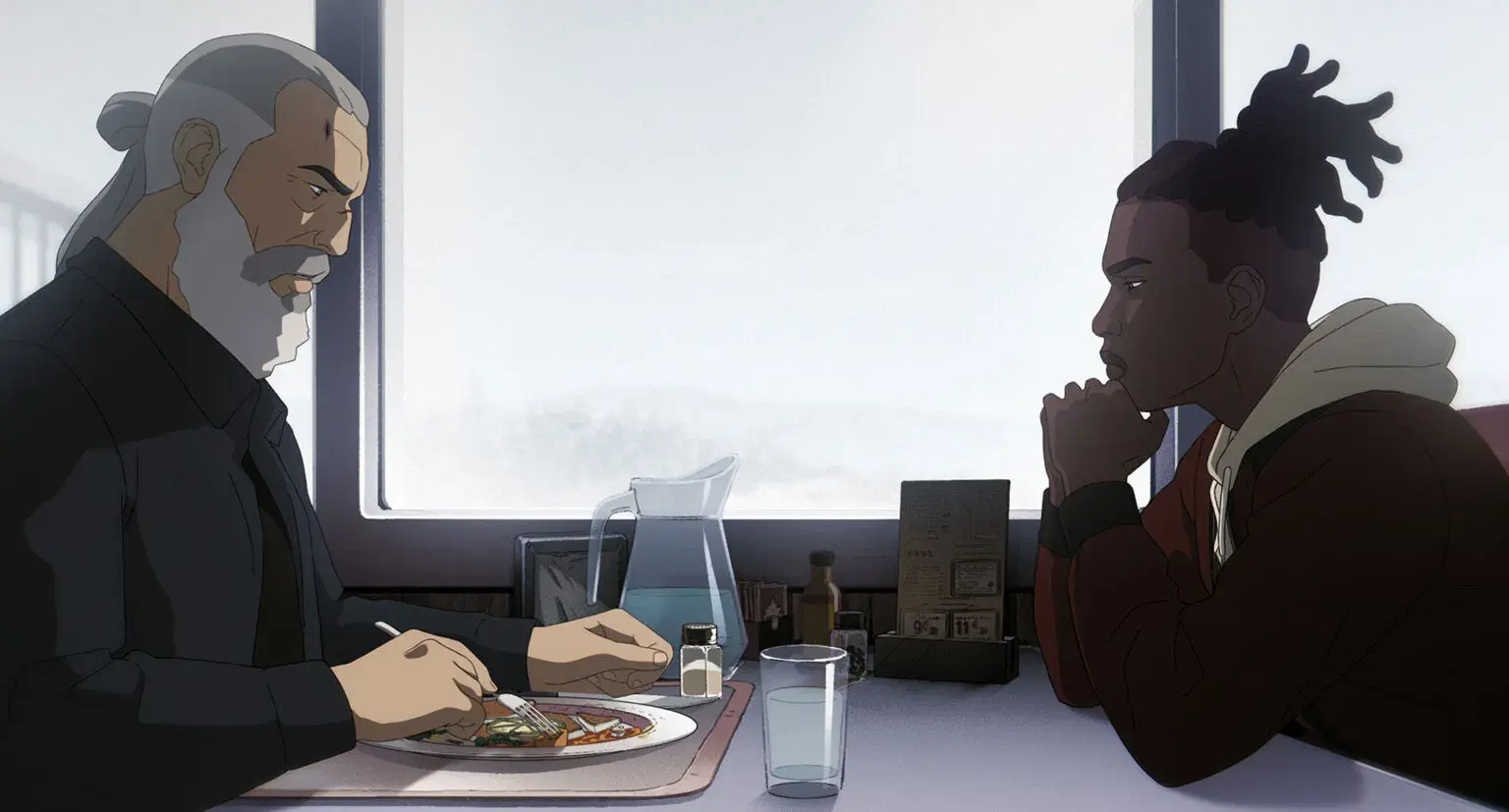
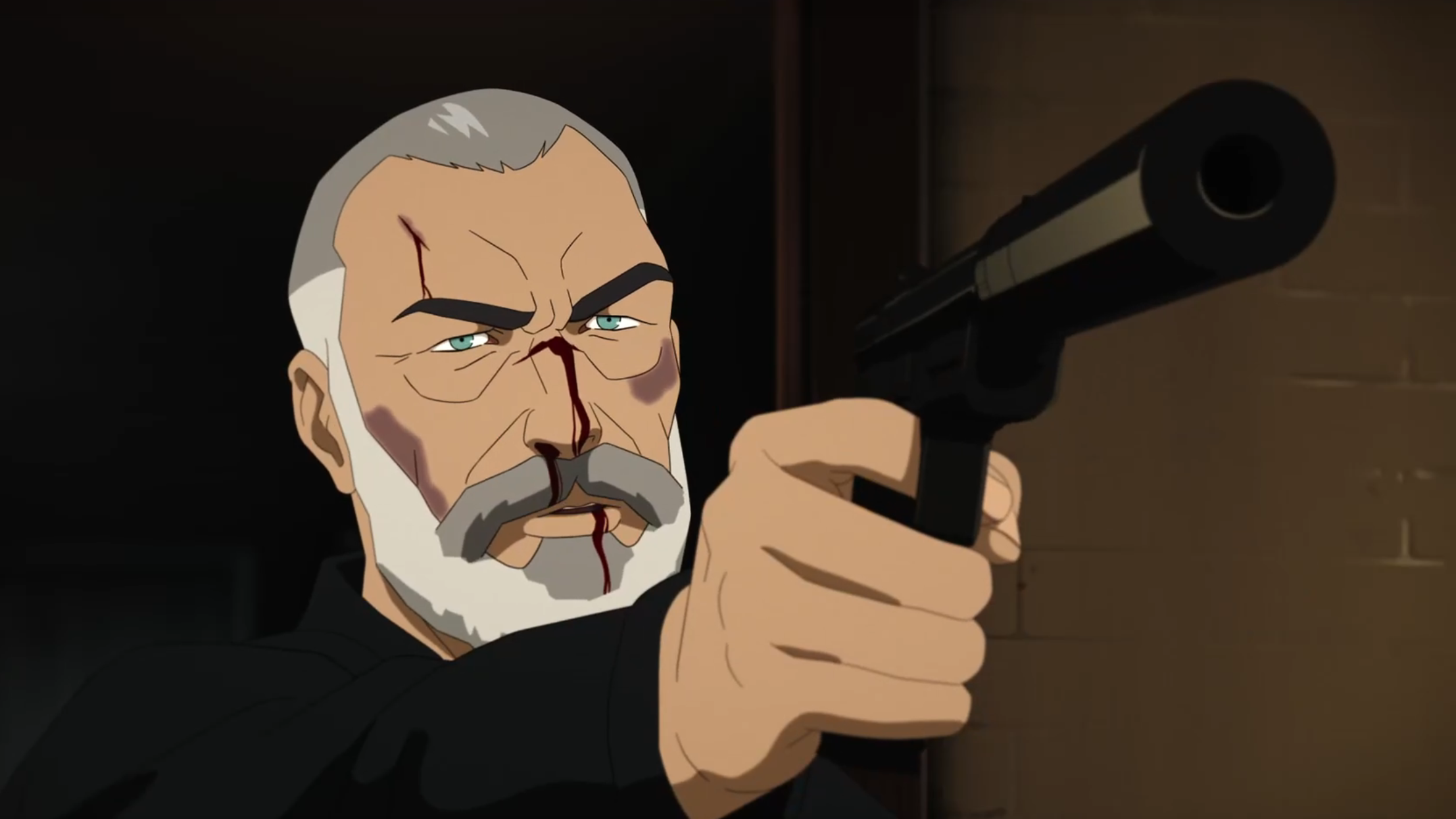
Of course, having retired, Fisher no longer spends his days stacking enemy agents in piles — and age takes its toll. He moves slower, after fights he needs time to catch his breath and recover. At first, his movements are slightly constrained: the body needs time to remember old habits and reflexes.
But even so, the authors do not try to turn him into a helpless old man who is saved by a young partner. Over time, Sam regains his form — he becomes more collected, more precise, more cold-blooded, but at the same time remains a human being, not a superhero. A professional who simply does his job — albeit with a slight fatigue in his voice, now belonging to Liev Schreiber.
This is already the fifth voice in the history of Sam Fisher, but the most iconic, of course, remains the voice of Michael Ironside, who invested a part of himself in the character at the very early stages. Schreiber lacks a bit of that signature Ironside hoarseness, but fortunately, this is no longer the slick "Captain America" performed by Eric Johnson. Schreiber does everything to sound like Ironside — and he succeeds convincingly.
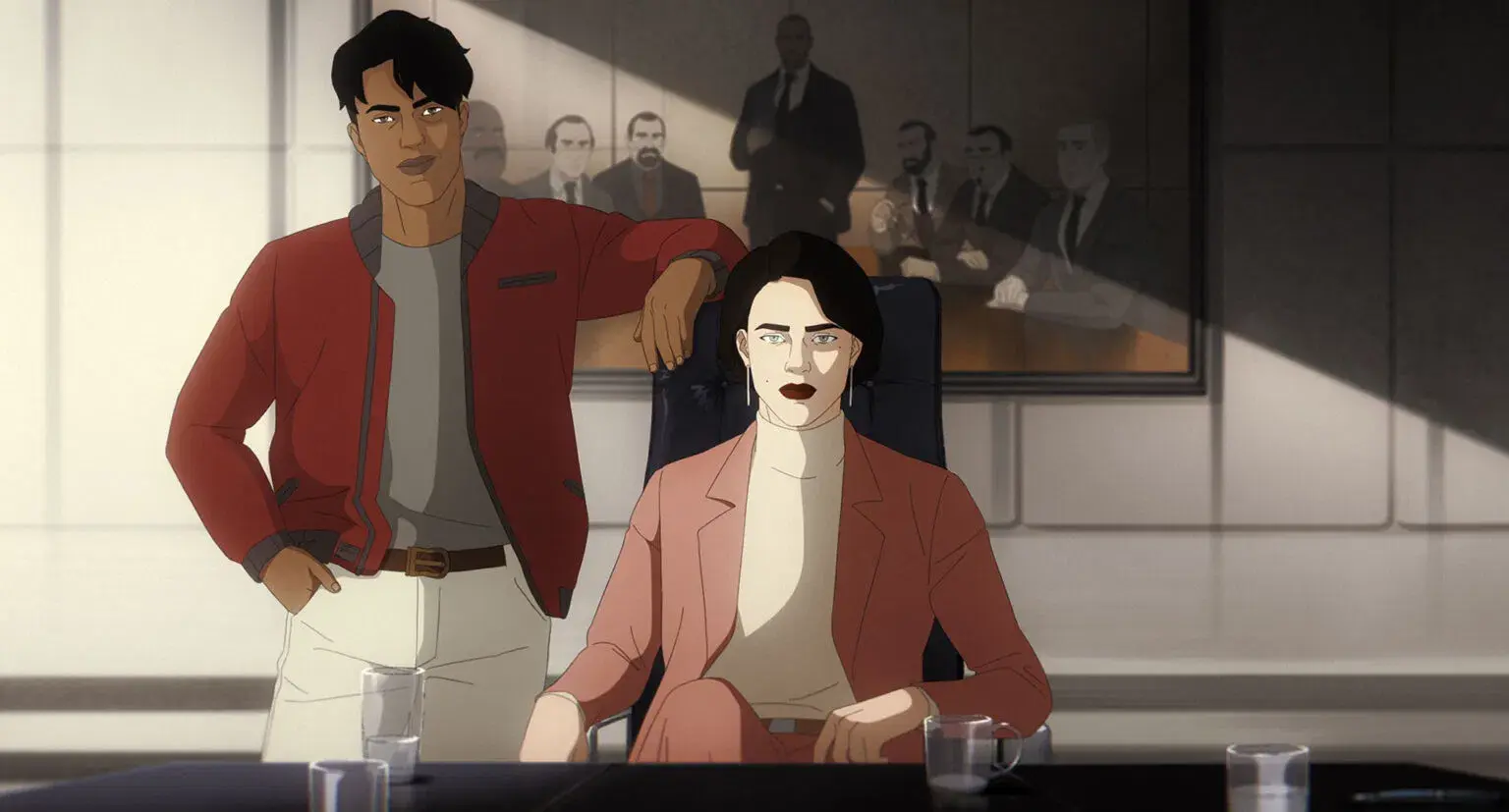
But the antagonists in "Deathwatch" turned out to be, perhaps, the most heterogeneous — if not to say the weakest — part of the series. Their motives are closer to pragmatic, harsh idealism than to open confrontation with the world, and the dynamics with Fisher remain frankly underdeveloped. Considering that Shetland's daughter — and concurrently Fisher's goddaughter — has become the main antagonist, I would like more than a short dialogue that essentially only refers to Shetland himself and how he saw this world.
It is even more difficult to say something substantial about Diana's suddenly appeared half-brother. A typical gray cardinal, introduced into the narrative for the sake of a plot twist. Admittedly, he managed to surprise — which means that the character was not used in vain. Especially since there are enough other plot "mini-bosses" around, whose main task is to give the viewer a couple of juiciest scenes of reprisals.
Functional Aesthetics
The visual style and animation of "Deathwatch" can be called functional, even utilitarian. They resemble many other Netflix animated projects, standing out perhaps only with a more muted, cold palette, justified by the setting and the gloomy mood of the story. The picture is frankly inexpensive, but neat and modern, with an emphasis on characters rather than backgrounds.
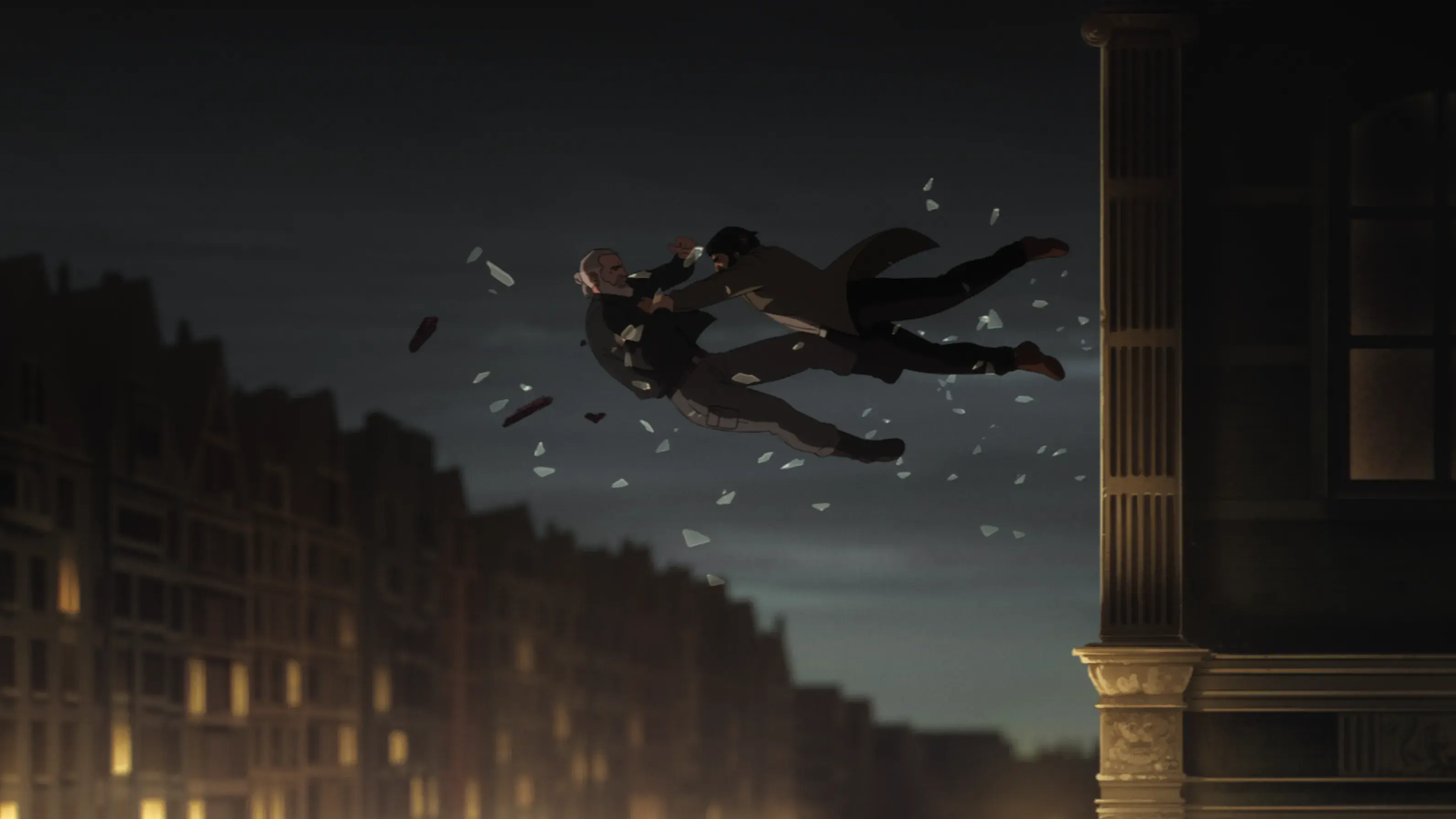
The characters are drawn in sufficient detail, and it seems that all the main efforts went into staging the action scenes — the real highlight of the series, where the degree of cruelty is turned up higher than is customary in Splinter Cell. There is no ostentatious "ballet" or supernatural acrobatics here.
On the contrary — a harsh, down-to-earth hand-to-hand combat, where every blow has weight and consequences, and fighters fight with their last strength, using everything that comes to hand. Especially in scenes with McKenna, where vengeful anger takes over rational calculation. This "dirty" style gives the fights realism, tangible physicality, and the feeling that victory is really achieved on the last breath.
Outside of the action, the visuals are less expressive. Locations are scattered throughout Europe — Poland, Germany, the Baltics, and St. Petersburg flashes by — but there is no tangible flavor of different countries. Most often, the frame features typical landscapes and interiors: farms, office skyscrapers, ports. It is almost impossible to recognize specific cities in them, and because of this facelessness, the atmosphere is slightly blurred.
Nevertheless, the picture copes with its tasks — even if it follows the usual path for Netflix, which, even with all the зрелищности of the fights, does not allow the series to truly stand out among the animated adaptations of recent years.
Diagnosis
"Splinter Cell: Deathwatch" is a dynamic, tightly knit spy adventure that is definitely worth the attention of fans of the series, but may seem too банальным and unoriginal to those who have never heard of Sam Fisher. Derek Kolstad brought to the story the very energy that once made "John Wick" famous — and this only benefited the series. The result is a dark, tough action movie with well-honed fight choreography, which makes the eight episodes fly by in one breath.
At the same time, the series copes with its super-task — it awakens a burning desire to play Splinter Cell again and gives rise to the hope that all this is not just so, and Ubisoft is really preparing to return the game Fisher to us. It is not for nothing that the company did not allow Kolstad to make some changes, referring to its own plans, which, apparently, it intends to adhere to.
Yes, when fans hear that Netflix is again taking on the экранизацию of a video game, many begin to twitch their eyes. After a wave of "anime" spin-offs on Castlevania, Tomb Raider, Devil May Cry and many other projects, you approach the next adaptation at best with caution — expecting at least an attempt to introduce an "актуальную" agenda, and at most — a complete misunderstanding of the original source.
But "Splinter Cell: Deathwatch" suddenly stands out from this series. Without intrusive moralizing, without pretentiousness and excessive pathos, with unexpected respect for the source material — this is the rare case when the series is primarily aimed at fans, but at the same time remains understandable for those who hear the name Sam Fisher for the first time.
It is a pity only that many of these fans will probably pass by — because of the sad reputation of animated экранизаций games. But such is the cursed world created by Netflix.