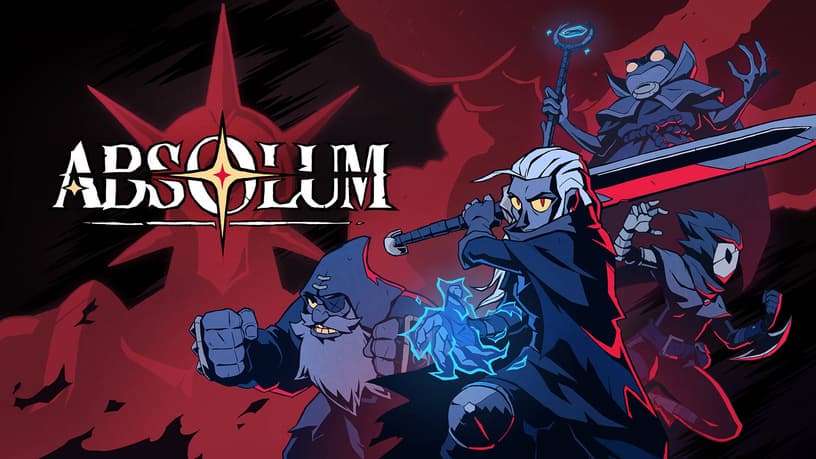
When it seems that we have already seen everything in the roguelike genre, the French from DotEmu come on stage and say: "Wait a minute! We've crossed Hades with Streets of Rage 4 here!". And so a new subgenre is born - rogue'em up. It takes the best features of both directions, gets rid of their weaknesses, and turns into a game that fans of the genre should not miss under any circumstances. What Absolum turned out to be - we tell in our material.
Magic Outlawed
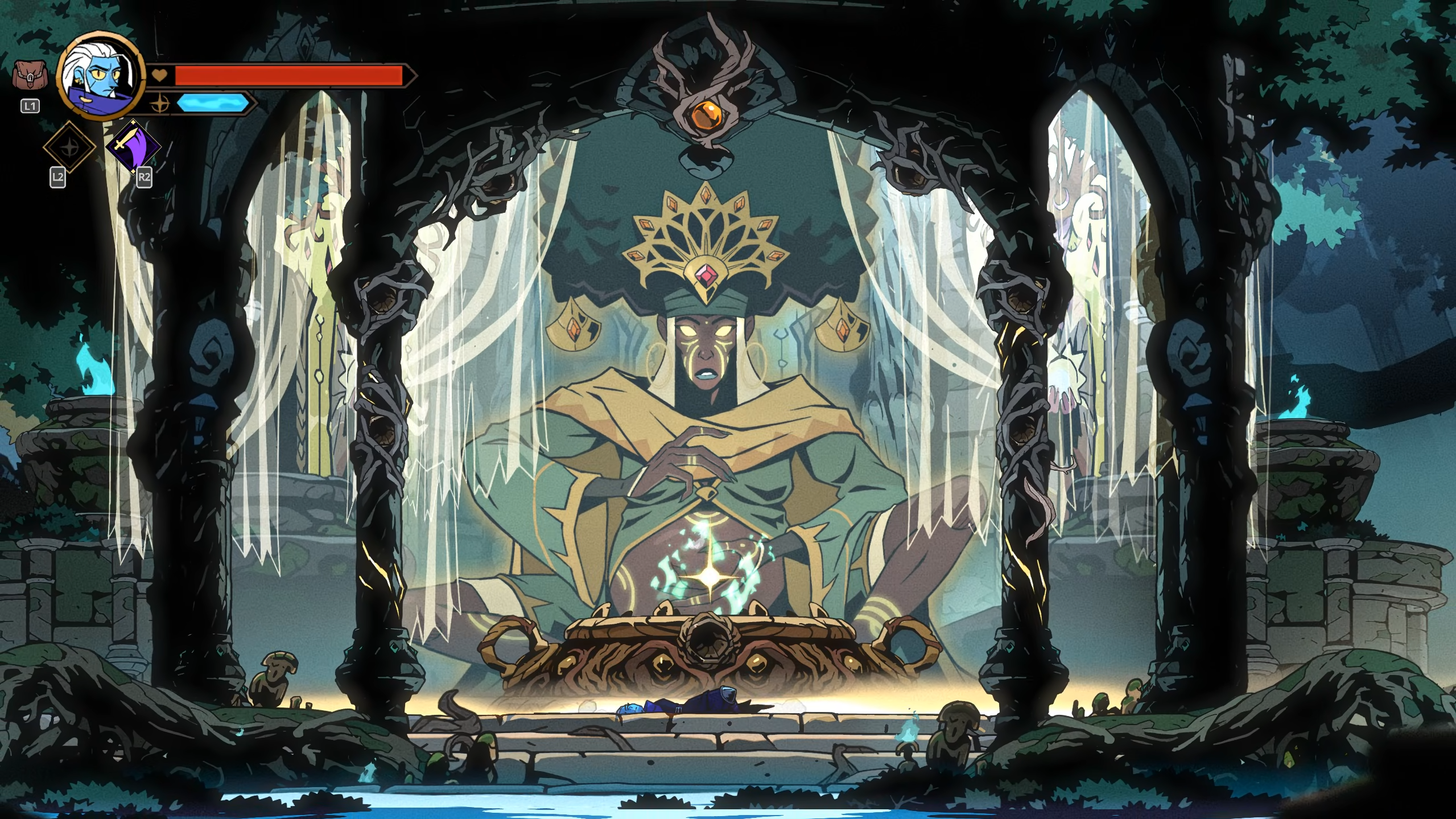
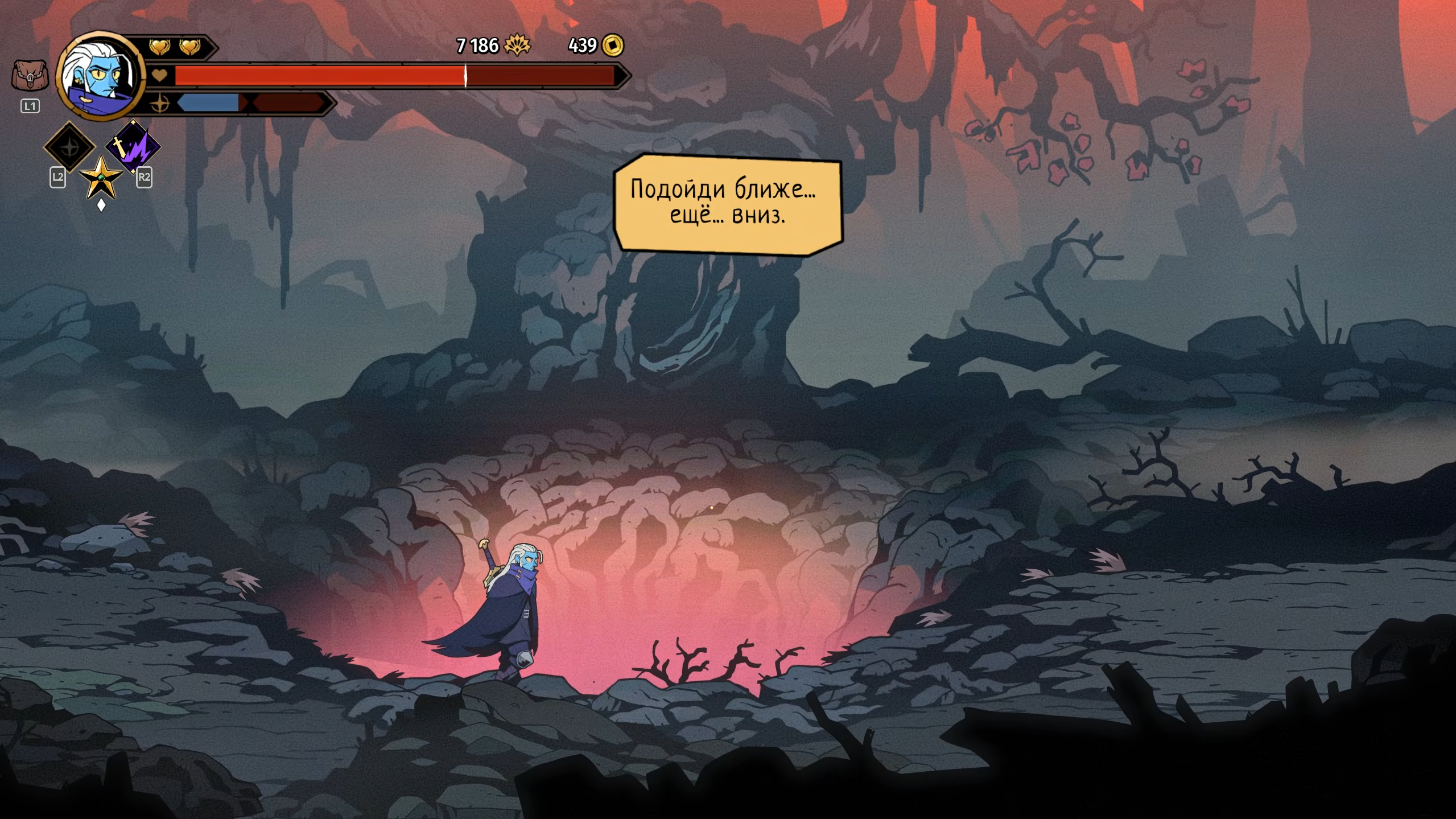
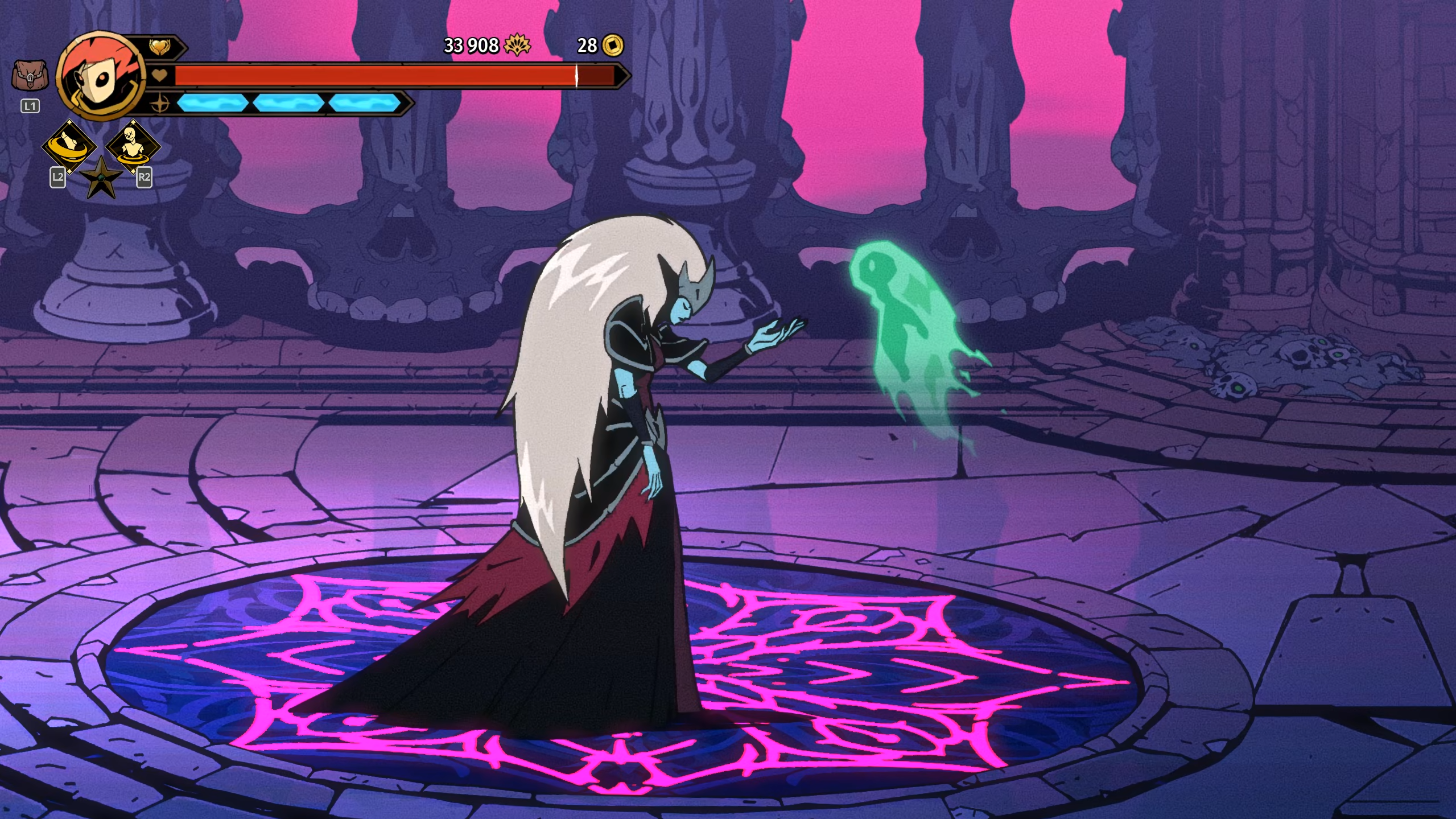
The events of Absolum unfold in the world of Talam, which has survived a mysterious cataclysm. Magic is strictly prohibited here, and power has been usurped by King Azra, who rules with an iron fist. Ironically, he himself secretly resorts to magic to keep the last wizards in check. Somewhere in the forests and swamps, a handful of rebels are hiding, determined to break into the palace and overthrow the tyrant. They are the last hope of Talam — and it is their fate that ends up in the hands of the player.
The story unfolds in a manner familiar from Hades — after each failure, the hero is reborn by Mother Uchavi in the starting location, and each new run slightly advances the narrative: it opens new dialogues, adds details to the lore, and gradually puts them together into a single picture of the world. However, unlike Hades, there are full-fledged quests here. Their completion not only gives meaning to each route, but also affects the environment — it opens new paths, changes old ones, and new heroes and NPCs appear in the camp, ready to help the rebels become stronger.
The writers of Absolum mixed a little bit of everything into this cauldron — classic fantasy clichés, a little humor, a drop of grotesque, and a pinch of social subtext, cleverly wrapped in a magical shell. The plot does not strive for revelations and does not try to turn the genre upside down — it serves more as a motivation, a reliable background behind which a honed and almost impeccable combat mechanic is hidden.
Timeless Beat 'em Up
Absolum is based on the classic beat’em up. The character moves from left to right, clearing screen after screen and juggling enemies with the help of an arsenal generously provided by the developers. Among the basic techniques, everything is familiar — fast and powerful strikes, dashes, jumps, throws and "vertical" evasions, as well as two types of parrying — as in any self-respecting game of 2025.
The first one works when dashing at the moment of an enemy attack and completely negates it, the second one requires using a special ability to meet the opponent's strike and allows you to reflect even the most deadly techniques.
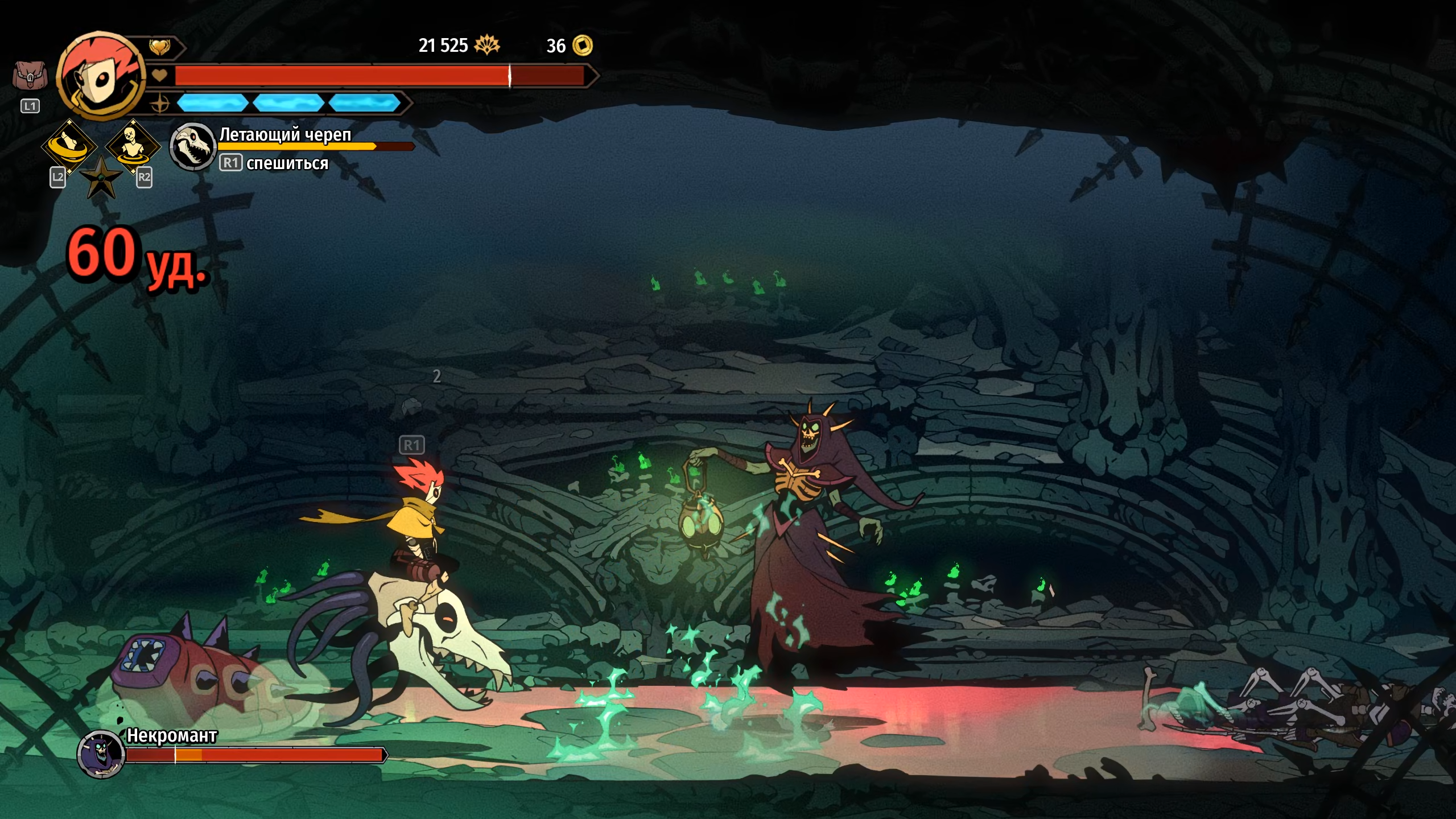
It was not without classic throwing weapons, which can be picked up directly from the floor. Here you will find not only knives and axes, but also, say, rotten pieces of meat that can poison the enemy. In a street fight, even a fantasy one, everything that comes to hand is used. And if the enemy came to the battle on horseback — it doesn't matter: he can always be thrown from the saddle, ride the beast himself and turn its power against the owner.
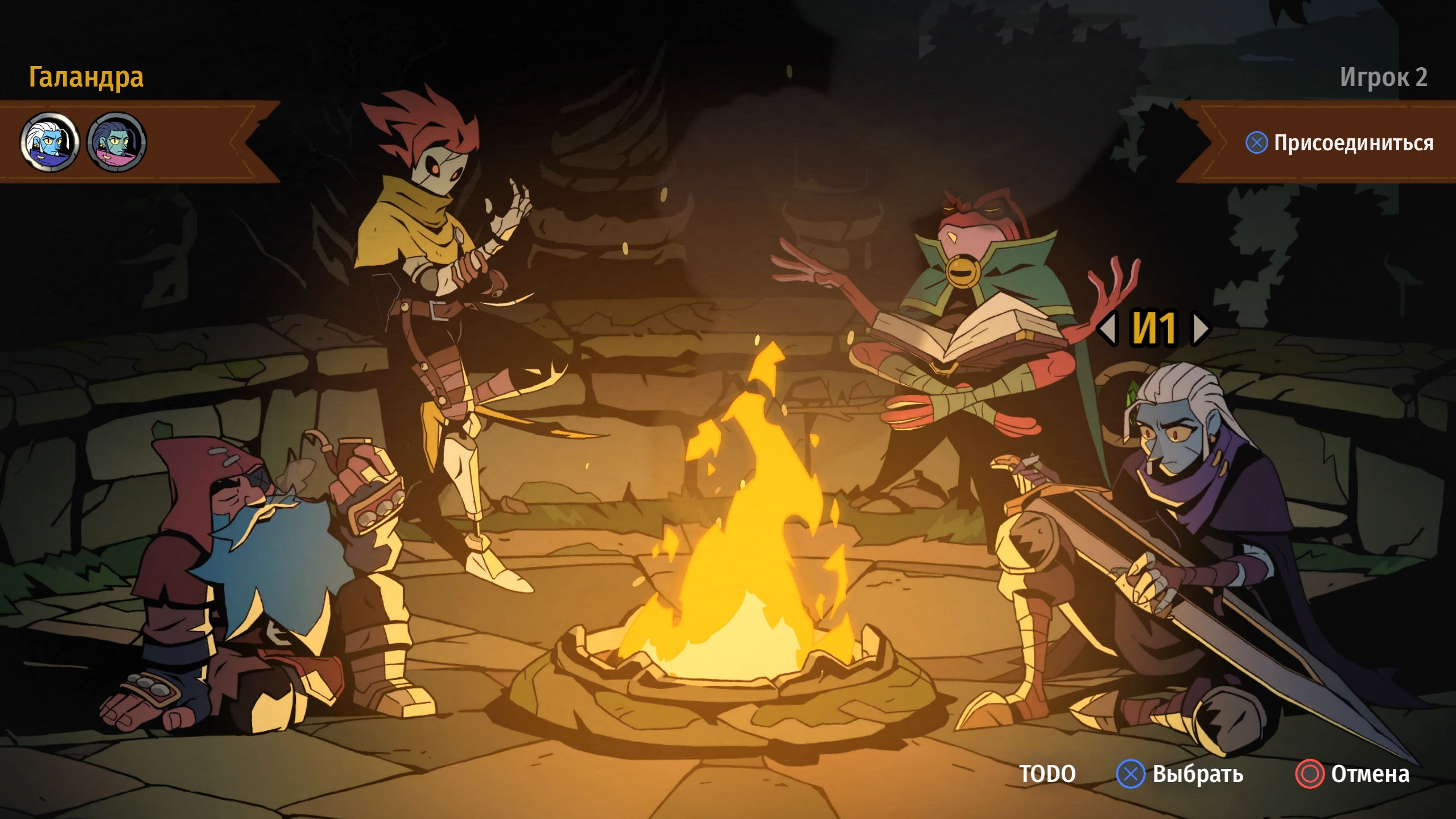
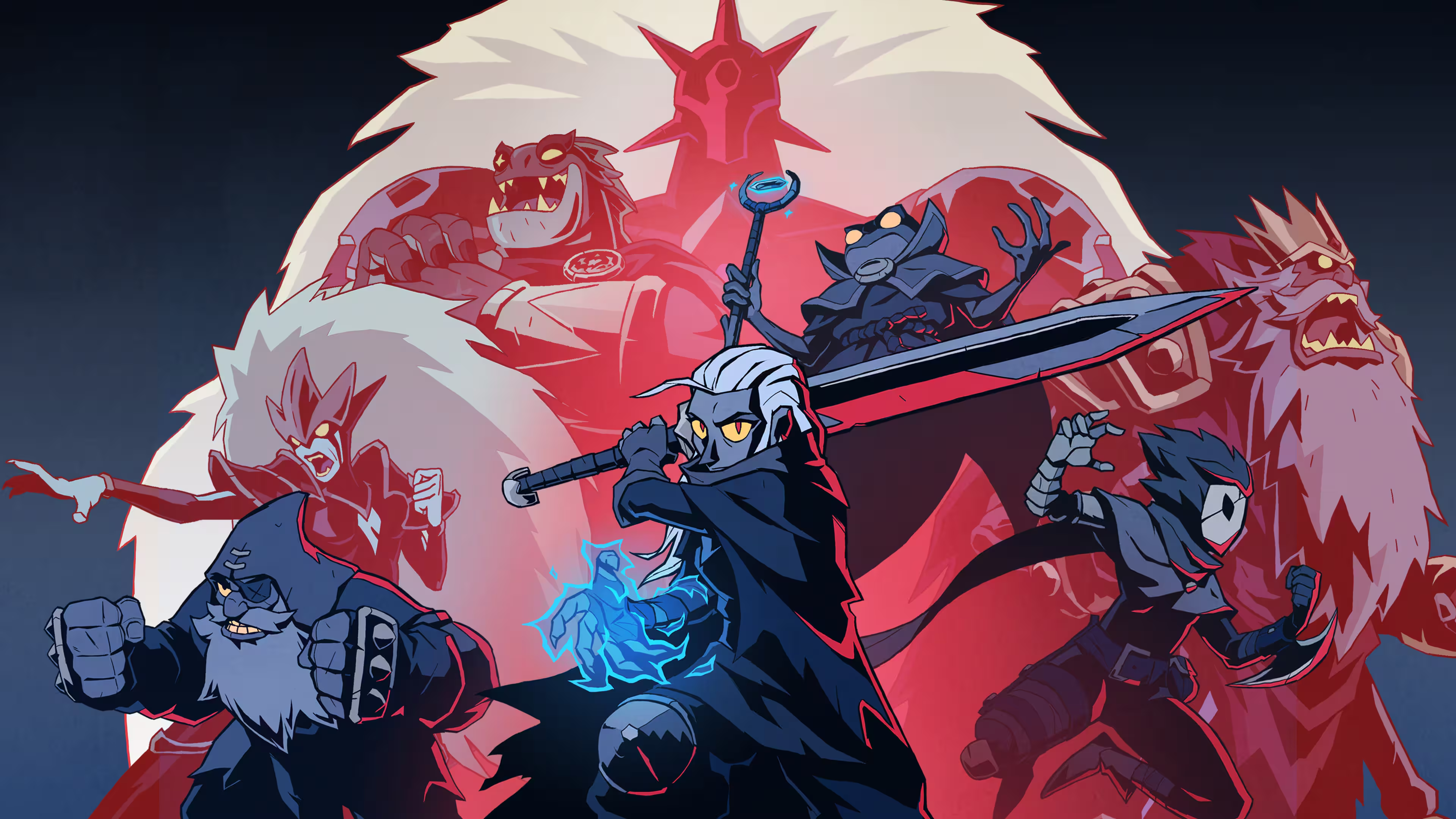
The player has four heroes at his disposal. Two are available immediately, two more are unlocked as you progress. Each of them has their own fighting style and a unique set of skills.
- Galandra is a gloomy swordswoman wielding a blade imbued with magic.
- Karl is a dwarf who clangs enemies with his fists in close combat, does not miss the chance to butt an opponent with a steel forehead, and at a distance puts into action a gun capable of showering enemies with fire, lead rain, or even grenades.
- Sider is a swift and agile puppet-rebel, masterfully wielding blades and traps.
- And the quartet is completed by Brom — a frog-mage who, if he doesn't lick the enemies to death, will shower them with a hail of all sorts of spells.
Each fighter has six abilities called Arcanas (you can only have two at a time in a run), one ultimate — as the name implies, capable of radically changing the course of the battle, and several passive effects — "inspirations". They are unlocked as you progress after defeating bosses, strengthen or modify already familiar skills, and replace complex "fighting" combinations — such as a diving kick or new types of throws. Together, these abilities allow you to control crowds of enemies and escape from particularly powerful attacks, using skills as a countermeasure.
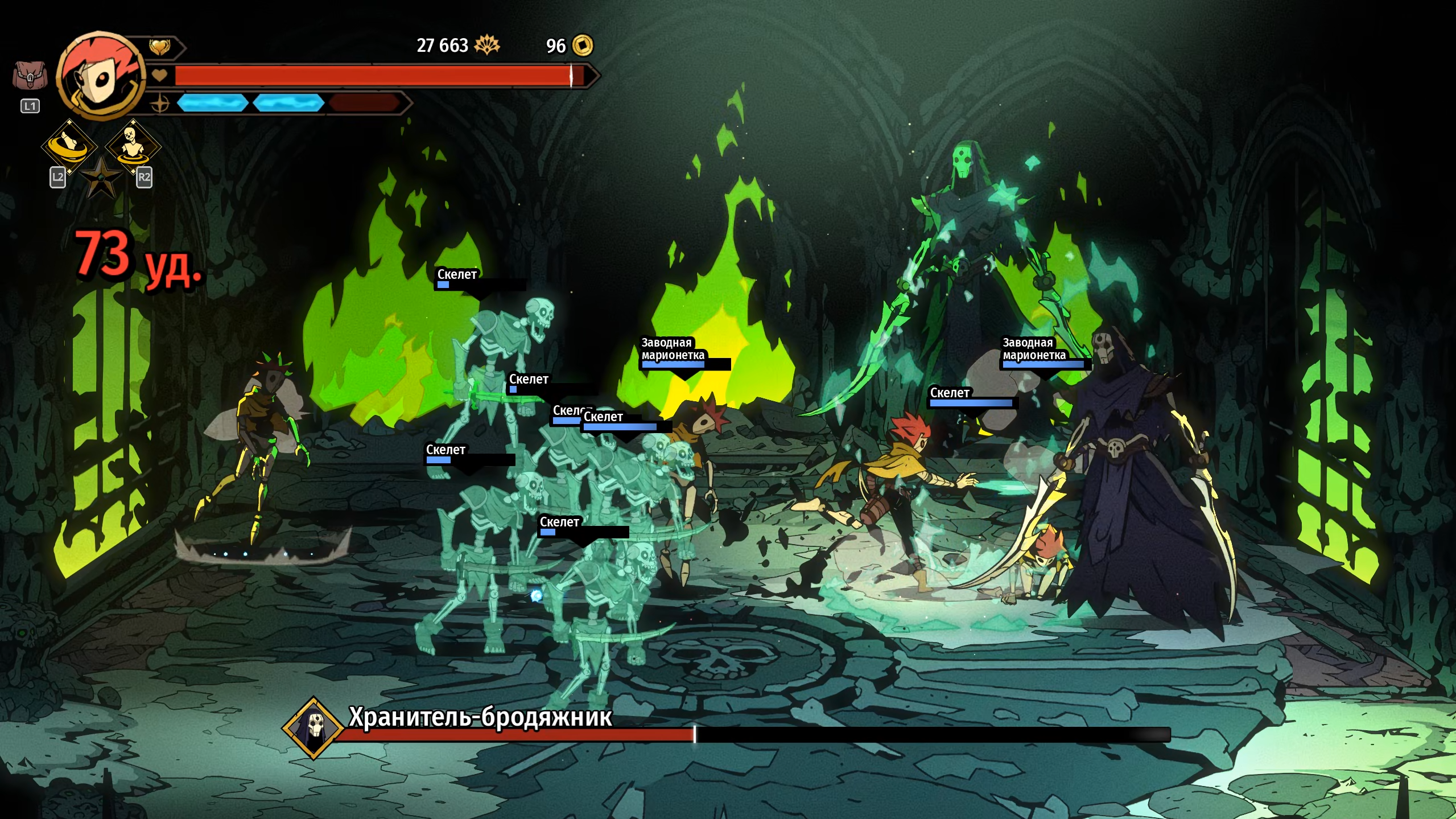
The use of Arcanas requires mana, which is replenished mainly when attacking opponents, encouraging you to play aggressively and maintain a continuous pace of battles. This is also facilitated by the pressure mechanic: a successful combo series can send the enemy into a knockdown ("overload"), allowing you to inflict the next strike with increased damage and throw the opponent to the side. If desired, you can even "football" him against the edges of the screen, continuing the series — a familiar technique for the genre, a timeless classic of beat 'em up, if you will.
But we remember that "roguelike" mechanics are also involved in this mess — that's where everything gets really interesting.
Roguelike Them All
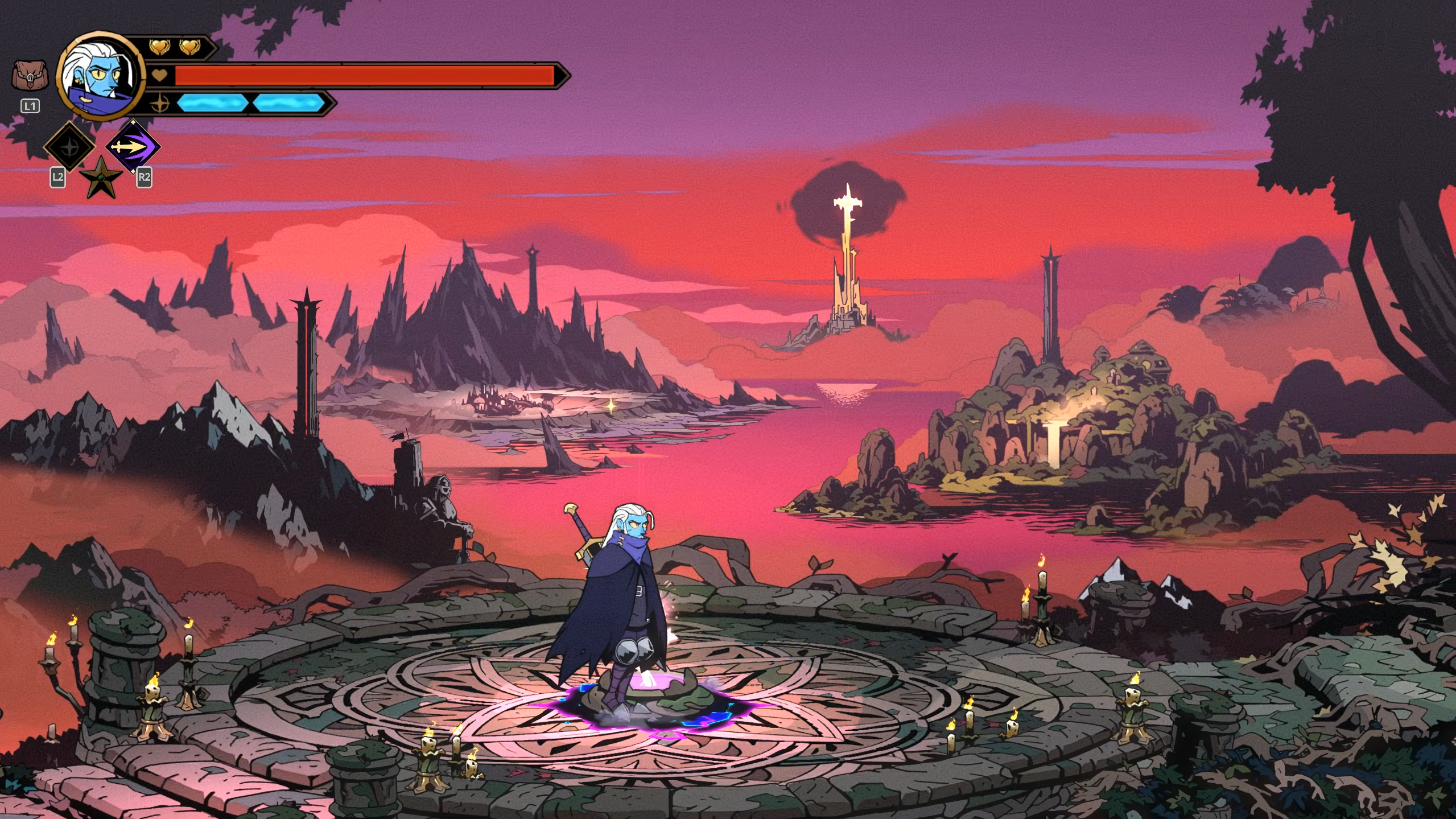
To begin with, let's go through the "base", and then see how familiar mechanics bloom, intertwining with each other. During runs, after clearing each level, the player receives gold, crystals, artifacts and rituals as a reward — in this, classically "roguelike", part without revelations.
Gold is used to buy artifacts and rituals from merchants, as well as to hire allies who fight shoulder to shoulder with the player until they fall in battle. Crystals are responsible for meta-progression — but more on that later.
Artifacts give passive bonuses — such as increasing characteristics, increasing damage dealt or reducing damage received, and rituals modify abilities and become the basis for build construction inside the run.
Rituals are divided by elements and types of abilities. For example, a fire ritual for a dash leaves a burning trail behind it, and a lightning ritual for a basic attack accumulates a charge that strikes enemies with electric shocks. But if the same ritual falls out for reflecting an attack with a dash — the charge will accumulate faster, and if for parrying — even faster, because performing a parry is more difficult than reflecting a strike with a dash. Thus, the game encourages skill, rewarding those who have mastered the basic mechanics of "beat 'em up" with more powerful effects.
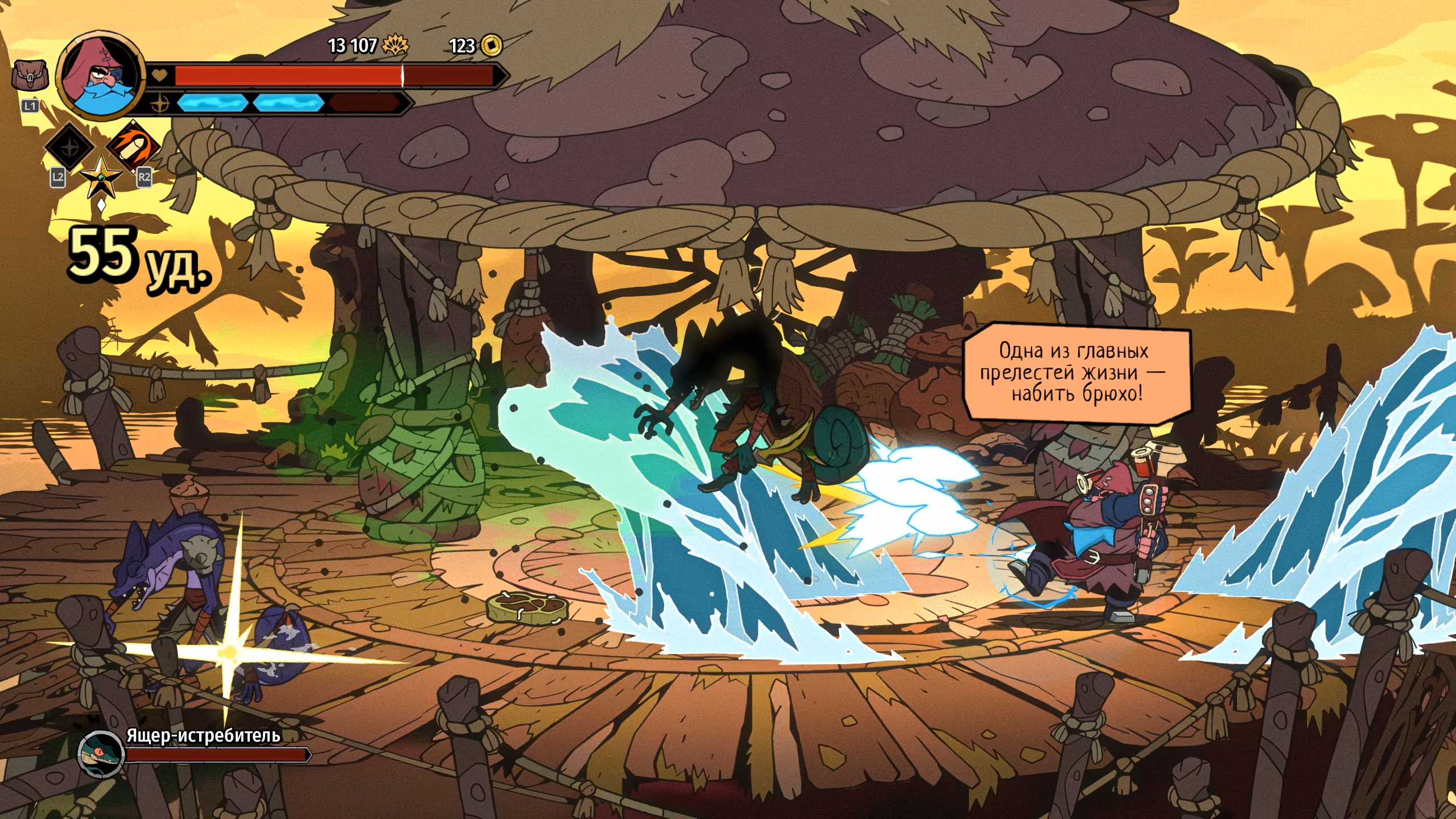
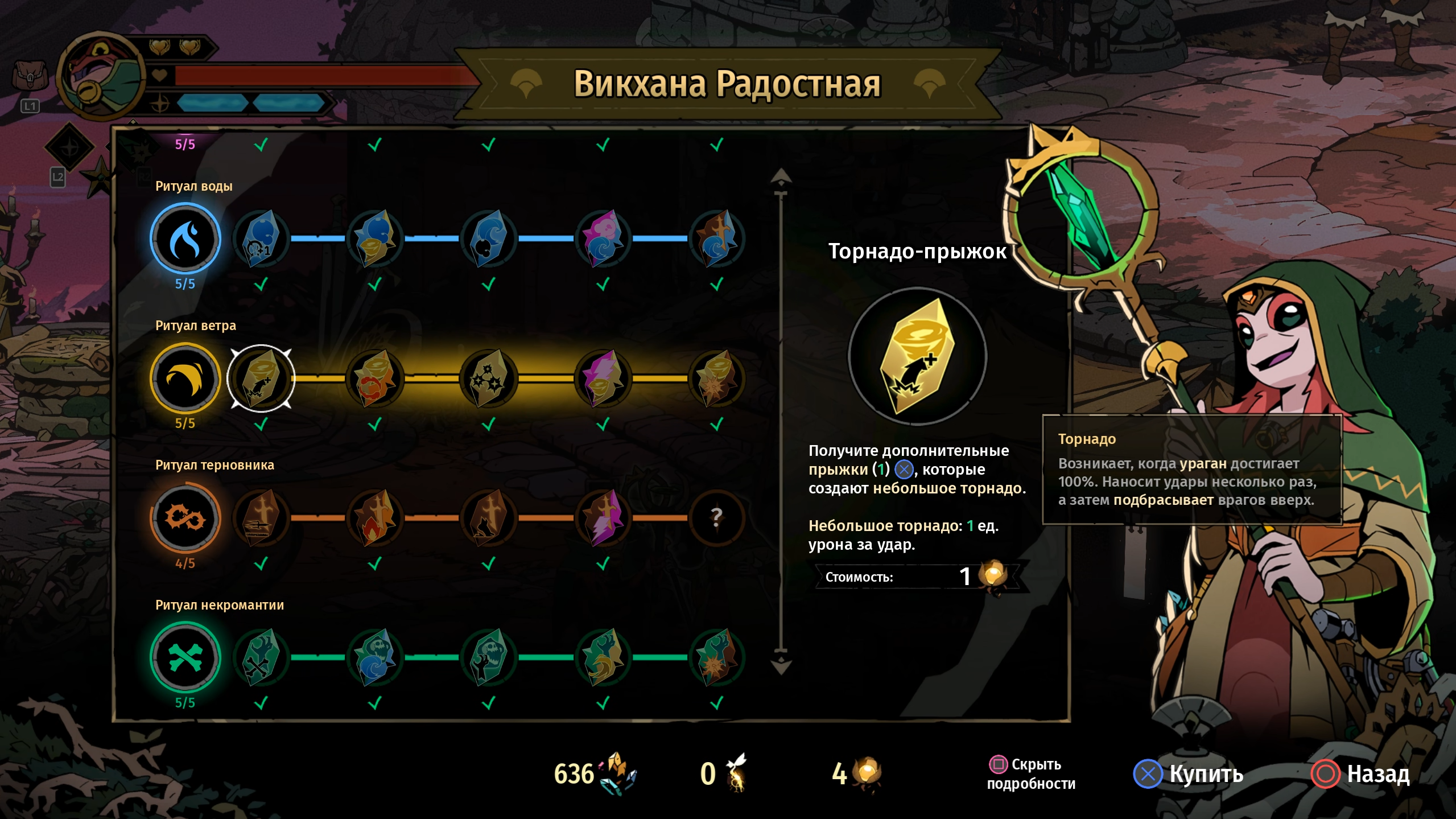
After clearing the level, the player chooses one of three random rituals. Over time, their combinations begin to work in synergy, opening up more and more impressive possibilities. For example, a water ritual for Arcana creates waves that knock back enemies, and another restores mana with each such knockback, allowing you to use abilities almost endlessly. There are a great many rituals and combinations here. I will not list all of them, of course, but among them there will be options for every taste — from necromancy with the summoning of skeletons to fiery tornadoes and manipulations with time (Hello, Hades 2!).
Pumping between runs enhances the effect of rituals — from a simple "+20% to fire damage" to adding combined rituals to the pool, when even water waves begin to leave a fiery trail behind them. These improvements, along with unlocking new abilities for heroes and increasing basic characteristics — such as the starting health reserve, gold or critical damage, — form the basis of meta-progression. Over time, it allows you to partially compensate for the lack of personal skill due to increased capabilities, but there were nuances here as well.
Radiance and Metamorphoses
Characteristics are upgraded with crystals obtained during runs. This process doesn't take long, so over time, accumulated resources can be spent on re-rolling rituals and inspirations right during the run, as well as buying starting artifacts before it begins — which noticeably simplifies assembling the desired build.
But unlocking abilities and additional rituals is a bit more complicated. Resources for this are obtained by increasing the level of "Radiance" — effectively, your overall level of progress. Experience for "Radiance" is awarded after each run and is only indirectly dependent on how far you've progressed.
It grows with hits on enemies, and, accordingly, the longer you last, the more enemies you destroy. But the main thing here is how skillfully you do it. The less damage you take and the longer your combos, the more experience is ultimately awarded and the faster new opportunities open up. Thus, Absolum encourages "beautiful" play, bringing the formula of the perfect run to "absolum-ta."
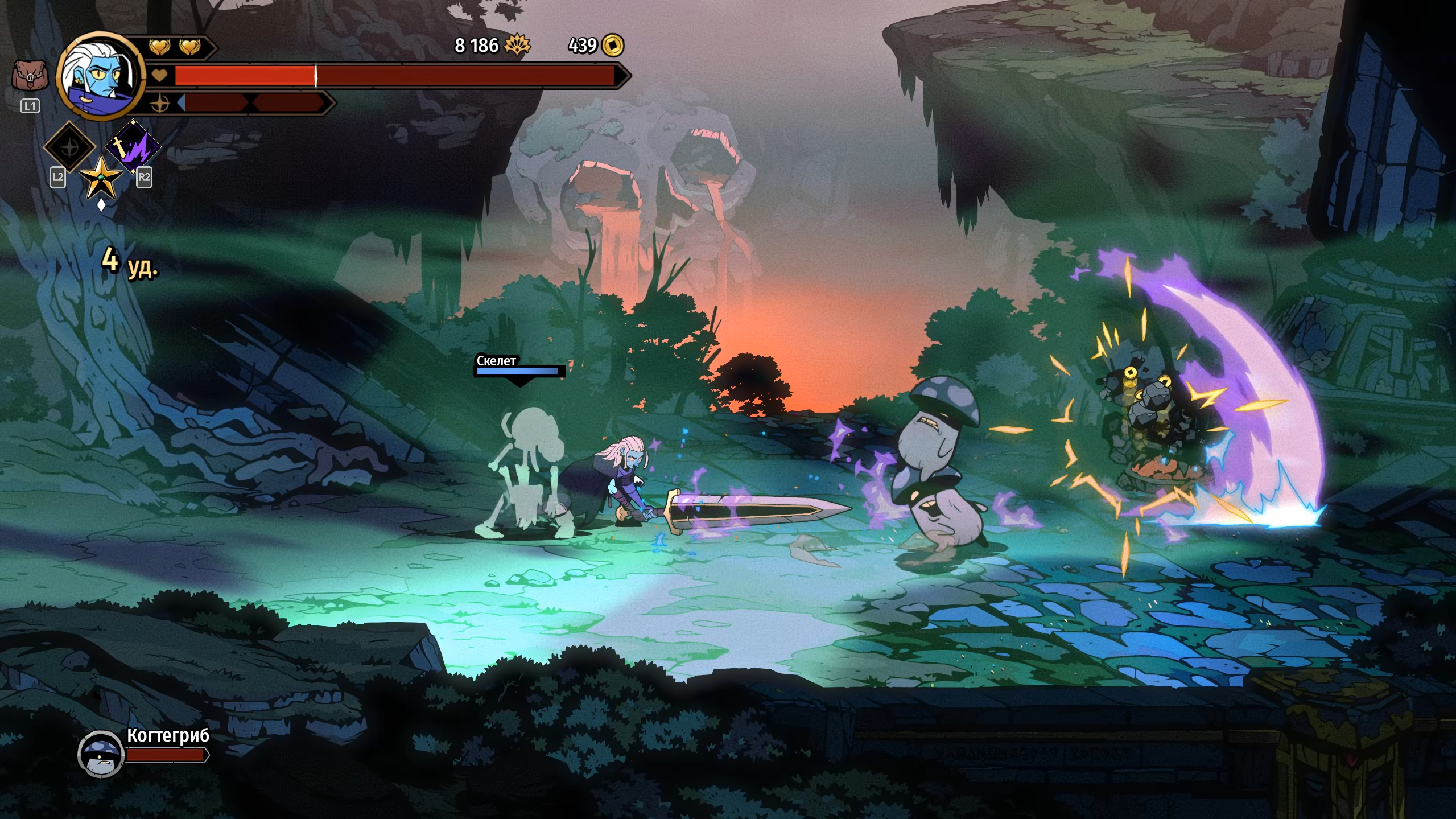
The requirement for high technical execution smooths out the usual "roguelike" edges. It's not enough to just assemble a powerful build and face-roll on the keyboard or gamepad — and sometimes it's not even necessary. Absolum pleases with a perfectly calibrated combat mechanic, thanks to which you never feel that you lost due to a bad drop or injustice on the part of the game.
Theoretically, it can be completed without any enhancements at all, if you show enough skill, using only the basic mechanics. All this together creates a rare feeling of complete control over the situation — a feeling that not every "roguelike" is capable of giving. It is achieved precisely due to the harmony with "beat 'em up" mechanics, but this is not all that Absolum has to offer.
Proper Variety
Each run in Absolum is not just a linear march forward, but a variable journey with random events in a constantly changing world. Talam is divided into several regions, and although all paths lead to a single finale, the player is always offered a choice of route. It is impossible to cover all areas in one run. And if the branched structure itself is familiar to "roguelikes", then what distinguishes Absolum from the classic formula is much more interesting.
At the very beginning, I already mentioned the presence of full-fledged quests. Within their framework, you need to visit points marked on the map and perform certain actions — talk to the goblin leader to build a bridge and open a new path, free a prisoner, or find tools necessary to unlock a new branch of improvements in the camp.
This makes runs along certain routes more meaningful and encourages the player to explore different directions, and not just go where it is more convenient. As a result, new bosses, secrets, and unexpected incidents await you.
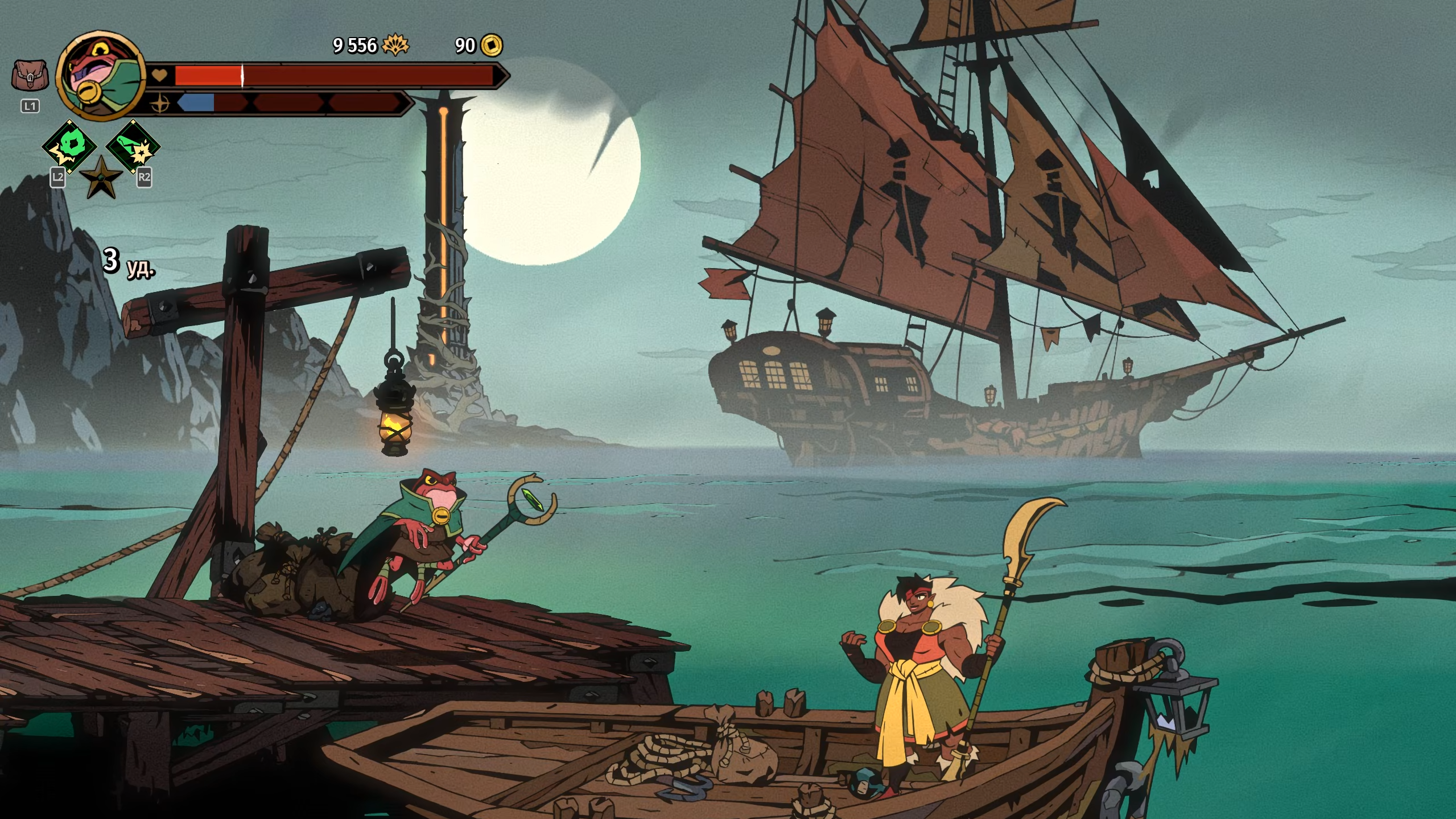
At the same time, caches and events are not static: running through the same location for the third time, you may notice that thickets have appeared, by cutting them down you open a chest with gold. The next time there will be no chest there, but a trap will appear that was not there before — or vice versa.
Of course, there are no completely procedurally generated locations here — the whole world is drawn and animated by hand, but that is why it seems much more alive. Over time, the game really starts to repeat itself, but for one complete playthrough, there is more than enough variety to surprise and throw something new even after fifteen hours.
And after receiving the "basic" ending — I call it that only because I don't want to spoil it — the composition of opponents is also slightly updated. New types of enemies appear in the starting zones, and then portals open, from which random opponents from different regions fall on you. This refreshes the initial battles right at the moment when they begin to get boring and seem too simple. As a result, even the flat, drawn world familiar to the genre acquires volume and continues to hold attention.
Creative Synthesis
Since we have already found out that Absolum plays excellently, it is worth adding that it looks and sounds no less beautiful — and this is the merit of a whole ensemble of masters. The French animation studio Supamonks is responsible for the visual part, giving the game smooth, hand-drawn animations and turning it into a stylish animated cartoon. The same studio is already working on the экранизацией Absolum, announced even before the release.
Among other things, it is worth noting the variety of decorations and the well-chosen color palette — calm, melancholic, reflecting the magical world in a state of stagnation. No less pleasing is the animation of enemy attacks: they are read unmistakably — either by the bright shine of the tip of the spear before the strike, or by the characteristic swing, or by other recognizable details.
Difficulties with perception arise only in those moments when an especially "fierce" build is assembled and the screen begins to be full of summoned skeletons, flashes, and effects. But, as a rule, by this point the power of the character is such that there is simply no need to track each attack — opponents explode under the onslaught of blows, and chaos becomes part of the design.
If the visual sets the mood for the game, then the musical arrangement directs it and brings it to perfection. The Absolum soundtrack is, without exaggeration, magnificent. The main composer was Gareth Coker, the author of the music for the Ori дилогии. He filled each location with its own unique sound — from meditative chimes to epic orchestral themes.
In addition, Mick Gordon joined the project, who, as they say, needs no introduction. You recognize him instantly — just hear the heavy guitar riffs in the battle with the Подземным Королём. The energetic, powerful composition sounds unexpected and at the same time surprisingly organic for the setting.
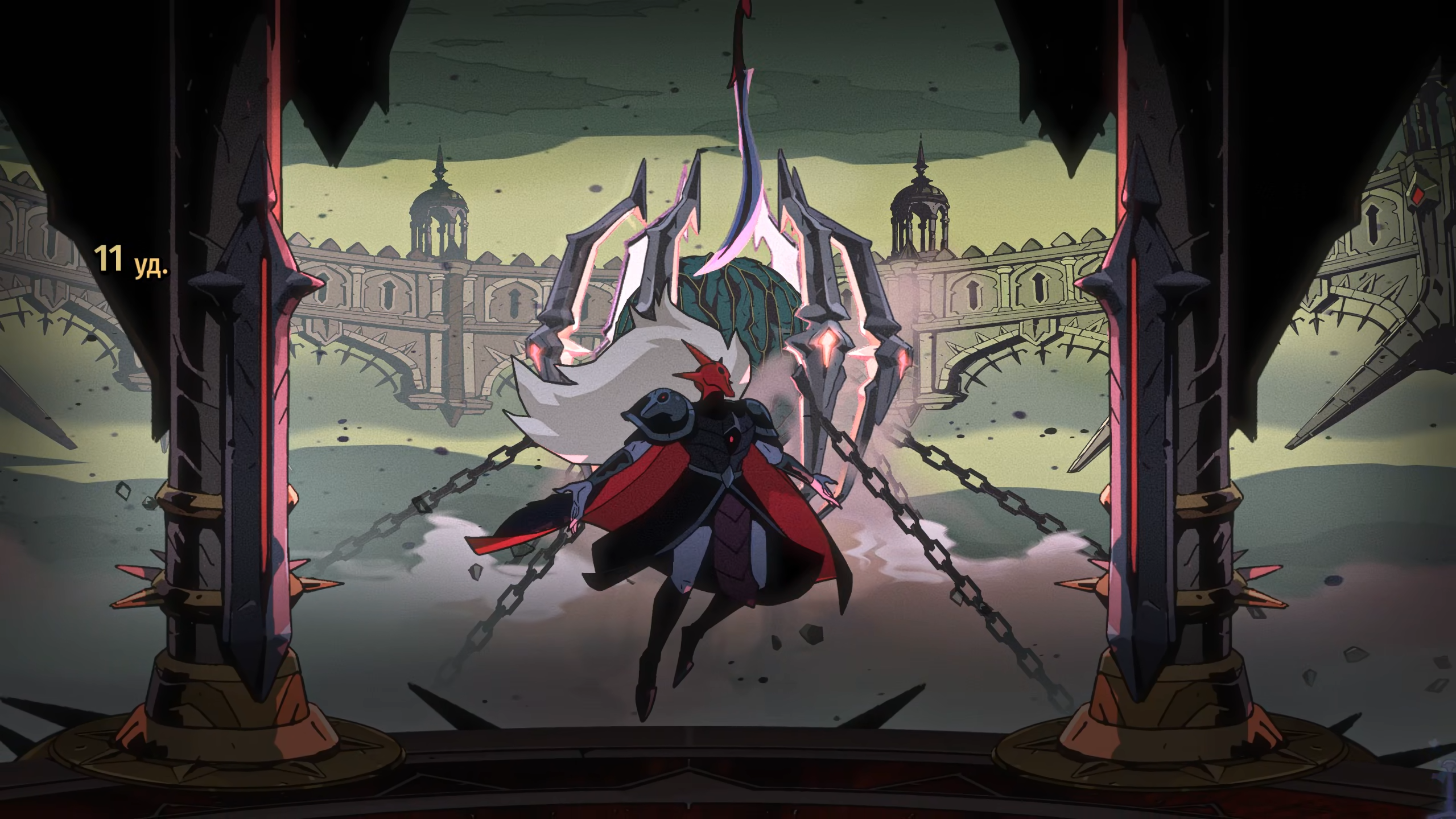
In another battle — with the Серебряной королевой — completely different, but equally expressive notes of dark fantasy await you. The soundtrack to this battle was written by Yuka Kitamura, composer of many FromSoftware games. And in another battle, Motoi Sakuraba joined the work, whose music combines the styles of both colleagues. As a result of this multifaceted collaboration, a truly exciting sound experience was born at the intersection of genres, perfectly emphasizing the synthesis that underlies the game itself.
And if you want to go this way not alone — there is such an opportunity. Absolum supports cooperative passage for two players, both locally on one screen and online. To avoid spoilers and inconsistencies, the worlds of the participants "merge" into a common one, where the smaller one is taken as the point of progress. At the same time, everyone retains personal improvements, and jointly achieved progress is transferred to a single game if it exceeds the original.
Ultimately, the only noticeable drawback of Absolum as a "roguelike" is the lack of возвышений. After completing the full passage and receiving the true ending, the game does not offer additional modes or settings that would encourage you to rush into battle again. Therefore, it is unlikely that it will take you more than twenty hours to master all the content and explore all the regions of Талама.
Personally, as a person who immediately switches to the next game after completing one, I don't see this as a big problem. But I know that for many players the presence of a full-fledged endgame is important — so consider that I just fulfilled my duty and noted this point in the protocol.
Diagnosis
Absolum was a pleasant surprise for me. I didn't expect the classic formula, which originated in the last century on arcade machines, to be so captivating when combined with "roguelite" mechanics. Dotemu, Guard Crush Games, and Supamonks have done an outstanding job of combining the strengths of "roguelikes" and "beat 'em ups" in such a way that they not only compensate for weaknesses and highlight strengths, but literally give them new meanings.
Along with a first-class combat system, solid variability, and well-thought-out metaprogression, the project pleases with its visual style and sound design, polished to a shine — leaving behind only positive emotions, without a hint of disappointment.
Yes, it may get a little lost against the backdrop of the full version of Hades 2 being released, but if you are not indifferent to either of these genres — whether it's "roguelikes" or "beat 'em ups" — you should definitely not miss Absolum.